

Key Takeaways
Make forty days of prayer a launchpad, not a deadline
A practice, not a bargain. Batterson presents a forty-day challenge as a way to establish a lasting rhythm, not a countdown for getting a desired result. His church met at 7:14 each morning to pray around a verse about humility, prayer, and renewal. The time served as a reminder, not a magic formula. The deeper aim was to discern what God wanted, then keep praying beyond day forty. Batterson describes this as trading prayers for the fastest answer for prayers sustained as long as necessary.
Keep the circle going. Participants prayed for different people, needs, and hopes. The book reports stories of restored relationships, new jobs, provision, and healing, but its central practice is simpler: choose a time and place, pray with others if possible, and continue after the challenge ends.
The forty-day structure gives an expansive spiritual intention a manageable starting point. In behavioral terms, a defined period can help establish a repeatable cue and make a private commitment visible to a group. The 7:14 gathering adds accountability without pretending the clock itself has power. The distinction between a launch and a deadline is especially important: a spiritual practice measured only by whether a request is granted can collapse into disappointment. A durable rhythm can remain meaningful even when circumstances do not change, because its purpose includes attention, discernment, and formation.
Write exact requests so answers do not disappear into memory
Make prayer traceable. Batterson recommends a journal to record requests, insights, and outcomes. Writing makes a vague hope more precise and gives the person praying a record to revisit. He calls this a safeguard against forgetting what was asked, then failing to recognize or remember an answer.
Follow the long arc. Journalist Kimberly reviewed years of journals and traced a path from an early prayer about influencing people through journalism to a job covering the White House. The path included moving to Washington without a job, filing papers, sending résumés, and enduring a rejected interview before another opportunity opened. The journal did not make the process quick. It helped her see how prayer, patience, and practical effort had accompanied a decade of change.
A journal can function as both a spiritual practice and a decision record. It makes intentions inspectable, helping distinguish what was actually hoped for from what memory later edits into a neat success story. That is valuable even for readers who understand the events in nonreligious terms: recording a goal can clarify priorities and make progress easier to evaluate. The same record can also invite selective interpretation. A useful journal preserves unanswered requests and changed circumstances alongside gratifying outcomes, rather than turning every coincidence into confirmation.
Let prayer train your attention toward people and openings you might miss
Attention follows concern. Batterson uses the phrase “first-class noticers” for people who spot relevant details and opportunities others overlook. He argues that prayer can direct attention toward people and situations that matter to a person’s concern. In his account, a reader named Peter noticed a distressed teenager beside him on a flight, approached her gently, and learned she was pregnant and fleeing home. His conversation helped her contact her parents and return home.
Notice, then respond. The book also tells of Cornelius and Peter, whose separate visions and prayers led them to meet. Their encounter opened the early Christian movement to non-Jews. Batterson’s point is not merely to look for signs, but to recognize a possible opening and take responsibility for responding to it.
Prayer can act as an attentional lens: people tend to register details that connect to active concerns, then interpret those details through their values. This offers a grounded way to understand the book’s emphasis on noticing without requiring every coincidence to be supernatural evidence. The airplane story also shows that attention alone is insufficient. Peter had to risk an awkward conversation, while remaining respectful of the teenager’s autonomy. The useful discipline is alertness paired with humility: notice possible need, ask rather than assume, and accept that a perceived opportunity may not be one.
Keep asking boldly, but let God define the answer and timing
Persistence is not control. Batterson draws on biblical stories of persistent prayer, including Honi, who prayed for rain during a drought and refined his request when the first rain did not match what he sought. The book’s lesson is to ask specifically and keep praying, while recognizing that prayer does not force a preferred outcome. Batterson distinguishes an immediate answer from an answer that takes longer, and he includes the possibility of “no.”
Stay with the request. One church member kept praying after her husband failed to get a job he had interviewed for. The day after a forty-day challenge ended, he received an offer for a different position, followed by another temporary job. Batterson treats the sequence as an answer, while emphasizing that persistence is not a schedule the person praying can control.
The book’s strongest version of persistence is not a technique for wearing down a reluctant deity. It is a way to stay engaged with a hope while remaining open to revision. That distinction matters because repeated prayer can sustain courage, but it can also intensify fixation if the request is harmful, unrealistic, or no longer appropriate. The account of a different job arriving after disappointment illustrates the value of flexibility. A mature practice can preserve the underlying need while allowing the specific plan to change.
Do not pray suffering away when faithful endurance is the work
Some burdens remain. Batterson describes Eli, a young child who survived a fall from a second-story window but was left with lasting disabilities. His parents pursued extensive therapy and continued to pray for healing. They also reached a point where they had to accept Eli’s current condition and learn to live well within it. Accepting reality did not mean abandoning hope or ceasing to pray.
Ask for strength, too. The book distinguishes prayers seeking rescue from prayers seeking the strength to endure. It argues that prayer can change a person even when circumstances do not change, and that an unanswered request should not automatically be read as a failure of faith. In this view, the goal is not simply comfort, but a faithful response to the life actually being lived.
This is a necessary corrective to spirituality that treats every hardship as a problem that can be prayed away. The story keeps ongoing care and hope together, rather than framing acceptance as passivity. A further caution is essential: explaining disability as a means for displaying divine power may comfort some people, but it can also make suffering sound instrumental or minimize the need for accessibility and support. The most humane application preserves the book’s call to endure while allowing grief, practical intervention, and advocacy to remain part of faithful life.
Treat prayer as a prompt to act, not a substitute for action
Put belief into motion. Batterson recounts a farmer who came to a community prayer meeting about drought wearing waders. His clothing expressed confidence that rain might come. Batterson also describes bidding eighty-five dollars on a book about Capitol Hill zoning before his church had secured a property there. In both stories, faith becomes visible through a concrete step, not merely an inner feeling.
Do what is yours to do. In another episode, a friend prayed for a computer for a campus ministry. Batterson realized he already owned an extra one and gave it away instead of continuing to ask for provision. The book’s challenge is to pray for what cannot be done alone, then act on what is already within reach. Action should express considered faith, not replace judgment or encourage reckless spending.
The movement from prayer to action helps prevent spiritual language from becoming a respectable form of delay. It also resembles implementation intentions: a broad intention becomes more consequential when linked to a specific next step. The computer story is especially clarifying because the response is generosity rather than a dramatic miracle. Still, the waders and property bid should not be treated as formulas for manufacturing outcomes. Faithful action needs ordinary safeguards, including sound judgment, consent, and care for people who could bear the cost of a failed risk.
Build prayer into Scripture, fasting, silence, and ordinary routines
Give attention a rhythm. Batterson points to Frank Laubach’s “game with minutes,” an experiment in briefly bringing God to mind throughout the day without stopping ordinary work. The practice turned chores and encounters into occasions for prayer. Batterson also urges readers to engage Scripture by reading slowly, remembering it, reflecting on it, and acting on it, rather than treating it as material to finish quickly.
Change the channel. Fasting, including a break from media, is presented as a way to reduce distraction and focus attention. Batterson credits a forty-day media fast with helping him finish a book after years of unfinished manuscripts. He recommends setting a clear period and purpose for a fast. The wider point is to vary familiar routines so that prayer does not become automatic recitation.
These practices treat prayer less as a single daily event and more as trained attention distributed across a life. The minute-by-minute exercise is deliberately small, while Scripture and fasting create longer periods of focus. Together they offer several entry points for people with different temperaments. The emphasis on fasting deserves practical care: abstaining from food is not appropriate for everyone, and a media fast or another non-food practice can serve the same reflective purpose. Novelty can interrupt habit, but sustainable prayer also requires room for quiet repetition.
Let other people carry your faith when your arms grow tired
Prayer is shared labor. In the biblical account of Moses and the battle against the Amalekites, Aaron and Hur support Moses’s raised arms when he grows tired. Batterson uses the story to argue that people who pray for others also need people praying for them. A prayer circle can offer consistency and emotional support during a difficult season, rather than leaving one person to bear the burden alone.
Tell what happened. The book also treats testimony as a way to share encouragement and give credit to God. Its account of the Moravian community describes a small group beginning around-the-clock prayer that continued for generations and supported a major missionary movement. Batterson’s point is that private devotion can become collective practice, and stories of faith can help a community sustain it.
The image of supported arms captures a social fact as well as a theological one: endurance is often distributed across relationships. Shared prayer can make care concrete through regular check-ins, practical help, and a sense that a burden is witnessed. Testimony also helps a group remember what it values and what it has attempted. Its limits matter, however. Celebrated stories should not make people with unanswered prayers feel deficient, and public sharing should respect privacy. Community is strongest when it makes space for both gratitude and lament.
Aim your biggest prayers at work that outlives your own gain
Dream beyond present resources. Batterson tells how Mark Moore developed MANA, an organization producing peanut-based therapeutic food for severely malnourished children. The idea grew through relationships and practical work at the church’s coffeehouse, which had earlier been prayed over as a place where new ideas could take shape. At the time described, its facility could make up to 18,000 packets an hour.
Give the dream away. Batterson also profiles businessman Stanley Tam, who transferred ownership of his company to God and ultimately gave more than $120 million to Christian causes. These stories connect prayer with ambition, work, and generosity. The book encourages people not to let a limited budget define a worthy vision, while its deeper standard is whether the vision serves others and is stewarded responsibly.
The examples broaden prayer from personal requests to institution-building and long-term service. MANA required not only an idea, but expertise, funding, partnerships, and production capacity. That combination makes the story more useful than a simple claim that prayer produces success. The language of unlimited provision can inspire courageous work, but it should not be mistaken for a guarantee that every ambitious project will be funded or succeed. A sounder reading pairs expansive imagination with accountability, evidence of need, and responsibility to those the project intends to serve.
Analysis
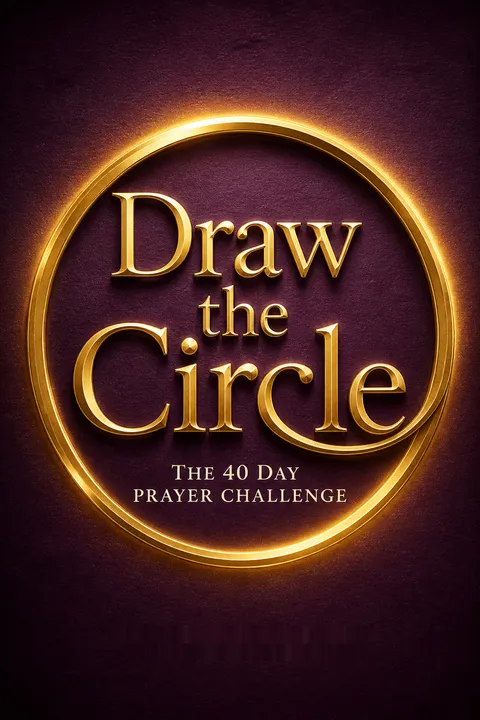
Draw the Circle is a Christian devotional organized as a forty-day challenge, but its central subject is not a technique for obtaining specific outcomes. It argues that sustained prayer should reshape the person praying: attention becomes more alert, desires are tested, routines are reordered, and faith is translated into action. The recurring image of drawing a circle gives persistence a physical metaphor, while the book’s many testimonies make that metaphor communal and memorable.
Its most practical contributions are the habits surrounding prayer: choose a time and place, pray with others, record requests, return to Scripture, vary routine, fast when appropriate, and act when an obligation is already clear. Stories such as the donation of an unused computer prevent the message from becoming only a call to wait for miracles. The account of Eli’s disability also introduces a difficult but essential distinction between seeking deliverance and learning to live faithfully when a condition remains.
The book’s evidence is primarily scriptural interpretation and personal testimony. These stories can inspire and illustrate a way of seeing, but they cannot establish that persistent prayer reliably produces a requested outcome. That tension is most important around miraculous healing, financial provision, and claims that a delayed answer is simply mistimed. The book partly addresses the risk by recognizing no, not yet, and endurance, though readers may still need to guard against treating every coincidence as confirmation or every disappointment as a spiritual test. At its best, the work offers a disciplined account of hope: name what matters, bring it repeatedly into prayer, remain receptive to revision, and take the next responsible step. Its theological assumptions are explicit, so its strongest audience is Christian readers seeking a more deliberate prayer life. Its wider value lies in the interplay of ritual, reflection, community, and service. Prayer here is not a way to control outcomes, but a practice for orienting a life toward a purpose beyond immediate comfort.
Review Summary
Draw the Circle received mixed reviews, with many praising its ability to reinvigorate prayer life and inspire faith. Readers appreciated the engaging stories and encouragement to pray boldly. However, some criticized the lack of structure and felt it promoted a prosperity gospel message. Several reviewers found the book helpful as a devotional but wished for more practical prayer guidance. Despite concerns about theological implications, many readers reported positive experiences and renewed passion for prayer after completing the 40-day challenge.
People Also Read







Glossary
Prayer circles
Persistent prayer around a concernA metaphor for praying consistently around a promise, person, problem, or hope until an answer becomes clear. The practice may include literal prayer walks, but the shape or physical act is not essential. Batterson stresses that a prayer circle is not a device for making God grant a wish; it begins by seeking what God wills.
ALAT prayers
Prayers sustained as long as neededBatterson’s contrast to ASAP prayers, meaning requests made with the expectation of an answer as soon as possible. ALAT means praying as long as it takes, while accepting that the answer may be yes, no, or not yet. The phrase emphasizes persistence and trust in divine timing, not a guarantee that a particular request will be granted.
Prayer genealogy
A record of prayers and answersThe chain connecting a prayer to events or choices that appear to follow from it. Batterson uses journals and personal testimony to trace how an earlier request may relate to a later opportunity, gift, or change. The term frames answered prayer as a history worth remembering and sharing, though the connection is interpreted through the book’s Christian faith.
God-idea
An idea discerned through prayerAn idea Batterson believes is prompted by God during prayer or attentive reflection. Such an idea may point toward a project, solution, or form of service, but it still requires practical work and obedience to develop. The book contrasts it with merely good ideas by emphasizing spiritual discernment and the possibility of serving purposes larger than personal success.
Prayer fleece
A request for divine confirmationA specific sign requested as confirmation when someone is uncertain about a possible direction. The term refers to Gideon’s biblical use of a fleece to seek reassurance. Batterson treats the practice cautiously: it should not replace clear guidance already present in Scripture, serve selfish motives, or become a game of interpreting arbitrary signs.
Double circle
Prayer combined with fastingBatterson’s name for intensifying prayer by pairing it with fasting. A fast may involve food or a chosen source of distraction, and it should have a defined purpose and duration. The practice is presented as a way to focus attention, examine motives, and seek God more deliberately, rather than as a mechanical method for securing a desired result.
Prayer covering
Support from others’ prayersOngoing intercessory prayer offered by other people for someone facing a demanding season or spiritual burden. Batterson compares this support to Aaron and Hur holding up Moses’s arms during a battle. A prayer covering makes intercession communal and reminds the person praying that endurance need not be solitary.
Game with minutes
Brief, repeated moments of prayerFrank Laubach’s practice of bringing God to mind for a moment throughout each minute of the day, while continuing ordinary activities. Inspired by Brother Lawrence’s practice of prayer during work, it treats routine encounters and tasks as opportunities for prayer. The aim is sustained awareness, not constant speech or withdrawal from daily responsibilities.
Prayer contracts
Prayer linked to divine promisesBatterson’s metaphor for prayer grounded in a promise or purpose he believes is consistent with God’s will. Drawing on biblical language about binding, he describes such prayer as a commitment with spiritual significance. The term does not mean that people can legally compel God; the book repeatedly places discernment of God’s will above personal demands.
FAQ
What's "Draw the Circle: The 40 Day Prayer Challenge" about?
- Purpose of the Book: "Draw the Circle" by Mark Batterson is a guide to a 40-day prayer challenge designed to deepen one's prayer life and relationship with God.
- Biblical Inspiration: The book draws inspiration from the biblical story of Honi the Circle Maker, who prayed for rain during a drought and refused to leave the circle he drew until God answered.
- Structure: It is structured as a daily devotional, with each day offering a new lesson, story, or insight into the power of prayer.
- Goal: The ultimate goal is to encourage readers to pray with more faith, persistence, and specificity, leading to personal and spiritual breakthroughs.
Why should I read "Draw the Circle: The 40 Day Prayer Challenge"?
- Spiritual Growth: The book offers practical steps to enhance your prayer life, which can lead to significant spiritual growth and transformation.
- Inspiration and Encouragement: Through real-life stories and biblical examples, it provides encouragement and inspiration to persevere in prayer.
- Community and Connection: It suggests ways to involve others in your prayer journey, fostering a sense of community and shared faith.
- Practical Application: The daily challenges and reflections are designed to be actionable, helping you to apply the lessons to your own life immediately.
What are the key takeaways of "Draw the Circle: The 40 Day Prayer Challenge"?
- Persistence in Prayer: The book emphasizes the importance of persistent prayer, encouraging readers to keep praying until they see results.
- Specificity in Requests: It teaches the value of being specific in your prayers, as clear requests can lead to clear answers.
- Faith and Expectation: Readers are encouraged to pray with faith and expectation, believing that God will answer in His timing and way.
- Community Prayer: The book highlights the power of praying with others, suggesting that collective prayer can lead to greater breakthroughs.
How does Mark Batterson suggest we approach prayer in "Draw the Circle"?
- Circle Making: Inspired by Honi the Circle Maker, Batterson suggests drawing metaphorical circles around your prayers, symbolizing commitment and focus.
- Pray with Boldness: He encourages praying bold prayers that honor God, as they demonstrate faith and trust in His power.
- Document Your Prayers: Keeping a prayer journal is recommended to track prayers and recognize when and how God answers them.
- Pray ALAT (As Long As It Takes): Instead of ASAP (As Soon As Possible) prayers, Batterson advises praying with patience and persistence.
What is the significance of the "circle" in "Draw the Circle"?
- Symbol of Commitment: The circle represents a commitment to stay in prayer until God answers, much like Honi's circle in the biblical story.
- Focus and Intention: Drawing a circle around your prayers helps to focus your intentions and demonstrate seriousness in your requests.
- Metaphorical and Literal: While the circle is often metaphorical, some readers have taken it literally by physically walking or drawing circles as they pray.
- Historical and Spiritual Roots: The concept is rooted in Jewish tradition and serves as a powerful visual and spiritual tool for prayer.
What are some of the best quotes from "Draw the Circle" and what do they mean?
- "Pray like it depends on God; work like it depends on you." This quote emphasizes the balance between faith and action, encouraging readers to trust God while also taking practical steps.
- "God honors bold prayers because bold prayers honor God." It suggests that God is pleased by prayers that reflect strong faith and trust in His power.
- "The greatest tragedy in life is the prayers that go unanswered simply because they go unasked." This highlights the importance of asking God for what you need, as unspoken prayers cannot be answered.
- "If you want God to do something new, you cannot keep doing the same old thing." This encourages readers to step out of their comfort zones and try new approaches in their spiritual lives.
How does "Draw the Circle" incorporate biblical stories and teachings?
- Biblical Examples: The book frequently references biblical figures like Honi, Joshua, and Elijah to illustrate the power of persistent prayer.
- Scripture Integration: Each day's devotional includes scripture to ground the teachings in biblical truth and provide a foundation for prayer.
- Lessons from Jesus: Jesus' teachings on prayer, such as the Lord's Prayer and His parables, are used to guide readers in developing a deeper prayer life.
- Old and New Testament: Stories from both the Old and New Testaments are used to show the timeless nature of prayer and God's faithfulness.
What practical advice does Mark Batterson offer for enhancing prayer life?
- Set a Prayer Routine: Establish a regular time and place for prayer to make it a consistent part of your daily life.
- Use a Prayer Journal: Document your prayers and God's answers to track your spiritual journey and growth.
- Involve Others: Create prayer circles with friends, family, or church groups to support and encourage each other.
- Fast and Pray: Consider fasting as a way to deepen your prayer life and focus more intently on God's will.
How does "Draw the Circle" address challenges in prayer?
- Overcoming Doubt: The book encourages readers to push through doubt and continue praying, even when answers aren't immediate.
- Dealing with Delays: It teaches that God's timing is perfect and that delays can be opportunities for growth and deeper faith.
- Spiritual Warfare: Readers are reminded that prayer is a form of spiritual warfare and that persistence is key to overcoming obstacles.
- Handling Disappointment: The book offers guidance on how to handle unanswered prayers and trust in God's greater plan.
What role does community play in "Draw the Circle"?
- Prayer Circles: The concept of prayer circles emphasizes the power of collective prayer and the support of a faith community.
- Shared Testimonies: Sharing prayer testimonies within a community can inspire and strengthen the faith of others.
- Corporate Prayer: The book encourages church-wide or group prayer challenges to foster unity and shared spiritual growth.
- Accountability and Support: Being part of a prayer circle provides accountability and support, helping individuals stay committed to their prayer goals.
How does "Draw the Circle" suggest using prayer for personal and spiritual breakthroughs?
- Identify Specific Goals: Clearly define what you are praying for to focus your prayers and recognize when they are answered.
- Pray with Expectation: Approach prayer with the expectation that God will answer, which can lead to greater faith and anticipation.
- Seek God's Will: Align your prayers with God's will, seeking His guidance and direction for your life.
- Celebrate Breakthroughs: Acknowledge and celebrate when prayers are answered, giving glory to God and strengthening your faith.
What is the overall message of "Draw the Circle: The 40 Day Prayer Challenge"?
- Power of Prayer: The book underscores the transformative power of prayer in personal and spiritual life.
- Faith and Persistence: It emphasizes the importance of faith and persistence in prayer, encouraging readers to keep praying until they see results.
- God's Faithfulness: Readers are reminded of God's faithfulness and His desire to answer prayers in His perfect timing.
- Call to Action: The book is a call to action for readers to deepen their prayer lives, involve others, and trust God for the impossible.
Download PDF
Download EPUB
.epub digital book format is ideal for reading ebooks on phones, tablets, and e-readers.








