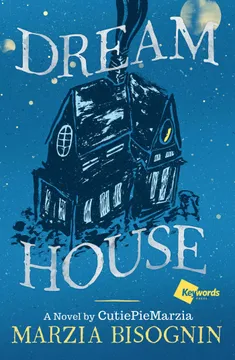


Plot Summary
A House From Her Dreams
Amethyst finds herself at the gate of a white country house that feels uncannily like the home she has always imagined, though she cannot remember how she got there. As rain begins, the elderly owners, Amabel and Marvin Bloom, notice her distress and invite her inside. Their kindness brings comfort, but Amethyst cannot explain who she is or where she belongs.
She accepts a bed in their isolated guest room, reassured by the warmth of the fire and the beauty of the house. The next day, a crash wakes her, yet the Blooms are gone. Alone in a home that seems suddenly unfamiliar, she tries to remember her life and collapses before she can find an answer.
The house offers Amethyst an immediate substitute for a self she cannot locate: its rooms feel remembered even when her biography does not. The Blooms respond to her as a person in need, creating an intimacy that she accepts without knowing its history. That contrast is the story's first pressure point. Domestic comfort appears to promise belonging, but the unexplained gaps in her memory make belonging feel both instinctive and suspect. The house is not simply a setting she enters; it is the only stable evidence she has that she may have had a life before this moment.
The Gate Will Not Release Her
When Amethyst wakes in the empty house, the old woman who knocks at the door points toward the open gate and walks away. Amethyst follows, but touching the iron makes her recoil with dread, so she shuts it and returns indoors. She borrows the Blooms' bunny-print pajamas, eats their food, and begins treating the parlour as her own refuge.
A figure appears behind a living-room window while she checks the garden, then vanishes before she can reach it. Inside, the bowl she left on the table has been washed and returned to a kitchen shelf. Amethyst concludes that someone else is in the house, although every room she searches appears empty.
Amethyst's choice to stay is not yet a reasoned commitment. The gate's visceral repulsion makes departure feel impossible, while the house supplies food, clothing, and a sense of safety that steadily substitutes for the life she cannot remember. The moved bowl sharpens the uncertainty: evidence of another presence is concrete, but its source remains invisible. Rather than resolving the mystery, ordinary housekeeping becomes uncanny because it proves that someone, or something, can act in the same domestic world as Amethyst without appearing to her.
The Chalk Circle Below
Searching a locked corridor after hearing whispers, Amethyst finds a keyhole view of polished shoes and forces the door open. Stairs descend to a candlelit cellar, where someone shoves her into a chalk circle before fleeing and extinguishing every flame. As she scrambles toward the stairs, an icy hand seizes her ankle and drags her back while the whispers swell into screams.
She wakes the next day with red welts and little strength. A note from Amabel promises a return at dinner, but the owners do not appear. The old woman visits again, silently pointing toward the gate, and a bathtub light flickers out while Amethyst tries to convince herself that the house is safe.
The cellar turns the house's invisible activity into bodily danger. Amethyst is not merely frightened by a presence; she is physically moved, injured, and left without an explanation. Her inability to distinguish a human intruder from a supernatural force matters because she has no dependable memory against which to test what she experiences. The promise of the Blooms' return briefly restores a practical explanation, but their absence leaves her suspended between trust and alarm. She clings to the house even as its hidden space has shown that its welcome can become coercive.
A Girl Behind the Wardrobe
At night, Amethyst dreams of a crying girl hiding in her wardrobe; when she leaves to make tea, the child appears to hang herself, then disappears when Amethyst wakes. The next day, Amethyst meets Avery, a young man from the neighboring mansion, who jokes easily but carries a sadness she recognizes.
He says he is stuck in his house, though he does not explain why. Amethyst also encounters Alfred, the Blooms' scarred, irritable gardener, who refuses her invitation indoors and gives little away. When the old woman returns and repeatedly urges Amethyst to leave, the warning only deepens her resolve to understand what is happening before she goes.
The girl introduces a second kind of uncertainty: unlike the cellar's unseen force, she is emotionally legible, frightened, and apparently dependent on Amethyst. The nightmare makes Amethyst feel responsible for a child she does not know, revealing how quickly her own need for connection becomes a need to protect someone else. Avery offers companionship without explanation, while Alfred's guardedness makes him an easy target for suspicion. Each new person is therefore both a potential ally and a possible source of the danger Amethyst cannot yet name.
The Gardener Called Derfla
Avery explains that villagers call Alfred the Derfla, a name built from the gardener's own letters and used to frighten children. Years earlier, Alfred's wife Lilly died giving birth to twin boys; after their house burned and the babies died, townspeople assumed Alfred had caused the fire, though police never charged him.
Reverend Marvin Bloom continued employing Alfred, but a later accusation that Alfred stole a picture worsened the village's distrust. The story unsettles Amethyst because the dream girl has also named the Derfla as her pursuer. She watches Alfred from the bathroom window, records him with a camera, and finds him guarding the locked shed. His past now seems to connect the house's hauntings to a living suspect.
The Derfla legend shows how a community can turn unresolved tragedy into a usable monster. The villagers' story gives children a name for danger, but it also strips Alfred of complexity and leaves him isolated under a public accusation that was never proved. Amethyst's suspicion is understandable: the legend overlaps with the girl's fear, and Alfred conceals himself behind the shed's locked door. Yet the story has also supplied an alternative to supernatural evil, namely the ordinary cruelty of rumor. The mystery now depends on distinguishing a frightening reputation from the person who bears it.
The Shed's Broken Footage
Amethyst leaves her camera filming Alfred, but the recording breaks into flashes and corrupted images just after the shed door opens. A frame seems to show Alfred's warped face inside. She finds sleeping pills in his pocket and becomes convinced that he may be drugging her. When she tries to force entry into the shed during a storm, a freezing force locks her body and drops her into the rain.
Later, the shed door stands ajar, and she discovers Alfred hanging from a beam. Amethyst supports him with a chair and saves his life. Alfred then explains that he died by suicide years ago, but her arrival made him visible again. A fresh recording shows the shed empty where he stands.
Amethyst's investigation produces evidence that seems to confirm her fear, but each clue changes meaning as it is tested. The pills suggest a human plot, the camera suggests something impossible, and the paralysis punishes her attempt to force certainty from the locked shed. Saving Alfred interrupts the simple role she assigned him as an attacker. His claim of death, verified by the empty footage, converts suspicion into a more difficult ethical question: whether a person condemned by a village can also be trapped by his own belief that he deserves condemnation.
Alfred Learns He Is Dead
Alfred recounts how Lilly died after childbirth and how he returned from arranging her funeral to find his home burned and his sons missing. He had left them with his sister, who had been unwell; he believes he failed his family and cannot forgive himself. Amethyst learns from a guide to spirits that guilt can keep a ghost bound to a place.
She persuades a local newspaper to publish a more generous account of Alfred and the village's unfair legend. When Alfred reads it, he embraces her, then steps outside as ravens gather over the shed. A shaft of light falls on him, the birds settle, and Alfred disappears. His release leaves Amethyst grateful, but Avery's admission that he knew Alfred was dead makes her distrust him.
Alfred's haunting is sustained less by the village's present opinion than by his own internalized verdict. The newspaper matters because it offers public recognition, but Amethyst's intervention is not a magical acquittal; it gives Alfred evidence that his life cannot be reduced to the Derfla story. His crossing follows an act of connection, not a solved crime. The same act of help sharpens Amethyst's relationship with Avery: his withheld knowledge makes care feel conditional. The section links restoration to testimony, suggesting that people trapped by shame often need someone else to help make their full history visible.
Avery's Dangerous Silence
After Alfred vanishes, Amethyst confronts Avery about his knowledge and receives evasions that end in a painful quarrel. She studies the Blooms' book on spirits and realizes that more than one presence may haunt the house. Magnetic letters form messages, and a homemade talking board spells out a reply that terrifies her.
The girl returns in a dream, now named Akiko, and links herself to Avery through a wooden heart marked with their initials. A rhyme addressed to Amethyst directs her to a hidden space beneath her bedroom. A cupcake, a yellow dress, and the date October 21 reinforce the invitation. Moving the wardrobe reveals a trapdoor, but exhaustion postpones her descent until night.
The story shifts from investigating Alfred to recognizing that the house contains several overlapping histories. The spirit guide gives Amethyst a vocabulary for that possibility, but it does not make communication safe: the board's answer intensifies her fear rather than clarifying the speaker. Akiko's heart and rhyme suggest intimacy between people who have not yet explained themselves. Avery's silence is especially painful because the clues increasingly connect him to the haunting. Amethyst continues anyway, driven by a mixture of affection, curiosity, and the conviction that unexplained suffering should not simply be left alone.
A Birthday Beneath Hills
On October 21, Amethyst follows the hidden stairs and tunnel to a candlelit chamber where Avery has prepared a birthday dinner. The surprise frightens her at first, but his apology and care soften her anger. During the meal, Avery describes the violence that fractured his family, and Amethyst recognizes the loneliness Akiko had once described.
They share a kiss, and he marks the occasion as her birthday. When Amethyst wakes, Avery is gone. A book about the old mansion explains that underground passages once joined the Bloom house, the neighboring estate, and the church. Before she can make sense of the tunnel, the house's rooms seem to change, shadows appear in the cellar, and she loses three days while clutching a strange pendant.
The birthday meal briefly makes the buried passage feel like a private home rather than a route through a haunted landscape. Avery's disclosure of family violence deepens the bond, while the kiss gives Amethyst a rare experience of mutual tenderness. His sudden absence ruptures that security and turns the same tunnel into evidence of concealment. The book's history anchors the supernatural in the village's physical design, where old routes join domestic, civic, and religious spaces. The lost days then expose a limit to Amethyst's control: intimacy can open a door, but it cannot guarantee that the person on the other side will remain.
The Grave Beyond the Tunnel
When Amethyst sees that the calendar has jumped to October 27, she asks Avery about the pendant she found. He shows her a matching one but cannot explain the missing days. A strange man later returns the pendant with an old key and warns her away. The barrier between the gardens prevents her from reaching Avery, so she takes the tunnel toward the church instead.
In its overgrown graveyard, she finds Avery Bradford's headstone, dated 2010, and understands that he is dead. Shaken, she meets him in the tunnel on her way back. Avery will not explain why he remains, and Amethyst runs from him, unable to absorb that their growing affection belongs to a world divided by death.
The headstone transforms earlier details without making them false: Avery's sadness, his claim of being stuck, his absence after the birthday, and his knowledge of Alfred all acquire a shared explanation. The revelation also changes the emotional stakes of their romance. Amethyst has not merely been drawn to a guarded neighbor; she has been building trust with someone who withheld the most consequential fact about himself. Her flight is a response to grief and betrayal together. The tunnel's old connections allow her to reach the truth, but they do not make that truth easier to accept.
The Name in the Chest
Back at the house, Amethyst uses the key to open a chest in the attic. Inside are photographs of Avery with Akiko, then pictures of Amethyst herself beside the Blooms and Avery. She cannot remember any of them, but the evidence proves that the house holds a life she has lost. Believing she must leave, she gathers the pendant, key, and photographs.
At the front gate, an invisible barrier stops her. Inside, she reaches for a glass and her hand passes through it; the refrigerator gives her no reflection. The possibility she has resisted becomes unavoidable: she may be dead too. Still unable to face it, she retreats to bed and tries to treat the revelation as a nightmare.
The photographs offer a material counterweight to Amethyst's failing memory. They show relationships that her conscious self cannot access, making the past both undeniable and emotionally unavailable. Her instinct is to leave, but the boundary at the gate repeats the trap she has sensed since the beginning. The failed reflection and untouchable glass finally turn a vague suspicion into a bodily fact. Yet she retreats into the language of dreaming, a psychologically credible defense against an identity too painful to integrate all at once. Recognition must come through relationship, not evidence alone.
Home at Last, Together
On Halloween, Amabel and Marvin appear in the house and show Amethyst a photograph identifying her as Akiko, their adopted daughter. They explain that she left nearly two years earlier to find her birth parents, then died in a car accident while returning to them. The sight of the newspaper report unlocks memories of her childhood, her bond with Avery, her fear of the Derfla, and the decision that brought her home.
Akiko recognizes that the Blooms are the parents who raised and loved her, and she embraces them before saying goodbye. Outside, children in costumes run past the house; one small ghost pauses as if aware of her. Avery waits beyond the garden gate, and Akiko takes his hand and leaves with him.
The final revelation resolves the novel's central question by joining the house's supernatural events to Akiko's interrupted return. Amethyst's amnesia had protected her from the trauma of dying, but it also kept her from recognizing the people and place she was trying to reach. The Blooms restore her history through testimony and a photograph, while the accident report supplies the memory that completes it. Her goodbye does not reject her adoptive family; it affirms them as home. Taking Avery's hand then becomes an act of recognition rather than escape, allowing affection, grief, and belonging to coexist.
Analysis
Dream House builds suspense by making its protagonist's problem epistemic before it is supernatural. Amethyst cannot remember her life, so she has no reliable baseline for deciding whether a sound, a person, or a room is strange. Each explanation she adopts is locally sensible: Alfred may be drugging her, Avery may be hiding something, and her nightmares may be stress. The revelations do not erase those perceptions; they reorganize them. The book's strongest structural device is therefore retrospective recognition, with objects and repeated gestures gaining meaning only after the reader has learned how much Amethyst has forgotten.
The novel also places two kinds of haunting beside each other. Alfred is burdened by a public story that converts grief into villainy, while Amethyst is haunted by a private absence that prevents her from recognizing the people who love her. His release depends on a more truthful account of his past and a willingness to receive compassion. Her recovery depends on testimony from the Blooms and the return of her own memories. In both cases, the remedy is relational: another person must witness the life that shame or trauma has obscured. Yet the solutions differ. Alfred needs help loosening his self-punishment; Amethyst needs to accept that her own life has ended without treating that fact as a denial of the love that shaped it.
The house concentrates these questions of belonging. It appears to Amethyst as a dream made solid, but its thresholds prevent her from leaving, while the underground passages connect places that seem separate above ground. The setting thus gives physical form to the novel's emotional argument: attachment can shelter, confine, and guide at once. Avery's secrecy complicates the comfort of romance, but their final meeting offers companionship without pretending that grief never happened. The ending finds peace not through escape from memory, but through recovering it and choosing connection with open eyes.
Review Summary
Dream House received mixed reviews, with many readers finding it poorly written and underdeveloped. Critics cited issues with grammar, pacing, and character development. Some felt the plot was predictable and lacked coherence. However, a few readers enjoyed the atmospheric and mysterious elements of the story. Many reviewers noted that while they appreciated Marzia Bisognin as a YouTuber, they found her debut novel disappointing. Some positive reviews praised the book's ending and its ability to maintain suspense throughout.
People Also Read

Characters
Amethyst
The amnesiac seekerAmethyst is a young woman drawn to an immaculate country house she cannot explain and unable to remember where she belongs. Curious, self-reliant, and socially hesitant, she answers uncertainty by investigating it: she searches locked rooms, questions neighbors, keeps watch on Alfred, and follows clues even when fear warns her away. Her compassion is equally active. She feeds herself from the Blooms' kitchen, offers company to Alfred, and tries to help the frightened girl who visits her dreams. Beneath her stubbornness is a deep hunger for connection, which makes Avery's attention powerful and his secrecy painful. Her defining tension is between the urge to flee what she cannot understand and the belief that another person's suffering deserves an answer.
Avery
The watchful neighborAvery lives in the mansion beside the Bloom house and becomes Amethyst's closest source of companionship. He is playful and attentive, yet a recurring sadness and careful evasions suggest that he carries a private history. He warns Amethyst about Alfred, explains the village's rumors, and offers company when she is frightened, while remaining guarded about what he knows. His relationship with Amethyst grows through shared confidences and moments of care rather than grand declarations. Avery's reserve can feel protective, but it also leaves Amethyst unsure whether she can trust him. He represents the difficult boundary between wanting to shelter someone and deciding how much truth that person deserves.
Alfred
The condemned gardenerAlfred tends the Blooms' garden and lives in a small shed on the property. A burn scar, a guarded manner, and his refusal to enter the house make him appear threatening to Amethyst, while the village's Derfla legend has already cast him as a monster. Beneath his hostility is a man shaped by bereavement, public suspicion, and a fierce attachment to the family he believes he failed. He accepts work from Reverend Bloom because the reverend treated him with dignity when others would not. Alfred's distrust is not simple cruelty; it is a defense built over years of being watched, judged, and excluded.
Akiko
The elusive childhood friendAkiko first reaches Amethyst as a frightened girl appearing in dreams and in the shadowed rooms of the house. She clutches a worn rabbit and speaks of being abandoned, then gradually reveals a brighter, more self-possessed side through her affection for Avery. Her fear of the Derfla echoes the village stories Amethyst hears, but her presence also carries personal clues: a wooden heart, a familiar room, and a song she shares with someone she trusts. Akiko's childlike intensity sits beside flashes of insight, making her both vulnerable and difficult to interpret. She gives the mystery an emotional center by embodying the need to be remembered and chosen.
Amabel Bloom
The foster motherAmabel is a warm, attentive woman who receives Amethyst into the Bloom home during a storm. Her hospitality is practical as well as tender: she offers shelter, tea, and a guest room, and tries to make the stranger feel safe. A strain beneath her smile hints that the house and its history hold more than she can immediately explain. Amabel's care is rooted in patience; she does not demand that Amethyst understand herself before offering affection.
Marvin Bloom
The steadfast foster fatherMarvin is Amabel's husband, a reverend whose books and esoteric symbols suggest a serious interest in spiritual matters. Quiet and distracted, he is nevertheless hospitable to Amethyst and has shown Alfred unusual loyalty in a village that distrusts the gardener. His faith is expressed through persistence rather than display: he continues to care for people others have judged or left behind. He and Amabel form the house's steady, parental presence.
Lilly
Alfred's beloved wifeLilly is Alfred's young wife, remembered as loving and closely involved in preparing a home for their children. Her loss shapes Alfred's grief and the village tragedy that later defines his reputation. Though she appears chiefly through Alfred's memories, her importance lies in the family life he hoped to build with her.
Seth and Benjamin
Alfred's newborn sonsSeth and Benjamin are Alfred and Lilly's twin sons. Their arrival marks the beginning of the family Alfred longs to protect, and their nursery remains central to his memories of home.
The old woman
The warning visitorA tiny elderly visitor repeatedly appears at the Bloom gate and points Amethyst toward the exit. Her urgency makes her seem less like a curious neighbor than a messenger trying to steer Amethyst away from danger.
Plot Devices
The Bloom House
A beautiful, binding refugeThe spotless Greek Revival house first gives Amethyst an immediate sense of belonging, then confines her within its rooms and grounds. Its ordinary details become evidence: a bowl moves, lights fail, messages form on refrigerator magnets, and hidden spaces lead to encounters that challenge her grasp of time and identity. The house is connected by old tunnels to the neighboring mansion and church, so it functions as both a domestic refuge and a shared supernatural landscape. Its appeal matters because Amethyst is not simply trapped against her will; she is emotionally attached to the place before she understands why.
The Derfla Legend
Rumor made into a monsterVillagers use a rearrangement of Alfred's name to create the Derfla, a frightening figure in stories told to children. The legend grows from suspicion around the fire that destroyed Alfred's home, despite the police never charging him. It explains why Amethyst associates her dream girl's fear with Alfred, while also showing how an unproven accusation can harden into a community's accepted truth. The story's supernatural mystery and its social history deliberately overlap, leaving Amethyst to ask whether the threat is a literal monster, a human being, or the damage caused by treating a grieving man as one.
Spiritual Relief
A guide without guaranteesThe old book Marvin reads gives Amethyst a provisional framework for understanding spirits. Its chapters distinguish different kinds of haunting, describe how a spirit may notice someone who notices it, and offer methods for helping a troubled ghost. Amethyst applies its advice to Alfred, concluding that his guilt and need for forgiveness keep him bound. The book is useful but imperfect: its author warns that it is based on personal experience, and it cannot explain every presence or protect Amethyst from risk. It therefore acts less as an authoritative rulebook than as a tool that lets her turn compassion into informed action.
The Underground Passage
A hidden route between worldsA trapdoor beneath the wardrobe opens onto an old passage linking the Bloom house to the neighboring estate and church. The route was built to connect places important to the village's religious and civic life, but it becomes Amethyst's way to reach Avery when the gardens are divided by an invisible boundary. A candlelit chamber beneath the houses serves as a meeting place and a setting for intimacy, then the church tunnel leads her to a grave that changes her understanding of Avery. The passage makes the story's connections literal: the houses share history underground even when their inhabitants cannot meet freely above it.
Messages and Keepsakes
Memory encoded in objectsThe story's clues arrive through objects that seem ordinary until their associations accumulate: magnetic letters, a camera recording, a wooden heart, a paired pendant, photographs, a newspaper, and an old key. Each object translates a hidden history into something Amethyst can handle when memory and speech fail. The camera distinguishes Alfred's visible presence from what the lens records, while the photographs eventually challenge Amethyst's assumption that she has never known the Blooms or Avery. The keepsakes do not explain themselves at once; their value depends on repeated attention, making investigation an act of remembering before Amethyst knows what she is trying to recover.
Download PDF
Download EPUB
.epub digital book format is ideal for reading ebooks on phones, tablets, and e-readers.








