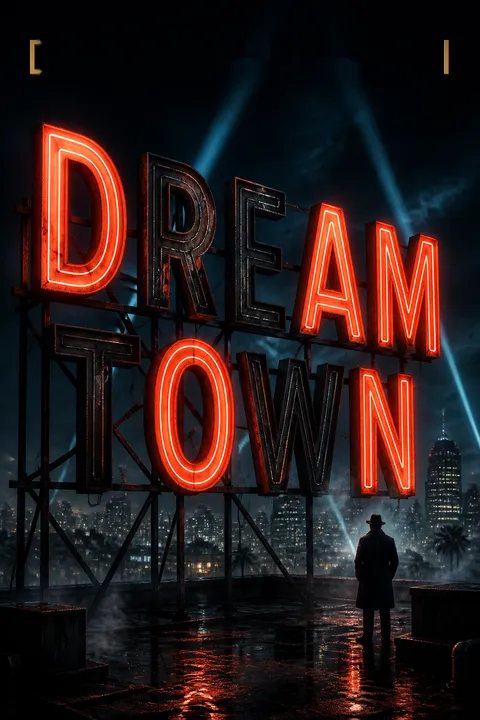


Plot Summary
A Screenwriter's Plea
On New Year's Eve, private detective Aloysius Archer drives from Bay Town to Hollywood to see Liberty Callahan, the actress and close friend whose ambitions have carried her away from him. Their affection is unmistakable, but neither names what it might become. At dinner, screenwriter Eleanor Lamb recognizes Callahan and asks Archer for help.
Lamb says anonymous callers have warned her, someone has left a bloody knife in her kitchen, and a dark car has watched her Malibu home. She refuses to involve the police, fearing trouble for her colleagues, and hires Archer instead. Her account is alarming, but her guarded manner makes him suspect she is concealing the reason anyone would target her.
The case begins inside a friendship that neither character knows how to define. Callahan's career gives her a route toward independence, while Archer's visit exposes how much he depends on her presence without admitting it. Lamb's request turns that intimate uncertainty into professional danger: Archer is not drawn in by a clean mystery but by a client whose fear and evasions arrive together. Her reluctance to contact police is a practical clue and a psychological one, suggesting that the threat may be entangled with the institutions or reputations she is trying to protect.
A Corpse at Las Flores
After the New Year's party, Archer calls Lamb's house and hears a man answer, though Lamb had presented herself as living alone. He drives to Malibu before dawn, finds the dark Ford she feared, and enters her house through an unlocked door. Inside, a blow knocks him unconscious beside a man shot through the head. The dead stranger is not Lamb.
Archer reports the body anonymously, then hides on the beach to avoid the arriving deputies. A boat lands nearby and men unload crates. When one spots Archer, a knife fight and gunfire send him sprinting to his car. He reaches Callahan's house bloodied, carrying the first clue that the murder and a smuggling operation may share the same night.
Archer's first visit makes the detective's body part of the evidence. He does not observe the crime from a safe distance: he is struck, disoriented, and forced to choose between reporting a killing and escaping men whose cargo is plainly illicit. The dead man's presence contradicts Lamb's claim that someone was threatening her, but does not yet prove she lied or killed him. Meanwhile, the beach shipment enlarges the case beyond one endangered screenwriter. The narrative makes uncertainty physical: Archer has to survive before he can interpret what he has seen.
The Missing Woman's Trail
Archer returns with the county sheriff's homicide detective Phil Oldham, who treats him as a possible suspect and insists Lamb may have killed the stranger. Archer notices there is no blood where the body was found, suggesting it was moved. Oldham has no identity for the victim and no sign of Lamb.
Sylvia Danforth, the elderly neighbor, confirms seeing Lamb drive home, then take a taxi that evening. At Green and Ransome Productions, Cecily Ransome says Lamb worked from home but had sounded normal. Archer searches Lamb's office and finds a Jade Lion Bar matchbook and a Wheeldex entry for Jonathan Brewster, linking her papers to Chinatown and an unexplained contact.
This section replaces the apparent simplicity of a missing-person case with competing accounts and absences. Oldham's suspicion of Archer reflects a police culture in which the investigator can become an obstacle or convenient suspect. Archer counters not with certainty but with material contradictions: blood should mark a close-range shooting, and a missing woman ordinarily leaves some trace of travel. Danforth's mundane observations become more valuable than the polished assurances of studio colleagues. Lamb's contact list and matchbooks suggest she was moving through a world she did not disclose, but the clues do not yet reveal whether she was victim, investigator, or participant.
Inside the Jade Lion
Following the matchbook and coded contact, Archer enters the Jade Lion, a Chinatown bar where customers drink potent baijiu and strangers are watched closely. He finds sandy crates behind a room divider and slips into a mirrored bedroom containing restraints, an empty vial with drug residue, and a concealed camera lens.
Nearby, he sees a platinum-blond actress bound to a bed while a man whips her; she is visibly drugged. Archer escapes after the scarred guards discover him, fighting the doorman and cutting his hand. He jumps into the actress's Rolls-Royce as it pulls away. In the car, she admits the Jade is a place she returns to for kicks, but keeps her identity and her connection to it hidden.
The Jade converts Hollywood's hidden economy into rooms, props, and surveillance. The mirrors and camera make private behavior into a commodity, while the drugged actress shows how fame can coexist with coercion rather than protect against it. Archer's decision not to interrupt the scene immediately is ethically uneasy: the woman's agency is compromised, yet a rescue attempt could expose them both to violence. His escape brings him information but not a name. The episode also shifts the meaning of Lamb's clues. The Jade is not simply a dangerous bar she may have visited; it is an organized system with customers, guards, and methods for controlling what people fear will be revealed.
Bonham Returns Alone
Archer learns that the dead man is Cedric Bender, an Anaheim private investigator, and that his Ford has vanished. He questions Lamb's college friend Alice Jacoby, who denies knowing the Jade, then discovers the Bonhams returned from France separately: Peter arrived first, and Bernadette is flying in.
At the airport, Bernadette claims she is headed home, but Archer follows her taxi to the Jade, where she meets the scarred man he saw there. A film poster helps Archer identify Lamb's coded contact, Jonathan Brewster, as the bar's violent operator, Darren Paley. Archer then travels to Las Vegas to question producer Bart Green, whose regular gambling and proximity to the Bonhams suggest that Hollywood money may be tied to the case.
The investigation begins to connect people through movement rather than confession. Bernadette's separate journey, her hesitation about Peter, and her visit to the Jade give Archer a stronger lead than her explanations do. The movie reference in Lamb's Wheeldex is a particularly apt code: Hollywood's own archive supplies a disguise for a real criminal identity. Yet the allusions do not make the truth transparent; they reward Archer's fluency in a town where images and names are routinely manufactured. The widening circle also exposes the cost of wealth. Private aircraft, international travel, and studio access create routes around ordinary scrutiny, but those routes leave records for a determined investigator.
The Sands Debt
In Las Vegas, Archer finds Green among young companions and learns that producer Simon Jacoby and director Danny Mars also gamble there. A casino employee describes Green's enormous markers and Jacoby's precarious debts, while Little Tony, a former enforcer, shadows Green.
Archer presses Green about Lamb and the Jade, then waits for more information from screenwriter Ross Chandler. Instead, Little Tony takes him to Paley, who confirms Archer has interfered with his business and wants to know who is diverting shipments.
Paley has Archer beaten unconscious and packed into a sack for burial. Willie Dash, alerted by Archer's call, follows with two local investigators and interrupts the execution. Archer leaves the desert alive, but Paley now knows he is investigating him.
The Vegas episode converts financial information into immediate bodily peril. Green's gambling debt is not colorful background; it is leverage that can bind respectable movie production to criminal enforcement. Paley's calm interrogation makes violence feel bureaucratic, a penalty administered once he decides the bill is due. Archer's survival depends partly on his judgment in calling Dash before the confrontation, a rare admission that self-reliance has limits. The rescue also changes the case's scale: Paley's network is not an isolated Chinatown operation but part of a wider system linking casinos, debt collection, and the men who transport illicit goods.
Samantha's Hidden Past
Archer tracks down the actress from the Jade and identifies her as Samantha Lourdes, an MGM star. At a private meeting, she tells him she married Paley as a teenager in Reno and escaped the marriage before he became a wartime enforcer.
He later found her in Hollywood and uses evidence of crimes she unwittingly assisted during their marriage to keep her returning to the Jade. Lourdes acknowledges that the club films its guests and that she has struggled with drugs, but she refuses to let the studio control her future.
She also identifies Bernadette Bonham as the woman Paley chose after their separation. Her testimony connects the glamorous actress, the criminal boss, and the Bonham household, while giving Archer a reason to protect her from further blackmail.
Lourdes complicates the usual opposition between victim and accomplice. She has made choices, including returning to the Jade, but Paley's leverage and the studio's appetite for her labor narrow the choices available to her. Her frankness gives Archer a human account of the system he had previously seen only through clues and violent rooms. The revelation of her teenage marriage also recasts Paley's power as something accumulated over years, not improvised in response to Archer. Her wish to leave the club is not a simple rescue narrative; she must reclaim control over her own career and body, while Archer must help without treating her as a possession to save.
The Truck's Second Route
Archer and Dash watch the Bonham property after Lourdes confirms that trucks deliver drugs to the Jade. A midnight truck stops at the house, where Peter Bonham opens a concealed bomb shelter. The men carry out crates and hooded, bound captives.
Archer photographs the transfer, then follows the truck with Dash. It leaves the coast, transfers the prisoners to another vehicle, and carries the crates to Los Angeles International Airport. There, airport security waves it through and the cargo is loaded onto Bart Green's Beechcraft by pilot Steve Everett.
Archer recognizes both plane and pilot from his Vegas trip. As they pursue the truck after the loading, gunmen ambush their car in an alley. Archer escapes, but Dash is shot and rushed into surgery.
The shipment provides the first direct evidence that criminal logistics depend on the respectable infrastructure of commerce. A bomb shelter meant to promise domestic safety becomes a warehouse for captives; an airport gate and a private plane convert local smuggling into long-distance distribution. The human cargo prevents the case from shrinking into a dispute over stolen profits. Dash's wound is the emotional price of Archer's pursuit, making his partnership less a tactical convenience than a relationship with consequences. The ambush also proves that evidence gathering is not neutral: the men who control the route are already willing to kill to preserve it.
A Script Becomes Evidence
While Dash recovers, Archer brings the shipment evidence to Ransome. She shows him an unpaid script Lamb left with her, a story about Chinatown, drugs, the mob, and a trafficking ring. Its detail suggests firsthand knowledge, and Lamb intended Ransome to direct it with Lourdes in the lead. Archer visits Green and learns that Mallory Green's money and influence are entangled with her husband's gambling life.
He also discovers that Alice Jacoby designed the Jade's rooms. When he confronts Alice, her bruised face and evasions reveal a troubled marriage and a deeper connection to the club. Meanwhile, Archer questions Gloria Mars, who admits Lamb once blackmailed her over her Communist past, using the money to buy her Malibu house.
Lamb's script is both evidence and a compromised artistic object. It transforms the criminal world into a story, but its accuracy raises the question of how the writer acquired knowledge and whether she planned to use it for justice or leverage. Ransome's interest in directing it and Lourdes's intended casting make creative ambition inseparable from the danger surrounding the material. The other women reveal different forms of dependence: Mallory protects a marriage that sustains her career, Alice hides the cost of her husband's gambling, and Gloria's inheritance cannot shield her from blackmail's emotional injury. The novel refuses to present Hollywood's women as a single type, even as the industry subjects them to related pressures.
The Name Nathaniel Sommers
Archer visits Bender's widow and finds no file for Mallory Green, despite her claim that Bender investigated her husband. The calendar and records are missing, but a fuel invoice for Green and Ransome's plane remains hidden behind the safe.
Archer later speaks with Eleanor's mother in Washington. She explains that Eleanor married diplomat Nathaniel Sommers in France; he abandoned her in South America, leaving a letter admitting he intended to disappear. Archer recognizes the description as Peter Bonham.
The revelation explains why Lamb moved to Malibu and why she had leverage over Bonham: his later marriage to Bernadette was never valid. Bender's bank records also show payments from a company whose initials point to Paley, suggesting the dead detective had been working for the Jade's owner.
The concealed marriage gives Lamb's financial independence and Malibu address a history that predates the case. Her move was not a random retreat from Los Angeles but a return to the man who abandoned her, now living under another name. The same evidence complicates sympathy: Sommers's betrayal may explain Lamb's grievance, but it cannot excuse her using other people as instruments. Bender's missing file introduces another moral ambiguity. The dead investigator appears to have accepted a lucrative assignment from a dangerous client, perhaps under financial pressure. Here, the mystery's central question shifts from who had a motive to how each person converted a legitimate wound or need into permission to harm others.
The Shelter's Dead Secret
Archer returns to the Bonham property after seeing Bernadette leave in the Bentley and finds the padlocked shelter beneath the artificial lawn. Inside are filthy bedding, chains, chloroform, and messages scratched by captive people. A dead man lies under blankets: Peter Bonham, killed by a knife to the chest. Archer infers that Paley and Bernadette have escaped together after Paley punished Bonham for diverting drugs.
He calls Oldham with the location, photographs, heroin analysis, and directions to raid the Jade, then heads for Reno. His theory is that Paley is moving the operation north through Mallory Green's Tahoe property. A surveillance team confirms that trucks are delivering crates to her chalet, setting Archer on a final trail.
The shelter makes the novel's metaphor of hidden lives literal. Its residents have been kept beneath a polished lawn in a place designed to reassure its owner against catastrophe. The scratched pleas break through the shelter's intended function: this is not protection from danger but the machinery of danger itself. Bonham's body joins the clues to a consequence, though the identity of his killer is still an inference at this point. Archer's decision to alert Oldham and continue toward Reno shows a shift from private pursuit to coordinated accountability. He no longer seeks only the missing woman; he is trying to expose an infrastructure that treats human beings as cargo.
The Lake Tahoe Trap
At Mallory Green's Lake Tahoe chalet, Archer finds pilot Steve Everett's body hidden in a Packard trunk and a locked chest of heroin inside the house. He breaks in and draws Mallory out by smashing a ceramic plate. Before he can question her, Paley and Little Tony arrive with Bernadette, who has joined them by boat. They seize Archer and Mallory at gunpoint.
Paley explains that Bender's report exposed Green as the partner siphoning his shipments; he also reveals that Bonham killed Bender and that Paley killed Bonham in retaliation. Archer realizes Mallory had arranged the trafficking operation and that Lamb is also present in the chalet. With both women and the criminals in one room, he has to act before Paley can move them again.
The chalet gathers the case's scattered systems into one confined space: the private plane, the drug supply, the dead pilot, the indebted producer, and Paley's enforcement crew. Mallory's role challenges the assumption that Bart's debts made him the central operator; her business competence has enabled the criminal enterprise rather than merely cushioned its costs. Paley's account of Bender and Bonham clarifies the violence but does not make him an impartial judge. His own idea of fairness is just another instrument of control. Archer's realization about Lamb arrives under immediate threat, where analysis and action can no longer be separated.
The Runway Showdown
Archer's concealed walkie-talkie brings help close enough to interrupt Paley's execution plan. Little Tony is shot and killed in the exchange; Mallory is wounded, and Paley escapes through a window with Bernadette toward the boat. Upstairs, Eleanor Lamb fires at Archer, who wounds her hand and takes her weapon.
Archer then steals Mallory's Packard and races toward the private airstrip, where Paley has started Green's Beechcraft. Running directly at the plane, Archer shoots its propeller and a tire. The damaged aircraft lurches back onto the runway and breaks apart. Archer drags the injured Paley from the cockpit. Bernadette has gone into the freezing lake, where Paley left her, and can no longer escape with him.
The climax tests Archer's restraint as much as his marksmanship. He refuses to shoot Bernadette in the back even though she is escaping alongside Paley, then pursues the plane knowing that an armed man is trying to take off in it. His intervention destroys the vehicle rather than killing its occupants outright, leaving Paley alive to face legal consequences. Lamb's sudden attack confirms that her earlier helplessness was a performance, but Archer still treats her as a prisoner rather than an execution target. The scene's violence is not a clean triumph: several people are injured or dead, and rescue arrives through a chain of risk rather than moral purity.
A New Office in Los Angeles
The sheriff's department and LAPD raid the Jade Lion, finding heroin, trafficked workers, and prominent guests trapped in compromising, drug-fueled rooms. Investigators recover Bonham's body and arrest the surviving conspirators.
Alice Jacoby's role in designing the club and helping Lamb comes to light, costing her her Warner Brothers position. Lamb and Mallory face prosecution, while Ransome leaves Green's company to build her own. Callahan, frightened by Archer's near-death encounters, chooses the steadier company of producer Harold Stevens and tells Archer she cannot keep living with the possibility that he will not return.
Archer does not ask her to wait. He accepts Ransome's payment, opens an independent Los Angeles detective office in Jake Nichols's building, and begins a life that is no longer borrowed from Willie Dash's agency.
The resolution separates institutional justice from private repair. The Jade raid interrupts the operation and frees its captives, but it cannot restore the years or choices the criminal network consumed. The Hollywood guests' exposure also shows how status can conceal complicity until evidence threatens the industry's public image. Archer's parting from Callahan is not a failure of affection; he understands that his dangerous work makes love feel like perpetual waiting. By opening his own office, he accepts the loneliness and responsibility of an independent life. The ending does not promise safety. It frames adulthood as choosing a risk one can own, rather than mistaking protection for fulfillment.
Analysis
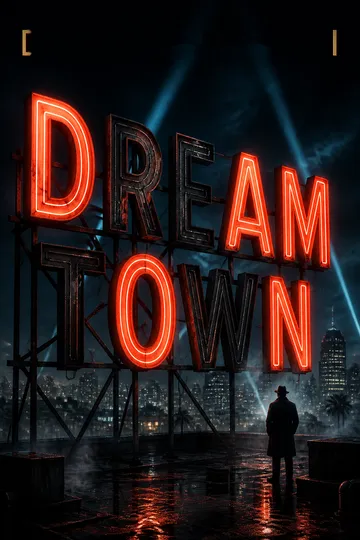
Dream Town treats Hollywood less as a backdrop than as a machine for managing appearances. Its studios manufacture identities, its stars perform versions of themselves, and its wealthy patrons use private planes, money, and reputation to move beyond ordinary scrutiny. The Jade Lion is the criminal mirror of that system: it stages intimate behavior, records it, and sells the resulting shame as leverage. The novel's sharpest structural move is to make the same instruments serve both deception and discovery. A movie reference conceals Paley's identity, a camera turns privacy into a weapon, and a flight log meant for routine travel helps Archer reconstruct a smuggling route.
The women in the story are not merely victims of a male industry, though the industry undeniably narrows their choices. Callahan wants a career without surrendering her future to a man; Lourdes has built financial independence but remains exposed to blackmail; Mallory converts professional exclusion into ruthless self-protection; Alice wants a more adventurous artistic life and takes a dangerous shortcut toward it; Lamb turns old abandonment into a rationale for manipulating others. Their different strategies prevent the book's critique of sexism from becoming a simple moral exemption. Constraint explains conduct, but does not absolve harm.
Archer's ethical center is similarly practical rather than spotless. He trespasses, lies to police, and sometimes acts on incomplete evidence, yet his most important decisions are refusals: he will not shoot Bernadette in the back, will not force Callahan to share his danger, and will not confuse rescue with ownership. Dash and Nichols teach him that survival depends on other people, while the investigation tests whether he can accept that dependence without surrendering responsibility. His new office marks a choice to live in uncertainty, not a promise that justice will be clean or complete. The case ends with a criminal network disrupted, but the book leaves its deeper victory in Archer's willingness to build a life that is neither safe by denial nor empty by habit.
Review Summary
Dream Town receives mostly positive reviews, praised for its vivid 1950s Hollywood setting and noir atmosphere. Readers enjoy Aloysius Archer's character development and the intricate plot involving murder, mystery, and Hollywood's dark underbelly. Some criticize the large cast of characters and convoluted storylines. The book is noted for its historical accuracy and engaging writing style, though a few find it less compelling than previous entries. Overall, fans of hardboiled detective fiction and Baldacci's work find it an entertaining read, with some considering it the best in the series so far.
People Also Read







Characters
Aloysius Archer
War-scarred private eyeA former soldier and ex-convict, Archer works as a private detective for Willie Dash before the case draws him deeper into Los Angeles. He is observant, physically capable, and suspicious of official power, especially when police or wealthy clients expect him to accept convenient explanations. His instincts are useful but not infallible; he can mistake confidence for certainty and must learn when to ask for help. Archer's dry humor protects a more earnest impulse to keep people alive, even when the work offers little money or thanks. His attachment to Liberty Callahan tests whether he can build a life around someone rather than only around the next case.
Liberty Callahan
Hollywood-bound actressCallahan is an ambitious actress and Archer's closest friend, with a vivid presence that lets her work a room without surrendering her independence. She has fought for steady roles in a business that prizes youth and often makes women's advancement contingent on men's approval. Her affection for Archer is sincere, but she does not mistake love for a reason to abandon her career or accept an arrangement that leaves her waiting in fear. Callahan understands the costs of Hollywood more clearly than Archer sometimes does, and her mixture of humor, confidence, and private uncertainty makes her ambition feel earned rather than shallow.
Eleanor Lamb
Screenwriter with secretsLamb is a highly capable screenwriter with a political education, diplomatic family background, and an unusually private life. She presents herself as a frightened woman asking for protection, but her carefully managed appearance and selective disclosures hint that she is accustomed to controlling what others know. Her intelligence makes her valuable to the studios and dangerous in personal dealings; she knows how to turn information into leverage. Lamb's history of abandonment complicates her appetite for control, but does not erase the damage she can inflict on people who trust her. She is both a creator of stories and someone who reshapes her own past to serve her purposes.
Cecily Ransome
Independent film directorRansome is a young writer and director whose films challenge the polished formulas that dominate Hollywood. She values emotional truth and difficult subjects, and her creative partnership with the established producer Bart Green gives her room to make ambitious work. Her confidence in her artistic vision does not mean she is immune to personal blind spots; she can underestimate the danger attached to the material she wants to film. Ransome's attachment to Lamb and her willingness to build a new company reveal both loyalty and a desire to control her own creative future. She represents a changing industry without being untouched by its power structures.
Mallory Green
Producer behind the polishMallory Green is an accomplished documentary producer whose public identity is often eclipsed by her husband's more commercial Hollywood career. Intelligent, disciplined, and acutely aware of the limits imposed on women, she has learned to protect her position through money, strategy, and careful management of appearances. Her marriage is less a refuge than a structure she believes she cannot safely leave without losing professional standing. Mallory's pride in her work coexists with resentment at the compromises surrounding it. She is not simply a neglected spouse or a formidable executive; her sense of agency is real, but it can be used to rationalize choices that harm others.
Darren Paley
Scarred criminal operatorPaley is a disciplined, violent criminal with wartime experience, mob connections, and a talent for making fear serve business. He keeps himself sober and alert, treating control as a necessity rather than a virtue. His personal code includes taking what he considers earned punishment, but that language of fairness only disguises his power to decide who deserves pain. Paley understands how fame, debt, shame, and drugs can bind people more tightly than a locked door. He is not reckless in the ordinary sense; his confidence comes from planning, intimidation, and an assumption that most institutions will choose convenience over confronting him.
Bernadette Bonham
French expatriate in MalibuBernadette is elegant, perceptive, and accustomed to moving between French and American social worlds. She presents herself as a wealthy wife with little interest in her husband's business, but her manner grows cautious when Archer asks about his return from France and his ties to Chinatown. Her past connection to Eleanor and Paley places her within a network she would prefer to describe as personal rather than criminal. Bernadette values comfort and loyalty, yet she also reads power quickly and knows when silence is safer than explanation. Her cultivated sophistication should not be confused with innocence or lack of judgment.
Peter Bonham
Malibu businessmanBonham is a wealthy, guarded businessman whose elaborate Malibu home reflects a cultivated taste for old European settings. He travels internationally and maintains a private world that even his neighbors do not fully understand. His imposing manner and evasive answers make him difficult to read, while his interest in protecting business arrangements suggests a man who keeps personal and professional lives carefully compartmentalized. Bonham's relationships are shaped by secrecy and control. He wants others to accept the version of his past he presents, and his confidence in his own ability to manage information can make him careless about the people whose lives are affected.
Willie Dash
Archer's mentor and partnerDash runs the Very Private Investigations agency in Bay Town and has trained Archer through years of difficult cases. A former federal agent with a sharp mind and an instinct for operational risk, he combines blunt advice with genuine loyalty. Dash is wary of Archer's tendency to move ahead before the evidence is secure, but he trusts the young detective's judgment enough to stand beside him when danger escalates. His past encounters with violence have not made him cynical about responsibility. Dash believes a good investigator must consider how personal decisions affect partners, clients, and anyone else drawn into the work.
Gloria Mars
Wealthy Hollywood strategistGloria is a wealthy, sharp-tongued woman married to director Danny Mars. She understands Hollywood's sexual and financial bargains and speaks candidly about the men who exploit them. Her inherited fortune gives her independence, but her marriage still carries emotional costs and public calculations. Gloria's confidence can look like cruelty, especially when she treats affection as a game she has already learned to survive. Beneath the swagger, she has a capacity for loyalty and grief that emerges when her past relationship with Lamb is discussed.
Alice Jacoby
Warner Brothers set designerJacoby is a talented set designer who rose from a poor West Virginia childhood into Hollywood's affluent circles. Her work creates graceful rooms and lavish environments, while her own life is less secure than those sets suggest. She is married to Simon Jacoby, whose gambling and drinking trouble their household, and she has long hoped to work with Cecily Ransome. Alice's desire for a more daring artistic life competes with her longing for status and stability. She understands how reinvention can open doors, but also how easily a carefully built identity becomes a hiding place.
Samantha Lourdes
MGM's platinum-blond starLourdes is a successful MGM actress whose glamorous screen identity conceals a poor farm upbringing and a difficult early marriage. She is practical about money and has invested in businesses so her future will not depend entirely on studio favor. She knows the difference between the persona a camera sells and the woman who has to live with its consequences. Her experience gives Archer a clearer view of the Jade's blackmail system, but she does not simply wait for him to solve her problems. Lourdes wants control over her work and a life beyond the studio's appetite.
Danny Mars
Old-school film directorMars is a veteran director with a long Hollywood career, close ties to Bart Green, and a taste for conventional spectacle. His confidence masks insecurity about his origins and his place among more successful producers. He is also a compulsive gambler and a serially unfaithful husband, placing strain on his marriage to Gloria. Mars is not particularly introspective, but he understands the value of an opportunity and resents being treated as a lesser talent. His career depends on the old studio network even as changing tastes threaten to make that network less reliable.
Sam Malloy
Retired LAPD detectiveMalloy is Cecily Ransome's granduncle and a retired Los Angeles police detective who remembers the department's corrupt past firsthand. Age and illness have narrowed his daily life, but his judgment remains keen and his affection for Ransome steady. He takes pride in having resisted the corruption around him, though he admits that conventional expectations still shape his private opinions. Malloy offers Archer institutional context without pretending that a former badge makes him omniscient. His loyalty to his grandniece is protective but not blind.
Jake Nichols
Crippled former investigatorNichols is a former investigator who now owns and runs a Los Angeles bar after gunfire left him unable to walk. He understands the Jade's criminal history and has a personal stake in the men who run it. His humor and frankness keep self-pity at bay, though he does not pretend that living with pain is easy. Nichols values loyalty among investigators and respects Archer for continuing work that can carry real consequences. He is one of the few people who can connect the old criminal networks to the present without romanticizing either.
Phil Oldham
County homicide detectiveOldham is a blunt county homicide detective assigned to the body found at Lamb's home. He has a reputation for fair play, but his position inside law enforcement leaves him exposed to pressure and shifting priorities. His exchanges with Archer move between hostility and reluctant cooperation. Oldham is practical rather than idealistic, and his judgment changes as the investigation reveals how much of the case exceeds a single murder. He represents the ordinary investigator trying to work within institutions that may not want every truth uncovered.
Plot Devices
Lamb's coded Wheeldex
A contact disguised as fictionLamb's address book contains an entry for Jonathan Brewster, a name connected to a film character, with the Jade Lion written beneath it. The literary reference gives Archer a path into Chinatown while concealing the contact from anyone who does not recognize the allusion. The device fits the book's Hollywood setting, where fictional names and manufactured identities are ordinary tools. It also reflects Lamb's own method of controlling information: she leaves a clue that can be read, but only by someone able to connect cinema, her private notes, and the dangerous man she has met. The code advances the investigation without making its answer immediately obvious.
The Jade's hidden cameras
Shame turned into leverageThe Jade Lion's mirrored rooms are fitted with concealed cameras that record guests in compromising situations. The images let the operators pressure actors and other clients into returning, recruiting others, or remaining silent. This device makes the club more than a setting for vice: it is an information business that converts privacy into a weapon. The rooms' theatrical design mirrors Hollywood's own production machinery, but here the recorded performance is used to control the performer. The camera also provides a motif for Archer's work, since he must distinguish what people choose to show from what the evidence reveals. Its threat reaches beyond the club into careers, marriages, and public reputations.
The Malibu bomb shelter
A refuge turned prisonBeneath the Bonhams' lawn, an underground shelter is disguised by artificial grass and locked from above. Its intended promise of protection is corrupted: the space holds drugs and trafficked people whose restraints, chloroform, and scratched messages expose the reality of their captivity. The shelter connects the domestic surface of Malibu wealth to the hidden labor and violence sustaining it. Its location also makes the plot's contrast between appearance and reality physical, since neighbors and visitors can stand over the captives without knowing they are there. When Archer finds it, the device turns rumor into direct evidence and changes the scale of the investigation.
The Beechcraft flight log
A private route leaves recordsThe Green family's Beechcraft seems to be an extension of Bart Green's wealth and convenience, carrying him between Los Angeles and Las Vegas. Its pilot and passenger log quietly records who has traveled with him, while a fuel invoice hidden in Cedric Bender's safe points Archer back to the aircraft. The plane becomes a method of moving people and contraband beyond ordinary scrutiny, but its paperwork creates an evidentiary trail. Archer first uses the log to identify regular associates, then recognizes the plane during the shipment's airport transfer. The device links private privilege to public infrastructure and shows that secrecy often depends on someone else keeping the records.
Bender's false paper trail
A planted client conceals the truthThe missing records in Cedric Bender's office initially support Mallory Green's claim that he had investigated her husband's affairs. But the absent client file, missing calendar, unusual payments, and surviving fuel invoice suggest the apparent burglary was staged to misdirect Archer. Bender was hired through an alias connected to Paley, not by Mallory, and his assignment concerned the diversion of drug shipments. The false account turns the investigation into a test of whether Archer trusts a client's polished story over inconsistent evidence. It also shows that a detective's files can be both a tool of accountability and a target for anyone trying to control what becomes known.
Archer Series Series
About the Author
Other books by David Baldacci









Download PDF
Download EPUB
.epub digital book format is ideal for reading ebooks on phones, tablets, and e-readers.








