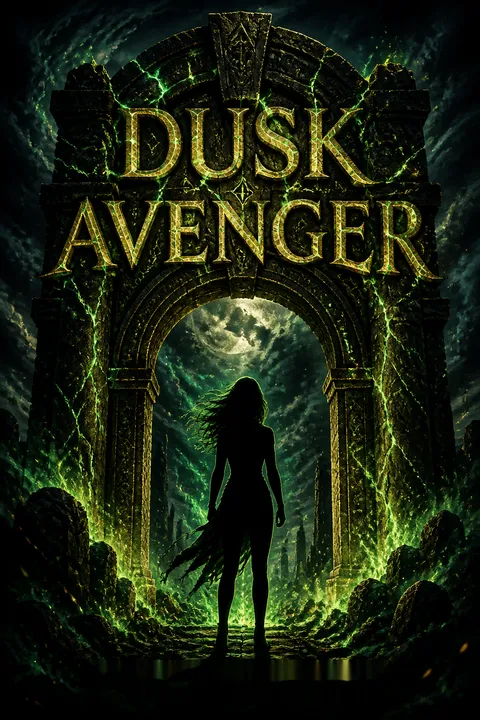


Plot Summary
The Road to Chicago
After a battle with the Company of Light, unicorn shifter Gisele and her companions return to the shadow realm to recover, leaving Sorsha and her allies their glittering, magically disguised RV.
Their next stop is Chicago, where the Company is holding Snap, the gentle devourer who left the group after fearing Sorsha could not accept his monstrous nature. Omen, a powerful hellhound shifter, leads the rescue mission with Ruse the incubus, Thorn the winged warrior, and Pickle, Sorsha's small dragon.
Sorsha has recently awakened a power no ordinary human should possess. Missing Snap and imagining his torture, she summons a surge of fire so fierce that it burns her fingers. The rescue has become personal, and her own new strength is already frightening her.
The story begins with two forms of vulnerability pulling in opposite directions. Snap is physically captive because he withdrew from intimacy, while Sorsha fears that her anger may turn her newly discovered power against people she loves. Her instinct is to convert guilt into action: if she can reach Chicago quickly enough, she can repair the rupture with Snap. The fire on her fingertips complicates that impulse. It is not simply a weapon waiting for a target, but an emotional force whose cost and limits she does not understand. The rescue quest therefore starts as both an external mission and a test of whether Sorsha can protect others without becoming another source of danger.
The Basilisk's Warning
In Chicago, Omen asks Talon, the local shadowkind syndicate leader, for information about the Company. Talon refuses to join the fight, insisting that the organization has not threatened his own interests, but his people identify the Company’s base: a shoe museum concealing laboratories and captive shadowkind.
Before the group leaves, Talon recognizes the fire building inside Sorsha and warns that it may consume her if she lets it loose. At a deserted strip mall, she tests her power by burning rubbish and melting a can, then feels the heat blister her back. She argues that the museum should be entered through Ruse’s ability to charm guards, not by setting the building alight. Thorn supports her plan, and Omen reluctantly agrees to try it.
Sorsha's proposal marks an important change in how the group defines competence. Omen assumes overwhelming force is reliable, but Sorsha sees that her power is becoming less predictable precisely as it grows. Her caution is not cowardice: it is an ethical judgment about collateral damage, grounded in her awareness that ordinary people may be caught in the fight. Ruse's social influence offers a route that uses their differences as resources rather than treating every problem as a battlefield. Talon's refusal supplies a counterexample to solidarity, showing how self-protection can masquerade as neutrality. His warning also gives Sorsha a credible reason to distrust her own power before its consequences escalate.
A Birthday Goes Up
Ruse charms the museum guards one at a time, learning that an inspection is expected and arranging for the group to enter during public hours. When he discovers that it is Sorsha's birthday, he takes her and the others to dinner, karaoke, and an eighties dance night.
The celebration briefly lets Sorsha remember Luna, the fae guardian who raised her, without being consumed by grief. Then a flare of Sorsha's power sets two nearby dancers' clothes on fire.
Omen pulls her into an alley, where he sees the burns on her arms and stops treating her fear as an excuse. He agrees that Ruse should lead the museum approach and that Sorsha need not use her flames. Their argument ends in a fierce, unexpected kiss, which Omen immediately tries to dismiss.
The birthday sequence places pleasure beside danger rather than treating them as separate phases of the plot. Ruse gives Sorsha a rare experience of being cared for, and the music connects that present joy to the childhood Luna created for her. The fire interrupts not because Sorsha chooses violence, but because her emotions can become action before she understands them. Omen's response shifts when he sees physical evidence of her pain. His concern emerges through restraint, not tenderness freely spoken, so the kiss becomes an unstable breach in his self-control. Sorsha's desire for connection and her fear of harming others now occupy the same emotional space.
The Shoe Museum Break-in
Ruse's charm gets the group through the museum's public galleries and past several guards, but two uncharmed men discover them near the inner laboratory. Thorn disables the attackers while Sorsha uses her fire to warp open the cages.
Snap's cell opens unexpectedly, and he emerges alive, yet he does not recognize Sorsha or his companions. The group frees the other imprisoned creatures while Omen discovers a world map marking Company facilities across the United States and Europe.
As reinforcements flood the museum, Sorsha burns through the attackers' ranks, narrowly redirecting a fireball away from a stranded child. The group escapes in the RV with Snap, but their reunion offers no immediate comfort: the devourer remembers neither their bond nor the months he spent fighting beside them.
The rescue succeeds materially and fails emotionally. Snap is out of his cage, but the person Sorsha hoped to recover is inaccessible even while standing beside her. That split makes captivity more than a matter of walls and restraints: memory and identity can also be damaged. The museum's map enlarges the conflict from a local rescue to a transnational campaign, while the battle tests Sorsha's restraint under pressure. Her near-miss with the child distinguishes her from the Company without making her harmless. She has to reckon with the fact that righteous motives do not guarantee safe actions, especially when her power answers emotion faster than judgment.
The Mark Beneath Skin
The group tries familiar foods and objects to help Snap recover his memories, but nothing reaches him. They also meet Antic, an imp rescued from a cage, who joins them despite Omen's doubts about her usefulness. During the drive toward Austin, Company mercenaries attack the party in a hotel suite. Sorsha escapes down the building's balconies while the others fight their way out, and everyone reaches the RV alive.
Omen then detects a tracking mark etched into Snap's bone, explaining how the Company followed them. Snap offers to leave for the shadow realm to keep the others safe, but Sorsha insists they remove the mark. Thorn cuts it from the bone while she holds Snap's hand. The tracker is gone, though Snap's memories remain buried.
The hotel attack turns Snap's memory loss into an active threat to the whole group. He is not responsible for the mark, yet his instinct is to take responsibility for the danger and disappear. Sorsha counters that self-erasure with practical solidarity: they will confront the injury together rather than let the Company make him a hazard in his own eyes. Her support does not restore their former intimacy, which keeps care from becoming a simple cure. Antic's presence similarly complicates the team's idea of usefulness. She is inexperienced and erratic, but her rescue creates an obligation to make room for imperfect allies rather than demand that every helper arrive battle-ready.
Omen's Old Guilt
As the group travels toward Austin, Omen explains that he once provoked mortals for amusement alongside Tempest, a sphinx whose appetite for chaos exceeded even his own. After mortals retaliated against his mischief, they killed a gathering of lesser shadowkind instead of finding him.
Omen has spent centuries trying to prevent his recklessness from causing further deaths, which helps explain his rigid discipline and contempt for careless power. Ruse later tries to jolt Snap's memory by pretending Sorsha has been captured, but the trick only frightens Snap and angers her.
The failed attempt prompts Ruse to recognize that his feelings for Sorsha are deeper than he has admitted. At a river, Sorsha tells Snap she loves him, and the name he once gave her brings his buried memories rushing back.
Omen's account reframes severity as a moral defense against repeating harm, not merely a preference for command. His guilt is real, but so is its cost: he can mistake emotional distance for responsibility and control for repair. Ruse's failed deception shows another version of that mistake. Trying to force memory through panic, he treats Snap's distress as a tool, then recognizes the damage when Sorsha objects. Snap's return begins not with a clue or magical trigger but with Sorsha accepting his frightening self without qualification. Her declaration gives him a route back to identity through trust, not through denial of what he has done.
Austin's Missing Family
In Austin, Sorsha contacts the local Shadowkind Defense Fund to learn about her childhood. Klaus, a longtime member, remembers her father, Philip Woodsen, as a bookish man who left the Fund years ago; he recalls a red-haired woman with him but knows nothing about their fate.
Sorsha searches public records and finds no clear birth entry, leaving her past unresolved. Antic then leads the group to a gnome who remembers old inquiries about a dangerous shadowkind called Ruby. A fae named Daisy recalls Luna and directs them to Gloam, an elf who lived near the river.
In the sewers, Gloam says Luna knew Philip and his shadowkind partner, Ember, and that she helped them seek a way to have a child. Sorsha recognizes that her own unusual nature may be connected to that impossible effort.
The search for Sorsha's origins advances through incomplete witnesses, each holding one fragment rather than a definitive account. Klaus can identify Philip but not the danger surrounding him; Gloam knows Luna's private connections but cannot explain what they achieved. This piecemeal structure makes memory a social resource, preserved unevenly by people who were never told the whole story. Sorsha's investigation also tests her relationship with human institutions. The Fund can offer information, but its members are cautious and not automatically brave. The possible link between her birth and the name Ruby transforms a personal question into a threat that may involve the ancient shadowkind themselves.
Snap Comes Back
Alone with Sorsha by the river, Snap admits he hates seeing her upset, even though he cannot understand their former relationship. She stops treating his lost memories as something he must fix and tells him that she loves him as he is, including his devourer nature. Snap remembers the guilt that drove him to seek help from the Company after he consumed a man's soul and feared his own hunger.
He had tried to escape both the memory and the torture by retreating into himself, losing months of experience. Sorsha insists that his restraint matters more than the terrible impulse he once felt. When she asks him to show his monstrous form, she welcomes him without flinching. Snap remembers their love, and they reunite.
Snap's return depends on Sorsha making room for the part of him he considered unforgivable. She neither denies the suffering of his victim nor reduces Snap to that act. Instead, she distinguishes desire from choice and points to the fact that he did not act on his worst impulse toward her. This is a more demanding form of acceptance than reassurance, because it asks him to remain accountable without self-annihilation. The scene also repairs the original wound between them: Sorsha's first reaction to his devourer form had frightened him, but her present response demonstrates that fear did not define her love. Memory returns through relational safety rather than force.
The Highest Refuse Help
Omen visits the Highest, the ancient shadowkind who can command him through an old obligation, hoping they will help stop the Company. They dismiss the threat to shadowkind living among mortals and refuse to intervene.
When Omen asks about Ruby, they reveal that they once searched for this being and warn him not to approach if he finds her. Back in Austin, Antic locates a night elf named Gloam, who joins the mission after the sun sets. The Fund members initially hesitate, but Sorsha persuades them to consider helping in San Francisco.
During a training session, she learns to direct her fire more safely by calming herself before each use. Then her old Fund branch refuses to assist, and the Austin group falters too, leaving Klaus as Sorsha's only dependable human ally.
The Highest expose a political order that regulates shadowkind when their behavior inconveniences the powerful, yet refuses protection when ordinary members face organized extermination. Their refusal confirms that Sorsha and her companions cannot rely on inherited authority to solve the crisis. The warning about Ruby is more ominous than informative, because it frames the unknown figure as a danger before establishing what she has done. Sorsha's effort to enlist the Fund shows that cooperation is possible but fragile: fear and reputational judgment can undo a commitment quickly. Her fire training offers a counterpoint. Control grows not through suppression but through deliberate attention to emotion, a skill she can practice even when institutions fail her.
The Winged Warrior
As the RV approaches San Francisco, Omen disappears during a stop, and Thorn cannot find him. The group continues because stopping would risk losing their chance to confront the Company. Sensing another winged being nearby, Thorn finally reveals his full form to his companions and seeks out Flint, a solitary survivor of his kind.
Flint is burdened by the old wars and doubts that another conflict can end differently, but Thorn persuades him that resisting the Company could save lives. In San Francisco, Klaus reports that the other Austin Fund members have withdrawn after hearing troubling accounts of Sorsha's methods.
He still plans to help on his own. With Omen absent and human support reduced, Sorsha takes responsibility for planning the operation and proposes a way to dismantle the Company through its leadership rather than another bloody raid.
Omen's disappearance removes the group's central authority at the moment its resources are thinning, forcing Sorsha to lead rather than merely challenge a leader. Thorn's disclosure is another response to that vacuum. He has kept his identity private because his kind carries a history of catastrophic violence, but the immediate need for help outweighs the safety of concealment. Flint's recruitment turns their shared history of war toward a different question: whether survival can be measured by lives saved rather than battles won. Sorsha's plan reflects that shift. She does not imagine violence can be eliminated, but she seeks a lever that can interrupt the institution producing it.
The Boss's Hidden Heart
Sorsha's team creates a distraction near a rift, drawing Company hunters out into the open. Ruse charms one of them, and the group follows a chain of contacts until they locate Isaac, the secretive head of the Company's North American operations.
His penthouse is protected by silver and iron, and its empty, brightly lit lower floor blocks shadowkind from slipping through. When Sorsha's allies charm a guard assigned to Isaac, he can offer no way to draw his boss outside.
Snap examines objects taken from Isaac's rubbish and senses his grief for Carmen, a woman he loved and believed a shadowkind had killed. Snap identifies a ring matching the one Isaac gave her. Sorsha uses that memory to build a false story that Carmen survived, giving Isaac a reason to leave his protected home.
The operation advances because the team stops treating the Company hierarchy as an abstract enemy and studies the private grief of the man who commands it. Snap's ability to read impressions from objects turns discarded packaging into a route through Isaac's emotional defenses. Sorsha then converts that knowledge into a deliberate deception, one that exploits his longing rather than his hatred. The tactic is ethically compromised, but it aims to interrupt a system whose violence is otherwise difficult to reach. Their plan also depends on cooperation across different kinds of skill: Antic draws hunters out, Ruse recruits insiders, Snap interprets traces, and Sorsha translates the discoveries into action.
The Penthouse Bait
Before approaching Isaac, Sorsha disguises herself with a dark wig and prepares the ring Snap identified. The plan requires Ruse to act at exactly the right moment, but their signal cannot rely on words while Isaac is watching her.
Sorsha removes her protective badge and asks Ruse to read her emotions, trusting him with access she had once withheld. Ruse tells her he loves her, and she returns the feeling before they set out. At dawn, Sorsha poses as a courier and gives Isaac a message linking her to Carmen.
She claims the woman survived and needs him nearby. Isaac, desperate to believe her, leaves his penthouse despite its protections. Sorsha keeps her fire controlled long enough to lead him into an alley, where Ruse, Snap, Thorn, and Flint are waiting to disarm him.
Sorsha's consent to Ruse's mind-reading ability is a relationship turning point and a tactical choice at once. Her trust is not a passive surrender: she names the boundary, gives permission for a specific purpose, and uses intimacy to make coordinated action possible. Ruse's confession answers that trust with emotional honesty rather than charm, revealing how far he has moved beyond his expected role as a seducer. The deception of Isaac echoes this difference. The group manipulates him, but they do so by understanding the human attachment that his ideology has buried. The scene places intimacy and strategy on the same ground, while leaving open the moral risks of using either as leverage.
The Company Turns Inward
Isaac fights when Sorsha's allies surround him, but she burns through the silver-and-iron protection sewn into his jacket without losing control of her fire. Ruse then charms him, persuading him that the Company has been manipulated into sustaining the threat it claims to fight.
Flint reinforces the story by making Isaac experience a vivid vision of the destruction the Company could cause. Shaken, Isaac agrees to contact his superior in Europe, where the organization's wider command operates.
The group sees this as their chance to persuade the top leader to erase the Company's records and dissolve its branches from within. Sorsha and her companions celebrate, believing they have found a way to end the organization without fighting every cell. Their apparent victory lasts only until Omen returns.
The apparent climax reverses the Company's own logic: instead of defeating each armed branch, the group tries to make its command structure dismantle itself. Sorsha's controlled fire removes Isaac's protection, but persuasion and illusion do the decisive work. The strategy is deliberately theatrical. Ruse gives Isaac a narrative that speaks to his desire to protect people, while Flint makes that narrative feel witnessed. Yet the plan rests on a manufactured explanation, which makes its success unstable. The group's celebration is understandable, but the speed of their triumph leaves little room to test whether Isaac's conversion will endure or whether the person above him can be reached. The victory is therefore real only as an opening.
Ruby and Tempest
During the victory celebration, Omen returns after being summoned by the Highest and demands to see the note in Sorsha's keepsake box. He breaks the glamour hiding the name her parents wrote: Ruby.
Omen explains that the Highest hunted a child born from a mortal and shadowkind union, believing such a being could destroy both realms. He says their warriors killed the child's parents and that Luna escaped with the child. Before the group can absorb the revelation, a call comes from Tempest, Omen's supposedly dead sphinx associate.
She claims she has been directing the Company and has stopped Isaac from dismantling it. Omen tells Sorsha that her danger must be handled first, then punches her unconscious. The book ends before she wakes or the group can decide what to do.
The ending makes two explanations collapse into one another. Sorsha's obscured identity is not merely a private mystery, and the Company is not simply the independent human threat the group believed it to be. The Highest's fear gives her existence a political meaning before she has chosen what to do with her power; Tempest's revelation then shows that the enemy's apparent structure has been shaped by a shadowkind agent. Omen's attack is the most disturbing consequence because it converts his protective authority into physical control at the exact moment Sorsha needs agency. The cliffhanger refuses easy reassurance: both the world-ending fear and the personal betrayal remain unresolved.
Analysis
Dusk Avenger turns a rescue mission into a struggle over who gets to define monstrosity. The Company calls shadowkind threats and builds laboratories, cages, and weapons around that belief. Yet the shadowkind are not innocent by nature, and the novel does not make Sorsha's fire morally pure simply because she directs it against persecutors. She fears the harm she might cause, nearly strikes a child, and has to practice control before she can claim mastery. Her ethical growth comes from taking that fear seriously without allowing it to become paralysis.
The romantic relationships deepen this argument. Snap's memory loss follows his shame about consuming a soul, and he regains himself when Sorsha accepts his nature without excusing his choices. Ruse's arc similarly challenges the assumption that an incubus can offer only pleasure: Sorsha trusts him with her thoughts, and he answers with love. Omen remains the most difficult case. His discipline is rooted in remorse for harm he once caused, but his final blow shows how easily protection can become coercion when he decides another person's danger for them.
The book also contrasts institutions with chosen alliances. The Highest possess immense power but refuse to defend shadowkind from an organized human campaign. The Defense Fund has a protective mission, yet fear repeatedly narrows what its members will risk. By contrast, Antic, Gloam, and Flint become allies despite their flaws, histories, and uncertainty. The group advances through the particular capacities of its members rather than through a perfect army.
The ending destabilizes the victory just as the team believes it has ended the Company. Tempest's claim that she shaped the organization suggests that both sides may have mistaken the source of the conflict, while the revelation that Sorsha is Ruby turns her origins into a threat defined by the Highest before she can define herself. The final attack leaves the central question unresolved: can Sorsha claim her power and identity without becoming the catastrophe others fear or the instrument they try to control?
Review Summary
People Also Read



Characters
Sorsha
The fire-wielding thiefSorsha is a resourceful thief and longtime advocate for shadowkind, accustomed to solving problems with nerve, improvisation, and a joke sharpened to a point. She is loyal to the people she loves, but earlier abandonment has taught her to guard her heart and avoid depending too deeply on anyone. Her instinct to protect others can become self-sacrifice, and her newly awakened fire intensifies that risk by making emotion physically consequential. Sorsha's strength lies not in fearlessness but in continuing to act while examining the harm she might cause. Her playful spirit, love of music, and fierce curiosity keep her from being defined solely by the violence surrounding her.
Omen
The disciplined hellhoundOmen is the formidable hellhound shifter who commands the group with strategic confidence and an often abrasive sense of authority. Centuries of experience have made him wary of impulsiveness, especially when power can endanger bystanders. His severity is connected to remorse over earlier recklessness, though he rarely offers that vulnerability without being pressed. Sorsha unsettles him because she resists his commands, sees through his emotional armor, and sometimes proves his assumptions wrong. He respects competence even when he dislikes its source. Beneath his disciplined exterior, Omen is deeply protective, but he struggles to distinguish care from control.
Ruse
The charming incubusRuse is an incubus whose charm can redirect human attention and loyalties, making him an invaluable negotiator and infiltrator. He hides uncertainty behind flirtation, humor, and an easy confidence that makes his more vulnerable feelings difficult to notice. Ruse initially assumes that his value lies in pleasure and persuasion, not in leadership or lasting affection. Sorsha's trust challenges that limited view of himself. He is attentive to the emotional states of the people around him, though his instinct to manipulate can sometimes outrun his judgment. His loyalty is expressed through both practical ingenuity and a growing willingness to be emotionally honest.
Thorn
The steadfast winged warriorThorn is a towering warrior with crystalline knuckles and a strong sense of duty. He favors direct action and physical protection, yet his formidability is matched by careful tenderness toward Sorsha and loyalty to Omen. His long history of conflict has left him questioning whether obedience and courage always serve the same cause. Thorn is not quick to speak about his doubts, but he listens closely and can revise his position when someone offers a better path. He provides the group with steadiness without demanding that others imitate his stoicism.
Snap
The gentle devourerSnap is a devourer whose beauty and gentle curiosity contrast with the terrifying nature of his soul-consuming power. He approaches the mortal world as a place of vivid tastes, textures, and surprises, and his eagerness is joined to a strong instinct to care for others. Shame about his own hunger shapes his choices, making him vulnerable to anyone who promises that his most frightening nature can be erased. His bond with Sorsha grows through a difficult balance of tenderness, accountability, and acceptance. Snap's sincerity makes him emotionally perceptive even when he takes language literally.
Pickle
Sorsha's pocket dragonPickle is the small green dragon Sorsha rescued from captivity and has kept close for years. His clipped wings make him vulnerable, but he remains curious, stubborn, and fond of food and attention. He often responds to danger through instinct rather than understanding, making his reactions an immediate measure of whether Sorsha's power feels safe to those near her. Their attachment is affectionate and habitual, built from everyday care rather than grand declarations.
Antic
The unruly impAntic is a tiny imp with restless energy, an appetite for pranks, and a persistent desire to be useful. Her tricks often create more chaos than their targets appreciate, so the others do not automatically trust her judgment. Still, she has a genuine instinct to help shadowkind and a willingness to join a dangerous cause without demanding status or reward. Sorsha treats her as a person whose skills might be directed rather than dismissed, giving Antic room to prove what she can contribute.
Gloam
The nocturnal elfGloam is a night elf whose mood and energy change with the light. During the day he is withdrawn and melancholy; after dark he becomes lively, curious, and eager for company. His self-consciousness about being strange often turns disappointment into self-pity, but his memories connect Sorsha's search to people and events that others have forgotten. He is more socially perceptive than his daytime gloom suggests, particularly when he recognizes loneliness in someone else.
Flint
The haunted winged survivorFlint is a powerful winged being who has withdrawn from the world and carries a grim memory of old battles. His supernatural talent can make others experience visions of terror, a gift he uses cautiously after years of isolation. Flint doubts that another conflict can avoid repeating the devastation he remembers. Thorn's appeal asks him to consider whether his strength might preserve lives rather than merely survive another war.
Luna
Sorsha's fae guardianLuna is the fae woman who raised Sorsha and passed on her love of music, glitter, and exuberant celebrations. Her influence remains present in Sorsha's humor and in the small rituals that help her recover from fear. Luna was protective and resourceful, but she kept parts of Sorsha's early life private. Her absence leaves Sorsha with both cherished memories and unanswered questions.
Vivi
Sorsha's mortal best friendVivi is Sorsha's energetic best friend, quick with a vivid metaphor and eager to help even when she does not fully understand the danger. Her optimism can make a crisis feel more adventurous than it is, creating tension with Sorsha's protective instincts. Their friendship represents the ordinary human life Sorsha fears she may be leaving behind. Vivi is loyal, curious, and difficult to keep at a safe distance.
Ellen
A cautious Fund leaderEllen co-leads Sorsha's local branch of the Shadowkind Defense Fund. Practical and experienced, she takes responsibility for members' safety, especially after the Company targets her and other allies. Her willingness to help is tempered by the real cost of involvement. Ellen represents the pressure faced by people who want to protect others but must weigh that commitment against their own vulnerability.
Klaus
The veteran Fund allyKlaus is a longtime Defense Fund member with a genial manner and a generous streak. His connection to the organization reaches back far enough to make him a valuable source of old memories. Unlike some newer members, he is willing to take personal risks for the cause, though he cannot make everyone around him follow. He brings both historical perspective and a reassuring sense of practical kindness.
Talon
Chicago's basilisk bossTalon is a basilisk and the calculating leader of Chicago's shadowkind syndicate. He uses his lethal gaze as both a real threat and a reason to conceal his eyes. Talon protects the interests of his own organization and resists causes that do not directly serve it. His polished menace makes him a useful source of information, but not a dependable ally.
Jinx
Talon's restless aideJinx is a twitchy, quick-moving member of Talon's syndicate who delights in blades and sharp remarks. He enjoys testing the patience of outsiders and treats Sorsha's human presence as a weakness. His quickness and local knowledge help the group find the museum, even as his attitude makes clear that information is not the same as solidarity.
Gisele
The wounded unicorn shifterGisele is a unicorn shifter and friend to Sorsha's group, known for her bright temperament and fierce response to anyone who harms her companions. A recent battle leaves her in need of recovery, so she returns to the shadow realm with Bow and Cori. Her confidence and loyalty remain present even when she has to step away from the fight.
Bow
Gisele's devoted partnerBow is Gisele's partner, a powerful equine shifter who supports her during recovery and takes pride in fighting those who threaten his friends. His mortal guise retains a conspicuous mane, a visible reminder of the strength he usually keeps hidden. He is direct, protective, and eager to return to the struggle.
Cori
A returning shadowkind friendCori accompanies Gisele and Bow back to the shadow realm after the recent battle. Though not central to the Chicago mission, Cori belongs to the small circle of allies who have shared danger with Sorsha and her companions.
Daisy
The glittering Austin faeDaisy is a fae who lives in Austin and favors extravagant, sparkling ornament. She remembers Luna fondly, though the two were not especially close. Her fondness for gossip makes her a useful guide to older connections among the city's shadowkind.
Tempest
Omen's sphinx associateTempest is a sphinx from Omen's past, remembered for her intelligence, appetite for elaborate mischief, and refusal to accept limits easily. Her history with Omen is marked by a shared taste for upheaval and by consequences neither of them could entirely control. She remains an unsettling presence in his memories.
Isaac
The hidden Company commanderIsaac is the secretive leader of the Company's North American operations. He keeps his identity and private life distant from the people who work for him, relying on strict security and protective metals. His personal grief sits beneath an otherwise controlled public manner, shaping the convictions that guide his work.
Philip Woodsen
A forgotten Fund memberPhilip Woodsen was a bookish member of the Austin Defense Fund who left its meetings years ago. Klaus remembers him as gentle and uncomfortable with even minor injuries. His departure and private life leave a trail of unanswered questions for anyone trying to understand Sorsha's childhood.
Ember
A shadowkind from Luna's circleEmber is an ifrit whom Luna knew well. Gloam remembers her as important to Luna's private life, though the details were not widely shared. Her presence in the fragments of the past helps direct Sorsha's search toward relationships the old witnesses barely understood.
Plot Devices
The shadow realm and rifts
A border between worldsRifts connect the human world to the shadow realm, allowing shadowkind to cross between them and giving the group routes for travel and escape. Shadows themselves also function as passages: many of Sorsha's companions can disappear into darkness and reappear elsewhere, while Sorsha cannot do so. The difference shapes both tactics and vulnerability. A rift near San Francisco becomes a site where the group deliberately draws Company hunters out, and the larger campaign depends on the Company's attempts to extend its reach across that boundary. The rifts make the conflict spatially concrete: what happens in one world can threaten the other.
Silver and iron protections
A barrier against shadowkindSilver and iron weaken or block shadowkind, so the Company builds them into badges, armor, cages, walls, and secure rooms. These metals prevent Ruse from using his influence, stop shadowkind from slipping through shadows, and make the Company's laboratories dangerous even to powerful beings. Sorsha can handle the metals, which allows her to open cages and remove protections that her companions cannot touch safely. In San Francisco, a protective jacket gives Isaac a temporary defense, so Sorsha must burn through it before the others can act. The materials are more than equipment: they turn human fear into architecture and control.
Sorsha's fire
Power with a bodily costSorsha can summon fire despite being raised as a human and having no known model for magical training. At first, the flames answer rage and seem easy to direct; with repeated use, they surge unpredictably and burn her skin. The danger forces her to distinguish restraint from denial. Omen teaches her to steady her attention with calming imagery, and she gradually learns to direct the fire without injuring herself. The power is vital during the museum escape and the confrontation with Isaac, but its unpredictability remains a source of fear. The story makes each use a decision with consequences for Sorsha and the people around her.
Devourer impressions
Memory hidden in objectsSnap can sense impressions left on objects by the people who have handled them. This ability helps the group recover clues without breaking into every part of Isaac's protected home. A pen reveals his boredom, a napkin carries the trace of a meal and an interrupted call, and discarded packaging leads Snap to a memory of a ring and a woman Isaac loved. The power is intimate as well as investigative: it turns ordinary belongings into emotional records, but it does not give Snap complete knowledge. He must interpret fragments, and Sorsha must decide what those fragments can responsibly support.
Fae glamours
The past under concealmentFae magic alters Sorsha's childhood memories and the writing on the note her parents left behind. The glamours prevent her from recognizing a bridge that could identify Austin and obscure her original name. Omen can sense and break one memory's concealment, while the note's hidden writing becomes legible only near the end. The device makes Sorsha's search for her origins a problem of trust as much as recollection: Luna's protection has also limited what Sorsha can know about herself. The suppressed memories are not simply missing; they have been deliberately shaped, and each recovered detail changes the meaning of the clues that came before.
Flirting with Monsters Series



About the Author


Download PDF
Download EPUB
.epub digital book format is ideal for reading ebooks on phones, tablets, and e-readers.








