

Plot Summary
The Counterpane Detour
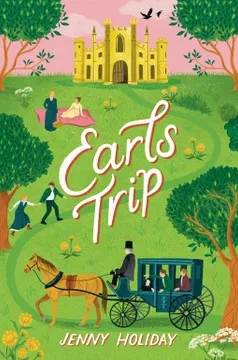
Archibald Fielding-Burton, Earl of Harcourt, sets out for his annual fortnight in Cumbria with his school friends Simon Courteney and Edward Astley, better known as Effie. Their ritual promises Archie relief from London and from caring for his increasingly confused mother.
But a worn childhood counterpane slips into his luggage, and he turns back to return it. His mother no longer recognizes him; the familiar blanket comforts her, while his presence unsettles her.
Her companion, Miss Brown, urges Archie to take the holiday anyway, since she and the household can manage. Archie leaves carrying the pain of a son who can still care for his mother, even when she cannot know him. The delay makes his departure feel less like escape than a hard-won permission to rest.
The counterpane gives Archie’s private grief a physical form: something once shared between mother and child has outlasted the memories that made it meaningful. Returning it is both an act of care and an admission of helplessness, since he cannot restore her recognition. His friends’ willingness to wait, and Miss Brown’s insistence that he leave, expose a tension between devotion and self-erasure. Archie has mistaken constant availability for proof of love. The trip begins when others help him accept that care can include stepping away.
The Wrong Turn North
As the coach finally leaves London, a messenger catches up with Archie carrying a desperate letter from Sir Albert Morgan, an old family friend. Olive Morgan has eloped with Theodore Bull, the writer whose fashionable arguments about vegetarianism once captivated Clementine, her elder sister.
Clementine had accepted Bull’s proposal, then tried to end the engagement; now she too has disappeared, apparently pursuing the pair. Sir Albert fears Bull will ruin one daughter and trap the other in an unhappy marriage.
Archie remembers his childhood closeness with Clementine and feels ashamed that he has let the Morgan family drift from his life. He abandons the planned journey to search for them. Simon and Effie refuse to leave him alone, turning their gentlemen’s holiday into a rescue mission.
The letter converts an annual holiday into a test of what friendship obliges people to do. Archie’s shame matters as much as Sir Albert’s request: he recognizes that distance and busyness have let an old bond thin without ever formally ending it. Simon and Effie’s immediate decision to accompany him shows that their friendship is not a matter of shared leisure alone. They change plans because Archie does, then make room for a crisis that is not theirs. The novel’s central idea of chosen loyalty begins as action, not declaration.
Clementine Fires First
Clementine has already left London in her father’s clothes, binding her chest and posing as a young man to reach Scotland before Bull and Olive. At a coaching inn, she learns the couple are in a private parlor. She finds Olive alone and frightened after Bull reveals he intends to leave England permanently, not merely elope. Olive distracts him long enough to slip out, and the sisters escape upstairs.
When Bull bursts into their room, Clementine draws the flintlock she stole from her father and fires. The bullet misses Bull and grazes Archie, who has just arrived with Simon and Effie. Clementine recognizes her old friend; Archie recognizes the girl who has just shot him. Olive is safe, but the noise has made their escape urgent.
Clementine’s disguise gives her mobility while exposing the limits placed on women: she can cross the country more freely only by concealing her sex, yet her body repeatedly threatens to betray the performance. Her rescue of Olive is brave but improvised, and the shot makes the cost of acting without a plan immediate. The scene also reintroduces Archie through physical consequence rather than a carefully staged reunion. Their childhood familiarity survives the shock, but it now exists alongside adult danger, attraction, and the need to decide what responsibility looks like.
A Castle Without Rules
Archie hides the Morgan sisters while Simon and Effie help him confront Bull. They beat and threaten the self-important writer until he promises to leave England and never contact either sister again.
Clementine, exhausted from travel and days without proper food or sleep, collapses before the party can ride to Quintrell Castle, Effie’s eccentric holiday choice in Cumbria. Archie carries her there despite his wounded shoulder. The neglected castle offers an unlikely refuge: its elderly housekeeper accepts the visitors, and its distant location makes discovery improbable.
Archie agrees to let the sisters stay for the remaining holiday if they keep out of the men’s way. That rule is meant to preserve the gentlemen’s tradition, but it also places Clementine and Archie under the same roof again.
The castle is a temporary shelter whose disorder quietly weakens the social rules the characters bring with them. Archie’s force against Bull is a practical counter to a man who has used rhetoric and charm to mask control, but the rescue does not magically resolve the sisters’ distress. Clementine’s collapse makes bodily needs impossible to treat as an afterthought. Archie’s condition that the sisters keep their distance reveals his desire to restore familiar routines, even as his decision to house them makes those routines untenable. The refuge protects reputation by removing the characters from public scrutiny, creating space for less guarded forms of intimacy.
The Sisters Compare Scars
Once Clementine has recovered, Archie gathers the group to hear what happened. She explains that Bull’s arguments first drew her in because they gave shape to her concern for animals; later, he valued her dowry and property more than her mind. After they slept together, he announced plans to move abroad, forbade children, and struck her when she objected.
Clementine’s father still hoped to salvage the engagement, so Olive offered to take her sister’s place, though she cannot explain all her reasons. In private, Olive shows Clementine a list of dreams: travel, a balloon ride, a house of her own, dogs, and children. The sisters begin to recognize that their differences have concealed not indifference, but unshared hopes and old hurt.
The revelation reframes both sisters’ choices without excusing their consequences. Clementine’s interest in Bull began in intellectual and ethical recognition, which made his later coercion especially disorienting. Olive’s list complicates the impression that she is merely socially ambitious: she has converted conventional resources, including marriage and pin money, into a private plan for a larger life. Their conflict comes from interpreting each other through visible habits rather than asking what those habits protect. The scene begins their repair by replacing caricature with particular knowledge.
Rooftops Make Room
The sisters keep to their own rooms and meals while Archie tries to resume the holiday with Simon and Effie. The castle’s bad food, leaking roof, and absurd phallic topiary turn their routines comic, but the men’s conversations about difficult parents reveal a serious bond beneath their teasing.
Clementine and Archie find a quieter meeting place on the roof. Under the stars, they speak about his mother’s decline, Clementine’s hatred of the Marriage Mart, and the years they lost touch.
She confesses that she willingly slept with Bull, then learned his cruelty afterward. Archie refuses to treat her as ruined and listens without demanding that she regret her choice. The roof becomes the first place where they can be close without performing for family or society.
The rooftop is neither domestic interior nor open countryside; its in-between position lets Archie and Clementine speak with unusual candor while remaining physically near the world they are avoiding. Their exchange counters the social logic that assigns sexual shame to women and freedom to men. Archie does not simply comfort Clementine; he takes her account seriously without claiming authority over her feelings. Meanwhile, the men’s frank talk about parental disappointment shows that tenderness already exists among them, even when it is disguised as banter. The house makes private vulnerability possible before either character knows what to call it.
Silk, Secrets, and Sisters
Effie commissions silk dressing gowns for himself, Archie, and Simon, and the men end up laughing on a settee when Clementine and Olive arrive. Their shared amusement loosens the boundary between the gentlemen’s trip and the sisters’ stay.
Later, Clementine and Archie overhear Olive confessing her affection to Effie. He gently refuses, explaining that his heart belongs to someone else; Olive admits she too loves another. The two discover they can be confidants rather than romantic prospects.
Clementine is startled by Olive’s reference to a secret love, but does not interrupt. By choosing to leave the conversation private, she begins to respect a boundary she once would not have known existed. The holiday’s improvised household becomes a place where each person can be seen without being claimed.
The dressing gowns turn masculine formality into playful exposure, making it easier for the women to join the group without pretending the old rules remain intact. Olive’s confession then reveals that a person can be socially flirtatious and still carry a serious private attachment. Effie’s refusal matters because he does not exploit her vulnerability or mistake her affection for a debt. His offer of correspondence gives Olive a relationship built on mutual recognition rather than courtship. Clementine’s decision not to intrude is a small but consequential change: intimacy now includes respecting what a loved one has not chosen to disclose.
The Hunt Breaks the Truce
Archie invites Clementine into the woods, intending to show her why hunting steadies his scattered attention. She agrees, though the agreement already troubles her. After a long, companionable ramble, Archie raises his double-barreled gun and shoots a pheasant from the sky.
The bird falls dead, and Clementine breaks into tears. Archie drops the weapon and realizes that explaining his pleasure in the hunt has not made him attend to what the act costs her. He helps her climb into a tree, where they talk until she can explain her response without apologizing for it.
Archie accepts that she will not continue the bargain. In turn, Clementine acknowledges that he was trying to share something important, not deliberately hurt her. Their disagreement forces them to listen more closely than affection alone had required.
The hunt tests whether intimacy can survive genuine ethical disagreement. Clementine’s distress is not a rhetorical position; it is a bodily response that Archie cannot argue away. His crucial change is not abandoning his own account of hunting immediately, but recognizing that he designed the outing around his meaning and neglected hers. The tree restores a shared language formed in childhood, yet the conversation is more adult because it allows difference to remain. Their friendship becomes sturdier when neither has to imitate the other in order to stay close.
A Lesson in Pleasure
After their conversation in the tree, Clementine asks Archie to help her experience sexual pleasure, provided he does not mistake the request for a wish to marry him. Archie initially agrees, then worries about her reputation and the possibility of pregnancy.
At first he refuses intercourse but does show her how pleasure can be shared without making her responsible for his desire. When Clementine returns the next evening, she insists that he enjoy himself too. They find ways to touch one another while avoiding penetration, and she discovers that her first experience with Bull had taught her almost nothing about her own body.
Their encounters are affectionate as well as physical, and Archie treats her curiosity as something to answer, not a reason to judge her. Their agreement gives desire room while leaving marriage unresolved.
Clementine’s request is an attempt to reclaim knowledge after Bull used intimacy as a route to control. Archie’s caution is protective, but it also risks repeating the pattern of men deciding what she can bear. The two negotiate by speaking plainly about pleasure, pregnancy, and choice. Their intimacy therefore depends on consent as an ongoing practice, not a single permission. The scenes also expose how sexual ignorance is socially produced: Clementine has watched nature closely, yet has been denied the human knowledge that could help her understand her own experience.
Hermes Takes the Prize
Clementine enters her turtle, Hermes, in Doveborough’s annual race, and the whole party cheers as he overtakes the leader to win. She gives her prize money to Olive, who has been secretly sending her pin money to Mrs. Scully, the widowed mother of their childhood friend Ralph. Clementine then learns why Olive cannot bear Hill House: she loved Ralph, planned to marry him when he returned from Canada, and refused him because she feared her father and society.
Ralph died before she could tell anyone, and Olive never learned where he was buried. The money, her hidden embroidery of his gravestone, and her grief all come into focus. Clementine understands that her sister’s London gaiety has been a way to live with pain she could not share.
Hermes’s race gives the group a joyful public event, but its real consequence is private disclosure. Clementine’s gift of the prize money assumes she understands Olive’s plans; Olive’s revelation shows that even newfound closeness cannot erase the years they spent misreading one another. Her money is not a fund for spectacle but a quiet attempt to care for the person connected to Ralph. Grief has shaped Olive’s preferences, her avoidance of Hill House, and her apparent indifference to marriage. Clementine’s response is not to solve that grief, but to witness it without reducing it to a character flaw.
London Closes In
Back in London, Sir Albert refuses Clementine’s request to return to Hill House and orders both daughters to remain at home unless he personally accompanies them. At dinner, Archie objects that such confinement is a form of imprisonment, but Sir Albert insists he knows what is best.
The unfairness finally makes Archie recognize that his imagined future with Clementine is not a passing fancy: he wants to love her openly and build a life she can inhabit freely. He tells Simon and Effie that he is in love, then admits that Clementine has repeatedly rejected marriage.
They help him see that he must tell her how he feels without trying to control her answer. Archie leaves to settle his mother at Mollybrook, intending to return to London and find a way to speak with Clementine alone.
Sir Albert’s restrictions sharpen the difference between protection and control. He sees confinement as a reasonable response to danger, but Clementine’s life has already been narrowed by the Marriage Mart and by men who presume to know what she needs. Archie’s protest is therefore more than romantic jealousy: he recognizes that Clementine’s freedom is the stake. His realization of love does not give him permission to override her refusal of marriage. The friends’ advice directs him toward a more ethical form of declaration, one that risks rejection rather than arranging a decision in advance.
The Sisters Make a Door
While Archie is away, Olive devises a fictional Scottish suitor, Mr. Ozymandias Macduff, and persuades Sir Albert that he has inherited a nearby estate. She uses the story to secure permission for the sisters to return to Hill House, presenting the move as part of her own courtship prospects.
Once there, Clementine visits Mollybrook and finds Archie with his mother, who unexpectedly recognizes her and urges Archie to marry her. The rare moment of lucidity gives Clementine and Archie the privacy they have been denied.
In the woods, Archie tells her he loves her and wants a life that includes her wildness, her family, and children they would raise with tenderness. Clementine realizes she can imagine marriage with him. She accepts, and they choose each other without asking either to become someone else.
Olive’s invented suitor is an act of strategic care: she uses the very marriage plot that constrains women to secure a space where Clementine can choose for herself. At Mollybrook, Lady Harcourt’s recognition briefly repairs a loss that Archie has learned to live with, but it does not dictate the couple’s decision. The proposal works because Archie offers a future shaped around Clementine’s stated values rather than treating marriage as a cure for her resistance. Clementine’s change of mind is not capitulation to convention; it follows from discovering that this particular relationship need not mean surrender.
Epilogue
Three weeks later, Clementine and Archie marry in Chiddington. The wedding is gentler than Clementine expected, and Archie makes sure the breakfast table includes food she can eat. That evening, instead of leaving for a private honeymoon, they share a picnic beneath a tree with Olive, Simon, and Effie.
Archie invites Olive to accompany them to Italy, where her fluency can help them travel. A fortnight later at Highworth, Effie receives a letter from his editor, Julianna Evans, praising his poem about Sally and asking him to write an anonymous advice column for married women. Effie, delighted by both the praise and the unlikely commission, returns to his painting with renewed pleasure.
The ending refuses to make marriage the only measure of happiness. Clementine and Archie marry, but their first evening as spouses is spent among the friendships that sustained them, and Olive is included in their travel plans rather than left behind as a solved subplot. The ordinary details matter: food suited to Clementine, a shared picnic, and Effie’s creative work receiving serious attention. Julianna’s letter also extends the book’s concern with hidden forms of authorship. Effie is invited to advise married women under a misleading public identity, yet his private voice and artistic life become more visible to the people who value him.
Analysis
Earls Trip asks what people owe one another when blood, rank, and social custom fail to provide genuine care. Archie has inherited a title but not his father’s approval; Simon inherits an earldom after loss; Effie has artistic gifts he must hide; Clementine is pressed toward marriage despite knowing the life expected of her does not fit. Their different forms of exclusion make the holiday’s chosen family more than a comforting theme. It is a practice: changing plans, listening, feeding one another, and staying present when a person’s needs are inconvenient.
The novel also distinguishes protection from possession. Bull’s polished arguments disguise a demand for control, while Sir Albert’s restrictions arise from fear but still deprive his daughters of choice. Archie’s moral growth depends on not repeating either pattern. His love for Clementine becomes meaningful only when he accepts that her freedom is not an obstacle to overcome. Clementine, in turn, discovers that refusing marriage as an institution does not require refusing every possible relationship; she can choose a partnership that makes room for her nature rather than disciplining it.
The sisters’ parallel stories complicate easy judgments about women’s behavior. Clementine’s ethical seriousness does not save her from being deceived, and Olive’s social polish does not make her shallow. Both women have been adapting to systems that offer them few direct routes toward autonomy. Their renewed bond begins when each learns to read the other’s actions as evidence of motives, not as proof of character. Hermes, the turtle briefly kept for a race, echoes this tension between care and captivity. The book’s final vision of happiness is therefore not escape from all obligation. It is a chosen web of obligations in which love does not erase difference, and commitment does not demand surrender.
Review Summary
Earls Trip has garnered mixed but generally positive reviews, averaging 3.61/5. Many readers praise its charming friends-to-lovers storyline, strong male friendships, found family elements, and humor, with comparisons to Bridgerton and Ted Lasso. Highlights include the sweet romance between Archie and Clementine, emotional dementia storyline, and the castle setting. Critics cite slow pacing, anachronistic language, flat characters, and a modern feel inconsistent with the Regency period. Some readers DNF'd due to boredom, while devoted fans eagerly anticipate the next installment.
Characters
Archibald Fielding-Burton
The loyal country earlArchie, the Earl of Harcourt, is an energetic outdoorsman whose ease with riding, hunting, and boxing contrasts with his difficulty reading and writing. He has learned to live with a father’s disappointment and with a mother whose memory is failing, yet he remains attentive to the people he loves. His annual holiday with Simon and Effie is not mere recreation; it restores his sense of himself. Archie tends to help through action before he can explain what he feels, a habit that can make him seem careless even when he is deeply observant. His loyalty is generous, but he must learn that protecting someone does not mean deciding for them.
Clementine Morgan
The untamed naturalistClementine is a country-loving observer of animals, plants, stars, and the small patterns other people overlook. She dislikes London society and resists the expectation that a woman’s future must be organized around marriage. Her attraction to Theodore Bull begins with his ideas, because she wants her values to matter in a world that often treats her as an unsuitable prospect. She is courageous and resourceful, but her independence can make it difficult to ask for help or admit when she is hurt. Clementine’s blunt curiosity is not lack of feeling; it is often how she protects herself from being managed. She values freedom, honesty, and relationships in which her choices are taken seriously.
Olive Morgan
The brilliant social strategistOlive is Clementine’s younger sister, graceful in society and skilled at reading what people want from her. Her love of clothes, parties, and flirtation can make her seem shallow, but she is more observant and pragmatic than her sister realizes. Olive wants a large life, including travel and independence, while also understanding how few routes are available to women. She often uses charm and money to create possibilities quietly. Her loyalty can be fierce, though she does not always communicate her motives clearly, even to Clementine. Beneath her theatrical composure is someone who has learned to manage grief and desire without expecting the world to make room for either.
Simon Courteney
The earnest political earlSimon, the Earl of Marsden, is Archie and Effie’s close friend from school. Serious, bookish, and inclined to worry, he often approaches a problem through argument and careful reasoning. He inherited his title unexpectedly after the deaths of his older brothers, leaving him to navigate a role he was never prepared to occupy. Simon’s political interests are sincere, as is his concern for his friends, though he can be so literal that he misses the emotional point until someone names it for him. His steadiness helps Archie think through difficult choices, while his willingness to change plans shows that duty need not make a person inflexible.
Edward Astley
The poetic dreamerEdward, usually called Effie, is the Viscount Featherfinch and heir to an earl. A poet and artist, he notices beauty in grief and in details others dismiss, but his creative sensitivity coexists with a playful, theatrical manner. His friends know him as dreamy and sometimes impractical, yet he is exceptionally attentive to emotional undercurrents. Effie’s family has not always offered him the acceptance he needs, which makes the chosen loyalty of Archie and Simon especially important. He keeps much of his writing private because aristocratic expectations leave little room for a public poetic life. Effie can be both comic and quietly perceptive, often giving others a language for feelings they have not yet named.
Theodore Bull
The polished ideologueTheodore Bull is a writer who gains notice for arguments against eating animals and for his fashionable, self-assured manner. Clementine is drawn to the ethical seriousness she believes his work represents. He knows how to flatter people by presenting himself as a meeting of minds, and he expects others to accommodate his plans. His public principles and private conduct create a troubling gap that becomes central to the Morgan sisters’ crisis.
Sir Albert Morgan
The anxious patriarchSir Albert is Clementine and Olive’s father and an old friend of Archie’s late father. He is ill and deeply protective of his daughters, especially after their mother’s death. His wish to see them settled comes from love and fear, but his certainty about what will keep them safe can become controlling. Sir Albert trusts Archie enough to ask him for help, even as he struggles to hear what his daughters want for themselves.
Lady Harcourt
Archie’s fading motherLady Harcourt is Archie’s mother, a warm and playful woman whose memory and sense of the present have become unreliable. She once made games, welcomed her son home, and gave him an affection he still carries. As her illness advances, she can confuse people and events, leaving Archie unsure how to reach her. Her presence remains emotionally central to him, not because she can always respond, but because their bond shaped his understanding of care.
Miss Brown
The patient companionMiss Brown is Lady Harcourt’s companion and Archie’s trusted support in managing his mother’s care. She meets confusion with patience rather than correction, and she understands when Archie needs to leave without making him feel that he has abandoned his mother. Her practical compassion helps preserve a measure of dignity for Lady Harcourt and gives Archie room to remain a son as well as a caretaker.
Ralph Scully
Olive’s country confidantRalph is the son of the surgeon in Chiddington and a childhood friend of the Morgan sisters. His easy friendship with Olive and his kindness during a difficult period make him an important presence in her memories. He belongs to the sisters’ less formal country life, where social rank carries less weight than familiarity and affection. Clementine remembers him as part of the world she and Olive shared before London pulled them in different directions.
Mrs. MacPuddle
The castle housekeeperMrs. MacPuddle runs Quintrell Castle with the authority of someone long accustomed to its eccentric owner and inadequate staff. Her brogue and formal household manner add comic texture, but she is also practical and responsive when Clementine needs food or the group needs rooms and care. She accepts the visitors without fuss, helping make the castle a workable refuge.
Sir Lionel Maundy
The absent eccentric ownerSir Lionel owns Quintrell Castle and lends it to Effie for the holiday. An essayist and artist devoted to solitude, he is absent for much of the story, leaving behind a decaying house, an unusual garden, and a sparse household. His eccentric preferences shape the setting even when he is nowhere near it.
Susannah
The inventive cookSusannah is the cook borrowed from a neighboring estate. Clementine’s request for meat-free meals gives her a chance to experiment, and she responds with imagination rather than resentment. Her cooking helps turn the castle’s improvised household into a place where the sisters’ needs are taken seriously.
Julianna Evans
Effie’s exacting editorJulianna edits Le Monde Joli and publishes Effie’s poems under his pen name. She is demanding about his work but clearly values his talent, and their correspondence reveals a lively professional and personal rapport. Her editorial judgment gives Effie both a challenge and a rare source of recognition.
Miss Franklin
The turtle race rivalMiss Franklin is a young competitor in Doveborough’s annual turtle race. Her turtle, Temperance, becomes Hermes’s strongest rival. She contributes to the village event that briefly gives the holiday a public, playful focus.
Plot Devices
The Earls Trip
A ritual for chosen familyThe annual September holiday gives Archie, Simon, and Effie a protected interval away from London, political duty, and family expectations. Its rules, shared jokes, and familiar disputes make it a ritual that renews their friendship. When Archie turns aside to help the Morgan sisters, the trip changes shape without losing its purpose: Simon and Effie follow him, and the holiday gradually becomes a larger gathering. The device links recreation to emotional survival. It also raises the question of who belongs in a family, suggesting that repeated acts of care can create bonds as durable as inheritance.
Clementine’s Disguise
A borrowed freedomClementine steals men’s clothing from her father and binds her chest so she can travel alone after Olive and Bull. The disguise allows her to board the Mail coach and move through public spaces with less scrutiny, but discomfort, hunger, and her body’s visibility keep the performance precarious. The flintlock she carries turns the disguise from mere concealment into a tool of rescue, though her shot hits Archie instead of Bull. The device makes visible the unequal mobility of men and women while showing that courage without preparation can bring danger as well as agency.
The Rooftop
A threshold for honestyThe sloped roof beside Clementine’s room becomes the private meeting place where she and Archie recover their childhood ease. It is physically suspended between the castle’s rooms and the open sky, matching their position between social roles and personal truth. There, they discuss grief, sex, family, and the choices that have shaped them, without the interruptions of the group or the demands of formal company. The rooftop does not solve their differences, but it lets them speak without immediately turning every feeling into a public decision. Its intimacy prepares the ground for greater trust.
The Turtle Hermes
A small test of freedomClementine enters a turtle named Hermes in Doveborough’s race and becomes unexpectedly invested in his progress. The contest gathers the holiday party around a shared, comic purpose, while the turtle’s captivity troubles Clementine even as she trains him. Hermes’s victory lets Clementine give her prize money to Olive, opening a conversation about the money Olive has been quietly saving for someone else. Later, Archie must release Hermes and finds himself reluctant to let the creature go. The turtle turns freedom into a concrete question: care can protect, but it can also confine.
Olive’s Book of Days
A private life in fragmentsOlive’s worn book holds her list of ambitions and a personal keepsake from Ralph, joining two versions of her life that Clementine has never understood. The list suggests an appetite for travel, ownership, and experiences beyond conventional marriage, while the book’s sentimental history points to grief she has hidden. Olive’s embroidery gives those private feelings another form, allowing her to make an image when she cannot speak openly. Together, the objects make her inner life legible without reducing it to a single motive. Their revelations reshape the sisters’ relationship and expose how easily outward performance can conceal real devotion.
Download PDF
Download EPUB
.epub digital book format is ideal for reading ebooks on phones, tablets, and e-readers.








