

Key Takeaways
Use the chakra map to unite embodiment, psychology, and spiritual aspiration
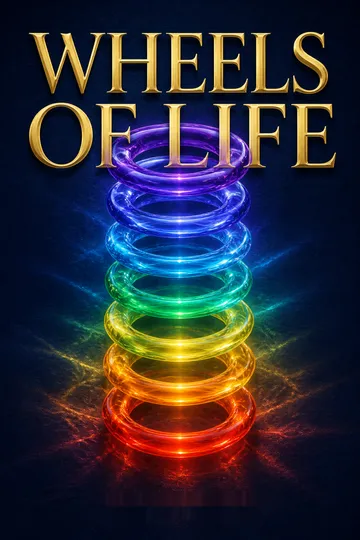
A map, not an organ chart. Judith adapts the Indian chakra tradition into a seven-part framework for understanding human life: survival, feeling and sexuality, personal power, love, expression, insight, and consciousness. Chakras are not physical organs. In this book, they are a symbolic map linking bodily experience, psychological patterns, development, and spiritual questions. The rainbow image turns the map into a journey between earthly life and expanded awareness.
Growth moves both ways. The current of manifestation brings ideas down into words, choices, and tangible action. The current of liberation rises from embodied experience toward broader awareness. Judith argues that either direction alone is incomplete: spiritual ideas without grounding can remain impractical, while bodily needs without reflection can trap a person in old patterns.
The model's strength is its refusal to make mind, body, and spirit compete for legitimacy. It gives readers a practical question: where does an experience live, and what other parts of life does it affect? That resembles systems thinking, where a change in one component alters the whole network. The map is most useful as a reflective metaphor, not as a literal anatomy. Claims that chakras correspond to nerve centers or directly govern health exceed what the book establishes, so readers should distinguish symbolic insight from medical explanation.
Read development as a layered journey, not a fixed-age diagnosis
Skills build on earlier needs. Judith places the seven centers alongside childhood development, from bodily trust in infancy through emotional exploration, autonomy, relationships, creativity, adolescent identity, and adult meaning-making. She draws on established developmental thinkers, but presents the chakra age ranges as a flexible map. A secure base can support exploration; supported autonomy can make later relationships less dependent on approval.
Each level has a right. The framework links survival with the right to exist and have necessities, feeling with the right to feel, power with the right to act, love with the right to give and receive love, expression with the right to speak and hear truth, insight with the right to see, and consciousness with the right to know. Adult life may revisit these developmental tasks rather than follow one tidy sequence.
The layered model helps explain why a person can be highly capable at work yet feel helpless in intimacy: competencies develop unevenly, and early learning does not guarantee later ease. It also makes caregiving concrete by asking what a child needs to practice each kind of agency. The developmental parallels are suggestive, not proof that each chakra maps neatly onto a universal age or stage. Family structure, disability, culture, and historical conditions shape development in ways a seven-part scheme cannot fully capture.
Spot whether stress makes you overfill or abandon a life function
Defenses have opposite shapes. Judith calls a coping pattern excessive when someone overinvests in a function, and deficient when they avoid or cannot access it. A person may dominate conversations to control exposure, while another struggles to speak at all. A bully can overcompensate for insecurity with control; someone who fears conflict may surrender choices to avoid it. Neither pattern is simply a flaw. Each began as an attempt to cope.
Look across the whole system. Chronic defenses can become character armor, the book's term for habitual bodily and psychological holding patterns. Judith cautions against diagnosing a chakra from one behavior alone. Talking too much, for example, might be a way to discharge tension while concealing weak grounding or emotional awareness. She recommends considering personal history, bodily habits, strengths, and relationships, then choosing different tools for different patterns.
This distinction is useful because many self-help prescriptions assume that more of a behavior is always better. Here, the same apparent trait can signal opposite needs: someone who avoids speaking may need practice and support, while someone who talks compulsively may need to pause and tolerate silence. Contemporary trauma-informed care similarly asks what a response once protected. The limitation is that body shape or posture cannot reliably diagnose a person's history or psychology. Compassionate inquiry is safer than assigning a type from appearance.
Build bodily safety before asking yourself to transcend ordinary needs
Start with the ground. The first chakra concerns survival, bodily trust, nourishment, boundaries, home, and material stability. Judith argues that when safety feels uncertain, attention gets captured by threat, leaving less room for exploration or reflection. One client who had escaped a war zone remained tense, sleepless, and vigilant years after reaching safety. The danger had changed, but his body still behaved as if it were present.
Practice ordinary contact. Judith's first steps toward repair are concrete: notice bodily signals, care for food and rest, move, feel the feet on the floor, and build boundaries. Her account of Mary, a client who struggled to sense hunger, fatigue, or temperature, illustrates how disconnection from bodily needs can feel like disconnection from life. In this framework, grounding is not a shortcut to prosperity; it is a foundation for meeting immediate needs and making choices.
The emphasis on basic safety resonates with trauma care, where persistent threat can keep attention and physiology oriented toward protection. Small, predictable practices can help restore a sense of agency. The metaphor also counters spiritual bypassing, the use of transcendent ideas to avoid ordinary pain or responsibility. A necessary caution: financial hardship, illness, or anxiety are not evidence of a deficient chakra, and grounding exercises cannot replace practical support or clinical care. Social conditions matter alongside personal coping.
Let desire move, but learn when to contain its energy
Feelings carry information. The second chakra represents sensation, emotion, pleasure, desire, movement, and sexuality. Judith treats feelings as signals that help people register needs and value experiences. When emotion or pleasure is shamed, a person may suppress those signals, lose touch with wants, or seek substitute rewards that never satisfy. Her client Jennifer, raised to see pleasure as selfish, continued to deny herself rest and enjoyment despite later having more freedom.
Flow needs a container. Judith describes the shadow as disowned parts of the self that continue to influence behavior outside awareness. Healing can involve moving frozen responses, naming feelings, and making room for pleasure. But release is not always the answer: someone who acts impulsively may need to pause and contain an urge, while someone numb or rigid may benefit from safe movement and expression. The goal is not constant indulgence, but a more conscious relationship with desire.
This account usefully distinguishes pleasure that satisfies from compulsive repetition that briefly dulls discomfort and then renews it. Its attention to shame is also important: people often learn to distrust feelings before they can explain them. Yet intense emotion, sexual behavior, or restraint cannot be sorted into chakra categories without context. Trauma, health, culture, and personal values all matter. In cases of abuse or addiction, supportive professional care may be more appropriate than self-directed catharsis.
Turn autonomy into responsible action, not obedience or domination
Power begins with choice. The third chakra concerns will, self-definition, energy, and the ability to act. Judith contrasts power-over, which depends on controlling others, with power exercised alongside others. Healthy autonomy means taking responsibility for choices without pretending that one controls every circumstance. In the book's example, Janet wanted a promotion and took initiative by learning what the role required and preparing for the transition instead of waiting passively for a decision.
Shame can immobilize or inflate. When a person's actions are repeatedly shamed, the resulting self-doubt can make even ordinary risks feel dangerous. Some respond by avoiding challenge; others build a demanding image through achievement and control. Judith recommends strengthening will through manageable challenges, planning, and attention to the inner critic, while excessive control may call for rest and flexibility. For children, the balance is guidance with limits, not humiliation or unlimited indulgence.
The distinction between agency and domination adds nuance to popular celebrations of confidence. Psychological theories of autonomy likewise distinguish self-endorsed action from behavior driven by pressure or approval. The book's focus on shame helps explain why a person may resist a goal they consciously want. Still, personal responsibility should not be mistaken for total control: discrimination, poverty, illness, and unsafe environments constrain available choices. A sound account of empowerment includes both individual agency and the conditions that make agency possible.
Love deeply without surrendering the self that makes love possible
The heart is an integrating center. The fourth chakra concerns love, relationships, self-acceptance, empathy, and balance. Judith describes healthy connection as a rhythm of reaching out and receiving, closeness and freedom, giving and taking. A person who continually gives to prevent rejection may look loving while ignoring personal needs. Someone who withdraws after being hurt may protect the heart but also block the possibility of connection.
Grief can reveal what was lost. Judith treats grief as a counterforce that can make the heart feel closed, while acknowledging it can help people reconnect with their own needs and compassion. She also adapts Jung's anima and animus, the inner qualities culturally labeled feminine and masculine, as capacities each person can develop. Seeing a partner as a carrier of one's missing qualities can obscure who that person actually is. Self-reflection helps separate genuine care from projection or dependence.
This model makes reciprocity central rather than treating self-sacrifice as the proof of love. Attachment research offers a useful parallel: secure connection combines closeness with a workable sense of independence. The book's emphasis on grief is especially humane because it does not present loss as a failure to be spiritual. Its gendered archetype language needs careful handling, however. Qualities such as assertiveness or nurturance are not inherently male or female, and relationships vary widely beyond the heterosexual examples often used.
Make honest expression and active listening part of your healing
The throat connects inner and outer life. The fifth chakra represents communication, listening, creativity, and the right to speak and hear truth. Secrets, ridicule, or contradictory messages can teach a child to distrust what they perceive and feel. Judith treats the voice as one clue to this pattern, not a complete diagnosis: a person may speak easily about work yet struggle to name feelings with a partner.
Listening is an action. The book recommends giving a speaker full attention, reflecting the meaning back in fresh words, and checking whether the listener understood before offering a solution or counterargument. In one couple's example, each partner wanted the other to acknowledge the difficulty of their situation, not immediately fix it. Writing, singing, and creative work can also give unspoken experience a form. Expression matters, but so does making space for another person's reality.
Active listening turns communication from a contest over whose account wins into a test of whether each person has been understood. That distinction is useful in families, workplaces, and therapy, especially when practical solutions are unavailable. The chapter also links speech with bodily experience, a reminder that communication is not only verbal content but timing, tone, and attention. A caveat: honesty is not an obligation to disclose everything to everyone. Privacy and safety can make silence appropriate.
Treat visions and beliefs as guides, then test them in life
Images can clarify or distort. The sixth chakra concerns intuition, dreams, symbols, pattern recognition, and vision. A vivid image is not automatically true: Monica's harsh self-image helped keep her isolated, while another client treated an idealized romantic picture as more real than available partners. Judith recommends exploring dreams and symbols as material for reflection, while distinguishing a flexible vision from a fixed illusion.
Awareness must return to the ground. The seventh chakra concerns belief, meaning, learning, and consciousness. Judith's central synthesis joins rising life energy with descending awareness: insight becomes useful when it informs relationships, choices, and embodied action. Meditation and mindfulness can help examine beliefs and observe reactions. The book also describes Kundalini-Shakti as a traditional image of awakening energy rising through the centers. Such spiritual language may be meaningful, but unusual physical or psychological symptoms also warrant qualified health assessment.
The final movement of the rainbow journey is not escape from ordinary life but a changed way of meeting it. Treating beliefs as interpretations makes room for revision, while symbolic thinking can help people notice patterns that literal description misses. The editorial caution is crucial: intuition can be insightful, but it is also vulnerable to bias, anxiety, and wishful thinking. A dream, vision, or sense of spiritual energy should prompt curiosity, not serve as a substitute for evidence, grounded judgment, or medical evaluation.
Analysis
Judith's central achievement is architectural. She gives readers a single symbolic map for questions that Western practice often separates: bodily regulation, childhood development, personality, relationships, creativity, and spiritual meaning. The rainbow bridge is an effective narrative because it makes integration directional without making it a simple climb upward. Embodiment matters at the base, consciousness at the crown, and the heart serves as a midpoint where selfhood can meet relationship. The repeated movement upward and downward resists the familiar fantasy that healing means leaving the body behind.
The map is most persuasive when used as a heuristic. Its developmental correspondences make readers ask what a child needs and what an adult may still avoid. Its distinction between excess and deficiency encourages functional questions rather than moral judgments. The case histories make abstract ideas memorable, although the author identifies them as composites, so they should not be read as clinical evidence.
The book also blends traditions that require distinction. Chakra correspondences to colors, elements, organs, psychological stages, and character types are not presented as a single uncontested Indian canon; Judith notes that some associations are her own interpretation. Nor does the text establish chakras as measurable anatomical structures or prove that a particular symptom comes from a specific center. Its useful claims about touch, trauma, communication, and emotional regulation should therefore be separated from speculative claims about energy fields or spiritual causes of illness.
That limitation does not erase the framework's value. A map can organize attention without being a literal picture of the territory. Used carefully, this one helps readers ask whether insight is embodied, whether connection preserves agency, and whether spiritual aspiration improves ordinary conduct. Used carelessly, it can encourage self-diagnosis or turn structural hardship into an individual's energetic failure. Its strongest lesson is methodological: examine the whole person, respect context, and use the symbolism to generate questions rather than pronounce verdicts.
Review Summary
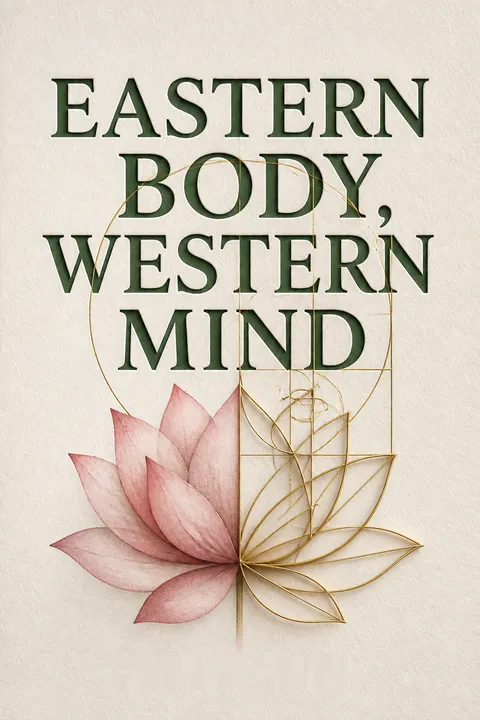
Eastern Body, Western Mind receives high praise for its comprehensive integration of Eastern chakra philosophy with Western psychology. Readers appreciate its insights into personal growth, healing trauma, and understanding human behavior. Many find it dense but illuminating, offering practical tools for self-reflection and transformation. Some criticize its appropriation of Eastern concepts, while others view it as a valuable bridge between traditions. The book's accessibility and depth make it a go-to reference for those interested in holistic approaches to mental and spiritual well-being.
People Also Read







Glossary
Chakra
Organizing center of experienceIn Judith's framework, a chakra is a symbolic center that receives, organizes, and expresses life energy. The seven major centers correspond to broad areas of human experience, from survival and sexuality to love, communication, insight, and consciousness. The author treats them as a map across body, psyche, and spirituality, not as physical organs.
Rainbow Bridge
Link between matter and spiritJudith's central metaphor for the journey through the seven chakras. The bridge connects embodied life with expanded consciousness, and links personal healing with the world around a person. Its colors represent the stages of the chakra map. Crossing it means integrating earthly needs and spiritual awareness rather than choosing one and rejecting the other.
Current of liberation
Upward movement toward awarenessThe upward direction of energy in Judith's model, moving from the dense, embodied concerns of the lower chakras toward increasingly subtle forms of awareness. It represents expansion, change, and release from limiting patterns. The book treats it as complementary to the downward movement that brings ideas into action and physical life.
Current of manifestation
Downward movement into formThe downward direction of consciousness in Judith's model, moving from abstract awareness through images, words, relationships, action, feeling, and bodily life. It describes how an idea becomes concrete in behavior and the outer world. The current is necessary to balance spiritual expansion, which without embodiment can remain diffuse or impractical.
Character armor
Chronic bodily coping patternsA term from bioenergetic psychology used for coping strategies that become habitual and are reflected in bodily tension, posture, and movement. Judith connects these patterns with developmental difficulties and chakra imbalances. The term describes a proposed mind-body relationship, not a diagnosis that can be reliably assigned from someone's appearance alone.
Excess and deficiency
Overuse or avoidance patternsJudith's terms for two broad ways of coping with difficulty in a chakra's area of life. Excess means overinvesting in that function, while deficiency means avoiding it or having too little access to it. Both are understood as adaptations that can restrict flexibility. The same behavior may have different meanings depending on the person's broader pattern.
Seven rights
Rights linked to each chakraJudith's framework connecting each chakra with a basic human right: to exist and have necessities, to feel, to act, to love and be loved, to speak and hear truth, to see, and to know. She proposes that experiences which undermine these rights can shape later coping patterns and that reclaiming them can support healing.
Seven identities
Expanding levels of selfhoodJudith's sequence of identities associated with the chakras: physical, emotional, ego, social, creative, archetypal, and universal. Each broader identity incorporates earlier ones without making them irrelevant. The sequence describes expanding ways of understanding the self, from bodily individuality toward connection with a larger human or cosmic whole.
Individuation
Movement toward integrated selfhoodA Jungian term Judith uses for becoming a more complete and distinctive self. The process involves recognizing and integrating disowned traits, developing autonomy, examining inherited roles, and relating personal experience to larger patterns. It does not mean isolation or self-absorption; the goal is a fuller self capable of meaningful connection.
Transcendent function
Synthesis of opposing perspectivesJung's term for the psyche's capacity to form a new perspective from opposing conscious and unconscious forces. In Judith's account, symbols can help hold tensions that seem irreconcilable until a broader understanding emerges. The process is not simply rising above conflict; it is integrating previously divided elements into a more inclusive view.
Kundalini-Shakti
Image of awakening life energyIn the yoga tradition as interpreted by Judith, Kundalini-Shakti is a serpent goddess representing latent life energy, traditionally pictured as resting at the base of the spine. Its awakening is described as movement through the chakras, potentially bringing intense physical or psychological experiences. Judith presents it as a spiritual framework, not a medical diagnosis.
Witness
Observing awarenessThe witness is Judith's term for awareness that observes thoughts, feelings, sensations, and actions without immediately judging or identifying with them. It can create distance from habitual reactions and help a person examine an experience more clearly. The book presents it as a contemplative practice and a spiritual idea, not a separately verified entity.
FAQ
What's Eastern Body, Western Mind about?
- Integration of Systems: The book explores the relationship between Eastern chakra systems and Western psychology, particularly Jungian psychology, to provide a holistic understanding of personal development and healing.
- Chakras as Energy Centers: Anodea Judith describes chakras as energy centers that influence our physical, emotional, and spiritual well-being, each corresponding to different aspects of human experience.
- Path to Self-Discovery: It serves as a guide for individuals seeking personal transformation, emphasizing the integration of body, mind, and spirit for holistic healing.
Why should I read Eastern Body, Western Mind?
- Comprehensive Framework: The book offers a well-researched framework for understanding human consciousness and development, combining scholarly insights with practical applications.
- Practical Healing Techniques: Judith provides exercises and techniques for healing and personal growth, making it a valuable resource for therapists, yoga practitioners, and those interested in self-improvement.
- Cultural Relevance: The integration of Eastern and Western philosophies is increasingly relevant in today's globalized world, appealing to those interested in spirituality and psychology.
What are the key takeaways of Eastern Body, Western Mind?
- Seven Chakras Explained: The book details the seven major chakras, each associated with specific issues, emotions, and developmental tasks, helping individuals identify areas of imbalance.
- Healing Through Awareness: Judith emphasizes the importance of awareness in healing, suggesting that recognizing our emotional and physical states can lead to profound transformation.
- Connection Between Mind and Body: It illustrates how psychological states are deeply connected to physical health, advocating for a holistic approach to well-being.
What are the best quotes from Eastern Body, Western Mind and what do they mean?
- “The chakras are truly a set of portals between the inner and outer worlds.”: This highlights chakras as connections between internal experiences and external reality, crucial for personal growth.
- “To heal our relationship to our bodies is to heal our relationship with the earth.”: Judith suggests that physical well-being is linked to our connection with the planet, advocating for a nurturing relationship with both.
- “Without the healthy functioning of the first chakra, we are hopelessly trapped on a mundane level of existence.”: This underscores the foundational importance of the first chakra in establishing a base for all other aspects of life.
How does Eastern Body, Western Mind define the chakra system?
- Energy Centers: Chakras are defined as energy centers within the body, each associated with different physical, emotional, and spiritual aspects of life.
- Connection to Psychological States: Each chakra is linked to specific psychological states and issues, influencing behaviors and emotional responses.
- Pathways for Healing: The chakras are presented as pathways for healing and personal growth, with balance leading to enhanced well-being.
What healing practices does Anodea Judith recommend in Eastern Body, Western Mind?
- Grounding Exercises: Emphasizes grounding techniques to connect with the earth and stabilize energy, including yoga and walking.
- Movement Therapy: Encourages movement to release pent-up emotions and energy, promoting healthier chakra flow.
- Inner Child Work: Suggests reconnecting with the inner child to heal past traumas and reclaim lost aspects of the self.
How does Eastern Body, Western Mind address the concept of "character armor"?
- Defense Mechanisms: Character armor refers to physical and emotional defenses developed in response to trauma and stress, manifesting as rigid postures or chronic tension.
- Impact on Energy Flow: It restricts energy flow through the chakras, leading to imbalances and health issues, making understanding these patterns crucial for healing.
- Connection to Chakras: Each type of character armor corresponds to specific chakras, influencing interactions with the world and self.
How does Eastern Body, Western Mind suggest balancing excess and deficiency in the chakras?
- Awareness of Patterns: Encourages awareness of patterns of excess and deficiency within each chakra as the first step toward balance.
- Targeted Exercises: Recommends specific exercises to either discharge excess energy or stimulate deficient areas, including movement and emotional expression.
- Holistic Approach: Emphasizes addressing both physical and emotional aspects of well-being for effective healing.
What role does the concept of "the shadow" play in Eastern Body, Western Mind?
- Integration of Opposites: The shadow represents repressed aspects of personality, with integration being crucial for personal growth and wholeness.
- Projection of the Shadow: Unacknowledged shadows are projected onto others, leading to judgment and conflict, making recognition important for understanding reactions.
- Healing Through Acceptance: Embracing the shadow is advocated as a means of healing and self-acceptance, transforming hidden aspects into strength and insight.
How does Eastern Body, Western Mind address emotional release and containment?
- Importance of Containment: Discusses the necessity of emotional containment to prevent overwhelm or disintegration when dealing with intense feelings.
- Emotional Release Techniques: Offers techniques for safely releasing emotions, such as breathwork and body awareness, approached with care to avoid retraumatization.
- Balancing Release and Containment: Advocates for a balance between emotional release and containment for healthy emotional processing and stability.
How does Anodea Judith define sexual healing in Eastern Body, Western Mind?
- Holistic Approach: Sexual healing is a comprehensive process involving emotional, physical, and spiritual dimensions, not limited to sexual activity.
- Connection to Eros: Emphasizes the role of Eros, the life force, in sexual healing, leading to deeper connections with self and others.
- Healing Emotional Wounds: Involves addressing and healing emotional wounds related to sexuality, with past traumas impacting sexual experiences.
How can I apply the concepts from Eastern Body, Western Mind in my daily life?
- Self-Reflection and Awareness: Engage in self-reflection to identify chakra imbalances, using journaling or meditation for insights.
- Incorporate Healing Practices: Integrate suggested practices like meditation, breathwork, and creative expression into daily routines for balance.
- Seek Support and Community: Join communities focused on chakra healing and personal growth to enhance the journey toward self-discovery and healing.
About the Author

Download PDF
Download EPUB
.epub digital book format is ideal for reading ebooks on phones, tablets, and e-readers.








