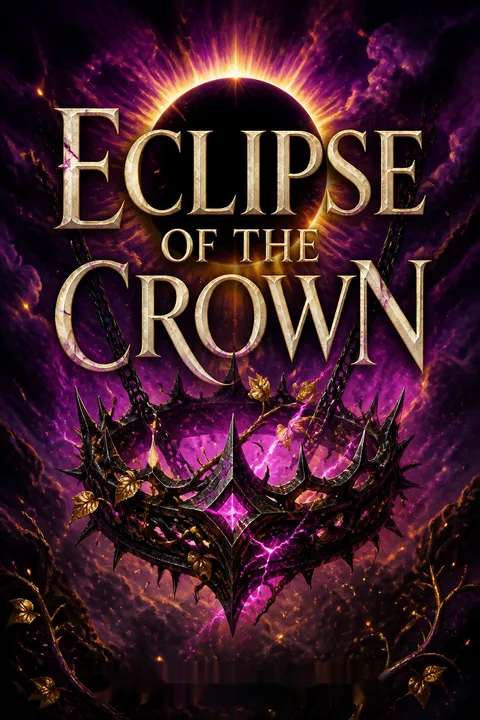


Plot Summary
A Captive at Yvlcon
After escaping the violent Marquis Cedric Caldor, Baroness Ammalie Avington arrives at Yvlcon with Damien Bloodthorne, the demon-blooded mage who has become her uneasy companion. Damien knows the Grand Order of Dread forbids unregistered guests, but he has brought her anyway.
The council’s officials separate them, lock a magical collar around Amma’s neck, and send her to confinement while Damien faces the council alone. There, Fryn, a cheerful captive with living snakes for hair, explains that the gathering is a convention for villains and that Amma’s revealing clothes mark her as Damien’s sexual property.
Amma is frightened and humiliated, but Fryn’s practical kindness gives her a first ally in the dark dimension. Damien’s warning has kept the guards from touching her, not kept him at her side.
Yvlcon turns bureaucratic absurdity into a real instrument of power. Forms and collars are played for comedy, but their consequences are physical: Amma is isolated, publicly classified as property, and denied the freedom to leave. Damien’s protective performance offers genuine safety while reinforcing the very hierarchy that endangers her. Fryn complicates the setting’s moral categories. She has survived villainous captivity by learning how to negotiate for herself, so her friendliness is not innocence but practiced agency. The scene begins the book’s central tension between protection and possession: Damien can keep Amma safe in the immediate moment, yet his methods make it harder for her to know where his care ends and control begins.
A Bargain for Amma
Before the six-member council, Damien offers the Grand Order information about E’nloc, a destructive presence he has encountered in the Wilds and at Krepmar Keep. The council enters his mind, sees the devastation E’nloc could cause, then chooses Damien for an undisclosed task and promises to release Amma if he completes it.
When Amma is finally freed, Damien carries her away from a villain who reaches for her. In private, Amma admits she is glad she caused Cedric’s death, though the liathau tree carried out the impalement.
Damien’s pride gives way to tenderness as he heals her bruises and apologizes for his part in her abduction. Their desire is mutual, but he stops before they have sex because the collar and his authority over her make consent uncertain.
Damien’s bargain makes intimacy inseparable from political coercion. He does not offer the council another atrocity; he offers knowledge, a choice that suggests he is already trying to act differently, though he still treats the arrangement as something he can manage alone. Amma’s confession about Cedric is a second kind of threshold. She can acknowledge pleasure in surviving and in retaliating without becoming a replica of the man who hurt her. Damien responds with remorse rather than demanding absolution, and his restraint matters more than his desire. The scene reframes his protectiveness: love cannot be proved by claiming someone, but it can begin to be proved by recognizing when one’s own power distorts a choice.
The Pendant’s Errand
At Yvlcon, Damien must perform villainy to protect Amma from other attendees, while she meets his former lover Delphine Delacroix and his rival Xander Shadowhart. Delphine’s attempted reconciliation exposes the cruelty of their past, including the scar Damien was forced to reopen as punishment.
The council later gives him a split, magically bound pendant and orders him to cast it into a pit near the Temple of the Void before an approaching eclipse. Damien learns the relic is connected to E’nloc but gets little explanation.
In a forbidden records corridor, he finds Xander studying the Order’s travel scrolls; Xander accuses him of using Amma and predicts she will leave. Damien punches him, then secretly steals scrolls that can take Amma near home, yet cannot bring himself to use them.
The pendant converts a vague supernatural threat into a deadline and a concrete journey, but its elaborate name and the council’s evasions preserve uncertainty rather than resolving it. Damien’s confrontation with Xander brings that uncertainty inward. Xander is not merely warning about the danger of E’nloc; he is naming Damien’s fear that affection will become another form of captivity. Damien can imagine the ethically correct action, sending Amma home, yet cannot carry it out. That failure is not presented as romantic virtue. It is a revealing mixture of attachment and selfishness, the very mixture the quest will repeatedly force him to examine. Delphine’s presence also establishes that Damien’s history of being controlled is not abstract; it has left bodily evidence.
The Oracle’s Warning
Damien and Amma leave Yvlcon for the Denonfy Oracle, hoping to learn what the council’s pendant will do. The Oracle gives Amma a cryptic warning about a winged beast, a broken bond, and the downfall of a chosen son, while Damien receives only an unhelpfully brief answer about his own destiny.
Amma sneaks into the prophecy archive and finds a record describing a hallowed son who will release the Harbinger of Destruction when the realm’s corners rot. Damien fears it means him, but Amma questions the fit.
On the descent, she slips, dislodges a boulder, and accidentally kills Jiblix, king of the Gribtoss goblins. The clan crowns her as their new ruler, leaving her to face thousands of subjects just as the prophecy’s promised empire becomes an unsettling possibility.
The Oracle’s riddles dramatize the gap between knowing a future and being able to use that knowledge. Amma’s choice to read Damien’s prophecy is a breach of trust, but it comes from refusing to let him carry the danger alone. Her doubts matter because prophecy supplies a label, not an interpretation: hallowed son could describe Damien, yet neither his identity nor his father neatly matches the prediction. The goblins then turn an accidental death into political legitimacy. Amma’s new authority is absurd in its origin, but it also tests whether power must reproduce the customs that created it. Her instinct is to question the role rather than enjoy the crown, an early sign that responsibility, for her, is measured by what happens to those beneath it.
The Dragon Below
Amma discovers that the Gribtoss goblins live under a crude monarchy, with former king Jiblix’s wives and advisers treated as possessions. She asks the wives to form a council and supports their inventions, while Damien is bathed and dressed in a scrap of cloth as her supposed concubine.
Their comic humiliation ends when the clan’s feared Big Spicy wakes: an infernal dragon that has been eating goblins who attack it. Damien tries to hold back the next suicidal battalions, but the goblins charge anyway.
After they overwhelm the dragon with nets and improvised weapons, Damien discovers it had fled abuse by other dragons and attacked only after the goblins struck first. He negotiates a truce, then Amma abdicates and leaves the clan with its new allies. She and Damien also summon Quaz, a frantic little imp, to accompany them.
The dragon encounter makes misunderstanding materially dangerous. The goblins interpret fear as proof that the creature is evil, while the dragon reads their attacks as a reason to eat. Damien’s ability to hear the dragon breaks that cycle, but only after the goblins have paid for it. Amma’s reforms are modest and concrete: she gives the wives names and influence, and encourages making rather than forced reproduction. Her decision to leave prevents benevolence from turning into a fantasy of permanent rescue; she cannot remain sovereign over every vulnerable group she meets. The scene also shifts Damien’s idea of strength. He begins by assuming he must defeat the dragon, then discovers that restraint and negotiation can save more lives than a display of magical dominance.
A Night in Buckhead
The pair cross Buckhead, where Amma reconnects with Erick Solonedy, a nobleman she has known since childhood. Erick distrusts the crown and explains that his brother Kaspar has become more loyal to King Archibald than to Buckhead’s people. He offers them shelter and arranges access to a trusted astronomer.
That night, Amma and Damien stop pretending their desire is only a game, and they make love, though the talisman still clouds the question of consent. The next morning, the astronomer studies Cedric’s stolen chart and identifies an eclipse in which both moons will obscure the sun, an event associated with the realm’s ancient catastrophe.
She warns that the chart points toward the One True Darkness, E’nloc. Damien and Amma continue toward the Temple of the Void, now aware that the council’s deadline coincides with a threat to the whole realm.
Buckhead gives the pair a temporary experience of ordinary life: friendship, a meal, a familiar town, and help offered without immediate coercion. That calm sharpens rather than erases the danger. Erick’s account shows political loyalty splitting a family, foreshadowing the crown’s private ambitions, while the astronomer links the personal quest to a historical rupture. The lovers’ intimacy is emotionally real, but the talisman prevents the scene from functioning as uncomplicated romantic reward. The book keeps consent visible inside desire, asking whether mutual feeling can neutralize an imbalance of power. Their tenderness becomes meaningful not because danger disappears, but because the story insists they must eventually choose one another without magical compulsion.
The Pendant Is Stolen
At the Temple of the Void, Damien and Amma find King Archibald, Kaspar, and the mage Gilead conducting a blood ritual over a forming pit. Kaspar’s blood strengthens the opening, and the pendant is meant to contain E’nloc before the eclipse.
Delphine arrives on a wyvern, steals the pendant from Amma, and uses her control over Damien’s noxscura to enthrall him. Under Delphine’s command, Damien turns on Amma and nearly drops her into the pit, but a moment of recognition lets him throw her onto solid ground instead.
He then leaves with Delphine. Amma’s magic cannot stop the wyvern, and her strength fails after she tries to pursue them. Xander arrives, blocks her escape, and takes her through a portal, insisting that he has a reason to keep her alive.
The temple gathers the book’s competing systems of control into one physical crisis. Archibald’s ritual treats blood as a tool of statecraft; Delphine treats Damien’s blood as a private leash; and the pendant promises containment without explaining who will bear its cost. Damien’s brief resistance is crucial but incomplete. He cannot defeat Delphine, yet he manages one refusal that keeps Amma alive. Her fall from the ledge echoes earlier abuse, making the scene’s terror specific rather than merely spectacular. Xander’s intervention is deliberately ambiguous: he rescues Amma from immediate danger while preserving his own agenda. The apparent rescue therefore does not end her vulnerability, it transfers her into another bargain.
Xander’s Unwanted Alliance
Xander brings Amma to a country estate and leaves the Righteous Sentries nearby, the same companions whose earlier choices helped deliver her to Cedric. Their uneasy reunion turns violent when Amma threatens the knight Barrett for repeating the old insult that she had invited her abuse.
Xander explains that he and Delphine are not allies: the Grand Order secretly assigned Delphine a task, and Xander followed her to learn what it was. He also explains that pure noxscura can poison or transform those who survive it, which is how Delphine gained power over other blood mages.
Xander believes Damien is especially vulnerable because his own magic is unstable. He needs Amma to distract Delphine while he frees Damien, and Amma agrees because saving Damien matters more than trusting Xander.
Xander’s exposition is also a negotiation over whose account Amma will accept. He admits enough to become useful, but not enough to become trustworthy. His explanation of noxscura widens the story’s moral history: Delphine’s power comes from an institutional experiment that killed children, so her cruelty has a political origin without becoming excusable. Amma’s conflict with the Sentries likewise refuses easy reconciliation. She can accept their help without pretending their earlier betrayal caused no harm. Her decision to cooperate with Xander is therefore neither gullibility nor forgiveness. It is tactical judgment under pressure, a form of agency that takes the risks seriously while keeping her purpose clear.
Delphine Falls
Xander’s group reaches Delphine’s temple at Briarwyke, where Barrett draws the wyvern away and Kori fights the smaller flying beasts. Pippa uses her divine power as a lure, giving Amma and Xander a chance to enter the main hall. Delphine keeps Damien enthralled and orders him to attack Xander.
Amma hides among the pillars until Xander’s blood magic creates cover, then rushes Delphine. When shadow imps block her, Amma awakens the temple’s dead brambles and sends them across the ceiling to tear through the attackers.
She nearly reaches Delphine, but Damien drags her toward a pit containing reanimated children. At the last instant, Xander’s taunts stir Damien’s recognition. Damien takes Amma’s dagger and drives it into Delphine; the children swarm her, and her magic dies with her.
This battle makes the protagonists’ strengths interdependent. Xander supplies strategy and blood magic, Kori and Pippa absorb danger, and Amma turns the temple’s neglected growth into a weapon. Her power is no longer a mysterious accident but a capacity she can direct, though using it drains her. Damien’s return to himself is not achieved by a grand declaration; the competing commands expose a crack in Delphine’s control, and Amma’s presence gives him something to recognize. The pit of reanimated children is a grotesque mirror of Delphine’s own childhood exploitation. Their attack ends her rule, but the scene does not mistake revenge for healing. The survivors leave with immediate danger ended and deeper questions intact.
The Truth in Orrinshire
After Delphine’s death, Damien gives Amma a scroll that could take her safely toward Faebarrow. She tears it apart and chooses to remain with him, even though the pendant is gone and the Grand Order may punish their failure.
On the road, Damien uses the occlusion crystal to speak with Zagadoth, his imprisoned demon father, and demands the truth about his mother. Zagadoth admits that Diana was once a priestess captured during a battle, but says he cared for her and that she chose to return to Aszath Koth.
He also confesses that he lied about demons being incapable of love because he feared Damien would repeat his own heartbreak. Damien then asks the question he has avoided for years: whether he himself can love. Zagadoth tells him that asking already contains the answer.
The conversation with Zagadoth changes the emotional vocabulary Damien has been using to interpret himself. His father’s lie was intended as protection, but it left Damien treating tenderness as an impossible weakness and desire as its only acceptable substitute. The revelation does not settle what happened between Zagadoth and Diana; it makes the missing history more consequential. Amma’s refusal to take the homeward scroll also matters. She chooses the risk with open eyes, rather than being carried along by Damien’s needs. Their relationship begins to move from possession and rescue toward explicit commitment, while the family history exposes how protective lies can reproduce the very abandonment they were meant to prevent.
A Mother’s False Memory
In the Orrinshire temple, Damien finds Diana, now a priestess of Isldrah, and approaches her with hope and suspicion tangled together. Diana believes he died as a child after she took him and Xander from Aszath Koth; she remembers grieving him and believes the gods restored him.
When Damien questions her account, the pendant appears in her hand, and she apologizes before using it against him. Gilead and Kaspar help subdue Damien, while temple attendants overwhelm Amma with enchanted water that makes her cheerful, forgetful, and compliant.
She wakes in priestess robes, surrounded by people insisting she is safe and should keep drinking. Vanders bites her thumb, and the sudden pain clears the enchantment enough for her to recognize that Damien is missing and that the temple has altered her memory.
Diana’s reunion is structured around incompatible memories rather than a simple mother-and-son embrace. She believes her grief is proof of devotion, while Damien hears a story that contradicts his father’s account. The pendant turns that uncertainty into immediate violence, showing how even family affection can be weaponized when institutions control the story people remember. Amma’s enchanted water is a quieter version of the same violence: it does not restrain her body, it edits her response to harm until compliance feels pleasant. Vanders restores her not through a heroic spell but through pain, a sensory fact the enchantment cannot absorb. The scene makes memory a contested territory and insists that emotional ease is not the same as safety.
Vanders Breaks the Spell
Amma hides the temple’s enchanted water in a rapidly growing fern and summons Kaz, Katz, and Quaz with blood, a torn hymn, and a makeshift ritual. The newly summoned imps cannot yet disguise themselves, so they help her slip through the temple instead.
Amma finds Diana still carrying the pendant and pretending that the temple’s version of events is true. The imps topple the floating relic above the fountain, shattering it and breaking the spell over Diana.
Memory returns in a rush: she recognizes that she was deceived, remembers Zagadoth and Damien, and admits she let the king’s people take her son. Amma gives her belongings back, and Diana chooses to help rescue him. They leave the temple together for Eirengaard, joined by the imps and driven by the approaching eclipse.
Amma’s escape is built from imperfect tools and accumulated observation. She cannot overpower the temple’s attendants, so she hides evidence, improvises a summoning, and recruits creatures she has previously learned to trust. The imps’ incompetence is not incidental: the plan succeeds because Amma adapts to what they can do rather than demanding that they become ideal helpers. Diana’s recovery also refuses the fantasy that one broken relic instantly repairs a life. Her memories return, but guilt arrives with them, and she acts by choosing to confront the consequences. The two women form an alliance without needing to erase their mistrust. Their shared urgency comes from a concrete fact: Damien is in the king’s hands, and time is running out.
The Hallowed Son
At an abandoned arena, Archibald’s divine mages bind Damien and draw his blood while the eclipse darkens the sky. Gilead reveals that he intends to use Damien as a vessel for E’nloc, then control the creature and stage a limited attack that will make Archibald look like the realm’s savior.
The ritual opens the void, and E’nloc enters Damien with overwhelming power. Damien kills the four noble sons who helped fuel the rite, but Gilead can still control his body by manipulating the vessel.
Xander arrives with Pippa and kills Gilead using a spell granted by the Grand Order. The surviving men move to Eirengaard Keep, where Xander demands that Damien free his mother, Birzuma. Archibald admits his plan was to sacrifice selected districts to restore public faith in the crown.
The prophecy’s language becomes political machinery. Gilead casts Damien as the destined hallowed son, but his plan is not sacred inevitability; it is a deliberate conspiracy that exploits prophecy, blood, and public fear. Archibald’s willingness to sacrifice targeted neighborhoods reveals the crown’s version of evil as cleanly dressed calculation. Damien’s power, once released, does not make him free. E’nloc can overwhelm him, and Gilead can still direct the vessel, leaving him caught between two forms of domination. Xander’s arrival prevents Gilead from controlling the outcome, but it also advances Xander’s own demand. The scene’s central question is no longer whether Damien is powerful. It is whether he can choose what that power is for.
Amma Chooses the Rift
Amma reaches Eirengaard and finds Damien enthroned with E’nloc inside him. He tries to drive her away by magically replacing her love with hatred, but she refuses to leave. Xander, desperate to remove the talisman, stabs Amma and then uses Pippa’s luxerna and a spell from the Lux Codex to resurrect her. Amma returns furious and alive, gives Damien his own talisman, and orders him to open a portal to the Abyss and expel E’nloc.
Damien obeys; the pendant breaks apart and falls into the void. E’nloc still reaches through the rift, so Amma grows a giant liathau tree across it while Damien’s magic binds the roots and closes the breach. In the Everdarque, the gods offered Amma immortality if she abandoned him. She chose to return instead.
Amma’s return is the book’s clearest rejection of the idea that virtue means self-erasure. The gods frame survival as selfishness and sacrifice as the only moral choice, yet Amma’s decision rests on a promise she genuinely wants to keep. Her love does not make her passive: she refuses Damien’s attempt to erase it, accepts the danger of resurrection, and directs the power that seals the rift. Damien, in turn, must surrender control and obey her command. The talisman changes hands, but its significance changes too. It is no longer simply a device for domination; in Amma’s hands it becomes a means of interrupting E’nloc. Their bond is not safe, but it is chosen.
The Families Reassemble
With the rift sealed, Diana confronts Birzuma, Xander’s demon mother, and banishes her from the realm with a divine spell. Princess Isabella, Archibald’s daughter, helps crack the crystal holding Zagadoth, freeing Damien’s father at last.
The Grand Order offers Amma a council seat for stopping E’nloc, but she declines and asks instead for help freeing Zagadoth; the council refuses, then closes the remaining infernal fissures. Damien and Amma agree to visit Aszath Koth together before returning to Faebarrow, while the surviving allies stay to help Eirengaard recover.
Amma also discovers she can use the talisman to command Damien, then removes it from him without harm. The resolution is not a return to their old lives. Their families and kingdoms have changed, and they now face them as partners rather than captor and captive.
The resolution distributes power rather than concentrating it in a triumphant hero. Diana’s victory comes from training and judgment; Isabella uses an ability her father suppressed; the Grand Order repairs the planar damage but refuses to solve the family’s remaining problem. Each relationship must therefore continue beyond the spectacle. Damien’s reunion with Zagadoth cannot erase their years of half-truths, and Diana’s return cannot undo her role in the kidnapping. Amma’s choice to visit Aszath Koth acknowledges that loving Damien includes learning the place that formed him, not simply rescuing him from it. Removing the talisman safely marks a crucial change: intimacy can continue without the magical bond that once made choice uncertain.
Epilogue
In Aszath Koth, Damien and Amma turn their old power games into willing play, until interruptions from Damien’s parents and a message about a newly hatched dragon threaten their privacy. The note reports that the draekin have named their child Murple, a word that means hope in their language. Damien then asks Amma to marry him.
He already knows her answer from the Oracle, but the certainty does not spare him the pleasure of hearing it. The final joke returns him to his self-appointed role as a villain: he threatens to keep Amma awake all night, then proves that his cruelty remains mostly theatrical. Their future includes both kingdoms, family obligations, and a marriage chosen without a talisman.
The epilogue makes domestic life the final test of the characters’ transformation. Damien still reaches for the language of conquest and punishment, but Amma can answer it as an equal because the threat is now play rather than coercion. The interruptions are comic, yet they also show that love does not create a sealed world. Parents, political responsibilities, and a newly born draekin remain part of their shared life. The oracle’s prediction offers foreknowledge, but Damien’s proposal still matters because he asks and Amma answers freely. The story closes not by abolishing their theatrical villainy, but by separating its performance from actual control.
Analysis
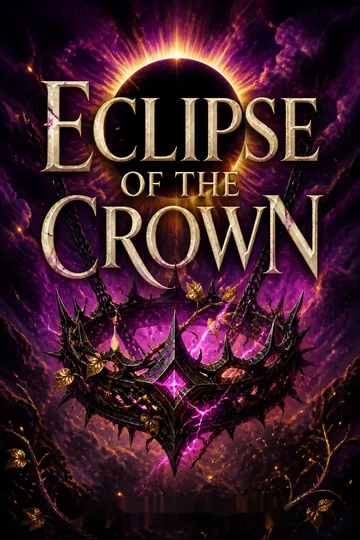
Eclipse of the Crown builds its romance around a problem that fantasy courtship often avoids: Damien has the power to decide what happens to Amma, and wanting her does not make that power harmless. The talisman, the collar at Yvlcon, and Delphine’s control over Damien repeat this problem at different scales. Each device asks whether affection can be trusted when one person can override another’s will. The story’s answer is not that love purifies coercion. Instead, love becomes credible when characters recognize the coercion, resist it, and allow the other person to choose.
Amma’s compassion is likewise treated as a force with risks, not as passive goodness. She protects the goblins, but she also questions their customs, gives their former wives a voice, and eventually leaves rather than making herself indispensable to them. Her return from the Everdarque is framed by the gods as selfish, yet she chooses it because her promise to Damien is genuinely hers. The choice exposes how easily institutions can disguise obedience as virtue.
Damien’s development depends on rejecting the story he inherited about himself. His father’s claim that demons cannot love shaped his self-image; prophecy then seems to confirm that he is destined for destruction. But neither inherited nature nor prediction absolves him of choice. His attempts to keep Amma safe sometimes repeat the logic of the people who controlled him. The turning point is not that he becomes harmless, but that he can accept her authority and act against E’nloc without making himself its master.
The book’s comic machinery sharpens rather than cancels its darker material. The Grand Order’s paperwork, the goblins’ improvised monarchy, and the imps’ incompetence make power look ridiculous, but they also show how systems persist through habit. Against those systems, the ending offers no effortless restoration. Families must face old lies, kingdoms must repair what their rulers broke, and Damien and Amma must build a future where choice remains possible.
Review Summary
People Also Read


Characters
Ammalie Avington
Compassionate wild cardAmmalie, usually called Amma, is the young baroness of Faebarrow and the story’s moral center. She is curious, generous, and inclined to protect people whom others dismiss, from frightened goblins to damaged creatures. Her kindness is not the same as innocence: after surviving Cedric’s abuse, she can name her anger and accept that she wanted him dead. Amma’s instinct to sacrifice her own needs often puts her in danger, but the story gradually shows her learning to distinguish generosity from self-erasure. Her connection with Damien draws out both her sensual confidence and her capacity to challenge him. She is most herself when compassion becomes action, whether she is reforming a goblin clan or refusing to let anyone define her choices.
Damien Bloodthorne
Reluctant dark lordDamien is a blood mage, demon spawn, and son of Zagadoth, raised to regard domination as natural and emotional attachment as impossible. He uses menace, sarcasm, and theatrical cruelty to manage fear, often disguising vulnerability as possession. His attraction to Amma unsettles that self-image because her kindness does not merely soften him; it makes him question the rules by which he has understood himself. He is capable of tenderness, but his protective impulses can still become controlling, especially when he believes danger excuses withholding the truth. His central struggle is not simply to become good, but to accept responsibility for choices made under pressure and to recognize that love requires another person’s freedom.
Xander Shadowhart
Rival with an agendaXander is a blood mage, Damien’s longstanding rival, and the son of the demoness Birzuma. He is clever, vain, theatrical, and skilled at making other people’s weaknesses sound like obvious truths. His cynicism protects him from dependence, especially from the possibility that he might care for anyone who could disappoint or control him. Xander often helps Amma and Damien for reasons that suit his own plans, so his usefulness never quite becomes trustworthiness. His rivalry with Damien combines genuine hostility with a complicated sense of kinship: each recognizes the other’s capacity for cruelty, and both are unsettled by the possibility that affection might change what they choose to do.
Delphine Delacroix
Nox-touched former loverDelphine is a powerful nox-touched mage and Damien’s former lover. Pure noxscura gave her the ability to manipulate the magic in other blood mages, and she expects relationships to grant her access and control. Her polished appearance and practiced intimacy conceal a brutal need to have others obey her. Delphine’s own transformation began in a violent experiment imposed on children, a history that explains the world that formed her without excusing what she chooses to perpetuate. She functions as a dark mirror for Damien: both know what it is to be controlled, but she turns that experience into a justification for controlling others.
Diana Bloodthorne
Priestess and motherDiana is Damien’s human mother, an Isldrah priestess with the bearing of a trained warrior. Strong-willed and practical, she once crossed the boundary between a religious duty and an intimate life in Aszath Koth. Her devotion can be both a source of strength and a vulnerability, especially when divine authority shapes what she believes about herself and her family. Diana’s relationship with Damien is burdened by absence, conflicting histories, and the pain of lost years. She is not defined only by maternal tenderness: she has a sword, a conviction of her own, and the capacity to confront powerful enemies when she understands what is at stake.
Zagadoth
Imprisoned demon fatherZagadoth is Damien’s demon father, a lord of the Infernal Darkness trapped in an occlusion crystal. He is warm, exuberant, and more emotionally expressive than Damien expects, though his cheerful manner can conceal how much he has withheld. Zagadoth’s fear of repeating heartbreak leads him to teach Damien that demons cannot love, a protective lie with lasting consequences. His history with Diana and his concern for his son complicate the familiar image of the ruthless demon lord. Through him, the story examines how a parent’s attempt to shield a child from pain can become a different form of deprivation.
Birzuma
Xander’s demon motherBirzuma is a demon lord imprisoned in a crystal by the crown and the mother Xander is determined to free. She is formidable, imperious, and capable of treating even her son as a disappointment when he fails to meet her expectations. Her relationship with Xander reveals the cost of seeking approval from a parent who measures worth by usefulness. Birzuma’s history intersects with Damien’s family and the politics of Aszath Koth, making her a personal figure as well as a source of danger.
Archibald Lumier
King behind the ritualArchibald is the king of Eiren and a descendant of a dominion, with the authority and inherited magic to imprison demons. He presents himself as the defender of the realm, but his devotion to the crown’s image makes him willing to treat ordinary people as expendable. His relationship with his children is shaped by control and political expectation rather than trust. Archibald’s character shows how respectable institutions can commit atrocities while continuing to speak in the language of public service.
Gilead
Prophecy’s manipulatorGilead is a mage who once served Cedric Caldor and later works with Archibald’s court. Patient, secretive, and adept at interpreting magical systems, he uses prophecy as cover for a plan of his own. He understands that fear can be organized and that the appearance of a savior may matter more to a ruler than the safety of the people being sacrificed. Gilead represents the danger of expertise without accountability.
Erick Solonedy
Amma’s trusted old friendErick is the younger son of Buckhead’s ruling family and a longtime friend of Amma. He is generous, courteous, and wary of the crown’s growing influence over his home. His instinct is to offer practical help, including shelter and access to a trusted astronomer, rather than demand that Amma explain every danger before he assists her. Erick provides a glimpse of the stable, humane life Amma might have had, and his presence also exposes Damien’s jealousy.
Winnifred Solonedy
Skeptical noble investigatorWinnifred is Erick’s sister, a member of Buckhead’s ruling family, and a sharp-minded investigator. She has gone to Eirengaard to examine troubling changes around the crown. Her independence and refusal to accept the official story make her useful to Amma’s allies. Winnifred balances noble standing with a willingness to question the political structures that benefit her family.
Laurel
Amma’s fearless friendLaurel is Amma’s close friend, a half-elf with a mischievous streak and a talent for acting decisively in dangerous situations. She arrives in Eirengaard with Perry and brings practical courage, familiar affection, and a willingness to tease Amma even in a crisis. Laurel’s loyalty is direct rather than ceremonial. Her presence reminds Amma that home is made of people who know her beyond her title or her relationship with Damien.
Perry
Nervous young magePerry is an acolyte preparing for his religious examinations and one of Amma’s trusted friends. He is cautious and easily intimidated, but he studies magic carefully and contributes what he can when events exceed his experience. His bond with Laurel gives him encouragement without erasing his uncertainty. Perry’s presence broadens the story’s picture of courage: he is not fearless, but he still follows those he cares about into danger.
Pippa
Uneasy temple priestessPippa is a priestess attached to the Righteous Sentries and a devotee of a goddess of health. She is compassionate but frightened, often caught between her religious commitments and Xander’s manipulation. Her healing skills make her valuable, while her uncertainty makes her vulnerable to being used as bait. Pippa’s struggle is not a simple conflict between courage and cowardice; she must decide whether obedience to an authority is still righteous when that authority places others at risk.
Barrett
Blunt Righteous SentinelBarrett is the heavily armored knight among the Righteous Sentries. He is physically brave and often careless with his words, repeating the assumptions that once helped excuse Cedric’s abuse of Amma. His presence forces Amma to insist that survival and consent are not the same as submission.
Kori
Stealthy Sentinel fighterKori is a stealth-focused member of the Righteous Sentries who prefers daggers, ambush, and direct action. She is guarded and practical, more comfortable fighting than explaining herself. Her willingness to help the group does not make her sentimental about the cost of doing so.
Fryn
Yvlcon’s serpent-haired guideFryn is an experienced Yvlcon captive with a crown of living snakes and a buoyant, candid manner. She has survived in villainous company by learning how to read its members, negotiate with them, and avoid confusing danger with affection. Her advice gives Amma a practical map of the gathering, while her history shows how people marked as monstrous can build chosen families and forms of safety.
Skoob
Goblin royal adviserSkoob is a Gribtoss goblin who becomes Amma’s adviser after she is named their king. He is eager, deferential, and accustomed to a brutal hierarchy, so Amma’s gentler orders initially confuse him. His hopes for better treatment make him an early measure of whether her accidental authority can become meaningful leadership.
Vanders
Antidote-bearing vaxinVanders is a small, round vaxin whose bite carries an antidote and whose loyalties tend to show through sudden appearances, determined nips, and careful companionship. Amma adopts him after meeting him at Yvlcon. His tiny size makes his interventions easy to underestimate, but he repeatedly reaches her when larger allies cannot.
Kaz
Crooked-jawed impKaz is Damien’s familiar, a small imp with a crooked jaw and a history of blunt, comic insults. Amma grows fond of him despite his suspicion of human women. His chaotic energy contrasts with Damien’s guarded manner, and his loyalty to both travelers gives him a place in their improvised family.
Katz
Melancholy summoned impKatz is an imp accidentally summoned when Damien misspells Kaz’s name. Slow, solemn, and convinced that nobody wants him, he is nevertheless included in the group and trusted with responsibility. His gloomy affectation becomes a running contrast to the frantic chaos around him.
Quaz
Feral red impQuaz is a quick, red-skinned imp with wings, sharp teeth, and a talent for turning himself into an unconvincing cat. Amma accidentally summons him while trying to bring back Kaz. His speed and willingness to attack threats make him one of her most effective allies, though his transformations are never as graceful as he hopes.
Anomalous Craven and Mudryth
Oddity-selling alliesAnomalous Craven is an exuberant alchemist who sells curious objects at Yvlcon, while Mudryth is his practical, sharp-eyed companion. They provide Damien and Amma a brief reunion with familiar allies and demonstrate that a villain’s market can contain strange inventions alongside genuine friendship. Their experiments are as hazardous as their wares.
E’nloc
The One True DarknessE’nloc is an ancient destructive presence associated with a spreading void and the thinning boundaries between planes. It seeks a vessel and communicates through an insistence on annihilation, making it both a cosmic threat and a pressure on Damien’s control of himself. E’nloc is less a conventional scheming villain than a force that turns existing fear and ambition into catastrophe. Its presence tests whether power can be contained without becoming another form of domination.
Isabella
Restless royal daughterIsabella is Archibald’s young daughter and a princess of Eiren. Her father has restricted her access to his private collection and discouraged her from using her inherited abilities. She is curious, irreverent, and unimpressed by the authority that surrounds her, suggesting a different future for the crown than the one Archibald tried to preserve.
Plot Devices
Bloodthorne’s Talisman of Enthrallment
Control with a costThe talisman allows Damien to compel another person, but its presence inside Amma also makes her vulnerable to commands and clouds the meaning of their intimacy. Damien’s use of it becomes a test of whether he can distinguish desire from consent. Later, it becomes central to both Amma’s recovery and the attempt to resist E’nloc. The object does not simply symbolize control; it repeatedly changes who can issue commands and whether those commands can be refused.
Fragmentable Dreadcouncil Pendant
A deadline disguised as disposalThe Grand Order gives Damien a magically divided pendant and commands him to cast it into the pit at the Temple of the Void before the eclipse. The council describes its purpose only as containment, leaving Damien and Amma to guess how it relates to E’nloc. Its fragments recur at several turning points, connecting the council’s bargain, the prophecy, and Damien’s eventual role as a vessel. The pendant makes an abstract threat physical, portable, and dangerously easy for rival mages to steal.
The Eclipse and Prophecy
A future with no instructionsThe approaching alignment of the moons and sun creates the deadline for the story’s crisis. The Denonfy Oracle’s predictions and the archive’s prophecy suggest that a hallowed son will release a Harbinger of Destruction, but their language never gives the characters a reliable plan. The eclipse heightens the magic around the realm while encouraging political actors to interpret the coming darkness for their own ends. Prophecy supplies pressure and pattern, not a moral answer, forcing Amma and Damien to decide what they will do rather than simply follow a label.
Noxscura and Luxerna
Destruction meets creationNoxscura is the destructive magical force associated with demons and blood mages; in its pure form it can poison or transform those who survive it. Luxerna is its divine counterpart and can sustain spells such as resurrection. Their interaction explains Delphine’s control over Damien, Amma’s unusual magical growth, the way E’nloc enters a vessel, and the danger of trying to heal or contain it. These forces are not moral identities by themselves. The characters’ choices determine whether magic becomes coercion, protection, or repair.
Amma’s Liathau Staff
Growth turned into agencyAmma’s connection to liathau trees and other living plants develops from a quiet affinity into a force she can direct under pressure. She grows a staff containing magical power, uses living vines to help the goblins resist the dragon, and later draws on the staff and the surrounding garden to close the rift. The staff links her home, her training, and her capacity to act without relying on Damien’s blood magic. Its growth follows her own: uncertain, sometimes exhausting, but increasingly self-directed.
Villains & Virtues Series
About the Author


Download PDF
Download EPUB
.epub digital book format is ideal for reading ebooks on phones, tablets, and e-readers.








