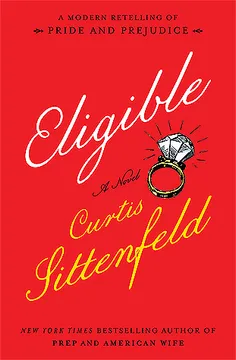


Plot Summary
A Summer Called Home
Five weeks before the summer begins, Mr. Bennet collapses at home and undergoes emergency bypass surgery. His daughters Jane and Liz leave their lives in New York to help him recover, taking on meals, errands, and medical appointments while their three younger sisters keep to their own routines.
Mrs. Bennet, absorbed in organizing a charity luncheon, sees another opportunity in the family crisis: Chip Bingley, a handsome Harvard-trained emergency physician and former star of the dating show Eligible, has moved to Cincinnati.
She persuades her friend Helen Lucas to invite the Bennets to a Fourth of July barbecue where Chip will be present. The house gathers around their father’s recovery, but the invitation also sets the family’s romantic hopes in motion.
The medical emergency gives the Bennets a practical reason to reunite, while exposing how little the household functions without Jane and Liz doing its daily work. Mrs. Bennet’s matchmaking turns crisis into social opportunity, revealing her instinct to manage uncertainty by arranging other people’s futures. Mr. Bennet’s recovery does not restore the family to health; it merely makes visible the habits and dependencies that were already there. The summer begins as a homecoming, but for the eldest sisters it is also an encounter with the life they left behind.
Two Women, Two Secrets
The sisters arrive in Cincinnati carrying private histories their family does not know. Jane once expected to marry Jean-Pierre Babineaux, but their incompatible plans for children and where to live ended their long relationship.
At thirty-nine, she has begun trying to conceive through donor insemination, paying for each attempt herself and telling only Liz. Liz, meanwhile, has spent much of adulthood waiting for Jasper Wick, the charming former colleague who repeatedly chose other women.
After he married Susan and had a son, Jasper and Liz resumed their intimacy under an arrangement that lets him continue living with his family. Liz accepts the secrecy as a workable form of closeness, while Jane hides a deeply personal plan that may determine whether she ever becomes a mother.
The sisters’ secrets arise from different relationships to time. Jane is trying to act before fertility narrows her choices, while Liz has spent years preserving a possibility that Jasper never turns into a public commitment. Both have built their plans without asking their family to witness them, partly to avoid judgment and partly to protect themselves from disappointment. Their arrangements look unlike each other, but each woman is postponing a reckoning: Jane with the limits of her body, Liz with the limits of Jasper’s devotion.
The Barbecue's Cold Welcome
At the Lucases’ barbecue, Jane meets Chip and quickly finds him warm, attentive, and attractive. Liz, by contrast, approaches his friend Fitzwilliam Darcy and receives an abrupt refusal when she asks to sit at his table. Later, she overhears Darcy dismissing Cincinnati women and questioning why anyone would pair him with Liz.
Rather than retreat, she confronts him with a pointed defense of herself and her hometown. Chip does not share Darcy’s contempt, but neither does he challenge his friend in the moment. The two sisters leave with opposite impressions of the visitors: Jane is intrigued by the former reality-show bachelor, while Liz has acquired a particular reason to dislike the surgeon who judged her before knowing her.
The barbecue establishes the novel’s central contrast between first impressions and actual character. Jane is willing to entertain the possibility that a man made famous by television might be sincere; Liz is quick to treat Darcy’s arrogance as proof of his whole nature. Her retort is both self-respect and performance, a way of refusing the social ranking he has imposed on her. Yet the scene also shows how easily contempt becomes mutual: Darcy’s disdain gives Liz a reason to watch him closely, even as she insists she has no interest in him.
A Bachelor Becomes Boyfriend
Chip asks Jane to dinner soon after the barbecue, and their first date stretches through a restaurant meal, drinks, and an overnight together. Jane tells Liz that the ease between them matters more than his looks, and Chip soon says he loves her.
Their courtship deepens through more dates and a family dinner, where Chip describes the isolation and producer manipulation of Eligible. He admits he did choose to continue through the selection process, despite Mrs. Bennet’s preferred story that his sister Caroline simply put him on the show.
Liz revises her suspicion that Chip is merely chasing fame, but Mary’s online discovery of an old gossip item about his academic record makes the family question his medical ability. Jane defends him, and the sisters’ approval begins to diverge.
Jane’s attraction grows from a feeling of ease, not from the spectacle attached to Chip’s public image. That distinction matters because the family keeps trying to read him through status, credentials, and television exposure. Liz’s initial skepticism is not wholly misplaced, but her instinct to investigate can become another form of control. Meanwhile, Jane is not simply swept along: she notices the contrivance of their meeting and still chooses to continue. The relationship becomes real through private attention, even as outsiders keep trying to assign it a story.
The Pregnancy Changes Everything
Jane faints during lunch with Caroline Bingley and is taken to Christ Hospital, where tests reveal that she is nine to ten weeks pregnant. The pregnancy began with a donor insemination before she met Chip, but she had not checked the results of her final treatment or told him she was trying to conceive.
Chip learns the truth in the emergency room and is shaken by both the pregnancy and Jane’s secrecy. He questions whether she could have become pregnant by someone else, then tells her he needs time to absorb the news.
Their affection falters. Soon after, he leaves Cincinnati to film an Eligible reunion, informing Jane by text rather than having a proper conversation. Jane, hurt and unsure what she wants now, accepts work with friends in Rhinebeck and leaves town.
Jane’s pregnancy turns a private project into a fact that must be negotiated with another person. Her silence was meant to protect the fragile possibility of motherhood, but it also kept Chip from knowing what kind of future he was entering. His response is understandable in part, yet his retreat to television leaves Jane bearing the emotional and physical consequences alone. The reversal unsettles the familiar romance pattern: a desired pregnancy does not immediately secure love, and a loving courtship does not guarantee readiness for parenthood.
Willie Misreads the Family
Mr. Bennet’s sister Margo visits with her stepson, Will Collins, a wealthy technology entrepreneur whom the younger Bennets still remember as the naked little boy they met in childhood. During his visit, Willie kisses Liz and proposes a practical marriage, assuming her age and family circumstances make his offer welcome.
Liz refuses him, and Mrs. Bennet scolds her for rejecting a successful man. Driving Mr. Bennet to physical therapy, Liz learns why her mother is so interested in Willie: her parents have no health insurance, owe roughly a quarter-million dollars for his surgery, and carry multiple mortgages.
Mr. Bennet admits the family cannot sustain the Tudor. Liz begins investigating a sale, while Willie’s later phone calls with Charlotte Lucas set the old friends on an unexpectedly fast path toward each other.
Willie’s proposal exposes a familiar family habit in an extreme form: people are treated as solutions before they are understood as individuals. Mrs. Bennet sees his money as rescue, while Willie mistakes shared history for compatibility. Liz’s refusal is an assertion of agency, but the financial revelation makes that choice feel costly. Her parents’ crisis has been hidden behind a large house and country-club routines, so the apparent security of the Bennets proves to be an inheritance already spent. Liz now has to act where her parents have avoided looking.
The House Has Teeth
Liz hires Shane Williams, a former schoolmate turned real-estate agent, to assess the Tudor and quietly prepares her parents to sell. The first interested buyers withdraw after an inspection finds brown recluse spiders throughout the house, including the basement and attic.
A costly fumigation becomes necessary, and the Bennets must leave their home for several days. Meanwhile, Jane moves to Rhinebeck, Lydia grows close to Ham Ryan, and Kitty and Mary begin looking for an apartment.
Liz sorts the basement, rents storage space, and pays for furniture so her younger sisters can move out. The sale does not solve everything, but the infestation makes clear that the family’s disorder is not merely financial or emotional. The house itself has been neglected beyond what appearances can conceal.
The spider infestation converts the Tudor from a symbol of inherited comfort into an active liability. Its hidden damage gives physical form to the family’s long practice of ignoring problems until someone else is forced to handle them. Liz’s competence is real, but her impulse to manage every consequence risks making her indispensable to the very people she wants to free. She buys her sisters a way out, yet also takes on financial responsibility for them. The house’s condition insists that rescue requires more than tidying; the structure itself must change.
A Confession, Then a Letter
As Liz and Darcy continue crossing paths on their runs, their arguments give way to repeated sex at his apartment. When Darcy appears at Liz’s sisters’ new flat and declares that he loves her, he frames his attraction with cutting criticisms of her looks, humor, and family.
Liz rejects him, believing he has already harmed Jane’s relationship with Chip and helped ruin Jasper’s life at Stanford. Jasper arrives in Cincinnati and offers his account of being expelled, blaming a politically motivated instructor and Darcy.
After Liz leaves for Houston, Darcy’s letter gives a different account: Jasper had urinated on the instructor’s desk and damaged her computer, and the university expelled him for property damage. Darcy also explains that he doubted Jane’s feelings for Chip but did not send Chip to California. Liz realizes she judged both men on incomplete evidence.
This section turns misjudgment into an active force rather than a simple mistake. Liz has built an interpretation of Darcy from his worst behavior, then uses that interpretation to dismiss his confession. Her trust in Jasper rests on the opposite distortion: years of intimacy have made his omissions seem less significant than they are. Darcy’s letter does not make him blameless, nor does it erase the cruelty of his declaration. It does, however, make Liz confront the difference between knowing someone’s habits and knowing the facts of their life.
Pemberley Interrupts the Escape
After interviewing feminist icon Kathy de Bourgh in Houston, Liz flies to California to support Charlotte, who has moved in with Willie and feels overwhelmed by their rushed partnership. Charlotte takes Liz to Pemberley, Darcy’s immense family estate, where Darcy receives them graciously and invites them back for dinner.
Liz learns that she misread Georgie Darcy’s message: Caroline had been injured in a car accident, not reunited romantically with Darcy. Their attraction resurfaces, and Darcy asks Liz to breakfast the next morning.
Before they can talk privately, Mary texts that Lydia and Ham have eloped to Chicago after the Bennets reacted badly to Ham’s disclosure that he is transgender. Liz cancels breakfast and books a flight back to Cincinnati, leaving Darcy at the airport with their relationship unresolved.
Pemberley complicates Liz’s settled picture of Darcy. The estate reveals his privilege, but his hospitality also shows a warmth she had not allowed herself to see. Her California visit gives them a chance to begin again, yet family obligation interrupts before she can decide what that chance means. Liz’s departure is not simply noble self-sacrifice; it is bound up with guilt about years of distance from her family. She chooses the familiar emergency over an uncertain intimacy, then has to live with the cost of leaving before either of them can speak plainly.
A Marriage Without Permission
Lydia and Ham marry in Chicago after the Bennets respond to Ham’s transgender identity with alarm and ridicule. Liz returns to Cincinnati and finds Mrs. Bennet distraught, while Mr. Bennet and Kitty have driven to Chicago without finding the couple.
Lydia eventually sends a photograph of herself and Ham holding their marriage certificate. Liz welcomes Ham at the couple’s return party and challenges her parents to make room for their daughter’s choice. Darcy has separately helped explain Ham’s transition to Mr. and Mrs. Bennet, and over time Mr. Bennet begins seeing him socially.
Mrs. Bennet remains slower to change, but she eventually joins her husband in a dinner with the newlyweds. Liz leaves Cincinnati again, having supported Lydia without pretending her family’s acceptance is complete.
Lydia’s elopement is an act of commitment and a response to the family’s refusal to recognize Ham with dignity. The Bennets initially treat the marriage as a threat to reputation, but the couple’s absence forces them to encounter the limits of parental control. Liz’s intervention is not a perfect cure: her mother’s prejudice persists, and reconciliation takes time. What changes is the family’s behavior, gradually, through contact and ordinary acts of inclusion. Ham’s effort to keep reaching out gives acceptance a practical shape rather than making it a sudden conversion.
Jane's Unlikely Television Wedding
After the Eligible reunion ends, Chip seeks Jane out in New York and proposes. He says the reunion made him understand that his doubts about medicine had overwhelmed his feelings for her, and he wants to raise her baby as his own.
Because their agreement with the show prevents them from openly resuming their relationship for months, a producer offers to film their wedding as a special. Jane accepts, preferring marriage and a shared start with Chip to waiting until after the birth, though she knows the choice will expose her to publicity.
At Thanksgiving, she tells the Bennets that the baby came from donor insemination, that Chip is her fiancé, and that the wedding will be televised. The news shocks the family, but Jane asks them all to attend.
Jane’s decision is neither a return to the old romance nor a surrender to television. She sees the show as a narrow, compromised route to the life she wants with Chip, and chooses it with a clearer understanding of its costs than she had during his first season. Her disclosure at Thanksgiving also reverses the family’s usual pattern of managing her future for her: she supplies the facts, sets the terms, and asks them to participate. The public wedding makes private choices visible, but it does not make them less hers.
The Best Man's Second Chance
In Palm Springs, Liz serves as Jane’s maid of honor while cameras follow both families. Caroline confronts Liz and insists she is unworthy of Darcy, but Georgie clarifies that Caroline’s earlier message referred to her injury in a car accident, not a renewed romance.
Liz understands that she let fear turn an ambiguous text into a rejection. During the wedding, she finds Darcy away from the cameras, thanks him for helping Jane and her parents, and apologizes for her assumptions.
Darcy admits that he mishandled his earlier confession but has not stopped loving her. Liz tells him she loves him and asks him to marry her. He accepts. Their kiss is interrupted by the production crew, but the show’s cameras cannot take ownership of the choice they have made.
The wedding joins the novel’s public and private plots, but its most consequential exchange happens outside the performance. Liz corrects her own error instead of waiting for Darcy to prove himself again, and Darcy acknowledges his part without demanding that she excuse it. Their proposal reverses the courtship’s power imbalance: Liz makes the request because she now knows what she wants, not because she has been persuaded by status or family pressure. The cameras capture the setting, but the emotional resolution depends on a conversation they choose to have without an audience.
After the Cameras Leave
The Bennets eventually sell the Tudor and move into a smaller condominium, while Mary and Kitty establish their own apartment. Kitty enrolls in a manicuring program, and Lydia and Ham remain married as Ham keeps trying to build a relationship with her parents.
Jane gives birth to Adelaide and settles into life with Chip in California. Four months after the Palm Springs wedding, Liz and Darcy are living together in Cincinnati and have bought a loft; they plan to marry at Knox Church in August.
When the wedding special airs, Liz is embarrassed by the producers’ edit, which labels her a party girl and turns a few drunken moments into a defining persona. She and Darcy watch together, able to laugh at the version of themselves television has assembled.
The aftermath does not produce a perfectly repaired family. Instead, the Bennets redistribute the work of living: the parents relinquish the Tudor, the younger sisters begin building adult lives, and Jane raises a child with support from friends and Chip. Liz’s return to Cincinnati is a choice different from her summer role as family caretaker. The televised edit tries to reduce her to a marketable type, but the ordinary life she shares with Darcy offers a more substantial counterstory. The family’s future becomes less dependent on one large house and one daughter’s labor.
Mary Chooses Her Own Lane
Mary’s final perspective reveals a sister who has never wanted the courtship and self-presentation that occupy the rest of the family. She prefers solitude, avoids exercise and beauty rituals, and finds little value in sex or sharing a bed. Her secret Tuesday-night destination is not a romance or a political group but Madison Bowl, where she belongs to a league of older players.
By the time the wedding special presents her to television viewers as the family scholar, Mary is at the bowling alley, focused on her approach and release. Her fourteen-pound ball knocks down every pin. She celebrates the strike with a fist pump, content in a pleasure that has nothing to do with being chosen by a partner or understood by an audience.
Mary’s ending refuses to treat marriage as the measure by which the sisters’ lives should be ranked. Her bowling league gives her a modest but genuine community, while the pleasure of a well-executed strike belongs entirely to her. The family has repeatedly mistaken her privacy for deficiency and her lack of conventional femininity for a problem to solve. Her final act does not require a revelation or conversion; it offers a clear account of a life organized around preferences she does not need to defend. In a novel crowded with romantic plots, Mary’s satisfaction is a deliberate alternative ending.
Analysis
Eligible relocates Pride and Prejudice’s courtship structure into a world where romance is mediated by reality television, inherited wealth, social media, and reproductive technology. Its central concern is not simply whether Liz and Darcy will overcome dislike, but how quickly each turns partial evidence into a complete verdict. Liz reads Darcy’s bluntness as proof of contempt and Jasper’s familiarity as proof of trustworthiness. Darcy misreads Jane’s hesitation and underestimates how his own status judgments shape his actions. These errors matter because they affect other people: Jane loses a relationship for a time, and Liz rejects a declaration before she understands its context.
The novel also questions the assumption that marriage is the universal cure for female insecurity. Jane wants a child and chooses an unconventional route; Charlotte changes her life through a startlingly fast partnership; Lydia marries outside her parents’ expectations; Mary builds a satisfying private world without seeking romance. Their different outcomes resist the idea that the sisters can be ranked by who attracts a husband. Liz’s family, meanwhile, is held together less by affection than by the work she and Jane quietly perform. The Tudor’s debt and infestation make that hidden labor impossible to ignore. Selling the house becomes a material reckoning with inheritance, dependence, and the cost of preserving appearances.
Television intensifies the book’s interest in performance. Chip’s fame, Jane’s wedding, and Liz’s edited persona all show how institutions turn complicated people into stories that can be watched and sold. Yet the novel does not treat public exposure as automatically corrupting: Jane uses the show strategically, while Liz recognizes that an edit cannot define her private self. The final movement toward commitment depends on people correcting their assumptions and accepting care without surrendering agency. Its romantic resolution is therefore less a reward for perfect judgment than a result of learning to revise judgment when new evidence arrives.
Review Summary
Eligible receives mixed reviews from readers. Some praise it as a witty, entertaining modern retelling of Pride and Prejudice, while others criticize it for straying too far from the original and handling sensitive topics poorly. Many enjoy Sittenfeld's sharp writing and humor, but some find the characters less likable than Austen's. The Cincinnati setting and reality TV elements are generally well-received. Overall, opinions are divided on whether it succeeds as both an adaptation and a standalone novel.
People Also Read










Characters
Liz Bennet
Independent magazine writerLiz is a New York magazine writer whose sharp eye and quick humor make her an excellent observer of other people and an unreliable interpreter of her own attachments. She is close to Jane and more ambivalent about her parents and younger sisters, though she repeatedly returns when they need help. Her long history with Jasper has taught her to accept intimacy without security, while her prickly exchanges with Darcy expose how readily she can mistake defensiveness for insight. Liz values independence, dislikes being managed, and is alert to hypocrisy, yet she can be judgmental herself. Her central tension is between the freedom she has built in New York and the loyalty that keeps drawing her back to Cincinnati.
Jane Bennet
Steady, hopeful eldest sisterJane is Liz’s older sister, a gentle yoga instructor whose calmness is often mistaken for passivity. She wants a family but does not want that desire to dictate every decision about love. Her romantic history has made her careful about incompatible futures, even as her kindness makes her reluctant to assume the worst of people. Jane’s steadiness is a form of attention: she notices what others need and rarely turns a disagreement into a contest. She and Liz share an unusually trusting bond, and Jane’s choices repeatedly test how much of a future can be planned and how much must be met as it arrives.
Fitzwilliam Darcy
Guarded neurosurgeonDarcy is a gifted neurosurgeon at Christ Hospital, educated at elite schools and accustomed to being read through his accomplishments. He is private, exacting, and often brusque, especially when he believes social rituals are being imposed on him. His confidence can look like contempt, and his bluntness sometimes wounds people even when he means to be honest. He is devoted to his work and protective of his younger sister Georgie. Liz’s refusal to accept his judgments at face value unsettles him, while her appetite for people and their complications challenges his preference for distance and control.
Chip Bingley
Searching TV bachelorChip is a Harvard-trained emergency physician whose appearance on Eligible made him a recognizable figure before he arrived in Cincinnati. He is personable and emotionally expressive, but he is also uncertain about whether medicine is the life he wants. His friendliness can make others trust him quickly, while his public persona complicates the question of how much of him is private and how much is performance. Chip wants love and approval, yet his choices show that affection alone does not settle his career doubts or guarantee good judgment. His connection to Jane places his public ambitions beside a more intimate desire for a life with purpose.
Mr. Bennet
Dry, retreating patriarchMr. Bennet is the sardonic father of the five sisters, a wealthy man who has relied on inheritance rather than professional work. His wit lets him deflect family conflict, and his apparent indifference often masks fatigue with the life he helped create. He is affectionate in oblique ways, particularly with Liz, but has long permitted his household to drift without confronting its practical needs. His heart surgery forces his family to reckon with his vulnerability and with the costs of his passivity.
Mrs. Bennet
Matchmaking social climberMrs. Bennet is a social-minded mother who measures security through marriage, money, and a family’s standing in Cincinnati. She devotes enormous energy to her Women’s League luncheon and to imagining suitable husbands for her daughters, while neglecting household maintenance and difficult conversations. Her concern is genuine but often arrives as pressure, and her prejudice toward people who differ from her is presented as casual opinion rather than considered belief. She clings to the Tudor and to familiar rituals because they make a precarious family life appear stable.
Lydia Bennet
Impulsive youngest sisterLydia is the youngest Bennet, bold, irreverent, and accustomed to using beauty and confidence as insulation from consequences. She and Kitty share an intense devotion to CrossFit and a taste for provocation, while Lydia’s teasing can be cruel, especially toward Mary. Beneath her impulsiveness is a strong appetite for choosing her own life without permission. Her directness often embarrasses Liz, but it also gives her a freedom from social self-consciousness that Liz both disapproves of and envies.
Kitty Bennet
Following younger sisterKitty is Lydia’s older companion in mischief and exercise, more likely to follow her sister’s lead than to set a direction of her own. She is attractive, sociable, and skilled at nail art, but her family tends to treat her as an extension of Lydia rather than as a person with separate interests. Kitty notices more than she says and sometimes surprises Liz with her loyalties. Her quiet talent hints at a practical self that has been obscured by the family’s habit of indulging her.
Mary Bennet
Private, defensive scholarMary is the middle Bennet sister, immersed in online graduate studies and guarded about her private life. She can be self-righteous and cutting, especially when her family tries to define her, but her reserve protects a genuine preference for solitude over social performance. Mary dislikes being treated as a project, whether the proposed project is romance, religion, or career. Her family assumes that her inwardness means she is unhappy, a judgment she rarely bothers to correct.
Jasper Wick
Secretive married loverJasper is Liz’s former magazine colleague and longtime confidant, clever, funny, and skilled at making emotional intimacy feel like a promise. He relies on Liz for professional advice and personal understanding, while keeping important parts of his life beyond her reach. His affection is real but self-serving, and he often chooses the comfort of her loyalty without offering her the security she wants. His charm makes it easy for Liz to excuse omissions that she would condemn in someone less familiar.
Charlotte Lucas
Practical longtime friendCharlotte is Liz’s closest childhood friend, a capable human-resources manager who has built a satisfying life in Cincinnati. She is observant and pragmatic, but her confidence does not make her immune to loneliness or sudden romantic decisions. Charlotte shares Liz’s humor and understands the pressure placed on unmarried women, though she is more open to changing her circumstances when an unexpected possibility appears. Their friendship offers Liz a rare relationship in which affection includes disagreement.
Hamilton Ryan, called Ham
CrossFit gym ownerHam owns a CrossFit gym and is a former Army servicemember with a disciplined, practical manner. He is warm without being sentimental and is attentive to Lydia while respecting her independence. Ham’s straightforwardness contrasts with the Bennets’ evasions, though he knows that being accepted by a family can require patience as well as honesty. He wants to be treated as himself, not reduced to other people’s assumptions about his history.
Caroline Bingley
Ambitious social managerCaroline is Chip’s sister and manager, a polished woman from Los Angeles who handles his public opportunities and image. She is ambitious, socially confident, and alert to status, but her composure can harden into condescension toward people she considers beneath her standards. Her interest in shaping Chip’s career gives her a practical role in his life as well as a personal stake in his relationships. Caroline is skilled at presenting calculation as competence.
Will Collins
Awkward tech entrepreneurWillie is Mr. Bennet’s step-nephew, a wealthy technology founder who speaks confidently about work but often misses the emotional cues of the people around him. His childhood awkwardness still shapes how the Bennets see him, even after he has become successful. Willie approaches romance as a practical arrangement and assumes that shared history can substitute for mutual understanding. His wealth attracts Mrs. Bennet’s attention, but it does not make him more perceptive.
Georgie Darcy
Thoughtful younger sisterGeorgie is Darcy’s younger sister, a history graduate student who is bright, shy, and deeply attached to her family home. She shares Liz’s interest in writing and public figures, which gives the two women an easy point of connection. Georgie’s health is a source of concern for Darcy, and her sensitivity makes her wary of becoming the center of attention. She is more openhearted than her brother’s reserve initially suggests.
Shane Williams
Warm local realtorShane is Liz’s former Seven Hills classmate and a Cincinnati real-estate agent. He is friendly, capable, and candid about what the Bennets’ neglected house will require. His professional help gives Liz a route through a crisis her parents have avoided.
Kathy de Bourgh
Feminist elder stateswomanKathy is an influential feminist writer and activist whom Liz hopes to interview for Mascara. Poised, articulate, and attentive to the difference between public performance and private care, she offers Liz a model of a life that does not follow a conventional timetable.
Amanda and Prisha
Generous Rhinebeck friendsAmanda and Prisha are Jane’s friends, a married couple raising a son in the Hudson Valley. Amanda is a successful former hedge-fund professional, while Prisha teaches high school English. Their household gives Jane a supportive place to work and reconsider what family can look like.
Plot Devices
Eligible
Love under television lightsEligible is the reality dating show that made Chip famous and continues to shape his choices after he moves to Cincinnati. Its producers control access, film private moments, and turn contestants into public characters. Chip’s return to the franchise delays his relationship with Jane, while the wedding special later offers them a way to marry sooner. The show also gives the Bennet family a public audience and edits their behavior into simplified identities. It functions as both obstacle and opportunity, making the characters negotiate what parts of love they will expose for money and attention.
Donor insemination
A future chosen privatelyJane’s attempts at donor insemination begin before she meets Chip, allowing her to pursue motherhood without waiting for a partner. Because she keeps the process private, the pregnancy creates a painful disclosure when she and Chip are already becoming serious. It tests the difference between a woman’s right to make a life plan and a new partner’s need to understand that plan. The device drives Jane’s central conflict without reducing her desire for a child to a medical plot point.
The Tudor
Inheritance turned into burdenThe Bennets’ enormous Hyde Park home carries decades of family memory, but its size and neglected condition conceal financial strain. Liz’s effort to sell it exposes unpaid medical costs, mortgages, clutter, water damage, and a severe spider infestation. The house makes the family’s dependence visible: each sister has a room and a place to retreat, yet few have learned to care for the structure or for one another. Selling it forces the Bennets to separate family identity from inherited property.
Pemberley
Wealth made visibleDarcy’s family estate in Atherton transforms his apparent social reserve into something Liz can place within a larger context of inherited wealth and family history. Its scale contrasts sharply with the decaying Tudor, but Darcy’s hospitality complicates the assumption that privilege makes him merely arrogant. The estate also gives Liz and Darcy a setting in which they can meet outside Cincinnati’s social pressures. Pemberley functions as both a status revelation and a test of whether Liz is responding to the man or to the life his family can afford.



Download PDF
Download EPUB
.epub digital book format is ideal for reading ebooks on phones, tablets, and e-readers.








