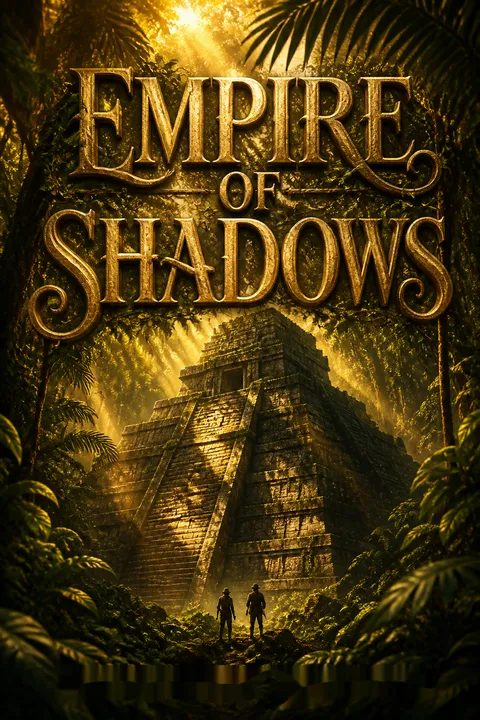


Plot Summary
Prologue
In 1632, Friar Vincente Salavert follows rumors into a hidden city in the mountains of New Spain. Smallpox has already begun to devastate the people there, and the priestess Ixb’ahjun uses a black stone mirror to show Salavert a vision of his own ambitions and the ruin they invite.
She gives him her rank medallion and orders him to flee. As he escapes, she seals herself inside the temple and drives a knife into her own chest. The vision leaves Salavert carrying an object tied to a power that demands blood, while the city disappears into plague, smoke, and silence.
The prologue makes ambition the first contagion. Salavert imagines conversion as a route to status, then carries disease into a community already vulnerable to colonial violence. Ixb’ahjun’s mirror exposes the kinship between his hunger for glory and the city’s own dangerous appetite for power. Her decision to spare him, then die alone, establishes an ethical counterweight to both men’s certainty: knowing what one wants does not make taking it harmless. The medallion survives where the priestess does not, turning a personal warning into an object that can outlast its context and tempt later seekers.
A Gate Becomes a Battleground
In April 1898, Eleanora Mallory, a gifted archivist barred from the archaeological career she wants because she is a woman, joins a suffrage demonstration outside Parliament. When two MPs ridicule the protesters, Ellie throws her sign and helps drive the crowd against the gates. Police arrest her, and the Public Record Office dismisses her the next day.
Before leaving, she retrieves a misplaced seventeenth-century psalter from her supervisor Charles Henbury’s desk. The book’s presence in a government archive is strange, but the dismissal has left Ellie with more urgent worries: no work, no prospects, and the familiar pressure to marry. She carries the book away, not yet knowing that it contains a route to a world no one has mapped.
Ellie’s first act of defiance is public and physical, but her dismissal reveals how institutions punish women for taking up space even when their qualifications are exceptional. Her archival habits complicate the apparent recklessness: she notices what others misfile, preserves what they neglect, and carries that attention into the adventure. The psalter enters her life through bureaucratic disorder, not destiny’s fanfare. That accident makes the story’s central conflict concrete: Ellie’s expertise is useful to powerful institutions, but those institutions will not grant her authority over what she knows.
The Map in the Psalter
At her desk, Ellie opens the psalter and finds its pages hollowed around a parchment map and a black medallion. The Latin identifies an inhabited kingdom behind the legend of the White City. By comparing the map with colonial records, she connects its coast to British Honduras and the vanished mission of San Pedro de Flores.
When Henbury’s visitor, the controlled and violent Mr. Jacobs, searches the office for the artifacts, Henbury gives him Ellie’s name. Ellie escapes to her friend Constance Tyrrell, who urges her to pursue the discovery herself rather than surrender it to the Royal Geographical Society. With Jacobs likely headed for her home, Ellie boards a steamer for Belize Town under a fabricated widow’s name.
The discovery turns Ellie’s unemployment from a dead end into an opening, but it does not grant her freedom without risk. Her decision to keep the artifacts is partly scholarly conviction and partly refusal to let male institutions take the work from her. Constance recognizes that distinction before Ellie does. Jacobs, meanwhile, makes private scholarship dangerous: his violence and Henbury’s cowardice show that knowledge has already acquired a market value. Ellie’s false identity lets her move, but it also plants the mistrust she must later confront.
A Snake in the Bath
After reaching Belize Town, Ellie chooses the locally run Hotel Rio Nuevo over the colonial visitors’ hotel and invents an uncle to explain her solitary travel. While she waits for a bath, a harmless snake surfaces in the tub. Adam Bates, the colony’s assistant surveyor general, hears her cry and breaks through the door with a machete.
He pins her aside, catches the snake, and explains the danger of local wildlife; Ellie answers by striking him with the towel rack. Hotel proprietor Ximena Linares identifies the intruder as Adam and explains that he knows the interior better than anyone. Ellie realizes that the man she least wants to ask may be her only plausible guide to the mountains.
Their first meeting establishes a useful mismatch. Adam’s field instincts save Ellie from a danger she does not understand, yet his assumption that she cannot handle herself turns rescue into another form of control. Ellie’s response is not gratitude but a demand for bodily autonomy, delivered with a towel rack. The scene also places their future partnership in material terms: Adam has the knowledge of terrain she lacks, while Ellie carries the historical evidence he needs. Attraction begins beneath irritation, but neither has reason yet to trust it.
The Guide She Resists
Ellie asks two trusted local guides to take her into the Cayo, the remote western district, and both refuse because the journey is dangerous for a lone Englishwoman. Adam follows her and offers his own services, then withdraws the offer when she rejects his judgment. That evening, Jacobs and Professor Dawson break into Ellie’s room, bind her, and take the map and medallion.
Ellie escapes her restraints, steals the artifacts back, and drops from a veranda into Adam’s arms as Jacobs searches for her. Adam hides her and refuses to betray her. Ellie shows him the map, tears it in half to keep leverage, and persuades him to leave town with her before Jacobs can capture them again.
The partnership begins not with easy trust but with a test under pressure. Ellie’s refusal to hand over the map preserves her agency, even as it risks Adam’s cooperation. Adam’s choice to shelter her matters because he acts before he knows what she can offer. Their power is uneven in practical skills, not in intelligence or moral judgment. Each must revise an assumption: Ellie sees that Adam can be honorable, while Adam sees that her insistence on participation is not a disguise for helplessness.
The Cave Beneath the River
Adam takes Ellie upriver aboard his shallow-draft steamboat, the Mary Lee. Their route enters an underground passage marked by a carved face, and Ellie persuades Adam to explore a side tunnel. Inside, they find a flooded cavern with carved figures, charcoal traces of old torches, and a painted bat creature.
A burial chamber beyond has been ransacked: pottery and human bones lie smashed together, evidence that modern looters reached the site before them. The destruction enrages Adam, who admits that he has stopped recording new ruins on official maps because his surveys help treasure hunters find them. On the return route, Ellie spots the medallion’s smoke-like glyph carved into stone, linking the artifact to the cave.
The first ruins offer discovery and loss at once. Ellie’s trained eye can recognize evidence, but the looting has erased much of the context that would make it intelligible. Adam’s reluctance to map sites is not ignorance; it is a response to the way official knowledge becomes a tool for extraction. Their disagreement about documentation begins to shift into a shared ethical problem. A map can protect a place by making it legible to authorities, or expose it to people who value only what can be carried away.
A Waterfall Erases the Boat
The pair continue upriver, but Ellie delays sharing the full map until they are well away from Belize Town. When Adam compares it with his field notes, he discovers they have taken a longer branch. Near a waterfall, their argument over whether to continue breaks into a sudden crisis: a falling log smashes the Mary Lee’s stern and destroys its propeller.
The damaged boat drifts onto another branch and over a second waterfall. Ellie and Adam leap clear and survive the plunge, but their craft is lost. On the bank, Adam’s machete snaps toward a black stone monument, revealing the map’s Black Pillar that Draws the Compass. Ellie has found her first incontrovertible landmark.
The wreck removes the couple’s transport and makes the expedition irreversible in a new way. They can no longer retreat by simply turning the boat around. The argument that precedes it exposes their different habits: Adam trusts improvisation, while Ellie wants evidence and direction. Yet the discovery of the magnetic pillar validates her scholarship just as their survival depends on his fieldcraft. Neither approach is sufficient alone. Their growing intimacy is built less through declarations than through repeated acts of shared risk and correction.
Santa Dolores Welcomes Them
Walking west, Ellie and Adam reach Santa Dolores Xenacoj, a Mopan Maya village founded by people who fled coercive labor and colonial violence. Padre Amilcar Kuyoc, the village priest, lets them stay with Na’chiin Feliciana’s family. Ellie joins the women making tortillas, struggles with the work, and earns warmth through her willingness to learn rather than lecture.
Adam learns that Kuyoc came from San Pedro Siris, a village burned by British forces, and suspects the priest has a revolutionary past. Kuyoc knows the region marked on the map and warns that it belongs to dangerous spirits. The travelers leave with food and directions, but also with a sharper awareness that the land’s history is still inhabited by people.
Santa Dolores changes the expedition’s scale. The landscape is not empty wilderness awaiting discovery; it is a lived world shaped by Indigenous survival, displacement, and political memory. Ellie’s books have prepared her to identify cultural patterns, but the women’s questions and hospitality teach her how little those texts can contain. Adam’s skepticism toward colonial authority gives him a route into Kuyoc’s history, yet neither traveler fully understands the warning. The village offers a different model of knowledge: situated, relational, and guarded for good reason.
The Arch and the Ambush
Following Kuyoc’s directions, Ellie and Adam find the Arch Hollowed by the Hand of God, a natural bridge of limestone above rushing water. Armed men surprise them there and confiscate Adam’s rifle, pack, and machete. Their leader is Jacobs, who followed annotations Dawson made before Ellie recovered the map.
Jacobs reveals that he knows Adam is a surveyor and needs his navigation skills to reach the city. He threatens Ellie to force Adam’s cooperation. When Jacobs calls her Miss Mallory, Adam learns that her widow’s name is false and that her real name is Eleanora Mallory. Ellie is taken under guard while Adam is compelled to map a route for the expedition.
The ambush converts a private race into a coerced expedition. Jacobs understands that Adam’s competence is valuable and Ellie’s safety is leverage, so he turns their strengths against them. The name reveal damages the trust they have begun to build at precisely the moment they need cooperation most. Ellie’s disguise had protected her, but secrecy has become costly. Jacobs’s method is efficient rather than theatrical, which makes his threat more chilling: he treats violence as a practical tool and people as assets with expiration dates.
Names, Lies, and Hostages
Held in a tent while Adam is forced to correct Dawson’s route, Ellie admits to Adam that she stole the map, invented her widowhood, and is the stepsister of his Cambridge friend Neil Fairfax. Adam is hurt that she withheld the truth, especially because he had already chosen to protect her, but he agrees they must stay with the expedition until they can stop the looters.
Their plan is complicated when two armed guards are found dead in the night, their skulls punctured and bodies torn. The survivors blame an unseen creature, and the dying man identifies it as an angel of death. Ellie and Adam realize that fleeing alone through the forest may be more dangerous than remaining among Jacobs’s men.
The confession makes trust an action rather than a feeling. Ellie tells the truth when it could cost her Adam’s regard, and Adam chooses not to reduce her deception to a verdict on her character. Their decision to remain is strategic, not passive: the expedition contains both the threat and the resources they need to reach Tulan. The deaths also unsettle the boundary between folklore and evidence. The supernatural danger does not replace colonial violence; it enters a landscape already made dangerous by armed men and extraction.
Tulan’s Border Stone
The caravan pushes deeper into the mountains, where Ellie and Adam find a stela showing a feathered ruler and seven kneeling figures. Ellie recognizes the image as a depiction of Tulan, the City of Seven Caves, a place usually treated as myth. Jacobs later identifies a black river-like seam across a cliff as the map’s River of Smoke, and the expedition enters a cleft in the rock.
A vast mural portrays Tulan’s rulers gathered around a black disk, confirming that the Smoking Mirror is more than a legend. Beyond the pass, white towers rise from a hidden valley. The city is real, but a body left unburied in a house and a nearby mass grave suggest its people did not leave peacefully.
The city’s approach is built from signs that change meaning as Ellie reads them: myth becomes political history, then architecture, then evidence of catastrophe. Her scholarship grants her interpretive authority, but it cannot resolve the violence under the evidence. The ruler’s mural suggests that gods may have grown from powerful human leaders, an explanation that remains plausible even as the supernatural becomes harder to deny. The city’s beauty therefore arrives with an ethical burden. To find Tulan is also to confront what happened to the people who built it.
The Temple’s Hidden Door
At Tulan, Ellie spots a mass grave in a sinkhole, while an uncanny light flashes from the temple where Adam has been taken. Dawson reveals that his organization collects magical artifacts, or arcana, for an imperial order it claims will preserve law and civilization. He demonstrates the firebird bone by making it blaze with light.
Adam discovers a concealed mechanism in the temple mural, but the discovery gives him no safe escape: Jacobs’s men are closing in, and Ellie has been separated from him. She slips away from her guards, retrieves Adam’s machete, and reaches the temple as Jacobs fires at them. Adam and Ellie flee down the pyramid’s steep outer tiers, cross the ball court, and jump into a cenote to escape the gunmen.
The conspiracy reframes the expedition: Dawson and Jacobs are not simply thieves but agents of a group that treats imperial control as moral necessity. The glowing bone makes that ideology materially dangerous. Dawson’s language of order masks a desire to monopolize powers no one understands. Ellie’s escape and Adam’s fight depend on allies among the workers, but the pair’s survival still rests on quick improvisation. The cenote is both a physical refuge and a threshold, plunging them beneath the city and into the history its rulers tried to control.
The Cenote’s Secret Current
At the bottom of the cenote, Adam is wounded by a bullet, and Jacobs leaves the pair trapped beneath sheer walls. Ellie tends Adam’s arm and refuses to accept that they are doomed. She notices that a broken pencil drifts across the pool, proving that water is flowing toward a submerged opening. Adam dives through the narrow passage and finds a larger cavern beyond.
They follow a trail of abandoned torches, then discover that enormous assassin bugs are drawn to heat. When the insects swarm, Ellie’s thrown torch ignites the stored pitchwood and pulls the colony away from their route. The cavern’s tunnels confirm that someone built a deliberate passage beneath Tulan, even as the pair must continue without light or reliable equipment.
The cenote reverses their familiar division of labor. Adam’s diving skill finds the passage, but Ellie’s observation of the pencil’s drift makes the escape legible. Her refusal to surrender is not simply optimism; she keeps converting details into testable possibilities. The torch fire is both solution and risk, since it consumes a resource and attracts a dangerous swarm. Their survival comes from combining knowledge of physical systems with practical experience, not from one person rescuing the other. That reciprocity becomes the emotional foundation of their partnership.
The Path of Kings
The underground route leads Ellie and Adam through chambers designed as a ritual passage into Xibalba. They identify a council of carved death gods, and levers trigger steam that nearly cooks them alive.
Ellie finds bone flutes hidden in the statues; their notes release the exit, though Adam must guess which mechanism completes the sequence when Ellie collapses from heat. A labyrinth of obsidian blades cuts Adam’s palm, and Ellie stitches it with her needle and Mendez’s liquor.
They cross a freezing stream and a chamber of dead jaguars, then creep through a cavern of huge, living bats. A key-shaped copper knife triggers a clanging alarm that sends the bats into a frenzy. Ellie burns through the rotted barrier over their exit, and they slide into a chamber piled with human and animal bones.
The Path of Kings makes knowledge costly in the literal sense: interpretation does not remove danger, and every failed inference can injure or kill. Ellie’s reading of the Popol Vuh helps her recognize the trial, while Adam’s practical gamble gets them through when her body can no longer continue. The dead jaguars and the mountain of bones expose the human cost beneath Tulan’s ritual grandeur. Their care for one another, including Ellie’s rough stitches, counters the path’s design, which tests individuals by threatening to isolate and destroy them.
Blood on the Mirror
The bone passage brings Ellie and Adam to the cavern beneath the temple, where Jacobs and Dawson have reached the Smoking Mirror by another route. Padre Kuyoc is captured after trying to mislead them, then reveals that he once used the mirror and learned it answers the desire hidden in a seeker’s heart.
The artifact’s visions come at the cost of blood, and Kuyoc warns that powerful men would sacrifice lives to command it. Ellie cuts her arm and presses the blood to the mirror.
In a vision with Tulan’s last priestess, she sees the city’s history and chooses to destroy the artifact. Adam uses the mirror’s knowledge to recover his machete and strike Jacobs. Ellie detonates Kuyoc’s old dynamite, collapsing the cave system; the survivors escape through a water passage as Tulan sinks.
The climax turns the book’s central question into a choice rather than a revelation. The mirror can offer knowledge, but it does not distinguish scholarship from appetite; it answers desire and lets power magnify it. Ellie has spent the story seeking access to knowledge denied her, which makes her decision to destroy the mirror a genuine sacrifice, not an easy rejection of ambition. Kuyoc’s warning and Tulan’s bones force her to weigh intellectual possibility against the people who would pay for it. The collapse preserves no pristine archive, but prevents the artifact from becoming another instrument of conquest.
A Village After the Ruin
Kuyoc leads the survivors through mountain trails to Santa Dolores, where Feliciana’s family treats Ellie’s wound and feeds the exhausted expedition. Ellie grieves that Tulan has fallen, but Kuyoc reminds her that she chose to bury the mirror with the dead rather than let it be taken.
Adam stays beside her, and Ellie admits that what she wants is him, not merely the protection their forced-marriage dilemma seemed to require. Their affection is returned, though they have not solved what marriage or their future should mean.
Then Adam reveals that Dawson’s notes listed Neil Fairfax’s excavation at Saqqara and the Staff of Moses as another target. Ellie understands that the threat has not ended. She and Adam decide they must act together again.
The village restores ordinary life after the spectacular destruction: food, tending a wound, children, animals, and conversation. That ordinary care gives Ellie a measure for what the mirror’s power endangered. Her choice of Adam is also distinct from the marriage bargain imposed by social convention; she names desire directly rather than accepting a legal solution as its substitute. Yet the ending refuses a false sense of closure. The Staff of Moses makes the next danger personal through Neil, while the pair’s new alliance rests on a more honest foundation than the one with which they began.
Analysis
Empire of Shadows sets the desire for knowledge against the structures that decide who may pursue it and who pays for its pursuit. Ellie has been trained to preserve records, yet the archive that employs her refuses to recognize her as a scholar. When she finds the map, her refusal to hand it to established men is both a claim to professional agency and a risky act of stewardship. The novel does not treat those motives as identical. Ellie’s ambition can be principled and still require scrutiny.
The contrast between Ellie and Adam is not simply book learning versus practical experience. Ellie can interpret iconography, compare records, and identify the historical stakes of a discovery; Adam knows how terrain, weather, and official maps affect people on the ground. Each becomes less capable when acting alone. Their partnership models an exchange of expertise in which authority is earned through attention and trust rather than gender or credentials. The ruined burial cave gives this collaboration its ethical test: discovery is not automatically a good when the people who made the past are treated as obstacles or specimens.
Tulan extends that question through the Smoking Mirror. Its visions convert private desire into power, but the blood beneath the city reveals the costs hidden by the promise of insight. The artifact’s danger is not that knowledge itself is wicked. It is that knowledge can be made available to an unaccountable few, who will call control protection and sacrifice necessity. Ellie’s choice to destroy the mirror costs her the dream of an unprecedented scholarly discovery, but it rejects a system that would turn people into fuel for other people’s ambitions. The village of Santa Dolores provides the ending’s counterimage: knowledge survives in relationships, practices, memory, and shared life, not only in objects that can be claimed, cataloged, or carried away.
Review Summary
Empire of Shadows is a historical adventure romance reminiscent of The Mummy and Indiana Jones. Readers praise its well-researched setting, witty banter, and exciting plot. The protagonist Ellie is a feminist archaeologist, which some found refreshing while others felt was heavy-handed. Many enjoyed the slow-burn romance with Adam, though some wanted more development. The book's pacing and length received mixed reviews. Overall, most found it an entertaining read with strong Indiana Jones vibes, despite some criticisms of character depth and feminist themes.
Characters
Eleanora Mallory
The scholar who breaks barriersEllie is a brilliant archivist with deep knowledge of ancient history, Latin, and archaeological methods, but the institutions around her treat her education as an ornament rather than a qualification. She is orderly, observant, and stubborn enough to turn a misplaced book into a field expedition. Her temper is not a flaw separate from her ideals; it is the energy she has learned to use when polite appeals fail. Ellie wants access to knowledge and the freedom to pursue work that matters, yet she must learn that discovery carries obligations to living communities and the dead. Her curiosity, courage, and capacity for self-correction make her more than a rebel against exclusion.
Adam Bates
The wilderness surveyorAdam is an American surveyor who left a wealthy family and Cambridge rather than accept the life his father had planned for him. He trusts field experience, improvisation, and the people who taught him to survive, while books and institutional prestige make him uneasy. His rough humor often disguises a serious awareness of exploitation, especially when official maps help looters reach Maya sites. Adam’s instinct is to protect people by taking risks himself, a habit that can become another kind of unilateral control. Ellie challenges him to treat her as a partner, while he gives her a practical education in the landscape. His loyalty grows from action, not grand declarations.
Constance Tyrrell
Ellie’s daring allyConstance is Ellie’s childhood friend, a suffragist with a taste for danger and a gift for turning possibility into action. She supports Ellie emotionally without confusing sympathy with passivity: when Ellie hesitates, Constance pushes her toward the choice she already wants. Her humor and adventurousness offer a counterpoint to Ellie’s careful scholarship. She also understands that social respectability can be used as a leash, even when she enjoys tugging at it.
Mr. Jacobs
The controlled pursuerJacobs is a composed, efficient operator who treats violence as a means of getting work done. He pursues Ellie because she has the map and understands its significance, then uses her safety to control Adam’s expertise. Unlike a boastful villain, he rarely wastes effort on threats he does not intend to carry out. His ability to read people makes him difficult to deceive, while his calm manner turns coercion into something almost administrative. Jacobs represents power that knows its own brutality and sees no reason to disguise it as benevolence.
Professor Dawson
The scholar turned collectorDawson is an academic whose credentials and historical interests sit uneasily beside his willingness to participate in theft. He wants the Smoking Mirror for an organization that claims to protect civilization, and he accepts that claim more readily than he examines its consequences. His dependence on Jacobs and his discomfort in the wilderness expose a gap between intellectual authority and practical courage. Dawson can recognize a priceless object, but not the people and histories that give it meaning.
Padre Amilcar Kuyoc
The village priest and witnessKuyoc is the elderly priest of Santa Dolores Xenacoj, quick-witted, politically perceptive, and far more capable in the mountains than his age suggests. He carries the memory of violence against Maya communities and understands why outsiders can be dangerous even when they claim scholarly motives. His warnings about Tulan mix folklore with knowledge he does not readily explain. Kuyoc is burdened by what he once desired and by the choices that desire nearly led him to make. His humor is dry, but it often protects a more painful seriousness.
The scarred priestess
Tulan’s haunting presenceA priestess from Tulan’s final days, she appears to Ellie through dreams and through the Smoking Mirror. Her scarred face and changing ceremonial clothing connect the ancient city to the present, but her presence is never simply explanatory. She carries grief, authority, and a hard-won understanding of what power costs. Her relationship to the mirror is shaped by both devotion and resistance, making her a human counterweight to its seductive promises.
Ximena Linares
The hotel’s watchful hostXimena co-runs the Rio Nuevo Hotel with her husband, Diego, and keeps a clear-eyed view of the travelers who pass through it. She is hospitable without being naïve and recognizes Adam’s rough habits as familiar rather than mysterious. Her local knowledge helps Ellie understand who can be trusted and what kind of journey she is contemplating. Ximena’s confidence also offers a quiet contrast to the colonial assumptions Ellie has encountered.
Diego Linares
The hotel’s steady proprietorDiego runs the Rio Nuevo with his wife, Ximena, and tolerates Adam’s muddy returns with weary affection. His hotel provides the travelers with a safe point of contact in Belize Town and a glimpse of local life beyond the colonial establishment.
Charles Goodwin
Adam’s resourceful allyCharlie is a skilled Kriol woodsman, one of Adam’s trusted companions, and a keen observer of the people around him. He understands the expedition’s power dynamics and knows when humor, loyalty, or a calculated distraction can change the balance. His willingness to risk himself grows from a broader suspicion of colonial authority and the men who profit from it.
Martin Lessard
The brawling woodsmanLessard is a blunt, gap-toothed Quebecois hunter whose temper and humor are both formidable. He has little patience for pretension and considerable practical courage. His friendship with Adam is built on old favors, teasing, and mutual respect for competence.
Flowers
The guard with a conscienceFlowers is a large, easygoing guard who seems less committed to Jacobs’s authority than to his own judgment. He treats Ellie with more courtesy than her other captors and recognizes when a small act of help can matter. His relaxed manner conceals a clear sense of the people around him.
Neil Fairfax
Ellie’s accomplished stepbrotherNeil is Ellie’s older stepbrother, an archaeologist working at Saqqara. Ellie loves him, though his easy access to the career she has had to fight for sharpens her sense of injustice. His affection and protectiveness are genuine, but he does not always see how the world narrows Ellie’s choices.
Florence Mallory
Ellie’s matchmaking stepmotherFlorence is Ellie’s stepmother, a dramatic and energetic woman who believes marriage will secure Ellie’s future. Her concern is affectionate, but it reflects the narrow social options Ellie is trying to escape.
David Mallory
Ellie’s quiet fatherDavid is Ellie’s father, an insurance actuary who loves his daughter but often remains on the edge of her conflicts. His ordinary, stable life contrasts with Ellie’s hunger for work that takes her beyond the domestic expectations surrounding her.
Na’chiin Feliciana
Santa Dolores’s matriarchFeliciana is the respected elder who hosts Ellie and Adam in Santa Dolores. Her household’s food, work, and conversation introduce Ellie to a community as a living society rather than an academic subject. She is watchful, practical, and generous on her own terms.
Mr. Henbury
Ellie’s careless supervisorHenbury is Ellie’s self-important supervisor at the Public Record Office. He relies on her competence while overlooking her contribution, then tries to protect himself when Jacobs comes looking for the artifacts. His small bureaucratic cruelties help push Ellie toward an independent path.
Mendez
Jacobs’s hard-edged guardMendez is an armed guard in Jacobs’s expedition, quick to threaten and slow to trust. He keeps Ellie under close watch and treats her as a liability, embodying the blunt force behind Jacobs’s polished control.
Plot Devices
The Psalter Map and Medallion
The hidden route to TulanA hollowed seventeenth-century psalter conceals a parchment map and a black medallion marked with an unfamiliar glyph. Ellie verifies the map against British colonial records and uses its landmarks to locate a route into the Cayo. The artifacts make her expedition possible, draw Jacobs and Dawson after her, and give Adam a reason to lend his surveying expertise. Their divided custody also externalizes the early lack of trust between Ellie and Adam. The medallion’s symbol appears again in Tulan’s caves, connecting the archival clue to the city’s religious history.
The Smoking Mirror
Desire made dangerously visibleThe great black obsidian disk is associated with prophecy and the ability to see across time and distance. It does not simply answer spoken questions. As Padre Kuyoc explains, it responds to the desire in the seeker’s heart and demands blood. Its power turns Ellie’s hunger for knowledge into a moral test, while Dawson’s organization sees it as a means to acquire information and control. The artifact is the material center of Tulan’s ritual system and the reason the expedition becomes a struggle over who should be allowed to wield power.
The Path of Kings
A ritual trial undergroundA network of caves beneath Tulan appears to enact the trials associated with Xibalba in Maya myth. Carved gods, hidden mechanisms, steam vents, obsidian blades, freezing water, trapped jaguars, and giant bats force Ellie and Adam to turn scholarship and fieldcraft into immediate survival. The route is not merely a series of hazards: it preserves how Tulan’s rulers understood initiation, sacrifice, and authority. The pair’s progress brings them to the chamber beneath the temple, while the bones there reveal the cost paid by earlier generations.
The Firebird Bone
Proof that myth can actDawson carries a small bone from a mythical firebird, which glows when handled in a particular way. He uses it to illuminate the temple and later the cenote, demonstrating that the stories Ellie and Adam have treated as cultural records can describe real powers. The bone opens the story beyond one lost city and one artifact. It gives the conspiracy a wider purpose, confirms that Dawson’s organization is pursuing multiple arcana, and makes Ellie reconsider the boundary between rational evidence and inherited legend.
Maps and Missing Sites
Knowledge that can expose or protectAdam’s official surveys can guide travelers through the colony, but recording remote Maya sites also makes them easier for looters and collectors to reach. His decision to stop adding discoveries to the public maps reflects his fear that documentation can accelerate destruction. Ellie initially sees mapping and publication as ways to protect a site, then learns that institutions can use those same records for extraction. Their disagreement gives the archaeological plot a practical ethical problem: knowledge can be shared responsibly, but once released, it cannot be controlled by good intentions alone.
Download PDF
Download EPUB
.epub digital book format is ideal for reading ebooks on phones, tablets, and e-readers.








