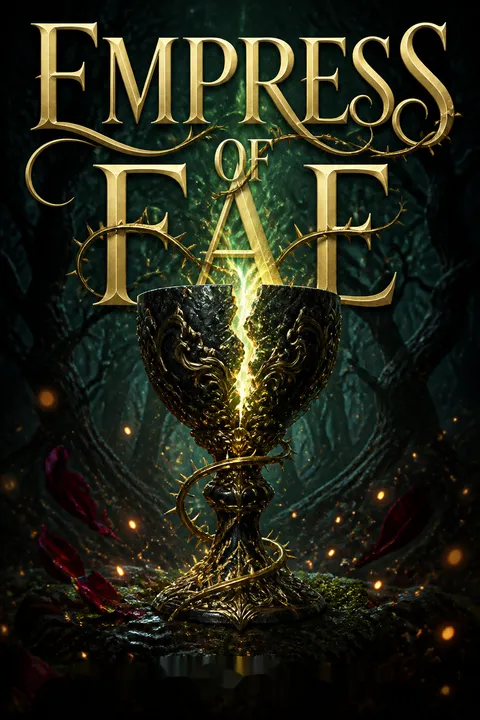


Plot Summary
Prologue
Three short prologues frame the conflict. In an ancient oak grove, a man raises a bone-hilted blade against three bound women, and the killing of one helps bring evil into the world.
In another scene, a powerful royal voice forces a young man to obey a blood-bound bargain, warning that another failure will not be forgiven. A prophecy then foretells a spring-born child of royal kin24 whose arrival will bring down kings and unsettle both fae and mortal realms.
The opening images turn inherited violence into the book’s oldest political language: a father makes a sacrifice, a ruler compels obedience, and prophecy makes a child appear dangerous before the child can choose anything. Each scene asks who gets to define a life as a threat and who pays for that judgment. The prologues do not identify every participant, preserving their mystery, but they establish a pattern that returns in Arthur’s choices: power treats fear as permission to control other people’s bodies and futures.
The Empty Umbral Throne
After Morgan1 escapes through a portal, Draven2 shuts himself away in the Siabra palace, barely eating and striking a pillar until it cracks. Odessa17 forces him to face the consequences of making Morgan1 empress without her consent. When his stepmother Sephone’s supporters break into his rooms, Hawl19 and Odessa17 stop the assassination attempt, and Hawl19 kills Sephone before she can attack Draven.2
Odessa17 then lays out the empire’s neglected defenses and warns that war may be coming. Draven2 accepts that he must govern in Morgan’s1 absence, appoints Lyrastra18 as regent, and begins preparing to cross the ocean after his wife.1 His grief becomes a duty rather than an excuse to abandon the court.
Draven’s grief is real, but it does not absolve him of the political choices that helped drive Morgan away. Odessa makes that distinction concrete: his private suffering cannot substitute for governing the people whose lives depend on him. The failed assassination sharpens the point, because a ruler’s withdrawal creates an opening others can exploit. His decision to leave only after appointing Lyrastra marks a meaningful change in his idea of devotion. He still intends to pursue Morgan, but he must first prevent his own court from collapsing around the absence he helped create.
A Dead Friend Returns
Morgan1 comes through the damaged portal into a hidden stone chamber, badly shaken and accompanied by Javer,11 the Siabra mage who followed her. At the stairway she finds Lancelet,4 the friend she believed dead after the attack at Meridium. Lancelet’s4 scars and hostility make clear that survival has not restored their former closeness.
Morgan1 is brought before Merlin8 and a small circle of allies at the temple’s Round Table. She learns that Arthur3 is waging war against Tintagel and Lyonesse, that her younger brother Kaye6 is near the front, and that Merlin8 has been replaced as High Priestess by Tyre.12 Morgan1 returns to Camelot seeking Kaye,6 but discovers that the kingdom she left has become a dangerous resistance’s only shelter.
The reunion does not grant Morgan the comfort of a clean homecoming. Lancelet’s survival is a gift inseparable from the harm Morgan believes she caused, so the friendship arrives first as accusation rather than relief. The Round Table offers a counterpoint to Arthur’s court: a community trying to distribute responsibility among people with different forms of knowledge and power. Yet Morgan’s urgency about Kaye threatens to reduce every other person’s suffering to a secondary concern. Her return begins the difficult work of holding family loyalty and public responsibility in view at the same time.
The Poisoned Inheritance
At the Round Table, Morgan1 learns Arthur3 has married Queen Belisent,7 who is pregnant, and that Kaye6 may lose his place as heir. Her uncle, Caspar Starweaver,9 admits he strengthened the tonic Morgan1 drank as a child at Arthur’s3 request, intending it to weaken her. He also reveals that he arranged for Kairos Draven2 to accompany her on her earlier quest, hoping Draven2 would protect her.
Javer11 renounces his old rank and pledges himself to Morgan,1 though she still blames him for the death of Beks. In a private meeting, Caspar9 explains that Morgan’s mother7 used the potion to hide her fae nature, then gave Morgan1 protective runes before fleeing the High Fae King.23
Morgan’s body becomes a record of other people’s decisions: her father’s fear, her uncle’s compromises, and her mother’s desperate attempt to protect her. The revelation that the childhood medicine was both concealment and poison complicates any simple account of family care. Caspar’s actions are neither wholly protective nor wholly cruel, and Morgan has to reckon with how often survival has depended on imperfect bargains made without her knowledge. Javer’s vow introduces a similar tension: remorse may be sincere, but it cannot restore Beks or erase the consequences of his earlier failures.
Gorlois Behind the Relics
Caspar9 connects the events in Myntra and Eskira to three ancient objects: Excalibur, the Grail, and a spear whose purpose remains uncertain. He tells Morgan1 that the Grail was used to strip the souls from Valtain children, a crime he says was engineered by Gorlois le Fay,23 the High King of the fae23 and Morgan’s true father.23
Draven’s father23 wielded the Grail, but Caspar9 believes Gorlois23 was the one who benefited. Rychel22 has taken the Grail to the Valtain, hoping to restore the children, unaware that their ruler caused their condition. Morgan1 resists the larger threat’s pull toward abstraction: Arthur’s3 war is still killing people now, and Kaye6 remains in danger.
This revelation widens the story without making its immediate moral problem disappear. The relics and ancient powers might explain the scale of the danger, but Morgan keeps returning to the vulnerable people caught inside it. That refusal matters: prophecy can make violence seem inevitable, while attention to actual victims restores choice and responsibility. The Grail also embodies a political logic of extraction, turning children’s souls into a resource for rulers. Morgan’s anger at Caspar’s history and concern for Rychel coexist, showing that she can question someone’s judgment without dismissing the compassion that motivated it.
A Spy Chooses Risk
Merlin8 proposes that Morgan1 return to the castle as a spy, where she may learn what Arthur3 intends to do with Excalibur. Morgan1 hesitates to take Caspar’s9 suppressive tonic again, but after a wounded temple informant named Christen dies, she agrees to enter the court despite the danger. Her attempt to heal him fails, leaving her to face the limits of her new magic.
She also begins sharing dreams with Draven, who has helped Nightclaw bond with Sunstrike, his own exmoor. Their growing connection gives Morgan1 comfort across the distance, but it does not solve the practical danger of working alone inside Arthur’s3 reach. The dream bond becomes stronger as Draven2 begins his voyage.
Christen’s death turns espionage from a clever strategy into a human cost Morgan cannot ignore. Her failed healing is important because it prevents new power from becoming a fantasy of unlimited rescue. She has to accept that compassion does not guarantee control over life and death. The shared dreams offer genuine intimacy, but they also expose the asymmetry of their situation: Morgan must remain inside a hostile court while Draven can only approach from far away. The section places emotional connection beside tactical vulnerability, making neither one a substitute for the other.
Camelot's Hunger Exposed
Morgan1 presses Lancelet4 to speak with her, admitting that she left her friend4 behind and wants their friendship back. Lancelet4 finally takes her through a secret passage into Camelot. The market is nearly empty, refugees sleep in makeshift tents, and bodies hang from gallows while the starving search for scraps. Lancelet4 reveals that two children froze to death in a shelter nearby.
The sight turns Morgan’s1 understanding of Arthur’s3 rule from distant reports into evidence she cannot dismiss. As the two women return through the tunnels, Lancelet4 freezes when they encounter an armed guard. Morgan’s1 rapier channels her fire and she kills him, proving that her magic can surface under pressure and saving them from discovery.
The market scene gives Arthur’s war its civilian ledger: hunger, displacement, public executions, and children left without warmth. Morgan’s instinct to help is checked by Lancelet, who understands how one visible act of charity can expose the resistance. This is not indifference; it is survival under surveillance. Their encounter with the guard reverses their emotional positions. Lancelet’s hesitation reflects trauma, while Morgan’s intervention gives her a chance to act without pretending the past is repaired. Their cooperation is tentative, built through risk rather than an easy return to intimacy.
Merlin's Fatal Bargain
Arthur’s3 soldiers storm the Temple of the Three, killing priests and rounding up acolytes. Morgan1 and Lancelet4 help Galahad,14 Guinevere,5 and other survivors escape through a passage, but Merlin8 separates Morgan1 from them. She binds Morgan1 with magic and tells Arthur3 that she imprisoned her, presenting Morgan1 as a victim rather than a returning conspirator.
When Arthur3 and his general Fenyx10 arrive, Merlin8 bargains for Morgan’s1 place in the court and refuses to reveal the rebels’ routes. Fenyx10 kills her. The spell releases Morgan,1 who is carried back to the castle by Fenyx10 while Lancelet4 is captured. Merlin’s8 death gives Morgan1 a credible cover, but leaves her without the mentor who built the resistance.
Merlin’s sacrifice is an act of political authorship: she uses her final power to write a story Arthur is likely to believe. The cover protects Morgan, but it also forces her into a role constructed through another person’s death. That rescue carries grief and obligation rather than triumph. Fenyx’s violence shows that the court’s polished order rests on direct coercion, while Lancelet’s capture makes the cost of the escape immediate. Merlin’s choice is courageous, yet the story does not treat sacrifice as a painless solution. Morgan inherits a mission without the person who could explain how to carry it.
A Marriage Across Dreams
Back in her old tower room, Morgan1 grieves for Merlin8 and fears she has lost the scattered resistance. In a shared dream, Draven2 steadies her as she recounts the attack and Merlin’s8 death. He does not blame Morgan1 for leaving, and she finally acknowledges that she loves him, while insisting that love must remain freely chosen.
Draven2 tells her he is already crossing the Kastra Ocean with a fleet of Siabra ships, Gawain,20 Crescent,21 and Hawl.19 He plans to reach her as quickly as possible. In the dream, they meet again in a cottage and begin to treat it as a place they can return to. Their bond deepens, but Morgan1 must wake alone in Arthur’s3 castle.
The dream sequence lets the couple negotiate what the original magical marriage could not: consent, fear, and the meaning of commitment. Draven’s willingness to accept Morgan’s departure gives her room to choose him rather than merely submit to a bond he created. Her confession does not erase his earlier coercion; instead, it distinguishes freely given affection from magically imposed obligation. The cottage becomes a shared imaginative space where they can speak honestly, not an escape from the political world. When Morgan wakes alone, the contrast keeps the intimacy from becoming a substitute for action.
Belisent Is Orcades
Morgan1 reappears at court beneath Merlin’s8 cover story and meets Queen Belisent,7 the woman who delivered Excalibur to Arthur.7 She recognizes her as Orcades,7 the fae woman she freed at Meridium, though she hides that knowledge from the court. Orcades7 confirms that she gave Arthur3 the sword for her own purposes and sees him as a useful shield, not a trusted partner.
Fenyx10 begins courting Morgan1 aggressively, framing her as a reward Arthur3 may grant him. At dinner, Arthur3 reveals he is bringing Kaye6 back from the front and intends his unborn child24 to replace him as heir. He also confirms Excalibur is in the castle. Morgan1 must play obedient sister while learning what Arthur3 plans.
The court’s central relationships are built on performance. Morgan hides what she knows about Orcades, while Orcades uses a mortal identity to conceal her own agenda. Arthur reads kinship and marriage as instruments for consolidating rule, and Fenyx treats Morgan as a political prize. Morgan’s ability to survive depends on seeming less informed and less powerful than she is. Yet the private recognition between the sisters creates a fragile opening for alliance. The section asks whether people who use one another strategically can still develop genuine concern, and whether such concern can survive the roles imposed by power.
Excalibur Rejects Its Masters
Arthur3 and Fenyx10 stage a public tournament, first forcing two prisoners to face starving wolves. Then they hand Excalibur to captives and promise survival to anyone who kills another prisoner with it. The sword will not obey a frightened boy or an older prisoner who refuses to participate.
When a woman invokes Perun, Excalibur flares and incinerates the prisoners, guards, and spectators in the arena’s front rows. The demonstration does not give Arthur3 control of the weapon; it exposes how little he understands it. Morgan1 watches from the royal pavilion, sickened by the spectacle but careful not to reveal her opposition. She sees that the sword’s power can destroy a crowd as readily as an army.
Arthur’s tournament converts state violence into entertainment, asking the public to watch prisoners perform the king’s desperation. Excalibur’s refusal to obey most wielders undermines the fantasy that authority can simply claim power by possessing it. The one successful invocation is disastrous, not proof of mastery. Morgan’s presence in the pavilion makes her silence morally uncomfortable, but open resistance would jeopardize the work she still hopes to do. The scene distinguishes power from legitimacy: Arthur can command people to hold the sword, but he cannot make the sword recognize his purposes as rightful.
The Prophecy Targets Children
Searching the library, Morgan1 finds Fenyx10 studying old texts about the three relics and copies a prophecy linking a royal child to a king’s downfall. She warns Orcades,7 who is pregnant and intends to use her child24 in a struggle against Gorlois.23 Arthur3 confronts his queen,7 suspects her baby24 will destroy him, and threatens to keep her guarded until the birth, then kill the child.24
Orcades7 escapes the palace before he can carry out that order. At the same time, Fenyx’s10 possessive advances toward Morgan1 intensify, and he announces that Lancelet4 will be used in the next tournament. Morgan1 understands that her attempt to buy Lancelet4 time may have put her friend4 in greater danger.
The prophecy turns uncertainty into a weapon because Arthur treats a possible future as evidence of guilt. His fear does not remain private; it becomes a threat to an unborn child and then to every infant in the city. Orcades’s own plans complicate the usual image of maternal devotion, yet Morgan’s warning shows that concern can cross even a wary political boundary. Fenyx’s interest in Morgan follows the same possessive logic as Arthur’s: both men assume that power grants ownership. Morgan’s effort to manipulate the tournament’s timing reveals the risk of resistance carried out inside an enemy’s system.
Lancelet Wields the Sword
Arthur’s3 next tournament pits prisoners against a glatisant, a monstrous creature with no ordinary weapon capable of stopping it. Lancelet4 enters the arena badly beaten and injured, while the other prisoners die trying to use Excalibur. When the sword lands at Lancelet’s4 feet, Morgan1 silently urges it to accept her friend.4
A golden aura gathers around Lancelet,4 and she finally wounds and kills the beast. The crowd cheers, but Arthur’s3 soldiers shoot Lancelet4 with a drugged arrow. Guinevere5 and Galahad14 lead rebels from the stands, who seize Lancelet4 and pull her from the arena, leaving Excalibur behind. Morgan’s1 effort has helped the sword answer another wielder, though she does not yet understand why.
Lancelet’s victory is not a return to an undamaged past. Her injured body carries the history of violence into the arena, but her training and persistence let her act despite it. Morgan’s silent intervention changes the meaning of Excalibur: the weapon responds not to royal command but to a relationship grounded in trust and recognition. The cheering crowd briefly sees a prisoner defeat the king’s monster, turning spectacle into public defiance. Yet the arrow reminds us that heroism does not make a person safe under tyranny. The rescue depends on the resistance’s collective preparation, not on one triumphant fighter alone.
Fenyx's Iron Prison
Kaye6 returns to Camelot, but before Morgan1 can reunite with him for long, Arthur’s3 men remove him. Fenyx10 captures Morgan1 and takes her to a hidden laboratory, where her uncle Caspar’s9 body lies under dissection. Fenyx10 uses an iron throne and repeated bloodwraith infusions to suppress Morgan’s1 magic and sever her sense of Draven.
He reveals that Tyre12 is an impostor who helped him infiltrate the temple. Fenyx’s jeweled armor contains powers stolen from murdered fae, and Arthur3 plans to use Morgan1 as a weapon because Excalibur is attuned to her. Fenyx10 also reveals that soldiers are killing infants across Camelot to prevent the prophecy from coming true.
Fenyx’s laboratory makes the court’s abstract appetite for power physically legible: stolen lives are preserved in jars, converted into gems, and worn as armor. His method mirrors the political violence around him, but strips away its ceremonial language. Morgan’s isolation is deliberate; suppressing her magic and bond aims to make her feel that resistance is futile. Yet his confession of the infant killings gives her a reason larger than self-preservation. The revelation that Tyre was an impostor also shows how the resistance’s trust was exploited, making future alliances harder to sustain without making trust itself a mistake.
Excalibur Calls Draven
Fenyx10 leaves Morgan1 chained while he prepares to dissect Caspar9 and claim her power. She loosens a rusted screw, slips one hand free, and redirects the bloodwraith injector so it stops suppressing her. When Fenyx10 moves to unlock her, she stabs his wrist with the screw and reaches Excalibur. The sword accepts her and shields her from the powers in Fenyx’s armor.
She wounds him, but he uses another gemstone to drain her strength. As Morgan1 reaches for Excalibur, her blood on its blade releases a golden light. Draven,2 flying toward Camelot on Nightclaw, is pulled from the sky and appears in the chamber. He attacks Fenyx,10 then uses his shadow magic to free the lingering spirits of the murdered fae.
Morgan’s escape begins with attention to material weakness, not a sudden rescue: she studies the screw, the injector, and Fenyx’s habits until an opening appears. Excalibur amplifies her choice but does not make the danger disappear. When Fenyx drains her, the bond and the sword together become a signal that reaches Draven across the continent. His arrival is not simply romantic rescue; it is the consequence of a connection they have both chosen to strengthen. His shadow magic then answers the laboratory’s accumulated violence by releasing the dead rather than claiming their power for himself.
The Grail Takes Kaye
Morgan1 refuses Draven’s2 immediate help until she has confronted Fenyx10 herself. She burns the general’s stolen-power armor, silences him with magic, and kills him in fire. The pair then reach the Temple of Perun, where the impostor priest Cavan13 is draining Kaye’s6 blood into the Grail to empower Excalibur. Javer11 flies in, seizes the chalice, and spills its contents, dying as he interrupts the rite.
Morgan1 kills Cavan13 and frees Kaye,6 but Guinevere5 later explains that the Grail has bound him between life and death, leaving him unconscious. Orcades,7 weakened after childbirth, dies after naming her infant daughter Medra.24 She reveals that Gorlois23 wants Morgan1 back and warns her to destroy the three objects.
The climax refuses a simple rescue. Morgan stops Kaye’s sacrifice, but the Grail leaves him suspended rather than restored, while Javer’s final act cannot undo his earlier failures or keep him alive. Orcades’s death similarly gives Morgan a child to protect and a warning she cannot fully interpret. These consequences prevent the story from treating power as a clean solution to grief. Morgan’s choices now carry responsibility beyond her private bond with Draven: she must protect Kaye and Medra, confront the source of the relics’ corruption, and decide what to do with forces that have already taken so much from others.
The Childslayer Falls
Arthur3 arrives at the temple and tries to restart the sacrifice, but Guinevere5 intervenes and magically forces him to see the crimes he has committed. Arthur3 admits that after Uther’s death he made a bargain with a mysterious High King,23 who promised to help him pursue his ambitions.
The enchantment that dulled his conscience does not erase his choices. As Tintagel and Lyonesse’s armies enter Camelot, Arthur3 accepts responsibility and goes out to face them. Their leaders execute him and declare Pendrath conquered.
Morgan1 objects that Kaye,6 not the invaders, has the rightful claim. Draven2 arrives with Siabra forces, Nightclaw, and Sunstrike, giving Morgan1 leverage to reopen negotiations and prevent the victors from settling the conflict by fiat.
Arthur’s confession complicates culpability without dissolving it. A bargain and a blunted conscience help explain his path, but Guinevere makes him face actions he still chose to carry out. His death answers the immediate demand for justice, while the victors’ attempt to annex Pendrath risks reproducing the domination that began the war. Morgan’s appeal for Kaye is therefore more than dynastic self-interest: she challenges the idea that conquest alone determines who may rule. Draven’s arrival changes the balance of power, but also gives diplomacy a chance to replace the cycle of unilateral punishment.
Epilogue
Morgan1 and Draven2 join Guinevere,5 Lancelet,4 Galahad,14 and their allies to negotiate reparations and end Pendrath’s war. Kaye6 remains unconscious, bound to the Grail’s power, while Morgan1 and Draven2 leave Medra24 in the care of a healer and wet nurse.
They plan to destroy the sword and Grail, find the missing spear, and search for Rychel.22 Before the gathering can settle, messengers report shadowy creatures attacking Tintagel and Lyonesse from Rheged. The alliance must prepare for a danger larger than Arthur’s3 war.
The ending offers political movement rather than restoration. Treaties begin, Medra is protected, and Morgan can finally stand beside Draven, but Kaye has not awakened and the relics remain unresolved. The new attacks from Rheged prevent peace from hardening into a final answer; the characters must carry cooperation beyond the crisis that first forced it. The tavern gathering and renewed council suggest that intimacy and governance can coexist, while the next threat tests whether former enemies can build trust before another disaster dictates their choices.
Analysis
Empress of Fae makes political power intimate. The rulers’ decisions reach bodies directly: Morgan1 is poisoned and bound, Guinevere5 is brutalized, Lancelet4 is imprisoned, children are sacrificed, and fae are harvested for their abilities. The novel refuses to keep these acts at the level of spectacle. It repeatedly shows their consequences through the people forced to endure them, especially those whom rulers describe as useful, dangerous, or expendable.
Morgan’s1 central development is a struggle over agency. She begins as a woman reacting to choices made by others, including her marriage and elevation to empress. Her growing power does not simply free her; it creates new responsibility. She has to decide when to conceal herself, when to trust allies, and when intervention will protect someone rather than expose them to further harm. Her relationship with Draven2 develops along the same fault line. His love is sincere, but his earlier decisions constrain her. Their reconciliation becomes meaningful only when Morgan1 can choose the bond rather than merely live inside it.
The novel also complicates inherited guilt. Arthur’s3 childhood abuse helps explain his fear of vulnerability, while the bargain with Gorlois23 and the influence on his conscience help explain his descent. Neither explanation cancels responsibility. Arthur’s3 final recognition matters because he must see the victims of his rule, but recognition arrives too late to restore them. In parallel, Caspar’s9 protective motives cannot erase the poison he gave Morgan,1 and Javer’s11 remorse cannot undo Beks’s death. The story treats intention as relevant but insufficient.
Prophecy and relics make the characters’ private choices appear cosmically predetermined, yet the narrative keeps returning to decisions made in the present. Arthur3 chooses to kill children. Morgan1 chooses to warn Orcades7 and save Kaye.6 Lancelet4 chooses to fight. Draven2 chooses to release the dead rather than exploit them. The book’s deepest political claim is that power becomes legitimate through restraint and accountability, not possession. Its ending gestures toward peace, but leaves Kaye6 unconscious, the relics unresolved, and new attacks underway. Cooperation is not a reward already secured; it is the fragile work the survivors must continue.
Review Summary
Empress of Fae receives mostly positive reviews, with readers praising the character development, world-building, and plot twists. Many appreciate the darker tone and political intrigue compared to previous books. The relationship between Morgan and Draven remains a highlight for fans. Some criticize pacing issues and character decisions. Overall, readers find the book engaging and eagerly anticipate the fourth installment. The spice level and writing quality are noted to have improved. A few reviewers express disappointment with certain plot elements or character arcs.
People Also Read



Characters
Morgan le Fay
Reluctant fae empressMorgan is a courageous, sharp-minded woman whose protective instinct often outruns her caution. Raised as a Pendragon princess, she discovers that her body and history have been shaped by hidden fae inheritances and by relatives who made consequential choices for her. She resists being treated as a political instrument, whether by Arthur3, Fenyx10, or even Draven2, and insists that love and loyalty must leave room for consent. Her concern for Kaye6, Lancelet4, Guinevere5, and others repeatedly draws her into danger. Morgan’s central tension is not whether she can wield power, but how to use it without becoming another ruler who decides other people’s lives for them.
Kairos Draven Venator
Siabra prince and mateDraven is a formidable Siabra prince, trained as a fighter and assassin, whose controlled exterior conceals an old history of loss. He loves Morgan1 fiercely, but his instinct to protect her has sometimes become a decision made on her behalf. Her departure forces him to confront that difference. He accepts responsibility for governing the empire she was made to lead, even while preparing to cross an ocean to find her. His loyalty is not limited to Morgan1: friends, subjects, and the vulnerable people living beyond the palace matter to him. Draven’s growth rests on learning that devotion should support Morgan’s1 agency rather than replace it.
Arthur Pendragon
Wartime kingArthur rules Pendrath through ambition, spectacle, and increasingly brutal force. He is Morgan’s1 brother and Kaye’s6 older brother, with the childhood history of family violence shaping a character who learned to treat feeling as a liability. He seeks expansion and obedience, yet his conduct exposes a deep fear of losing control. Arthur can appear charming or affectionate, which makes his cruelty harder for those who love him to accept. His relationship with Morgan1 carries the painful possibility of what their family might have been, while his treatment of the kingdom reveals how private injury can be turned into public policy.
Lancelet de Troyes
Scarred knight and friendLancelet is a skilled knight whose fierce loyalty survives trauma but is shadowed by anger and grief. She was Morgan’s1 closest friend, and Morgan’s1 absence leaves a wound neither woman can repair through apologies alone. Lancelet’s protectiveness toward Guinevere5 gives her a reason to endure, though she often struggles to imagine a future beyond danger and revenge. Her bluntness can become a shield against vulnerability, and her refusal to accept easy absolution makes her relationship with Morgan1 feel earned. Lancelet is defined by both her capacity to fight and the difficulty of allowing others to stand beside her.
Guinevere
Lyonesse survivorGuinevere is a princess of Lyonesse whose political marriage becomes a brutal captivity under Arthur3. She speaks sparingly and carries a guarded stillness, but her apparent distance should not be mistaken for weakness. Her bond with Lancelet4 is complicated by trauma and by her uncertainty about whether she can feel as she once did. Guinevere understands the cost of vengeance and the danger of treating another person as a symbol. Her spiritual authority grows through her connection to the Temple of the Three, where she offers moral clarity without pretending that justice can undo what has happened.
Kaye Pendragon
Youngest Pendragon heirKaye is Morgan’s1 younger brother, a gentle and curious boy caught in a war he did not choose. Arthur3 uses his royal position to make him a symbol for the troops, while Kaye tries to endure isolation and the sights of a military camp. He retains warmth and playfulness, especially in his affection for animals and his trust in Morgan1. His vulnerability gives Morgan’s1 return its first urgency, but he is more than a reason for her to fight: he represents a possible future in which authority might be exercised with care rather than fear.
Orcades
Enigmatic fae queenOrcades enters Camelot under the name Queen Belisent7, a poised and powerful fae woman with an agenda of her own. She uses Arthur’s3 ambition as cover while pursuing a larger struggle against the High King23. Her manner is wry, proud, and sometimes startlingly unsentimental, especially when speaking about the role of children in political destiny. Yet she is capable of recognizing Morgan1 as family and of accepting help from her. Orcades complicates easy judgments about loyalty: she may use people strategically, but her choices are shaped by a long history of confinement and conflict.
Merlin
Temple guardianMerlin is the former High Priestess of the Temple of the Three and one of Morgan’s1 oldest guides. Patient and perceptive, she protects knowledge from rulers who would turn it into a weapon. Her caution can look like passivity to more impatient allies, but she understands that survival sometimes depends on waiting for the right moment. Merlin’s care for Morgan1 is both affectionate and political: she wants the young woman to choose her own path, even while preparing her to take risks for others. She embodies a form of authority based on service rather than possession.
Caspar Starweaver
Fae-blooded spymasterCaspar is Morgan’s1 uncle, a court alchemist and covert operator whose choices are driven by his loyalty to Pendrath. He has hidden truths, arranged dangerous plans, and helped protect people through networks of passages and informants. His motives are often protective, but the means he chooses have caused real harm, including the poisoning of Morgan’s1 childhood tonic. Caspar’s intelligence and dry humor do not spare him from moral responsibility. His relationship with Morgan1 rests on an uneasy hope that remorse and honesty can begin repairing trust.
Fenyx
Power-hungry lord generalFenyx is Arthur’s3 charismatic Lord General, skilled at presenting ambition as loyalty and coercion as courtship. His polished appearance and confidence help him command attention, but his behavior reveals contempt for consent and a desire to possess both people and power. He admires strength only when he believes he can control it. Fenyx’s interest in Morgan1 becomes dangerous because he sees her as a prize and a means to command Excalibur. His use of stolen fae power exposes the violence beneath the court’s elegant rituals.
Javer
Penitent court mageJaver is a former Siabra court mage who follows Morgan1 to Camelot after she leaves Draven’s2 court. He is nervous, theatrical, and difficult for Morgan1 to trust, particularly because his past is entangled with Beks’s death. His vow to serve Morgan1 may begin as an effort at atonement, but he must prove its worth through action. Javer’s story explores the gap between remorse and repair: regret matters only when it changes what a person is willing to risk for someone else.
Tyre
Temple's public priestTyre is introduced as Merlin’s8 successor, a warm and irreverent priest who respects the Temple of the Three and cares for Camelot’s poor. He moves between the temple and the royal court, appearing to offer a humane alternative to Arthur’s3 religious policies. His easy manner makes him seem trustworthy, while his proximity to power gives him access to sensitive information. The distinction between the role a person performs and the person underneath it is central to his presence in the story.
Cavan
Priest of PerunCavan serves as High Priest of the temple Arthur3 built for Perun. He represents a religious institution aligned with the king’s3 new political order. His stern presence contrasts with the older temple’s more communal traditions, and his position gives him access to royal ritual and ceremony. Cavan’s role connects worship to the machinery of kingship, raising questions about whether sacred practice can remain independent when rulers use it to justify their ambitions.
Galahad Prennell
Knight of the resistanceGalahad is Sir Ector’s15 son, a thoughtful young man who once hoped to serve in the temple. Arthur’s3 policies restrict that path, but Galahad continues to help the resistance through courage, intelligence, and loyalty. His gentleness does not prevent him from acting decisively when friends are threatened. His connection with Christen carries the tenderness of a relationship made difficult by public persecution. Galahad helps turn the Round Table from an ideal into practical work: guiding escapees, gathering information, and organizing resistance.
Sir Ector Prennell
Veteran knight and mentorSir Ector is an experienced knight, Galahad’s14 father, and a steady mentor to Morgan1 and Lancelet4. His loyalty is to Pendrath and its people rather than unquestioning obedience to whichever monarch occupies the throne. He values discipline and protection, especially where the young are concerned. That conviction puts him at odds with Arthur’s3 rule and leads him to make difficult choices on behalf of his family and kingdom. Sir Ector’s courage is measured less by battlefield glory than by his willingness to risk his standing for those with less power.
Dame Halyna
Veteran sword instructorDame Halyna is a formidable knight and an instructor who trained generations of fighters, including Morgan1 and Lancelet4. She is blunt, disciplined, and difficult to intimidate. Her loyalties are grounded in Pendrath’s people rather than Arthur’s3 personal authority, and she is willing to accept danger when she believes it may help end the war. Halyna’s practical judgment tempers the resistance’s more impulsive members. She also represents a model of strength that does not require cruelty.
Odessa di Rhondan
Siabra warrior and adviserOdessa is a sharp-eyed warrior in Draven’s2 court who refuses to let him confuse grief with responsibility. Her directness can sting, but she uses it to push him toward decisions his people need. She understands the dangers of Siabra politics and the weakness of an empire allowed to neglect its defenses. Odessa’s loyalty is practical rather than flattering: she challenges the prince2 because she expects him to do better. She remains a crucial source of judgment when Draven2 is tempted to retreat into private sorrow.
Lyrastra Venator
Siabra regentLyrastra is Draven’s2 sister, a sharp-tongued member of the Siabra royal family coping with a serious injury. She has a fierce independence and dislikes being treated as fragile. Her humor often carries anger and grief underneath, but she remains politically astute and capable of taking on responsibility. Lyrastra’s relationship with Draven2 is shaped by shared family losses and a rare bluntness with one another. She is skeptical of sentimental promises, preferring trust demonstrated through difficult work.
Hawl
Bearkin protector and cookHawl is an Ursidaur, a Bearkin serving Draven’s2 household and later traveling with the Siabra force. Towering, loud, and fearsome in a fight, Hawl is also a devoted cook who takes food and care seriously. Their comic disputes with the ship’s cook reveal a stubborn sense of dignity, especially around the history of Bearkin persecution. Hawl’s loyalty is expressed through practical service, protection, and an ability to make an unfamiliar place feel more like home.
Gawain
Draven's steadfast friendGawain is a capable warrior and Draven’s2 longtime friend. His humor keeps tense situations from becoming unbearable, though he is perceptive enough to recognize when Draven2 needs blunt advice instead of comfort. Gawain is devoted to Crescent21 and their daughter, Taina, and his decisions balance friendship with family responsibility. He is seasick during the voyage but persists, a small sign of the practical courage beneath his jokes.
Crescent di Rhondan
Siabra stitcher and allyCrescent is a skilled magical stitcher, Gawain’s20 partner, and father to Taina. His craft connects distant places and makes him valuable to the journey, though he sometimes pushes himself past sensible limits. Crescent’s loyalty to Draven2 is strong enough that he joins the expedition despite the strain on his family. His abilities offer a practical form of magic based on connection and passage rather than direct violence.
Rychel
Lost girl with the GrailRychel is a clever young woman whose curiosity and compassion drew her into the mysteries surrounding the Valtain children. She believes the Grail may help undo their suffering, and her choices reflect a desire to repair harm rather than simply preserve her own safety. Morgan1 cares about her even when she questions her judgment. Rychel’s absence gives the search for the relics a personal stake beyond military strategy.
Gorlois le Fay
High King of the faeGorlois is an ancient ruler whose reach extends into the affairs of both fae and mortals. Others describe him as a being of immense power, accustomed to taking whatever he wants. His influence is tied to Morgan’s1 hidden origins and to the ancient objects now moving between kingdoms. He is not present as an ordinary court antagonist; his distance and age make him a looming force whose intentions are only partly understood.
Medra
Newborn fae-mortal childMedra is the newborn daughter of Orcades7 and Arthur3, born into a world where adults have already attached political meaning to her existence. Some see her as a threat because of prophecy, while others see a child who deserves protection from the ambitions surrounding her. Her vulnerability gives Morgan1 and Draven2 a responsibility that crosses court and family lines. Medra represents a future that has not yet chosen what it will become.
Tuva
Owl and sacred witnessTuva is a golden-eyed owl associated with Merlin8 and later with Guinevere5. She watches events from the temple and the resistance’s gatherings, a quiet presence linked to spiritual knowledge and the goddesses. Her movements sometimes signal the passage between danger and safety, though she remains an animal rather than a conventional messenger.
Plot Devices
The mating bond and shared dreams
Connection across distanceDraven2 and Morgan’s1 magical bond lets them sense one another across the Kastra Ocean and meet in a recurring dream cottage. The connection begins as part of a binding marriage Morgan1 did not choose, so it carries both intimacy and an ethical problem. Their conversations in the dream space allow them to discuss grief, fear, and love more honestly than they can in public. As they choose to trust each other, the bond grows stronger. It later becomes a lifeline when Morgan’s1 magic and senses are suppressed, giving Draven2 a way to find her.
Excalibur
A sword that choosesThe ancient sword is recovered by Morgan1 but carried to Arthur3 by Orcades7. Arthur3 treats it as a military asset and stages deadly tests to discover how it can be used. Most wielders cannot make it strike, and one prisoner’s success causes a catastrophic flash that kills people in the arena. Morgan1 later finds that she can influence the sword, helping Lancelet4 wield it against a glatisant. Excalibur’s behavior suggests that possession and authority are not enough to command it. Its power also links the personal conflict in Camelot to the wider threat surrounding the three relics.
The three relics and prophecy
Ancient power drives conflictExcalibur, the Grail, and a missing spear are tied to a prophecy about a child of royal kin24 and the fall of kings. Different characters interpret the warning according to their own fears and ambitions. Arthur3 responds by threatening Orcades’s unborn child24 and ordering the murder of infants, while Gorlois23 appears to have drawn Arthur3 into a larger bargain involving the relics. The Grail has already been used to strip souls from Valtain children. Together, prophecy and relics turn private family fears into continent-wide danger, without making the characters’ choices inevitable.
Fenyx's jeweled armor
Stolen fae abilitiesFenyx’s10 dark breastplate holds gemstones that channel abilities taken from murdered fae. The stones let him compel, inflict pain, heal wounds, create misleading doubles, and drain vitality. The armor makes his physical power appear almost limitless, but its use has costs and its effects can be disrupted. He uses it to suppress Morgan1 and to make himself more powerful than an ordinary mortal general. When Morgan1 and Draven2 confront him, the armor becomes a visible record of his exploitation, not merely a weapon.
The Round Table resistance
A network beneath the courtThe Temple of the Three and its Round Table provide a meeting place for a loose resistance to Arthur3. Merlin8, priests, knights, refugees, and informants share intelligence, shelter escapees, undermine the king’s3 control, and organize around people with different skills. Secret passages connect the temple to the castle and city, while the de Troyes family4 helps hide those in danger. The network is vulnerable to informers and violent raids, but its shared work makes it harder to destroy than a single leader. After Merlin’s8 loss, Guinevere5 and Galahad14 help keep it functioning.
Blood of a Fae Series
About the Author
Other books by Briar Boleyn


Download PDF
Download EPUB
.epub digital book format is ideal for reading ebooks on phones, tablets, and e-readers.








