

Key Takeaways
Treat enchantment as focused influence, not merely a spell with props
A practical origin story. Peter Paddon traces the book to a coven exercise in 1980s London. After ritual, the group had little time to get served at a crowded pub, so their teacher challenged them to draw the busy bartender's attention without shouting or throwing anything. Paddon presents that small act as enchantment: an applied craft of directing attention and intention, rather than a purely ceremonial practice. He argues that the same abilities can be developed through a sequence of exercises, each building on the last.
A larger claim. Paddon distinguishes his approach from ordinary persuasion and claims it can influence people without words, including at a distance. That is his magical interpretation, not an established finding. The book's practical center is focused attention, repeated practice, and deliberate influence.
The pub story gives an abstract subject a memorable, human-sized starting point: a thirsty group trying to get a bartender to notice them. It also raises the book's central tension. The same techniques can be understood as ritual practice, as training in confidence and attention, or as a claim about supernatural influence. Research on social interaction supports the importance of attention, expectation, and nonverbal signals, but does not establish remote magical control. Keeping those explanations distinct lets readers appreciate the exercises without treating the strongest claims as proven.
Train attention on yourself before aiming it at the world
Build the instrument first. The book's progression begins with the practitioner, not a target. Paddon emphasizes trance, concentration, visualization, emotional commitment, and confidence as the capacities that make his later techniques possible. He calls heart-led, sensory involvement visceral magick, contrasting it with analysis that he believes can interrupt the work. Practice is cumulative: exercises are meant to be repeated rather than sampled once and abandoned.
Change inward first. Paddon recommends choosing a personal change before trying to influence others or circumstances. His pragmatic logic is that changing oneself first may change what one wants from the world, saving effort. He also suggests that people can contribute different strengths, such as visualization or energy work, and practice together. The overall lesson is less about instant mastery than developing attention through consistent rehearsal.
The self-first sequence has a useful parallel in skills training: musicians, athletes, and clinicians rehearse attention and emotional regulation before performing under pressure. It also offers an ethical advantage, since self-directed practice does not override another person's choices. The book's contrast between heart and intellect is more debatable. Reflection can sometimes disrupt fluent performance, but it also helps practitioners evaluate outcomes and correct mistakes. A strong practice can make room for both modes: immersion during an exercise, followed by clear-eyed review.
Picture the outcome vividly, while leaving room for how it arrives
The crystal as a focus. Paddon recommends using one familiar object, often a smooth quartz pebble, as a repeatable aid to concentration. In a brief daily exercise, the practitioner gazes softly at it, imagines a desired outcome, and lets the image carry emotional force. The aim is a fleeting conviction that the outcome is already real. Paddon treats that moment as the decisive point of a working, and says the object helps train focus rather than possessing power by itself.
Keep the request positive. He advises imagining what should happen, rather than dwelling on what should be avoided, and cautions against specifying every step. A workshop participant focused on resolving a pay problem and reported receiving back pay along with two unexpected payments. The story illustrates the author's preference for broad aims, though it does not establish that visualization caused the outcome.
A stable object can work as an attentional anchor, much as a musician uses a tuning note or a meditator follows the breath. Vivid mental rehearsal can also clarify goals and make desired actions easier to imagine. The leap from rehearsal to guaranteed external change is not supported by the anecdote: unexpected payments have many possible explanations, and memorable successes are easier to recall than misses. The most grounded use of the exercise is to pair a clear intention with openness to opportunity and practical action.
Use trance and ritual as attention tools, not proof of supernatural control
Ordinary altered attention. Paddon defines trance broadly as a changed state of awareness in which attention moves away from everyday surroundings. He points to daydreaming as a familiar example and describes ritual, rhythmic movement, and posture as ways to settle attention and sustain focus. In his account, a practitioner need not become unconscious or lose control; the useful state is absorbed, alert, and centered.
Technique and interpretation. The book describes trance as a foundation for magical work and offers practices for entering it, including rocking and structured breathing or movement. It also gives metaphysical interpretations, such as opening a route to ancestors. These are presented as part of the author's witchcraft worldview, not as clinical explanations. The practical point is that an altered attentional state can make visualization and rehearsal feel more vivid.
Absorption is a useful bridge between spiritual practice and psychology. People become deeply focused during music, sport, meditation, and even routine tasks, and that experience can change their sense of time and bodily awareness. Such states can be meaningful without proving that perception has become extrasensory. The book's broad definition of trance risks grouping very different experiences together, from casual mind-wandering to hypnotic absorption. Readers benefit from noticing what a practice does for their attention while avoiding assumptions about what caused the experience.
Make touch, gesture, gaze, and speech deliberate channels of presence
A rising sequence. The book moves from exercises with a willing partner to forms of influence using touch, hand movements, eye contact, and speech. Paddon calls some gestures magnetic passes and presents them as ways to guide attention and communicate intention. He then extends the same logic to influencing a person who is farther away, or not looking directly at the practitioner. These claims belong to the book's magical model; the practical exercises are most safely understood as training in focus, performance, and awareness of nonverbal communication.
Consent changes the meaning. Paddon repeatedly treats practice as cumulative and urges readers to develop confidence. Yet some proposed applications involve people who have not agreed to participate. The distinction between consensual demonstrations and covert attempts to affect someone is crucial. Skill at reading or projecting presence does not grant permission to override another person's choices.
The sequence resembles performance training: a speaker learns posture, timing, eye contact, and voice, then combines them into a coherent presence. Those signals can genuinely influence how others attend and respond. That ordinary social effect does not validate the book's stronger claim that intention travels through energy at a distance. More importantly, the same skill can serve care or coercion. A consent-based setting makes the exercises safer and allows participants to describe what they actually experience without the pressure to confirm a supernatural explanation.
Use glamour to examine how feelings shape what people notice
Mood before appearance. Paddon describes glamour as creating an impression or illusion. He recommends starting with subtle shifts in feeling, then connecting that feeling to a person, object, or situation. Persuasion, by contrast, aims to influence a decision or belief without necessarily making something appear different. The book's examples include trying to seem like a strong candidate in a job interview and a childhood story in which Paddon says his father failed to recognize him.
A useful distinction. These stories show how the author imagines glamour working, but they are personal recollections, not independent tests. In everyday life, mood and expectation do affect interpretation: a favorable first impression can make someone seem more attractive or trustworthy. The book turns that familiar possibility into a magical practice and encourages readers to treat subtle impressions as part of a larger system of influence.
Glamour is an evocative label for a real feature of perception: people do not passively register the world, but interpret it through expectations, emotions, and context. That makes the concept useful even without accepting the supernatural mechanism. The danger lies in confusing an impression with a fact. A warm atmosphere might improve an interviewer's experience, but it cannot establish competence; a subjective memory of being overlooked cannot establish that a disguise or magical effect occurred. The strongest application is to notice how impressions form, not assume they can be controlled at will.
Frame public speech around a feeling listeners can carry forward
Words recruit attention. Paddon argues that speaking to a group can extend influence because listeners attend to the speaker and may reinforce a shared emotional frame. He likens the spread of an idea to ripples that cross and amplify one another. As an example, he interprets Marc Antony's funeral speech in Shakespeare's Julius Caesar as a performance whose apparent praise and underlying emotional force shift the crowd's judgment. The book also invokes Hitler's rallies as an example of mass persuasion.
Rhetoric has ordinary power. This account blends magical energy with recognizable features of public speaking: emotional cues, repetition, timing, and group identity. Paddon suggests that a speaker's unspoken intention can matter as much as the literal message. The reader can apply the practical insight by considering both what a speech says and what emotional response its delivery invites.
Crowds do influence individuals, and individuals can reinforce a crowd's sense of what is normal or urgent. Communication research describes related processes through conformity, social proof, and emotional contagion. These mechanisms help explain why a compelling speech can change a room without requiring a hidden energy signal. The historical examples also deserve care: Shakespeare's scene is dramatic literature, not a controlled case study, and Hitler's political power involved institutions, propaganda, and violence as well as oratory. Attention to rhetoric is valuable, but it should not flatten history into a single technique.
Make necessity and responsibility the boundary around influence
Ethics is contextual. Paddon rejects both a blanket ban on influence and the idea that desire alone justifies it. He asks practitioners to consider whether an intervention is necessary, what consequences it may produce, and whether they are prepared to accept the cost. His everyday example is parenting: adults sometimes require children to do things they would rather avoid. He distinguishes this kind of responsibility from acting out of anger or convenience.
Power increases the duty of care. The book acknowledges that its techniques could be used to frighten, deceive, or harm people, and argues that practitioners should avoid such uses except, in his view, when protection or justice warrants them. This moral framework is important, but it leaves difficult questions unanswered: who decides what is necessary, and how can a person know whether an influence has caused harm?
The emphasis on consequences is stronger than a simple rule-based prohibition because real choices often involve competing duties. Still, an appeal to necessity can become a convenient excuse, especially when the person being influenced has no chance to object. A useful ethical test adds proportionality, transparency where possible, and respect for autonomy: is the intervention limited to the least coercive option, and would it seem defensible if its target knew about it? These questions make responsibility more than a private feeling of good intent.
Protect your agency by noticing pressure and choosing whether to engage
Awareness as defense. Paddon says people can resist influence by recognizing that they feel pressured and consciously declining to follow it. He also recommends placing protection within one's spiritual practice, such as asking a guardian spirit or deity for support. For readers outside that framework, the transferable point is to pause, identify the request, and decide whether it aligns with one's own interests and boundaries.
Do not confuse help with treatment. The book discusses using its techniques for healing, while warning that poorly understood interventions could make some situations worse, particularly when serious mental health conditions are involved. It does not present these methods as a replacement for medical care. That caution deserves emphasis: feeling calmer or more hopeful may be supportive, but it is not evidence that an illness has been diagnosed or cured.
A pause is a simple but powerful defense against social pressure. It creates space to examine who benefits, what is being asked, and whether a decision is genuinely voluntary. The author's spiritual model can provide comfort and structure for readers who share it, while psychological boundaries offer a parallel for others. One limit is that suspicion of invisible influence can itself become distressing if every impulse is treated as an attack. Grounding decisions in observable behavior and seeking qualified care for health concerns keeps protection practical.
Analysis
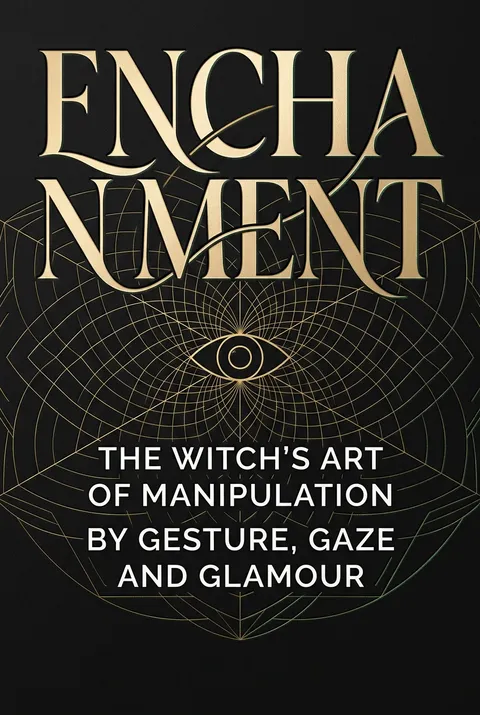
Enchantment is a practice-led work of witchcraft that moves from inner preparation toward increasingly interpersonal forms of influence. Its narrative begins with a mundane problem, getting a bartender's attention, then turns that anecdote into a training sequence involving trance, visualization, a crystal focus, touch, gesture, gaze, speech, glamour, and protection. The through-line is not a single spell but the author's belief that repeated attention and emotional commitment develop a capacity to shape experience.
The book's most useful ideas do not depend on accepting its strongest metaphysical claims. Rehearsal can sharpen intention; ritual can organize attention; confidence can alter how a person carries themselves; and emotion, voice, and gesture can shape social encounters. These practices also have a clear self-development use. A person who visualizes an interview or a desired change may become more prepared to notice opportunities and act on them.
The central epistemic problem is that Paddon repeatedly treats anecdotal success as evidence of magical causation. Reports of a person turning, a payment arriving, or an interviewer responding favorably do not isolate the cause. Expectation, selective memory, ordinary social cues, chance, and deliberate effort offer competing explanations. The text supplies no controlled evidence that thoughts or energy can compel people at a distance. Readers should distinguish the author's spiritual interpretation from what such stories can demonstrate.
The ethical problem is equally important. The book acknowledges coercive uses, yet some of its proposed applications target people who have not consented. An ethics based on necessity and personal responsibility can encourage reflection, but it lacks reliable safeguards when the practitioner alone decides what another person needs. Consent, proportionality, and respect for autonomy provide stronger checks. The most defensible reading treats the work as a blend of ritual, attentional practice, and social influence, while declining to regard nonconsensual magical control as established or ethically neutral.
Review Summary
Enchantment by Peter Paddon receives an overall rating of 3.88 out of 5 stars from 86 Goodreads reviews. A five-star review praises the book's practical approach to teaching pagans about influencing themselves and their surroundings. The reviewer commends the easy-to-follow lessons, excellent pacing, and ethical consciousness, recommending it highly for serious pagans and occultists. However, a three-star review finds the book entertaining and interesting but criticizes it for being too brief and poorly edited.
Glossary
Visceral Magick
Heart-led magical practicePaddon's term for magic performed through emotional, sensory, and embodied involvement rather than primarily through intellectual analysis. He argues that a practitioner should engage the work intuitively while performing it, then reflect on it afterward. In this book, visceral involvement supplies the emotional commitment and attention that support his exercises.
now space
Focused present awarenessPaddon's description of the altered, concentrated state in which the practitioner is absorbed in the present moment. He associates it with trance and magical work, and interprets it as loosening ordinary perceptions of time and place. The book uses the term both for a subjective state of attention and for a metaphysical condition.
one-point concentration
Attention held on one targetA focused state in which distractions recede and awareness settles on a single object, image, or intended outcome. Paddon compares it to the narrowed attention experienced in activities such as aiming or sword practice. He treats this capacity as central to visualization and to directing the intention used in his magical exercises.
magnetic passes
Gestures intended to guide attentionA set of hand movements that Paddon presents as ways to influence another person's attention or induce a receptive state. He describes circular, downward-waving, and drawing-in motions. The book frames them as magical techniques, while their observable effects may also involve ordinary visual attention, expectation, and social interaction.
Glamour
An induced impression or illusionIn Paddon's specialized use, glamour means shaping how someone feels about or perceives a person, object, or situation. It can refer to subtle changes in mood or impression, as well as more dramatic illusions. He distinguishes it from persuasion, which aims more directly at influencing a choice or belief.
projected invocation
Ritual energy projection exerciseA technique Paddon assembled from Egyptian magical material, Rosicrucian practice, and his own experimentation. The practitioner visualizes a deity's name, incorporates its image through breath and body, then projects the concentrated symbol toward a recipient. Paddon describes it as a way to practice projecting energy, charge objects, or transmit a chosen quality.
Dark Night of the Soul
Ritual for transforming negativityPaddon uses this term for a difficult self-improvement ritual in which the practitioner deliberately evokes anger or other negative feelings, then becomes calm and accepts the shadow aspects of the self. The intended movement is from acknowledging difficult emotion to transforming it into useful energy. The book's description is a personal magical account, not a clinical treatment protocol.
the 'fluence
Influence through magical intentionPaddon's informal name for the ability to direct intention toward people, circumstances, or oneself. The term covers a broad range of practices in the book, from building confidence and influencing attention to claims of nonverbal or distant manipulation. It expresses the author's model of enchantment and does not establish that these effects occur through a supernatural mechanism.
Download PDF
Download EPUB
.epub digital book format is ideal for reading ebooks on phones, tablets, and e-readers.








