

Key Takeaways
Treat family healing as shared work, not a verdict on one person
Start with self-observation. The book opens with Andrew, whose children from two relationships had cut off contact. Their mothers explained that he rarely showed empathy and expressed emotion mainly through anger. The authors asked him to investigate how he had developed those habits, rather than focus only on what others had done to him. They taught him to create a quiet personal healing space by attending in turn to his body, feelings, and sense of awareness.
The relationship is the unit. The authors frame family problems as patterns formed between people, not defects located in just one person. Their term subtle field describes a nonphysical realm of energy and consciousness they believe influences behavior. This is a spiritual model, not an established scientific account, but the invitation to reflect on one's own contribution is concrete and widely useful.
What's useful here is the shift from accusation to inquiry. Family-systems thinking similarly asks how a behavior is reinforced by a network of reactions, rather than treating one relative as the entire problem. Self-reflection can create room for responsibility without requiring a person to accept blame for another's abuse or choices. The book's metaphysical explanation is not necessary for that practical insight. A quiet pause that helps someone notice anger, fear, or defensiveness can be valuable on its own, provided it leads to changed conduct and not just a more elaborate story about invisible forces.
Trace repeated conflict to the pattern you help keep alive
Look for the loop. The authors name five recurring patterns that can erode family relationships: withholding, narcissism, dependency, control, and chaos. These are their descriptive categories, not clinical diagnoses. Withholding blocks honest expression; control narrows other people's room to act; dependency can turn closeness into pressure. The book argues that such habits may begin as attempts to cope with fear or loss, then become damaging when carried into adult relationships.
History explains, but does not excuse. Andrew's father was violent and self-centered. Andrew learned to prioritize his own survival, then repeated that orientation with his partners and children. The authors also describe Henry, a successful businessman whose guarded, self-important manner helped at work but undermined intimacy. Their practical message is to notice what a once-useful defense now costs, and practice a different response.
The distinction between a pattern's origin and its present effect is powerful. Developmental psychology often finds that strategies formed in unsafe settings can persist after the setting changes. That history can make a reaction understandable without making it harmless. The categories are most useful as prompts for specific questions: What happens before the argument? What does each person do next? What consequence keeps the cycle going? The label narcissism deserves particular care, since ordinary self-focus is not a diagnosis. Describing observable actions is usually fairer and more actionable than assigning a fixed identity.
Choose for durable fit, not chemistry alone
Attraction is not the whole match. The book defines compatibility through three factors: soul vibration, core values, and dominant elements. Soul vibration is the authors' spiritual idea of an underlying affinity; core values concern what people believe and prioritize; dominant elements come from a Taoist model of character and temperament. The authors say attraction can be intense even when partners lack the qualities needed to navigate life together.
Use observable evidence. Wendy and Charlie felt strongly suited to each other, yet struggled to connect with their young son Tim. The authors interpreted this as a mismatch in soul vibration, while his grandmother seemed to provide a stronger sense of belonging. Readers need not accept that explanation to take the family question seriously: Do people feel welcomed, listened to, and respected? The book's suggested intuition exercises and muscle testing are not validated ways to assess a partner.
This section is strongest when its spiritual vocabulary is translated into everyday compatibility: shared priorities, emotional safety, and the ability to repair disagreements. Relationship research commonly distinguishes attraction from the habits that sustain cooperation, although no simple test can predict a family's future. The story of Tim also shows why adult chemistry cannot be the only measure of a household's health. A child's behavior may signal a need for more attention or a change in family routines. The caution is important: labeling a child spiritually incompatible could deepen rejection unless adults treat the idea as a hypothesis, never as the child's fault.
Make empathy visible through listening, honesty, and reliable care
Care must be legible. The book treats empathy as the capacity to understand another person's feelings, needs, and perspective. Its exercises use meditation and visualization to cultivate that capacity, including a practice the authors call sharing prana. Prana is their term for life-affirming energy. In practical terms, the method asks participants to become calm, direct attention toward one another, and imagine sharing goodwill.
Repair begins in conversation. Stephen had struggled to communicate with his daughters, who believed he did not care about them. The authors linked his reserve to a spiritual blockage, then describe him meeting his daughters, listening, and speaking more openly. They report that the conversation lasted for hours and renewed his joy in parenting. Whatever one believes about prana, the visible ingredients are attention, honesty, and showing up when family members need support.
The useful bridge between meditation and relationship repair is rehearsal. A reflective practice can help someone approach a hard conversation less defensively, but empathy is ultimately tested in how the person listens, responds, and follows through. Stephen's example therefore works best as a story about renewed contact, not proof of an energetic mechanism. A further safeguard is to distinguish empathy from agreement: understanding a relative's experience does not require accepting harmful behavior. Warmth and boundaries can coexist, and reliable care often communicates more than claims of deep connection.
Regulate your response before treating a child's behavior as defiance
Read the whole situation. The authors argue that a child's difficulty can reflect the wider family environment, including adult stress and conflict. They discuss sleep troubles, thumb-sucking, toilet training, and persistent crying, and offer calming practices for parents. Their own account of soothing a screaming child includes an important qualification: the child should not be hungry or in physical distress before a parent tries a calming technique.
Respond before you label. The book recommends that caregivers steady themselves rather than vent frustration onto a child. Its Keep-It-Together Mudra is a short hand-and-breath practice intended to create a pause. The spiritual explanation is optional; the behavioral principle is not. Check for immediate needs, consider medical advice when symptoms persist, and ask whether household routines, conflict, or a caregiver's expectations are adding pressure.
This is a humane corrective to interpreting every difficult behavior as deliberate disobedience. Developmental capacity, fatigue, discomfort, and the child's context all matter. A caregiver's pause can also interrupt escalation, a basic idea shared by emotion-regulation approaches. The book's insistence that family dynamics matter should not become a claim that parents cause every symptom. Nor should a child be made responsible for restoring adult harmony. The most ethical use of this perspective is to widen the inquiry: attend to the child's needs, the caregiver's stress, and the practical conditions around the behavior.
Treat trauma as serious, while keeping medical care in the picture
The book's trauma model. The authors use trauma scar for an energetic imprint they believe can remain after events such as a difficult birth, abuse, or separation. They describe Sebastian, who had a complicated delivery and cried persistently, and report that his mother used their energy-healing exercises before his distress eased. This is their account of the case, not evidence that the method treated a medical condition.
Do not substitute visualization for care. The book also discusses physical symptoms, fertility, sexual dysfunction, and childhood illness. Those concerns can have medical, psychological, and social causes that require qualified assessment. The authors sometimes advise consulting a doctor, and that caution should lead. Meditation may support calm or reflection, but it cannot establish that a trauma has been located or cured, and it should never delay appropriate treatment or safeguarding.
The focus on lasting effects of difficult experiences is valuable, especially when families are tempted to dismiss distress because a person appears physically well. Trauma-informed care emphasizes safety, choice, and support, rather than forcing someone to relive an event. The book's energetic account is a spiritual interpretation and should be kept separate from clinical diagnosis. That distinction protects both children and adults: it leaves room for personal ritual while ensuring that symptoms such as persistent crying, pain, or reproductive difficulties receive evidence-based attention. Consent matters especially when a parent is doing an exercise intended to affect a child.
Guard family attention from pressure, interference, and digital noise
Outside forces enter the household. The authors describe ex-partners, relatives, social expectations, and digital media as pressures that can disrupt trust and communication. Their Boundary Safety Net is a meditation intended to strengthen protection from what they call external energetic intrusions. The book also urges families to limit phone and social-media use at shared times, such as meals, and describes a Core Field Meditation for restoring attention.
Make boundaries practical. Rosalie and Stephen faced hostility from an ex-spouse and extended family. Their story points to a familiar task: decide what contact is welcome, what behavior is unacceptable, and how the household will respond. The book's metaphysical shield is not empirically established. Clear agreements, device-free time, and consistent limits are concrete ways to protect family attention and privacy.
The section connects relational health to the environments that compete for attention. A household's norms can protect time for conversation without pretending that every outside influence is malicious. Digital habits are best handled through clear, mutually understood rules rather than panic about technology. Likewise, a boundary is not a wall that prevents all discomfort; it is an agreement about access and conduct. The book's energy language may help some readers visualize protection, but practical limits remain essential, especially when the pressure involves harassment, coercion, or unsafe contact.
Treat pregnancy as a family transition, not a private project
Make room before the arrival. The book presents conception, pregnancy, and a newborn's arrival as changes that affect both partners and existing children. Its practices include quiet bonding time, chanting, and inviting family members to participate in a shared ritual. The authors say these exercises can support a pre-born child's well-being, but they do not establish that chanting or energy work improves pregnancy outcomes.
Keep practical care central. The broader lesson is to prepare emotionally and logistically: adjust routines, make time for the couple, and help siblings feel included. The book discusses fertility difficulties and sexual problems through its energy model, yet these concerns can have medical causes. Its most reliable contribution here is the reminder that family formation changes relationships as well as schedules, and that support should reach the pregnant person and the wider household.
Shared rituals can make an impending birth feel like a family event rather than an isolated medical process. Their value can lie in attention, reassurance, and a chance for relatives to express hopes, not in an unverified transfer of energy. This distinction allows readers to keep meaningful practices without treating them as treatment. Fertility struggles also carry grief and pressure, so rituals should never become another obligation or imply that a person's mindset caused an outcome. Practical help, respectful communication, and qualified prenatal care remain the foundation.
Let adult children leave without making distance mean rejection
Release the role, preserve the bond. The authors argue that parents need to give adult children room to follow their own paths. Natalie, a divorced mother, worried constantly as her daughter Elaine prepared to leave for college. The authors interpreted her worry as attachment and describe exercises intended to loosen it. Their story ends with Natalie, her husband, and Elaine spending time together before Elaine left to study in Paris.
Build a life beyond parenting. The book also addresses empty-nesters' identity, regret, and resentment. It encourages parents to renew their partnership, pursue their own development, and address old grievances rather than letting them govern current relationships. Its rituals may help some readers mark a transition, but the practical task is to support independence while remaining available. A child moving away is a change in closeness, not necessarily a rejection.
This is a compelling account of individuation: a healthy family bond must allow each member to become more fully themselves. Attachment theory makes a similar distinction between secure connection and control, though adult children may need different levels of contact than parents prefer. Letting go does not mean suppressing sadness or accepting every choice without concern. It means expressing care without turning care into surveillance or guilt. The book's attention to parents' identity after children leave is especially valuable because an empty nest can expose needs that parenting had kept out of view.
Analysis
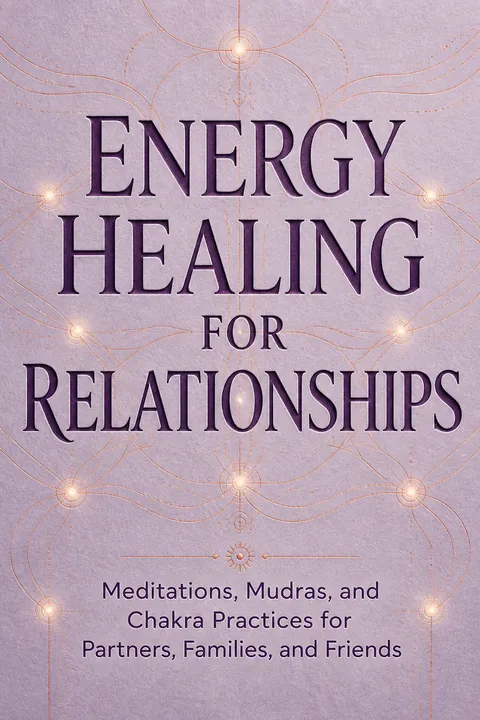
This book is a spiritually framed manual for changing family relationships, organized around case histories and a large collection of meditations, visualizations, and hand gestures. Its central move is to reinterpret conflict as a relational pattern that can be examined and changed, rather than a permanent flaw in one family member. The opening account of Andrew makes that idea memorable: estrangement becomes an invitation to examine his anger and lack of empathy, not simply a reason to condemn his children or former partners.
The most transferable material concerns ordinary behavior. The book repeatedly emphasizes self-reflection, empathy, honest communication, respect for a child's needs, boundaries, and the challenge of letting adult children develop independently. Its case stories make those themes concrete. It also offers a useful distinction between attraction and long-term compatibility, although its proposed measures of soul vibration and elemental fit are not established ways to predict relationship success.
The book's explanatory system is a different matter. Prana, subtle fields, energetic projections, past-life attachments, and trauma scars are presented as literal mechanisms, sometimes alongside claims about illness, fertility, sleep, sexuality, and children's behavior. The text does not provide evidence sufficient to verify those mechanisms or to show that its exercises treat those conditions. Reported improvement in a case history does not establish cause; changes may have multiple explanations, and the accounts do not replace controlled clinical evaluation.
A responsible reader can separate the practice from the claim. Slow breathing, focused attention, reflection, and shared rituals may help people feel calmer or prepare for difficult conversations, without requiring belief in invisible energy systems. But persistent symptoms, trauma, abuse, fertility concerns, and medical problems call for qualified care. Exercises involving another person, especially a child, should respect consent, safety, and appropriate boundaries. Read as a spiritual reflection guide, the book offers prompts for care and accountability. Read as medical instruction, its claims require substantial skepticism.
Glossary
Subtle field of energy and consciousness
The authors' nonphysical human fieldThe book's term for a nonphysical field that it says interpenetrates the body and influences awareness, emotion, energy, and relationships. Its proposed organs include chakras, meridians, and energy reservoirs. This is a spiritual framework used to explain the book's exercises, not an established anatomical structure or scientific account of relationship problems.
Personal healing space
A quiet inward attention practiceA meditative state the authors ask readers to create by sitting quietly and attending in sequence to the physical body, feelings and mind, and a broader sense of awareness or spirit. In the book, it is the starting place for many exercises. It can also be understood as a structured pause for self-observation.
Prana
Life energy in the authors' modelA term from Yoga that the authors use for life-affirming nonphysical energy. They associate freely flowing prana with vitality, pleasure, love, intimacy, and joy, and describe blockages as sources of relational difficulty. The book often equates prana with chi, a concept from Taoist traditions. These are spiritual concepts, not medically measured forms of energy.
Soul vibration
Spiritual affinity between peopleThe authors' term for an underlying spiritual resonance that they believe influences comfort, belonging, understanding, and intimacy between family members. They attribute it to a soul's origins and experiences, including past lives. The book proposes that differing soul vibrations can be harmonized through exercises, but offers no validated method for measuring this quality.
Core field
Source of mental functionsIn the book's subtle anatomy, a resource field containing sixteen functions of mind, including will, intent, desire, choice, creativity, empathy, and love. The authors say that distorted energy in this field can support restrictive beliefs and patterns. Their Core Field Meditation is intended to fill the field with prana, jing, and bliss.
Mutual Field of Prana
Shared field in the authors' modelA field that the authors say partners or family members create by radiating prana to one another. They believe it can sustain connection across physical distance and protect intimacy from disruptive influences. The associated exercise involves meditation and visualization together. It is a spiritual concept, not a verified force or substitute for communication and relationship care.
Trauma scar
The authors' energetic trauma imprintThe authors' term for an alleged imprint in the subtle field associated with an event such as a difficult birth, abuse, or separation. They describe it as interfering with energy flow and potentially affecting well-being. This concept is not equivalent to a clinical trauma diagnosis. The book's visualization exercises should not replace medical or psychological assessment and treatment.
Family Harmony Circle
A shared family meditationA group exercise in which household members sit together, imagine their family field, and visualize sharing prana and jing. The authors intend it to create a more nourishing atmosphere and strengthen family connection. Its practical elements include setting aside time together and expressing a shared intention, regardless of whether participants accept the proposed energy field.
Boundary Safety Net
A protective energy visualizationA meditation intended, in the authors' model, to strengthen the body's exceptional meridians by directing jing through them and forming a protective boundary around the subtle field. The book presents it as protection from negative projections. It is not a demonstrated shield against harassment, abuse, or physical danger; concrete safety measures and appropriate support remain necessary.
Download PDF
Download EPUB
.epub digital book format is ideal for reading ebooks on phones, tablets, and e-readers.








