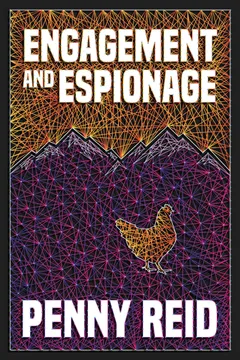


Plot Summary
The Missing Egg Supply
For Jenn Sylvester, the Donner Bakery’s custards depend on Richard Badcock’s exceptional farm eggs. When he says his stock is gone, she persuades him to sell four dozen from his house and accepts a higher price in exchange for a year’s advance order.
The errand makes her late to Green Valley’s Friday jam session, where her boyfriend, Cletus Winston, has been waiting after weeks of missed time together. Jenn arrives in a blonde wig with a bakery box, and Cletus’s disappointment gives way when she explains that Badcock treated her suspiciously.
In the dark backstage, their reunion turns intimate, but her mother’s frantic messages interrupt them: all sixty-one of Badcock’s chickens have been killed. Their private longing is suddenly tangled with a crime.
The opening makes Jenn’s exacting standards both a source of craft and a measure of strain. Her loyalty to Badcock’s eggs is not mere fussiness: she recognizes quality as a relationship between producer, ingredient, and finished work. Yet she keeps paying for that loyalty with her own time, arriving late to the person she loves. Cletus’s frustration is similarly double-edged. He wants closeness, but restrains his impulse to solve Jenn’s problems for her. The dead chickens break into their private reunion as a material loss, not an abstract omen, forcing the couple’s intimate conflict into the town’s shared life.
Forty Birds, Twenty Missing
At Badcock’s farm, officers find forty strangled chickens and twenty-one missing. Cletus gathers his family to pluck and butcher the dead birds before the meat spoils; Jenn finds room in the church’s donated industrial freezers and the bakery’s walk-in, while Badcock’s local customers agree to buy the salvaged birds.
Ashley Winston observes that the precise neck breaks suggest someone familiar with handling chickens, and that the killing looks deliberate. Jenn rebukes Cletus and Officer Jackson James when they joke at Badcock’s expense, making them face the farmer’s grief.
After working through the night, Jenn confronts her mother, Diane, about the bakery’s crushing workload. She refuses to keep making supply runs and demands another baker and protected days off. Diane agrees to take over deliveries and hire help.
The rescue is practical care in its most credible form: a freezer is found, a family works through the night, and a farmer’s loss becomes partly recoverable. Jenn’s rebuke of Cletus matters because compassion here is not a personality label; it is a demand that people change their conduct when another person’s livelihood is at stake. The same insistence shapes her confrontation with Diane. Jenn stops treating exhaustion as proof of devotion and names the labor she has been carrying. The two crises therefore expose a shared problem: care becomes destructive when it depends on one person silently absorbing every cost.
Twenty Cows, Two Hundred Thousand
At Miller Farm, Jenn learns that her father, Kip Sylvester, is involved in a proposed agritourism venture with retiring farmers. A sudden auction offers all twenty of Miller’s rare Guernsey cows as one lot, while Kip watches from the crowd beside his mistress, Elena Wilkinson.
Diane, still raw from the divorce, tries to buy the cows before Kip can. Cletus warns her that Kip may be baiting her, but Diane keeps bidding and wins for two hundred thousand dollars.
She returns to her car triumphant, then collapses into tears over what she has done. The purchase turns her anger into an expensive obligation. For Jenn, the auction also confirms that Kip’s business dealings reach beyond the lodge and may be disrupting the farms that supply her bakery.
The auction converts private marital injury into a public financial spectacle. Diane’s bid is less a plan for dairy farming than an attempt to defeat Kip on ground he appears to have chosen, which makes the price a measure of emotional exposure as much as purchasing power. Jenn sees the danger but cannot simply overrule her mother without repeating the old pattern of managing Diane’s feelings and consequences. Cletus’s warning is sensible, yet his wish to acquire a Guernsey cow complicates his position. The scene binds business, family rivalry, and affection together, showing how easily a supposedly practical transaction can become a proxy battle.
Smoke Among the Beehives
After the auction, Jenn asks Cletus to visit a stream where they once grew close. He arrives with an engagement ring, but before he can propose, Jackson James reports that Diane has been found unconscious beside Old Man Blount’s burning bee boxes.
She has a concussion and smoke inhalation; someone struck her, dragged her across a field, and left her near the fire. Blount’s bees have been destroyed, adding another injured supplier to the dead chickens and Miller Farm’s abrupt sale.
Jenn suspects the attacks may be aimed at the bakery’s supply chain, though the police have not established a connection. Cletus stays with Jenn and helps care for Diane. As they compare the farms and the timing, the disruptions begin to look less like unrelated misfortunes.
The fire raises the stakes by shifting from property damage to bodily danger. Jenn’s first response is to connect the violence to the suppliers she depends on, a suspicion grounded in the repeated pattern rather than in a wish to make herself central. Cletus supports her without pretending that their emerging theory is proven. His presence is protective, but the scene also tests whether protection means taking control or remaining beside her while she thinks. The damaged bee boxes matter because they belong to a person’s work and history, just as the chickens did. In this story, violence becomes legible through what it destroys and whom it places at risk.
Five Rings on the Counter
The next morning, Cletus proposes in Diane’s kitchen, after earlier showing Jenn one ring at the stream and taking it back because he misread her reaction. He has bought five rings so she can choose, but Jenn tells him the choice matters less than the person asking.
She selects one without treating it as a test, and accepts his proposal. Their new commitment is immediately interrupted when Diane reveals that Kip has emptied more than three million dollars from the lodge renovation accounts.
Cletus arranges care for Diane, including meals and help with her injured condition, while he and Jenn begin to trace the farm dealings. The engagement is real, but the couple’s future is now shadowed by a family business crisis and an investigation that may expose Jenn to danger.
The ring episode reveals a mismatch between Cletus’s care and his assumption that perfect care requires perfect prediction. Buying five rings is generous, but it also turns Jenn’s preference into a puzzle he believes he must solve. Her answer shifts the measure of commitment away from performance and toward recognition. The proposal’s domestic setting then places romance beside financial instability rather than shielding it from consequence. Diane’s missing funds prevent the engagement from becoming a sealed, private victory. Instead, love is shown as an ongoing practice under pressure, requiring both tenderness and an honest assessment of what Kip’s power can do.
The Bakers Share a Secret
At Daisy’s diner, Cletus meets gossip Karen Smith and learns that Nancy Danvish still sells farm goods to a select few, despite telling Jenn she had retired.
He also discovers that several of Jenn’s state fair baking rivals are meeting together, including Tricia Wilkinson, the sister of Kip’s mistress and a former champion who stopped placing after Jenn began winning. Cletus confirms that Kip’s deal with Miller is not complete and learns that Kip hopes to build a farm-stay business with the farmers’ land.
At the diner, Kip confronts Jenn and belittles her choices, but she refuses to accept his judgment. The clues point toward a connection between the business scheme and jealous competitors. Jenn proposes going undercover, even if doing so means faking a breakup with Cletus.
The mystery becomes more specific as social information acquires evidentiary weight. Karen’s gossip, Nancy’s selective sales, and Tricia’s contest history are not proof on their own, but together they revise the map of possible motives. Kip’s treatment of Jenn supplies another kind of evidence: he still assumes that he can define her value and recruit her into his plans. Her decision to infiltrate his venture is therefore both investigative and psychological. She uses the very underestimation that has diminished her to gain access. The risk is that a tactic built on concealment may also reproduce the emotional distance already hurting her relationship.
A Breakup for the Crowd
To make the ruse convincing, Jenn and Cletus stage a public breakup at the community center’s jam session. Cletus lets other musicians believe he is furious that Jenn has neglected him, then accuses her of choosing work over their relationship and leaving him for Jackson.
Jenn knows the accusations are part of the act, but their emotional force catches her unprepared. The performance costs Cletus his beloved banjo in a bet with another musician, because he believes Jenn will arrive on time and win it back.
When she arrives late, he hands over the instrument rather than retreat from the wager. Jackson drives Jenn home, and she calls Cletus in tears. He reassures her that the hurtful claims were planned, while the banjo is safe, but their real separation is still approaching.
The staged breakup turns performance into an emotional stress test. Cletus uses a genuine past grievance because a fabricated quarrel would not persuade the town, yet that choice makes the lie difficult for Jenn to contain. His banjo wager deepens the cost: he risks a treasured object to make the deception believable, while she experiences his public rejection as a possible truth. The scene exposes a central asymmetry. Cletus can plan the performance, but he cannot control what it does to Jenn’s body or trust. Their eventual reassurance matters, though it does not erase the loneliness required by the scheme.
Farm Bakes Takes the Stage
Jenn publicly quarrels with Diane and pretends to leave the bakery, giving Kip reason to believe she has joined his side. She also lets him think she is dating Billy Winston, who plays along to make the story credible. Kip brings her to a meeting with bakers and investors planning Farm Bakes and a related food brand.
The group argues over using Jenn’s millions of social media followers to promote the venture. Tricia resents Jenn’s proposed role and accuses her of benefiting from unfair advantages; Josephina Ortiz objects and withdraws from the business.
Later, Elena apologizes for her sister and reveals that Tricia and her friend Deb Brightwell are skilled at killing chickens by breaking their necks with a broom. Jenn recognizes this as a possible link to Badcock’s murder and relays what she can to Cletus through her monitored phone.
The meeting exposes exploitation in polished business language. The investors value Jenn’s audience and appearance, while arguing over whether she deserves authority in the venture. Tricia’s hostility is personal, but it grows from a real contest over credit and control. Josephina’s refusal to remain in the room marks an ethical boundary the others are willing to cross. Elena’s casual account of the broom method turns a domestic skill into investigative evidence, showing how ordinary knowledge can become dangerous when directed toward violence. Jenn’s performance succeeds because Kip believes she is compliant, but its success also depends on her tolerating the very objectification she is trying to expose.
The Daughter Fights Back
Cletus and his brothers listen through Jenn’s phone as she stays with Kip and Elena. When Elena receives a call from Tricia about the police, the conversation suggests that Tricia has been hiding Badcock’s missing chickens at her house.
Cletus sends the lead to Officer Fredrick Boone, and the birds are recovered. Kip realizes Jenn has betrayed the group, grabs her, and hits her in the face. Shelly drives to the house, knocks Kip down, and holds him until Cletus and the others arrive. Jenn’s security cameras recorded the assault, giving the police evidence.
Kip and Elena are arrested for assault and attempted kidnapping; Jenn’s father can no longer pretend that his control over her is paternal care. The recorded exchange also directs suspicion toward the people behind the farm attacks.
Jenn’s investigation produces a concrete result, the return of Badcock’s missing hens, but its success immediately exposes her to violence. Kip’s attack strips away the language of family concern he used to mask control. The intervention by Shelly and Cletus is urgent, yet Jenn is not merely rescued: her own decision to report the chickens and her home security footage help secure the evidence. This balance matters. The scene refuses to equate agency with solitary self-sufficiency, while refusing to reduce Jenn to a passive victim. Support becomes useful because it joins her judgment rather than replacing it.
Tricia at the Panic Room
After Kip’s arrest, Tricia arrives at Jenn’s house with a gun and forces Jenn and Cletus to sit in the living room. She wants to erase the security recording of her arrival and leave with them. Cletus keeps her talking while he and Jenn edge toward the concealed panic room.
He pieces together a likely division of responsibility: Tricia and Elena handled Badcock’s chickens, while Deb attacked Diane and set the bee boxes alight, and Elena moved Diane toward the fire. Tricia’s shock at the last detail suggests the partners did not share everything.
Jenn opens the hidden door, and she and Cletus escape inside as Tricia fires several shots. Cletus calls the police and warns his family away. The immediate threat ends with them alive behind the reinforced door, but the truth remains messier than a single culprit.
The hostage scene turns the story’s most important method, listening closely, into a survival tool. Cletus’s questions are not simply a display of cleverness; they keep Tricia speaking while Jenn gets within reach of the panic room. Her surprise at Elena’s actions fractures the conspirators’ apparent unity and complicates the easy idea of a single coordinated plot. The reinforced room, introduced as a feature of Jenn’s house, becomes meaningful protection rather than decorative preparation. Still, safety is provisional. The couple can survive the immediate violence, but they cannot make the criminal network or its motives disappear by identifying them.
A Home Chosen Together
Police take Tricia into custody, while Jenn’s security footage supports the case against Kip and Elena. Tricia later claims responsibility for the attacks, apparently trying to shield Deb and Elena; investigators lack enough evidence to charge the others.
Alex, Cletus’s hacker friend, restores Diane’s renovation money, and Cletus moves the old barn to the Winston homestead to house the cows Diane bought. Jenn returns to the bakery on terms that preserve her days off and require a second baker.
She and Cletus finally speak openly about his restraint and her wish to live with him; he is still cautious, but agrees to stop treating desire as a danger to her. Their intimacy resumes at the community center, where Cletus’s elaborate seduction becomes a private celebration of the life they have chosen.
The resolution distinguishes emotional closure from perfect legal justice. The people responsible for the violence are not all held equally accountable, and Tricia’s claim to sole responsibility leaves unanswered questions. Yet the couple’s final movement is toward chosen interdependence, not rescue as a permanent arrangement. Jenn keeps the boundaries she established at work, while Cletus learns that restraint can become another way of withholding himself. Their intimacy answers the novel’s recurring problem of care: it need not mean self-erasure or control. The barn and restored funds offer practical repair, but the deeper resolution is a home in which both people can ask for what they want.
Analysis
Engagement and Espionage makes care tangible through work: Jenn sources ingredients, Cletus repairs her home, the Winstons salvage Badcock’s meat, and the town’s farmers sustain the bakery. The mystery threatens those relationships by turning commerce into a route for coercion. Livestock and bee boxes are not interchangeable property; they embody years of labor, local knowledge, and attachment. The crimes therefore test whether the community recognizes harm before it reaches a human body.
Jenn’s arc concerns the difference between generosity and self-abandonment. She has learned to anticipate other people’s needs, especially Diane’s, and to experience a boundary as a possible betrayal. Her decision to stop working herself ragged is not a rejection of her mother. It is an attempt to make their relationship sustainable. Undercover, she weaponizes the town’s assumption that she is foolish and ornamental, yet she also risks inhabiting the very role that has constrained her.
Cletus faces a parallel difficulty. He wants to protect Jenn and is skilled at influencing events, but love requires him to leave decisions in her hands. His plans can be expressions of devotion and forms of control at once. Their romance deepens when each can ask for care directly, rather than interpreting restraint as nobility or sacrifice as proof of love.
The legal resolution is deliberately imperfect. Tricia accepts blame in a way that may protect other participants, and the available evidence cannot cleanly account for every act. Emotional and practical repair must therefore continue beyond the arrests. The book’s final movement toward partnership does not erase the injuries or solve every public wrong. It offers a more modest claim: people can make a livable future by setting limits, telling the truth, accepting help, and choosing one another without pretending that love makes them invulnerable.
Review Summary
Engagement and Espionage is a highly anticipated spin-off featuring Cletus and Jenn from the Winston Brothers series. Readers praise the witty banter, clever mystery, and character growth. Many found it a comforting return to Green Valley and the beloved couple. The book balances romance, family dynamics, and cozy mystery elements. While some found the mystery predictable, most enjoyed the overall story and character interactions. Fans of the series are excited for more installments, appreciating the continuation of Cletus and Jenn's relationship post-Beard Science.
Characters
Jennifer Sylvester
The meticulous bakerJenn is the skilled baker at the Donner Bakery, known for the standards she applies to ingredients and the desserts that win her notice across Green Valley. Her devotion to quality is matched by a reflex to take on too much, especially when her mother is distressed. She is compassionate without being naïve, and increasingly understands that kindness does not require surrendering her time or judgment. Her relationship with Cletus gives her room to be desired and intellectually respected, while the mystery draws on the town’s habit of dismissing her as pretty but unintelligent. Jenn’s most defining struggle is to make choices from her own values rather than from guilt, even when those choices upset people she loves.
Cletus Winston
The strategic romanticCletus is a mechanic, banjo player, cook, and unusually observant strategist whose eccentric manner lets others underestimate him. He loves Jenn intensely, but his instinct to arrange outcomes can conflict with his promise to respect her autonomy. Lists, plans, and precise observations help him manage a world that once taught him to anticipate danger. He expresses affection through practical service, from maintaining Jenn’s house to solving problems before she sees them, yet must learn that love is not improved by withholding desire or deciding what she can handle. His humor, odd habits, and capacity for genuine tenderness coexist with a sharper appetite for vengeance than he readily admits.
Diane Donner
The formidable motherDiane owns the lodge and bakery where Jenn works. She is a polished, ambitious businesswoman accustomed to managing appearances and keeping control, but her husband’s betrayal leaves her emotionally unsteady. Her love for Jenn is real, though she has often relied on her daughter’s labor without fully seeing its cost. Diane can move abruptly between self-pity, anger, and practical resolve, making it difficult for Jenn to set limits without feeling cruel. Her instinct to protect her family can become overbearing, yet she is capable of reconsidering her behavior when confronted with its consequences. She represents a parent trying to become more accountable while still learning how to respect an adult child’s independence.
Kip Sylvester
The controlling fatherKip is Jenn’s father and Diane’s estranged husband, a former high school principal whose polished manner conceals a need to dominate family and business alike. He prizes status, appearance, and influence, and assumes he can direct Jenn’s choices by defining what she is worth. His new agritourism venture draws local farmers and bakers into a scheme that serves his ambitions and his conflict with Diane. Kip’s condescension is especially effective because it has been reinforced over years, leaving Jenn with an old longing for recognition even as she learns to distrust his version of affection. He embodies the harm done when control is mistaken for care.
Tricia Wilkinson
The resentful rivalTricia is Elena Wilkinson’s sister, a baker with a history in the state fair competition and a strong sense of ownership over her business ideas. She resents Jenn’s success and distrusts the attention Jenn receives, especially when Kip proposes bringing Jenn’s social media audience into Farm Bakes. Her ambition is mixed with old grievances about recognition and opportunity. Tricia can be forceful and perceptive about business, but jealousy narrows her judgment and makes her willing to treat another person’s success as an injury to herself.
Elena Wilkinson
Kip’s longtime mistressElena is Kip’s longtime partner and Tricia’s sister. Soft-spoken and outwardly deferential, she appears less confrontational than the people around her, but she has her own loyalties and can justify behavior that harms others. Her closeness to Kip places her inside the family and business conflict, while her attachment to Tricia shapes how she interprets the baker’s grievances. Elena’s gentleness should not be confused with passivity or moral clarity. She illustrates how people can participate in damaging choices while understanding themselves as loyal, helpful, or merely caught in another person’s struggle.
Deb Brightwell
Tricia’s loyal friendDeb works with local farmers and has been close to Tricia since their youth in 4-H. Her friendship is defined by loyalty, practical skill, and a readiness to support Tricia’s ambitions. Those qualities could make her a dependable ally, but loyalty also creates the risk of becoming complicit when a friend’s resentment turns destructive. Deb’s history with farming and chickens places her within the practical world behind the mystery, where familiarity with animals can become either care or a means of harm.
Richard Badcock
The devoted egg farmerBadcock raises the carefully tended hens whose eggs Jenn considers essential to her baking. He is deeply attached to his birds and treats their lives with unusual reverence, including burying those that die naturally. His guarded manner can make him seem hostile, but his reserve reflects a farmer protecting his work and livelihood. The attack on his flock turns his private devotion into a public crisis, and his circumstances remind Jenn and Cletus that rural livelihoods are personal, not interchangeable assets.
Nancy Danvish
The retiring farmerNancy is a capable farmer, craftswoman, and longtime supplier whose decision to retire changes Jenn’s access to local ingredients. She is frank, independent, and unwilling to disguise her reasons for making a business choice. Nancy’s ties across Green Valley give her access to information, though she does not share everything she knows. Her wish to travel and leave farm work behind is understandable, even when the choice complicates the investigation. She represents the practical costs of retirement and the limits of asking someone to remain available merely because others depend on them.
Old Man Blount
The prickly beekeeperBlount is a difficult, fiercely independent beekeeper whose son has joined a motorcycle club rather than remain under his roof. He is known for his temper and refusal to sell his land, but his bees and handmade boxes carry personal meaning. His grief makes him volatile, and his insistence on independence can isolate him from help. Through him, the story shows that a person’s unpleasantness does not make their loss less real or their safety less important.
Farmer Miller
The retiring dairy farmerMiller is a dairy farmer preparing to retire and move closer to family. His Guernsey herd and property become central to the agritourism venture, though he has his own reasons for considering a sale. He is practical about money and retirement rather than sentimental about remaining on the farm indefinitely. His business dealings reveal how a seemingly generous arrangement can appeal to a farmer while still carrying risks and concealed motives.
Fredrick Boone
The careful investigatorBoone is a deputy sheriff and the most attentive investigator on the local force. He takes the attacks on farms seriously, asks measured questions, and understands that property loss can undermine a community’s sense of safety. His responsibilities extend beyond this case, and limited police resources sometimes prevent him from following every lead as quickly as Jenn hopes. Boone provides institutional attention without pretending that the justice system can instantly repair every loss.
Jackson James
The affable deputyJackson is a local officer and Cletus’s friend, often present when the investigation intersects with town life. His easy manner and interest in Ashley can make him seem less focused than Boone, but he is capable and committed to his work. His friendship with Jenn becomes useful during Cletus and Jenn’s staged breakup, though Cletus’s jealousy temporarily distorts how he reads Jackson’s intentions.
Billy Winston
The dutiful older brotherBilly is Cletus’s older brother, a disciplined business leader with a beautiful singing voice and a strong sense of responsibility. He often supports Cletus’s plans even when he questions their complexity. His seriousness masks emotional vulnerability, and he is more generous toward his family than toward himself. Jenn values his kindness, while his presence in the Winston household reveals the affectionate rivalry and old wounds that shape the brothers.
Beau Winston
The charming redheadBeau is one of Cletus’s brothers, a mechanic with an easy charm and a habit of teasing. He is dating Shelly and wants time away from work to strengthen their relationship. His humor can soften the family’s tension, but he also understands when Cletus needs practical help. Beau’s contrast with his more controlled brother helps expose the affection and friction running through the Winston family.
Roscoe Winston
The veterinary studentRoscoe is Cletus’s youngest brother and a veterinary student. He is quick-witted, competitive, and not shy about challenging Cletus, whose teasing he sometimes finds exhausting. His training makes him observant around animals, and his place in the family balances irreverence with practical usefulness. He shares the Winstons’ loyalty while resisting the expectation that everyone should accommodate Cletus’s habits.
Ashley Winston
The sharp-eyed sisterAshley is Cletus’s sister, an accomplished chicken plucker and an observant reader of people and animal behavior. She challenges Cletus when his impulse to interfere overrides another person’s right to choose. Her practical knowledge helps the family think clearly about how the chickens were killed. Ashley’s developing relationship with Drew is part of the family’s wider landscape of affection and expectation.
Shelly
The steady mechanicShelly works with the Winston family at the auto shop and is Beau’s partner. Taciturn, skilled, and difficult to rattle, she acts decisively when someone is in danger. Her affection often appears through practical support rather than elaborate reassurance. Shelly’s steadiness gives the lively Winston family a useful counterweight, and her care for animals reflects the tenderness she keeps largely private.
Drew Runous
The patient musicianDrew is Cletus’s friend and a guitarist in the Green Valley jam sessions. He is in a relationship with Ashley and is patient where Cletus is impatient, especially about formal commitment. His musical presence helps establish the community center as a gathering place for the town. Drew’s reserved steadiness also makes him a quiet part of the Winstons’ network of mutual aid.
Roger Gangersworth
The rival bakerRoger is an experienced local baker who resents Jenn’s repeated success at the state fair, though his own work is respected. He is connected to the group developing Farm Bakes and sees commercial value in Jenn’s public following. His ambition and envy complicate his judgment, but he is not as openly hostile as Tricia. Roger shows how competition can turn professional disappointment into a shared grievance.
Josephina Ortiz
The principled bakerJosephina is a baker and prospective Farm Bakes investor who is willing to challenge the group when it treats Jenn unfairly. She values teaching and the craft itself more than being publicly recognized. Her refusal to remain in a venture whose members demean Jenn marks her as an ethical counterpoint to the project’s more opportunistic participants.
Karen Smith
The town informantKaren is a prolific local gossip whose casual observations give Cletus a useful lead about Nancy Danvish’s continuing sales. She is often intrusive and unkind, but her appetite for community news makes her an inadvertent source of information. Her role shows how a small town’s rumor network can help an investigation as readily as it can wound people.
Alex
Cletus’s hacker friendAlex is Cletus’s technically gifted friend in Chicago, known for abilities that operate beyond ordinary legal boundaries. Cletus trusts him with complicated digital tasks because Alex can uncover information that conventional channels may not reach. His friendship is built on competence and discretion, qualities Cletus values as highly as affection.
The Winston siblings
Cletus’s loyal familyCletus’s brothers and sisters form a noisy, capable network that responds quickly when a neighbor needs help. They tease, disagree, and work together, often turning a difficult task into a family undertaking. Their presence gives Jenn a model of belonging that contrasts with the silence and conditional approval of her childhood home.
Plot Devices
The Local Supply Chain
Connects farms to motiveJenn’s bakery depends on a small network of local producers for eggs, milk, butter, honey, berries, and preserves. When those sources are disrupted through slaughter, fire, sale, or sudden retirement, the pattern creates the mystery’s first evidence. The supply chain also gives the attacks practical consequences: Jenn may lose the ingredients that distinguish her baking, while farmers lose animals, income, or the work they value. It links the mystery to the characters’ ordinary responsibilities and makes a local business rivalry capable of producing real harm.
The Staged Breakup
Creates undercover accessJenn and Cletus pretend to end their engagement so Kip will believe Jenn is free of her mother’s influence and available to join his business venture. Cletus makes the public performance convincing by drawing on their real disagreements about Jenn’s overwork, then adding false accusations involving Jackson. The ruse gives Jenn a reason to attend Kip’s meeting, but it also strains the couple because the performance uses real emotional vulnerabilities. It tests whether they can distinguish strategic deception from the trust they need in private.
The Monitored Phone
Carries evidence and warningCletus’s hacker friend enables the group to listen to and record activity through Jenn’s phone while she is with Kip and his associates. The phone lets Cletus and the Winstons follow her meeting, hear Elena’s call about the missing chickens, and respond when Jenn uses an agreed emergency phrase. It also makes the undercover plan more credible because Jenn can keep the device in sight without wearing a conspicuous wire. Its function depends on the trust Jenn places in Cletus and the rapid coordination of people nearby.
The Panic Room
Turns preparation into refugeJenn’s house has two reinforced safe rooms, built as part of its security system. When Tricia enters with a gun, Jenn and Cletus use their knowledge of the concealed door to escape the living room and survive the shots fired outside. The rooms also reflect the uneasy history of the house: protection has been designed into a place associated with Jenn’s childhood and family conflict. In the crisis, that preparation does not defeat Tricia by itself, but it creates enough time for Cletus to summon help.
Cletus’s Ring Survey
Tests what commitment meansCletus buys five engagement rings because he wants Jenn to have the one she truly prefers, then attempts to infer her choice by studying her reactions. The plan reveals how his intelligence and desire to please can become overengineering. Jenn ultimately chooses without ranking the stones, making clear that the proposal matters because of the person offering it. The recurring ring boxes turn a conventional romantic object into a small argument about preference, prediction, and the difference between knowing someone and trying to read their mind.
About the Author
Other books by Penny Reid


Download PDF
Download EPUB
.epub digital book format is ideal for reading ebooks on phones, tablets, and e-readers.








