

Key Takeaways
Treat engagement as shared work, not a perk campaign
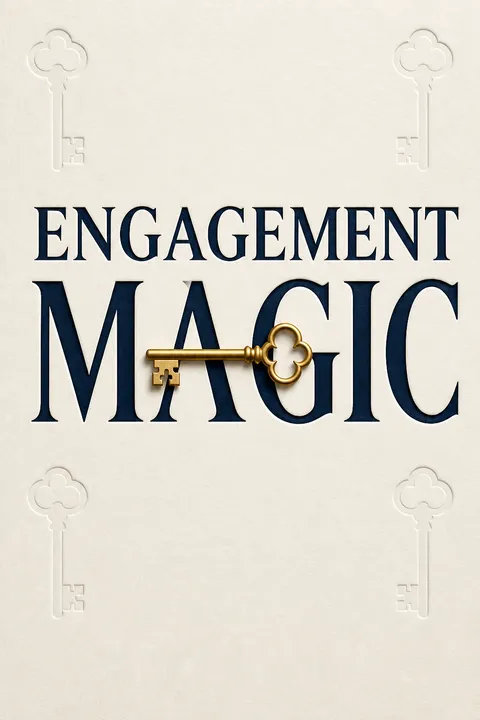
Engagement requires feeling and doing. Maylett defines it as emotional commitment to work that also shows up in action. The book’s central framework, MAGIC, names five conditions that help people engage: Meaning, a sense of purpose; Autonomy, room to shape work; Growth, chances to develop; Impact, visible results; and Connection, belonging to people or a mission. Employers can create conditions for engagement, but employees choose whether to invest themselves.
Low engagement is not one condition. DecisionWise survey data divide respondents into 32 percent Fully Engaged, 48 percent Key Contributors, 16 percent in an Opportunity Group, and 4 percent Disengaged. The book also reports that 34 percent fear retaliation if they speak up. These figures suggest both a range of engagement and a workplace problem that perks alone cannot fix.
The framework is strongest when it treats engagement as a relationship rather than an employee attitude to be extracted. That fits a broader psychological account of motivation: people are more likely to invest effort when they experience agency, competence, and social belonging. The shared-responsibility idea can also be misused, however. Employers control pay, schedules, safety, and voice more directly than most workers do. Calling engagement a two-sided choice should not make unequal power disappear or turn retaliation and poor conditions into an employee’s failure.
Fund fairness and safety before buying another morale perk
Basics prevent dissatisfaction. Drawing on Frederick Herzberg’s Motivation-Hygiene Theory, the book distinguishes conditions such as pay, security, and supervision from work that provides challenge, responsibility, or recognition. The basics matter: employees at an auto plant became alarmed after being robbed in the parking lot, and a later assault made their safety concerns impossible to ignore. Yet adding more benefits does not necessarily create lasting motivation.
People adapt to upgrades. A raise, free lunch, or new office amenity can become the expected baseline. The book describes a study comparing lottery winners, accident victims, and control participants: after major life changes, winners did not report substantially greater present happiness than controls. Its lesson for employers is not to abandon compensation or benefits, but to treat them as necessary foundations rather than substitutes for worthwhile work.
This distinction resembles the difference between preventing harm and creating flourishing. Fair pay and safe conditions are not decorative extras, and calling them mere hygiene can understate their moral and practical importance. Still, the adaptation point is useful: a benefit can lose novelty without losing value. A secure workplace or fair wage remains important even when employees stop noticing it. Leaders should ask whether a perk addresses a real need, not whether it produces permanent excitement.
Give routine work a human purpose employees can recognize
Purpose changes the work’s meaning. Meaning is the personal sense that work serves a purpose beyond completing the task. At Medtronic, CEO Bill George brought patients who relied on the company’s medical devices to meet employees, including production workers. Hearing patients explain how product quality affected their lives helped employees connect small manufacturing tasks to patient health.
Meaning has two sources. Inherent meaning comes from the work itself, such as directly caring for patients. Associated meaning comes from what the job makes possible outside work, such as supporting a family or paying for a child’s education. Leaders can communicate a credible mission and show how roles contribute to it, but they cannot dictate what matters to each person. Grand mission statements ring hollow when daily decisions contradict them.
Meaning works partly by helping people place a task inside a larger story. That can strengthen professional identity and make tedious work feel consequential. The Medtronic example is persuasive because it brings beneficiaries into contact with employees, rather than relying on slogans. Purpose should not become a tool for persuading workers to accept poor conditions or unpaid sacrifice. A compelling mission complements fair treatment; it cannot ethically replace it.
Set the guardrails, then let people choose the route
Autonomy means bounded control. It is the ability to shape work and its conditions in ways that support good performance, not freedom from collaboration or leadership. The book identifies four forms: spatial autonomy over where work happens, temporal autonomy over when, social autonomy over whom to work with, and task autonomy over how work is done. Clear expectations and accountability make those choices safer and more useful.
Trust can release initiative. At 3M, employees were allowed to use part of their work time on personal projects. Chemist Art Fry developed the Post-it Note after experimenting with a colleague’s adhesive. The example shows how discretion can produce value that a tightly prescribed task might miss. Not every job permits the same choices, but a manager can often offer some control over process, scheduling, or team participation.
The useful distinction is between autonomy and abandonment. People need enough structure to understand the target, authority, and limits, while retaining discretion in how they contribute. This echoes good system design: constraints can focus creativity instead of smothering it. The right amount varies by role, skill, and risk. In safety-critical work, procedural control may be essential, but employees can still have authority to raise concerns or stop unsafe work.
Stretch people into mastery, not panic or a title chase
Growth means development, not just promotion. A call center with high turnover formed employee problem-solving teams, expanded cross-training, and let agents choose among product areas. Within six months, turnover fell to nearly half its previous level, while performance indicators rose. The changes created challenge and learning without relying on expensive training or new titles.
Challenge needs support. The book calls beneficial, motivating pressure eustress, and harmful, overwhelming pressure distress. Its zone of proximal development describes the range where a person can succeed with suitable help. Assignments beyond that range can produce anxiety rather than progress. Managers can support growth through mentoring, feedback, and room to learn from mistakes. Employees also need a real choice about which skills and challenges they want to pursue.
The call center example makes a strong case that job design can improve both retention and performance. It also avoids treating promotion as the only sign of progress. The caution is that growth language can disguise work intensification: more responsibility without support, time, or compensation is not development. A meaningful stretch expands capability while preserving a credible path to success. That requires managers to notice workload, not merely celebrate resilience.
Show people the result of their effort before effort drains away
Impact makes progress visible. Meaning answers why work matters; impact concerns the outcomes it produces. At medical-device maker Accellent, employees often handled tiny components without seeing how they helped patients. The company displayed patient stories connected to its products, making the consequences of careful work more concrete. The book also reports that about 30 percent of employees do not receive regular feedback on their performance.
Bring outcomes closer. In one experiment described in the book, students assembling toy figures completed an average of 10.2 when finished toys remained visible, compared with 7.2 when their work was immediately dismantled. The example illustrates how visible progress can sustain effort. Managers can make results easier to see through feedback, customer stories, useful measures, and recognition that explains what the contribution changed.
Visible outcomes help close the psychological distance between effort and consequence. That distance matters especially in large organizations, where a person may complete one small step in a long chain. But measurement can distort attention when a proxy becomes the goal. A team rewarded only for speed may sacrifice quality; a department judged only by revenue may neglect service. Impact measures should connect to outcomes people value, not merely produce impressive dashboards.
Build belonging across teams, not only inside each tribe
Connection needs trust and communication. It is a sense of belonging to people, an organization, or a shared mission. In DecisionWise surveys, 75 percent of employees responded positively about connection to their immediate team, compared with 57 percent about connection to other departments. Strong local bonds can coexist with mistrust across the organization.
Information can thin out downstream. The book calls uneven communication the Irrigation Effect: messages reach senior leaders more reliably than frontline employees. More than 90 percent of executives said they had appropriate information, compared with 68 percent of frontline workers. Microsoft’s forced employee rankings offer a warning: when colleagues compete for fixed performance slots, they may hoard information and avoid collaboration. Connection grows when communication is candid, reciprocal, and safe.
Belonging is not merely friendliness. It creates social trust that makes coordination easier, especially when work crosses departmental boundaries. The irrigation metaphor also points to an organizational design problem: messages do not travel simply because leaders sent them. They need repeated channels, translation, and opportunities for questions. At the same time, forced social contact is no cure for distrust. Shared purpose and fair processes matter more than office parties or slogans about being one big family.
Train managers to create engagement, not just hit targets
Results do not reveal how they were achieved. In a three-year study of 147 managers at a cereal manufacturer, operational performance reviews did not correlate with 360-degree feedback about leadership behavior. Some managers met targets while damaging employee and customer relationships. Their teams had nearly five times the company’s average turnover, and those managers stayed in their roles for just under 18 months on average, compared with more than seven years for other managers.
Engagement is a learnable skill. The book argues that managers can develop behaviors such as listening, setting clear expectations, delegating authority, giving feedback, recognizing contribution, and helping employees see the purpose of their work. Promoting a capable individual contributor without teaching people leadership can leave the new manager and the team poorly equipped.
The contrast between results and leadership behavior captures a familiar measurement trap: organizations often reward the visible output while overlooking the conditions that produced it. A manager can temporarily raise numbers through pressure, but the cost may appear in turnover, quality, or customer trust. This does not mean every demanding manager is harmful. It means performance systems should assess both outcomes and the human processes that make those outcomes repeatable.
Audit your engagement gap, then change the fit or your behavior
Engagement rises and falls. The book recommends comparing experienced engagement with desired engagement across the five MAGIC conditions. The difference, called the engagement gap, can clarify whether the main need is more meaning, autonomy, growth, impact, or connection. A single bad day is not a verdict; patterns over time matter more than a momentary dip.
Agency has limits, but it matters. The book’s survey tracking found that fewer than 5 percent of fully disengaged employees moved into another engagement category within two years. That figure supports honest decisions about whether a role can change or whether a different workplace is a better fit. Individuals can name what they need and take initiative, while employers remain responsible for fair, safe conditions and meaningful opportunities.
Self-assessment turns a vague complaint into a more specific conversation: which part of work is missing, and what change might address it? That is valuable for both employees and managers. The individual-responsibility message needs careful handling, because people cannot choose their way out of unsafe conditions, discrimination, or economic constraint. Agency is most useful when it helps a person distinguish what can be negotiated, what must be endured temporarily, and what requires a change in circumstances.
Analysis
Engagement Magic is a practical leadership book built around a compact framework and illustrated through workplace stories, survey findings, and organizational cases. Its central contribution is a useful distinction: employee satisfaction concerns the conditions of the employment bargain, while engagement involves a person’s emotional investment and active contribution. The five MAGIC conditions make that distinction operational. They invite leaders to ask not simply whether workers like their benefits, but whether work offers purpose, choice, development, visible consequences, and belonging.
The framework is especially strong in its insistence that engagement is not a mood that can be purchased or commanded. The examples of patients meeting medical-device workers, employees shaping their work, and teams seeing progress show how ordinary tasks can become more consequential when workers understand their role and can influence how they perform it. Its account of management also has practical force: targets alone do not capture the quality or sustainability of leadership.
The evidence deserves a measured reading. DecisionWise reports an unusually large survey database, but a large number of responses does not by itself establish that engagement caused higher profits, lower turnover, or better customer outcomes. Organizational comparisons may reflect other differences, and many findings are correlational. The book’s employee categories are useful diagnostic labels, not universal measurements of every workforce. Its historical examples illustrate mechanisms, but cannot prove that one practice alone produced an outcome.
The most important tension is between shared responsibility and unequal power. Employees do make choices about where to invest attention and effort, but employers control many of the conditions that make those choices possible. A sound application of the framework therefore pairs individual reflection with institutional accountability. Ask what workers can change, then ask what management must change. Used that way, MAGIC is less a motivational campaign than a design lens for work that is fair, demanding, and humanly worthwhile.
Review Summary
Engagement Magic receives mostly positive reviews, with readers praising its insights on employee engagement and the MAGIC framework (Meaning, Autonomy, Growth, Impact, and Connection). Many found it informative and applicable to various organizational levels. Some readers appreciated the balance between research and practical strategies, while others felt certain sections could have been more concise. The book's emphasis on engagement as a shared responsibility between employees and employers was widely viewed as a valuable perspective.
People Also Read










Glossary
MAGIC
Five engagement conditionsAn acronym for Meaning, Autonomy, Growth, Impact, and Connection. These are the five conditions the book uses to explain how workplaces can support engagement. They are not a prescribed package of perks. Leaders shape the conditions, while individuals decide whether and how to invest themselves in the work.
Employee engagement
Emotional commitment plus actionThe book defines employee engagement as an emotional state of passion, energy, and commitment toward work, expressed through active investment of a person’s abilities and effort. It therefore involves both feeling and behavior. Engagement is distinct from satisfaction, which concerns whether basic employment expectations are being met.
Opportunity Group
Underused, undecided employeesOne of the book’s four employee engagement categories. People in the Opportunity Group are neither fully engaged nor fully disengaged. They may feel underused, contribute only what is required, and remain uncertain about the organization. The category highlights a population that may respond to changes in work conditions, support, or opportunity.
Engagement resistance curve
Propensity to engageA model describing how readily different people are inclined to engage, rather than measuring their current engagement level. It ranges from people who resist engagement across most settings to those who readily find purpose and energy in work. Most people fall between the extremes and respond to their environment and personal circumstances.
Engagement gap
Desired versus current engagementThe difference between the engagement a person currently experiences and the engagement they would like to experience across the MAGIC conditions. The book presents it as a way to identify priorities for change. A larger gap signals a greater distance between present work conditions and the individual’s desired experience.
Irrigation Effect
Communication fading downstreamThe book’s term for information that becomes less available as it moves through an organization. Senior leaders may feel well informed while frontline employees lack the context needed to do their work or understand decisions. The metaphor emphasizes that communication must reach every level, rather than merely originate at the top.
law of impact proximity
Bring work near outcomesThe principle that engagement can improve when organizations reduce the distance between employees’ daily tasks and the results of those tasks. Employees need ways to see how their effort affects customers, colleagues, or the wider world. Feedback, beneficiary stories, and meaningful measures can make those effects more visible.
eustress/distress threshold
Boundary between challenge and overloadThe point at which a work challenge shifts from motivating pressure to harmful strain. Eustress is pressure experienced as energizing and manageable; distress is pressure experienced as threatening or overwhelming. The book argues that support, skill, and how a challenge is framed affect where an individual experiences this threshold.
Self-Determination Theory
Needs supporting intrinsic motivationA psychological theory used in the book to explain why people are more likely to act with initiative when basic needs for autonomy, competence, and relatedness are supported. In the workplace, these needs correspond to having meaningful choice, developing capability, and feeling connected to others. The theory helps explain why perks alone may not sustain engagement.
Download PDF
Download EPUB
.epub digital book format is ideal for reading ebooks on phones, tablets, and e-readers.








