Plot Summary
Exiles and Forgotten Origins
Adam and Eve, cast from Eden, live in regret near the forbidden Garden, their story fading into legend. Cain, marked and cursed, becomes a wanderer, his descendants building the first cities and spreading both civilization and violence. The world grows, but so does wickedness, as the memory of Eden and the Creator's ways are lost amid the rise of new peoples and the shadow of ancient sins.
The Watchers' Descent
On Mount Hermon, two hundred divine Watchers, led by Semjaza and Azazel, descend in defiance of Elohim. They establish their own cosmic mountain, mimicking Eden, and plot to subvert humanity's allegiance. Adopting new identities as gods and goddesses, they swear a binding oath to pursue their plan, knowing betrayal means eternal torment. Their arrival marks the dawn of a new, perilous age.
Secrets and Seductions
The Watchers spread across the earth, teaching humans sorcery, astrology, weapon-making, and sexual perversions. They twist the beauty of creation into tools of idolatry and excess, undermining Elohim's order. The arts of war and seduction flourish, and the world is drawn into a spiral of violence and depravity, as the Watchers' influence grows unchecked.
Sacred Marriage Decreed
The Watchers, seeking to cement their rule, institute the Sacred Marriage rite, demanding women for themselves. When mortals resist, the gods take by force, unleashing terror and heartbreak. The resulting unions are not acts of love but domination, and the world trembles as the boundaries between mortal and divine are shattered, setting the stage for monstrous offspring.
Birth of the Nephilim
The children of the Watchers and human women are the Nephilim—giants of immense strength and appetite. Their births are catastrophic, killing their mothers, and their hunger devastates the land. These Rephaim become kings and tyrants, ruling with cruelty and excess. Humanity, once in awe of the gods, now lives in fear of their monstrous progeny.
Enoch Among Giants
Enoch, wisdom sage and counselor to the priest-king of Sippar, navigates a society dominated by Nephilim and their Rephaim overlords. He witnesses the collapse of justice and the rise of exploitation, as the giants' appetites drain the land. Enoch's pacifism and faith are tested as he struggles to serve both the ruling elite and the suffering common people.
Wisdom, War, and Rebellion
Enoch's son Methuselah, passionate and rebellious, trains the spirited Edna, a temple virgin, in both combat and learning. Their bond deepens amid the looming threat of the Sacred Marriage. As the city teeters on the brink of revolt, Enoch receives a vision from archangels, calling him to reject the gods and seek Elohim, setting his family on a path of peril and prophecy.
Prophecy and Family Bonds
Enoch's vision warns of imminent destruction and a calling to journey to the mountains. As Sippar erupts in chaos, Methuselah and Edna's love is tested by violence and loss. The family, guided by faith and the archangels' message, flees through secret tunnels, pursued by both Nephilim and fate, determined to find sanctuary and truth.
The Archangels' Message
Gabriel and Uriel, archangels of Elohim, reveal the truth of the Watchers' rebellion and the coming judgment. Enoch is chosen as prophet, tasked to pronounce doom upon the gods and their offspring. The family's journey becomes a quest for survival and meaning, as they seek Adam, the first man, and the wisdom to confront the world's evil.
Riot and Ruin in Sippar
As Sippar descends into anarchy, Nephilim rampage, devouring and destroying. Enoch's family risks everything to rescue loved ones, facing betrayal and heartbreak. The gods intervene, but their justice is hollow, and the survivors are left to mourn and rebuild. The trauma cements Enoch's resolve to follow Elohim, even as the world grows darker.
Escape and Cannibal Night
Enoch's clan flees Sippar, pursued by Nephilim and haunted by grief. Their journey is fraught with danger, but faith and love sustain them. Methuselah and Edna's bond deepens, even as they face the horrors of cannibal giants and the collapse of civilization. The family's escape is both a physical and spiritual exodus toward hope.
Flight to the Mountains
Guided by visions and archangels, Enoch's family traverses rivers and deserts, pursued by enemies and fate. They reach the volcanic mountains of Sahand, where Adam and Havah dwell among cave-dwellers. The reunion is bittersweet, as Adam's wisdom and sorrow reveal the depth of humanity's fall and the hope of redemption.
Adam's Hidden Legacy
In the caves of Sahand, Enoch learns from Adam and the Karabu, a secret order of giant-killers. Methuselah and Edna marry, forging a partnership of love and strength. The family trains for years, preparing to confront the Nephilim and the spreading evil. Adam's stories and regrets shape their understanding of the cosmic war between good and evil.
Karabu and the Giant Killers
Enoch, Methuselah, Edna, and their son Lamech become skilled giant-killers, hunting Nephilim across the land. They rescue survivors, confront packs of giants, and face the growing threat of organized Nephilim armies. Their victories are hard-won, and the cost is high, but their resolve is unbroken as they pursue justice and survival.
The World Tree's Temptation
Crossing the desert, the family encounters the World Tree, a place of seductive danger. Lilith and her daughters, demonic temptresses, ensnare them with sorcery and lies. Only Lamech's faith breaks the spell, revealing the deadly truth behind the beautiful façade. The family narrowly escapes, forever changed by the encounter.
Lilith's Deceit and Deliverance
In the depths of the World Tree, Edna is nearly sacrificed by Lilith and her brood. Methuselah and Enoch, aided by Lamech and Betenos, battle demonic forces and a monstrous serpent. The victory is costly, and Edna's miscarriage brings sorrow. Yet, Betenos' conversion and marriage to Lamech renew hope, as the family prepares for greater trials.
The Hidden Valley and Behemoth
Betrayed by Nephilim allies, Methuselah's family is stranded in a hidden valley, facing the monstrous Behemoth. Edna's death at the beast's jaws devastates Methuselah, but Lamech and Betenos' love endures. Their grief is interrupted by the arrival of Cain, the cursed son of Adam, whose own darkness threatens to consume them all.
The Council of the Didanu
In Baalbek, the city of giants, Methuselah and his companions are captured and brought before the Council of the Didanu, ancient Rephaim kings. Torture and humiliation await, as the giants reveal their plan to invade Eden and seize the Tree of Life. The family's fate hangs by a thread, as war looms and hope fades.
Baalbek: City of Giants
Methuselah, Edna, Lamech, and Betenos endure captivity and the threat of violation. With the help of repentant Nephilim twins, they escape, racing against time to warn Eden of the coming invasion. Their flight is perilous, and the world teeters on the brink of annihilation as the giants' armies march.
The War on Eden
Inanna leads a horde of Nephilim to storm Eden, seeking immortality. The Karabu and Cherubim mount a desperate defense, as volcanoes erupt and chaos reigns. Rahab and Leviathan, monsters of the deep, decimate the invaders. The Garden is destroyed in fire and ash, denying victory to both gods and giants, but at a terrible cost.
The Heavenly Lawsuit
As war rages on earth, the satan prosecutes a lawsuit against Elohim in the heavenly court, accusing the Creator of injustice. Enoch, now a prophet in heaven, defends Elohim's ways. The Son of Man reveals the futility of the accuser's arguments, and the court's verdict affirms the sovereignty and righteousness of Elohim, even as the world below is remade in fire.
The Fall of the Garden
The destruction of Eden marks the end of an age. The Watchers are punished, Inanna disgraced, and the Nephilim scattered. The Tree of Life is lost, but the promise of a Chosen Seed remains. Enoch is taken into heaven, and the survivors must find new purpose in a world forever changed by war and judgment.
Cain's Final Revenge
In the Hidden Valley, Cain seeks to destroy the lineage of the Chosen Seed. Methuselah, Lamech, and Betenos, aided by Uriel, battle Cain and his werewolf clan. Through faith, cunning, and sacrifice, they defeat the cursed one, ending his quest for vengeance. The victory is bittersweet, as loss and hope intertwine.
The Chosen Seed
Lamech and Betenos, now free, settle in Shuruppak, where their son Noah is born. The city flourishes, but the old evils persist, and the pantheon's influence spreads. Yet, the birth of Noah fulfills the prophecy of the Chosen Seed, a beacon of hope in a world still shadowed by the legacy of giants and gods. The story of redemption continues, as the war of the seeds endures.
Characters
Enoch
Enoch is a man of deep faith and wisdom, serving as counselor to kings in a world ruled by giants. Torn between pacifism and the need for action, he is haunted by visions and called to confront the Watchers' evil. His journey transforms him from a passive sage to a prophet and giant-killer, ultimately ascending to heaven as a witness to divine justice. Enoch's relationships—with his son Methuselah, his wife Edna, and the archangels—reveal a man struggling with doubt, grief, and the burden of destiny.
Methuselah
Methuselah is fiery, impulsive, and deeply loyal, embodying the tension between earthly desires and spiritual calling. His love for Edna is both his strength and vulnerability, driving him to defy gods and giants alike. As a giant-killer and protector, he matures through loss and hardship, learning the cost of faith and the necessity of sacrifice. Methuselah's journey is marked by rebellion, grief, and eventual acceptance of his role as the bearer of Enoch's mantle and the guardian of the Chosen Seed.
Edna
Edna is a temple virgin turned warrior, fiercely independent yet deeply loving. Her relationship with Methuselah is central to her identity, and her courage in the face of violence and loss inspires those around her. Edna's death at the hands of Behemoth is a pivotal moment, shattering Methuselah and propelling Lamech and Betenos toward their destiny. Her legacy endures in the faith and resilience she imparts to her family.
Lamech
Lamech, son of Methuselah and Edna, is introspective, spiritual, and torn between the contemplative life and the call to action. Trained as a giant-killer, he struggles with the weight of prophecy and the expectations of his lineage. His love for Betenos and his eventual acceptance of his role as father to the Chosen Seed mark his growth from uncertainty to purpose, embodying the hope of a new beginning.
Betenos
Betenos is a survivor of tragedy, initially an outsider to Elohim's ways. Her journey from skepticism to faith is marked by courage, compassion, and a willingness to fight for those she loves. As Lamech's wife and the mother of Noah, she bridges the gap between old wounds and new hope, her resilience and adaptability making her indispensable to the family's survival.
The Watchers (Semjaza, Azazel, Inanna, Enki, Utu, etc.)
The Watchers are divine beings who rebel against Elohim, seeking to rule humanity as gods. Semjaza is the calculating leader, Azazel the violent enforcer, and Inanna the embodiment of war and seduction. Their psychological complexity lies in their blend of pride, envy, and longing for worship. Their actions unleash the Nephilim and corrupt the world, but their ultimate fate is one of judgment and humiliation.
The Nephilim and Rephaim (Thamaq, Yahipan, Mahawai, etc.)
The Nephilim are the hybrid offspring of Watchers and humans, marked by immense strength, insatiable hunger, and moral emptiness. The Rephaim, their elite rulers, are cunning and cruel, embodying the worst excesses of power. Their psychological emptiness is contrasted by moments of fear and vulnerability, especially as the world turns against them. Their downfall is both a judgment on their violence and a warning against unchecked ambition.
Adam and Havah (Eve)
Adam and Havah, living in exile, are haunted by regret and the weight of their choices. Adam's blindness and Havah's steadfastness reveal a couple bound by love and loss. Their wisdom and pain shape Enoch's understanding of the cosmic war, and their legacy is both a cautionary tale and a source of hope for redemption.
Cain
Cain is a tragic, vampiric figure, consumed by bitterness and a thirst for revenge against Elohim. His transformation into a predator, both literal and metaphorical, makes him a symbol of the destructive power of unresolved guilt and envy. His final confrontation with Lamech and Betenos is both a reckoning and a release, ending an ancient cycle of violence.
Uriel and Gabriel (Archangels)
Uriel and Gabriel serve as intermediaries between Elohim and humanity, offering visions, warnings, and sometimes cryptic encouragement. Uriel's wit and Gabriel's strength provide both comfort and challenge to Enoch's family. Their presence underscores the reality of the cosmic war and the possibility of divine intervention, even as they respect human agency and struggle.
Plot Devices
Dual Narrative Structure: Earthly Struggle and Heavenly Court
The novel weaves together the earthly saga of Enoch's family with the celestial drama of the Watchers' rebellion and the heavenly lawsuit. This dual structure allows for thematic resonance between personal loss, societal collapse, and the larger war between good and evil. The interplay of visions, prophecies, and direct divine intervention creates a sense of inevitability and moral weight.
Foreshadowing and Prophecy
Prophetic dreams, angelic visitations, and ancient promises foreshadow key events, shaping characters' choices and the unfolding of the plot. The motif of the Chosen Seed, the war of the seeds, and the coming judgment are repeatedly invoked, building tension and a sense of destiny. The use of prophecy also explores the tension between free will and predestination.
Mythic Subversion and Syncretism
The story incorporates and subverts ancient Near Eastern myths—giants, chimeras, the World Tree, Lilith, and more—recasting them as echoes or distortions of the true cosmic war. This device both grounds the narrative in a recognizable mythic landscape and challenges readers to discern truth amid competing stories.
Psychological and Moral Complexity
The novel delves into the inner lives of its characters, exploring their doubts, desires, and moral dilemmas. Enoch's pacifism, Methuselah's passion, Edna's resilience, and Lamech's uncertainty all serve to humanize the epic, making the cosmic stakes personal. The Watchers and Nephilim are given moments of vulnerability and fear, complicating the dichotomy of good and evil.
The Lawsuit in Heaven
The heavenly lawsuit, prosecuted by the satan, serves as both a narrative device and a theological exploration. It allows for the articulation of deep questions about justice, suffering, and the nature of God, while also providing a mechanism for delaying divine intervention and heightening earthly peril. The verdict affirms the sovereignty of Elohim and the futility of rebellion.
Cycles of Loss and Renewal
The story is marked by cycles of tragedy—Edna's death, the destruction of Eden, the fall of the giants—but each loss is met with the emergence of new hope: Betenos' conversion, the birth of Noah, the enduring promise of the Chosen Seed. This device reinforces the theme of redemption amid ruin.
Analysis
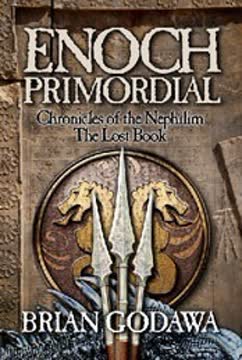
Brian Godawa's Enoch Primordial reimagines the ancient world as a battleground of gods, giants, and mortals, blending biblical tradition with mythic motifs to explore the origins of evil and the hope of redemption. The novel's structure—interweaving the struggles of Enoch's family with the cosmic rebellion of the Watchers and the legal drama of the heavenly lawsuit—serves as both epic fantasy and theological meditation. At its heart, the story grapples with the problem of suffering, the seduction of power, and the cost of faith. Characters are not mere archetypes but complex individuals wrestling with doubt, desire, and destiny. The use of mythic subversion—recoding pagan legends as echoes of a deeper truth—invites readers to see familiar stories in a new light, challenging assumptions about authority, justice, and the nature of the divine. The cycles of loss and renewal, culminating in the birth of Noah, affirm the resilience of hope even in a world scarred by violence and betrayal. Ultimately, Enoch Primordial is a meditation on the enduring war between the seeds of good and evil, and the promise that, even amid ruin, the story of redemption continues.
Last updated:
Review Summary
Enoch Primordial receives mixed reviews (4.27/5 average). Readers praise Godawa's extensive research, world-building, and action-packed narrative blending biblical themes with fantasy. Many appreciate the theological depth and appendices explaining scriptural basis. However, criticisms include modern colloquial dialogue that feels anachronistic, heavy-handed conservative political commentary, awkward romance elements, uneven pacing, and excessive creative liberties. Some find characters underdeveloped and the writing occasionally juvenile. Several reviewers note it should be book one since it's chronologically before Noah Primeval. Christian readers are divided on its execution.





