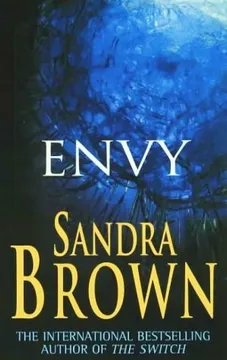


Plot Summary
Prologue
In 1988, charter operator Hatch Walker watches three young people take one of his boats offshore for a night of drinking. Hours later, the boat barrels back into the marina and nearly smashes into the quay. Its pilot, Roark Slade, is battered and frantic; his friend Todd Grayson and their companion, Mary Catherine, are missing.
As the Coast Guard questions Roark, he struggles to explain how a celebration became a disaster. Asked what could have driven his best friend to attack him, he finally names envy. The prologue leaves the charge hanging over the water, while the reader knows that at least one person survived and that the missing pair may not have simply drowned.
The opening presents a crisis before its causes, making the word envy feel less like an explanation than a clue. Hatch’s practical, observant viewpoint grounds the scene in physical consequences: a damaged boat, a wounded survivor, two people lost at sea. Roark’s answer is striking because it names an emotion instead of recounting an action. That gap invites the reader to treat the later story as evidence gathering. The scene also establishes a crucial uncertainty: survival is not the same as innocence, and the person who returns first may control the account of what happened.
The Initials on the Manuscript
In 2002, Maris Matherly-Reed, a senior editor at her family’s New York publishing house, discovers an arresting prologue among unsolicited submissions. It is signed only P.M.E. and mailed from St. Anne Island, a remote place off Georgia. With no address or phone number, she asks a local deputy to find someone using those initials.
The deputy visits a ruined plantation house and leaves Maris’s number with its guarded resident. P.M.E. calls before dawn, furious that she involved the sheriff, then insists the pages are not for sale. Maris persists, persuading him to finish the unwritten book. His hostility does not diminish her interest. She has found an unusual voice, and she is determined to hear what comes next.
Maris’s first decisive act is editorial rather than romantic: she risks professional convention because the pages seem to deserve attention. Her pursuit begins with an ethical impulse, respect for an unknown writer, but quickly acquires the energy of a personal challenge. The anonymous submission turns access into a plot: P.M.E. wants to be found while resisting the contact he engineered. That contradiction establishes the book’s concern with authorship as performance. A manuscript can be an invitation, a disguise, and a means of controlling what another person knows.
The Writer in the Wheelchair
Maris travels to St. Anne alone, expecting to meet Parker Evans, but first mistakes Mike Strother, Parker’s longtime helper, for the author. Parker is not home, so she tracks him to the island tavern, where the locals’ crude teasing fails to drive her away. When she calls him a coward, Parker reveals himself from his wheelchair and takes her back to his plantation house.
Their first conversation turns into a forceful kiss that unsettles them both. Mike insists that Maris stay overnight rather than travel back in darkness. The next morning Parker gives her the first chapter, about college friends Roark and Todd, but refuses to promise he will complete the novel. Maris reads on, and the negotiation begins.
The island tests Maris’s confidence by making her an outsider without making her helpless. She answers condescension with directness, while Parker uses both his physical presence and his wheelchair to unsettle assumptions about him. Their kiss is not yet intimacy; it is a contest over who can dictate the terms of encounter. Mike’s welcome provides a counterweight to Parker’s antagonism, making the house feel like a fragile social world rather than a mere refuge. The chapter also links two kinds of risk: Maris is testing a writer, while Parker is testing the editor who has come to judge him.
Friends Under Pressure
Parker’s manuscript takes Maris back to Tennessee, where creative-writing students Roark Slade and Todd Grayson become roommates and close friends. They trade jokes, books, money, and care through illness and family loss, but competition shadows their companionship.
Todd resents Roark’s talent and the praise Professor Hadley gives him. After Roark plays a gross prank with Todd’s toothbrush, Todd retaliates by misleading him about a meeting with Hadley, making Roark nearly an hour late.
Roark loses a chance to discuss his work and fears the damage to his future. He confronts Todd, who apologizes, while Leslie, the young woman Roark loves, helps him recognize how deeply writing matters to him. Their friendship survives, but the injury remains unspoken.
The manuscript’s early friendship is built from ordinary acts of mutual care, which makes the small betrayals more consequential than open hostility would be. Todd’s prank weaponizes Roark’s trust in a shared routine; Roark’s earlier prank, by contrast, has not threatened his friend’s future. Leslie’s role is to interpret pain without erasing responsibility. She helps Roark convert humiliation into evidence of commitment, while his decision to continue trusting Todd preserves the friendship at a cost. The scene makes rivalry psychologically credible: envy grows not from hatred of a stranger, but from comparing oneself with the person whose approval matters most.
A Party with Two Purposes
Before Maris leaves for Georgia, Noah stages an elaborate early anniversary party in a Chelsea apartment, making her believe she has stumbled upon evidence of an affair. Instead, he presents a private writing office and claims he has resumed writing, a gift Maris has wanted for years.
While she celebrates, Noah goes to a nearby apartment to meet Nadia Schuller, a powerful literary columnist and his secret lover. They are working together to bring WorldView’s Morris Blume into a takeover of Matherly Press.
Noah intends to use his marriage to Maris and Daniel’s trust to secure control, then discard both. His new office is a cover, not a workplace. The party restores Maris’s confidence in her marriage just as Noah prepares to exploit that confidence.
The anniversary surprise works because it satisfies a real longing: Maris wants Noah to write again and to share more of himself with her. Its emotional truth makes the deception effective. Noah’s false writing room is especially revealing because it imitates intimacy through objects, offering Maris a visible sign of a private life that does not exist. His business ambition and affair are not separate transgressions; both depend on managing what other people believe. The scene reframes marital attentiveness as a tool, showing how affection can become an instrument of control when one partner treats the other’s hopes as useful information.
The Name Behind Mackensie
Parker’s pages draw Maris back to the island, where she presses him to deepen Roark and Todd’s characters. She critiques the manuscript, wins his grudging respect, and offers a fifteen-thousand-dollar advance so he will continue.
Back in New York, she reads Parker’s recommended Deck Cayton mystery and recognizes a passage repeated almost exactly in Envy. The mystery series is written by Mackensie Roone, a bestselling author whose identity is unknown. Maris confronts Parker at the cotton gin.
He admits that Mackensie Roone is his pseudonym and that he submitted Envy without revealing his success because he wanted an unbiased judgment of a different kind of book. The revelation angers her, but she understands why he wanted the story to stand on its own.
The reveal unsettles the usual hierarchy between editor and author. Maris believed she was evaluating an unknown writer, while Parker was evaluating her capacity to see beyond a famous brand. His test is ethically dubious, but it is also a response to the market’s tendency to read reputation before prose. The repeated passage functions as a signature hidden in plain sight, turning Maris’s attention to language into investigative skill. Her anger matters because she refuses to let Parker’s artistic anxiety excuse his manipulation. Their professional bond deepens only after she insists that trust must be earned, not merely staged.
The Husband’s Second Address
After returning to New York, Maris discovers that Noah’s supposed writing office is immaculate and unused. She follows him to Nadia’s secret apartment and finds them together. Noah does not confess remorse; outside, he grips Maris’s arm and threatens to make her and the people she loves suffer if she disobeys him.
Maris leaves him, but keeps their separation private while she considers the consequences for herself and the publishing house. She returns to St. Anne after deciding that the marriage was already broken, independently of her attraction to Parker.
There, Parker tells her about years of surgeries, painkillers, addiction, and Mike’s role in getting him into treatment. Maris admits that she wants him, and their cautious attraction becomes a physical relationship.
Maris’s discovery is not simply proof of infidelity. Noah’s threat destroys the premise that their marriage rests on mutual regard, replacing it with coercion. Her departure is therefore an act of self-preservation, not a retaliatory affair. Returning to Parker forces her to distinguish desire from escape: she knows the marriage is over before she chooses another man. Parker’s disclosure of addiction offers a different form of vulnerability from Noah’s staged tenderness. He does not present himself as healed or admirable; he names the dependency and pain that shaped his retreat, allowing intimacy to begin with difficult truth.
The Night the Boat Turned
As Maris reads further, the college story moves to Key West. Roark and Todd share a shabby apartment and struggle to write while working at night. Roark helps Mary Catherine, a dancer whose real name is Sheila, after she miscarries Todd’s child; Todd avoids her, and Roark comforts her without exploiting her vulnerability.
When Todd sells a manuscript before Roark does, jealousy erupts. On a drunken boat trip with Sheila, Todd attacks Roark, then knocks Sheila overboard when she tries to intervene. Roark dives repeatedly but cannot find her.
As he begs for a life preserver, Todd starts the engine and deliberately drives the boat over him, shredding his legs. The novel’s prologue has already shown the battered survivor returning; now Maris understands how the night’s violence began.
The boat episode reveals the moral difference between weakness and cruelty. Roark feels jealousy when Todd succeeds, but he recognizes the feeling and tries to master it. Todd turns comparison into permission to injure. Sheila’s vulnerability exposes the cost of treating people as prizes or conveniences: Todd’s sexual history with her becomes another point of shame to suppress, and her attempt to interrupt the fight is fatal. The water erases witnesses and evidence, making the surviving person’s account unusually powerful. The story’s suspense therefore rests not only on what happened, but on how a lie can become the public version of an event.
Daniel’s Quiet Countermove
Daniel Matherly senses that Noah’s charm conceals something and hires investigator William Sutherland to examine his son-in-law. He also arranges for Maris to become chairman and chief executive of Matherly Press, then gives Nadia the news for publication.
Noah, meanwhile, pressures company lawyer Howard Bancroft to prepare a power-of-attorney document that would let him act for Daniel. When Bancroft refuses to release it without proper safeguards, Noah threatens to expose the truth about Bancroft’s mother and father. Soon afterward, Bancroft dies by suicide.
Noah takes Daniel to the country under the pretense of a quiet weekend, persuades him to sign the document, and confronts him with the investigator’s report. During their argument, Noah pushes Daniel down the staircase and later presents the fall as an accident.
Daniel’s age becomes a strategic vulnerability Noah tries to exploit, but the elder publisher remains an active reader of people and institutions. His countermeasures are quiet because he knows that a public confrontation could give Noah time to redirect the company. Bancroft’s coerced silence shows how Noah converts intimate knowledge into leverage, making shame function like a weapon. The country-house weekend joins personal trust to corporate procedure: Daniel believes he is dealing with family, while Noah treats the document as a route to power. Daniel’s murder is the consequence of this mismatch, not an isolated act of violence.
The Sentence That Gives Him Away
After Daniel dies, Maris returns to New York for the funeral and learns from Nadia that Daniel had made her successor at the publishing house. She finds investigator Sutherland’s card among her father’s papers and discovers that Noah removed his report.
Maris asks Massachusetts police to reinvestigate, but they find no evidence of foul play. When Noah admits Daniel’s death was convenient, Maris recognizes the same revealing phrasing in Envy and realizes that Noah is Todd, the college friend in Parker’s manuscript.
She also learns that Noah concealed a vasectomy and had prevented her from having the family she hoped for. At the university, Maris finds Mike, who confirms his connection to the story and gives her the remaining pages. The fictional history is now evidence about the people around her.
Maris’s breakthrough depends on combining kinds of knowledge that institutions keep apart. The police report offers physical facts but cannot establish motive; the novel gives her a vocabulary for recognizing Noah’s habits of thought. Her identification of him as Todd is not intuition alone. It arises from repeated language, concealed history, and Daniel’s missing investigative file. The discovery of the vasectomy further exposes the marriage as a structure built around decisions Noah made without her consent. Fiction becomes neither a substitute for evidence nor a mere escape: it trains Maris to notice patterns that official accounts fail to explain.
The Manuscript’s Real Wound
At the university, Mike Strother explains that he was Professor Hadley, the instructor who recognized Roark’s talent and warned him about Todd’s envy. He tells Maris what the manuscript has not yet fully disclosed: Todd copied Roark’s novel, The Vanquished, submitted it under his own name, and sold it.
When Roark discovered the theft, Todd tried to kill him and Sheila at sea, then framed him for her drowning. Roark survived with catastrophic leg injuries, was convicted of involuntary manslaughter, and spent time in prison before Mike found him addicted and desolate.
Maris sees why Parker has built Envy around their history, but also realizes its ending may involve killing Noah. She and Mike hurry to St. Anne, fearing that Parker’s revenge has become irreversible.
Mike’s identity as Hadley collapses the distance between the manuscript and lived experience. The warning he once wrote about Todd’s character becomes a retrospective diagnosis, but it could not prevent the betrayal. Roark’s conviction shows how trauma can make a victim appear to confirm the accusation against him: his rage is real, even though the story used to explain it is false. Parker’s revenge grows from a genuine demand for recognition, yet the history also exposes its danger. Maris can understand the wound without treating retaliation as repair, and that distinction drives her toward intervention.
The Gin Becomes a Trap
Parker has sent Envy directly to Noah, knowing the manuscript will provoke him into coming south. He prepares a controlled burn in the abandoned cotton gin and plants charges, smoke devices, and a recorder. Maris and Mike race to reach him, but Parker has already brought Noah inside. Noah mocks Parker’s disability and boasts that he has used Maris and Daniel to advance his career.
Parker reveals that he intends to make Noah feel the terror he inflicted at sea. When the fire appears to spread, Noah falls into the gin’s dry well during their struggle. Parker presses him to admit that he drove over Roark, abandoned Sheila, stole the novel, and pushed Daniel down the stairs. A recording captures the admissions as smoke thickens.
The cotton gin concentrates the book’s recurring machinery of concealment: hidden charges, an unseen well, and a story whose truth has been withheld for years. Parker’s plan reverses the original power relation by making Noah dependent on the man he left in the water. Yet the reversal is morally unstable. Parker wants confession, but he has arranged circumstances that resemble execution. The recorder and deputies’ intervention provide an alternative to private vengeance: a record that can survive competing testimony. The scene’s suspense comes from whether Parker will accept that distinction before his desire for symmetry becomes another form of violence.
The Last Plot Twist
Noah’s panicked pull on the rope drags Parker from his wheelchair, leaving him unable to haul Noah out alone. As the smoke thickens, Parker reveals that he never intended to let Noah die; he wanted a confession and an experience of mortal fear. Noah admits he stole Roark’s novel because he needed to be first, then confirms his crimes against Sheila, Parker, and Daniel.
Parker struggles to his feet, exposing that he can walk short distances despite his severe injuries. Deputy Harris and other officers enter, extinguish the controlled fire, and arrest Noah; the recording preserves his admissions. Mike and Maris reach Parker, who turns away from revenge rather than killing the man responsible for his ruined legs and years in prison.
Parker’s inability to rescue Noah from the well becomes the final test of whether he has escaped the logic of the original crime. The physical limitation is real, but the scene refuses to make disability synonymous with helplessness: Parker can stand, choose, and stop. His decision to spare Noah does not absolve the past. Instead, it transfers judgment from a private reenactment to evidence and law. The confession also corrects the novel’s central theft: Noah finally acknowledges that the success he built on Roark’s work was borrowed. Recognition arrives too late to restore what was lost, but it makes denial harder to sustain.
A Story Returned to Its Author
After Noah is taken into custody, Parker and Maris begin rebuilding their relationship without pretending the harm between them has vanished. Maris understands that Parker made her part of his revenge plan, then drove her away when he could no longer bear to use her.
He admits that he loved her and wanted her to leave before the final confrontation. They discuss the book Parker wrote under his own name: The Vanquished was his manuscript, which Noah stole and published as his own.
Parker had waited until he was strong and successful enough to challenge him as an equal. Maris tells him she loved that novel before she knew who wrote it. They turn toward the work ahead, including her publishing house, his writing, and the family they may build.
The resolution does not equate love with forgetting. Maris accepts Parker’s explanation while naming the fact that he used her, and Parker’s confession makes their future depend on honesty rather than idealization. The revelation about The Vanquished restores authorship symbolically, but it cannot return the years Parker lost or erase Maris’s grief for Daniel. Her love began through a book, yet it matures through contact with the imperfect author who wrote it. The ending’s intimacy is therefore not a reward for revenge. It is a new agreement to make choices together, without disguises determining the plot.
Analysis
Envy makes reading itself an instrument of suspense. Maris is not a detective by profession, yet editorial habits teach her to notice repetitions, omissions, weak motivations, and the gap between a character’s stated purpose and actual behavior. Parker’s manuscript gives those skills a human cost: its resemblance to real events makes interpretation urgent, but it does not automatically make Maris’s conclusions correct. She must test what she reads against what people do.
The novel’s paired friendships, Roark and Todd in the manuscript, Parker and Noah in the past, show how envy feeds on closeness. A stranger’s success may irritate, but a friend’s success threatens the self-image one has built beside him. Todd cannot tolerate Roark’s talent without turning affection into rivalry. Noah goes further, treating another person’s work, body, and family as resources to appropriate. The distinction is not that good people never feel envy; Roark does. The distinction is whether a person acknowledges the feeling or makes it a justification for harm.
Authorship consequently becomes more than a question of who wrote a book. Noah’s stolen novel gives him public success while stripping Parker of credit, mobility, and years of freedom. Parker’s own use of Maris repeats, in altered form, the act of treating another person as material for a desired outcome. His revenge is understandable, but the book does not present understanding as absolution. Maris’s judgment and Mike’s intervention push him toward a choice that restores agency without reproducing the original crime.
The corporate plot sharpens these intimate questions. Noah’s takeover strategy and his treatment of Howard show that polished institutions can conceal coercion as effectively as a pseudonym conceals an author. Daniel’s final countermeasures defend both his daughter and the independence of the press. The ending’s return of The Vanquished to its author cannot undo the past, but it replaces a public lie with an accountable record. Envy’s deepest resolution is not that every wound closes. It is that truth, once exposed, can stop being managed by the person who caused it.
Review Summary
Envy is a captivating romantic suspense novel that keeps readers guessing until the end. The story follows Maris, a publisher, who becomes entangled in a complex web of deceit and revenge when she discovers a mysterious manuscript. The book-within-a-book format adds depth to the plot, while the characters, especially Parker, are well-developed and intriguing. Readers praise Brown's writing style, pacing, and ability to create a suspenseful atmosphere. While some found certain plot points predictable, most reviewers highly recommend the novel for its engaging storyline and satisfying conclusion.
Characters
Maris Matherly-Reed
The searching editorMaris is a senior editor and publisher at Matherly Press, where her respect for writers keeps her reading unsolicited work even when company policy discourages it. She is perceptive, disciplined, and accustomed to measuring stories by both craft and commercial promise. Her marriage to Noah matters deeply to her, as does her bond with her father, Daniel, and the family business they share. Maris’s romantic imagination is unusually powerful, but she is not simply ruled by fantasy: she asks hard questions, recognizes patterns, and expects people to answer for their choices. Her work with an unknown author reconnects her with the creative process and tests the difference between caring for a story and trusting its storyteller.
Parker Evans
The guarded novelistParker lives on St. Anne Island, where he writes in the shadow of a painful past and depends on a wheelchair for most movement. He is sharp-tongued, proud, observant, and deeply resistant to pity. His physical scars and deliberate isolation shape the way he controls what others can know about him. Writing gives him both discipline and a private world in which he can arrange events that once seemed beyond his control. Parker is capable of warmth, humor, and tenderness, though he often hides these qualities behind provocation. His relationship with Mike offers steadiness; his work with Maris offers an intellectual equal whose opinions he cannot dismiss.
Noah Reed
The polished publisherNoah is a successful publisher, Maris’s husband, and Daniel’s trusted business partner. His intelligence, charm, and command of the publishing world make him persuasive in rooms where reputation and money carry weight. He is ambitious and highly strategic, attentive to the ways professional alliances can open doors. Noah’s public confidence sits beside a private impatience with limits and obligations. He is also a former novelist whose acclaimed debut continues to shape how Maris sees him. The gap between his image and his private motives is central to the suspense, but his character is introduced first through the same qualities that make him appear dependable.
Daniel Matherly
The publishing patriarchDaniel built Matherly Press into a respected publishing house and raised Maris after the early death of her mother. He is intellectually alert, affectionate without being smothering, and accustomed to guiding others through questions rather than handing them answers. Age and failing mobility concern him, but they do not erase his pride or his instinct for business. Daniel values the independence of the company because he sees himself as its steward, not merely its owner. His relationship with Maris is both familial and professional, a source of deep loyalty that complicates any decision affecting her marriage or the future of the firm.
Mike Strother
Parker’s steady anchorMike is Parker’s longtime helper, housekeeper, cook, and most trusted reader. Patient and practical, he balances Parker’s sharp moods with a familiarity that permits honest disagreement. His care is active rather than sentimental: he notices when Parker is slipping into isolation and is willing to challenge him directly. Mike also understands the demands of writing and gives Parker candid feedback on his drafts. His kindness toward Maris helps her enter Parker’s secluded life without being treated as an intruder. Beneath his easy manner is a strong moral sense, especially when loyalty to Parker conflicts with concern for someone Parker may hurt.
Nadia Schuller
The influential columnistNadia is a prominent book critic whose syndicated column gives her unusual influence over authors and publishers. She is polished, bold, and skilled at turning personal access into professional leverage. Her appetite for status and attention is matched by a keen understanding of how reputations are made. Nadia has little patience for conventional modesty and often treats social rules as obstacles to negotiate. Her rivalry with Maris is sharpened by their very different backgrounds and ways of exercising power. Beneath Nadia’s practiced confidence is a fear of being left outside the security and recognition she has spent her life pursuing.
Roark Slade
The devoted young writerRoark is a gifted Tennessee college student who wants to write fiction and treats the work as a vocation rather than a hobby. He is generous with friends, attentive to people in pain, and capable of acknowledging his own jealousy even when it embarrasses him. His close friendship with Todd is built on shared humor and literary ambition, but Roark’s greater talent creates a strain neither young man knows how to discuss. He values loyalty and tries to respond to others with decency, sometimes at the cost of ignoring warning signs. His story forms the emotional center of Parker’s manuscript and gives Maris a way to understand how trust can be both sustaining and dangerous.
Todd Grayson
Roark’s ambitious roommateTodd is Roark’s college roommate and closest friend, a capable writer who longs for recognition and financial security. He is funny, sociable, and outwardly confident, but comparison with Roark unsettles him. Todd’s family losses leave him with a fierce desire to become independent and to make his success unmistakably his own. He can be generous and affectionate, yet his competitiveness makes ordinary setbacks feel like judgments on his worth. The friendship’s closeness gives him access to Roark’s vulnerabilities, while their shared ambition provides a language for both admiration and resentment.
Mary Catherine
The dancer seeking kindnessMary Catherine is a dancer in Key West whose stage persona is more confident and polished than her private life. She befriends Roark and Todd, but her connection with them is not merely flirtatious. When she faces a painful personal crisis, she turns to Roark because she trusts his kindness. Her choices reveal a person who is resourceful, funny, and more emotionally vulnerable than the men around her first assume. She wants practical help and companionship without surrendering her independence.
Professor Hadley
The demanding writing teacherProfessor Hadley teaches creative writing with a stern manner and a reputation for unsettling students before he teaches them. He takes craft seriously and is unwilling to praise work simply to protect a young writer’s confidence. His standards can feel punishing, but he is capable of recognizing talent and giving thoughtful guidance. Hadley understands that technical skill and literary depth are not identical, and his evaluations affect how Roark and Todd see themselves. His role in their education makes him an unwelcome but important authority in their friendship.
Hatch Walker
The weatherwise chartermanHatch runs a small boat-charter business in Key West and trusts his knowledge of weather more than the judgment of careless visitors. Gruff, self-reliant, and suspicious of authority, he makes his living from tourists he privately dislikes. His practical eye catches the danger when a rented boat returns at reckless speed. Hatch’s rough manner gives way to immediate concern when he sees the injured young man aboard, making him the grounded witness who frames the story’s opening crisis.
Howard Bancroft
The cautious company lawyerHoward is Matherly Press’s longtime legal adviser and a trusted colleague of Daniel’s. He is careful with documents and unwilling to treat a questionable legal arrangement as routine simply because a senior executive requests it. His professional caution reflects a deeper commitment to protecting the people and institution he serves. Howard’s past carries private pain, but he has built a respected life through patience, advocacy, and hard work.
Morris Blume
The media conglomerate chiefMorris Blume leads WorldView, a vast media company that has expanded rapidly under his command. He is controlled, pale, and difficult to read, with a taste for bold acquisitions and a low tolerance for delay. Blume sees publishing houses as strategic assets as well as cultural institutions, and he is attracted to Matherly Press’s reputation and market position. His negotiations with Noah introduce a corporate pressure that runs parallel to the private conflicts inside the Reed and Matherly families.
Maxine
The family’s faithful housekeeperMaxine has cared for Daniel and Maris for decades and is treated as a member of the family. Blunt, bossy, and fiercely protective, she expresses affection through practical attention: meals, reminders, and keeping watch over Daniel’s health. Maris understands that Maxine’s scolding comes from love, even when Daniel resists being supervised. Her loyalty gives the Matherly home its sense of continuity.
Leslie
Roark’s thoughtful first loveLeslie is a conscientious, religious student who volunteers in Roark’s food drive and shares his interest in books. She is warm without being naïve and clear about the life she wants, even when that clarity hurts someone she cares for. Her brief relationship with Roark teaches him that affection cannot erase incompatible ambitions. Leslie’s kindness is not a promise to stay; it is the honesty to leave before either person has to betray their own future.
Dwight Harris
The curious island deputyDwight Harris is a local deputy who carries Maris’s inquiry to the remote plantation house. He is curious, cautious after dark, and proud of his county. His small act of assistance connects Maris’s New York search to Parker’s island retreat.
William Sutherland
Daniel’s discreet investigatorWilliam Sutherland is a former Secret Service agent who now runs an elite private-investigation agency. Daniel hires him to examine concerns that cannot be settled through ordinary company channels. Sutherland is discreet, methodical, and careful about client confidentiality.
Plot Devices
The manuscript within the novel
A story becomes evidenceParker’s Envy is delivered to Maris in installments, and its fictional account of Roark and Todd is interwoven with the present-day story. Each new chapter gives Maris a reason to revise her editorial advice while gradually revealing a history that resembles the lives around her. The manuscript also controls the pace of disclosure: Parker chooses what to share, and Maris must infer what he has not yet written. By the time its plot becomes recognizable as more than invention, the pages have taught her how to interpret people, language, and motive.
Mackensie Roone
Fame hidden behind a nameParker’s successful mystery novels appear under the gender-ambiguous pseudonym Mackensie Roone. The disguise protects his privacy and prevents the public from measuring him against the athletic hero of his mystery series. It also lets him submit Envy without the reputation that might bias an editor’s judgment. Maris discovers the connection through a passage repeated in both books, turning close reading into a way of identifying the author. The pseudonym joins Parker’s artistic fear to his desire for control over how readers see him.
The power-of-attorney document
A legal shortcut to controlNoah presses lawyer Howard Bancroft to prepare a power-of-attorney document that would give him authority to act for Daniel and Matherly Press. He presents it as prudent succession planning, but the document would allow him to move toward a WorldView sale without the safeguards Daniel and Maris expect. Howard’s refusal exposes the danger in its terms, and Noah uses private information to pressure him. The document becomes a material sign of Noah’s ambition and gives Daniel reason to investigate what his son-in-law is really planning.
The abandoned cotton gin
A ruin conceals the final reckoningThe island’s old cotton gin links Parker’s plantation home to the history of the land and offers him a secluded place to think. Its abandoned well, decaying timber, and combustible interior are introduced well before the final confrontation. Parker later uses the building’s hazards to stage a controlled fire and force Noah into a confession. The gin’s physical decay mirrors the buried history between the men, while the well turns a remembered danger into a test of whether Parker will repeat Noah’s violence.
The borrowed sentence
A phrase exposes a false identityA distinctive sentence in Parker’s manuscript closely matches a passage from a Mackensie Roone mystery. Maris notices the repetition after Parker recommends the book, which reveals that the supposedly anonymous author has another body of work. Later, Noah uses a strikingly similar formulation about Daniel’s death, and Maris recognizes that his language connects him to Todd, the character in Envy. The device rewards the reader for following both the writing and the lives that the manuscript appears to describe.

Download PDF
Download EPUB
.epub digital book format is ideal for reading ebooks on phones, tablets, and e-readers.








