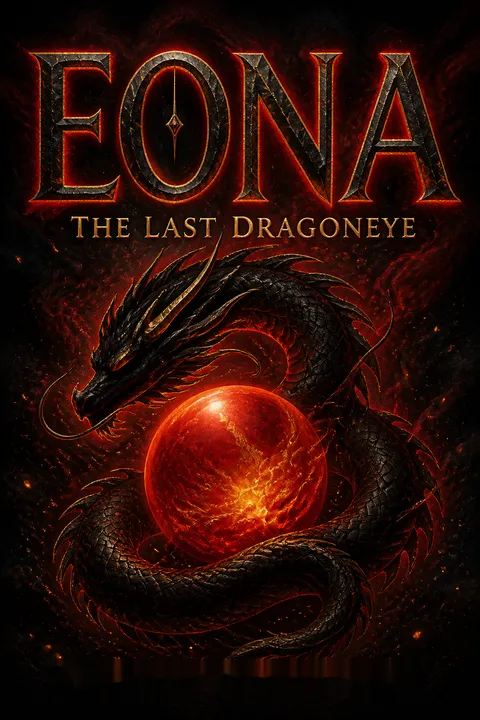


Plot Summary
Prologue
Teacher Prahn records the fall of the imperial palace after Emperor Kygo’s father dies. High Lord Sethon seizes the throne, kills Kygo’s mother and infant brother, and claims the surviving heir is dead.
Prahn reports that Lord Ido, the Rat Dragoneye, murdered the other Dragoneyes to steal their power, while the newly chosen Mirror Dragoneye, Lord Eon, escaped with Lady Dela and Ryko. He warns that the land is already suffering floods and earthshakes without the dragons’ protection. His account is also a plea to spread the truth before Sethon silences him.
Prahn’s account establishes the conflict as a struggle over who gets to define reality. Sethon does not merely take the palace; he declares the heir dead and turns a contested coup into official history. Prahn counters with testimony, but his position as a palace insider makes truth costly rather than secure. The preface also frames the dragons as more than magical weapons: their absence destabilizes the land itself. Eona’s escape therefore begins inside several crises at once, political, ecological, and historical.
The Healing That Breaks
Three days after the coup, Eona stands on a storm-dark shore, sensing that the ten dragons whose Dragoneyes were murdered have returned from exile. Her friend Ryko, an elite guard mortally wounded by Ido, is failing in a resistance refuge. At Dela’s pleading, Eona risks calling the Mirror Dragon and channels its power into Ryko’s ruined body.
His wounds close, but the grieving dragons attack their union. Ido intervenes through the Rat Dragon, helping drive them back, and the struggle tears apart the refuge and floods the village. Thirty-six people die. Eona wakes two days later with Ryko alive and the knowledge that her first act of healing has saved one friend at a terrible cost.
The rescue gives Eona power before it gives her mastery. Her choice to heal Ryko is ethically intimate, grounded in debt and loyalty, but its consequences are public and uncontrollable. The deaths make the gap between intention and responsibility impossible to ignore. Ido’s unexpected defense complicates the story’s moral map: a man responsible for mass violence becomes, for one moment, the only person capable of preventing a larger catastrophe. Eona’s new power arrives not as a triumph but as an obligation she cannot yet safely fulfill.
Kygo’s Killing Rage
While Eona and Dela travel disguised as a grieving merchant family, Ryko hides beneath their cart to reach the surviving heir. Lieutenant Haddo’s patrol nearly finds him, and Eona distracts the soldiers by pretending to be a bereaved mother. That night Ryko returns bloodied with Kygo, who has learned that Sethon murdered his mother and infant brother.
The young emperor is in a battle frenzy, attacking everyone near him, including his own guards. Eona’s ancestor Kinra pushes her toward Kygo’s Imperial Pearl, but Eona fights that influence and uses the new Hua link with Ryko to stop his advance. Haddo dies when Captain Yuso’s sword strikes him during the fighting, and the survivors flee before Sethon’s reinforcements arrive.
This fight binds political survival to Eona’s private struggle over agency. She can stop Kygo only by reaching through Ryko’s life force, a form of control that resembles the coercion she herself suffered from Ido. At the same time, Kinra’s inherited desire makes Eona uncertain whether her impulses belong to her or to the past. Haddo’s death further blurs the simple division between enemy and innocent: the patrolman showed mercy, but the battle leaves no clean way to spare him. Eona protects the emperor while discovering how easily protection can become domination.
The Emperor’s Truth Bringer
The fugitives ride through the mountains toward a resistance contact, carrying the burden of the village deaths and the knowledge that Ido is alive in Sethon’s prison. In a forest camp, Kygo asks Eona to become his Naiso, the adviser charged with telling the emperor truths others may soften or conceal. She accepts, then admits that calling the Mirror Dragon brings the ten bereaved beasts down upon her.
She can enter the energy world only briefly, and she has no training to control her power. Kygo concludes that they must free Ido, the only trained Dragoneye who might protect her during communion. When Ryko challenges Eona’s honesty, she again seizes his will, then releases him in horror at what she has done.
The Naiso appointment grants Eona political authority while making her private failures more consequential. Her honesty earns Kygo’s trust, but her inability to use her dragon safely immediately turns that trust into a strategic problem. The episode with Ryko reveals that truthfulness alone cannot guarantee ethical conduct: Eona knows coercion is wrong and still reaches for it when threatened. Her new office is therefore not a reward for moral purity. It is a demand that she keep examining the means by which she serves a cause she believes in.
Dillon Unleashes the Folio
The group encounters Dillon, Ido’s apprentice, carrying the black folio and suffering from the Sun Drug that Ido used to damage his mind. As soldiers pursue him, the pearls binding the book lash out at anyone who approaches. Dillon joins his Hua to Eona’s and chants from the folio, draining power from both the Mirror Dragon and the weakened Rat Dragon.
He raises a ring of water around the mountainside, then loses control as trees, soldiers, and horses are swept into the torrent. Eona and Yuso cling to wreckage and survive the flood, but the party is scattered. The resistance later finds Kygo unconscious, Ryko and Vida injured, Tiron badly broken, and Solly, Dela, and Dillon missing.
Dillon’s catastrophe turns the black folio from a mysterious prize into an active threat that can consume both mind and landscape. His cruelty and victimization coexist: he wants revenge on Ido, but the book magnifies that grievance until his agency is difficult to separate from its power. Eona’s link to him does not make her his equal in control; it makes her vulnerable to being used as a conduit. The flood also strips away the group’s protective structure, scattering allies and leaving their emperor near death. Power here is not simply dangerous when misused. It can erase the distinction between user and instrument.
A Kiss and a Test
Yuso and Eona reach a hidden resistance camp, where the physician can examine Kygo only through her because the emperor’s body is sacred. Eona’s touch on the Imperial Pearl helps draw Kygo back from the shadow world, and their first kiss makes their alliance newly personal. Soon after, Kygo tests whether Eona healed him by ordering her to take Ryko’s will.
She obeys only when Yuso threatens Ryko’s shoulder, and the link shows that she has no control over Kygo. Eona breaks her hold, but Ryko recoils from the involuntary bond. Meanwhile Dela deciphers a warning in Kinra’s journal: the Mirror Dragon’s return may signal the end of dragon power, and Eona may be the one who can restore it.
The kiss offers mutual recognition, but the test exposes the political asymmetry beneath their intimacy. Kygo needs proof that Eona has not compromised his sovereignty, while Eona experiences his experiment as a betrayal of the trust he has just professed. Ryko becomes the body on which their uncertainty is tested, reinforcing how easily loyalty can be converted into a resource. The prophecy expands the stakes beyond restoring a throne: Eona may have to preserve the dragons themselves. The section’s emotional movement is from closeness to suspicion, with neither affection nor rank sufficient to resolve the question of consent.
The Red Folio’s Warning
Dela deciphers enough of Kinra’s red folio to warn that Eona must master a dark force and use the Hua of all men to defend the land. Kygo reads the Mirror Dragon’s return as an omen of disaster and accuses Eona of bringing the crisis into being. Their argument deepens their attraction and mistrust, but he finally agrees to turn back toward the city and free Ido, whose training may be necessary to stop the dragons’ decline.
Eona conceals Kinra’s possible role in the prophecy because Kygo already believes her ancestor was a traitor. The resistance prepares a disguise through the Blossom World, a pleasure district whose houses and courtiers can open a path into the palace.
The prophecy does not deliver usable certainty; it gives each character a different reason to fear the future. Kygo converts uncertainty into blame, a familiar defense for a ruler who must act before evidence is complete. Eona hides what she suspects not because she has stopped valuing truth, but because she fears that disclosure will make Kygo reject the one clue she has. Their secrecy is reciprocal and self-reinforcing. The decision to rescue Ido is therefore both tactical and relational: they need his expertise, yet every step toward him also increases Eona’s dependence on a man whose motives remain dangerous.
The Blossom World Infiltration
At the Blossom World, Mama Momo recognizes Ryko, who once belonged to her household, and agrees to help the resistance enter the palace. Eona and Vida pose as high-ranked Blossom Women, while Dela, Ryko, and Yuso disguise themselves as attendants and guards. High Lord Haio unexpectedly takes Eona and Vida to Sethon, who recognizes enough of Eona’s face to grow suspicious and orders them sent to his private apartments.
The women attack their escort in a narrow passage. Eona kills a guard with the broken neck of her lute and suffers a deep knife wound; Dela and Vida overpower the eunuchs. A young attendant joins their escape because he fears Sethon’s abuse more than the rebels, guiding them toward the prison compound.
The disguise turns gendered vulnerability into tactical cover, but it does not make the women safe. Sethon’s court treats them as purchasable bodies, and the mission forces Eona to use the very appearance others impose on her as a tool. Her violence is immediate and defensive, yet it leaves her bleeding before the central rescue has begun. The attendant’s decision to help adds an important contrast: complicity is shaped by fear, but fear does not erase the possibility of choice. Eona’s group advances through a system of coercion by relying on people who know its workings from the inside.
Ido Leaves the Cell
Eona is carried to Ido’s cell, where torture and starvation have left him barely alive. She enters the energy world and finds him sheltering inside the Rat Dragon. Their bargain is direct: she will heal him if he holds back the ten grieving dragons and trains her. Her healing restores both Ido and her own slashed arm, but their renewed union triggers a violent clash that blows open the cell and kills nearby soldiers.
Ido uses his power to carve an escape through the palace, refusing to spare the men in his path. Outside, Eona forces him to call Dillon toward them, hoping to keep the black folio from Sethon. The act establishes her control over Ido, but also makes their connection more intimate and perilous.
Eona’s healing is both care and leverage. She saves a man who has inflicted immense harm, but only after making his survival conditional on cooperation. The resulting explosion demonstrates that her power cannot be neatly separated from the violence of the world she is trying to repair. Ido’s escape makes the moral cost visible: he can be useful without becoming safe, and gratitude is not a reliable basis for alliance. By compelling him to summon Dillon, Eona repeats the logic of control she fears, telling herself that necessity makes the difference. The story leaves that distinction unsettled.
The Pearl’s Hidden Purpose
As the fugitives travel toward the coast, Ido begins Eona’s Staminata training and teaches her to sense the land’s energy without immediately joining her dragon. He explains that the black folio contains the String of Pearls, a weapon formed by linking the dragons’ own pearls. Dela’s work on the red folio reveals Kinra was a Dragoneye, not merely the treacherous court figure in official histories.
Ido adds that the prophecy’s Hua of all men refers to the Imperial Pearl sewn into Kygo’s throat. Eona sees that Kinra’s old attempt to take it may connect to the fading dragon power, but refuses to believe the pearl must be sacrificed. She tells neither Kygo nor the resistance the full danger of the folio’s power.
The revelation converts an object of legitimacy into a possible instrument of ecological repair, forcing Eona to question the assumptions that have organized her loyalty. Yet knowledge arrives through Ido, whose self-interest makes every fact feel compromised. He knows more than he admits, and Eona responds by withholding what she knows in turn. Their alliance is thus built on partial disclosure, a pattern that mirrors the empire’s inherited political myths. Kinra’s erased history also suggests that official memory can preserve authority by recasting dissent as criminality, even when the suppressed motive may have been morally serious.
Sokayo Burns with Power
At Sokayo, the resistance discovers that Jun, one of its own archers, has killed the village sentries and shot Ido; a lookout kills Jun before he can escape. As Sethon’s troops close in, Eona removes the arrow and heals Ido, then joins him in channeling the dragons’ power against the attackers. Their combined strike destroys the advancing force and leaves the hillside scorched.
Kygo survives, but sees that Eona has crossed the Covenant of Service and used dragon power as a weapon. When Master Tozay arrives by ship with Eona’s long-lost mother, Lillia, Eona is too shaken by the battle to greet her easily. The wounded survivors board for the eastern rendezvous as the cyclone approaches.
The attack makes the danger of internal betrayal concrete: Jun’s resistance identity did not prevent him from serving Sethon’s aims. Eona’s healing again becomes a gateway to a far greater use of power, and the distinction between saving a life and killing an army collapses under battlefield pressure. Her action preserves her friends, but it also gives Kygo reason to regard her as a weapon. Lillia’s arrival offers a possible return to family just as Eona’s moral world becomes more alien to her. Survival brings no clean relief; it leaves her with new power, new guilt, and an overdue reunion.
A Mother’s Rhyme
On Master Tozay’s ship, Eona meets Lillia, the mother she has not seen since childhood. Lillia explains that Eona’s stepfather sold her into bondage after her father died and that her brother later died in the army. She also passes on a family rhyme and a riddle preserved through the women of their line.
The riddle says Kinra’s daughter had two fathers but only one bloodline, leading Eona to hope briefly that she might share royal blood with Kygo. She realizes Kinra loved Lord Somo, the Rat Dragoneye, so the hoped-for royal connection is false. The discovery leaves Eona grieving a family she never knew and fearing that her inheritance binds her more closely to Ido.
The reunion gives Eona facts but not the uncomplicated belonging she longs for. Lillia’s account explains the circumstances of her sale without undoing the abandonment Eona experienced, and their shared family symbols cannot instantly create intimacy. The riddle briefly offers Eona a fantasy of safety: royal blood might make her immune to royal coercion and make a future with Kygo possible. Its collapse shows how hope can become another form of strategic self-deception. Her ancestry is not an escape from history; it is the route by which old choices continue to shape her present.
The Cyclone’s Bargain
As the cyclone overtakes the ship, Ido escapes his guard and wakes Eona in her cabin. He asks her to use the sensual compulsion connecting them so he can borrow its force and control the Rat Dragon. Eona agrees, though she insists the act must save everyone aboard, not serve Ido’s ambition. Their physical union lets Ido redirect the storm and push the junk beyond its worst force.
Eona returns to the cabin with her lip bloodied and conceals Ido’s presence from Kygo, claiming she has learned to use her dragon alone. Meanwhile Tozay has asked her to place her power at the resistance’s disposal, even beyond the Covenant. Eona accepts, then carries both secrets into the next stage of the war.
The storm scene binds rescue to desire in a way neither character can comfortably contain. Eona consents to a strategy, but the power works through bodily intimacy and blurs the boundary between chosen action and supernatural compulsion. Her lie to Kygo protects the alliance in the short term while deepening the distrust that threatens it. Tozay’s request broadens the problem beyond romance: political leaders also treat Eona’s power as an instrument whose use can be justified by survival. Her willingness to help is real, but so is her fear that every bargain will take more than she meant to give.
Chart Stands Upright
At the eastern resistance camp, Kygo introduces Eona as his Naiso and presents Ido as a necessary ally to tribal leaders who despise him. Rilla and Chart arrive safely with Lon, giving Eona a rare moment of reunion with the people who raised her after bondage. When a leader demands proof of her control, Kygo orders Ido to place his arm in a brazier.
Eona compels him, secretly redirecting the pain and healing the burns afterward. She then heals Chart’s lifelong physical impairment before the gathered camp, restoring his ability to stand and speak clearly. Chart is grateful but angry that she never asked his permission. Ryko and Dela challenge Eona’s growing use of control, and she lashes out at them.
Eona’s demonstration wins political legitimacy while exposing the ethical danger at its center. She chooses to spare Ido’s arm, but the coercion remains; healing does not retroactively create consent. Chart’s response is the clearest rebuke because he understands both the gift and what it cost him: a body restored without a choice offered. Eona’s anger at criticism signals a shift from seeing power as a burden to defending it as entitlement. Her old experience of being treated as less than a person should make this transformation especially painful, but memory alone cannot prevent her from reproducing the same harm.
Dillon Reaches the Army
Dillon arrives at the edge of Sethon’s army, moving through its ranks with the black folio’s Righi, a chant that drains moisture from living bodies. Eona admits to Kygo that she secretly made Ido summon Dillon and that royal blood can use the folio to bind a Dragoneye’s power.
Kygo reveals he already knew the Imperial Pearl may be the Hua of all men, exposing how little either has trusted the other. As Dillon’s destruction approaches, Yuso betrays Eona and delivers her to Sethon, who binds her with the black folio and his blood. He tortures her, uses her healing power to study the dragons, and prepares to draw Kygo and Ido into a trap.
Truth arrives only when concealment becomes more dangerous than confession. Eona’s disclosure cannot repair the trust already damaged by her silence, and Kygo’s withheld knowledge shows that he has been making the same calculation from the opposite side. Their conflict is no longer simply personal: each secret gives Sethon leverage over the other. Yuso’s betrayal is likewise rooted in coercion, since Sethon holds his son, but the choice still devastates the resistance. The black folio converts bloodline and intimacy into mechanisms of command, making the political order’s deepest assumptions physically enforceable.
The Ridge Falls
Sethon displays Eona on a command platform and forces her to enter the energy world, using her power to distract the Mirror Dragon while his hunters seize Ido. Ido’s attacks split Sethon’s much larger army with trenches and lightning, but the resistance cannot hold once the Rat Dragon is cut off from him. Kygo, Tozay, Dela, Ryko, and other leaders are captured.
Sethon brings them before the army and demands Kygo’s submission. When Kygo refuses, Sethon kills Caido in front of the prisoners. He orders Kygo stripped and prepares to remove the Imperial Pearl, intending to stitch it into his own throat within twelve breaths. Eona remains bound, forced to watch as the coup’s central prize is about to change hands.
Sethon’s military advantage depends on turning Eona’s gift into a weapon against the people she chose to protect. The defeat is not merely a matter of numbers; it is a collapse of the resistance’s ability to coordinate once Ido loses access to his dragon. Caido’s execution makes Sethon’s rule legible as spectacle, using one death to discipline an entire captive audience. The threatened transfer of the pearl brings the political and ecological plots into one physical act. Eona can see the mechanism of catastrophe clearly, yet cannot move, making the scene a brutal measure of how authority can immobilize even the person whose power it exploits.
Ryko Gives His Will
As Sethon begins the pearl transfer, Ryko offers Eona his life force to break the blood compulsion. She accepts, and his Hua floods through her strongly enough to free her, though the link kills him. Eona heals Kygo before his wound can take his life, then the Imperial Pearl’s release brings all twelve dragons into the earthly world.
She tells Kygo the truth: the pearl is the dragons’ stolen egg, not the empire’s rightful symbol. With his trust, she begins the Righi and returns the pearl to the Mirror Dragon, closing the circle. Ido tries to seize the dragons’ power for himself, but cannot contain it; the power destroys him as the old dragons burn and are reborn.
Ryko’s final choice transforms a bond that had often violated his autonomy into an act he freely authors. Eona accepts his gift without pretending it is painless or morally simple, and his death becomes the price of breaking Sethon’s control. Kygo’s decision to surrender the pearl is equally significant: he gives up the emblem that validates his throne because the land’s survival matters more than possession. Ido makes the opposite choice, treating power as something to own rather than return. His destruction clarifies the novel’s central distinction: power can renew life only when its holder accepts limits and relinquishes control.
A Different Mirror Dragon
The newly born Mirror Dragon does not initially recognize Eona, and Kygo is again close to death from Ido’s knife. Eona cannot heal him herself because the old bond has ended. The new dragon lowers her muzzle, sends fresh Hua through Kygo, and closes his wound; she also mends Eona’s broken finger and burns. Kygo survives, and the resistance leaders gather before him as the rightful emperor.
Tozay publicly credits Kygo and Eona with restoring balance, while Dela stands among the living survivors. Eona enters mind-sight and sees the complete Circle of Twelve in the celestial world. The new Mirror Dragon turns toward her, and Eona senses a tentative echo of connection rather than the old, possessive bond.
The ending restores connection without restoring ownership. Eona does not receive her former power back in the old form; she encounters a new dragon whose recognition is a possibility, not a guarantee. That distinction makes the final bond feel earned rather than automatic. Kygo’s survival and political recognition matter, but the deeper resolution lies in the altered terms between human and dragon. The circle is complete because the stolen pearl has been returned, not because the empire has secured permanent access to its power. Eona’s future begins with uncertainty, but no longer depends on treating another being’s life force as property.
Analysis
Eona’s central conflict is not a simple contest between good and evil power. It is a struggle over whether power can be used without turning another person into a resource. Her own history makes her especially alert to coercion, yet the Hua links created by her healing let her control Ryko and Ido. Under pressure, she repeatedly tells herself that necessity justifies this control. Chart’s protest matters because it exposes the difference between a beneficial result and an ethical act: Eona restored his body without asking what he wanted. His response forces her to recognize that her motives do not erase another person’s claim to agency.
The romance with Kygo intensifies the political question rather than escaping it. He is both the man Eona loves and the sovereign whose rule depends on the Imperial Pearl. Each conceals information in the name of protection, and each fears that the other may use power against them. Their eventual act of trust is therefore material, not merely emotional: Kygo relinquishes the pearl, the foundation of his authority, because Eona tells him the empire’s history is false. His choice makes legitimate rule depend on accepting limits instead of possessing every source of power.
The dragons’ renewal recasts the empire’s founding story as an act of theft. Human institutions have treated the dragons’ pearls as symbols and their energy as a public resource, while the actual cost of that arrangement has accumulated in the land. Returning the Imperial Pearl cannot undo centuries of exploitation, but it ends the claim that tradition alone makes ownership just. Kinra’s erased history, Lillia’s inherited rhyme, and Dela’s translation of Woman Script all show that official records are not neutral. The conclusion offers neither effortless healing nor restored personal power. Eona loses her old bond, Kygo loses his dynastic emblem, and the dragons begin again. The new relationship between Eona and the Mirror Dragon is tentative, suggesting that repair begins not with mastery, but with the willingness to encounter another life without claiming it.
Review Summary
Eona received mixed reviews, with many praising its fast-paced action, complex characters, and intricate world-building. Readers appreciated the exploration of power dynamics and moral dilemmas. However, some found the romance and love triangle problematic, and criticized Eona's character development. The book's themes of identity, trust, and responsibility resonated with many readers. While some felt it surpassed the first book, others were disappointed by certain plot elements and character choices. Overall, the novel was seen as a compelling conclusion to the duology, despite its flaws.
People Also Read
Characters
Eona
Mirror DragoneyeEona is a sixteen-year-old who spent years forced to live as a boy and trained for a power she could not openly claim. Her disability was deliberately inflicted to preserve that disguise, so the Mirror Dragon’s healing changes not only her body but her sense of what freedom might mean. She is perceptive, stubborn, and capable of bold action, yet her new ability to heal also lets her control the people she saves. Her central psychological conflict is not whether she wants power, but whether she can use it without reproducing the coercion that shaped her own life. Her loyalty to Kygo, Ryko, Dela, and the land continually tests that distinction.
Kygo
Pearl Emperor in exileKygo is the rightful heir to the throne, trained from childhood in imperial ritual, military strategy, and the isolation of sacred rank. He wants to honor his father’s humane rule, but his grief and the urgency of reclaiming the empire push him toward decisions that test those ideals. Eona becomes both his truth-telling adviser and the person whose power could alter the balance of the realm. Their attraction complicates his political dependence on her, while his fear of being controlled makes trust difficult. Kygo’s defining tension is between personal feeling and sovereign duty: he must learn that authority is not proved by holding every source of power close.
Lord Ido
Rat DragoneyeIdo is a brilliant, trained Dragoneye whose command of the Rat Dragon makes him both indispensable and dangerous. He is strategic, physically confident, and accustomed to treating knowledge and intimacy as bargaining tools. His pursuit of power has led him to betray other Dragoneyes, while his capacity for vulnerability appears most clearly when his own survival is at stake. Eona’s healing creates a connection he cannot fully control, and his teaching gives her access to abilities that also unsettle her. Ido understands power as protection against helplessness, a belief that explains his ruthlessness without excusing it. He remains a foil for Eona because he imagines freedom as possessing enough power that no one can refuse him.
Ryko
Imperial Shadow guardRyko is an island-born member of the emperor’s elite guard, formidable in combat and governed by a strict code of duty. He protects Eona even after learning that her identity and choices have repeatedly endangered him. Because Eona heals him, their bond gives her access to his will, creating a profound conflict between gratitude and autonomy. Ryko is proud, guarded, and deeply suspicious of power without accountability, but his loyalty is not blind. He also loves Dela while believing that his own life and obligations leave little room for happiness. His refusal to surrender his moral judgment makes him one of Eona’s clearest measures of whether she is changing for the worse.
Lady Dela
Courtier and ContraireDela is a courtier and Contraire, a person whose lived gender differs from the body assigned at birth. Quick-witted and resourceful, she understands how to move through spaces where appearance determines safety. Her loyalty to Eona and Kygo is practical as well as personal, and she often sees the emotional consequence of a decision before Eona is ready to face it. Dela loves Ryko but struggles against his belief that his duty and history make a shared future impossible. Her own life gives her a deep sensitivity to the difference between identity and social role, while her courage allows her to challenge Eona without abandoning her.
Dillon
Ido’s damaged apprenticeDillon is Ido’s young apprentice, once a frightened and confused boy caught between his master’s demands and his own wish to survive. Ido’s use of the Sun Drug leaves Dillon’s mind and body badly damaged, while the black folio intensifies his anger and grants it destructive force. His relationship with Eona retains traces of their earlier acquaintance, which makes her struggle to help him more personal than a simple confrontation with an enemy. Dillon’s story asks how much agency remains when abuse and supernatural power have both reshaped a person’s mind.
High Lord Sethon
The usurping warlordSethon is Kygo’s uncle and a hardened general who believes that military force and personal entitlement justify his claim to the throne. His coldness is most visible in the way he treats people as instruments: heirs, soldiers, Blossom Women, and Dragoneyes all become pieces in his effort to secure rule. Unlike Kygo, he does not seek popular goodwill or a restorative legacy. He understands how fear can discipline an army and how affection can be exploited as leverage. His relationship to power is openly possessive, making him the political expression of the same coercive logic Eona must resist within herself.
Captain Yuso
Kygo’s calculating captainYuso is a senior Imperial Guard, disciplined and tactically capable, whose loyalty to the throne is shaped by both military duty and a private attachment to his son. He is careful with information and often more pragmatic than Ryko, which makes him useful to Kygo and difficult for Eona to read. Yuso can act with compassion toward wounded soldiers and subordinates, but his calculations can also place other people in danger. His divided obligations make him a study in how love can be used as leverage by a ruler who understands a person’s private vulnerabilities.
Master Tozay
Resistance strategistTozay leads a resistance network whose spies, safe routes, and practical discipline keep the fugitives moving. He thinks in terms of military outcomes and accepts that victory may demand costs individuals would reject. That realism makes him valuable to Kygo but unsettling to Eona, who fears that every alliance will eventually ask her to cross another moral boundary. Tozay is also a father to Vida and a skilled coastal operator, much more than the modest fisherman he sometimes appears to be. His belief in strategy reveals how political necessity can become an excuse to use people beyond their limits.
Vida
Resistance fighterVida is Tozay’s daughter and a young resistance fighter who has been trained by hardship rather than courtly convention. She is blunt, capable, and willing to protect Eona even while mourning friends lost through Eona’s uncontrolled power. Her skepticism prevents their alliance from becoming sentimental: she demands that Eona take responsibility rather than rely on good intentions. As their relationship softens, Vida offers Eona moments of practical care and companionship. She also understands the cost of war at a personal scale, through her own losses and her bond with the resistance community.
Lillia
Eona’s estranged motherLillia is Eona’s mother, separated from her daughter when poverty and family authority led to Eona’s sale into bondage. She is gentle and reserved, carrying grief for her husband and son as well as the complicated knowledge of what happened to Eona. Their reunion is constrained by years of absence and the difference between the child she remembers and the Dragoneye before her. Lillia preserves family knowledge through a rhyme and riddle passed between women, giving Eona a connection to her ancestors that official histories have erased.
Kinra
Eona’s Dragoneye ancestressKinra is the last Mirror Dragoneye before Eona and a powerful presence in the family’s hidden history. Her journal, death plaque, and swords carry fragments of her knowledge and influence into Eona’s life. Official accounts reduce her to a traitor, while the surviving family record suggests that her motives were more complicated. Kinra’s legacy is psychologically double-edged: she offers Eona access to skill and memory, yet her ancient desires can intrude on Eona’s choices. Through Kinra, the novel asks whether inheritance is a resource, a burden, or an unfinished moral obligation.
Rilla
Eona’s former maidRilla once served Eona in the palace and became one of the few people to offer her steady affection without reducing her to her disability or disguise. Practical, sharp-tongued, and protective, she understands how easily vulnerable people can be overlooked by the powerful. Her reunion with Eona reconnects the Dragoneye to the ordinary life and relationships that political struggle threatens to erase.
Chart
Eona’s childhood friendChart is Rilla’s son, a young man whose lifelong physical impairment has made others treat him as a source of ill fortune rather than as a person. Eona’s friendship with him predates her rise in rank, and his directness helps expose when she begins to see people through the lens of her power. Chart values his freedom to choose as much as his physical well-being, making him an important counterweight to Eona’s increasingly confident use of healing.
Solly
Resistance scout and fighterSolly is a blunt, resourceful resistance fighter who helps guide the fugitives through dangerous terrain. His unshowy courage and practical loyalty make him a dependable presence in the group, especially when disguises and escape plans go wrong.
Mama Momo
Blossom World matriarchMama Momo runs a powerful house in the Blossom World and once took Ryko in when he was a child. Shrewd and unsentimental, she understands how the pleasure district’s networks can be used to move people and information through the city. Her history with Ryko gives her practical concern beneath her hard manner.
Caido
Mountain resistance leaderCaido leads a mountain resistance unit and helps shelter Kygo’s party after the flood. He is lean, observant, and devoted to the restoration of the legitimate emperor, but he also shows the human cost of asking ordinary fighters to stand against a much larger army.
Prahn
Palace witness and chroniclerPrahn is an imperial librarian and tutor who records Sethon’s seizure of the palace and the uncertain fate of Kygo. His account offers the story’s first counterweight to official propaganda, grounding the fantasy’s political conflict in the danger of bearing witness.
Plot Devices
The Circle of Twelve Dragons
Land’s living balanceTwelve celestial dragons correspond to compass directions and elemental energies, each traditionally joined to a Dragoneye. Their power helps regulate weather and the land’s life force, so the murder or absence of their human partners has consequences beyond the palace. Eona’s Mirror Dragon is the long-missing thirteenth presence in the cycle, while Ido’s Rat Dragon remains one of the few active beasts. The dragons also make emotion physically consequential: their grief can strike through a communion and tear apart the earthly world. The device links political violence to ecological damage and gives Eona’s private choices consequences for an entire empire.
The Imperial Pearl
Sovereignty and renewalThe Imperial Pearl is sewn into the emperor’s throat and functions as a visible sign of sovereignty, a living link to the dragons, and a focus of dynastic struggle. Its transfer requires a dying emperor and must be completed within twelve breaths, which makes it both a political emblem and a physical vulnerability. Official lore describes it as the seal of a bargain between human rulers and dragons. The story later challenges that account, turning the pearl into the center of a much older moral debt. Its meaning changes from proof of authority to a test of whether a ruler can relinquish what he claims to own.
The Black Folio
Power through blood and chaosThe black folio contains the dangerous Righi and knowledge of the String of Pearls. Its pages are infused with Gan Hua, a force that can distort judgment and overwhelm an unprepared reader. White guardian pearls protect the book and respond violently when someone tries to take it. The folio can connect royal blood to Dragoneye power, making political authority capable of becoming literal control over another person’s will. Dillon’s use of it demonstrates its destructive potential, while Eona’s encounter with it forces her to confront the temptation to solve every problem by taking more power.
Kinra’s Red Folio
A buried historical warningKinra’s red journal is bound by protective black pearls and written in an ancient form of Woman Script, much of it hidden in code. Dela’s slow translation reveals fragments of prophecy and a history that conflicts with official accounts of Kinra’s life. The journal makes women’s transmission of knowledge a parallel to the empire’s formal archives, which have omitted or distorted important facts. It does not provide simple instructions; instead, it gives Eona clues she must interpret while confronting the possibility that her ancestor’s influence can intrude on her own desires.
Hua Links
Healing that binds willsHua is the life energy visible to Dragoneyes in the celestial plane. When Eona heals a person, a thread of that person’s energy can remain woven into hers, allowing a connection that may become control. The link with Ryko forms as Eona saves him from death; the earlier link with Ido follows her healing of his heart point. These bonds let Eona draw strength or compel action, but they also reproduce the violation of autonomy she suffered from Ido. The device makes healing morally complex: restoring someone’s body may create an unequal relationship that the healer must consciously refuse to exploit.
Eon Series
Download PDF
Download EPUB
.epub digital book format is ideal for reading ebooks on phones, tablets, and e-readers.








