

Key Takeaways
Your felt reality can be a learned map, not the truth about you.
The central metaphor. Boyd calls the “Matrix” the web of beliefs, images, emotions, and assumptions that can make a person experience life in ways that contradict their Christian identity. Its power lies in how ordinary it feels. Mary, a committed Christian with lifelong depression, felt stuck despite prayer, therapy, and medication. The book asks readers to treat that experience as real, but not automatically as the final truth about themselves. In its Christian framework, freedom means learning to live from what God says is true in Christ, rather than being defined only by past experiences or cultural messages.
A different diagnosis. The Matrix metaphor shifts the question from “Why am I failing?” to “What is shaping how I see myself, God, and the world?” Boyd attributes this distortion to a fallen world and spiritual deception. Readers need not accept every part of that explanation to use the practical invitation: examine the assumptions that keep pain feeling inevitable.
The map-and-territory distinction gives shame a useful interruption: a feeling can be compelling without being a complete account of reality. That idea resonates with cognitive therapy, which helps people notice how interpretations shape emotion. The specifically Christian answer is that identity rests in Christ, not in the most painful internal story. The risk is treating distress as evidence of spiritual deception or a defect in faith. A metaphor that restores agency is helpful; one that turns every difficulty into a cosmic plot can become frightening or unfalsifiable.
Follow the trigger to the inner scene that makes an old fear feel present.
The brain's shortcuts. Boyd argues that the mind responds to present cues by drawing on learned patterns that include images, meanings, and feelings. He calls a lie-encoded neural pattern a “neurochip.” The term is a metaphor, not a literal chip in the brain. A small cue can bring an old emotional response into the present before a person has time to reason through it.
Doreen's phobia. As a child, Doreen woke to grasshoppers placed in her shirt by her brother and panicked. As an adult, even the possibility of seeing insects could trigger intense fear and avoidance. The authors describe this as a childhood conclusion, insects mean danger, being activated automatically. Their practical question is not only what happened years ago, but what a person experiences internally when fear is triggered now.
The account captures an important feature of threat learning: reactions can be rapid, bodily, and out of proportion to the present cue. Research on fear conditioning and memory supports the general point that past learning influences current responses, though the book's “neurochip” language is a simplified model, not a standard neurological diagnosis. Memories are also reconstructive, not exact recordings that simply replay. The model is most useful as a prompt for curiosity about triggers and learned meanings, rather than as a literal explanation of how every brain or symptom works.
Inspect your mind's images, sounds, and sensations before arguing with its feelings.
Become a mind detective. Boyd asks readers to notice what happens internally when they remember a place, anticipate an event, or think about a difficult person. The book names the sensory pattern of thought the “VAKOG code”: visual, auditory, kinesthetic, olfactory, and gustatory elements. A memory might arrive as a moving image, a voice, a bodily sensation, or some combination. The authors suggest speaking to one's “soul” in the third person to create some distance from a thought, then recording what appears.
Look before changing. Once the internal pattern is noticed, the reader can experiment with its features, such as making an image smaller or quieter, and observe whether the emotional intensity shifts. The purpose is not to deny an emotion but to understand what inner experience accompanies it.
This practice resembles metacognitive approaches that help people observe thoughts rather than treat them as commands. Naming sensory details can also make vague distress more specific and discussable. The book's claim that changing an image can reliably change an emotion needs qualification: people vary in how vividly they imagine, and many thoughts are not voluntarily controllable. For intense trauma or panic, deliberately revisiting imagery can be destabilizing. Self-observation can be a useful skill, but distressing memories are often best explored with a qualified clinician.
Let Jesus, not inherited images, define what God is like.
Belief beyond doctrine. Boyd distinguishes between what a person says they believe about God and the inner picture that shapes their emotional response. In his Christian approach, Jesus is the decisive picture of God's character. Jill, a theology student with little sense of connection to God, pictured Jesus far away across a vast canyon, facing away from her. She knew the doctrines of Christianity, but the image made God feel indifferent.
Bring the picture into view. Her counselor invited her to compare that image with the Gospel stories of Jesus welcoming people and with her belief that Jesus loves her. Jill then imagined Jesus turning toward her and closing the distance. The book presents this as a way to bring an emotionally powerful inner representation into line with Christian teaching, not as a replacement for learning or reflection.
Jill's story connects religious experience with attachment: early relationships can shape expectations of whether care is available, and those expectations may color how a person imagines God. A vivid image can make abstract theology emotionally accessible. The approach also assumes that Christian readers accept Jesus as the fullest revelation of God, an essential premise rather than a neutral psychological finding. It is worth asking whether an image feels healing because it reflects a trusted belief, because it evokes safety, or both. That distinction can deepen, rather than diminish, the exercise.
Rehearse your identity in Christ as a vivid, lived possibility.
Make truth concrete. In Boyd's theology, a Christian's identity is grounded in being “in Christ”: forgiven, loved, and given a new life by God's grace. The problem, he argues, is that this can remain an abstract belief while old experiences shape everyday reactions. He proposes creating a “truth-communicating event,” an imagined scene that gives a belief sensory and emotional detail. A reader might picture responding to a familiar conflict with patience and self-respect, then imagine the scene from their own perspective.
Practice, not pretend. The book's “Faith-Setting Process” asks readers to imagine a desired, biblically grounded future and return to it repeatedly. Boyd says it may initially feel artificial because the old self-image is more familiar. The exercise is meant to support action consistent with the person's faith, not simply to produce a pleasant fantasy.
Mental rehearsal is used in sports, performance, and some psychological interventions because imagining an action can help people prepare for it. Here, rehearsal gives a Christian identity a concrete form, which may help translate belief into behavior. The important distinction is between practice and prediction: visualizing a joyful future does not guarantee that depression, conflict, or addiction will resolve. Rehearsal is strongest when paired with observable steps, supportive relationships, and realistic expectations, rather than treated as proof that a particular outcome is promised.
Distinguish wise boundaries from condemnation, and keep human worth beyond dispute.
The forbidden tree. Boyd interprets the “Tree of the Knowledge of Good and Evil” as a symbol of humans claiming God's role as ultimate judge. In his account, judging someone's behavior is not the same as deciding that the person is beyond worth or compassion. He illustrates the distinction through his reaction to a man who abused and killed a child. The crime demanded protection and justice, but Boyd's impulse to regard the perpetrator as wholly worthless blocked his ability to respond with compassion.
Discern without dehumanizing. The book does not argue that harmful behavior should go unchallenged. It argues that boundaries and accountability can coexist with the Christian belief that every person has worth before God. For Boyd, condemning others can also become a way to feel morally superior and avoid examining one's own motives.
This distinction offers a demanding alternative to the false choice between excusing harm and treating a person as irredeemable. In restorative justice, too, accountability can be paired with an effort to preserve human dignity, although victims' safety and wishes must remain central. The spiritual practice of compassion should never be used to pressure victims into contact, reconciliation, or forgiveness on someone else's timetable. Boyd's challenge is most persuasive when love means refusing dehumanization while still supporting consequences that prevent further harm.
Connect a painful memory to your whole life, not just its worst moment.
A wider timeline. The book's “Theater of Life in Christ” is a guided imagery exercise for revisiting a painful memory from an adult perspective. Doreen, whose insect phobia began with a childhood prank, imagined herself watching her life alongside Jesus. She connected the frightening event with pleasant memories from before and after it, then imagined her adult self helping the younger child understand what had happened. Her fear decreased during the counseling session described in the book.
Context can change meaning. The exercise aims to place a distressing moment inside a broader personal story, rather than letting it stand for the whole future. The authors recommend checking emotional intensity before and after and repeating the exercise if needed. They also describe it as a form of inner work, not a way to alter the historical facts of the event.
The exercise has a family resemblance to imagery rescripting, a technique used in some therapies to revisit distressing scenes with new information, protection, or perspective. Doreen's example makes the idea memorable, but a single counseling story cannot establish that the technique will work for everyone or in one session. Trauma memories can be complex, and guided imagery may intensify distress. The adult perspective and supportive presence are valuable elements, while pacing, consent, and professional guidance matter when the material is severe.
Take depression seriously without reducing it to weak faith or weak willpower.
More than one cause. Boyd argues that emotions cannot usually be changed by commanding oneself to feel differently. He says mental interpretations can influence emotion, while also acknowledging that some depression involves physiological factors and may call for medication. Mary, whose chronic depression began after seeing a Holocaust film as a child, had internalized a terrifying picture of the world and an image of God as uncaring. In counseling, she explored those beliefs and practiced imagining a more hopeful future consistent with her faith.
A complementary approach. The book presents mental and spiritual exercises as a way to address learned meanings, not as a universal substitute for medication or therapy. Mary also needed to examine why she felt undeserving of happiness. Her story illustrates how fear, religious belief, and self-punishment can become entangled, while leaving open the possibility of multiple causes.
The book's best safeguard is its recognition that depression can have physiological dimensions and that medication may help. Contemporary mental health practice generally understands depression through interacting biological, psychological, and social factors, not a single hidden cause. Mary's story may help a reader ask what beliefs accompany low mood, but it cannot show that a childhood memory caused her entire illness. Spiritual meaning-making can complement care; it should not turn symptoms into evidence of spiritual failure or delay appropriate treatment.
Change what a temptation means before demanding that desire disappear.
Examine the pull. Mark, a married churchgoer struggling with pornography, knew it conflicted with his beliefs but remained drawn to it. In counseling, he recalled discovering pornography as a teenager and interpreting it as a way to become like the men he admired. The authors use this story to argue that behavior can persist when a person's emotional expectations conflict with their stated values.
Replace the old association. Mark was invited to imagine the consequences of pornography through the values he had come to hold as an adult, including its potential harm to relationships and the people involved in production. The exercise aimed to make his internal picture consistent with his considered beliefs. The practical lesson is to investigate what a temptation seems to promise, then address that promise directly, alongside concrete changes and support.
The story highlights a real tension: information about harm does not automatically extinguish a behavior that serves emotional needs or is reinforced by repetition. Exploring what a behavior promises can clarify the work required, much as functional analysis does in behavioral therapy. The book's emotionally vivid counter-imagery may help some readers, but disgust and shame can also deepen secrecy. For compulsive behavior, a broader plan can include accountability, environmental changes, relationship repair, and professional support.
Analysis
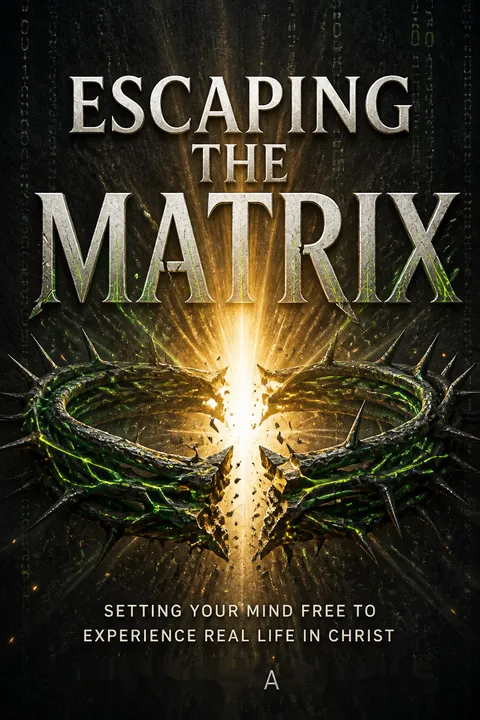
Escaping the Matrix is a Christian spiritual-growth book that borrows the structure of The Matrix films to explain why a person can affirm religious truths yet experience life in ways that contradict them. Its narrative moves from diagnosis to practice: first name the deceptive patterns, then inspect the sensory and emotional form they take, and finally rehearse Christian truth in ways intended to make it experientially compelling. The personal stories of Mary, Doreen, Jill, and Mark give the argument a clinical feel and show how one internal interpretation can shape a person's experience of God, self, and other people.
The book's most useful contribution is its insistence that insight is not merely verbal. A person may understand a belief intellectually while responding emotionally according to a different learned expectation. The call to observe triggers, images, and reactions can create space between an automatic response and a chosen action. The emphasis on Christ as the measure of God's character also gives Christian readers a clear theological anchor, while the warning against condemnation ties inner change to outward compassion.
Its central weakness is the certainty with which a complex model of thought is presented. “Neurochips” are metaphors, and the book's claims about control over mental representations and rapid therapeutic change extend beyond what its case histories establish. The Matrix's supernatural explanation of deception is a theological interpretation, not a neuroscience finding. Some readers may benefit from the imagery exercises, but others, especially people with severe depression or trauma, may need clinical care and a more gradual approach. The strongest reading preserves the book's invitation to examine learned meanings and practice a more hopeful identity, while refusing to treat imagery as a universal cure or suffering as a failure of faith.
Review Summary
Escaping the Matrix receives mostly positive reviews, with readers praising its powerful insights on thought transformation and Christian living. Many find the book life-changing, offering practical exercises and theological foundations for personal growth. Some readers appreciate its connection to neuroscience and psychology, while others find these aspects complex. The book's emphasis on experiential thinking and taking thoughts captive to Christ resonates with many. A few critics note difficulty following the content without prior knowledge of The Matrix movie.
Glossary
Matrix
deceptive inner worldviewBoyd's term for the network of internalized beliefs, images, feelings, and assumptions that leads a person to experience life in ways that conflict with Christian truth. The book connects this psychological pattern to the biblical idea of conformity to the world and interprets its influence through a Christian account of spiritual deception.
neurochip
metaphor for learned patternA metaphor Boyd uses for a learned neural pattern that can be activated by a cue and bring an old meaning or emotional response into present experience. The term is not a literal brain structure or a standard clinical diagnosis. In the book, it describes how a past interpretation, such as “I am unsafe,” can continue to influence reactions.
VAKOG code
sensory form of thoughtThe sensory features a person uses when mentally representing an experience: visual, auditory, kinesthetic, olfactory, and gustatory. Boyd argues that people differ in which senses shape a memory or emotion and that noticing these features can clarify how an internal experience feels. The acronym names a method of observation in the book, not a full scientific theory of thought.
truth-communicating event
vivid rehearsal of truthAn imagined scene designed to make a belief feel concrete rather than merely conceptual. In the book, a reader pictures a situation in which a Christian truth, such as being loved by God, shapes thoughts and behavior. Boyd presents this practice as a way to challenge an old internal representation and rehearse a response aligned with the person's faith.
Faith-Setting Process
imagined future practiceA guided exercise in which a person imagines a desired future consistent with Christian belief, makes the scene vivid, and practices experiencing it as a real possibility. The book uses the process to help a person rehearse a changed self-image and commit to cooperating with God toward that future. It is a spiritual imagery practice, not a guarantee of a specific outcome.
Theater of Life in Christ
guided memory imagery exerciseA visualization exercise in which a person imagines watching a painful memory from the perspective of their present-day self, with Jesus as a supportive presence. The scene is linked to positive memories from before and after the event, placing it in a wider life story. Boyd presents it as a way to reduce a memory's emotional charge and update its meaning.
Tree of the Knowledge of Good and Evil
symbol of human judgmentIn Boyd's interpretation of Genesis, the forbidden tree represents humanity's attempt to claim God's authority to determine ultimate good and evil. He connects eating from it with condemning judgments that rank people's worth. The metaphor does not prohibit practical discernment or boundaries; it challenges the assumption that people can make final judgments about another person's inherent worth.
I of the soul
observing inner perspectiveA specialized term used for the reflective position from which a person notices thoughts and emotions rather than identifying completely with them. Boyd describes it as a conscious, discerning aspect of the self that can observe the mind and connect a person's innermost spiritual commitments with everyday mental life. The term belongs to the book's theological model of the person.
Download PDF
Download EPUB
.epub digital book format is ideal for reading ebooks on phones, tablets, and e-readers.








