

Key Takeaways
Use essential oils as concentrated aromatics, not universal cures
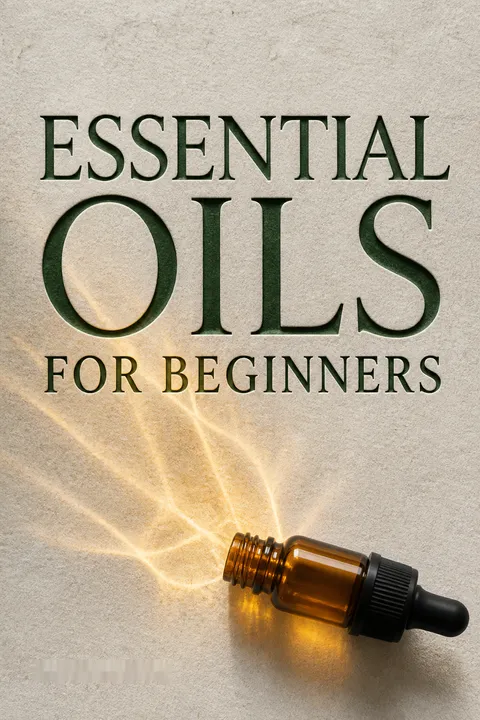
Plant-derived and potent. Essential oils are concentrated, fragrant extracts from particular parts of plants. The book presents them as versatile ingredients for scent, personal care, and household products, and as possible supports for well-being. Its historical thread includes French chemist René-Maurice Gattefossé, who reportedly used lavender oil after burning his hands in a 1910 laboratory accident, an episode that helped spark his interest in essential oils.
History is not proof. The story explains aromatherapy's appeal, but a dramatic personal experience cannot establish that an oil reliably treats an injury. The book's most practical promise is simpler: learn what an oil is, how it is made, and how to handle it before deciding whether its fragrance or use suits you.
What's striking is the book's movement from a vivid origin story to an expansive catalogue of uses. That history helps explain why lavender became emblematic of aromatherapy, while also illustrating a basic distinction in health reasoning: an observation can generate a hypothesis without confirming a treatment. Essential oils are better approached as concentrated materials with specific sensory and practical uses than as a single category of natural medicine. The framing also avoids a common mistake: assuming that a plant-derived substance is automatically gentle, safe, or effective.
Let scent shape an experience, not dictate a medical conclusion
Smell and feeling connect. The book describes inhaled aromas traveling through the olfactory system to brain regions associated with emotion and memory. It uses this pathway to explain why a familiar fragrance may quickly shift mood or call up a powerful recollection. It suggests frankincense for a contemplative atmosphere, and citrus scents for an uplifting one.
Responses vary. The book notes that the same oil can smell appealing to one person and unpleasant to another. A scent's effect may depend on personal associations, setting, and expectation, not only on the plant's chemical contents. Aromatherapy can therefore be treated as an individual sensory practice, rather than a predictable way to control mood or bodily functions.
What's useful here is the recognition that smell is not merely decoration. It can become a cue for a routine, a memory, or a particular emotional setting, much as music or lighting can. That makes scent a plausible tool for shaping an environment, especially when a person already finds a fragrance calming or energizing. The more ambitious claims about aromas directing hormone release or reliably producing specific states need separate evidence. A subjective benefit can be meaningful without proving a universal biological effect.
Check the plant's Latin name before trusting the bottle
Identity beats marketing. The book recommends checking the Latin plant name because familiar common names can cover different species with different properties. It distinguishes, for example, among types of eucalyptus, and warns that some sellers may dilute or substitute oils. It also says there is no official grading system for essential oils, despite commercial labels that suggest a standardized rank.
Price tells only part. Production explains some cost differences: the book estimates that about 600 pounds of rose petals are needed for an ounce of rose otto, while mint is comparatively abundant. A high price alone does not verify purity, and a low price does not prove fraud. Buy from a seller that clearly identifies the plant and production details, rather than relying on prestige language.
This advice resembles ingredient scrutiny in food and cosmetics: the name, source, and manufacturing process matter more than a polished label. Botanical naming is especially valuable because it makes the product easier to identify across sellers. The book's distinction among grade, purity, and integrity is useful as a buying checklist, but its own warning that grading is not official should temper confidence in terms such as therapeutic-grade. Transparent sourcing is a better basis for comparison than an unsupported quality badge.
Extraction method changes what a bottle contains
Different routes, different extracts. The book describes steam distillation as the common method: steam carries plant oils into a cooling vessel, where the oil separates from water. The remaining scented water is called a hydrosol. Citrus oils are often obtained by expression, which presses oil from the peel. Some delicate flowers, including jasmine, are commonly processed with solvents; the resulting extracts are called absolutes.
Read beyond the name. Carbon dioxide extraction is presented as another method, with products that can retain different plant materials depending on pressure and processing. The old, labor-intensive technique of enfleurage transfers fragrance from flowers into fat. These methods affect a product's composition, texture, scent, and suitability for particular uses, so extraction is relevant information, not just factory trivia.
The extraction overview gives readers a useful material-science lens: an essential oil is not simply the plant's scent bottled without alteration. Heat, pressure, pressing, and solvents each select or preserve different compounds. That matters for fragrance and for reproducibility, especially when comparing two products sold under the same common name. The book sometimes implies that one method is naturally superior, but the more useful question is whether a method is appropriate for the plant and whether the resulting product is clearly described.
Build balanced blends, then dilute them before skin contact
Blend for scent and purpose. The book encourages combining oils with complementary aromas and organizing them as top, middle, and base notes, a vocabulary for how quickly scents emerge and fade. It also advises following a recipe's sequence because changing the order can change the finished aroma. These categories help with fragrance design; they do not establish that a blend has stronger medical effects.
Carriers reduce concentration. Carrier oils, such as jojoba, sweet almond, or grapeseed, dilute essential oils for topical use. The book emphasizes small amounts and careful measurements. Because oils differ in strength and irritation potential, a recipe should not be treated as a universal safe dose. Begin with a conservative dilution and follow oil-specific safety guidance.
Blending is presented as both craft and formulation: a person is balancing scent, concentration, and intended use. The comparison to cooking captures why sequence and proportion can affect the result, while carrier oils make the safety dimension explicit. The caution is that an appealing blend is not automatically a therapeutically stronger blend. Fragrance classifications help organize perception; they should not be mistaken for a validated dosing system or evidence that ingredients amplify one another inside the body.
Choose inhalation or topical use for a clear, limited purpose
Three routes, distinct exposures. The book groups essential-oil use into inhalation, topical application, and ingestion. Examples include diffusing a scent into a room, adding diluted oil to a massage blend, or placing a few drops on a cloth to smell. A bath can involve both skin contact and inhalation. The appropriate route depends on the specific oil, the intended experience, and the user's circumstances.
Do not assume ingestion is safe. The book lists some oils as suitable for food or oral use, but it also warns that many are for external use only. Its broad recipes are not a substitute for professional advice. Do not ingest essential oils based on a general guide or a product's aroma; seek qualified medical guidance before considering internal use.
Thinking in terms of exposure route is a practical way to slow down before using a concentrated product. A scent in a room, a diluted skin application, and swallowing an oil are not interchangeable acts, even when the same plant name appears on the label. This is where the manual's helpful taxonomy needs a firm boundary: internal use carries risks that cannot be assessed from a recipe alone. The safest default for a beginner is to avoid ingestion and choose a lower-exposure use only when appropriate.
Treat dilution and contraindications as part of the recipe
Test before routine use. The book recommends a patch test: apply a small amount of diluted oil to a limited area of skin, then watch for irritation for up to 24 hours. It warns against applying most oils undiluted, especially to sensitive areas or mucous membranes. Some citrus oils, including bergamot, can make skin more vulnerable to sunlight; follow oil-specific sun-exposure precautions.
Some risks are serious. The book identifies wintergreen as rich in methyl salicylate, a compound related to aspirin, and warns that swallowing it can be extremely dangerous. It also calls for caution around children, pregnancy, allergies, medications, and pets. Because the book gives inconsistent advice about which oils are safe neat or internally, its safety notes should not replace a clinician's or poison-control professional's guidance.
The strongest practical message in this reference is that safe use depends on the particular oil, concentration, route, and person. A patch test can reveal some skin reactions, but it cannot rule out every allergy, medication interaction, or hazard from inhalation or ingestion. The book's safety sections also conflict with some of its recipes, which makes conservative interpretation essential. Treating warnings as ingredients in the formulation, rather than fine print, is the most responsible way to use any concentrated aromatic product.
Use aromatherapy for comfort, not as a substitute for care
Recipes are not clinical trials. The book offers blends for headaches, nausea, colds, skin problems, stress, and many other complaints. For example, it suggests inhaled peppermint for nausea and lavender in blends intended to relax or soothe. Such directions show how the author organizes the oils, but the recipes do not demonstrate that they diagnose, prevent, or cure the conditions named.
Keep the boundary clear. A pleasant scent or massage may make a routine feel more comfortable, and personal comfort can matter. It does not establish that an infection has been treated or that a serious symptom is harmless. Persistent, severe, or worsening symptoms call for appropriate medical assessment. Essential oils should not delay prescribed care or replace treatments recommended by a qualified professional.
This distinction preserves what aromatherapy can reasonably offer without endorsing every health claim in the catalogue. Comfort, ritual, and perceived relaxation are worthwhile outcomes, but they are different from disease modification. The book often moves from a plant's laboratory properties or traditional use to a recommendation for a specific illness; those steps require evidence that a recipe alone cannot provide. Readers gain a more reliable decision rule by asking whether a use is for sensory comfort or intended as treatment.
Homemade fragrance is not automatically a disinfectant
DIY has practical appeal. The book adapts essential oils for room sprays, carpet powders, candles, soaps, shampoos, and household cleaners. Lemon, lavender, tea tree, and eucalyptus appear frequently in its formulas. These recipes offer ways to customize scent and make small household products, while carrier oils and unscented bases help incorporate oils into personal-care blends.
Scent is not sanitation. The book describes some oils as antibacterial or disinfecting, but a fragrance in a homemade spray does not by itself prove that a surface or room is safe from harmful microbes. Its recipes should be understood as scent or cleaning ideas unless the specific product's effectiveness is established. Keep ingredients away from children and animals, and use products according to the safety guidance for every component.
The appeal of homemade products is partly control: users choose the smell and ingredients rather than accepting a packaged formula. But efficacy claims require a different standard from sensory appeal. A cleaner must work at a suitable concentration and contact time, while a pleasant room spray may do little beyond changing the smell. Separating those goals prevents a common category error. The book's recipes are most dependable as craft suggestions, not as replacements for validated hygiene practices.
Start with a few oils, small batches, and careful notes
Build a compact kit. The book recommends beginning with versatile favorites such as lavender, lemon, and peppermint, then considering orange, tea tree, and rosemary. A small collection is easier to learn than a shelf of unfamiliar bottles. Record the oil's botanical name, purchase source, dilution, date, and any reaction or preference; labels prevent blends from becoming mystery mixtures.
Protect the contents. Store oils in dark glass, away from direct sunlight and heat. The book notes that citrus oils tend to lose potency sooner than many other oils and recommends keeping them cool. Make modest batches, especially when a blend contains citrus, and replace products when their scent or condition changes. Careful storage preserves the material and makes experience easier to interpret.
A small, documented collection turns trial and error into a more disciplined practice. Recording exact products and dilutions helps distinguish an effect from a changed formula, a different species, or a new exposure. This resembles good laboratory bookkeeping, scaled down for a home user. The book's emphasis on a few familiar oils also limits unnecessary complexity. Still, notes are not proof of medical efficacy; their value is tracking tolerability, scent preference, and product quality over time.
Analysis
This book is best read as a beginner's field guide to aromatic products and homemade formulations, not as a dependable medical handbook. Its structure moves from plant extraction and purchasing to blending, then to a large catalogue of oils and recipes for health, beauty, mood, and household use. That breadth is its appeal and its main challenge to summarize: a reader can easily confuse a long list of proposed applications with a hierarchy of evidence.
The durable practical thread is a sequence of decisions: identify the plant, understand how the oil was produced, choose a limited use, dilute when applying to skin, and store the bottle carefully. The book's historical anecdotes, from ancient aromatic rituals to Gattefosse's reported lavender experience, give aromatherapy cultural depth. They explain how practices developed, but they do not establish that a given recipe treats a modern diagnosis.
The source also mixes plausible sensory observations with far-reaching physiological and disease claims. A fragrance may be personally calming, and plant extracts can have measurable chemical activity, but those facts alone do not prove that a home blend reliably treats infection, pain, or chronic illness. Evidence for a specific use depends on the oil's identity, concentration, route, population, and outcome measured. The book does not consistently make those distinctions, and some safety advice conflicts with its recipes, particularly around neat application and ingestion.
A careful reader can preserve the book's useful craft knowledge while narrowing its health promise. Treat its oil profiles and DIY formulas as starting points for understanding aroma and formulation, not as instructions for self-treatment. Prefer clear botanical labeling, avoid internal use without qualified guidance, and take warnings about phototoxicity, irritation, medicines, children, pregnancy, and animals seriously. The central value is learning how to approach essential oils with curiosity and restraint, rather than assuming that natural origin makes them harmless or curative.
Review Summary
Essential Oils for Beginners is highly regarded as an informative and accessible guide for those new to essential oils. Readers appreciate its comprehensive coverage of oil properties, uses, and safety precautions. Many find it a valuable reference book, praising its organization and practical recipes. The historical context and scientific explanations are noted as interesting additions. While most reviews are positive, highlighting its usefulness for beginners, a few critics question the scientific validity of some claims. Overall, readers find it a helpful starting point for exploring essential oils.
People Also Read



Glossary
Aromatherapy
Use of oils for well-beingThe book defines aromatherapy as using essential oils to influence mood, bodily well-being, or cognitive function. It includes inhaling scents and applying diluted oils, often alongside other materials such as carrier oils or hydrosols. The term describes a practice, not proof that a particular oil treats a particular medical condition.
Carrier oils
Oils used for dilutionCarrier oils are less volatile oils used to dilute essential oils, especially before topical application. The book names sweet almond, jojoba, grapeseed, coconut, and sunflower oils as examples. They also affect the texture of a blend and can be used on their own. The specific carrier and dilution should be chosen with skin sensitivity and product instructions in mind.
Hydrosol
Scented water from distillationA hydrosol is the water collected during steam distillation after the steam carrying plant material has cooled and condensed. Essential oil separates from this water, but the remaining liquid retains some of the plant's fragrance. The book describes hydrosols as ingredients for products such as moisturizers, linen sprays, and simple perfumes.
Absolute
Solvent-extracted fragrant materialAn absolute is an aromatic extract produced using solvents. The book explains that this method is often used for delicate flowers, such as jasmine, that do not suit ordinary steam distillation. It notes that solvent traces are a possible concern and that aromatherapy practitioners may prefer other extraction methods. An absolute is not identical to every steam-distilled essential oil.
Steam distillation
Extraction using plant-carrying steamSteam distillation is a common method for extracting essential oils. Plant material is held above boiling water, and rising steam carries volatile aromatic substances into a cooling vessel. The condensed liquid separates into essential oil and water because the two do not mix. The collected water may become a hydrosol.
Expression
Oil pressed from plant materialExpression extracts oil by pressing plant material rather than using steam or a solvent. The book identifies citrus peel as a common source, including lemon, orange, grapefruit, and lime. The method is similar in principle to pressing other plant oils and is useful when the aromatic oil is readily released from the peel.
Enfleurage
Fragrance absorbed into fatEnfleurage is an older, labor-intensive method for capturing fragrance from flowers. In the method described by the book, blossoms rest on fat or vegetable oil, which absorbs their aromatic compounds; spent flowers are replaced with fresh ones. The fragrant material is then separated from the fat, often using alcohol.
Phototoxic
More reactive in sunlightThe book uses phototoxic to describe an oil that can make skin more vulnerable to irritation when exposed to sunlight or ultraviolet light. It particularly warns about bergamot and some citrus oils. The level of risk and required waiting period vary by oil, so users should follow product-specific safety guidance and avoid assuming all citrus oils behave alike.
Patch test
Small-area skin reaction checkA patch test is a preliminary check for skin irritation. The book advises applying a small amount of diluted oil to a limited area, such as the inner arm, and observing the skin for up to 24 hours. A clear result does not guarantee that every use is safe, but irritation is a reason to stop using that oil.
Neat
Undiluted essential oilNeat means an essential oil has not been diluted with a carrier or another ingredient. The book says most oils should rarely be applied neat because concentrated oil can irritate or damage skin. Although it identifies a few oils as exceptions, its own guidance is inconsistent, so beginners should not treat neat use as a safe default.
About the Author
Other books by Althea Press
Download PDF
Download EPUB
.epub digital book format is ideal for reading ebooks on phones, tablets, and e-readers.








