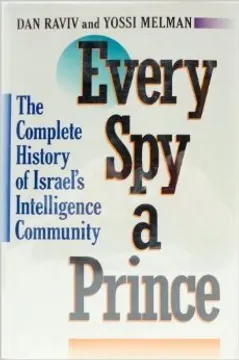


Key Takeaways
Build secret services to defend democracy, not to stand above it.
The founding test. In 1948, Israel’s leaders needed intelligence to help a small country survive while building a democracy. The first head of military intelligence, Isser Beeri, treated suspicion as proof: he helped convene a rushed tribunal that condemned Captain Meir Tubianski, who was then executed. Beeri also authorized the torture of Jules Amster to obtain a confession against a political rival. Prime Minister David Ben-Gurion investigated, cleared Tubianski, and removed Beeri. The episode established a principle and exposed its fragility: security agencies operate in secrecy, but their powers still require legal limits and political responsibility.
The recurring tension. The founders wanted intelligence officers to serve the public, not become a secret police force. Yet the need to protect the state repeatedly tempted officials to bypass democratic rules.
What's striking is how quickly emergency logic can turn suspicion into punishment. The Tubianski case shows that oversight is not an administrative luxury. It is a safeguard against a security agency mistaking confidence for evidence. Secrecy also creates an information imbalance: the people affected by an operation may be unable to challenge it publicly. That makes independent review and clear responsibility more important, not less. The book's founding ideal is demanding precisely because its strongest tests arrive when leaders feel there is no time for ordinary procedure.
Use human networks to protect people, but compartmentalize the work.
People were the advantage. Israel’s early intelligence relied heavily on humint, short for human intelligence gathered through people, informers, and personal relationships. Before statehood, Reuven Shiloah used a journalist’s cover in Iraq to build contacts, including among the Kurds. After 1948, intelligence organizations also helped Jews leave countries where emigration was blocked. In Iraq, a covert airlift brought roughly 150,000 Jews to Israel between 1950 and 1952. Later operations helped Jews leave Morocco and Ethiopia, often through secret arrangements with governments that publicly opposed Israel.
Access created risk. The same reliance on personal networks produced failures when handlers ignored basic safeguards. In Iraq, Israeli operatives met openly, knew too many details about each other, and failed to keep espionage separate from immigration work. Iraqi authorities dismantled the network and arrested scores of Jews.
The book makes a strong case that intelligence is not just information collection. It can also be a form of rescue, diplomacy, and logistical problem-solving. Such work depends on trust between people who may face radically different risks. That trust, however, cannot replace operational discipline. A source's courage does not protect a network if identities and assignments are shared too widely. The contrast between the successful airlift and the exposed spy ring is a useful reminder: human connection creates access, while compartmentalization helps keep that access from becoming a liability.
Set agency boundaries before rivalry turns coordination into failure.
A divided beginning. Israel initially split intelligence duties among military intelligence, Shin Bet, the Foreign Ministry’s Political Department, and the immigration service. The arrangement encouraged rivalry. In 1951, the Political Department’s European operatives rejected a reorganization and resigned together, while some destroyed files. The Mossad was created to centralize foreign intelligence, but disputes over who controlled operations continued.
Bad coordination had consequences. In Iraq, Yaakov Frank arrived to take over an intelligence station without clear instructions or a welcome from the incumbent. In Egypt, the Lavon Affair grew from a sabotage operation involving amateur recruits, poor supervision, and a chain of command that later became a battlefield for accusations. The operation failed, agents were arrested, and political leaders argued for years over who had authorized it. The recurring question was not only what went wrong, but who was responsible.
These episodes resemble a familiar organizational failure: when authority is fragmented, people can duplicate work, hide information, and deny responsibility once results turn bad. The intelligence setting makes those habits especially dangerous because outsiders cannot easily see the process. A clear division of duties does not guarantee success, but it makes errors easier to identify and correct. The book also shows a limit to centralization: giving one agency more control can reduce rivalry while concentrating power. Coordination needs both defined authority and meaningful accountability.
Use intelligence alliances to widen options, not outsource judgment.
Small states seek leverage. Mossad founder Shiloah argued that Israel should cultivate allies beyond its hostile Arab neighbors. The resulting peripheral alliance sought ties with non-Arab states and minorities that shared concerns about Arab nationalism. Israel developed secret cooperation with Turkey, Iran, Ethiopia, and others, while also building ties with the CIA. One striking intelligence success came in 1956, when Israeli intelligence obtained the Soviet leader Nikita Khrushchev’s secret speech criticizing Stalin and passed it to the Americans.
Diplomacy had limits. Secret relationships sometimes produced valuable access, as with Jordan and Morocco, and helped Israel pursue Jewish emigration. But the same connections could pull intelligence into morally and politically risky work. Israel assisted Morocco in the abduction of dissident Mehdi Ben-Barka, who was killed in Paris. The alliance protected some Israeli interests, but it also tied the state to a murder it could not publicly acknowledge.
Secret alliances can give a small country access, information, and room to maneuver that formal diplomacy cannot provide. The Khrushchev document shows how an intelligence service can create value for a powerful partner rather than merely request favors. But access is not the same as influence, and a useful relationship can become a trap when the partner’s objectives are unacceptable. The Ben-Barka operation illustrates that danger. Cooperation should be judged not only by what it yields, but by what it asks a democratic state to do in return.
Separate what intelligence collects from what leaders choose to believe.
Collection was not the problem. Israeli intelligence helped prepare the way for the rapid victory of the Six-Day War in 1967. Aman, the military intelligence service, collected information through agents, intercepted communications, and technical surveillance. But confidence in that success hardened into the Concept, an informal assumption that Arab leaders would not start a war they could not win.
Warnings lost to certainty. In 1973, Egypt and Syria attacked on Yom Kippur, and Israel was caught by surprise despite warning signs and reports of military preparations. Analysts discounted information that did not fit the Concept. The result was a devastating war and an official inquiry that condemned intelligence failures. The same system later failed to anticipate Egypt’s President Sadat’s peace initiative in 1977. Intelligence gathered facts; leaders and analysts still had to interpret them without letting yesterday’s victory dictate tomorrow’s expectations.
This is the book's clearest lesson about intelligence failure: more collection cannot compensate for a bad interpretive model. Once an institution treats one explanation as settled, contradictory evidence starts to look like noise. The danger applies beyond military intelligence. Organizations can become overconfident after success and then misread change as an exception rather than a signal. The 1967 victory was real, but it did not prove Arab incapacity. The book suggests that a healthy analytic culture must protect dissenting assessments, especially when they unsettle the prevailing view.
An occupation can turn security officers into unaccountable local rulers.
A new kind of power. After the 1967 war, Shin Bet’s work expanded from domestic security to controlling political activity across the occupied West Bank and Gaza Strip. Its agents recruited informers, investigated suspected organizers, and influenced residents’ permits, trade, and daily lives. This system, sometimes called preventive intelligence, aimed to stop attacks before they happened rather than investigate them afterward. It initially helped dismantle Palestinian guerrilla networks.
Control was not consent. Over time, informers became visible, feared, and vulnerable. The intifada, a Palestinian uprising that began in 1987, exposed how poorly Israel understood the population it governed. Shin Bet’s network could identify individual suspects, but it had failed to foresee a mass revolt. Informers such as Muhammad al-Ayad were killed by neighbors, while Israeli forces struggled to suppress protests without escalating the conflict.
The shift from protecting a state to managing an occupied population changes the meaning of intelligence work. A permit decision or an informer’s report may look administrative to the agency, but it can shape someone’s livelihood and safety. That scale of everyday intervention invites resistance, even when it reduces immediate violence. The uprising also shows the limits of treating political discontent as a security problem. An informer network can reveal individual plans; it cannot substitute for understanding a population's collective grievances or deciding how political authority should be exercised.
A flawless raid cannot rescue a strategy built on false assumptions.
Tactical brilliance. In 1981, Israel’s air force destroyed Iraq’s nuclear reactor near Baghdad. The operation demonstrated exceptional planning and execution, and French support for Iraq’s nuclear project weakened afterward. The raid is one of the book’s clearest examples of intelligence and military power working effectively toward a specific objective.
Strategy went wrong. A year later, Israel invaded Lebanon to drive out the PLO, but the campaign expanded far beyond its initial aims. The government expected help from Lebanon’s Christian Phalangist militias and hoped to reshape Lebanese politics. Those assumptions failed. The PLO was pushed out of Beirut, but Israel did not secure a peace treaty, Syrian influence remained, and the Sabra and Chatila massacre stained the campaign. The war damaged Israel’s standing and contributed to the resignation of Prime Minister Menachem Begin.
The contrast is between operational competence and strategic judgment. A raid can be planned with precision and achieve its immediate military aim, while a larger campaign rests on political assumptions that do not hold. The distinction matters because tactical success is visible and easy to celebrate; strategic consequences unfold across institutions and communities that the attackers do not control. The Lebanon campaign also cautions against treating a local ally’s promises as a stable foundation for policy. Intelligence can clarify an ally’s interests, but it cannot make those interests identical to Israel’s.
Coverups corrode the legitimacy that secret agencies depend on.
The bus hijack. In 1984, Israeli forces stormed a hijacked bus and captured two Palestinian attackers alive. Both were then killed. Shin Bet officials gave false accounts to investigators and courts, and the agency’s chief, Avraham Shalom, was implicated in the coverup. An official inquiry found that false testimony had become routine in cases involving interrogations. The Landau Commission condemned the practice while still accepting limited pressure during questioning, leaving the boundaries troublingly vague.
A double standard. Shin Bet demanded honesty from its own employees while allowing them to lie in court. That contradiction helped turn an internal scandal into a public crisis of trust. The same tension appears in the book’s accounts of interrogation, detention, and the treatment of people accused of spying. Secrecy can protect operations, but it cannot make unlawful conduct harmless.
A secret agency depends on public tolerance as well as operational secrecy. When officials lie to courts, they do more than hide a single event: they weaken the credibility of future testimony and make lawful work harder to defend. The Landau Commission tried to preserve room for urgent counterterrorism while setting limits on coercion, but unclear boundaries invite officials to define necessity in their own favor. Accountability is not simply a moral check after an operation. It is part of the agency's ability to earn trust when its actions cannot be fully observed.
Keep private operators from turning national security into private business.
Secrets became commodities. The arms trade drew former intelligence and military officers into private businesses, sometimes with blurred lines between personal profit and Israeli policy. Israel’s defense industry needed foreign buyers, and unofficial intermediaries helped find them, from Iran to Latin America. But their deals could entangle the state with unsavory regimes and leave Israel blamed for actions it had not formally approved.
The danger reached the inner circle. Lakam’s Jonathan Pollard stole U.S. intelligence for Israel, damaging trust with America and unsettling American Jews. In the Iran arms-for-hostages affair, private Israelis and U.S. officials bypassed normal channels, while the Mossad was largely excluded. The operation collapsed into the Irangate scandal. The book’s late-century warning is not that intelligence should avoid risk, but that unofficial operators need oversight before their private ambitions become national policy.
The distinction between state action and private enterprise is especially hard to maintain when former officials trade on their contacts and expertise. Their work may serve a real security need, yet commissions and personal loyalties can distort what counts as the national interest. Pollard and the arms brokers represent different kinds of boundary failure: one official spy, one expanding marketplace of unofficial operators. Both show why a government needs clear authorization, traceable responsibility, and a way to stop a useful contact from becoming an independent policy-maker.
Analysis
This history is not simply a catalogue of operations. Its deeper subject is the unstable bargain between secrecy and democracy in a state that regards intelligence as necessary for survival. The same agencies that rescued Jewish communities, penetrated adversaries, and supplied leaders with strategic access also operated in a system where the public could not reliably know who gave an order, what law governed it, or who would answer for failure.
The book’s strongest pattern is institutional rather than heroic. Early failures in Iraq and Egypt arose from poor coordination and weak tradecraft. The 1973 surprise came despite a large collection effort because analysts and leaders trusted a mistaken model of Arab intentions. In the occupied territories, intelligence became a tool of daily administration, and apparent control concealed political alienation. The later scandals reveal a further weakness: when secrecy is paired with political protection, officials can treat truth as a resource to manage rather than a duty to preserve.
The account also invites caution about its own evidence. Much of the history depends on anonymous sources, retrospective testimony, and an intelligence community that withheld its records. The authors often distinguish what they can establish from what remains uncertain, but some episodes, particularly covert killings and the internal chain of command, resist definitive reconstruction. That uncertainty is not incidental. It is part of the subject: secret institutions shape public events while limiting the evidence available to judge them.
The resulting lesson is more demanding than a call for either openness or secrecy. Intelligence needs protected sources and operational freedom, but it also needs boundaries that survive political pressure, independent review, and honest internal reporting. Israel’s services are most impressive when disciplined human skill serves a defined public purpose. They are most dangerous when tactical success, partisan ambition, or institutional pride is mistaken for a sound national strategy.
Glossary
Mossad
Foreign intelligence agencyIsrael’s foreign intelligence and special operations agency, formally established in 1951 under the prime minister’s authority. Its work includes gathering information abroad, maintaining liaison with foreign intelligence services, and conducting covert operations. The book contrasts its foreign-facing role with Aman’s military intelligence work and Shin Bet’s domestic security responsibilities.
Aman
Military intelligence serviceThe Hebrew acronym for Israel’s military intelligence branch, part of the Israel Defense Forces. Aman collects and analyzes information on foreign armies and regional threats, including through human sources and signals intelligence. It also supports military planning and has responsibilities such as military censorship. Its failure to anticipate the 1973 war became a major national scandal.
Shin Bet
Domestic security serviceIsrael’s General Security Service, responsible for internal security, counterespionage, and preventing terrorism. After the 1967 war, its responsibilities expanded to political and security control in the occupied territories. The book traces its effectiveness against underground networks alongside the ethical and legal crises caused by coercive interrogations, informers, and coverups.
Lakam
Scientific intelligence bureauThe Hebrew acronym for the Science Liaison Bureau, a secret Israeli agency created to protect and support the nuclear program. It later gathered scientific and technological information for the wider defense establishment. Its activities were kept from much of the intelligence community, and it became publicly known after Jonathan Pollard was exposed as an American spy working for it.
humint
Human-source intelligenceA shortened form of human intelligence, meaning information gathered through people rather than technical collection alone. The book uses the term for agents, informers, personal contacts, and recruited sources. Human intelligence gave Israel access to communities and decision-makers, but depended on careful handling, source protection, and an ability to assess whether a source was reliable.
Varash
Intelligence chiefs committeeThe Hebrew acronym for the committee bringing together the heads of Israel’s intelligence and security services. Established to improve coordination and reduce duplicated effort, it included leaders from agencies such as the Mossad, Aman, and Shin Bet. Its meetings were secret, and its work reflected the persistent tension between cooperation and rivalry among the agencies.
peripheral alliance
Ties beyond Arab neighborsAn Israeli strategic approach, associated with intelligence founder Reuven Shiloah, that sought relationships with non-Arab states and minorities surrounding the Arab world. Israel developed covert or limited cooperation with countries such as Iran, Turkey, and Ethiopia, as well as with groups including the Kurds. The aim was to counter isolation and gain strategic access.
the Concept
Assumption of Arab restraintThe informal Israeli belief, strengthened after the 1967 victory, that Arab leaders would not start a war they were certain to lose. During the run-up to the 1973 Yom Kippur War, analysts discounted warnings that contradicted this assumption. The Concept describes an interpretive failure, not an absence of collected information.
preventive intelligence
Warning before an attackAn intelligence approach aimed at detecting and stopping violence before it occurs, rather than identifying perpetrators afterward. Shin Bet relied on informers and local networks in the occupied territories to find planned attacks and underground activity. It helped dismantle some guerrilla cells, but could not reliably predict the mass political uprising that began in 1987.
Download PDF
Download EPUB
.epub digital book format is ideal for reading ebooks on phones, tablets, and e-readers.








