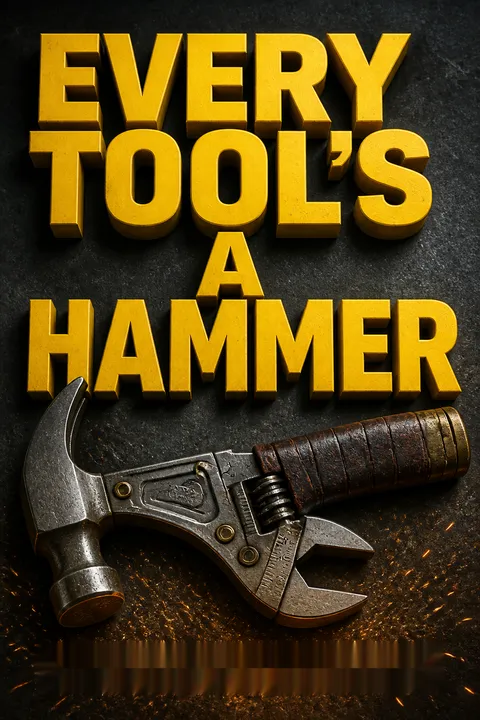


Key Takeaways
Count your curiosity as making, even before anyone calls it useful.
Making is broader than craft. Savage includes coding, cooking, writing, and performance in making: each creates something that did not exist before. His career did not follow a straight route to a single goal. It grew through opportunities, wrong turns, and interests he kept pursuing. A teenage costume project made him feel powerful, but a classmate’s ridicule also showed how exposed a personal enthusiasm can make someone feel.
Find people who make room. Years later, Savage wore a Neo costume for a MythBusters segment because it suited the shot. His crew’s laughter was affectionate, and the experience helped him stop hiding an interest he had once kept private. The lesson is not that every hobby must become a job. Making matters even when it is simply a way to explore and share what fascinates you.
What's striking is how this account links creative practice to belonging. A person who can name an interest without embarrassment is more likely to find collaborators, teachers, and audiences who share it. That resembles the role of psychological safety in groups: people contribute more when they are not punished for showing unfinished thoughts or unusual enthusiasms. The qualification is important. Publicly sharing an interest is not safe in every setting, and not every passion needs an audience. The useful aim is to find trustworthy contexts where curiosity can be expressed without making approval the price of continuing.
Follow the fascination past the first idea and into its details.
Interest generates ideas. Savage calls the small, private sparks of enthusiasm that draw attention “secret thrills.” They may begin with a film object, a design detail, or a question that seems trivial to other people. His visit to an exhibition about Stanley Kubrick sparked a plan to recreate Major Kong’s survival pack from Dr. Strangelove. Only about a fifth of its listed contents remained, so the project required research into the film, historical survival kits, and the meaning of the prop’s unusual items.
Go beyond imitation. Rebuilding the object became a way to understand the choices behind it. Savage had spent decades returning to a Blade Runner prop, refining his replica as his research and abilities grew. Obsession can sustain difficult work, but it is most useful when curiosity remains open to new information rather than narrowing into fixation.
The example illustrates a form of learning through attention: a maker studies an object closely enough to ask not only how it looks, but what purpose and context shaped it. That approach resembles reverse engineering, where reconstructing a system reveals design decisions hidden from casual observation. It also turns enthusiasm into a durable source of effort. Still, obsession is not automatically a virtue. Its value depends on its effects on health, obligations, and other people. The distinction between committed curiosity and harmful compulsion matters, especially because the same outward intensity can describe very different experiences.
Turn project complexity into visible lists and visible progress.
Lists clear mental space. Savage once resisted planning, then found that even an untidy project was already being catalogued in his head. While preparing a theater production, he gathered scattered tasks into a single master list. Seeing the whole job at once changed it from a swarm of separate worries into a project he could manage. At Industrial Light & Magic, he learned to track tasks with checkboxes: empty for not started, partly filled for partial progress, and complete when done.
Refine, then begin. His method starts with an unfiltered brain dump, groups related tasks, breaks them into smaller steps, and tracks progress as work changes. Lists also help restart a project after a long pause. Their danger is endless elaboration: planning can become a refuge from doing. A list is useful when it clarifies the next action, not when it tries to predict every surprise.
Lists are a practical form of cognitive offloading: information that would otherwise occupy working memory is put somewhere visible, leaving more capacity for judgment and problem solving. Checkboxes add feedback, which can make slow projects feel less abstract by recording actual movement. This is especially useful when tasks depend on one another. The caution is that visible completion is not the same as meaningful progress. A finely checked list can reward busywork or make a changing project look more certain than it is. Good lists remain provisional maps, not contracts with reality.
Prepare the work so haste does not turn a small job into damage.
Set up before cutting. Savage describes “addressing your work” as getting yourself, the tools, and the material into a suitable position before acting. At sixteen, he tried to drill a hole in a bicycle rack while it was poorly supported and he was in a hurry. The bit overheated, dulled, and snapped; the metal hardened around it, leaving the needed hole blocked. He later understood that cooling fluid helps carry heat away during metal cutting and that clamping the work improves control.
Small pauses prevent costly resets. Marking a hole, securing the part, and choosing the right tool can feel slower than simply starting. But a failed cut may destroy the part, the tool, and the time saved by rushing. The same principle applies beyond a workshop: organize the next step before adding speed. A deadline can focus effort, but impatience is not a substitute for preparation.
This is a concrete human-factors lesson: errors often arise not from a lack of intelligence, but from a setup that makes control difficult. In aviation, medicine, and manufacturing, checklists and stable work conditions reduce reliance on memory and improvisation at the moment of action. The analogy holds without implying that every task needs elaborate preparation. Excessive setup can become its own delay. The practical question is whether a short precaution meaningfully lowers the chance or cost of error. For cutting, lifting, or other hazardous work, safety deserves priority over speed.
Use meaningful deadlines to separate essentials from decorative perfection.
Time narrows the choices. Savage began a replica of a space suit from Alien in 2002, but the project stalled under a flood of details. A planned appearance at San Diego Comic-Con in 2014 supplied a reason to finish. The date mattered to both the maker and the costume, so it helped him stop polishing details that few people would notice and complete the work in time.
Let the purpose guide tradeoffs. On a Coca-Cola commercial, a mechanical ice-cube effect kept failing under hot lights. Instead of pursuing the most elegant mechanism, Savage manually adjusted the setup to capture usable takes before filming ended. Deadlines can expose which features serve the project and which express personal preference. They work best when tied to a real purpose and paired with flexibility. An arbitrary deadline may be easy to ignore; a punishing one may undermine the work.
A deadline acts like a constraint in design: it reduces the number of live options and forces priorities into view. That can counter perfectionism, especially when a project has no natural endpoint. Yet constraint is not automatically productive. Unrealistic deadlines can shift costs onto collaborators, invite unsafe shortcuts, or reward shallow completion. The stronger lesson is to define what success requires before the clock gets tight, then make tradeoffs consciously. A deadline helps decide what to omit; it cannot replace judgment about what must not be compromised.
Ask for help before heroic independence becomes everyone else's emergency.
Making alone has limits. Early in his career, Savage built a set and an ATM prop for a student film without enough experience, time, or help. He saved the most difficult work for last, ran out of money, and arrived at filming with major problems. The crew had to spend three all-nighters repairing the set. His failure was not simply a lack of skill; it was his inability to recognize when the project needed more hands and knowledge.
Collaboration is a craft. Later, working with Jamie Hyneman and theater crews, Savage learned by asking questions, sharing tasks, and relying on other people’s expertise. For a manager, that also means delegating and giving timely feedback. Doing a task faster alone can cost the team learning and stall the larger project. Asking for help is not surrendering responsibility. It is a way to use the skills available and make the work more achievable.
The story distinguishes individual competence from collective capacity. Complex work depends on coordination, shared information, and people being able to admit uncertainty early. This aligns with research on psychological safety, the condition in which team members can raise concerns without fear of humiliation. The practical challenge is that delegation takes time, especially when expertise is tacit and difficult to explain. That initial cost is real, but silently absorbing every task creates a bottleneck. Managers can improve the tradeoff by defining the result clearly, then letting collaborators choose how to reach it.
Draw or mock up an idea before expensive materials have to agree.
Make the idea visible. A drawing can reveal gaps that words and mental pictures conceal. Savage used sketches to plan sculptures, untangle mechanical assemblies, and communicate with Jamie, whose problem-solving style differed from his. The aim was not polished illustration. It was a shared picture clear enough for two people to discuss or build from.
Prototype cheaply. Cardboard served the same purpose in three dimensions. Savage used it to test film sets, model a house, and communicate the scale and shape of proposed objects before committing to costly materials. A crude mock-up lets makers and collaborators discover awkward dimensions or practical problems early. Cardboard is not essential; the right prototype material is simply one that is cheap, workable, and forgiving enough to encourage revision.
Drawing and prototyping externalize thought. Once an idea occupies a page or a model, people can inspect it together instead of trying to synchronize private mental images. That makes prototypes useful not only for testing whether an object works, but for discovering what the object is supposed to be. A model can still mislead if its roughness hides structural, material, or scale constraints. The best prototype is therefore honest about what it can test. A cardboard shell may reveal fit and proportion, but it cannot establish the strength of a finished assembly.
Build room for wrong turns, because making improves through revision.
Iteration is how ideas sharpen. Savage uses “mistake tolerance” for leaving room to try, fail, and adjust without making every error catastrophic. In engineering, loose tolerance permits some variation between parts; in creative work, it means allowing an early version to be rough. At Brightworks, seven-year-olds built chairs that broke, examined why, and made improved versions. Their later chairs reflected what they had learned about balance, joints, and comfort.
Budget for learning. Savage recommends buying extra material when a new technique is involved. He made multiple versions of a tool holster, and his son needed three attempts to get his own design right. Revision is not a guarantee of success, and some builds require extreme precision. When materials are scarce or a mistake could be dangerous, slowing down and testing on scrap may provide the needed margin.
This is a useful distinction between error as evidence and error as harm. Iteration gives learners feedback, but only when they can observe what went wrong and change their next attempt. That is close to the logic of deliberate practice: targeted repetition with information about performance, rather than repetition alone. The boundary matters. “Fail fast” rhetoric can obscure costs borne by workers, users, or communities. The relevant question is not whether failure is good, but whether the experiment is designed so that mistakes teach without imposing unacceptable damage.
Choose tools and joints that preserve the option to revise.
Design for disassembly. Savage prefers screws, pins, and other mechanical fasteners when a build may need adjustment. His replica of the complex ZF-1 weapon from The Fifth Element contained more than 175 custom parts. Rather than glue the pieces into a fixed form, he designed connections that let him open and revise the object. That choice added planning and labor at the start, but kept future changes possible.
Match the method to the materials. Glue is sometimes the right choice, but different adhesives suit different surfaces and conditions. A bond may fail if the materials expand differently, flex under use, or have not been cleaned and roughened appropriately. Savage suggests testing unfamiliar glues on scrap. Likewise, he recommends trying inexpensive tools before investing in a professional version. A tool earns its place when experience shows it fits the work.
Reversible design has option value: it makes repair, inspection, and modification easier when the maker does not yet know every future need. The same principle appears in modular software and maintainable products. However, reversibility is not free. Fasteners can add weight, complexity, and failure points, while adhesives can provide an appropriate permanent bond. The decision should follow the object’s use, not a blanket preference for one technique. Testing materials and connections on samples is a modest way to turn uncertain choices into informed ones.
Design your shop around what you reach for, then reset it for tomorrow.
Organization should fit the maker. Savage’s shop reflects two priorities: seeing tools and materials clearly, and reaching them without moving other things first. He calls the second “first-order retrievability.” His open racks suit a fast, improvisational style; Jamie’s more compartmentalized shop suits a different way of working. Neither arrangement is a universal ideal. The useful measure is whether the space supports the work being done there.
Clean up for the next session. Savage learned that leaving a clean bench and tools in place makes it easier to restart the following day. He compares this to wrapping Christmas lights neatly so a future version of himself does not face a tangled box. Tidying is not a moral test, and an occasional messy exit is understandable. The point is to notice how the state of a workspace affects momentum and adjust it to help the next work session begin.
This account treats a workspace as an arrangement of affordances: objects are placed so certain actions become easier and others less likely. That idea connects workshop organization to interface design. Visibility helps only when the scene remains legible; too much exposed material can become visual noise rather than useful information. A clean bench can lower the friction of starting, but a different maker may think best amid active materials. The design criterion is not tidiness. It is whether the space reliably supports attention, access, and safe work.
Share the work, methods, and credit that made your work possible.
Knowledge grows in circulation. Savage’s early fascination with Star Wars magazines showed him that other people built the objects he admired. Sharing that interest helped him find peers and, eventually, work. Later, he brought physical examples of his work to an interview with Jamie Hyneman, giving a clearer account of his abilities than photographs alone could provide.
Credit the people behind the result. Savage argues that makers should share useful methods and acknowledge collaborators rather than treating success as a solo achievement. His Mecha Glove replica generated a detailed guide for other builders. At Weta Workshop, artists pass sculptures between departments, adding different skills to a shared object. Sharing can help others learn, while also making a maker’s work easier to find. It is not a guarantee of opportunity, but secrecy can prevent useful connections from forming.
The section connects generosity with both cultural transmission and practical reputation. A tutorial can lower the barrier for newcomers, while a portfolio can make a person’s abilities legible to potential collaborators. Credit also improves the accuracy of the story told about how work gets made. There is a legitimate concern about uncompensated labor or knowledge being appropriated, so openness should not mean surrendering boundaries or ownership. The strongest norm is reciprocal sharing: disclose what can help others, name contributors, and protect the people whose labor or expertise made the result possible.
Analysis
Every Tool's a Hammer is part memoir, part workshop manual, and part argument for a culture of making. Its structure follows practice rather than a conventional success story: curiosity leads to projects, projects expose limitations, and those limitations generate procedures for working better. The anecdotes are not decorative. A snapped drill bit demonstrates how impatience creates material consequences; a ruined student-film set exposes the cost of refusing help; children rebuilding chairs show how learning can be made tangible. The repeated movement from story to usable principle makes a wide-ranging book feel coherent.
Its most valuable contribution is its account of creative work as both cognitive and physical. Lists, drawings, cardboard mock-ups, clamps, and clean benches are not dull preliminaries to inspiration. They are ways to think, coordinate, and protect momentum. The book also usefully reframes mistakes as information, while distinguishing ordinary iteration from high-precision work where error has a serious cost. That distinction prevents its encouragement to experiment from becoming a careless slogan.
The approach has limits. Savage’s experience comes from environments with tools, skilled colleagues, and professional resources, as well as early family support. Some readers have little time, space, money, or control over their work. Advice to buy extra material or set a personally meaningful deadline is less available to them. The book acknowledges unequal access to making, but its hands-on methods can still assume a degree of agency. Even so, the underlying principles adapt: sketch on scrap paper, ask a knowledgeable person, or break a task into visible steps. The book’s central claim is not that everyone needs a workshop. It is that people can learn by making, and that their interests deserve room to become real.
Review Summary
Every Tool's a Hammer receives mostly positive reviews, with readers praising Savage's enthusiasm, practical advice, and insights into the creative process. Many find it inspiring for makers and creatives of all types. The book blends memoir, philosophy, and practical tips, though some wished for more Mythbusters stories. Readers appreciate Savage's down-to-earth approach and permission to embrace one's interests. Critical reviews mention repetition, privilege, and sections that may not appeal to all readers. Overall, it's seen as motivational for makers and fans of Savage's work.
People Also Read




Glossary
secret thrills
Private sparks of interestSavage’s term for small, personally compelling interests that catch someone’s attention and invite further exploration. A secret thrill might begin with a film object, a design detail, or a topic that seems unusual or unimportant to others. Following these interests can generate ideas and projects, even when they do not become a career.
mistake tolerance
Room to experimentSavage’s term for allowing enough time, materials, and psychological space to make errors while learning or developing a project. The idea draws on engineering tolerance, where parts can vary within acceptable limits. In creative work, mistake tolerance makes revision possible without treating every imperfect attempt as wasted effort.
addressing your work
Preparing for the taskSavage’s phrase for arranging oneself, the workspace, the materials, and the tools in a suitable position before beginning a task. It includes planning, securing work, and reducing avoidable friction. The preparation may appear slower in the moment, but it can prevent errors, damage, and costly rework.
visual cacophony
Useful visible varietySavage’s description of a workspace where tools and materials remain visible in an active, varied arrangement. The goal is not disorder for its own sake, but an environment that lets a maker quickly notice and select what is needed. It works only when the visible arrangement remains understandable to the person using it.
first-order retrievability
Direct access to toolsSavage’s principle of arranging tools so they can be reached without moving other objects or making a separate search. He favors storing frequently used tools close to where they are needed, sometimes keeping duplicate sets in different work areas. The arrangement is specific to a maker’s habits and the work performed.
knolling
Arranging items in groupsA method of organizing a workspace by removing items not in use, grouping similar objects, and aligning them neatly, often at right angles. The practice makes materials easier to survey and locate. Savage connects it to the chef’s mise en place, preparing ingredients and tools before service begins.
acknowledgment hierarchy
Levels of useful feedbackSavage’s model for responding to other people’s contributions, from basic thanks and specific encouragement to motivation, constructive criticism, project-wide correction, and addressing behavior that harms the team. The model emphasizes that effective collaboration requires both recognition and difficult feedback, especially from people responsible for leading the work.
FAQ
What’s Every Tool’s a Hammer: Life Is What You Make It by Adam Savage about?
- Memoir and Maker’s Guide: The book is a blend of memoir and practical guide, chronicling Adam Savage’s journey as a maker and sharing lessons from his decades in special effects, television, and prop building.
- Philosophy of Making: Savage explores the universal nature of making, emphasizing creativity, iteration, and the importance of embracing mistakes as part of the process.
- Practical and Emotional Insights: The book covers both hands-on advice (like tool use and shop organization) and the emotional aspects of creativity, such as facing self-doubt and maintaining momentum.
- Celebration of the Maker Mindset: It’s a celebration of curiosity, experimentation, and the community of makers, encouraging readers to see themselves as creators in all aspects of life.
Why should I read Every Tool’s a Hammer by Adam Savage?
- Inspiration from a Master Maker: Adam Savage shares unique insights from his career, offering motivation and encouragement for readers to pursue their own creative passions.
- Actionable Advice: The book is filled with practical tips on creativity, workflow, tool selection, and overcoming common barriers like self-doubt and impatience.
- Mindset Shift: Savage reframes failure as iteration, helping readers embrace mistakes as essential learning steps rather than setbacks.
- Community and Collaboration: Readers gain strategies for sharing knowledge, collaborating effectively, and building supportive creative communities.
What are the key takeaways from Every Tool’s a Hammer by Adam Savage?
- Making is Universal: Creativity and making are not limited to traditional crafts—they encompass everything from cooking to activism.
- Iteration Over Perfection: The creative process is nonlinear, and mistakes are vital for growth and innovation.
- Organization Fuels Creativity: Effective workspace organization and project management (like lists and checkboxes) are crucial for sustaining creative momentum.
- Embrace Obsession and Curiosity: Following your fascinations and obsessions leads to meaningful and sustained creative work.
What are the best quotes from Every Tool’s a Hammer by Adam Savage and what do they mean?
- “Failure is iteration.” This quote reframes failure as a necessary and productive part of creativity, encouraging makers to see mistakes as learning steps.
- “Remember, in every tool, there is a hammer.” Quoting Mark Buck, Savage highlights the importance of creative problem-solving and using tools beyond their intended purpose.
- “Travel plans gone astray are dancing lessons from God.” Borrowed from Kurt Vonnegut, this quote celebrates unexpected detours as opportunities for growth and discovery.
- Quotes as Mindset Shifts: Each quote encapsulates a core philosophy of the book—embracing flexibility, resilience, and the joy of making.
How does Adam Savage define and use “obsession” in Every Tool’s a Hammer?
- Obsession as Creative Gravity: Savage describes obsession as the driving force that moves ideas from thought to reality, providing structure and momentum for projects.
- Positive vs. Negative Obsession: He distinguishes between passion (which fuels great work) and unhealthy fixation (which can be destructive), advocating for mindful management of obsession.
- Personal Experience: Savage credits his prolific output to his serial curiosity and encourages readers to follow their own “secret thrills” for sustained creativity.
- Harnessing Obsession: Recognizing and channeling obsession is key to completing complex and meaningful creative work.
What does Adam Savage mean by “failure is iteration” and “mistake tolerance” in Every Tool’s a Hammer?
- Reframing Failure: Savage explains that creative “failures” are actually iterations—necessary steps in the process of experimentation and learning.
- Mistake Tolerance: He advocates for giving yourself room to make errors without harsh self-judgment, as this is essential for growth and innovation.
- Nonlinear Creative Process: The path to success is full of wrong turns and backtracking, which provide valuable information about what doesn’t work.
- Cultural Critique: Savage critiques the fetishization of failure, emphasizing instead the importance of resilience and learning from mistakes.
How does Adam Savage recommend getting started on creative projects in Every Tool’s a Hammer?
- Overcoming Inertia: Savage likens starting a project to overcoming inertia, urging readers to become the force that gets things moving.
- Follow Your Secret Thrills: He suggests paying attention to small, personal fascinations as seeds for creative ideas.
- Active Engagement: Immersing yourself in your interests and environment can spark inspiration and lead to spontaneous ideas.
- Start Small, Iterate: Taking the first step, no matter how small, is crucial for building momentum and confidence.
What role do lists, checkboxes, and organization play in Adam Savage’s creative process in Every Tool’s a Hammer?
- Lists Tame Complexity: Savage uses lists to break down projects into manageable tasks, reducing overwhelm and clarifying next steps.
- Checkboxes Build Momentum: Checking off completed tasks provides a visual and psychological boost, reinforcing progress and motivation.
- Iterative List-Making: He adapts lists as projects evolve, using them for brain dumps, task breakdowns, and prioritizing difficult problems.
- Organization Supports Creativity: A well-organized workspace and workflow free up mental space for creative problem-solving.
How does Adam Savage address impatience and “addressing your work” in Every Tool’s a Hammer?
- Impatience as a Pitfall: Savage admits that impatience often leads to mistakes and rework, emphasizing the value of slowing down.
- “Use More Cooling Fluid”: This metaphor encourages taking time and care, both literally in metalworking and figuratively in all creative tasks.
- Addressing Your Work: Proper preparation—organizing tools, workspace, and thoughts—saves time and improves craftsmanship.
- Quality Over Haste: Slowing down and preparing thoroughly leads to better, safer, and more satisfying results.
What is Adam Savage’s advice on learning new skills in Every Tool’s a Hammer?
- Learn by Doing: Savage stresses that skills are best acquired through hands-on projects, not just isolated practice.
- Embrace Multiple Attempts: He encourages making several versions and learning from each iteration, as mastery comes from repeated effort.
- Use Cheap Materials: Practicing with inexpensive materials reduces fear of mistakes and encourages experimentation.
- Iterative Learning: Each attempt builds intuition and confidence, making the learning process more effective and enjoyable.
How does Adam Savage suggest organizing a maker’s shop in Every Tool’s a Hammer?
- Visual Cacophony: Savage prefers having tools and materials visible and accessible, supporting fast and intuitive work.
- First-Order Retrievability: Frequently used tools are kept near their points of use, minimizing wasted time and maintaining creative flow.
- Customized Organization: He tailors his shop layout to his personal workflow, balancing visibility with order.
- Organization as Creative Support: An organized shop reduces friction and supports sustained creativity.
What are Adam Savage’s views on glue, mechanical fasteners, and tool use in Every Tool’s a Hammer?
- Mechanical Fasteners Preferred: Savage favors screws, bolts, and rivets for their flexibility, repairability, and longevity.
- Glue as a Compromise: While glue can be faster, it’s less reversible and requires careful selection and surface preparation.
- Matching Tools to Tasks: He emphasizes understanding the properties of adhesives and fasteners to choose the right one for each project.
- Creative Tool Use: Savage encourages seeing every tool as a potential “hammer,” fostering creative problem-solving and adaptability.
How does Adam Savage recommend sharing knowledge and collaborating in Every Tool’s a Hammer?
- Sharing Enriches the Community: Savage believes that openly sharing knowledge and work benefits both the individual and the maker community.
- Express Your Passions: Being open about your interests leads to learning opportunities and skill development.
- Share Credit and Vision: Recognizing collaborators and clearly communicating your vision fosters a healthy, innovative team environment.
- Collaboration Over Scarcity: Savage contrasts a collaborative mindset with scarcity thinking, advocating for generosity and collective progress.
Download PDF
Download EPUB
.epub digital book format is ideal for reading ebooks on phones, tablets, and e-readers.








