

Key Takeaways
Read each border emergency as one long history, not a new crisis
The route is the story. In 2019, Hondurans gathered to pray in Tapachula, Mexico, many of them deported from the United States and preparing to try again. Their journey linked a small room far from home to decisions made in Washington. The book argues that border crises are not isolated episodes: each grows from earlier wars, laws, deportations, and political bargains. The story begins in 1980, when the United States created modern asylum law while deepening its involvement in Central American conflicts, and continues through the family arrivals of 2014, the separations of 2018, and the asylum restrictions of 2019.
Two places, one history. The lives of Juan Romagoza, Eddie Anzora, Keldy Gonzáles, and Lucrecia Hernández Mack show how US decisions transform Central America and American communities at the same time. A border can divide legal categories while concealing the connections that produced them.
What's striking is the book's change of scale. A crowded border is not treated as a sudden natural disaster, but as the visible end of a long chain of decisions. This resembles systems thinking: an outcome becomes intelligible when feedback loops and distant causes are brought into view. The method also resists the news cycle's habit of treating each increase in arrivals as unprecedented. A useful caution is that continuity should not erase change. The people arriving in 2014 were often children and families, not the single Mexican men who had dominated earlier border narratives. The history connects these events without making them identical.
Trace today's flight north back through Washington's Cold War choices
Repression had sponsors. In El Salvador, land inequality and state violence deepened over decades. The 1932 massacre of roughly 30,000 people helped suppress reform and left a durable fear of dissent. In 1980, doctor Juan Romagoza witnessed soldiers kill a wounded student in a hospital. Archbishop Óscar Romero publicized such violence, then was assassinated. The Reagan administration increased military support even as atrocities mounted. In Guatemala, a 1954 CIA-backed coup against President Jacobo Árbenz helped install a repressive order that endured for decades.
People fled what policy helped sustain. The US trained and armed security forces while often treating political opposition as a communist threat. Civil wars, massacres, and persecution drove people into exile. This does not mean US policy alone explains migration, but the book traces a direct contradiction: Washington helped strengthen regimes that later produced refugees, then often refused those refugees asylum.
This history complicates the familiar separation between foreign policy and immigration policy. The same government can support a security partner abroad and deny protection to people escaping that partner's violence. In political analysis, such contradictions often persist because institutions divide responsibility: one office funds allies, another processes asylum, and neither is required to reckon with the full chain. The account is strongest when it shows that chain through people and records, rather than assigning every later event to one cause. Central American societies had their own political actors and conflicts, but US support altered the balance of power and the consequences of dissent.
Treat asylum decisions as political outcomes, not neutral paperwork
The law promised a standard. The Refugee Act of 1980 defined a refugee as someone unable or unwilling to return home because of persecution, or a well-founded fear of it, based on traits such as religion, nationality, or political opinion. In practice, applicants had to prove an individual threat under narrow legal rules. General violence, hunger, and a collapsing economy were usually insufficient, even when they shaped the danger people faced.
The outcomes exposed unequal treatment. By 1984, Salvadoran and Guatemalan applicants were rejected at rates of 98 and 99 percent, while asylum applicants from other countries fared far better. A class-action lawsuit, American Baptist Churches v. Thornburgh, challenged discrimination in those decisions. A 1991 settlement allowed roughly 300,000 Salvadorans and Guatemalans to remain and reapply. The case revealed that legal standards do not administer themselves: officials interpret them, and those interpretations can track foreign-policy priorities.
The gap between a universal legal principle and its application is not merely bureaucratic noise. It is where political judgment becomes enforceable. The book's comparison of approval rates makes unequal treatment legible in a way individual stories alone cannot. At the same time, the legal definition of persecution cannot easily absorb every form of danger, especially when threats come from gangs, state forces, or both. That constraint is real, but it does not justify using a narrow test as a shortcut to mass rejection. Fair process requires consistent standards, trained decision-makers, and a meaningful chance to present evidence.
Punishment at the border redirects migration instead of ending it
Deterrence became the default. US officials repeatedly assumed that harsher consequences would persuade people to stay home. Operation Blockade in 1993 placed agents visibly along El Paso's busiest crossing points and pushed migrants toward remote desert routes. Arrests in the sector fell, but crossings shifted elsewhere and deaths increased. The measure counted fewer arrests as success even though people kept moving.
The penalties escalated. Under Trump, the government separated parents and children, first in pilot programs and then through the 2018 zero-tolerance policy. Later, the Migrant Protection Protocols sent asylum seekers back to Mexico to await US hearings, where many faced danger and extreme delays. During the pandemic, Title 42 was used to expel asylum seekers under a public-health rationale. These policies changed where and how people waited, but the book's recurring evidence is that threats did not outweigh the dangers people were fleeing.
The central policy problem is a mismatch between the measure and the objective. Arrest totals, detention capacity, and removal counts are administrative outputs; they do not show whether people can safely remain in their communities. When governments optimize for visible enforcement, they can mistake displacement for deterrence. That is a classic measurement error: what is easiest to count becomes a proxy for what matters. The account also suggests a limit to its own argument. Some enforcement may change the timing or route of migration, but the book's examples show why punishment alone cannot remove violence, political persecution, or economic collapse at the source.
Deportation carried Los Angeles gang conflicts into Central America
The gangs crossed borders too. Mara Salvatrucha, or MS, began among Salvadoran newcomers in Los Angeles, where Black and Chicano gangs often treated Central American teenagers as outsiders. The 18th Street gang, by contrast, recruited across Latino nationalities. Both groups grew within a city shaped by segregation, street violence, and aggressive policing.
Deportation helped spread the conflict. US policy increasingly used immigration law to remove people identified as gang members or convicted of crimes. Between 1993 and 1996, thousands of Salvadorans with serious criminal records were deported to a country still recovering from civil war, with weak police and limited jail capacity. The returnees brought gang identities, rivalries, and practices with them. Eddie Anzora, deported after growing up in Los Angeles, saw how American street styles and gang affiliations had become a source of danger in El Salvador. Deportation did not create every gang, but it helped turn local groups into transnational networks.
This is a powerful example of policy producing consequences beyond the jurisdiction where it is designed. Deportation can look like crime control inside the United States while exporting people, conflicts, and risk to countries with far fewer resources. The story also warns against treating gang membership as a simple immigrant trait. The groups developed amid specific conditions: exclusion, racial hierarchy, neighborhood violence, and prison affiliations. That history does not excuse violent crime. It does show why a removal-only strategy can displace a problem rather than dismantle its causes, and why cooperation with receiving countries matters.
Temporary status can become a lifetime without rights or certainty
The law can lock people in place. The 1996 Illegal Immigration Reform and Immigrant Responsibility Act expanded deportation and imposed three- and ten-year bars on some undocumented people who left the country. A person who had lived in the United States for years could face long separation from family simply by departing and trying to return legally.
Provisional protection is not permanence. Temporary Protected Status, or TPS, protected many Salvadorans from deportation during periods of danger, but offered no direct path to permanent residency. Eddie Anzora, who arrived in California as a child, built a career and family before a drug arrest exposed him to deportation. He spent years hiding, then was removed to El Salvador. The book shows how legal status shapes ordinary choices: where to work, whether to report abuse, and whether a family can reunite. A label called temporary can stretch across decades.
Legal status is often discussed as a line between authorized and unauthorized presence, but this account shows it functioning as a structure of daily risk. The three- and ten-year bars can discourage departure, even when people want to resolve their status through ordinary channels. TPS offers safety without a durable endpoint, which can protect lives while preserving uncertainty. That tension is not unique to immigration: temporary systems often become permanent when lawmakers avoid making a difficult decision. The result is a population whose contributions may be settled and visible while its rights remain provisional.
Ask why leaving became safer than staying before calling migration economic
People rarely flee for one reason. Keldy Gonzáles left Honduras after relatives were killed, her family faced threats, and her husband lost work. Hurricane Mitch had already destroyed homes, livelihoods, and crops. In Guatemala's western highlands, farmers described worsening frosts, irregular rainfall, and shrinking harvests. For families already living close to hunger, a failed crop could make departure urgent.
The official categories miss the overlap. A person may flee persecution while also seeking work, or leave because violence, corruption, poverty, and climate pressures combine. Keldy's family repeatedly moved, went into hiding, and tried to reach safety. In 2018, a Honduran caravan included people fleeing extortion and people who could not earn enough to feed their children. Calling such movement purely economic can make danger disappear from view, just as treating every migrant as a classic political dissident can oversimplify the facts.
The distinction between economic migration and persecution may be administratively necessary, but human motives rarely arrive in tidy legal compartments. Climate stress can reduce income, intensify competition over land, and make existing violence more consequential. A useful assessment asks not only what someone hopes to gain, but what conditions have made staying untenable. Still, broadening the frame should not mean assuming every hardship qualifies for asylum under existing law. The challenge is to build policy that recognizes mixed causes without pretending that one legal category can capture the full social reality.
Build care networks where official systems abandon people
Ordinary people made protection practical. In Tucson, Margo Cowan and Lupe Castillo helped Salvadoran asylum seekers escape detention and avoid deportation. Pastor John Fife and Quaker rancher James Corbett eventually helped create the Sanctuary Movement, in which churches offered refuge and activists challenged the government's treatment of refugees. Their methods ranged from legal applications and bond funds to shelter and safe transportation.
Care also became a system. In San Francisco, Juan Romagoza organized support for refugees, then helped build La Clínica del Pueblo in Washington, DC. The clinic relied on volunteer doctors, community health promoters, and people who had trained as health workers in El Salvador but could not practice as doctors in the United States. It offered free care to people without insurance or secure status. These efforts did not replace public responsibility, but they kept people alive and made neglected needs visible.
The book presents solidarity as logistics, not just sentiment. Someone must raise bond money, find a bed, arrange an appointment, translate a form, or accompany a frightened patient. Those tasks convert moral concern into usable protection. The community health model also draws on local knowledge that conventional institutions may overlook. Yet volunteer networks are fragile and uneven: access depends on geography, time, and the availability of committed people. Their success should be read as evidence of civic capacity, not as an excuse for governments to outsource basic obligations.
When enforcement labels victims as threats, evidence and trust collapse
A database can split a family. In 2017, Keldy and her sons were separated at the border. Government records treated her as a single adult and her boys as unaccompanied minors, placing them in different agencies with no reliable link between their files. She spent months detained, unsure where her children were. Her asylum claim was denied, despite the violence her family had faced in Honduras.
The missing records became part of the harm. Keldy gathered names and identifying information from other separated mothers, then passed lists to advocates who were trying to locate families. During later court-ordered reunification efforts, lawyers found government counts incomplete and built their own records. Keldy eventually reunited with her sons in 2021, after crossing into the United States on humanitarian parole. The case shows how an administrative category can erase relationships, while people outside government reconstruct the evidence needed to restore them.
Bureaucratic fragmentation can produce harm without any single official needing to understand the whole system. One agency records a parent, another records a child, and the missing link becomes a lived separation. This is a form of institutional blindness: organizations act on partial files while the person experiences one continuous crisis. Keldy's handwritten lists are striking because they reverse the usual power relation. A detained mother, not the government, creates the usable record. Accurate data is not a technical nicety here; it is a precondition for accountability and family reunification.
Keep the disappeared present by turning memory into evidence
Witnesses resist official erasure. Juan saved bullet casings after soldiers killed a patient in the hospital where he worked. He brought them to Archbishop Romero, who used reports of killings in his sermons. Decades later, Juan testified against two Salvadoran generals in a US civil case, and a jury found them liable for torture and ordered $54 million in damages. The case made command responsibility visible even when El Salvador's amnesty law blocked prosecution.
Accountability takes many forms. In Guatemala, Helen Mack pursued the officers who ordered her sister Myrna's murder, while Myrna's daughter, Lucrecia Hernández Mack, worked in public health and later politics. Their efforts faced threats, obstruction, and incomplete justice. The book does not suggest that testimony repairs every loss. It shows how naming people, documenting violence, and caring for survivors challenge a political culture built on forgetting.
Memory here is active work: preserving evidence, finding witnesses, building archives, and insisting that private trauma has public meaning. Such practices matter because states can control records, legal categories, and the official account of events. The people in this story create counter-records that outlast denial. At the same time, legal victories are partial. Civil liability, a criminal conviction, or public recognition cannot return a murdered relative or restore years of family life. Their importance lies in narrowing the space for impunity and in making the next denial harder to sustain.
Analysis
The book's central contribution is to make immigration policy legible as part of a shared history rather than a border-management problem. Its narrative braids four lives across countries and decades: Juan's path from torture and exile to community medicine, Eddie's from Los Angeles street culture to deportation and life in El Salvador, Keldy's from family violence to detention and separation, and Lucrecia's from a murdered mother's research to public service and political struggle. These stories are not interchangeable, but together they show how policy decisions travel through families, neighborhoods, and institutions.
The book is especially persuasive when it tracks mechanisms. US military support helped sustain repressive governments; asylum standards then filtered out many people fleeing those governments. Deportation laws moved gang members across borders, while legal barriers made long-term residents afraid to leave. Deterrence policies shifted migrants into deserts, detention centers, and Mexican cities without removing the conditions driving them north. Each policy can be defended as a narrow administrative response. The cumulative pattern is harder to defend because the costs are exported and the measures of success are often arrests, denials, or removals rather than safety.
The narrative also resists a simple division between heroes and villains. Officials such as Doris Meissner and Kevin McAleenan understood some limits of enforcement, yet remained inside systems that imposed them. Activists built care networks but disagreed over whom to help and how to describe the cause. Migrants made strategic choices under pressure, not as symbols of a single political argument. That complexity strengthens the history.
A remaining tension is that the book documents policy failure more fully than it can specify a durable alternative. Humane processing, regional protection, and investment in public institutions appear as necessary directions, but none can quickly resolve the intertwined problems of violence, corruption, climate stress, and inequality. The deeper lesson is therefore diagnostic: any policy that treats movement as the cause, rather than a response to conditions, is likely to reproduce the crisis it claims to end. The human stories reveal the price of that error, while insisting that accountability and care remain possible even when political reform is slow.
Review Summary
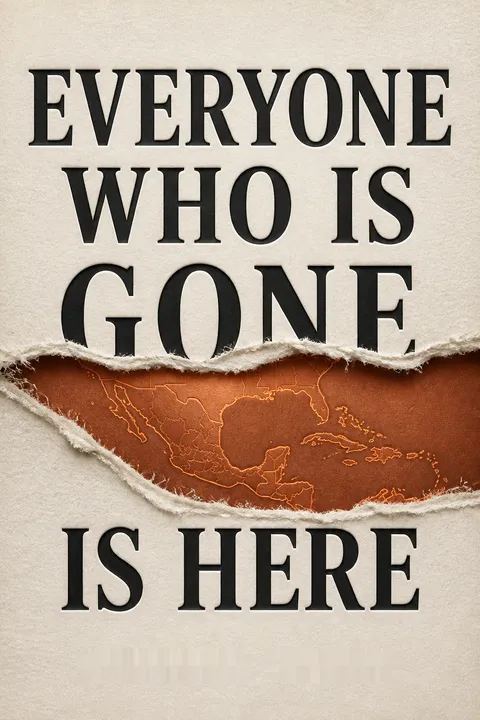
Everyone Who Is Gone Is Here is a comprehensive, meticulously researched book on Central American immigration to the US. Blitzer weaves personal stories with historical and political analysis, tracing the roots of the crisis to US foreign policy and internal conflicts. Readers praise its depth, empathy, and ability to humanize a complex issue. Some found it emotionally challenging and lengthy, but most consider it essential reading for understanding the current situation. The book covers decades of policy failures, violence, and the human cost of migration, offering no easy solutions but raising important questions.
People Also Read








Glossary
Refugee Act of 1980
US refugee and asylum lawA federal law that established a formal framework for refugee admissions and asylum in the United States. It defined a refugee as someone outside their country who cannot or will not return because of persecution, or a well-founded fear of persecution, tied to specified grounds such as religion, nationality, or political opinion. Its promise depended on how officials applied its standards.
Consequence Delivery System
Deterrence through penaltiesA US immigration-enforcement approach built on the assumption that delivering harsh consequences to people who cross the border will discourage others from attempting the journey. Measures described in the book include detention, expedited removal, and family separation. The system treats punishment as a deterrent, even when the conditions driving people to leave remain unchanged.
Sanctuary Movement
Faith-based refugee protectionA network of churches, clergy, volunteers, and legal advocates that sheltered Central American asylum seekers and helped them avoid deportation, particularly during the 1980s. Some participants provided housing, legal aid, or transportation; others organized congregations and public campaigns. The movement argued that US policy was returning refugees to persecution and that religious and civic communities had a duty to protect them.
Illegal Immigration Reform and Immigrant Responsibility Act of 1996
Expanded deportation and penaltiesA federal law that broadened the grounds for deporting immigrants, expanded detention and expedited removal, and restricted routes from undocumented status to lawful status. It also created three- and ten-year bars for some people who left the United States after accumulating periods of unlawful presence. The book presents it as a major structural shift toward mass deportation.
Temporary Protected Status
Temporary protection from removalA form of US immigration protection that can allow eligible people from designated countries to remain and work temporarily when conditions make return unsafe. It protects against deportation while the designation is active, but does not itself provide permanent residency or citizenship. Salvadorans affected by war and disasters received protection that was repeatedly renewed without a permanent resolution.
Migrant Protection Protocols
Asylum seekers wait in MexicoA US policy, also called Remain in Mexico, that returned certain asylum seekers to Mexico while their US immigration cases proceeded. People had to travel back to a US port of entry for court hearings and then return to Mexico to wait for the next date. The program exposed many to danger, long delays, and difficulty obtaining legal help.
Title 42
Public-health border expulsion authorityA provision of the 1944 Public Health Service Act that allows the government to restrict entry during a communicable-disease emergency. During the COVID-19 pandemic, the Trump administration used it to expel asylum seekers at the border, despite objections from public-health experts that the policy lacked a valid health rationale. The expulsions continued under the next administration.
promotores de salud
Community health promotersLocal residents trained to provide basic health services, nursing support, administration, and community outreach where medical care is scarce or mistrusted. At La Clínica del Pueblo, the model helped connect patients to doctors and clinics, including through translation. It drew on Juan Romagoza's experience in El Salvador, where community members helped deliver care during conflict.
FAQ
1. What is Everyone Who Is Gone Is Here by Jonathan Blitzer about?
- Comprehensive immigration crisis: The book examines the intertwined histories of the United States and Central America, focusing on how decades of US foreign and immigration policy have shaped migration, asylum, and humanitarian crises.
- Personal and political narratives: It weaves together the stories of migrants, activists, and policymakers with broader geopolitical and legal developments from the 1980s to the present.
- Historical and contemporary scope: The narrative covers Cold War interventions, civil wars, gang violence, and recent US policies like family separation and Title 42, showing their cumulative impact on migration patterns.
2. Why should I read Everyone Who Is Gone Is Here by Jonathan Blitzer?
- Humanizing migration: The book offers intimate portraits of migrants and asylum seekers, challenging readers to see beyond statistics and policies to the real human cost of immigration enforcement.
- Insight into US policy: It provides a detailed, critical examination of US immigration and foreign policy, revealing contradictions, failures, and the evolution of laws and enforcement strategies.
- Bridging perspectives: Blitzer presents the viewpoints of both migrants and US officials, fostering empathy and a nuanced understanding of the crisis’s complexity.
3. What are the key takeaways from Everyone Who Is Gone Is Here by Jonathan Blitzer?
- Interconnected histories: US foreign policy and immigration enforcement are deeply linked to Central American conflicts and migration patterns.
- Human cost of policy: Immigration laws and enforcement have profound, often devastating effects on individuals and families seeking safety.
- Activism and resistance: Grassroots movements like the Sanctuary Movement and legal challenges have played crucial roles in confronting injustice and influencing policy.
- Complexity and nuance: The book urges readers to move beyond simplistic narratives, recognizing the historical, political, and human complexities involved.
4. Who are the main individuals featured in Everyone Who Is Gone Is Here by Jonathan Blitzer, and why are they important?
- Juan Romagoza: Salvadoran doctor and torture survivor whose journey embodies the trauma of civil war and the fight for justice and asylum.
- Eddie Anzora: Salvadoran immigrant and entrepreneur whose experiences reflect the challenges of gang violence, deportation, and reintegration.
- Keldy Mabel Gonzáles Brebe de Zúniga: Honduran mother separated from her children under the Trump administration, representing the human impact of family separations.
- Lucrecia Hernández Mack and Myrna Mack: Guatemalan reformers and activists whose stories highlight the struggle against corruption, impunity, and political violence.
5. How does Jonathan Blitzer explain the historical roots of the Central American migration crisis in Everyone Who Is Gone Is Here?
- Civil wars and repression: The book details the Salvadoran civil war, Guatemalan genocide, and Honduran instability, emphasizing state-sponsored violence and US-backed military regimes.
- US interventions: It covers CIA-backed coups, military aid, and Cold War anti-communist policies that exacerbated violence and displacement.
- Mass displacement: These events created waves of refugees and asylum seekers, many of whom faced hostile immigration systems in the US and Mexico.
6. What is the Sanctuary Movement, and how is it portrayed in Everyone Who Is Gone Is Here by Jonathan Blitzer?
- Origins and purpose: The Sanctuary Movement began in the 1980s as a network of US churches and activists providing shelter and legal aid to Central American refugees fleeing violence.
- Key actions and figures: Activists like John Fife and James Corbett helped smuggle migrants, offered sanctuary, and challenged government deportations as a moral stand.
- Legal and political impact: The movement faced government crackdowns but raised awareness, influenced immigration law, and highlighted contradictions in US asylum policy.
7. How does Everyone Who Is Gone Is Here by Jonathan Blitzer explain the evolution of US immigration policy affecting Central Americans?
- Legislative milestones: The book covers the 1965 Immigration and Nationality Act, the 1980 Refugee Act, IRCA (1986), and IIRIRA (1996), showing how each shaped migration and enforcement.
- Policy contradictions: US asylum and immigration systems often excluded Central Americans, with high denial rates and restrictive interpretations of persecution.
- Enforcement escalation: Policies like mass deportations, Secure Communities, and the creation of ICE increased the scale and harshness of enforcement, often with unintended consequences.
8. What role do gangs like MS-13 and 18th Street play in the narrative of Everyone Who Is Gone Is Here by Jonathan Blitzer?
- Origins and spread: The book traces these gangs from their roots in Los Angeles to their transnational expansion, fueled by US deportation policies.
- Violence and community impact: Gang wars and territorial disputes have become dominant forces in both US and Central American communities, shaping the lives of young people and deportees.
- Policy responses: Aggressive policing and mass deportations often exacerbated gang violence, creating cycles of incarceration and migration.
9. How does Everyone Who Is Gone Is Here by Jonathan Blitzer portray the experiences of Central American asylum seekers and deportees?
- Legal obstacles: Asylum seekers face long delays, high denial rates, and a dysfunctional system that leaves many in limbo for years.
- Trauma and marginalization: Many carry scars of war, torture, and displacement, facing discrimination and exclusion in the US.
- Support networks: Organizations like La Clínica del Pueblo and activists provide crucial medical, legal, and social support to help refugees navigate these challenges.
10. How does Everyone Who Is Gone Is Here by Jonathan Blitzer address recent US immigration policies like family separation, Title 42, and the Migrant Protection Protocols?
- Family separation trauma: The book details the zero tolerance policy under Trump, which led to thousands of children being separated from their parents, causing lasting psychological harm.
- Title 42 expulsions: It explains how the Trump and Biden administrations used a public health law to expel asylum seekers during COVID-19, often without due process.
- Migrant Protection Protocols (MPP): The policy forced asylum seekers to wait in dangerous conditions in Mexico, leading to low approval rates and increased vulnerability.
11. What are the political and bureaucratic dynamics behind US immigration policy shifts, according to Everyone Who Is Gone Is Here by Jonathan Blitzer?
- Partisan pressures: The book shows how immigration became a “third rail” in US politics, with reform efforts repeatedly stymied by polarization and political calculations.
- Internal government conflicts: It reveals tensions between career officials and political appointees, with figures like Stephen Miller pushing hardline policies through bureaucratic maneuvering.
- Advocacy and resistance: Despite setbacks, advocates and some officials continued to push for more humane policies and legal protections for immigrants.
12. What are the best quotes from Everyone Who Is Gone Is Here by Jonathan Blitzer, and what do they mean?
- “Country of mine you don’t exist / you’re just my bad silhouette / a word that I got the enemy to believe.” — Reflects the erasure and contested identity experienced by displaced Central Americans.
- “Una cucharita de justicia” (“a small spoonful of justice”). — Captures the incremental but vital pursuit of justice through advocacy and storytelling.
- “The United States had become ‘the Wuhan of the Americas’.” — Highlights the tragic irony of US deportations spreading COVID-19 to Central America.
- “We can’t stop, but do we have any other choice?” — Expresses the moral resolve of sanctuary activists confronting unjust policies.
- These quotes: Illustrate the book’s themes of injustice, resilience, and the struggle for dignity amid political and humanitarian crises.
Download PDF
Download EPUB
.epub digital book format is ideal for reading ebooks on phones, tablets, and e-readers.








