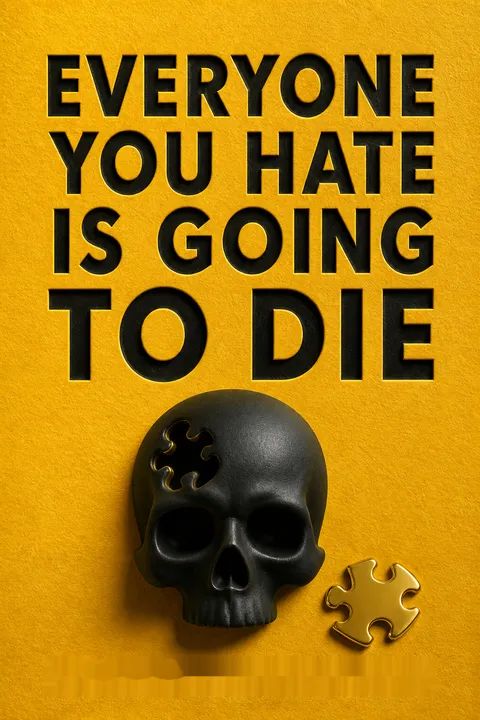


Key Takeaways
Do not preserve a dead relationship just to avoid a painful breakup.
A breakup hurts either way. Sloss says his stand-up special Jigsaw prompted more than 120,000 breakups, 350 canceled engagements, and 300 divorces, figures he delivers with comic bravado. The deeper point is moral rather than statistical: ending a relationship causes pain, but hiding that its future is gone prolongs the other person’s investment and delays recovery.
Choose honesty over delay. Sloss ended his first serious relationship, which had been loving and formative, because he wanted a different life. They both cried, but their grief did not prove the decision was wrong. A breakup can honor what was good while admitting that the relationship no longer fits. Avoiding pain today can mean wasting more of both people’s lives.
What's striking is the distinction between pain and harm. A breakup creates acute pain, while a prolonged, dishonest relationship can quietly consume years. Decision research often describes sunk-cost thinking: people keep investing because they have already invested, not because the future looks promising. The reported Jigsaw figures are compelling as testimony, not proof that a comedy special caused each separation. The practical test is simpler: assess the relationship's present and likely future, rather than treating past effort or anticipated guilt as a reason to stay.
Learn to enjoy your own company before choosing someone else.
Alone is not a waiting room. Sloss argues that a partner is not responsible for another adult’s happiness. He spent seven years single, enjoying the freedom to shape his own days, while also acknowledging that solitude can be difficult. Learning to live with oneself makes it harder for fear of being alone to dictate who gets a place in one’s life.
Do not confuse attention with fulfillment. He criticizes people who perform relationship happiness online, partly because such displays can make others believe a bad partnership is preferable to being single. His challenge is to build a life that feels worthwhile without a partner, then ask whether a relationship genuinely adds to it. Being single is not evidence of failure or a sign that one is waiting to be chosen.
This reframes independence as a condition for better judgment, not as a prize for people who reject intimacy. Attachment research supports the idea that secure relationships can coexist with autonomy: closeness need not require surrendering a separate identity. The more difficult nuance is that solitude is not equally accessible or pleasant for everyone. Disability, grief, depression, finances, and social exclusion can make isolation painful. The useful aim is not to celebrate loneliness, but to reduce panic-driven dependence and widen the sources of connection and support.
Choose love that expands your life, not a person to complete it.
A partner is not a missing half. Sloss once believed in finding a destined person, much as he once believed he would marry young. He now sees that story as a poor substitute for asking whether two actual people work well together. His parents offered a vivid counterexample to cynical dating: they bickered and disagreed, yet remained devoted. His father’s willingness to sacrifice for his family seemed less like a boast than an inconvenient fact of love.
Keep your own shape. Relationships change people in small ways. A partner might introduce a new hobby, while a breakup can return time and interests that had faded. Sloss’s test is not whether love makes life effortless, but whether being with someone feels worth the changes. A good relationship adds to a full person; it does not manufacture one from an empty space.
The contrast between completion and mutual influence is useful because it rejects both romantic fusion and detached self-sufficiency. In developmental psychology, close relationships can support exploration when people feel secure enough to remain distinct. That offers a sharper test than destiny: does this bond make each person more capable of being themselves? Sloss’s family example is emotionally persuasive, but one couple’s longevity cannot establish a universal standard. Different healthy partnerships express devotion differently, and sacrifice is meaningful only when freely chosen rather than demanded.
Recognize emotional abuse before its invisible damage feels like your fault.
Harm can leave no bruise. Sloss describes a relationship in which a partner criticized his past, weakened his confidence, and encouraged distance from people he loved. In public, she appeared kind and impressive, so friends praised her while he doubted his own experience. Emotional abuse can be difficult to recognize because its effects accumulate gradually and the person causing harm may also offer affection or reassurance.
Pay attention to shrinking. Sloss says the relationship left him apologizing for ordinary behavior and carrying its fear into a healthier partnership. He recommends taking seriously patterns of isolation, control, humiliation, and pressure to distrust one’s own judgment. A trusted friend or therapist can help restore perspective. If leaving could provoke retaliation, planning with informed support is safer than treating a clean break as a test of courage.
The account captures a central feature of coercive control: the damage is not only an individual insult, but a steady narrowing of someone’s social world and confidence in their own perceptions. Outside observers may see the charming public persona and miss the private pattern. The recommendation to notice isolation and self-censorship is therefore valuable. Still, leaving can be complicated by housing, money, children, or safety risks. A boundary is not a complete safety plan, and support should be tailored to the person’s circumstances.
Meet grief with honesty, not optimism that asks the bereaved to hurry.
Name the loss plainly. Sloss’s sister Josie had cerebral palsy and died when he was eight. He remembers her laugh and the joy his family took in making her happy. He also remembers how uncomfortable people became around death, sometimes trying to manage his reactions instead of letting him grieve. His advice is to acknowledge that a death is awful and stay present, rather than claiming to know exactly how the bereaved feels.
Do not turn grief into a contest. The person who has lost someone does not need another person to rank the loss, offer a quick silver lining, or insist that everything will be fine. Sloss finds comfort in mortality’s universality and in the fact that people matter deeply to one another even if the universe offers no promised afterlife. For a grieving friend, listening and companionship can be more useful than an explanation.
This is a strong account of emotional validation: support does not require solving a feeling, only recognizing that it makes sense. Bereavement research likewise distinguishes the presence of grief from a disorder; intense sadness is not automatically something to fix. The author’s directness gives readers language for an awkward moment. Yet no single response works for everyone. Some people welcome religious beliefs or practical reassurance. The safer principle is to follow the bereaved person’s cues, offer concrete help, and avoid making their loss a stage for someone else’s beliefs.
Let chosen family count, and set boundaries with harmful relatives.
Kinship is built through care. Sloss describes learning to protect younger siblings, while also admitting that fear after Josie’s death made him distant from his two younger brothers. Years later he apologized for how he had treated them. They barely remembered the incidents and considered him a good older brother, a reminder that guilt and another person’s experience may not match.
Blood is not a blank cheque. Sloss values the bonds siblings can create, but rejects the idea that family ties require tolerating cruelty. A close friend can fill a familial role through loyalty, guidance, and shared history. A relative who repeatedly harms someone may need distance, even if that means missing holidays or ending contact. The role people play in one another’s lives matters more than whether they share a family tree.
The chapter makes room for two truths that are often forced apart: family bonds can be formative, and family membership does not excuse abuse. The brothers’ different memories also show how guilt can become a private narrative that outruns the other person’s actual judgment. This does not mean every apology is unnecessary; repair still matters when harm is remembered. The broader lesson is to ask what a relationship is doing now, rather than assigning automatic moral priority to biology or treating distance as proof of disloyalty.
Make sex consensual and informed, not a test of worth or love.
Sex is not a prize. Sloss argues that sex education should explain desire, consent, and bodily autonomy, not only the dangers of pregnancy and disease. He compares sex to a game that is worthwhile only when both people want to participate. Past consent, suggestive clothing, or a previous sexual relationship does not create an obligation to say yes now.
Experience is a choice, not a score. As a young man, Sloss set himself a goal of sleeping with more than a hundred people, partly to compensate for insecurity and rejection. Around number 102, he recognized the goal as egotistical, even though the encounters had also brought genuine fun and connection. He distinguishes casual sex from lovemaking, while insisting that neither is morally superior. The essentials are mutual interest, respect, and honest expectations.
The strongest insight is the move away from sex as achievement and toward sex as shared activity. That framing helps expose coercion hidden inside familiar scripts about men pursuing and women granting access. His self-critique also complicates a simple celebration of sexual experience. However, accumulated experience cannot guarantee emotional maturity, compatibility, or freedom from curiosity, and a low number of partners is not a deficit. Consent and communication are more reliable measures of a healthy sexual life than any tally.
Keep friends who challenge you, and expect them to confront harm.
Good friends interrupt self-deception. Sloss’s friend Jean called out his selfish behavior when he treated her home and feelings as incidental while pursuing casual sex. He initially dismissed her criticism, then recognized that she was identifying a pattern he needed to change. Their friendship became stronger because it could hold both affection and uncomfortable truth.
Loyalty has moral limits. Sloss recounts a close male friend sexually assaulting a woman in their circle. The group believed her, cut the perpetrator off, and followed her lead on what support she wanted. They also reconsidered whether their own banter and tolerance of pushy behavior had helped create a culture where misconduct went unchecked. Friendship, in this account, means care in private, accountability in public, and refusing to protect a friend at another person’s expense.
This account challenges the assumption that rough humor and emotional restraint mean men lack empathy. The decisive evidence is conduct: the friends support the survivor and reject the perpetrator rather than hiding behind group loyalty. Jean’s earlier correction illustrates the same ethic at a smaller scale. Still, insight after harm does not erase the importance of noticing warning signs sooner. Accountability works best as a shared norm, not as a heroic intervention reserved for the moment after a serious violation.
Treat mental health as maintenance, not a contest in suffering.
Distress does not need a ranking. When the pandemic stopped Sloss’s live performances, he lost the audience feedback that had long supported his confidence. Time at home became a source of guilt rather than rest, and he began to recognize a downward spiral. He cautions against dismissing one’s own sadness because someone else has it worse. Pain is not a competition in which another person’s hardship cancels yours.
Use support before crisis. Sloss compares therapy to finding a fire in a house: the alarm may seem manageable until someone helps locate the source. He found a therapist who listened, asked questions, and helped him reflect. He also names talking with friends and exercising as possible supports, while admitting exercise remained unpleasant for him. His case for accessible therapy treats care as ordinary upkeep, not evidence of personal failure.
The pandemic story shows how external validation can become fused with identity when a career supplies both work and applause. Removing that structure exposes a person to inner criticism that success had been masking. The fire metaphor makes therapy legible as investigation, not instant repair. A useful qualification is that therapy is not the only route to support, and access remains uneven. Friends, community care, medication, and practical changes can all matter. The point is to take distress seriously without requiring a dramatic crisis first.
Love a country without treating its history as a defense brief.
Identity is more than birthplace. Sloss was born in England to Scottish parents, but was raised in Scotland and identifies with the place that shaped his life. His comic anger at England sits alongside affection for English friends and family. He connects the tension to Scottish political powerlessness, including the country’s votes for remaining in the European Union being outweighed in the wider UK result.
Admiration can survive criticism. Sloss also likes Americans’ warmth while criticizing the United States’ healthcare system, national self-image, and tendency to treat criticism as hostility. He argues that a country’s achievements do not erase its failures, and that affection should make honest scrutiny possible. His humor deliberately exaggerates national stereotypes, but beneath it is a useful distinction: criticize institutions and historical narratives without pretending every citizen is identical.
The chapter treats national identity as a relationship rather than a neutral label: belonging includes memory, culture, political power, and the experience of being heard or ignored. That makes the Scotland and England material more than teasing. The same standard applies to national pride: affection need not become denial. Comedy can puncture self-congratulation, though broad national caricatures can also flatten real differences. The strongest version of the argument targets institutions and myths while leaving room for varied citizens, regional histories, and divided loyalties.
Analysis
This book is a comic memoir organized around relationships, moving from romantic choices and family grief to sex, friendship, national identity, and the author’s experience of mental strain during the pandemic. Its governing tension is between a deliberately abrasive public voice and a more vulnerable private account. Sloss mocks idealized love, but his family’s devotion, his grief for his sister, and his dependence on close friends reveal that connection is not the enemy. The target is the belief that a relationship is automatically better than solitude, or that loyalty requires surrendering judgment.
The comedy is also a method of disclosure. Exaggerated certainty gives the reader permission to laugh before the author admits uncertainty, guilt, or fear. That device makes difficult topics approachable, especially death and emotional abuse. It also means readers must separate memoir from evidence. The relationship statistics attributed to Jigsaw are reported by the author, not presented as a controlled study. His claims about sex, national character, and what causes divorce reflect personal experience and comedic generalization, not universal rules. His own account of still being in an early, blissful relationship usefully complicates his confidence about what long-term love requires.
Some advice needs particular care. The book is right that a person is not responsible for staying in a coercive relationship to manage a partner’s behavior. But its suggestion to simply let a partner follow through on a suicide threat is unsafe as general guidance. Such threats should be taken seriously, while responsibility is transferred to crisis professionals, emergency services, or trusted supports rather than made the partner’s private burden. More broadly, the book is most valuable as a provocation: it asks readers to examine whether affection, fear, habit, and public performance are being mistaken for love. Its best test is not whether a relationship looks perfect, but whether the people in it can remain whole, honest, and safe.
Review Summary
Everyone You Hate is Going to Die received mixed reviews, with an average rating of 3.93 out of 5. Many readers found the book hilarious and insightful, praising Sloss's dark humor and clever analogies. However, some felt it was repetitive, lacking structure, and relied too heavily on crude language. Fans of Sloss's stand-up comedy generally enjoyed the book more, while others found it less engaging in written form. The book's content covers relationships, death, mental health, and cultural observations, often with a comedic twist that resonated with many readers.
People Also Read

Glossary
Jigsaw
Sloss’s relationship-focused specialJigsaw is Daniel Sloss’s stand-up special about love, commitment, and the possibility of staying in relationships that no longer work. In this book, Sloss says viewers credited the show with prompting breakups, canceled engagements, and divorces. It serves as the starting point for his argument that an outside perspective can help people reconsider a relationship they have been reluctant to leave.
the One
A destined perfect partnerThe One is the popular idea that each person has a single destined romantic partner who completes them. Sloss rejects the idea as a misleading standard that encourages people to treat love as fate or as proof that they are incomplete alone. He instead frames a good relationship as a choice between whole people who enrich one another’s lives.
FAQ
1. What’s "Everyone You Hate is Going to Die" by Daniel Sloss about?
- Comedian’s Take on Relationships: The book is a comedic exploration of relationships—romantic, familial, platonic, and even national—through the irreverent, brutally honest lens of Scottish comedian Daniel Sloss.
- Humor and Dark Honesty: Sloss uses dark humor and personal anecdotes to dissect the absurdities, challenges, and joys of human connection, including love, sex, friendship, and loss.
- Breaking Societal Norms: The book challenges conventional wisdom about love, happiness, and societal expectations, encouraging readers to question what they’ve been taught about relationships.
- Inspired by Stand-Up: Much of the book expands on themes from Sloss’s stand-up specials, especially "Jigsaw," which is infamous for causing thousands of breakups and divorces.
2. Why should I read "Everyone You Hate is Going to Die" by Daniel Sloss?
- Unique Comedic Voice: Sloss offers a refreshingly candid, often outrageous perspective on topics most people are too polite to discuss openly.
- Relatable and Cathartic: The book resonates with anyone who’s struggled with relationships, breakups, or societal pressure to conform.
- Encourages Self-Reflection: Readers are prompted to examine their own lives, relationships, and beliefs, often with a mix of laughter and discomfort.
- Not Just for Comedy Fans: While fans of Sloss’s stand-up will appreciate the book, its insights and humor are accessible to anyone interested in human behavior and modern life.
3. What are the key takeaways from "Everyone You Hate is Going to Die"?
- Self-Love Comes First: Sloss argues that happiness and fulfillment start with loving and understanding yourself, not relying on others to complete you.
- Question Relationship Norms: The book challenges the idea that being in a relationship is inherently better than being single, and warns against settling for mediocrity.
- Embrace Honesty and Humor: Facing life’s darkest or most awkward moments with honesty and humor can be liberating and healing.
- Toxicity and Boundaries: Recognizing and escaping toxic relationships—romantic or otherwise—is crucial for personal well-being.
4. How does Daniel Sloss define and approach relationships in "Everyone You Hate is Going to Die"?
- Relationships Are Not Obligations: Sloss rejects the notion that you must love or stay loyal to people just because of blood or history.
- Love Should Be Inconvenient: He believes true love is disruptive and inconvenient, not just a source of comfort or validation.
- Breakups Are Necessary: The book normalizes breakups and even celebrates them as acts of self-respect and growth.
- Friendship and Chosen Family: Sloss values chosen bonds over biological ones, emphasizing the importance of friends who challenge and support you.
5. What is the "Jigsaw" method or advice mentioned in "Everyone You Hate is Going to Die"?
- Jigsaw Analogy: Sloss’s "Jigsaw" is a metaphor for how people try to fit others into their lives to complete themselves, often forcing pieces that don’t belong.
- Breakup Catalyst: The "Jigsaw" stand-up special (and its philosophy) has inspired over 120,000 breakups and 300 divorces, as people realize they’re settling.
- Self-Completion: The core advice is to become a complete person on your own, rather than seeking someone else to fill your gaps.
- Wait for the Right Fit: Don’t settle for someone who only partially fits; wait for a relationship that genuinely complements your life.
6. How does Daniel Sloss address toxic relationships and emotional abuse in "Everyone You Hate is Going to Die"?
- Personal Experience: Sloss shares his own story of being in a toxic, emotionally abusive relationship, highlighting how subtle and damaging such dynamics can be.
- Manipulation Tactics: He describes common tactics of emotional abusers, such as isolation, gaslighting, and eroding self-worth.
- Escaping Toxicity: The book encourages readers to leave relationships that diminish them, regardless of guilt or fear.
- Not Your Responsibility: Sloss stresses that you are not responsible for fixing or saving toxic partners, especially if they threaten self-harm to manipulate you.
7. What does "Everyone You Hate is Going to Die" say about family, siblings, and childhood?
- Family Isn’t Sacred: Sloss challenges the idea that family bonds are unbreakable or always positive, advocating for boundaries with toxic relatives.
- Sibling Dynamics: He shares both heartfelt and darkly funny stories about his siblings, including the loss of his disabled sister, to explore grief and forced love.
- Only Children and Empathy: The book humorously claims only children are less empathetic, using sibling rivalry and protection as a lens for understanding love and loss.
- Parental Influence: Sloss credits his parents for shaping his worldview, but also pokes fun at the randomness and flaws of parenting.
8. How does Daniel Sloss discuss sex, gender, and modern dating in "Everyone You Hate is Going to Die"?
- Sex Positivity: Sloss advocates for a healthy, shame-free approach to sex, encouraging exploration and rejecting slut-shaming.
- Gender Stereotypes: He mocks outdated gender roles and highlights the importance of understanding the opposite sex, especially through friendships.
- Dating Apps and Hookup Culture: The book offers a comedic but insightful look at Tinder and the differences in dating experiences for men and women.
- Virginity and Experience: Sloss dismisses the idea that your "first time" is sacred, arguing that sexual experience is valuable for personal growth.
9. What are Daniel Sloss’s views on friendship, especially with the opposite sex, in "Everyone You Hate is Going to Die"?
- Value of Opposite-Sex Friends: Sloss believes having close friends of the opposite sex is crucial for personal development and empathy.
- Platonic Relationships: He debunks the myth that men and women can’t be just friends, using his friendship with Jean as a central example.
- Jealousy and Boundaries: The book discusses how romantic partners often feel threatened by these friendships, and why that’s a sign of insecurity.
- Chosen Family: Sloss elevates the importance of friends who challenge, support, and call you out, sometimes more than family.
10. How does "Everyone You Hate is Going to Die" use humor to address serious topics like death, grief, and mental health?
- Laughing at Darkness: Sloss uses dark, sometimes shocking humor to make taboo subjects like death and grief more approachable and less isolating.
- Personal Loss: He shares the story of his sister’s death and his own struggles with mental health, using jokes to process pain and connect with readers.
- Therapy and Self-Reflection: The book normalizes therapy and self-examination, often making fun of his own resistance and breakthroughs.
- Breaking Taboos: By joking about topics people usually avoid, Sloss encourages open conversations and emotional honesty.
11. What are the best quotes from "Everyone You Hate is Going to Die" and what do they mean?
- “Everyone you hate is going to die. But so will everyone you love, so maybe it’s not as comforting as I thought!” — Highlights the universality of death and the futility of holding grudges.
- “If your other half completes you, why on earth didn’t you try to fill that void yourself first?” — Challenges the idea of needing someone else to be whole.
- “You are not responsible for the happiness of other human beings.” — Emphasizes personal boundaries and self-care in relationships.
- “Love should be the most inconvenient thing in the world.” — Suggests that true love disrupts your life in profound, unexpected ways.
- “If you’re in a relationship with someone you don’t want to be with, allow me to try and inspire you to get out of it.” — Encourages readers to leave unfulfilling relationships for their own well-being.
12. How does "Everyone You Hate is Going to Die" address cultural and societal issues, including nationalism, America, and masculinity?
- National Identity and Banter: Sloss humorously explores Scottish identity, the love-hate relationship with England, and the absurdity of nationalism.
- Critique of America: He offers both affectionate and scathing observations about American culture, politics, and the myth of American exceptionalism.
- Masculinity and "Lads": The book examines male friendships, toxic masculinity, and the importance of emotional vulnerability among men.
- Societal Conditioning: Sloss critiques how society pressures people into relationships, marriage, and conformity, urging readers to question these norms and find their own path.
Download PDF
Download EPUB
.epub digital book format is ideal for reading ebooks on phones, tablets, and e-readers.








