

Key Takeaways
Tell the story that lets a stranger recognize your humanity
Story creates a meeting. Twelve-year-old Khosrou, called Daniel in Oklahoma, invites the reader into his life as if speaking to the king in the Persian tales of Scheherazade. In those tales, a storyteller survives by keeping a listener engaged. At school, Daniel faces mockery, bullying, and suspicion that his memories are invented. Instead of reducing his family’s flight to a brief account of refugee hardship, he tells about candy, bad jokes, a beloved grandfather, and fear. The ordinary details make a distant life legible without making it simple.
Listening changes the exchange. When Daniel’s father visits Mrs. Miller’s class, he speaks little English, but his humor and the baklava he shares give the students a way to join his world. Their differences do not disappear. For a moment, they meet as people rather than stereotypes.
The book treats attention as a moral act: a listener who stays for the details can no longer keep the speaker at the safe distance of a category. That resembles narrative empathy, the idea that encountering a particular person’s inner life can complicate abstract judgments. Yet storytelling should not become a test refugees must pass to deserve welcome. Daniel’s wit and vividness invite connection, but the burden of proving humanity belongs to the audience, not to the person under suspicion.
Treat memory as a stitched account, not a courtroom transcript
A memory can change shape. Daniel’s earliest image of his grandfather is a bull being slaughtered, blood on the old man’s hands, and a smile directed at the child. Daniel believes the bull was killed for a feast celebrating him, and feels responsible for its death. Years later, his mother corrects the account: the bull had become dangerous, and killing it was a mercy. The feast was real, but it was made with a sheep, and his grandfather would have washed before touching him.
The feeling remains. Daniel cannot verify every image, but his mother confirms the grandfather’s affection. The book’s author’s note makes the method explicit: the narrative draws on childhood recollection and family interviews, with some names changed and timelines adjusted. Emotional conviction and factual certainty are not identical.
This is a useful distinction for memoir and family history. Memory is reconstructive: people recall through fragments, later knowledge, and repeated retellings. That does not make every remembered detail false, nor does sincerity guarantee accuracy. Daniel’s revision models a more careful response than either blind belief or dismissal: retain the affection, revise the circumstances, and admit what cannot be known. The reader is asked to respect memory without treating it as documentary evidence.
Exile steals ordinary inheritance before it steals a homeland
Loss arrives in small objects. Before exile, Daniel’s life in Isfahan includes a house with birds, jasmine in the garden, family visits, and a father who brings home Orich candy bars. After his mother’s conversion puts the family in danger, they flee Iran without the father, their home, or most possessions. They pass through Dubai and an Italian refugee camp before settling in Oklahoma. Daniel loses not only a country, but languages, familiar food, time with grandparents, and the unremarkable certainty of knowing where he belongs.
A new name has a price. In Dubai, his mother begins calling him Daniel because English speakers cannot pronounce Khosrou. The practical solution feels to him like his old self has been discarded. He decides the new name must make him tougher, but adaptation does not restore what migration has taken.
Displacement is often discussed through borders and legal status, while this account shows its intimate scale: a child’s food words, routines, and family jokes become difficult to carry across languages. Sociologists describe belonging as something built through repeated interactions, not merely declared by citizenship. Daniel’s experience makes that visible. Still, a new identity is not necessarily a betrayal of the old one. The challenge is to recognize adaptation as both resourcefulness and loss, rather than demanding that a refugee choose only one description.
Measure a culture by how it treats the person asking for help
Hospitality reveals power. Daniel explains tarof, a Persian practice of elaborate courtesy through which hosts and guests repeatedly offer and decline respect, food, and help. In his memory, a guest should be treated as an honor, with the host apologizing for having too little to offer. In Oklahoma, he sometimes goes hungry at school rather than endure the public shame of an empty lunch account. In the refugee system, his mother faces agents who demand forms that frightened applicants may not understand.
Dignity is part of aid. The Italian camp feeds residents, but serves hot dogs as a reminder that they should get used to food from elsewhere. A young refugee, Ali Shekari, refuses to eat. The book contrasts these moments with people who help, including a librarian and an Oklahoma couple who sponsor Daniel’s family.
The contrast is sharp because it concerns more than material generosity. A meal or a form can either preserve a person’s agency or turn assistance into humiliation. This connects to the distinction between charity and rights: charity depends on a giver’s discretion, while a rights-based system treats access as an obligation. The book’s cultural contrasts should not be read as a simple ranking of nations. It also shows generous Oklahomans and cruel Iranians. The more durable question is what power permits people to do to those who need them.
Let family legend illuminate gaps without pretending it fills them
Stories carry what records miss. Daniel inherits accounts of ancestors, Persian kings, poets, and his great-grandmother Aziz. Some details are family testimony; others are his own imaginative additions. He invents a librarian who might have loved Aziz, then admits that the only family account says she and a lover tried to kill her husband. The imagined romance gives shape to a lonely woman’s life, but it cannot be passed off as established fact.
History has competing versions. Daniel uses Persian epics and the 1,001 Nights to interpret family suffering, while also showing how stories change with each teller. His relatives remember events differently, and a child’s account may mistake, compress, or embellish what happened. The result is not a clean family record. It is a layered account of what people remember, what they inherit, and what they wish they knew.
Family legends can make the past emotionally accessible, especially when archives are unavailable or painful subjects are kept quiet. They also shape identity, giving descendants a vocabulary for courage, betrayal, and belonging. The ethical strength here is the narrator’s willingness to mark invention instead of disguising it as evidence. That distinction matters: imaginative reconstruction can reveal a question or a longing, but it cannot settle what happened. Readers can value the meaning of a family story while keeping its factual status in view.
Judge love by its care, not the sacrifices it claims to justify
Romance can become an excuse. In the Persian legend of Khosrou and Shirin, Khosrou’s jealousy helps destroy Farhad, a rival who carves a path through a mountain to reach Shirin. The king’s claim to love does not prevent him from manipulating and harming others. Daniel uses the tragedy to question the idea that a dramatic sacrifice proves devotion. Love also requires restraint, attention, and choices that do not make another person pay for one’s desire.
Family love is tested by conduct. Daniel’s father can be funny, generous, and beloved, yet he leaves his children in Iran and later returns to his separate life. Ray teaches Daniel martial arts but abuses his mother. The book refuses to let affection or past kindness erase harm. A person can contain tenderness and failure at once, but the vulnerable still need protection.
The account separates intensity from care. Romantic plots often reward obsession as proof of devotion, while Daniel’s retelling asks what that obsession costs everyone outside the central couple. This resembles an ethics of care, where love is judged through attention to dependency and consequences, not declarations alone. The same standard clarifies family relationships without flattening them into villains and heroes. Compassion for a person’s history may explain behavior, but explanation is not absolution, especially when violence places others at risk.
Turn conviction into motion before fear makes waiting feel like life
Belief becomes action. Daniel’s mother, Sima, converts from Shiite Islam to Christianity despite the danger to her family. When the secret police arrest her, she refuses to identify the underground church members. After her release, she has a week to decide whether to cooperate. The family eventually escapes through a series of improbable openings, including her husband’s connection to a government official whose tooth he treats.
Waiting is not the only response. In Italy, Sima sees the refugee camp’s hopeless routine and finds an American family willing to let her children study. She and her children complete a year’s worth of workbooks in roughly forty school days by reusing and erasing completed books. Her persistence does not guarantee success; it turns a narrow chance into a route forward.
Sima’s determination is compelling because it is practical, not merely inspirational. She seeks papers, schooling, and safety, then works within imperfect openings. Research on resilience often emphasizes protective relationships and material resources alongside individual coping. The narrative supports that fuller view: courage matters, but so do the people who offer shelter, education, or a chance to escape. Celebrating persistence should not imply that people who remain trapped simply lack resolve. Her agency is remarkable, and the conditions around her are unjust.
Refusing to join cruelty is not enough when silence protects the cruel
Bystanders shape the harm. Daniel’s classmates bully him, while other children laugh or look away. In Italy, an old man asks Daniel to warn the town if the refugees from Hotel Barba approach. The children in the town accept the instruction until Daniel realizes the people being called dangerous are the people he lives with. These scenes make prejudice ordinary: it travels through jokes, assumptions, and small acts of exclusion, not only through open violence.
Attention creates responsibility. Daniel asks the reader to imagine not only the person doing harm, but also the person who sees it and chooses not to intervene. His father’s visit to school offers a different scene: Mrs. Miller welcomes him, and his humor and shared food let the class meet him directly. Listening does not repair every injustice, but it interrupts the habit of seeing strangers as categories.
The book’s moral lens extends beyond perpetrators to the social permission that makes cruelty easy. This aligns with research on bystander behavior: people often look to others for cues, and shared responsibility can dissolve into everyone waiting for someone else to act. The narrative counters that drift by making the witness visible. Still, intervention is not equally safe for everyone, and the refugee child in Italy has little power over adults. The practical lesson is to assess risk honestly, then use whatever influence is available rather than confusing discomfort with neutrality.
Let hope promise repair without pretending the wounds were imaginary
The ending revises, not erases. After years of holding onto the bull as proof of his grandfather’s love, Daniel asks his mother what truly happened. She corrects the scene but confirms the affection: his grandfather would have made a feast and welcomed him. The memory is less literal than Daniel believed, yet it still carries a real bond. Later, Daniel’s father brings back Mr. Sheep Sheep, the stuffed animal Daniel had left behind, damaged but recognizable.
Hope faces the unfinished. Daniel’s family remains divided, and the grandfather is gone. Still, the adult narrator has a son named for him, giving the lost relationship a place in a new generation. The title’s promise is not that suffering was harmless. It is a faith that pain can be answered by love, justice, and a future that does not repeat every loss.
Hope here is neither a cheerful gloss nor a guarantee that every wound receives visible repair. It is a commitment to imagine a moral future large enough to judge the present, while still naming what happened. That structure appears in religious hope, restorative justice, and intergenerational storytelling: the past remains real, but it does not get exclusive authority over what comes next. The book’s faith claim is personal rather than universally demonstrable. Readers need not share it to recognize the practical force of refusing to let despair define the only possible ending.
Analysis
Everything Sad Is Untrue is a literary memoir told through the unstable, comic, and sometimes painful perspective of a child. Its organizing device is not a conventional chronology but the act of remembering: family stories, Persian epics, school humiliations, food, violence, and sudden digressions accumulate until the reader understands why the narrator insists on telling them. The apparent disorder is purposeful. A refugee’s life does not arrive as a tidy report, and the book asks whether a listener can remain present without demanding a simplified account.
Its deepest tension is between memory as evidence and memory as inheritance. Daniel’s version of the bull changes when his mother supplies another account, yet the correction does not make his love for his grandfather fraudulent. The book thereby avoids two easy conclusions: that recollection is perfectly reliable, or that uncertainty makes every account worthless. Its author’s note reinforces the distinction between remembered experience and verifiable history. The narrative is trustworthy partly because it identifies its gaps and inventions.
The book also refuses a clean moral division between cultures. Iran offers deep traditions of hospitality and poetry, but also state violence and patriarchal power. Oklahoma contains xenophobia and humiliating bureaucracy, but also teachers, librarians, and sponsors who offer real kindness. This complexity prevents the story from turning either country into a symbol. Its sharper critique is directed at behavior: who is welcomed, who is believed, who is made to beg, and who acts when another person is harmed.
The title is best read as a hope, not a factual claim that suffering disappears. The narrator’s faith imagines eventual justice, while the memoir preserves the losses that make such hope necessary. Its lasting argument is that stories cannot undo exile or restore a dead relative, but they can make indifference harder. To listen closely is to let another person become more than the role assigned to them.
Review Summary
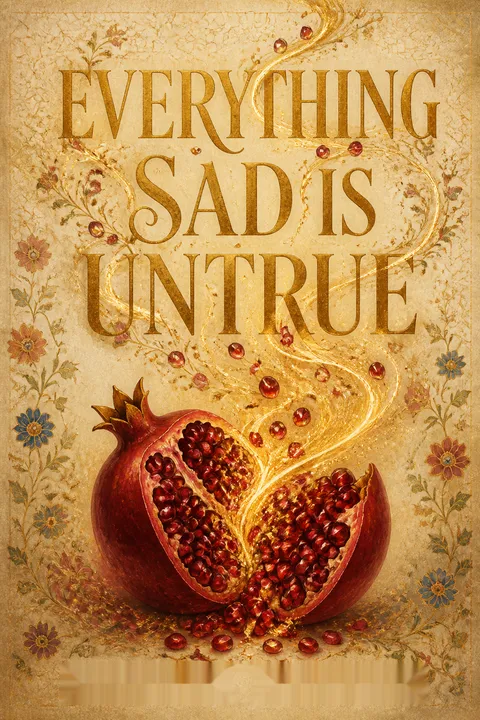
Everything Sad Is Untrue is a powerful memoir by Daniel Nayeri about his journey from Iran to Oklahoma as a refugee. The book blends Persian storytelling with personal experiences, exploring themes of identity, family, and belonging. Readers praise Nayeri's lyrical prose and unique narrative structure, though some found it challenging to follow. Many consider it a beautifully crafted, emotional work that offers insight into the refugee experience and the power of storytelling. While marketed as young adult fiction, its complexity may resonate more with adult readers.
People Also Read








Glossary
tarof
Courtesy through repeated offersTarof is a Persian etiquette of elaborate politeness in which people offer, decline, and reoffer hospitality or assistance to show respect. In Daniel’s examples, a host urges a guest to accept food, while the guest initially refuses rather than appear demanding. The practice depends on shared cultural understanding; without that context, an offer or refusal can be misread.
mazloom
A pitiful, wronged personMazloom describes someone seen as wronged, vulnerable, or pitiable, often prompting a desire to comfort or protect them. Daniel’s family uses it affectionately for him as a child, especially when he looks close to tears. The word also carries a sharper implication of victimhood, which Daniel sometimes resists because he does not want others to reduce him to suffering.
sayyed
A claimed prophetic descendantIn the book’s account of Shiite Iran, a sayyed is a person understood to descend from the Prophet Muhammad’s family. Daniel explains that this lineage carries religious significance and social privileges. His mother and father are both sayyeds, making his mother’s conversion especially shocking to relatives and authorities who view the change as a rejection of inherited religious identity.
najis
Ritually impure or pollutedNajis means ritually impure in Islamic religious vocabulary. Daniel describes how some people in Iran applied the term to converts, treating them as contaminating or vile rather than simply as people with different beliefs. In his family’s story, the label marks the social and spiritual exclusion his mother faces after leaving Islam.
dastan
Story or storylandDastan is a Persian word for a story or tale. Daniel also uses it to describe the imaginative world created by storytelling, where a local hero can become a legendary figure through a poet’s telling. The term links Persian literary tradition to his larger idea that stories preserve, reshape, and pass on a people’s memory.
finigonzon
Beautiful girl or boyFinigonzon is a word from the private language Daniel says he invented as a young child. He remembers it as meaning a beautiful girl, with a related form for a beautiful boy. The word becomes part of his playful vocabulary for attraction and beauty, while also recalling how language changes as he moves between Iran, Italy, and the United States.
Persian flaw
A deliberate rug imperfectionThe Persian flaw is Daniel’s name for the intentional imperfection said to be woven into a Persian rug as a reminder that only God can be perfect. He uses the idea as a metaphor for human limits and the tangled errors in family history. The book complicates the metaphor by observing that real lives contain many flaws, not just one small, chosen imperfection.
patchwork memory
Recollection assembled from fragmentsPatchwork memory describes recollection built from incomplete personal memories, family testimony, and imagined connective details. Daniel uses the idea to explain why a refugee’s account may not resemble a complete archival record. The term acknowledges gaps and contradictions without declaring the whole story false, and it encourages readers to distinguish remembered experience from confirmed fact.
FAQ
What is Everything Sad Is Untrue about?
- Refugee experience, identity formation: The book chronicles Khosrou/Daniel's journey as an Iranian refugee adapting to life in America, focusing on his struggle to reconcile his Persian identity with his new American surroundings.
- Storytelling as survival: It explores how Khosrou uses storytelling to make sense of his experiences, connect with others, and preserve his cultural heritage in the face of displacement and prejudice.
- Family, faith, and resilience: The narrative delves into the complexities of Khosrou's family relationships, their unwavering faith, and their remarkable resilience as they navigate the challenges of being refugees in a foreign land.
Why should I read Everything Sad Is Untrue?
- Unique narrative voice: Daniel Nayeri's distinctive writing style blends humor, vulnerability, and philosophical musings, creating a captivating and thought-provoking reading experience.
- Exploration of identity: The book offers a nuanced and insightful exploration of identity, belonging, and the challenges of navigating cultural contrast, making it relevant to readers from diverse backgrounds.
- Celebration of storytelling: It celebrates the power of storytelling to heal, connect, and preserve cultural heritage, reminding readers of the importance of sharing their own stories and listening to those of others.
What is the background of Everything Sad Is Untrue?
- Iranian history and culture: The story is deeply rooted in Iranian history, culture, and mythology, providing readers with a glimpse into a rich and complex world often misunderstood in the West.
- Religious persecution: The family's flight from Iran is driven by religious persecution, highlighting the challenges faced by minority religious groups in certain parts of the world.
- Refugee experience: The book sheds light on the realities of the refugee experience, from the bureaucratic obstacles and cultural adjustments to the emotional toll of displacement and loss.
What are the most memorable quotes in Everything Sad Is Untrue?
- "All Persians are liars and lying is a sin.": This quote, presented early in the book, encapsulates the prejudice and misunderstanding Khosrou faces, setting the stage for his exploration of truth, storytelling, and identity.
- "A patchwork story is the shame of a refugee.": This poignant line captures the fragmented nature of Khosrou's memories and the challenges of piecing together a coherent identity in the wake of displacement.
- "You don't get to choose what you remember.": This quote speaks to the involuntary nature of memory and the power of the past to shape the present, highlighting the themes of loss, identity, and the search for meaning.
What writing style, narrative choices, and literary techniques does Daniel Nayeri use?
- Fragmented and non-linear narrative: Nayeri employs a fragmented and non-linear narrative structure, mirroring the disjointed nature of memory and the refugee experience, creating a sense of immediacy and authenticity.
- Metafiction and self-awareness: The author frequently breaks the fourth wall, addressing the reader directly and reflecting on the act of storytelling itself, blurring the lines between fiction and reality.
- Humor and vulnerability: Nayeri masterfully blends humor and vulnerability, using wit and self-deprecation to explore difficult themes and connect with readers on an emotional level.
Hidden Details & Subtle Connections
What are some minor details that add significant meaning?
- The recurring mention of Orich candy bars: These chocolate-covered coconut candies become a symbol of Khosrou's lost childhood and the tangible reminders of his life in Iran, highlighting the things that cannot be replicated in America.
- The description of Oklahoma's Red River: The contrast between the name and the actual appearance of the river symbolizes the gap between expectations and reality, mirroring Khosrou's experience as a refugee in America.
- The significance of the clown doll with baggy pants: This seemingly insignificant toy represents Khosrou's attempt to hold onto his memories and cultural identity, even in the face of adversity, as he hides his candy in its pockets.
What are some subtle foreshadowing and callbacks?
- Early mentions of Ray's temper: Seemingly casual remarks about Ray's anger foreshadow the later revelation of his abusive behavior, creating a sense of unease and building tension throughout the narrative.
- Recurring references to the story of Khosrou and Shirin: These allusions foreshadow the tragic nature of love and relationships in the book, highlighting the themes of betrayal, loss, and the complexities of human connection.
- The initial description of Aziz as a "happy mazloom girl": This early characterization foreshadows the tragic events that befall her later in life, creating a sense of foreboding and highlighting the theme of innocence lost.
What are some unexpected character connections?
- The parallel between Khosrou and Master Moon's student: Both Ray and the student at Master Moon's gym experience physical hardship and violence, highlighting the theme of resilience and the search for strength in the face of adversity.
- The connection between Aziz and Scheherazade: Both women use storytelling as a means of survival, highlighting the power of narrative to shape reality and resist oppression.
- The mirrored experiences of Khosrou's parents: Both Sima and Khosrou's father experience a sense of loss and displacement, highlighting the theme of exile and the challenges of adapting to a new world.
Who are the most significant supporting characters?
- Ellie (Khosrou's grandmother): Her exile to England and subsequent mental health struggles highlight the lasting impact of trauma and displacement on individuals and families.
- Ray (Khosrou's stepfather): His abusive behavior and complex backstory serve as a catalyst for conflict and highlight the challenges of navigating family relationships in the wake of trauma and displacement.
- Pastor Hamond: He represents the well-meaning but often misguided attempts of the American Christian community to reach out to refugees, highlighting the complexities of cultural exchange and religious conversion.
Psychological, Emotional, & Relational Analysis
What are some unspoken motivations of the characters?
- Sima's need for control: Her strict adherence to routines and her determination to provide for her children may stem from a need to regain control after experiencing trauma and displacement.
- Khosrou's father's desire for connection: His frequent phone calls and storytelling may be driven by a desire to maintain a connection with his children and preserve his cultural heritage in the face of separation.
- Ray's need for validation: His obsession with martial arts and his desire to impress Khosrou may stem from a deep-seated need for validation and a desire to overcome his own past trauma.
What psychological complexities do the characters exhibit?
- Khosrou's identity confusion: He grapples with the challenges of reconciling his Persian heritage with his new American identity, leading to feelings of alienation and a search for belonging.
- Sima's survivor's guilt: She may experience guilt and self-blame for the events that led to her family's displacement, driving her determination to provide for her children and make their sacrifices worthwhile.
- Ray's internalized trauma: His abusive behavior may be a manifestation of his own past trauma and a way of exerting control over his environment.
What are the major emotional turning points?
- The slaughter of the bull: This event marks a loss of innocence for Khosrou and introduces the themes of violence, death, and the complexities of tradition.
- Sima's conversion to Christianity: This decision sets the stage for the family's flight from Iran and underscores the theme of faith as a source of both conflict and strength.
- The divorce of Khosrou's parents: This event shatters Khosrou's sense of stability and highlights the challenges of navigating family relationships in the wake of trauma and displacement.
- The arrival of Mr. Sheep Sheep: This gift from Khosrou's father is a symbol of love and connection, but its damaged state also represents the brokenness and loss that permeate Khosrou's life.
How do relationship dynamics evolve?
- Khosrou and Sima: Their relationship evolves from one of dependence to one of mutual support and understanding, as Khosrou comes to appreciate his mother's strength and sacrifices.
- Khosrou and Ray: Their relationship is marked by tension and conflict, but also by moments of connection and understanding, as Khosrou grapples with his feelings towards his abusive stepfather.
- Khosrou and his sister: Their relationship is complex and often fraught with conflict, but also characterized by a deep bond of loyalty and shared experience, as they navigate the challenges of being refugees together.
Interpretation & Debate
Which parts of the story remain ambiguous or open-ended?
- The true nature of Ray's feelings towards Khosrou: It is unclear whether Ray genuinely cares for Khosrou or if his actions are driven by a need for control and validation.
- The extent of Sima's agency in her relationships: It is debatable whether Sima is a strong and independent woman or a victim of circumstance, forced to make difficult choices in a patriarchal society.
- The ultimate meaning of Khosrou's journey: It is left to the reader to interpret whether Khosrou's story is one of triumph over adversity or a cautionary tale about the lasting impact of trauma and displacement.
What are some debatable, controversial scenes or moments in Everything Sad Is Untrue?
- The depiction of Ray's abuse: Some readers may find the depiction of Ray's abuse to be gratuitous or exploitative, while others may see it as a necessary portrayal of the realities faced by many refugees.
- Sima's decision to convert to Christianity: Some readers may view Sima's conversion as a betrayal of her cultural heritage, while others may see it as an act of personal liberation and spiritual awakening.
- The portrayal of American culture: Some readers may find the portrayal of American culture to be overly critical or stereotypical, while others may see it as a nuanced and insightful commentary on the challenges faced by immigrants in a new land.
Everything Sad Is Untrue Ending Explained: How It Ends & What It Means
- Khosrou's acceptance of his fragmented identity: The ending suggests that Khosrou has come to terms with the fragmented nature of his memories and the complexities of his identity, embracing his Persian heritage while also finding a place for himself in America.
- The enduring power of storytelling: The final lines emphasize the importance of sharing stories and connecting with others, suggesting that storytelling is a way to heal, unite, and preserve cultural heritage in the face of adversity.
- The possibility of hope and healing: Despite the sadness and loss that permeate the narrative, the ending offers a glimmer of hope, suggesting that it is possible to find meaning and connection in the midst of trauma and displacement.
About the Author
Other books by Daniel Nayeri
Download PDF
Download EPUB
.epub digital book format is ideal for reading ebooks on phones, tablets, and e-readers.








