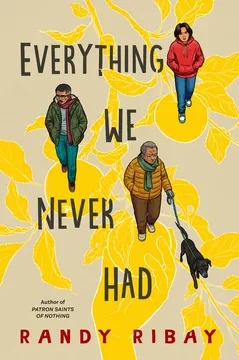


Plot Summary
A Promise in the Fog
Francisco Maghabol1 leaves the Philippines after his father gambles away the family land and abandons his wife and children. As the eldest son,1 Francisco1 expects to work in America for several years, send money home, and buy the land back. Instead, in Watsonville, California, he earns about a dollar a day picking fruit, while growers and contractors deduct the cost of food, tools, and lodging from his pay.
Aboard the same ship, he befriended Lorenzo,5 a thoughtful Ilokano immigrant who hopes to study law. Now the two young men work side by side in the fog. Francisco1 nearly asks Lorenzo5 whether he regrets coming, but cannot bring himself to name his own doubt.
Francisco's migration begins as an act of care, but the labor system makes that care difficult to deliver: each deduction separates his work from the family it is meant to support. His silence with Lorenzo is not a lack of feeling. It is a survival tactic learned in a world where hope has repeatedly been sold as certainty. The opening also places the novel's central question inside a practical dilemma: when duty requires leaving, what does a person owe to the people left behind?
A Room Given Up
In Philadelphia, sixteen-year-old Enzo4 helps his parents, Chris3 and Julia,7 roll lumpia during winter break. His father3 raises the possibility of bringing home Enzo's estranged grandfather,2 Emil,2 after a doctor warns that a new virus could spread through the retirement community where Emil2 lives. Enzo4 agrees, though he knows Chris3 and Emil2 share a history of anger and avoidance.
As cases spread, Emil2 accepts the move, and Enzo4 gives up his carefully arranged bedroom so his grandfather2 can have it. When Chris3 and Emil2 arrive, Emil2 brings Thor,11 his elderly rescue dog, and immediately dismisses Enzo's4 chosen name in favor of an older one. Enzo4 welcomes the dog anyway, hoping its presence might make a tense family arrangement easier to bear.
Enzo's consent is sincere but not entirely free: family obligation is treated as a moral duty, while the cost of fulfilling it falls first on his private space. His willingness to accommodate Emil reflects the Filipino concept of utang na loob, gratitude and debt carried within family relationships. Yet the opening also shows why obligation alone cannot produce intimacy. Emil arrives with habits of dismissal, Chris with old resentment, and Enzo with anxiety that makes each uncertainty feel immediate. Thor offers a small, wordless possibility of connection.
A Touchdown Without Applause
In 1983, Chris3 plays high school football despite his father2 Emil's2 preference for schoolwork and control. Chris3 scores a winning touchdown, but Emil2 leaves to warm the car instead of celebrating with him.
Soon afterward, Emil2 has the coach remove Chris3 from the team because Chris3 has missed an essay about ancestral history. Chris3 resents the punishment and initially tries to defy his father2 by wasting the library hours imposed on him. There he meets Becs,10 a Filipino student from the Philippines, who challenges him to think about why he claims his family has no history.
Her question stings because Chris3 knows little about the country his father2 refuses to discuss. He begins researching, finding a subject that turns punishment into a path toward answers.
Chris's rebellion is self-defeating because he has learned to express anger through withdrawal rather than direct refusal. Football gives him a rare arena where skill can be seen, but his father's absence after the winning play confirms Chris's belief that achievement will not earn emotional recognition. Becs interrupts that loop by directing his attention toward curiosity. The essay becomes more than a school task: it gives Chris a way to approach an inheritance his father has kept at a distance, even as he remains unsure whether that knowledge will bring them closer.
The Son of a Firebrand
In 1965 Stockton, Emil2 works long hours at his aunt Carmen's15 Subic Bay Café and studies whenever he can. He believes security comes from education, discipline, and keeping his distance from Francisco's1 labor activism.
A teacher recognizes Emil's2 talent in mathematics and offers him a chance to advance, but he forges his father's1 signature rather than risk another argument. At school, white students mock him for being the son of an organizer,2 while Sammy Bautista12 invites him to help form a Filipino Student Union.
When Francisco1 returns and asks Emil2 to join him in Delano, he says he is proud of his son's2 mind and urges him to use his education for the community. Emil2 hesitates, then agrees to make the trip after his cousin threatens his job.
Emil's ambition is not simple selfishness. He has watched poverty make his family dependent on others, so professional success feels like protection against humiliation and instability. Francisco's activism, by contrast, seems to Emil to expose the family to consequences without securing their future. The conflict is sharpened by the different forms of care each man recognizes: Emil trusts provision and upward mobility, while Francisco argues for collective responsibility. Emil's forged form and eventual decision to travel show a young man testing independence without yet knowing what kind of belonging he wants.
The Letter Across the Ocean
As Francisco1 works the orchards, organizer Pablo13 asks him to join a campaign against growers who underpay workers. Francisco1 refuses, convinced that workers divided by language and fear cannot unite; that night, Pablo13 is beaten, and Francisco1 finds his body the next morning.
Francisco1 later receives a letter from his sister Carmen:15 their mother is ill, Carmen15 has left school to help support the family, and no money has arrived. The news forces Francisco1 to face how little his American wages have accomplished.
Meanwhile, the white dance partner he hoped to see is forbidden by her father from returning. Francisco1 meets Beatriz,6 Mang Carlos's sharp-minded daughter, and their companionship offers a different kind of closeness. Then her family leaves town, and Francisco1 again considers going home.
The letter makes distance measurable. Francisco can no longer treat sacrifice as an idea when his mother is sick and his sister has lost her schooling. His inability to send money complicates his self-image as the responsible eldest son, while Pablo's murder shows the personal danger of challenging the system that keeps workers poor. Beatriz offers recognition without turning Francisco into a symbol or a provider, but migrant life makes even that bond provisional. Each loss narrows his imagined future, and the question of whether to return becomes more urgent than the hope that America will eventually repay him.
Walks Around the Hive
When Philadelphia closes schools and public spaces, Enzo's4 anxiety intensifies as he follows the pandemic online and worries about Emil2 crowding the family's home. Kyle8 tells him not to dismiss his own distress just because others are suffering more.
Enzo4 keeps asking Emil2 to let him join Thor's11 walks; eventually the dog chooses to stay beside Enzo,4 and Emil2 allows him along. Their quiet walks gradually become conversations about family, loneliness, and Emil's2 own father.1 Enzo4 then persuades Chris3 to join them, hoping the three generations can share that opening.
Instead, Chris3 and Emil2 fight over Chris's3 choices and Emil's2 controlling behavior. Enzo4 withdraws from the walks, stops attending therapy, and sinks into doomscrolling as pandemic suffering and anti-Asian attacks fill his screen.
The walks demonstrate that intimacy can begin without confession: shared attention to a dog, neighbors, and a changing street gives Enzo and Emil a low-pressure way to be together. Enzo's attempt to turn that fragile bond into a repair project for his father and grandfather exceeds what a teenager can control. Their fight makes his anxiety worse, but it also reveals a generational pattern: men who have never learned to speak vulnerably can turn an invitation into a contest over authority. Enzo's retreat is not indifference. It is exhaustion from carrying responsibilities that belong to the adults.
A Paper His Father Rejects
Chris's library research leads him from Ferdinand Marcos's rise to martial law, political imprisonment, and the 1983 assassination of opposition leader Benigno Aquino. The evidence makes him question why his schools and father2 taught him so little about Filipino history.
He tries sharing what he learns with Emil,2 who dismisses the subject and insists Chris3 is not Filipino. A memory clarifies the wound beneath Emil's2 certainty: when Francisco1 died, Emil2 refused to attend the funeral, and Chris3 chose not to go either, afraid of upsetting his father.2
Now Chris3 tries to explain why history matters and why he may study it in college. Emil2 rejects his paper and ambition. Chris3 leaves rather than submit, resolving that any children he has will be allowed to know their history and choose their own lives.
Research gives Chris a vocabulary for what he has experienced at home: omission can be an inheritance as powerful as stories passed down. His father's rejection is not only about Marcos or a college major. It repeats Emil's effort to protect his family by narrowing their choices to what he believes will guarantee safety. Chris sees that a father's material provision can coexist with emotional deprivation. His decision to leave the roof is a small but meaningful break from the silence he once used as rebellion; he begins to imagine fatherhood as guidance without control.
The Son in Coachella
Emil2 reaches Delano intending to find Francisco1 and possibly persuade him to abandon the strike. While waiting at the Filipino Hall, he listens to Lola Mar describe how the United States promised wartime Filipino allies citizenship and benefits, then denied them.
Her account unsettles Emil's2 belief that hard work alone explains who succeeds. Later, card players tell him that Francisco1 recently arrived with a boy named Sergio and introduced him as his son. Emil2 realizes his father1 has another child, and that his mother knew.
He calls her, hears that the family planned to tell him eventually, and hangs up in anger. Emil2 boards the bus back to Stockton, deciding he will finish school, leave for college, and stop reaching for a father1 he no longer trusts.
Lola Mar's story disrupts Emil's faith in assimilation by showing that effort cannot make an unjust promise fair. Yet the decisive blow comes from his father's concealed family, which recasts Francisco's absences as personal betrayal as well as political commitment. Emil is not simply rejecting activism; he is withdrawing from a relationship in which he feels that everyone else knew the truth before he did. His planned escape resembles his father's migrations in one respect: both men imagine distance as a way to regain control. The difference is that Emil believes he is choosing a future, not abandoning one.
The Fourth Night
In Watsonville, white mobs attack Filipino workers after they gather to dance with white women. Lorenzo5 urges Francisco1 to stay away, but after three nights of repeated violence, Francisco1 joins the men going to the dance hall. On their way back, a mob ambushes the group and beats them. Francisco1 survives, but Lorenzo5 had gone looking for him and is found dead.
Francisco1 blames himself and heads for the railway, intending to leave America for good. As a northbound freight train passes, he remembers Lorenzo's5 argument that staying is itself a refusal to be driven out. Francisco1 lets the train go. He decides to remain in the country and continue fighting, though he will define that struggle on his own terms.
Francisco's decision is born from grief, not triumph. The violence makes clear that simply surviving does not mean the workers are safe, and Lorenzo's death leaves Francisco with a guilt he cannot reason away. At the tracks, leaving would restore the imagined family duty that brought him across the ocean, but it would also concede that the mob can decide who belongs. Staying does not repair his losses or promise victory. It gives his grief a direction, turning a private failure into a commitment to resist the conditions that made his friend vulnerable.
A Leash Passed Forward
By May, Enzo4 has shut out friends, schoolwork, and therapy. Kyle8 comes to his window and reminds him that he cannot force two grown men to change, though he can leave room for them to try. That night Enzo4 overhears Chris3 confronting Emil2 about the failed walk and Enzo's4 worsening mental health.
Chris3 argues that sensitivity is not weakness and admits that his own father2 never gave him the emotional understanding he wants to give Enzo.4 Emil2 leaves for the retirement home several days later, but entrusts Thor11 to Enzo.4
The family misses the old man's presence even as Enzo4 reclaims his bedroom. When Enzo4 invites Chris3 on a walk, Chris3 accepts. At the disputed intersection, he lets Enzo4 choose the direction, and they continue together in an easy silence.
The resolution does not make the family whole by forcing reconciliation. Emil leaves, and his relationship with Chris remains unresolved; what changes is that Chris begins speaking about the love he has struggled to express, while Enzo stops treating repair as his personal assignment. Thor's leash carries a practical responsibility and a bond between generations, but it cannot substitute for conversation. The final choice of direction matters because Chris yields control to his son. Their quiet walk suggests a different inheritance: not perfect understanding, but the willingness to remain present and let another person lead.
Analysis
Everything We Never Had arranges four generations of Maghabol men so that family conflict can be read as inherited behavior rather than isolated temperament. Francisco's1 migration, labor organizing, and losses shape Emil's2 conviction that security depends on disciplined work and emotional restraint. Emil's2 control then narrows Chris's3 choices, while Chris's3 difficulty speaking openly leaves Enzo4 to infer what the adults feel. The chain is not destiny: each generation receives the consequences of earlier choices, but also the possibility of responding differently.
The book's historical strands make private wounds inseparable from public forces. Francisco's1 poverty is not simply a test of character; it is produced by racial exclusion, wage theft, and violence. Chris's research into Marcos and Aquino similarly shows how political history can be absent from a family's daily conversation while still determining what its members know about themselves. The novel resists both romanticizing sacrifice and treating assimilation as a clean escape. Education and financial stability can protect a family, but they cannot by themselves create trust or restore what was lost. Masculinity is presented as a learned practice, often confused with control, stoicism, and provision. The men inherit an idea that love means preventing hardship, yet they struggle to express love as curiosity about another person's inner life. Enzo's4 sensitivity exposes the cost of that confusion. His anxiety is not a flaw that the family must eliminate; it is a form of attention made painful by the belief that he must answer every crisis himself.
The resolution remains deliberately partial. Emil2 leaves the household, and the earlier generation's conflict is not neatly settled. What changes is the immediate pattern: Chris3 speaks more honestly, Enzo4 relinquishes responsibility for repairing everyone, and father3 and son4 choose a walk together. Their progress rests not on a perfect apology or a solved history, but on making room for another person's direction.
Review Summary
Everything We Never Had receives widespread praise for its masterful multi-generational storytelling, following four generations of Filipino-American men across nearly a century. Readers consistently highlight Ribay's ability to weave historical context seamlessly into deeply human character studies exploring generational trauma, masculinity, and father-son relationships. Many found the book deeply personal and emotionally resonant, frequently mentioning tears. Minor criticisms include the COVID setting feeling unnecessary for some, pacing that occasionally felt rushed, and a conclusion some found slightly underwhelming. Overall, most consider it essential, culturally important reading.
Characters
Francisco Maghabol
Migrant eldest sonFrancisco leaves the Philippines as a teenager to earn money for the family his father abandoned. He is dutiful, proud, and deeply alert to the gap between America's promises and the life its Filipino laborers are allowed to build. His early understanding of manhood rests on sacrifice and provision, but poverty and racism repeatedly frustrate those aims. He is also drawn to friendship, pleasure, and love, though migration makes every attachment feel temporary. Francisco's story asks what responsibility means when the person trying to fulfill it cannot control the conditions around him. His belief in community develops in tension with his private longing to return home.
Emil Maghabol
Ambitious, guarded sonFrancisco's1 son and Chris's3 father, Emil grows up poor in Stockton while his father1 is often away organizing workers. He becomes disciplined, mathematically gifted, and determined to escape the insecurity he associates with field labor and activism. Emil values education and financial stability because they promise protection, but he often mistakes emotional restraint for strength. His distrust of his father's1 choices shapes how he parents Chris3 and how he approaches Enzo4. Emil is neither simply an antagonist nor a reliable guide: he provides materially, carries old injuries, and struggles to understand care that cannot be measured in security or success.
Chris Maghabol
Teacher seeking another wayChris is Emil's2 son and Enzo's4 father, a middle school teacher whose interest in history conflicts with the engineering career his father2 wanted for him. As a teenager, he experiences Emil's2 high expectations as control and learns to hide disappointment rather than risk another argument. He loves his family, yet often finds himself unable to speak about emotions directly. Chris's interest in Filipino history helps him see how silence about the past shapes the present, while fatherhood gives him a chance to reconsider what protection should mean. His instincts are compassionate, even when habit makes him hesitate or withdraw.
Enzo Maghabol
Anxious family bridgeEnzo is Chris3 and Julia's7 only child, a thoughtful teenager managing anxiety with help from a therapist16 and the support of friends. He pays close attention to other people's feelings, sometimes so closely that he takes responsibility for problems he cannot solve. His Filipino and Puerto Rican family traditions give him a strong sense of connection, but also make obligation feel heavy. Enzo's curiosity and emotional openness contrast with the guarded habits of the men before him. He wants to make the world better, yet struggles to accept that caring does not mean he can control every outcome.
Lorenzo
Francisco's steady companionLorenzo is an older Ilokano immigrant who travels and works alongside Francisco1. Educated and thoughtful, he hopes to attend college and build a life in America. He offers Francisco1 companionship without demanding easy answers and thinks carefully about the risks of resisting racist violence. Lorenzo's perspective gives Francisco1 a counterweight to his own impulsiveness: survival, belonging, and resistance do not always point in the same direction.
Beatriz
Sharp-eyed Filipino daughterBeatriz is Mang Carlos's daughter, a Filipina-Mexican young woman who has grown up among migrant workers. Independent-minded and observant, she challenges Francisco's1 assumptions about romance, gender, and the different ways Filipino men try to survive in America. Her humor is direct, but it does not conceal her seriousness about the limits placed on women. She sees people as individuals rather than symbols of a cause or a family's future.
Julia Maghabol
Enzo's grounded motherJulia is Chris's3 wife and Enzo's4 mother, a university scholar who combines warmth with a practical understanding of family strain. She helps welcome Emil2 into the home while recognizing that the arrangement will be difficult. Julia supports Enzo's4 emotional needs and knows Chris's3 anger is still present even when he tries to hide it. Her steadiness does not mean she can resolve the tension between father2 and son3 for them.
Kyle Sardo
Enzo's frank best friendKyle is Enzo's4 athletic, sociable friend, usually more relaxed about uncertainty than Enzo4 is. He notices when Enzo4 is spiraling and challenges him when he minimizes his own feelings. Kyle offers companionship without pretending to have a cure, and his willingness to return after periods of silence reminds Enzo4 that friendship can include imperfection and repair.
Hazel Young
Chris's candid friendHazel is Chris's3 close friend, a perceptive student who speaks plainly when he excuses his father's2 behavior or sabotages his own chances. She understands the pressure of being Black in a mostly white school and recognizes racism that Chris3 has learned to shrug off. Her loyalty is affectionate but never indulgent; she expects Chris3 to admit what he wants instead of hiding behind indifference.
Rebecca Sales
Filipino history catalystKnown as Becs, Rebecca is a student from the Philippines who recognizes the distance between Chris's3 family roots and his limited knowledge of them. She does not treat shared ethnicity as automatic intimacy, and she is willing to challenge Chris3 when he makes assumptions. Her presence directs him toward questions about history, political exile, and identity while preserving her own boundaries.
Thor
A bridge on four pawsThor is Emil's2 elderly black rescue dog, a steady presence in a household where the people struggle to speak openly. His walks give Emil2 and Enzo4 a reason to spend time together without demanding immediate conversation. Thor's needs are ordinary and concrete: a leash, a route, attention, and care. Those routines make space for the family to notice one another.
Sammy Bautista
Student organizer and photographerSammy is a Filipino student at Emil's2 school who helps organize a Filipino Student Union and uses photography to document community life. Outgoing and ambitious, he sees value in Filipino people and history that Emil2 has learned to overlook. His friendship offers Emil2 a glimpse of belonging that does not require abandoning academic ambition.
Pablo
Labor organizerPablo is a young organizer who urges Filipino and other farmworkers to recognize their shared power against growers. He speaks with conviction and presses Francisco1 to reconsider a life built around accepting low wages. His arguments introduce Francisco1 to collective resistance as a possible response to exploitation.
Linda Maghabol
Chris's perceptive motherLinda is Emil's2 wife and Chris's3 mother. She understands that Emil's2 distance from his father1 contains unresolved pain, and she encourages the children to make their own choices about family. Her warmth gives Chris3 a different model of parental attention, though she cannot undo the silence between Emil2 and his son3.
Auntie Carmen
Café owner and pragmatistEmil's2 aunt runs the Subic Bay Café and offers him work, shelter, and a model of upward mobility. She believes that success comes through discipline and assimilation, and she regards Francisco's1 activism as needless risk. Her certainty helps shape Emil's2 early view of his father1 and of what a secure life should look like.
Dr. Mendoza
Enzo's therapistDr. Mendoza helps Enzo4 identify how anxiety feels in his body and develop ways to manage it. He encourages Enzo4 to explore deeper patterns rather than treating self-care as a quick fix. His steady, nonjudgmental approach gives Enzo4 language for feelings that the men in his family struggle to discuss.
Plot Devices
Utang na loob
Family debt made tangibleThe Filipino concept of utang na loob, a debt of gratitude and obligation carried within the heart, shapes Enzo's4 agreement to let Emil2 move in. It also frames how generations understand care: Francisco1 sends money toward home, Emil2 values the provision he lacked, and Enzo4 tries to honor family while recognizing the cost to his own well-being. The idea functions as both bond and burden. It explains why characters keep showing up for one another, but the novel also asks whether gratitude can become a demand for silence or self-erasure.
Murder hornets
Anxiety given a shapeEnzo4 imagines ordinary anxiety as a nest of buzzing hornets, with especially intense periods as more dangerous insects emerging from it. The metaphor lets him notice and communicate physical distress without treating it as a defect to be fixed. As the pandemic and family tension grow, the image also conveys how worries multiply when he feels responsible for suffering he cannot control. His therapist's16 support and Enzo's4 walks offer ways to live with the anxiety, rather than pretending it can be eliminated.
Inherited silences
History hidden inside familyThe novel's shifts among Francisco1, Emil2, Chris3, and Enzo4 reveal that each generation inherits not only stories but omissions. Chris's school research and Emil's2 childhood memories expose how political history, migration, poverty, and family injury shape choices long after the original events. The changing perspectives prevent any one man's account from explaining the whole family. Each generation knows only part of what came before, and that partial knowledge affects how they interpret love, duty, and masculinity.
The evening walks
Conversation without pressureThor's11 daily walks give Emil2 and Enzo4 a routine in which they can share space before they know how to share feelings. Attention to the dog11 and the neighborhood lowers the pressure to perform intimacy, allowing personal history to surface gradually. When Chris3 joins, the same walk reveals how unresolved conflict can disrupt a fragile connection. The route is not a cure or a symbolic shortcut to reconciliation. It is a repeated opportunity to listen, and its meaning changes depending on whether the walkers allow one another room.
Chris's history project
Research opens a locked pastChris's3 assignment about ancestral history sends him to the library to study Ferdinand Marcos and Philippine political history. The work gives him a route toward understanding Becs10, his own Filipino heritage, and the history Emil2 has avoided discussing. Research does not make Chris3 an authority on lived experience, and he becomes aware of the limits of what he can know. It does, however, show him that ignorance is produced by institutions as well as by family silence, and it gives him a concrete reason to challenge his father's2 narrow definition of success.
Download PDF
Download EPUB
.epub digital book format is ideal for reading ebooks on phones, tablets, and e-readers.








