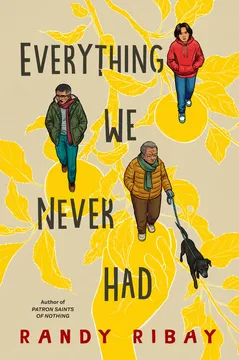


Plot Summary
The Orchard in Fog
In 1929, sixteen-year-old Francisco Maghabol picks apples in Watsonville, California, measuring every day against the promise that brought him from the Philippines: work for a few years, send money home, and recover his family’s lost land. Instead, growers pay little, charge workers for necessities, and leave him with barely enough to live on.
His closest companion, Lorenzo, shares the same labor camp but imagines a future in America, while Francisco still expects to return to his mother, sister, and younger brothers. His father’s earlier abandonment has made Francisco wary of men who leave their families, even as he has crossed an ocean to do just that. In the orchard fog, he begins to wonder whether duty can justify the distance.
Francisco’s migration begins as a practical act of care, but the novel immediately shows how easily necessity can become self-accusation. He measures his worth by money he cannot save and by a home he cannot reach, while the labor system converts his body into a resource and his family into a distant obligation. His father’s departure supplies a private wound beneath the public hardship: Francisco fears repeating abandonment even as he believes leaving is the only way to provide. The orchard’s fog is not simply atmosphere. It expresses the uncertainty between sacrifice and escape, a question Francisco cannot settle by working harder.
The Harvest Takes Its Cut
During the apple season, Francisco meets Pablo, a labor organizer who argues that workers of different backgrounds could resist the growers together. Francisco doubts that scattered crews can unite, and he refuses to attend Pablo’s meeting. That night, workers beat Pablo; by morning, Francisco sees his body in a ditch and keeps walking to the orchard.
When the season ends, deductions for food, shelter, tools, and the contractor’s share leave Francisco with almost no savings, so he cannot send money home. The loss gives weight to Pablo’s warning, but not yet to his proposed solution. Francisco and Lorenzo stay in Watsonville to seek other work, while Francisco privately wonders whether his plan is failing before it has even begun.
Pablo’s death makes exploitation visible as organized force rather than an unfortunate byproduct of poverty. Francisco’s silence protects him from immediate danger, but it also implicates him in a system whose violence he has learned to survive by not witnessing. The pay deductions sharpen the same lesson economically: workers produce abundance yet cannot retain enough to support themselves, much less their families. Pablo’s vision of solidarity therefore arrives with a cost Francisco can see but cannot yet accept. His hesitation is not cowardice in any simple sense. He is weighing collective action against the concrete risks of losing even the little income he has.
A Letter Across the Sea
A letter from Francisco’s sister, Carmen, reaches the camp after months of travel. She reports that their mother’s health is failing, the younger boys need care, and Carmen has left school to help support the family.
Her account makes clear that Francisco’s promised remittances have not arrived. At the same time, he loses Milly, the white dance partner he had begun to imagine might share his future, after her father forbids her to return to the hall.
He grows close to Beatriz, Mang Carlos’s daughter, who challenges his assumptions about the men around them and about women’s limited choices. When anti-Filipino danger rises, her family leaves town. Their departure leaves Francisco facing the same migratory uncertainty that has already separated him from home.
The letter collapses the distance Francisco has used to make his sacrifice bearable. Until it arrives, he can imagine that his family is waiting safely for the money he will eventually send; Carmen’s details reveal that waiting itself has become costly. His losses in California echo this rupture. Milly represents a future he had not admitted wanting, while Beatriz offers recognition without pretending the world is fair. Both connections are vulnerable to forces beyond individual affection, including racist control over interracial relationships and the danger of simply being Filipino. Francisco’s life is shaped by promises of return, yet each new bond makes leaving more complicated.
Watsonville Turns Violent
When a white mob surrounds the dance hall, Filipino workers and the women dancing with them face clubs, guns, and a police response that offers little protection. Lorenzo urges Francisco to stay away during the nights of attacks, but Francisco joins the dancers on the fourth night, unwilling to let the mob dictate where he can go. The men are ambushed on their walk home.
Lorenzo has gone out searching for Francisco and is found beaten to death. Francisco blames himself, then runs toward a passing train, ready to abandon America. He stops before boarding, remembering Lorenzo’s insistence that remaining in the country could itself be resistance. Francisco stays, deciding to fight for the life his friend cannot continue.
The riot converts the novel’s earlier abstractions into bodily consequences: a dance becomes a target, the authorities’ inaction becomes part of the violence, and Francisco’s choice has an irreversible price. His guilt over Lorenzo’s death is emotionally understandable but not factually just; the mob, not Francisco, chose to kill. Yet grief makes responsibility feel personal because Francisco had defied Lorenzo’s caution and survived. The train offers a literal exit from both danger and shame. By not boarding, he does not discover a clean solution. He accepts that belonging may require resisting those who deny it, while carrying the cost of that decision.
A Future Without Fields
In 1965 Stockton, Francisco’s teenage son Emil works at his aunt Carmen’s café and studies whenever he can, hoping to build a life beyond the fields. His math teacher recognizes his talent and offers him a chance to advance, but Emil forges his father’s approval rather than risk another argument over education.
At school, a white student trips and humiliates him, then mocks Francisco’s organizing. Sammy Bautista invites Emil to help form a Filipino Student Union, but Emil refuses, wary of drawing more attention to himself.
At home, Francisco turns Emil into an example during a labor meeting, praising their community’s unity while Emil feels used as a symbol. Emil wants opportunity, but he has learned to associate his father’s cause with instability and public exposure.
Emil’s ambition is genuine, but it has been shaped by a racial bargain: he hopes that achievement and assimilation will make him harder to dismiss. His teacher’s praise offers possibility while also separating him from the field workers, as if intelligence could exempt him from a shared history. Emil’s refusal of Sammy’s invitation is therefore more than shyness; it is a defense against being defined by his father. Francisco, meanwhile, sees community as the condition of survival and uses Emil’s presence to make that future tangible. Their conflict begins because each man sees a different danger: exclusion for Francisco, entrapment for Emil.
Delano's Broken Promise
Francisco invites Emil to see the grape strike forming in Delano, but Emil hesitates until his cousin Leon threatens his café job if the organizing costs the family business. On the bus south, Emil meets Sammy, who plans to photograph the workers’ campaign.
At the Filipino Hall, an elderly woman named Lola Mar tells Emil how the United States promised Filipino guerrillas citizenship and benefits, then denied them after the war; her story unsettles the explanations of failure Emil has learned.
But when Emil finally reaches the workers, a card player tells him Francisco has another son, Sergio, from a relationship in Coachella. Emil calls his mother, discovers she knew, and returns to Stockton furious. His interest in the movement collapses into a plan to leave for college and make his own life.
Lola Mar’s history disrupts Emil’s belief that hard work and assimilation reliably earn security. Her experience reveals broken promises as policy, not personal failure, and briefly makes his father’s activism legible. The revelation about Sergio then turns that new respect into betrayal: Francisco’s public devotion to community sits beside private absences and undisclosed family ties. Emil’s anger is not merely a rejection of labor politics. It is a response to discovering that his father’s moral authority has concealed choices that affect his own family. His decision to leave resembles Francisco’s migration, but Emil frames departure as self-protection rather than rescue.
The Touchdown Is Not Enough
In 1983 Denver, Emil’s son Chris finally gets a chance to prove himself on the football field. He scores the winning touchdown, but his father leaves before the celebration, and Chris has to ride home with his friend Hazel and her father. Soon after, Emil removes him from the team over a missing history essay, despite Chris’s strong performance and his effort to keep his grades up.
Sent to the library after school, Chris meets Becs, a Filipino student newly arrived from the Philippines. She questions his claim that his family has no history and points him toward the assignment he has been avoiding. Chris begins researching Ferdinand Marcos, discovering that the paper might connect him to a past his father has chosen not to explain.
Chris’s football success and Emil’s response crystallize a painful mismatch: Chris wants recognition for what he can do, while Emil treats achievement as conditional on discipline and future security. The winning play does not alter the family pattern because Chris has learned to hide his hurt rather than risk asking for care. Becs interrupts that habit by challenging his ignorance without reducing him to it. Her questions open a route from personal frustration to historical inquiry. The library becomes an alternative arena: unlike football, it lets Chris pursue an interest that his father cannot easily control, even though the consequences of that pursuit remain uncertain.
The Past Comes Due
With help from a librarian, Chris studies Marcos’s martial law, corruption, and attacks on political opponents. A news recording of Benigno Aquino’s 1983 assassination makes the research immediate, but when Chris asks Emil about it, his father dismisses the crisis in the Philippines.
Chris completes an ambitious paper and tries to share what he has learned. Emil refuses to read it, insists Chris is not really Filipino, and warns that history is useless compared with practical subjects.
Chris finally leaves rather than submit to another lecture. A remembered conversation about Francisco’s funeral helps explain Emil’s distance: he had refused to take his children to bury a father he considered absent, and Chris had learned to protect Emil’s feelings by staying silent.
The research gives Chris language for a history his father has treated as irrelevant, but knowledge does not produce instant intimacy. The assassination footage exposes the stakes of political silence; Emil’s dismissal repeats that silence inside the family. Chris’s discovery that his father rejected the funeral of Francisco clarifies how grief and resentment have been passed down as rules about what must not be discussed. His departure from the rooftop is a small but consequential refusal of self-sabotage. He cannot make Emil listen, yet he can stop confusing obedience with love and begin to claim the history that Emil tried to leave behind.
A Room Lost to Care
In late 2019, sixteen-year-old Enzo helps his parents make lumpia when his father, Chris, raises the possibility of bringing Emil home from his retirement community. A new virus threatens older residents, so Emil eventually moves into the family’s Philadelphia house with his dog, Thor.
Enzo gives up his bedroom, though the change is especially difficult because he has carefully arranged the room as a refuge from anxiety. Emil’s criticisms and habits strain the household, while the pandemic closes schools and keeps the family indoors.
Enzo tracks infection reports compulsively, feels his anxiety intensify, and worries that resenting Emil makes him selfish. He has learned to call severe anxiety murder hornets, but his usual coping tools no longer quiet the swarm.
Enzo’s consent to Emil’s move is shaped by family obligation, but consent does not erase the cost of displacement. His lost room represents a carefully built method of self-regulation, so the arrangement threatens more than comfort. The pandemic expands this private disruption into a world Enzo cannot monitor or repair, and his habit of comparing his distress with larger suffering leaves him ashamed of needing help. The murder-hornet metaphor gives him a vocabulary for anxiety without implying that naming it will control it. Enzo is caught between caring for a vulnerable elder and recognizing that care can unsettle the caregiver.
Walks Around the Block
After several refusals, Emil allows Enzo to join his evening walks with Thor. At first Emil uses Enzo mainly to handle the dog’s messes, but the repeated walks gradually become a place for conversation. Emil describes his childhood in Stockton, his absent father, his engineering career, and his loneliness after losing loved ones.
Enzo shares his anxiety, friendship with Kyle, and difficulty talking deeply with Chris. Emil admits that he and Chris never learned to speak openly, a pattern inherited from Francisco. Enzo sees that his grandfather’s harshness has roots without excusing its effects. Believing they might begin to change the pattern together, he asks Emil and Chris to take a walk as a family.
The walks offer a form of intimacy that does not depend on confrontation. Side by side, with Thor setting the pace, Emil and Enzo can exchange histories without demanding immediate confession or agreement. Their stories revise each other’s impressions: Enzo sees the loneliness beneath Emil’s control, while Emil recognizes that Chris’s emotional reserve is not a simple character flaw. The generational pattern becomes understandable as learned behavior, not destiny. Enzo’s invitation to include Chris is hopeful but also reveals his tendency to assume responsibility for repair. The walks teach him connection is possible; they do not yet teach him where his responsibility ends.
The Walk Falls Apart
Chris joins Enzo and Emil for an evening walk, but the three struggle to speak naturally. When Emil and Chris clash over the route and over Chris’s resentment, old anger breaks through: Chris accuses his father of controlling the family, while Emil calls him ungrateful.
Enzo becomes overwhelmed and the walk ends without repair. He stops walking with Emil, withdraws from Kyle, skips schoolwork and therapy, and spends his days scrolling through pandemic deaths and anti-Asian attacks.
Kyle eventually visits Enzo’s house and speaks to him through the window. He apologizes for disappearing himself, then reminds Enzo that two grown men’s relationship is not his to fix. Enzo hears the limit in that advice and begins to reconsider his role in the family’s conflict.
The failed walk demonstrates that proximity and good intentions cannot substitute for emotional skill. Chris and Emil are not simply unwilling to talk; each hears the other through accumulated injury, so even a change of route becomes charged with older struggles over control and autonomy. Enzo’s collapse follows because he has treated their reconciliation as a task he can manage. The pandemic’s relentless news gives his helplessness a global scale, while racist attacks make the danger personal to his wider community. Kyle’s intervention does not solve Enzo’s family problems. It restores proportion: caring about the men does not make him responsible for changing them.
The Porch After Midnight
One night Enzo overhears Chris and Emil talking outside. Chris insists that both men contributed to the disastrous walk and that Enzo needs support, not judgment. Emil resists apologizing to a child, then asks whether his efforts to provide food, education, and safety were not love.
Chris distinguishes material care from the deeper work of knowing a child and allowing him to become himself. He admits Emil did not give him that kind of understanding, though he had been repeating patterns inherited from Francisco.
Hurt by the conversation, Emil decides to return to the retirement home. Enzo joins Chris after Emil leaves, and Chris tells his son that his sensitivity is a strength. Father and son share a tenderness Chris has struggled to express.
The porch conversation brings the family’s central conflict into focus without making either man a simple villain. Emil understands love through provision because deprivation taught him that material security is decisive. Chris can value that labor and still name what it could not replace: emotional recognition and freedom from imposed expectations. The distinction is psychologically important because it allows gratitude and hurt to coexist. Enzo overhearing the exchange receives a form of affirmation that his father had not managed to give directly. Emil’s decision to leave shows that insight does not instantly dissolve defensiveness. The conversation opens a door, but neither man can force the other through it.
Thor Finds a Home
Before Emil returns to the retirement home, Chris sends Enzo an article that holds environmental damage and signs of recovery together, and Enzo answers with an unexpected expression of affection. Three days later, Emil leaves with Thor, but he gives the dog’s leash to Enzo, trusting grandson and pet to care for each other.
The house feels emptier, and Enzo rebuilds his bedroom around the chair and plant that once helped steady him. He takes Thor out alone, then invites Chris to join them. Chris puts down his cigarettes and comes along. At the intersection where Emil and Chris once fought over the route, Chris asks Enzo which way he wants to go. Enzo’s mind is quiet for the moment, and the choice is his.
The ending offers neither a complete reconciliation nor a clean return to the family’s earlier arrangement. Emil leaves because the shared home remains difficult, yet entrusting Thor to Enzo preserves a bond that the move might otherwise sever. The dog becomes a practical inheritance of companionship, not a symbolic cure. Chris’s willingness to walk with Enzo marks a change in conduct: he accepts his son’s invitation without redirecting it or turning it into a lesson. The final choice of route matters because Enzo is no longer tasked with steering the adults toward resolution. He can choose a direction for himself, while the family’s larger repair remains open.
Analysis
Everything We Never Had treats masculinity not as a single inherited trait but as a set of survival strategies that change as conditions change. Francisco answers racist exclusion with collective action, yet his organizing competes with the care his family needs. Emil responds to deprivation by pursuing education and financial security, then mistakes control for protection. Chris recognizes the emotional damage of that approach but still struggles to speak openly. Enzo, raised to attend to feelings, initially turns empathy into an impossible assignment: repairing two generations of conflict while a pandemic overwhelms his sense of agency.
The novel’s historical strands prevent family conflict from becoming a private morality tale. Francisco’s poverty and the violence against Filipino workers are not personal failures; Emil’s pursuit of stability is shaped by real scarcity; Chris’s research makes political erasure part of his own identity. Yet context does not excuse harm. The family can acknowledge what each man endured while still naming what he withheld or imposed. This balance allows understanding without absolution.
Care appears in several forms: remittances, education, food, therapy, a borrowed room, a dog’s walk, and the difficult act of telling someone what their behavior has cost. The book does not rank these gestures as if one could replace the others. Material protection matters, but so does being known as a person with desires that differ from a parent’s plan. Enzo’s sensitivity is crucial because it makes him notice what others have learned to suppress, but the story also insists that sensitivity needs boundaries. He can invite his father and grandfather toward one another; he cannot make them reconcile.
The ending therefore offers practice rather than cure. Emil leaves, Chris and Enzo begin walking together, and the old injuries remain unresolved. Still, Chris lets Enzo choose the direction. That small transfer of agency carries the novel’s larger hope: inherited patterns are powerful, but they are not commands. A family can begin differently through modest acts of attention, even when the past cannot be repaired and the future is not yet clear.
Review Summary
Readers overwhelmingly praise Everything We Never Had, highlighting its masterful multi-generational storytelling across four generations of Filipino-American men. Many found it deeply emotional and personally resonant, particularly appreciating its exploration of generational trauma, masculinity, father-son relationships, and Filipino history. The audiobook received special praise for its multi-person cast. Some critics noted the lack of a strong plot throughline and felt the ending was abrupt. Most reviewers, including Filipino readers, appreciated the authentic cultural representation and historical research woven throughout the narrative.
Characters
Enzo Maghabol
The anxious family bridgeEnzo is the sixteen-year-old Filipino and Puerto Rican American at the story’s contemporary center. Curious, funny, and deeply attuned to other people’s pain, he also lives with anxiety that can turn attention into relentless monitoring. Therapy gives him language and tools, but he sometimes uses his empathy to take responsibility for problems that belong to adults. He loves his parents and wants to understand his difficult grandfather, even as he needs privacy and space. Enzo’s growth lies not in becoming less sensitive, but in learning that care can include boundaries and that he cannot compel others to repair their relationships.
Francisco Maghabol
The migrant organizerFrancisco leaves the Philippines as a teenager, determined to earn enough to help his mother and siblings recover from poverty. In California’s fields, he encounters low wages, racism, and violence, then becomes involved in organizing farmworkers. His instinct is to turn hardship into collective action, a conviction that gives other workers courage but strains his own family. Francisco is shaped by his father’s abandonment and by the shame of not being able to provide as promised. His story asks how a man can serve a community without neglecting the people closest to him, and how resistance can be both necessary and costly.
Emil Maghabol
The guarded achieverEmil is Francisco’s son, Chris’s father, and Enzo’s grandfather. As a boy in Stockton, he studies and works in a café while seeking a future beyond the fields. He values education, discipline, and financial security because he has experienced scarcity and the instability of his father’s activism. His drive to protect his family becomes entangled with a need to control their choices and with discomfort around emotion. Emil’s perspective complicates easy judgments: he has genuine reasons for his defenses, but those defenses also injure the people he loves. He struggles to recognize that providing for someone is not the same as knowing them.
Chris Maghabol
The unheard fatherChris is Emil’s son and Enzo’s father, a history teacher who has spent much of his life trying to earn approval from a demanding parent. As a teenager, he finds identity and curiosity through football, Becs, and research into Filipino history. He later works to offer Enzo the emotional openness he did not receive, though he still struggles to speak about his own feelings. Chris’s care is sincere but imperfect: he can understand historical injustice more readily than family vulnerability. His relationship with Enzo gives him a chance to practice a different model of fatherhood without pretending that the past has disappeared.
Lorenzo Tolentino
Francisco's steadfast friendLorenzo is a fellow Ilokano migrant who travels and works alongside Francisco. Older and better educated, he hopes to attend college and build a permanent life in America. His calmness offers Francisco companionship and practical caution, while his affection for his younger friend often makes him act like an older brother. Lorenzo’s outlook differs from Francisco’s: he believes a person must accept the choices already made and find a home in the present. Their friendship gives Francisco a rare place to speak honestly about regret.
Beatriz Roxas
The sharp-eyed companionKnown as Bea, Beatriz is Mang Carlos’s daughter and a young Filipina American raised in the world of migrant camps. She is observant, witty, and unwilling to accept that a woman’s future must be limited to marriage. Her conversations with Francisco expose his unexamined attraction to white women and offer him a more searching view of the men around him. Beatriz has her own intelligence and ambitions rather than existing only as a romantic prospect. Her connection to Francisco also links his early migrant life to the family that follows.
Julia
Enzo's steadying motherJulia is Enzo’s mother, Chris’s wife, and a university scholar who brings warmth and cultural attentiveness to the household. She supports Enzo’s mental health and recognizes the strain that Emil’s arrival places on everyone. Julia often helps stabilize tense moments, but she does not have the power to resolve the history between Chris and his father. Her presence shows care as both practical labor and emotional availability, while her own Puerto Rican background gives Enzo another inheritance of language, food, and family connection.
Kyle Sardo
The honest best friendKyle is Enzo’s close friend, an easygoing extrovert who notices when Enzo is hiding distress behind concern for world events. He teases Enzo, shares coping strategies, and reminds him not to minimize his own needs by comparing them with greater suffering. Kyle is not always present when Enzo needs him, but he returns and offers grounded companionship rather than grand solutions. His friendship models a form of masculine intimacy based on checking in, admitting difficulty, and accepting that one person cannot repair another person’s whole life.
Hazel Young
Chris's candid allyHazel is Chris’s best friend, a perceptive student who refuses to let him pretend that his father’s absence does not hurt. She challenges his dismissal of racist treatment on the football team and pushes him to acknowledge that he wants Emil’s approval. Hazel’s directness is balanced by loyalty and humor. Her friendship gives Chris a model of care that does not confuse support with agreement, and her relationship with Becs helps connect Chris to a Filipino community beyond his own family.
Rebecca Sales
The history-opening newcomerRebecca, who goes by Becs, is a Filipino student newly arrived from the Philippines during Chris’s high school years. She sees how little Chris knows about his heritage and presses him to take that gap seriously without treating him as incapable of learning. Her explanation of why her family left the Philippines leads him toward research on Marcos. Becs also has her own political and family history, including an activist aunt, and does not surrender it simply to educate Chris. Her presence makes heritage a lived relationship rather than a school assignment.
Carmen Maghabol
The practical family anchorCarmen is Francisco’s sister and Emil’s aunt, a capable family member who helps keep the household afloat in Stockton and works at the café. As a girl, she leaves school to care for her mother and younger brothers, then writes Francisco an honest account of the cost of his absence. Her practical choices contrast with Francisco’s distant hopes and give his decisions consequences beyond his intentions. She is also the aunt who values financial stability and warns Emil that his father’s activism could endanger their livelihood.
Linda Maghabol
Chris's protective motherLinda is Chris’s mother and Emil’s wife. She recognizes that Emil’s unresolved history with Francisco shapes the family, and she tries to give her children choices even when her husband’s rules narrow them. Her willingness to take the children to Francisco’s funeral, if they choose, contrasts with Emil’s insistence that the man was not a real father. Linda’s care is attentive but not all-powerful; she cannot make Emil open up or undo the silences the children have absorbed.
Thor
The patient walking companionThor is Emil’s senior rescue dog, a black mixed-breed with a white patch on his chest. His walks give Emil routine and give Enzo a low-pressure way to spend time with his grandfather. Thor’s affection shapes the household’s relationships without requiring anyone to explain themselves. He responds to presence and care, making him a quiet companion through the family’s awkward attempts at connection.
Pablo
The labor organizerPablo is a young Filipino organizer who urges field workers to recognize their shared power across ethnic and language divisions. Francisco initially distrusts his ideas and refuses his invitation to a meeting. Pablo’s brief presence makes the danger of collective resistance impossible for Francisco to ignore.
Mang Carlos
The cautious elderMang Carlos is an older Filipino worker and Beatriz’s father. His jokes and observations offer Francisco a glimpse of the lives available to migrant men, while his decision to move his family away from growing danger reflects a parent’s protective calculation. He values survival and family safety, even when that means leaving a place others are determined to resist.
Sammy Bautista
The student documentarianSammy is an ambitious Filipino student who invites Emil to organize a Filipino Student Union and later travels to Delano with a camera. He believes the workers’ campaign deserves to be documented and remembered. His ease with community pride contrasts with Emil’s wish to avoid attention.
Lola Mar
The witness to broken promisesLola Mar is an elderly Filipina who tells Emil about fighting the Japanese alongside her family and losing her sons. After the war, promised citizenship and benefits never materialize, leaving her to labor in California fields. Her account challenges the idea that individual effort alone determines success.
Leon
The threatened livelihoodLeon is Emil’s cousin and Carmen’s son, who works at the family café after leaving school. He values the stability the family has gained and sees Francisco’s organizing as a threat to it. His ultimatum forces Emil to confront the practical cost of choosing sides.
Dr. Mendoza
Enzo's therapy guideDr. Mendoza is Enzo’s therapist, who helps him describe anxiety through the image of a hornet’s nest and develop ways to manage it. He encourages Enzo to notice his feelings, speak with his family, and consider additional treatment when coping strategies stop being enough. His guidance gives Enzo language without promising a quick fix.
Dr. Young
The early warning voiceDr. Young is Chris’s longtime friend and a physician who alerts him to the emerging virus and the danger it poses to residents of retirement communities. Her warning prompts the family to consider bringing Emil into their home.
Plot Devices
Four Generations of Men
A family history in motionThe novel shifts among Francisco, Emil, Chris, and Enzo, letting the reader see how each man’s choices become another generation’s inheritance. Their timelines connect labor activism in California, a young man’s pursuit of education, a father’s search for Filipino history, and a teenager’s effort to understand anxiety and family conflict. The alternating perspectives complicate blame: an act that looks like abandonment from one generation may have been experienced as sacrifice by another. The structure also makes repetition visible. The men do not simply inherit beliefs; they inherit habits of silence, control, and care, then decide whether to repeat them.
Utang na Loob
Gratitude with a costThe idea of utang na loob, or a debt of gratitude to family and community, shapes Enzo’s willingness to accept Emil into the home and Francisco’s duty to send money back to his family. It binds people across distance, but it can also make obligation feel limitless. Enzo learns that honoring family does not require denying his own needs, while the older generations reveal how care can become entangled with sacrifice, resentment, and unspoken expectations. The concept therefore functions as both a source of connection and a pressure point, asking what people owe one another when love is genuine but relationships remain painful.
Murder Hornets
Anxiety given a shapeEnzo’s metaphor for anxiety turns a diffuse internal experience into something he can notice and discuss. Ordinary worries form a background hum; periods of severe anxiety feel like a dangerous swarm that overwhelms his usual coping strategies. The image helps him communicate with his therapist and friends, but it does not make distress disappear. During the pandemic, Enzo’s constant news monitoring intensifies the swarm, while walks with Emil briefly quiet it by drawing his attention back to the neighborhood. The device makes mental health concrete without reducing Enzo to a diagnosis or implying that coping alone can resolve social and family pressures.
Thor's Evening Walks
A route toward conversationThe routine of walking Thor creates a setting in which Emil and Enzo can share stories without sitting face to face and demanding immediate openness. The dog’s stops, the changing streets, and the repeated route give their conversations time to emerge gradually. The walks also expose the limits of routine: inviting Chris does not automatically repair the conflict between father and son, and one failed attempt sends Enzo into deeper withdrawal. Later, the invitation works differently because Chris chooses to join Enzo without directing the route. The walks turn an ordinary chore into a measure of who is willing to listen and who is allowed to choose.
Historical Research
The past made visibleChris’s library research into Ferdinand Marcos and Benigno Aquino gives him a way into Filipino history that his father has withheld or dismissed. Books, archival material, and a news recording reveal the political violence behind Becs’s family’s migration and challenge Chris’s assumption that the Philippines is distant from his own life. The research becomes personal when Emil refuses to engage with it, repeating the family’s pattern of silence in a new form. History functions not as background information but as a method of seeing how power shapes both public events and private relationships.
About the Author


Download PDF
Download EPUB
.epub digital book format is ideal for reading ebooks on phones, tablets, and e-readers.








