

Key Takeaways
A strategy is only real when people, choices, and operations can deliver it
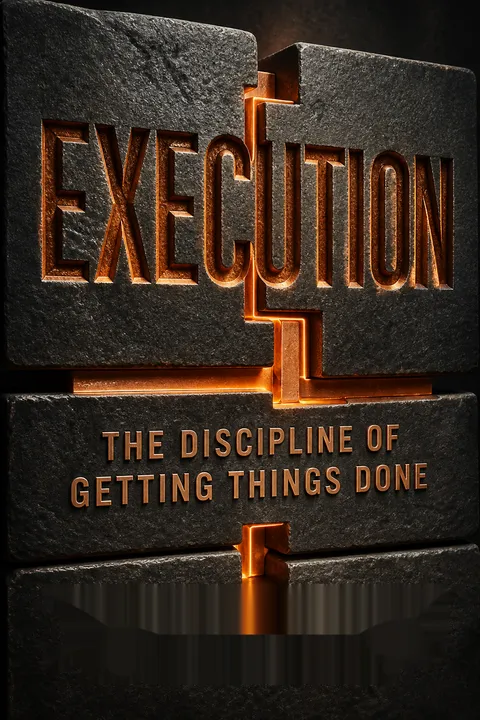
Execution connects the pieces. In this book, execution is not a synonym for hard work or attention to detail. It is the discipline of testing what a business can do, matching people and resources to its priorities, and following through until plans produce results. Its three connected processes are people, strategy, and operations. The leader must actively connect them, rather than treating them as separate annual exercises owned by human resources, planning, and finance teams.
The operating model matters. Dell showed the difference between a strategy and a deliverable system. Its build-to-order process linked customer orders, suppliers, assembly, and shipping, limiting inventory and allowing rapid response to changing demand. The book reported Dell turning inventory about 80 times a year, compared with roughly 10 to 20 times for rivals. Direct sales alone did not explain its advantage. The entire operation had to work together.
What's striking is the book's view of execution as a feedback system, not a final stage after strategy. A plan makes claims about customers, resources, and timing; operations reveal whether those claims hold. That resembles control systems in engineering, where sensing and correction are as important as the initial design. Yet execution is not automatically virtuous. A tightly coordinated organization can pursue a bad strategy with impressive efficiency. The useful test is therefore not simply whether teams hit targets, but whether results and new information are changing the assumptions behind those targets.
Stay close enough to ask the questions only a business leader can ask
Leadership means engagement. Bossidy and Charan argue that leaders cannot outsource the substance of execution. They must understand the business and its people, face inconvenient facts, set a small number of priorities, and clarify who will do what by when. They also have to distinguish performance from potential, coach people through difficult work, reward meaningful results, and examine their own blind spots. This involvement is not micromanagement: the leader probes, coaches, and follows up, while the people closest to the work remain responsible for doing it.
Presence reveals reality. After returning to Honeywell, Bossidy found that an otherwise promising standby-power product had been designed too small and for only one fuel type. Sales were poor, and the product was too far off course to salvage. His point is not that CEOs should design products. It is that direct, informed review can expose costly misunderstandings before they become accepted facts.
The strongest version of this argument is that senior leaders need enough contact with the work to detect when polished summaries conceal operational trouble. Organizational research on information flow points to the same risk: each reporting layer can filter or reinterpret bad news. The counterweight is scale. If every important judgment must pass through the CEO, engagement becomes a bottleneck and weakens local initiative. The practical distinction is between owning the questions, priorities, and review mechanisms, and taking over decisions that capable teams can make themselves.
Make honest disagreement routine, then end every meeting with owners and dates
Culture lives in interaction. The book calls the unwritten beliefs and norms shaping how people work together the social software of a company. It changes not through slogans alone, but through repeated forums where leaders question plans, surface disagreements, and make commitments visible. Social Operating Mechanisms are those forums, which can include reviews, meetings, and written exchanges. Linked together, they form a Social Operating System that spreads common expectations across the organization.
EDS made commitments public. CEO Dick Brown began monthly performance calls with roughly 150 senior leaders. They compared results with commitments, discussed setbacks, and specified corrective action. Sales information that had been compiled quarterly became available daily. The purpose was not to stage public humiliation. It was to make performance and responsibility harder to hide, while giving leaders a shared view of the business and a regular chance to address problems.
This approach connects culture to a concrete mechanism: people learn what is safe, important, and expected by watching how meetings handle conflict. Psychological safety, in its useful sense, does not mean comfort or constant agreement. It means people can raise risks without being punished for the act of speaking up. Candor still needs standards: evidence, respectful challenge, clear decision rights, and closure. Without those, frankness can become theater, or the loudest voice can dominate while quieter expertise disappears.
Choose people for tomorrow's job, not yesterday's performance
Talent must fit the strategy. A strong people process asks not only who is succeeding now, but who can handle the organization's future needs. That requires defining the job's essential demands, evaluating real behavior and results, developing promising leaders, planning succession, and addressing poor fit promptly. A technically strong specialist may not have the commercial, political, or people skills required to run a business in a new market.
A costly mismatch showed why. One chemical company invested $250 million in an Indonesian plant and assigned it to a manager who had performed well running a plant in Brazil. In Indonesia, he struggled with contractors, licensing, unions, hiring, and selling the output. His technical ability did not prepare him to manage the full business in an unfamiliar setting. Headquarters had not developed a deep understanding of the location either. The strategy may have made sense, but the team was not equipped to carry it out.
The lesson is not to distrust specialists. It is to distinguish expertise in a function from capacity for a broader role, especially when geography, regulation, or customer relationships change. Structured assessment can make those gaps visible, while discussion among people who have observed a candidate can correct one manager's blind spots. Still, talent grids and competency labels can harden into false precision. Good judgment needs evidence from actual assignments, room for learning, and careful attention to whether the role itself is clearly designed.
Stress-test a strategy's assumptions before committing capital and credibility
A plan is a set of bets. A useful strategy explains where the business will compete, how it expects to win, what capabilities it needs, and how it will make money. Leaders should test the assumptions about customers, competitors, the outside environment, and the organization's own ability to deliver. They should also identify a few critical issues, compare alternatives, and preserve room to adjust when conditions change. A long forecast is not a substitute for explaining how the business will succeed.
AT&T's expansion exposed weak assumptions. The company bought cable businesses for about $100 billion, expecting to gain direct customer access and sell bundled communications services. But long-distance prices fell faster than expected, customers adopted bundles more slowly, execution took longer, and regulators did not act as anticipated. In 2001, AT&T sold the cable holdings to Comcast for $44 billion in equity, with Comcast also assuming $25 billion in debt. The attractive strategic story had not been tested against enough realities.
The case makes strategy look less like prediction and more like disciplined uncertainty management. A useful review asks what must be true for a plan to work, what evidence would contradict those conditions, and which decisions can be delayed until better information arrives. Scenario planning helps, but it cannot eliminate surprise or guarantee a correct forecast. The discipline is to expose assumptions early and set signals for reconsidering them, rather than treating a confident narrative as proof that the organization can deliver.
Turn broad ambitions into an operating plan people can actually execute
A budget needs a route. An operating plan translates strategy into the year's targets, funded programs, accountable owners, and timelines. It explains how sales, marketing, manufacturing, product launches, and productivity work will fit together. Its financial budget should express the action plan, not replace it. Leaders need to debate the assumptions behind the numbers, including changes in demand, prices, suppliers, and customer behavior, before agreeing on commitments.
Plan across functions together. The authors describe companies building a budget in three days by bringing relevant leaders into one working session. Teams test proposals against one another in real time. A price cut, for example, may increase sales but add production costs or overtime. This simultaneous discussion helps expose trade-offs that sequential bargaining can miss. It also lets the group revise the plan while everyone understands how one department's choice affects the rest.
This is a practical application of systems thinking: local targets can conflict even when each department is behaving rationally. A shared planning conversation makes dependencies visible before they turn into expensive surprises. The compressed timetable is less important than the quality of the information and the candor of the participants. Moving quickly with unreliable data or a culture of deference merely produces a bad plan faster. The deeper principle is to organize planning around interdependence, not around separate departmental submissions.
Treat missed milestones as evidence, not excuses to postpone decisions
Review early enough to act. Milestones turn long-term intentions into observable progress. Regular reviews compare actual results with the assumptions and commitments behind the plan. When results slip, leaders should investigate the cause, assign corrective work, and reconsider the plan if circumstances have changed. Waiting until year-end turns useful warning signs into a postmortem. Contingency plans make it easier to shift resources rather than treating the original forecast as untouchable.
Honeywell revised course quickly. After the September 11 attacks disrupted the aerospace business, the company rebuilt its operating plan in ten days. Leaders estimated the likely revenue shortfall, identified cost reductions, and coordinated teams around revised priorities. The example illustrates execution as adaptation, not rigid obedience to an outdated plan. Follow-through also means documenting decisions, naming owners, and agreeing on when progress will be checked again.
The logic resembles a feedback loop: measure, compare, diagnose, and adjust. Shorter review cycles are especially valuable when markets or operations move quickly, because they limit the time a flawed assumption can go unchallenged. But milestones should function as information, not merely as weapons for punishing misses. If employees hide early warning signs to protect their evaluations, the system loses its sensing ability. Reviews work best when leaders distinguish avoidable neglect from intelligent experiments that produce disappointing results.
Reward durable contribution, not numbers that can be gamed
Incentives teach priorities. People pay attention to what compensation and promotion reward. If the measure is poorly chosen, effort can rise while the business becomes less healthy. Before the 2008 financial crisis, some mortgage brokers were paid for initiating loans without regard to whether borrowers could repay them. The immediate metric encouraged volume; the longer-term risk landed elsewhere. The authors argue that leaders must align rewards with the time horizon and substance of the goal, including meaningful milestones for work whose value takes years to judge.
Outcomes are not goals. Shareholder value is the result of sound choices, not a useful substitute for specifying them. Leaders should consider financial performance alongside behavior, risk, collaboration, and whether results were achieved by weakening the organization's future. A manager who hits a target by delaying product development or loading inventory into distribution may be borrowing success from the next period.
This is a classic principal-agent problem: employees respond to what the organization can measure and pay, while the organization may care about outcomes that are delayed or difficult to observe. Goodhart's law captures the danger: when a measure becomes a target, it can stop being a good measure. The answer is not to abandon metrics, but to use a portfolio of indicators, including quality and longer-term consequences. Judgment remains necessary, and poorly calibrated performance systems can punish experimentation or create political scorekeeping.
Build the courage to hear bad news and act on it
Self-command supports execution. The authors use emotional fortitude for the capacity to face reality, accept criticism, manage ego, and make difficult decisions. They describe its foundations as authenticity, self-awareness, self-mastery, and humility. Together, these qualities help leaders listen to opposing views, acknowledge limitations, correct mistakes, and address underperformance without turning every disagreement into a personal threat.
Avoidance has a price. One CEO knew that a trusted executive responsible for most of the company's business was faltering but could not bring himself to replace him. The board ultimately forced the decision, and the CEO's authority was damaged. The issue was not whether the executive was a good person. It was whether he could meet the demands of the role. Candid feedback, coaching, reassignment, or a respectful exit are all more useful than pretending a mismatch will fix itself.
There is a valuable balance here: humility keeps leaders open to correction, while decisiveness prevents openness from becoming endless delay. Candor is not a license for cruelty, and high standards do not require public shaming. A leader who can separate a person's dignity from their fit for a particular role can make tough decisions more fairly. The argument also implies a reciprocal obligation: organizations should create channels for bad news and protect credible dissent, rather than demanding courage from employees while rewarding silence.
Analysis
Execution is presented as an organizational capability built from linked decisions, not a personality trait or a last-mile push. Its distinctive claim is that people, strategy, and operations must be tested together. A strategy is credible only if capable people can deliver it; an operating plan is meaningful only if its assumptions still fit the market; and talent decisions matter because the work itself changes. This is a stronger model than treating planning, hiring, and budgeting as separate technical specialties.
The book's most durable contribution is procedural. Leaders create repeated forums for evidence, disagreement, commitment, and review. Those interactions expose hidden dependencies, teach managers how to reason about the business, and create a path for changing course. In this sense, execution functions like an organization's learning architecture. Results are not merely scores. They are signals that can revise assumptions, resource allocation, and role design.
The model also has risks. Concentrating the three processes in the leader's hands may suit a high-engagement executive, but it can become centralized control or dependence on one person's judgment. Strong execution therefore requires distributed knowledge and clear authority, not just a forceful CEO. Similarly, accountability and rewards can improve focus but can also produce gaming, excessive short-termism, or silence if people fear punishment for bad news. The book recognizes flawed incentives, though its frequent corporate success stories offer more illustration than controlled evidence about causation.
Its ideas are best used as questions, not as a universal corporate recipe: What must be true for this strategy to work? Which people and capabilities are missing? What concrete action will turn the target into reality? What evidence would trigger a change? Who owns the next step, and when will it be reviewed? These questions make execution a practical discipline while preserving room for uncertainty, learning, and local judgment.
Review Summary
Execution receives mixed reviews, with praise for its focus on implementation and leadership principles. Many find it insightful for executives, emphasizing the importance of follow-through, accountability, and having the right people in key positions. Critics argue it's outdated, repetitive, and lacking concrete tools. Some appreciate its real-world examples, while others find them impersonal. The book's emphasis on execution over strategy resonates with many readers, though some feel it could be more concise and applicable to smaller businesses.
People Also Read









Glossary
Execution
A system for delivering resultsA leadership discipline that connects a business's people, strategy, and operating plans. It involves testing assumptions, matching capabilities and resources to priorities, assigning accountability, and following through. In the book, execution is not simply implementation or attention to detail. It is an ongoing way to expose business realities and act on them.
Social software of execution
Norms that shape workThe shared beliefs, values, and behavior norms that determine how people communicate and make decisions in an organization. Bossidy and Charan argue that leaders change this social software through repeated practices such as candid discussion, coaching, accountability, and rewards tied to performance. It is the human operating layer that gives formal structures practical effect.
Social Operating Mechanisms
Forums for organizational dialogueFormal or informal settings where people exchange information, debate issues, make decisions, and practice expected behaviors. Examples include talent reviews, strategy discussions, operating reviews, meetings, and written exchanges. They become mechanisms rather than routine gatherings when they connect groups across organizational boundaries and create useful information flow, shared understanding, and accountable action.
Social Operating System
A linked network of forumsThe connected set of Social Operating Mechanisms, measurement practices, and rewards that helps an organization coordinate work and reinforce its norms. Rather than relying on isolated meetings, a Social Operating System links recurring discussions about people, strategy, and operations. Over time, those repeated interactions teach leaders how to make decisions and work together.
Emotional fortitude
Capacity to face hard realitiesThe personal strength needed to hear unwelcome information, accept opposing views, acknowledge one's own limits, and make difficult decisions. The authors associate it with authenticity, self-awareness, self-mastery, and humility. In their account, emotional fortitude enables leaders to surface conflict, give candid feedback, address poor performance, and learn from mistakes without being ruled by ego or avoidance.
Leadership Assessment Summary
A view of talent and potentialA tool described in the book for comparing a group of employees on performance, behavior, and potential. It helps leaders identify strong performers, people ready for promotion, individuals who need development, and those who may be in the wrong roles. It is intended to inform succession and talent decisions, supported by more detailed assessments of performance, development, and retention risk.
Simultaneity
Planning together in real timeA planning approach in which relevant leaders examine assumptions and trade-offs together rather than submitting separate plans in sequence. Participants can see how changes in one function affect others, revise proposals as information emerges, and build a shared understanding of the whole business. The book uses this idea to explain how a practical operating plan can be developed efficiently.
FAQ
What's Execution: The Discipline of Getting Things Done about?
- Focus on Execution: The book emphasizes that execution is the crucial link between a company's strategy and its results, often overlooked by leaders.
- Core Processes: It introduces three essential processes for execution: the people process, the strategy process, and the operations process, which must be interconnected.
- Leadership Role: Execution is highlighted as the primary responsibility of leaders, requiring their active involvement to drive results.
Why should I read Execution: The Discipline of Getting Things Done?
- Practical Insights: The book offers actionable insights and frameworks applicable to any organization, based on real-world experiences.
- Addressing Common Failures: It helps readers understand and avoid common pitfalls in execution, leading to better decision-making.
- Timeless Principles: The principles are relevant across industries and organizational sizes, making it a valuable resource for leaders.
What are the key takeaways of Execution: The Discipline of Getting Things Done?
- Execution is a Discipline: It requires rigorous discussion, follow-through, and accountability, integrated into strategies and culture.
- Importance of People: Having the right people in the right roles is crucial for effective execution.
- Cultural Change: Prioritizing execution involves creating mechanisms for dialogue and accountability, essential for long-term success.
What are the three core processes of execution according to Execution: The Discipline of Getting Things Done?
- People Process: Focuses on selecting, developing, and retaining talent aligned with organizational goals.
- Strategy Process: Involves formulating realistic strategies, continuously assessed and adjusted.
- Operations Process: Translates strategy into actionable plans, ensuring effective resource allocation and performance measurement.
How does Execution: The Discipline of Getting Things Done define execution?
- Systematic Process: Execution involves rigorous discussion, questioning assumptions, and ensuring accountability.
- Not Just Tactics: It is integral to strategy and must be embedded in the organizational culture.
- Reality-Based Approach: Requires a realistic understanding of the business environment and organizational capabilities.
How can leaders create a culture of execution according to Execution: The Discipline of Getting Things Done?
- Model Desired Behaviors: Leaders should exemplify accountability, transparency, and open communication.
- Implement Social Mechanisms: Regular meetings and dialogues encourage robust discussions and accountability.
- Link Rewards to Performance: Differentiating rewards based on performance reinforces the importance of execution.
What are the seven essential behaviors of a leader in Execution: The Discipline of Getting Things Done?
- Know Your People and Business: Deep understanding enables informed decisions and strong relationships.
- Insist on Realism: Promote honesty and transparency to confront challenges effectively.
- Set Clear Goals and Priorities: Focus efforts and resources on a few clear, measurable goals.
How does Execution: The Discipline of Getting Things Done suggest leaders should handle underperformers?
- Address Issues Directly: Confront underperformers with constructive feedback and clear expectations.
- Provide Support and Coaching: Offer resources to help improve performance, fostering development and accountability.
- Make Tough Decisions: Be willing to reassign or let go of underperformers if necessary to maintain focus on goals.
What role does emotional fortitude play in execution according to Execution: The Discipline of Getting Things Done?
- Foundation of Leadership: Essential for confronting challenges and maintaining integrity.
- Encourages Open Dialogue: Fosters an environment where team members feel safe to express concerns.
- Promotes Accountability: Leaders with emotional strength hold themselves and others accountable.
What specific methods does Execution: The Discipline of Getting Things Done recommend for effective leadership?
- Robust Dialogue: Ensure all perspectives are considered and assumptions tested before decisions.
- Setting Clear Goals: Align goals with strategy and ensure everyone understands their roles.
- Continuous Improvement: Regularly assess performance and make necessary adjustments.
What are the best quotes from Execution: The Discipline of Getting Things Done and what do they mean?
- “Execution is the great unaddressed issue in the business world today.”: Highlights the often-overlooked importance of execution in achieving business goals.
- “You can’t will this process to happen by issuing directives.”: Emphasizes the need for active engagement from leaders in execution.
- “The culture of a company is the behavior of its leaders.”: Underscores the influence of leaders on organizational culture and employee behavior.
How can leaders ensure effective follow-through on commitments according to Execution: The Discipline of Getting Things Done?
- Establish Clear Accountability: Define responsibilities to prevent ambiguity and encourage ownership.
- Regular Check-Ins: Keep everyone aligned and focused through regular progress reviews.
- Celebrate Successes and Learn from Failures: Recognize achievements and analyze failures for continuous improvement.
About the Author
Other books by Larry Bossidy

Download PDF
Download EPUB
.epub digital book format is ideal for reading ebooks on phones, tablets, and e-readers.








