

Key Takeaways
Coach leaders where development meets measurable business results
Start with the business. Executive coaching is not cosmetic polish or advice detached from daily work. It helps leaders solve challenges in ways that improve organizational results while strengthening their leadership. The executive’s core work includes explaining the organization’s direction, building relationships and effective teamwork, and producing results through others. Coaching should connect all three, not treat leadership growth as a separate activity from getting the work done.
A useful opening. In the book’s opening example, a division leader is under pressure to improve within twelve months. His team works in silos, while he fills vacancies by doing extra technical work instead of leading the group. The coach links team behavior to results and asks the leader to examine his own response. The division reaches the company’s top rank within eight months.
The strength of this approach is its refusal to choose between human development and operational performance. It treats leadership behavior as part of the causal chain that produces results, rather than as an agreeable side project. This resembles applied organizational learning: people improve while working on consequential tasks, so lessons can be tested in context. The discipline is also a useful guard against vague coaching goals. Still, outcomes depend on market conditions, resources, and colleagues, not just a leader’s development. A coach can connect behavior to results without claiming that behavior alone controls them.
Use backbone and heart together when the conversation gets difficult
Be candid and connected. The book’s central image pairs backbone, the ability to state a clear position, with heart, the effort to understand and remain connected to others. Backbone without heart can become rigid or humiliating. Heart without backbone can become appeasement, leaving the hard issue untouched. Effective coaching requires both, especially when a leader’s decisions or conduct are part of the problem.
A boundary with care. A client asked the coach to manage a staff committee, although the work belonged to an employee and would deepen the organization’s dependence on an outsider. The coach declined, stayed present through the client’s prolonged anger, and offered support for the more difficult work of developing the employee. Their working relationship recovered. The refusal did not abandon the client. It protected the client’s longer-term interest while keeping the relationship intact.
This pairing is more than a pleasant balance of warmth and toughness. It resembles the distinction in conflict research between assertiveness and cooperativeness: durable problem solving often requires enough of both to protect interests without destroying the relationship. The case also shows that empathy is not agreement, and a boundary can be an act of service. The risk is that directness can be misused as a badge of honesty. Its value depends on timing, specificity, and the other person’s ability to respond. Candor works best when it addresses behavior and consequences, not character.
Notice your anxiety before you start solving the client's problem
The coach is part of the system. Signature presence means bringing judgment, values, emotion, and attention to the actual moment instead of hiding behind a technique. A coach’s anxiety can quietly redirect the work: advice comes too quickly, the client’s burden becomes the coach’s burden, or a process continues mechanically after it has stopped being useful. Self-differentiation is the capacity to state a position while staying connected to the people affected by it.
Regain your footing. The author suggests setting a goal for each session, distinguishing what is clear from what is uncertain, noticing personal triggers, and responding deliberately rather than automatically. In one example, a team facing a merger and an unknown reorganization could not see a clear solution. The coach named the uncertainty rather than pretending to resolve it. The team eventually developed a flexible structure and clarified who held decision authority.
The coach’s emotional response can function as information, but only if it is examined rather than obeyed. This is close to the idea of metacognition: noticing a thought or impulse creates a small interval in which another response becomes possible. Naming what is known and unknown can also reduce the pressure to manufacture certainty. The approach should not turn every feeling into a diagnosis of the organization. A coach’s anxiety may reflect personal history, fatigue, or genuine risk. Reflection helps separate these explanations before the feeling is used as evidence.
Read recurring conflict as a pattern made by the whole system
Look beyond the apparent culprit. An interactional force field is the recurring influence created by people relating over time. Like a web, it shifts when one person moves, yet its habits can persist as individuals come and go. A leader’s behavior matters, but so do the reactions that behavior invites and the organizational conditions that reinforce the cycle. Anxiety can spread through triangles, in which a person draws a third party into a tense relationship to reduce pressure instead of addressing the original issue.
The coach can get recruited. A finance executive, Tom, felt threatened by a new CEO and turned to an internal coach, Ben. Ben became anxious too and began organizing Tom’s team and planning the reorganization himself. The arrangement eased the immediate pressure but weakened Tom’s ownership. The coach’s task is to notice the system’s pull without becoming its substitute leader.
A relational lens helps explain why replacing one person rarely fixes an entrenched workplace problem. Repeated interactions create expectations, informal rules, and feedback loops that can survive staff turnover. This perspective also reduces simplistic blame and points toward leverage: one person can interrupt a cycle by changing a contribution to it. Yet systems language can blur individual accountability if used carelessly. A pattern may be shared, but authority and responsibility are not always equal. Coaches should examine power, incentives, and decision rights alongside the choreography of interaction.
Keep the client responsible, even when rescuing feels more useful
Support without taking over. The Client Responsibility Model means the coach helps the leader think and act on the challenge while the leader retains ownership of decisions and outcomes. Its opposite, the Rescue Model, makes the coach the effective problem solver: the coach gives answers, manages the process, or becomes more invested than the client. That can ease discomfort briefly, but the original problem often returns when the coach leaves.
Contract for real work. Early conversations should clarify the business challenge, the client’s contribution to it, the coach’s role, and how success will be judged. A coach should not become a substitute for the client’s boss or quietly evaluate the client on the boss’s behalf. Involving the boss can clarify expectations and accountability, while preserving the direct relationship between boss and employee. The coach can help the boss assess performance, but should not do that job for them.
This principle protects both learning and organizational accountability. In education, a tutor who supplies every answer can produce a correct assignment without building the student’s capacity. Coaching can fail the same way when the expert’s competence displaces the leader’s practice. Role clarity also matters ethically: clients need to know who receives information and who evaluates performance. However, refusing to rescue should not become an excuse for passivity. A coach still has a duty to name serious risks, challenge harmful behavior, and clarify the limits of confidentiality and the contract.
Tie measurable leadership behaviors to the business result that matters
Connect three kinds of evidence. The Three Key Factors are the business result, the leader behaviors, and the team interactions that could produce it. The client customizes each category, then makes the behaviors specific enough to observe. Instead of aiming vaguely to be more decisive, a leader might state how decisions will be made, invite relevant input, and summarize decisions and responsibilities. The test is whether an observer could recognize the behavior in a meeting.
Make the investment testable. One client, Anne, reached $244.8 million in revenue, 3 percent above target and 10 percent higher than the prior year, while peer divisions missed targets by 6 to 14 percent. Her team also improved its working practices. She estimated coaching contributed 25 percent of the result; using a conservative comparison, the book calculates a 48-to-1 benefit-cost ratio. The client, not the coach, must judge the contribution and account for other influences.
This framework makes an often invisible intervention more accountable: it specifies what people did differently and asks whether those actions plausibly connect to the outcome. That is stronger than relying on satisfaction surveys alone. The Anne example also illustrates why attribution requires humility. Revenue, leadership behavior, market conditions, and team capability move together, so a benefit-cost calculation is an informed estimate, not proof that coaching caused the entire gain. The method is most credible when assumptions are visible, measures are chosen before results are known, and inconvenient evidence is not ignored.
Change your part of the pattern, and prepare for pushback
Plan for the relationship, not just the task. A leader’s action plan should account for who has authority, who sponsors the change, who implements it, and where responsibilities are unclear. It should also identify the interaction pattern that keeps the problem in place. In one case, Miriam repeatedly promoted a new management approach to Sam, who responded with passivity. She saw that her forceful selling helped maintain his refusal to engage.
Expect the old response. Miriam planned to ask Sam for his ideas, then tolerate the silence instead of filling it with another pitch. She also arranged for her boss to support the change before addressing Sam. This planning mattered because familiar patterns tend to pull people back, even when everyone says they want improvement. Preparing for likely resistance, including one’s own discomfort, makes persistence more realistic and helps distinguish a genuine obstacle from a return to old habits.
The pattern view turns change into a practical experiment: alter one’s own contribution, observe what happens, and adjust. That shares a logic with implementation planning, where anticipated barriers are addressed before action rather than treated as surprising failures. Miriam’s silence is particularly instructive because it changes the interactional conditions without requiring Sam to transform on command. Still, not every response is a habit that patience can overcome. If the other party lacks authority, resources, or incentive, a better conversational move is insufficient. Behavioral change must be paired with structural diagnosis.
Coach in the live moment, then debrief before work swallows learning
Move from discussion to practice. Live-action coaching places the coach in a real meeting or work conversation, after agreeing on the coach’s role and the client’s goals. The coach may observe, offer a brief suggestion, ask a question, or pause the action for a short review. The client remains in charge. In a meeting with Len, the coach prompted him to refocus a wandering discussion and clarify decisions rather than taking over facilitation.
Turn action into learning. Afterward, the client first assesses what worked, what did not, and whether the business goal advanced. The coach adds specific feedback, examines the pattern and role alignment, and agrees on a next step. This debrief should be scheduled as part of the work, especially after a live session, because leaders are quick to rush to the next appointment. Successes matter too: naming effective behavior makes it easier to repeat deliberately.
Real-time feedback shortens the distance between an action and its consequences. That makes it easier to recognize a habitual response while it is still changeable, much like coached practice in a sport or craft. The structured debrief then turns an event into a usable lesson rather than a vague impression. But observation carries power: a leader may perform for the coach, and employees may feel monitored. Clear consent, a defined scope, and respect for the leader’s authority are essential. The coach should intervene only in ways agreed upon beforehand.
Set expectations before coaching employees, and keep the roles distinct
First clarify the job. A boss who coaches an employee has two responsibilities. First, the boss states what must be accomplished, by whom, and when, then confirms the employee understands, commits, and begins taking initiative. Only after that comes coaching to develop the skills or confidence needed to meet the expectation. Coaching is not a softer substitute for performance management, and encouragement cannot make an unclear mandate fair or workable.
Match help to need. The book draws on situational leadership to tailor direction and support to an employee’s competence and commitment for a particular task. A motivated novice may need instruction and encouragement; an experienced employee who is already confident may need room to act. The boss should also distinguish a skill gap from organizational obstacles or a recurring boss-employee conflict. Training may be needed before coaching, and the boss must make clear when speaking as a coach versus exercising authority.
Separating expectations from development prevents a common managerial confusion: treating coaching as persuasion until the employee complies. It also gives the employee a fairer basis for learning, because the target and the available authority are explicit. The task-specific approach recognizes that expertise is uneven; an employee can be highly capable in one area and inexperienced in another. A useful caution is that visible agreement does not always equal genuine commitment. Hierarchy can make dissent costly, so managers need to invite concerns without punishing the honesty that makes coaching effective.
Analysis
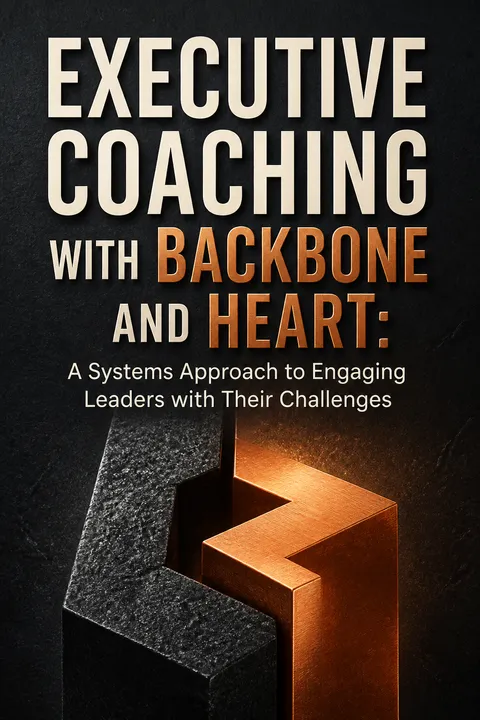
The book’s distinctive contribution is a practical theory of coaching as work inside a living relationship system. Its coach is neither a detached expert dispensing advice nor a neutral listener who avoids judgment. The coach stays close enough to notice interaction patterns, but separate enough to resist becoming the client’s proxy. This tension gives the title its force: warmth without evasion, candor without abandonment.
Its most useful move is to bring together three levels commonly separated in leadership development: business outcomes, the leader’s conduct, and team interaction. That structure disciplines the conversation. Rather than equating growth with insight, it asks what people will do differently and how that behavior relates to performance. The four-part working sequence, from contracting through planning, action, and review, further turns coaching into an iterative practice rather than a string of inspirational conversations.
The systems perspective adds explanatory depth. A leader’s recurring difficulty may be sustained by a team’s response, a boss’s mixed signals, unclear authority, or informal routines. The coach is not outside these dynamics; the coach can be recruited into them. This is both an astute warning and a demand for unusually strong self-observation. The rescue pattern is especially plausible because intervention feels useful, earns gratitude, and produces visible activity, even as it reduces the client’s ownership.
The approach is strongest when it insists on specific behavior, role clarity, and direct feedback. Its limits appear when measurement is treated as more precise than the evidence allows. The book’s benefit-cost calculation is a structured estimate, not a controlled causal finding, and its systems explanations should not obscure unequal authority or material constraints. The model also assumes a client has enough agency to change the relevant pattern. In coercive or unsafe settings, directness may carry real costs. Used with those cautions, the method offers a demanding standard: develop leaders through the work itself, keep responsibility where it belongs, and judge progress by both learning and results.
Glossary
signature presence
Authentic, steady coachingThe coach’s active use of judgment, values, emotion, creativity, and attention in the moment. Signature presence is not a scripted technique or a performance of professionalism. It involves staying engaged through uncertainty and discomfort, while remaining useful to the client rather than reacting automatically to the client’s anxiety.
self-differentiation
Stand firm, stay connectedA way of maintaining a clear personal position while staying connected to others, particularly under stress. In the book’s coaching context, it helps a coach avoid both rigid withdrawal and anxious over-accommodation. The goal is not emotional detachment, but the ability to respond thoughtfully rather than being governed by an automatic reaction.
interactional force field
A system’s relational pullThe recurring influence created as people interact over time. It shapes how members respond, often without conscious agreement, and can persist even when individuals leave and others replace them. A coach studies this relational pattern to understand how a client and colleagues reinforce, resist, or enable particular behaviors.
Client Responsibility Model
Client owns the challengeA coaching stance in which the coach helps the client understand and address a challenge while the client retains responsibility for decisions, actions, and outcomes. The coach may question, advise, or facilitate, but does not become the substitute leader. It contrasts with a rescue approach that can create dependence and weaken the client’s problem-solving capacity.
Three Key Factors
Results, leader, teamA goal-setting approach that links a business outcome to the leader behaviors and team interactions needed to achieve it. Each factor is customized to the client’s situation and made as observable and measurable as possible. The connection among the factors gives coaching a practical agenda and a basis for reviewing results.
homeostasis
Pressure to preserve the patternThe tendency of a system to preserve its current way of functioning, even when members say they want change. Established routines and relationships can pull people back toward familiar behavior. Recognizing this resistance helps a leader prepare for it rather than treating every setback as proof that change is impossible.
live-action coaching
Coaching during real workA coaching arrangement in which the coach observes or intervenes while the client conducts an actual meeting or work conversation. The coach’s role and level of intervention are agreed upon in advance. The purpose is to help the client notice and adjust behavior in context while preserving the client’s authority and ownership.
benefit-cost ratio
Estimated benefit per costA way to express the financial value attributed to an intervention relative to its cost. In this book’s method, the client estimates the coaching contribution to a business result, then compares that portion of the result with coaching expenses. The calculation is a practical estimate that should account for other influences and use credible measures.
situational leadership
Match support to the taskThe referenced management approach of adjusting direction and support to an employee’s competence and commitment for a specific task. The same employee may need substantial instruction in one area and little oversight in another. The boss assesses the particular task rather than applying one habitual management style to every employee or situation.
change agent
Facilitates organizational changeA person who helps a change effort proceed by supporting the sponsor and the people responsible for implementation. The change agent may gather information, advise, facilitate, train, or coach, but should not quietly take over the sponsor’s authority or the implementers’ responsibilities. Clear role boundaries help prevent the change agent from becoming a rescuer.
Download PDF
Download EPUB
.epub digital book format is ideal for reading ebooks on phones, tablets, and e-readers.








