

Plot Summary
The Toolshed Arsenal
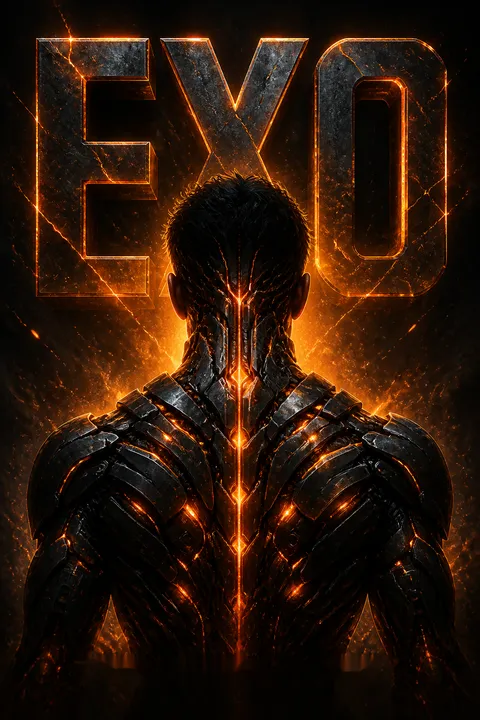
Seventeen-year-old Donovan Reyes patrols the Ring Belt with Jet, his closest friend and fellow exo soldier. Humans with exocels carry alien living armor beneath their skin, a visible badge of their place in the zhree-led society.
Near the stadium where Donovan’s father, the Prime Liaison, will soon speak, a boy named Horatio gives Donovan a Sapience pamphlet and reports weapons at his uncle Sean Corrigan’s house. Donovan and Jet find Corrigan and two companions, then discover rifles, ammunition, explosives, and propaganda hidden in a locked shed.
As they begin taking the suspects away, gunmen ambush them. Jet is wounded, Donovan is shot, and the teenage prisoner Anya escapes. Donovan follows her, but she shocks him with a stun device. A second blow leaves him unconscious and in enemy hands.
Donovan begins with confidence in a system where duty has clear procedures: receive a tip, search a house, arrest suspects. The hidden arsenal seems to validate that confidence, but the ambush reveals how quickly official competence can become vulnerability. His pursuit of Anya is an important first misjudgment. He assumes his armor and training make him the strongest person in every encounter, overlooking both her resolve and the people waiting for her. The scene also establishes how political identity is worn on the body. Donovan’s markings make him recognizable as an agent of the state before he speaks, turning his very skin into a target.
The Valuable Prisoner
In a hidden room, Sapience leader Kevin Warde chains Donovan to a chair and shoots him while demanding the identity of the informant who exposed Corrigan. Anya objects to the torture, but Kevin hands her his pistol and pressures her to finish the killing.
Before she can decide, Brett, another Sapience operative, discovers on the news that their captive is Dominick Reyes’s son. Kevin abandons execution and orders the group to use Donovan as leverage. They drive north toward a rebel stronghold, but a road closure leaves them facing marked workers and a zhree supervisor.
Donovan persuades Kevin to let him negotiate passage. Though wounded and barely able to control his armor, he convinces the supervisor that the group is on official business. The ploy works, but Kevin keeps him captive and takes him deeper into the Black Hills.
The shift from execution to hostage-taking depends on Donovan’s family name, not his own wishes or accomplishments. His father’s power follows him even into a room where the state cannot protect him. That makes Donovan simultaneously more valuable and less free. Anya’s refusal to shoot him is not a conversion to his side, but it exposes the gap between her own conscience and Kevin’s demand for absolute commitment. His negotiation at the roadblock complicates the captors’ view of him: the exo they regard as an enemy is also a person whose language, training, and judgment can keep them from killing strangers. Survival here requires him to use the very cooperationist skills Sapience despises.
Max Steps Forward
At the Warren, an enormous underground Sapience base, rebels stone Donovan until commander Saul Strong Winter orders them to stop. Then Max, the movement’s influential pamphlet writer, sees him and reveals that she is his mother, gone since he was five.
Donovan learns that his parents’ marriage broke amid her growing opposition to the zhree and his father’s decision to have him Hardened. Saul moves Donovan from a freezing cell after he swears not to escape, contact SecPac, or act against the Warren.
His mother and Anya bring him food and clean clothes while he recovers from his wounds. Max wants to reclaim their relationship, but she still regards exos as tools of alien rule. Donovan wants to understand her, yet he cannot pretend that she and he are no longer enemies.
The family revelation turns Donovan’s captivity into a conflict over the meaning of his own body. For Max, his armor embodies a political choice made for him; for Donovan, it is inseparable from his identity, friendships, and service. Their reunion cannot restore the childhood she left behind, because she approaches him through an ideology that rejects what he has become. His oath to Saul is likewise a survival bargain, not a change of allegiance. The Warren’s hostile crowd treats him as less than human, while his mother sees both a son and a symbol. He is forced to negotiate between those versions before he can decide what he believes.
The Library Kiss
As Donovan regains strength, Anya brings him to the Warren’s cramped library, where he finds his mother’s propaganda condemning exos. An old history recording shows the first zhree landing, the ensuing human war, and the eventual peace that created the present order.
Donovan sees the devastation as proof that coexistence saved lives; Anya sees the same footage as evidence that humans lost the right to shape their future. Their argument ends in a brief, unexpected kiss.
Donovan begins to believe she might choose another life, but Anya explains that her family was displaced when the zhree-backed government built an algae farm on their land. Sapience fed and sheltered them afterward, while Kevin became a rescuer her family depended on. Her loyalty grows from loss and debt, not simply hatred.
The library scene makes history a contest over interpretation rather than a settled record. Donovan and Anya watch the same images and draw opposing conclusions because each has inherited a different cost: his security is built inside the new order, while her family’s displacement made that order feel personal and coercive. The kiss does not resolve their politics. Instead, it exposes how intimacy can arise before trust or agreement, especially when both teenagers are isolated from their usual communities. Anya’s history also unsettles Donovan’s easy distinction between violent extremists and innocent civilians. Her dependence on Sapience is real, even when the organization’s methods remain indefensible.
Bombs Above the Warren
SecPac aircraft pound the Black Hills, forcing Warren residents into a reinforced shelter. As explosions shake the underground rooms, frightened rebels accuse Donovan of guiding the attack to their location.
Max shields him, and Anya insists the bombing has stopped, but distrust sharpens around the prisoner. Saul decides Donovan must be moved from the base before SecPac can close in. The next day, Max, Anya, Kevin, and Brett take him toward Rapid City, where Max hopes a Sapience scientist can help.
Donovan is not told what that means. On the journey, Max describes her belief that erze status and Hardening turn selected humans into servants of alien power. Her conviction clashes with Donovan’s lived attachment to his friends and the community that raised him.
The air strike compresses the Warren’s politics into a physical crisis: once people fear annihilation, suspicion becomes easier than evidence. Donovan’s presence gives the rebels a convenient explanation for the explosions, despite his lack of contact with SecPac. Max’s defense of him matters, but it cannot erase the movement’s hostility toward his body. The journey also reveals how ideology travels through intimate memory. Max’s case against the erze system is rooted in what she witnessed and what she believes was done to her son; Donovan’s counterargument is rooted in the relationships and protections that system has given him. Neither can fully hear the other while treating personal experience as proof of universal truth.
The Doctor’s Spray
In a concealed Rapid City laboratory, Dr. Eugene Nakada examines Donovan’s eighth-generation exocel and demonstrates a spray that temporarily suppresses its activation. Max asks whether he can remove Donovan’s armor altogether, but Nakada warns that such an operation would almost certainly kill him or cause permanent brain damage.
Donovan realizes his mother brought him here hoping to free him from the body she hates. Before they can leave, SecPac attacks. Max fires at the officers, while Donovan stops Anya from shooting Jet; Brett unlocks Donovan’s restraints and reveals himself as an undercover SecPac agent.
Kevin, Anya, and Nakada escape through a hidden tunnel. Max is captured. Donovan is reunited with his wounded friends, but he has attacked Jet during the chaos and cannot explain why saving Anya mattered so much.
Nakada’s brief suppression of the exocel makes visible a fear that had previously been political: the technology that defines Donovan can be switched off by someone who understands it. Max’s wish to remove it may come from love, but it also denies Donovan authority over his own body. The raid then fractures every apparent allegiance. Anya fires on the rescue team, Brett’s identity overturns his apparent place among the rebels, and Donovan’s attempt to protect Anya places him in conflict with Jet. The scene refuses a clean division between loyalty and betrayal. Donovan acts from several attachments at once, and his inability to explain them becomes a new threat to his standing among his own people.
The High Speaker’s Test
At the Towers, Donovan’s father argues that Max’s extremism endangered their family, while Donovan resents years of concealment about her. The next day, the visiting High Speaker from the zhree homeworld questions whether Earth is worth defending and treats Donovan as a specimen.
When Donovan’s anger rises, his exocel suddenly shuts down. Nurse Thet explains the hidden safeguard: an exo cannot use armor to attack a zhree. The High Speaker takes the failure as proof that humans remain subordinate, while Earth’s colonial leaders argue that human soldiers are essential to the colony’s defense.
The exchange unsettles Donovan more than his captivity did. He has been taught to see himself as a capable soldier and partner, but discovers that his armor contains a limit imposed without his knowledge.
The High Speaker’s examination gives bodily form to the novel’s central contradiction: exos are called partners, yet their most valued power has an undisclosed restriction. Donovan’s inability to attack a zhree does not make him a puppet, but it reveals how sharply his freedom is bounded by the institutions that empowered him. The High Speaker’s condescension and the safeguard are distinct injuries, one social and one biological. Together they make both Sapience’s claim of human subordination and the cooperationist promise of equality harder to dismiss. Donovan does not suddenly reject his erze; he begins to see that loyalty and autonomy can coexist uneasily, rather than cancel each other out.
A Letter Under Door
Donovan visits Max in SecPac custody and urges her to trade information for a reduced sentence. She refuses, insisting that he leave the Round and abandon his soldier’s life instead. Soon after, a court sentences her to public atomization on Peace Day.
Donovan’s first attempt to save her is not a direct rescue: he writes Saul a detailed plan for intercepting the prison transport, including its likely route and the vehicle’s security weaknesses. He slips the envelope beneath the door of Jim and Mila Guerra, whom he suspects are connected to Sapience because Jim bears a familiar freedom emblem.
The decision horrifies him. He has given an enemy information that could endanger his colleagues, yet he cannot accept that his mother should die without making one desperate attempt to keep her alive.
The letter is a small, deliberate act with consequences far beyond its physical size. Donovan does not abandon his beliefs in one dramatic conversion; he crosses a boundary by deciding that an existing duty cannot answer the personal obligation he feels toward his mother. The choice also echoes Max’s earlier departure from her family: both make a secret decision while telling themselves that the stakes justify it. His reasoning is neither wholly selfless nor wholly tactical. He wants to save Max, but he also wants to prove that being an exo has not erased his capacity to choose. The hidden envelope makes moral agency feel less like a grand declaration than an action taken in a quiet doorway.
The Atomizer Opens
On October 1, Donovan wakes to alarms and learns that Max’s execution has been moved forward without warning. He races to the Steps, but Jet and other officers restrain him as the atomizer erases her.
SecPac later reveals why the date changed: Max had secretly given Commander Tate information about Kevin Warde’s associates, then requested immediate execution so Saul’s people would not risk a rescue. Donovan admits his own conspiracy at a disciplinary hearing.
Rather than expelling him from the soldier erze, the tribunal gives him a week in custody and medical leave. His attempt to save Max has failed, but his friends continue to visit him. In the aftermath, he must face both his disobedience and the fact that his mother made a final choice for the cause.
The execution collapses the distinction Donovan hoped to preserve between love and control. He tries to decide what Max needs, while she makes a choice that protects Saul and the movement at the cost of any possible reunion. The revelation that she cooperated with SecPac only to prevent a rescue complicates her earlier refusal to bargain: she is not simply unyielding, but chooses which people and principles she will protect. Donovan’s discipline is serious without being annihilating. His comrades recognize that trauma shaped his actions, but they cannot pretend he did not violate his oaths. The result is grief without absolution, and a protagonist who must live with a choice he cannot undo.
Peace Day Bloodshed
On Peace Day, Rii scouts enter the solar system, heightening fear that the zhree may abandon Earth. At the stadium ceremony, a Sapience distraction draws attention while a sniper shoots Prime Liaison Dominick Reyes.
Jet kills Mila Guerra before she can trigger what appears to be a bomb, but the device is a fake; the real attack is the shot that kills Donovan’s father. Donovan and Jet pursue a stolen SecPac transport carrying Jim Guerra. The truck crashes into a building, then explodes, throwing Donovan through the air.
He wakes in the Towers, grieving his father and learning that a separate Sapience team has seized hostages at the algae farm. The movement’s coordinated violence has turned the private losses of Max’s execution into a national crisis.
The public ceremony is designed to display cooperation, so the attack makes that image itself part of the target. The fake detonator draws the crowd’s fear toward Mila, while the sniper’s shot strikes at the political figure meant to embody human and zhree partnership. Donovan’s own attempt to help Sapience save Max has unknowingly supplied information used in the wider campaign, binding his private guilt to public violence. The Rii threat adds a second scale of danger: human factions are fighting over Earth just as an external rival tests the colony’s defenses. Peace Day becomes less a celebration than a contest over who can claim to protect the future.
Donovan Enters Building Five
While recovering, Donovan learns that Saul and Anya are among the rebels holding marked workers and two zhree Engineers inside the algae farm. SecPac is preparing to storm the building, where explosives threaten to flood the lower level and drown the hostages.
Donovan escapes the Towers by punching Nurse Therrid, whose order keeps him confined, and reaches Commander Tate’s perimeter. He persuades her to give him an hour to negotiate, arguing that a bloody raid would deepen human hatred and weaken the case for keeping Earth.
Unarmed, he enters Building Five and asks for Saul. Javid, a hostile rebel, refuses to trust him and orders the prisoners used as proof of Sapience’s resolve. Anya tries to reach Saul, but Javid blocks her. Donovan’s appeal becomes a fight for time.
Donovan’s escape from the Towers repeats an earlier pattern, but with a crucial change: he now understands that his body’s obedience has limits, and chooses to cross them knowingly. Striking Therrid is both an assault on someone he cares about and a refusal to let medical caution become political surrender. At the farm, he risks entering without weapons because he recognizes that a raid could confirm Sapience’s propaganda in front of the world. His argument is not that the rebels are harmless; it is that the cost of proving strength may destroy the fragile coalition everyone needs. Javid’s suspicion shows how trauma and certainty can make even a plausible offer of peace look like another trap.
Hostages Walk Free
Javid attacks Donovan and tries to drown him in an algae tank, but Anya pulls him free. Once he can breathe, Donovan tells Saul that the Rii threat is real and that Earth could face invasion if the zhree withdraw.
He gives Saul his mother’s old poetry notebook, the one object he saved from his childhood, and explains that Max’s final act was meant to spare Saul and the cause. The notebook moves the grieving commander, while the strategic warning persuades him to negotiate.
Donovan carries Saul’s terms back to SecPac: provide fuelled cars, withdraw forces from the area, and allow the rebels to scatter in exchange for the hostages. Tate accepts. The hostages leave alive; Anya departs with Saul, and Donovan lets her go despite knowing they may meet again as enemies.
The rescue does not come from Donovan overpowering the rebels. He has neither the leverage nor the physical advantage to do so. Instead, he makes Saul see the hostage crisis in a wider frame, linking immediate retaliation to the vulnerability of the planet itself. His mother’s notebook works differently: it is not intelligence but a surviving fragment of private life, a reminder that Max was more than a propagandist or martyr. Donovan’s willingness to let the rebels leave is a costly form of restraint, not forgiveness. He saves people without securing justice, and protects Anya without asking her to change sides. The outcome preserves life while leaving the conflict unresolved.
A Future Without Instructions
At Dominick’s funeral, Soldier Werth honors the dead Prime Liaison and summons Donovan to meet the zhree leaders. The High Speaker has departed, but the threat from the Rii remains, and the Commonwealth is preparing an evacuation plan in case it abandons Earth.
Administrator Seir tells Donovan that the colony needs a new Prime Liaison and asks him to advise the zhree in choosing one. He is only seventeen, still recovering from captivity and discipline, but his fluency in Mur, knowledge of his father, and experience with Sapience make him unusually useful.
Donovan accepts because the consequences of withdrawal would be catastrophic for humans and zhree alike. He cannot replace his father or reconcile his parents’ visions, but he is asked to help determine whether their world can endure.
The appointment transforms Donovan’s inherited identity from a source of danger into a civic responsibility, but it does not grant him adult certainty. He is chosen precisely because he stands at several intersections: human and exo, soldier and son, fluent participant and political outsider. The decision also tests the novel’s competing models of loyalty. His father served institutions; his mother served a revolutionary cause; Donovan has learned that either commitment can become destructive when it refuses to account for individual lives. Advising the zhree is not a neat reward for heroism. It is an invitation to act inside a system he now understands as compromised, with consequences too large for any one person to control.
Epilogue
On patrol with Jet after his return to duty, Donovan asks for a detour through the Transitional Habitation grids. The wooden post outside Anya’s apartment is still bare, and he has no way to know whether she escaped or whether she will ever come home.
Then he spots a white X painted on it, the signal he asked her sister to pass along. Jet notices his expression change. Donovan confirms that he is all right, and they drive away together. The small mark cannot bridge the distance between them, but it tells him Anya is alive and leaves their connection open.
The X resolves the book’s emotional ending without resolving its political conflict. Donovan and Anya remain divided by their allegiances, and the signal promises neither reunion nor safety. It offers only evidence of continued life, which is precisely what Donovan has learned to value after losing both parents and watching political causes consume people. The mark also answers his earlier need to know whether Anya is safe, while respecting her choice to remain outside his world. Jet’s presence matters: Donovan returns to shared duty, but now carries a private connection that does not fit neatly inside the categories of friend, enemy, or family.
Analysis
Exo treats political allegiance as something lived through bodies and relationships, not simply debated in speeches. Donovan’s exocel makes him physically powerful, socially protected, and visibly distinct from the unmarked humans Sapience claims to defend. It also contains limits he did not choose and can be disabled by a technology his opponents are trying to develop. The same armor can therefore signify opportunity to Donovan, servitude to Max, and strategic risk to the zhree leaders.
The novel refuses to make either political camp morally simple. Sapience names real inequalities: families are displaced, status is rationed, and humans have little control over the larger decisions governing Earth. Yet the movement’s methods turn those grievances into attacks on civilians and exos. SecPac protects people from terrorism, but its searches and crackdowns can make the state appear as threatening as the rebels say it is. Each side can produce evidence for its own story, while ordinary people pay the cost of being sorted into categories.
Family intensifies that political conflict. Max and Dominick both claim to have acted for Donovan’s future, but each withheld the truth and made decisions on his behalf. Their opposing visions meet inside a son who cannot reduce love to agreement. His loyalty to his friends does not erase his longing for his mother, and his attempts to save her do not undo the harm his choices cause. The book’s sharpest question is not whether he is loyal, but who gets to define loyalty when every institution demands sacrifice.
Donovan’s eventual role as adviser offers no easy reconciliation. The zhree may need human allies to keep Earth, but need is not equality, and being selected for responsibility does not give him control of the outcome. His small acts of restraint, especially negotiating at the algae farm, offer a more modest kind of agency: not ending conflict, but preventing one immediate act of violence from becoming inevitable. The final signal from Anya preserves that fragile possibility of human connection across opposing sides.
Review Summary
Exo received mixed reviews, with praise for its unique alien invasion premise, world-building, and complex moral questions. Readers appreciated the nuanced portrayal of colonization and the exploration of identity. Some found the characters underdeveloped and the pacing uneven. The romance subplot was criticized as unnecessary. Many reviewers commended the book's thought-provoking nature and its ability to subvert typical YA sci-fi tropes. While some found it slow or predictable, others were intrigued enough to anticipate the sequel.
People Also Read
Characters
Donovan Reyes
The divided young soldierDonovan is a seventeen-year-old soldier-in-erze, Hardened with alien biotechnology and the only son of Prime Liaison Dominick Reyes. He is disciplined, observant, and unusually skilled at reading people, qualities shaped by growing up between human and zhree cultures. His pride in his exocel and his loyalty to his fellow soldiers are genuine, not simply inherited from his powerful father. Yet he is also hungry for the family connection lost when his mother left, and this need makes him vulnerable to choices that conflict with his training. Donovan’s defining struggle is not deciding whether he belongs to one side or another, but learning how to exercise judgment when duty, affection, and political consequences pull him in incompatible directions.
Anya
The rebel with a conscienceAnya is a sixteen-year-old Sapience recruit whose family was displaced to make way for a zhree-backed algae farm. She has learned to associate the movement with the practical help her family received after losing their land, particularly from Kevin Warde. Her loyalty is entangled with gratitude, grief, and a desire to belong, rather than resting on settled political theory. Anya is curious about exos and unafraid to question the cruelty of people on her own side. Her attraction to Donovan grows alongside their ideological conflict, not in place of it. She can recognize his humanity without abandoning her own history, which makes her neither a simple convert nor a simple enemy.
Maxine Russell
The absent mother and rebelKnown within Sapience as Max, Maxine Russell is a veteran insurgent and the movement’s most influential writer. Before becoming an extremist, she aspired to write and worked within the erze system as an Administrator. Her political convictions grew from seeing the system’s inequalities and fearing that human children were being reshaped into a dependent servant population. Max is fiercely committed, emotionally guarded, and capable of loving people whose identities she ideologically rejects. Her separation from her son remains a wound she cannot repair simply by returning to him. She sees sacrifice as proof of seriousness, a belief that gives her strength but also narrows the kinds of future she can imagine.
Dominick Reyes
The principled Prime LiaisonDominick Reyes is West America’s Prime Liaison, the senior human intermediary between the government and zhree authority. His public manner is controlled and demanding, shaped by the burden of representing millions of people in negotiations where human power is limited. As a father, he believes that withholding painful truths can protect Donovan, even when that choice damages their trust. He values law, responsibility, and the long-term survival of human society, and he refuses to treat his family as an exception to political principles. His rigidity is not indifference, but it can look like emotional distance to the son who wants warmth as much as guidance.
Jet Mathews
The steadfast erze mateJet is Donovan’s best friend, patrol partner, and fellow soldier-in-erze. He is energetic, blunt, and prone to teasing, but his humor rests on dependable courage and a deep sense of responsibility. Jet is less politically reflective than Donovan, yet he understands that loyalty means staying beside someone through confusion as well as danger. He has little patience for evasions that put people at risk, especially when Donovan hides what he is feeling. His bond with Donovan is both affectionate and demanding: Jet offers protection, but expects his friend to be honest about whether he can still serve.
Saul Strong Winter
The insurgent commanderSaul leads a major Sapience cell and has spent much of his life organizing resistance to zhree rule. He is measured where Kevin is volatile, weighing the risks of a decision against its value to the movement. His relationship with Max gives his political commitment a private dimension, though he does not allow affection to make him openly sentimental. Saul believes human freedom is worth prolonged struggle, even when the cost is severe. That conviction makes him a formidable leader and a difficult person to persuade. He can hear practical arguments, but he distrusts cooperation with the institutions Sapience exists to oppose.
Kevin Warde
The brutal field operativeKevin is a seasoned Sapience operative who directs weapons runs and field missions. He is charismatic when recruiting and ruthless when he believes the cause requires violence. His care for displaced people can coexist with intimidation, possessiveness, and cruelty, making him difficult for younger recruits to assess. Kevin uses loyalty as a test: he pushes others toward actions that will make retreat psychologically harder. His confidence in force contrasts with Saul’s caution and exposes the difference between serving a cause and serving one’s own appetite for control.
Brett
The quiet operativeBrett is a nervous, soft-spoken member of Kevin’s field team, known for handling equipment and explosives. He tends to defer to stronger personalities and watches events closely rather than taking the lead. His anxiety makes him seem less dangerous than Kevin, but he is more capable and consequential than he first appears. Brett represents the uncertain middle ground occupied by people who move between organizations, roles, and loyalties while trying to survive.
Commander Tate
SecPac’s hard-edged commanderCommander Tate oversees SecPac operations across the region. Direct and demanding, she expects soldiers to make judgments under pressure and take responsibility for their mistakes. She has little patience for sentiment that clouds an operation, but she understands that force can create political consequences beyond the immediate mission. Tate’s authority is grounded in experience and the constant strain of managing too few officers against a widening insurgency. She treats Donovan as both a talented officer and a young man whose private crisis can affect the people under her command.
Soldier Werth
The exos’ zhree masterSoldier Werth is the zhree commander responsible for the Soldier erze on Earth. He is imposing and exacting, but he treats his human soldiers as valued members of the erze rather than disposable assistants. Werth believes exos are essential to Earth’s future and depends on their local knowledge and willingness to serve. His authority reflects the real imbalance between the species, even when he acts with respect. To Donovan, Werth is both a commander to obey and an example of how a powerful institution might recognize human capability.
Nurse Therrid
The familiar zhree nurseTherrid is a zhree Nurse who has known Donovan since childhood and specializes in caring for exo soldiers. He is warm, teasing, and more comfortable with humans than many older zhree, though he remains a representative of their authority. Therrid sees the physical and psychological costs of Hardening and captivity, and he takes his responsibility for Donovan seriously. His closeness to human patients does not erase the limits of his understanding; he can mistake protection for a sufficient answer when Donovan needs the freedom to act.
Dr. Eugene Nakada
The exocel researcherNakada is a former Scientist-in-erze who now conducts clandestine research for Sapience. His interest in exocels began with personal grief and a desire to understand the Hardening process, especially its failures. He approaches living bodies with a scientist’s curiosity, often failing to appreciate the fear his experiments provoke. Nakada believes that knowledge about exos could change the balance of power, but the same research can become a weapon in the hands of people seeking liberation through violence.
Tamaravick Kohl
The reliable fellow soldierKnown as Vic, Tamaravick Kohl is a soldier-in-erze in Donovan’s close circle. She is serious, hardworking, and considerate, with a quieter vulnerability beneath her competence. Vic follows procedure and cares deeply about her fellow officers, but she is not naturally suited to concealing what she knows. Her relationships with Jet and Donovan reveal the warmth of their unit beyond combat, while her professionalism keeps her grounded when others act impulsively.
Thaddeus Lowell
The unflappable team leaderThaddeus, usually called Thad, is a young lieutenant and mentor to Donovan’s cohort. He is a natural leader whose calm manner makes people trust his decisions in dangerous situations. Thad combines easy humor with a sharp sense of responsibility, and he can shift quickly from camaraderie to command. He understands the pressure on SecPac and tries to protect both his soldiers and the civilians caught between state forces and Sapience.
Leonidas Hsu
The quiet artist soldierLeon, short for Leonidas, is a soft-spoken soldier-in-erze who carries a sketchbook and draws elaborate fantasy figures. His calmness in combat contrasts with his private artistic imagination. Leon offers Donovan a reminder that exos are not defined only by armor and duty; they also build inner lives through friendship, humor, and creative work.
Cassidy Spencer
The sharp-witted cohort mateCassidy, usually called Cass, is a quick-witted soldier known for entering a room with confidence and handling difficult people with ease. Her humor can defuse tension, but she is also perceptive about pain and knows when to offer quiet sympathy instead. Cass’s injuries and recovery underscore the physical cost of SecPac work, while her determination to return to active service reflects her pride in her erze.
Horatio Corrigan
The wary young informantHoratio is a football-playing boy who finds Sapience propaganda and weapons at his uncle’s home. Afraid that his uncle may hurt someone, he chooses to tell Donovan what he discovered despite worrying about the consequences for his family.
Javid
The uncompromising rebelJavid is a volatile Sapience fighter who distrusts Donovan and rejects negotiation as weakness. His certainty hardens under pressure, making him dangerous to both hostages and fellow rebels.
Dr. Thet
The visiting High SpeakerThe High Speaker is the senior political leader of the Mur Erzen Commonwealth, visiting Earth from its distant homeworld. He views the colony through questions of strategic cost and security, and his unfamiliarity with human society makes him a consequential judge of Earth’s future.
Plot Devices
The Exocel
Armor and vulnerabilityAn exocel is a living technological system integrated into a human body during childhood. It hardens the wearer against bullets and injury, allows armor to spread across the skin, and can shape hands into tools or blades. For Donovan, it is not merely equipment: it is part of his physical identity, a source of status, and the basis of his military role. Its hidden limits complicate that apparent strength. The technology makes exos formidable, but it also connects their bodies to systems controlled by the zhree and can be suppressed under particular conditions.
Erze and Markings
Belonging made visibleThe erze are zhree work and social groups that include humans selected to serve in specialized roles. Human markings identify a person’s affiliation, while an exo’s markings carry the promise of automatic membership and protection. The system gives Donovan a community stronger than his fractured family, but it also creates visible divisions between marked and unmarked people. Both cooperationists and Sapience interpret those divisions politically. Erze membership therefore functions as a real social bond and as a contested structure of power, making Donovan’s loyalty emotionally meaningful rather than merely procedural.
Sapience Propaganda
A spark for resistanceSapience pamphlets carry the movement’s argument that zhree rule and human cooperation have made humanity dependent and servile. Their inflammatory language recruits supporters, spreads fear of exos, and gives SecPac clues to possible cells. The same material links the opening arrest to Donovan’s mother, whose writing has helped shape the ideology surrounding him. Propaganda is therefore both a plot trail and an instrument of political action: it can expose a weapons cache, recruit an isolated teenager, or transform a complicated history into a demand for violence.
The Neutrality Oath
A bargain under captivitySaul offers Donovan food, warmth, and a chance to see his mother in exchange for a pledge not to harm anyone in the Warren, escape, or contact the outside. Donovan accepts because he is injured and has few alternatives. The oath allows him to move within the rebel base, but it also constrains what he can do while the threat around him changes. It tests whether his loyalty is a fixed reflex or a commitment he can interpret. Later, the difference between honoring a promise and serving a just outcome becomes central to his decisions.
Exocel Suppression Spray
A weapon against armorDr. Nakada’s experimental spray briefly blocks the neural activation of a human exocel, leaving an armored person suddenly without control of the system that protects them. Its demonstration frightens Donovan because the effect is fast and apparently simple, and Sapience hopes to develop it into a usable weapon. The spray also exposes how little humans understand the technology that has reshaped their bodies. Nakada’s work is incomplete, but even a temporary failure of armor could alter how exos fight, how SecPac protects people, and how the zhree assess the human population.
Exo Series
Download PDF
Download EPUB
.epub digital book format is ideal for reading ebooks on phones, tablets, and e-readers.








