

Plot Summary
Prologue
Five years before the expedition, Maeve Carter stands on a seventy-story rooftop after learning that her father is ill. She is not trying to die: she throws herself backward, free-falls, then opens a parachute and lands safely among startled onlookers. The jump quiets her grief and makes her feel vividly alive.
Before fleeing the approaching police, she gives a camera her name, turning private recklessness into public fame. She cannot yet know that Venture Enterprises will recruit her, or that the impulse to outrun fear will one day lead her into a place where no parachute can help.
The rooftop leap establishes Maeve’s central contradiction: she risks her life, but she does not want it to end. Danger gives her a temporary command over grief, especially the helplessness she feels as her father’s illness threatens the life they shared. The parachute matters because it turns a fall into a chosen return. Maeve is not simply chasing attention or thrills; she is seeking the feeling of agency that illness has taken from her father and, by extension, from their partnership. Her impulsive public introduction also plants the tension between private experience and performance that follows her into the expedition.
Two Teams, One Lost City
Five years after her rooftop jump made her famous, Maeve is a celebrated Venture adventurer who still resents the Adreno Squad, a close-knit team of male explorers led by Wilder. When Venture CEO Ajax Howard receives word that a shipwreck survivor has found the lost city of Apear, he offers Wilder’s team an unlimited budget to document it.
Maeve arrives separately, expecting a routine promotional assignment, and discovers Ajax has given her the same mission. The city has fascinated her since childhood, when her father, Dexter, taught her to explore. Wilder treats the assignment as a chance to beat Maeve; she sees it as a chance to claim the discovery and honor the father who can no longer travel beside her.
The rival commission makes professional competition inseparable from personal need. Wilder thinks in terms of the team’s reputation and the discipline that keeps its members alive; Maeve measures the expedition against a more intimate history, her father’s lost career and the childhood they built around travel. Venture’s promise of money and publicity complicates their motives without erasing them. Both explorers want recognition, but Maeve’s ambition carries a grief that Wilder initially cannot see. The contrast prepares the story’s eventual shift from rivalry to chosen collaboration: the same destination can mean a trophy to one person and a way of keeping a family legacy alive to another.
A Warning at the Water
Before leaving, Maeve visits Dexter, now living with progressive multiple sclerosis, and plans the trip with him. He helps her prepare while concealing how much he longs to go himself. She flies to a nearby island, crosses by boat, and questions Conrad, the shipwreck survivor Venture paid for his silence.
He recalls cliffs, a difficult jungle route, ruins, skeletons, and a presence that frightened him into fleeing. Meanwhile, Wilder, his younger brother Rick, cousin Logan, and their chosen brothers Way and Aiyaret travel by boat toward the island.
Their habitual teasing hides old grief and trauma: Logan lost his parents, and Aiyaret struggles with nightmares and touch. Maeve hears Conrad’s warning, but it makes her more cautious, not less determined.
The preparations show that every explorer carries a private map as well as a physical one. Dexter’s advice equips Maeve, but his illness also makes each departure an act of separation. Conrad’s account introduces uncertainty without explaining it away: his fear might be superstition, memory, or evidence that the island is genuinely dangerous. The Adreno Squad’s humor functions differently. It is a practiced way of staying close while avoiding direct exposure of old wounds. By setting these emotional patterns before the island tests them, the story makes survival more than a contest of fitness. The group’s vulnerabilities will affect how they respond to danger and to Maeve.
The Island Keeps Its Dead
The Adreno Squad reaches the island first and ignores the captain’s warning that local people avoid it because of a curse. On the beach, they find several shipwrecks, some old and one comparatively recent, then push inland. They discover an abandoned village and a temple whose wall drawings show people being thrown into a pit and pursued by shadowy shapes.
The images suggest the island’s danger has shaped its inhabitants for generations, but the team leaves without touching the relics. Maeve enters alone from the cliffs, climbs with her gear, and follows a fading trail through the jungle. In a cave she finds a human skeleton and desperate marks scratched into stone, then leaves a small marker so the dead person might be found later.
The island’s history first appears as an accumulation of absences: ships that never left, homes abandoned with their structure intact, and a body left below ground. These remains make exploration ethically complicated before the supernatural threat becomes undeniable. Maeve’s choice not to disturb the skeleton contrasts with the race for public credit; she recognizes that discovery does not grant ownership over the dead. The temple drawings convert local caution into a record of collective fear, while the squad’s decision to keep moving shows how professional confidence can suppress unease. Each group enters the island with a different relationship to evidence, and the landscape begins to challenge both.
The Jungle Turns Strange
As Maeve pushes farther inland, the island’s wildlife behaves in ways she cannot explain. A jaguar watches her at night without attacking, and an unusual mass of snakes gathers around her camp before she leaves at dawn. Later, the same cat blocks her route north, then flees from something deeper in the jungle. Maeve follows its warning east and finds a clearing concealing a mass grave.
At its edge lies a more recent corpse, badly mutilated. She takes the man’s wallet so his identity and death can be reported, but leaves the body where it fell. The Adreno Squad, meanwhile, continues toward the island’s interior, carrying the captain’s carved protective pendant and the memory of the temple’s pit drawings.
Maeve’s expertise does not make her invulnerable; it makes her attentive to signs that other people might dismiss. The jaguar’s behavior offers a form of knowledge that cannot be translated into a map or corporate report. Maeve responds by changing direction, treating another species as a witness rather than scenery. The clearing then sharpens the distinction between the beauty of exploration and its cost: a mass grave and a recent killing lie beneath the same green cover that first drew her forward. Her decision to preserve the dead man’s identity, while refusing to turn his body into footage, reveals a code of care that will matter when she joins the team.
Maeve Saves Wilder
After the team finds recent human footprints near a waterfall, Wilder slows the group, suspecting another person may be hunting the same prize. That night a jaguar stalks their camp. When Rick moves toward it, Wilder knocks him down and takes the animal’s claws across his own side. Maeve, camped nearby, hears the commotion and rushes in with a burning flare, driving the cat back into the trees.
She cleans and bandages Wilder’s wound, then explains that Ajax sent her to find Apear too. Wilder refuses to welcome her, but the darkness makes sending her away reckless. They agree to share the camp for one night and turn the discovery into a race. Maeve leaves before dawn, determined to reach the ruins first.
The rescue breaks the rivalry’s clean boundaries: Wilder cannot dismiss Maeve as unqualified after she has protected his team, yet he still tries to control the terms of her presence. Maeve’s practical response, using the flare and treating his injury, establishes competence more persuasively than any argument about gender or status could. The group’s reluctance to let her stay has a deeper cause than simple hostility, but she does not yet know that Aiyaret’s trauma makes close contact with a woman difficult. The overnight truce therefore contains both an unspoken vulnerability and a new contest. Their cooperation begins under pressure, not trust.
Apear Opens Below
Maeve uses the hours before dawn to slip past the sleeping squad and continue alone. Wilder wakes to find her gone and drives the team hard to catch up. Rick loses his footing on a steep descent, but his fall reveals a city carved into a crater below the jungle. Maeve has already reached it and begun filming. When the others arrive, she proves she found the place first and allows them to document it with her.
The abandoned streets contain belongings that appear to have been left in haste, not carefully preserved. At the city’s center yawns a deep, black pit. Wilder nearly slips at its edge, and Maeve pulls him back. As she proposes exploring the chasm, something surges from the darkness, seizes her, and drags her below.
The discovery gives Maeve the professional victory she wanted, but the city immediately refuses to behave like a prize. Its abandoned objects imply sudden departure, while the central pit turns the urban plan into a threat. Wilder’s near fall and Maeve’s rescue begin to reverse their established power dynamic: she has already saved him once, and he now depends on her judgment at the edge. Her decision to explore the opening is not simply recklessness; it is the explorer’s refusal to treat an unanswered question as finished. The sudden abduction exposes the limit of that confidence. In this place, the person who approaches the unknown may not return under their own power.
Below the City
Maeve wakes in darkness with a badly torn leg, stops the bleeding with her belt, and stitches the wound using a shoelace and a piece of bra wire. She discovers human bones scattered through the cavern. Above, Aiyaret ignores the team’s delay and rappels down to search for her.
Something attacks him, cuts his rope, and leaves him unconscious near Maeve. When he wakes, Maeve hides them from the enormous crocodile-like predator that dragged her below.
They find a tunnel leading away from its feeding chamber and move through it together, Maeve leaning on Aiyaret despite his history of fearing touch. She tells him Way’s affection is more than friendship; Aiyaret admits he has feared losing his closest companion. Their talk helps them keep moving toward the others.
The cave strips away the explorers’ usual protections: equipment fails, light narrows, and Maeve must use whatever she carries to keep herself alive. Her improvised stitches make her body both the site of injury and the instrument of repair. Aiyaret’s choice to descend is an act of care that costs him control over a fear he has spent years managing. Their forced physical closeness becomes a negotiated trust rather than a cure for trauma; Maeve watches his boundaries, while he chooses when to accept help. The conversation about Way turns survival into emotional recognition. Even in a lethal tunnel, the characters begin naming needs they had previously hidden behind family loyalty.
The Pit Hunts Back
Wilder, Way, Rick, and Logan search the cavern and find blood, claw marks, and a tunnel. Maeve and Aiyaret emerge from it, but the predator attacks again before they can climb out. Maeve draws it into a narrow passage while the others escape, then reaches the rope and climbs just ahead of its jaws. A hurricane overtakes the island.
Wilder carries the injured Maeve uphill, and the group shelters in an abandoned off-road truck when they find one in the jungle. Its supplies include a loaded pistol, which Maeve keeps. During the night the creature rams the truck, tears off a door, and forces everyone into the storm. Maeve runs with a flare and the pistol, drawing the predator away while the others flee through the trees.
The escape converts the team’s earlier divisions into practical interdependence: Wilder carries Maeve, Maeve draws the predator, and the others move when she creates an opening. Her injury does not erase her agency, though it forces her to accept support she would rather refuse. The truck offers only a temporary illusion of safety; its metal shell becomes another enclosure once the predator attacks it. That reversal echoes the cave, where shelter and trap have been difficult to distinguish. The hurricane expands the danger from a single animal to the whole environment. Survival now depends not on mastering the island but on moving through it together while accepting that plans will fail.
The Wave Takes Maeve
The team regroups on the shore, but Maeve’s fever and infected leg worsen as the weather turns again. When she recognizes the sea drawing back, she warns the others too late to outrun the tsunami. Wilder throws her toward a tree, yet the wave pulls her away. Maeve survives by clinging above the flood, then finds Logan and Rick in the water and helps them climb to safety.
The crocodile attacks her again, biting her arm and shoulder; she strikes its face with a rock and reaches the surface. A rescue helicopter finds Maeve on floating wreckage and airlifts her to a hospital. She sees the predator leap at the rescue board and begs the crew to search for her missing teammates, who have been swept elsewhere.
The tsunami makes the story’s central danger brutally literal: no amount of courage can keep a group together when the landscape itself moves beneath them. Maeve’s survival is not a triumph of mastery but a sequence of small decisions, from finding a tree to helping Logan and Rick before the predator returns. Rescue arrives for her body while her loyalties remain with those still missing. The crocodile’s leap at the helicopter keeps the island’s threat active even as Maeve leaves it, preventing safety from feeling complete. Her separation from the team tests whether their new bond can persist without proximity, shared labor, or the immediate pressure of death.
Maeve Breaks Out
In the hospital, Maeve learns that doctors nearly amputated her leg and that search crews found no trace of the Adreno Squad. Dexter and Ajax try to make her rest, but Maeve cannot accept abandoning people who risked themselves for her. With her father’s help, she distracts the officer guarding her room, slips out, and hires a helicopter pilot to take her back to the island.
She jumps into the water and searches inland. Meanwhile, the surviving team members have been trapped in a flooded cave with the predator waiting outside. As the water recedes, they plan a risky escape. Maeve finds them in the jungle just as the creature pursues them, and she fires her rifle to drive it off.
Maeve’s return answers the moral question raised by her rescue: being saved does not free her from obligation, but neither does obligation erase the danger to her father. Dexter’s participation matters because he helps her choose without pretending the risk is harmless. Her escape from the hospital reprises the rooftop leap in altered form. Both actions reject helplessness, but this time Maeve is not seeking a private rush; she is returning for specific people who have become her family. The squad’s cave ordeal confirms that they have also been forced to rely on each other without her. Their reunion is therefore not a rescue fantasy but a mutual return to a bond already tested by separation.
The Crocodile Falls
The team races toward the beach, but the predator catches Rick and drags him into the jungle. Maeve’s gunfire distracts it while Wilder reaches his brother. The creature then seizes Logan. He saves Maeve from its jaws, but it bites off the lower half of his leg. As Wilder and Way treat Logan, Maeve draws the crocodile toward a boulder and fires into its open mouth when its jaws trap her against the rock.
When the gun empties, she uses one of the creature’s own teeth to strike its head until it stops moving. Maeve returns to the beach, where a rescue helicopter arrives. Logan’s heart fails during transport, but the team gets him to medical care, and he survives surgery.
The climax refuses a clean victory. Maeve’s skill ends the predator’s reign, but Logan’s amputation makes the cost permanent, and his cardiac crisis carries that cost into the rescue itself. The team’s responses reveal how their former protective roles have changed: Logan chooses to shield Maeve, while she turns back toward danger to save the group. Her final weapon, the crocodile’s tooth, reverses the island’s earlier use of teeth as instruments of helplessness. Yet the act does not restore what Logan lost. The novel treats survival as a beginning with consequences, not a return to the untouched lives the characters had before they entered Apear.
A Team Chosen Together
In the hospital, Logan grieves his missing leg but insists he will adapt, and Maeve holds him through the moment when his usual jokes fail. She grows close to the whole squad: Wilder becomes her lover, Rick and Logan acknowledge their desire, and Aiyaret begins to trust both Maeve and his feelings for Way. After recovery, Venture orders Maeve back before the others can travel.
She returns home, then avoids the squad for weeks, afraid their island bond cannot survive ordinary life. Wilder, Rick, Logan, Way, and Aiyaret visit her and make clear that they want her on their team. Maeve admits she misses them and accepts. Dexter welcomes the choice, while Venture credits her with finding Apear and directs part of the reward toward his charity.
The return home is the story’s quieter test: without a predator to unite them, the characters must decide whether their connection belongs only to crisis. Maeve’s hesitation reflects more than fear of rejection; she has built her identity around proving she can go alone, so accepting a team threatens a cherished form of independence. The men’s visit answers that fear with a concrete offer rather than a demand that she change. Logan’s rehabilitation also reframes belonging: the team must adapt its work to the body he has now, not treat his injury as the end of his identity. Maeve’s choice allows care, ambition, and autonomy to coexist.
Epilogue
A year later, Logan is learning to explore with his prosthetic, and the Adreno Squad has returned to work closer to home while he recovers. Maeve now belongs to the team and shares a home with the men she loves.
Before a hot-air-balloon jump, they crowd into her camera frame and send their affection to Dexter, making him part of the expedition even from afar. Maeve records the group, then turns the camera toward the sky. Together, they leap into open air, not to outrun grief or prove who is best, but to begin another journey as a family.
The final jump recalls the prologue’s rooftop fall but changes its emotional meaning. Maeve began by using risk to silence pain she could not control; now she chooses a leap among people who know her history and will share its consequences. The camera still makes adventure public, yet it also carries the team’s message to Dexter, transforming documentation into connection rather than self-advertisement. Logan’s presence matters especially: his return to exploration is not framed as erasing his amputation but as adapting the practice around it. The ending offers no cure for illness, trauma, or bodily loss. It offers a durable form of belonging that can travel with them.
Analysis
The novel makes exploration both its adventure plot and its psychological language. Maeve and the Adreno Squad seek remote places because ordinary life cannot contain the scale of their grief, trauma, and restlessness. Their adrenaline is not presented as a cure; it is a temporary way to quiet the mind, and the island repeatedly removes that refuge by forcing them to confront fear, dependence, and bodily vulnerability.
Apear complicates the familiar fantasy of discovery. The explorers arrive expecting a lost city to reward skill and ambition, but its wrecks, graves, and abandoned homes insist that places have histories before outsiders claim them. Maeve’s choice to preserve a dead man’s identity rather than turn him into content marks a distinction between documenting a place and consuming it. The mysterious predator makes that distinction physical: the island is not a backdrop, and human confidence does not make its inhabitants subordinate.
The romance develops through concrete acts of care rather than through attraction alone. Maeve saves Wilder, respects Aiyaret’s boundaries, and returns for the entire group; the men carry, comfort, and protect her without stripping her of agency. Aiyaret’s trauma is handled through negotiated trust and gradual choice, while Logan’s amputation refuses the easy promise that survival restores everything. His future requires adaptation, not a return to his former body or role.
The ending therefore resolves the opening’s fear of separation without undoing loss. Dexter cannot explore as before, Logan must rebuild his practice, and Maeve must accept that loving her father does not require remaining his sole adventure partner. The team becomes a form of shared life in which independence survives through mutual reliance. The final jump echoes Maeve’s first leap, but the meaning has changed: she is no longer falling alone to escape pain. She is choosing risk with people who will meet her on the way down and rise beside her afterward.
Review Summary
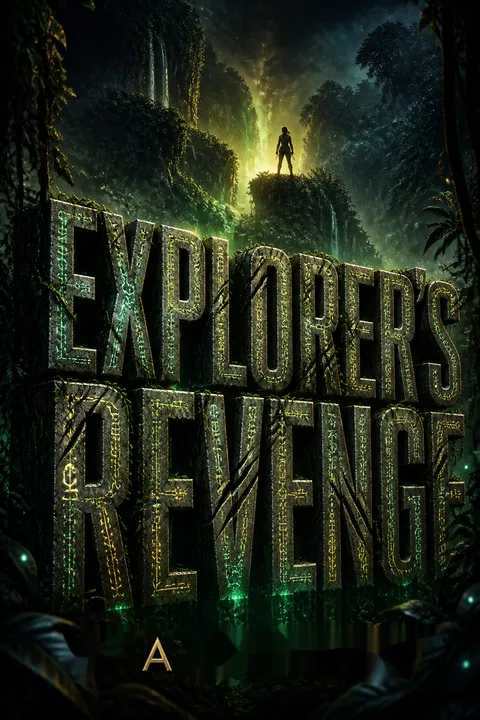
Explorer's Revenge follows badass adventurer Maeve and five male explorers—Wilder, Logan, Aiyaret, Way, and Rick—as they compete to find a lost island, only to face dangerous monsters and survival challenges. Readers praised the action-packed plot, slow-burn romance, and strong character development, comparing it to Indiana Jones meets Jurassic Park. While most loved Maeve's fearlessness and the found family dynamics, some felt the romance took a backseat to adventure or developed too quickly through trauma bonding. The spice arrives late (around 70-80%), but the suspenseful pacing kept readers hooked throughout.
People Also Read



Characters
Maeve Carter
Fearless solo explorerMaeve is a highly skilled adventurer whose public persona is built on dangerous stunts and candid documentation. Her appetite for risk is not simple carelessness: movement and physical challenge help her manage grief, uncertainty, and the loss of her former life with her father. She is competitive, funny, and blunt, but her confidence does not prevent tenderness. Maeve respects local communities, protects the dead from becoming spectacle, and notices when others need care. Her central tension is between proving she can do everything alone and admitting that independence need not mean isolation. She values her father’s influence deeply and wants her achievements to honor him without reducing her own ambitions to an extension of his.
Wilder
Control-minded team leaderWilder leads the Adreno Squad and carries responsibility as if it were another piece of climbing equipment. He plans carefully, watches the group’s safety, and often masks fear with command or irritation. His bond with younger brother Rick and cousin Logan is familial and protective, while Way and Aiyaret are brothers by choice. Maeve unsettles him because she is his equal in skill and refuses to accept his authority as proof of superiority. Beneath their antagonism is attraction, but Wilder’s deeper conflict is the belief that keeping everyone safe requires him to suppress his own needs. His discipline makes him dependable, though it can also narrow his ability to trust others’ judgment.
Rick, also called Merrick
Joker and loyal brotherRick, whose given name is Merrick, is Wilder’s younger brother and the squad’s irreverent troublemaker. He uses jokes, teasing, and physical play to soften tension, especially when Wilder’s control tightens or a teammate is hurting. His humor is not indifference; he is attentive to the group and often helps others return to the present without demanding explanations. Rick grew up beside Wilder and treats the squad’s chosen members as family. He is drawn to Maeve’s boldness and enjoys provoking the rivalry between her and Wilder. His warmth and impulsiveness make him an emotional counterweight to Wilder’s vigilance, though he can also act before considering the danger.
Logan
Grieving logistics anchorLogan is Wilder’s cousin, raised as a brother by Wilder and Rick after losing his parents in a car accident. He handles logistics and planning, but his warmth and appetite for humor keep the team from becoming only a survival machine. Beneath his playful confidence, Logan carries persistent grief and the sense of absence that comes with losing his first family young. The squad gives him a place where memory can be shared without requiring him to perform sadness. He is drawn to Maeve’s fearless energy and responds to her as someone who understands both adventure and vulnerability. Logan’s practical intelligence complements Wilder’s leadership and helps the group turn risk into coordinated action.
Way
Quiet protectorWay is a member of the Adreno Squad and a brother by choice to Wilder, Rick, Logan, and Aiyaret. He is observant, physically protective, and often notices distress before the person experiencing it can name it. His care for Aiyaret is particularly patient: he offers companionship without forcing disclosure and learns to distinguish protection from control. Way carries grief of his own and has difficulty imagining a future that does not include the team. He is less inclined than Rick to hide behind jokes, though he still keeps his deepest wishes private. His steady presence makes him a source of safety for the others, while his own fear of loss complicates his willingness to be emotionally direct.
Aiyaret
Survivor learning trustAiyaret is one of the squad’s explorers, a reserved man whose childhood abuse left him with nightmares, shame, and a strong aversion to unexpected touch. He has learned to survive by staying guarded, but his chosen family steadily offers care without demanding that he heal on their timetable. Aiyaret is perceptive and capable, even when he doubts his own strength. He worries that the close bond among the men will eventually dissolve, revealing how deeply he fears abandonment. His connection with Way is shaped by years of quiet devotion, while Maeve’s respectful attention gives him another experience of trust. His courage is not the absence of fear; it is the willingness to act while frightened.
Dexter Carter
Maeve’s explorer fatherDexter raised Maeve on travel, exploration, and the conviction that her gender should never limit her ambitions. Progressive multiple sclerosis has ended his active career and changed the life he shared with his daughter, but it has not erased his curiosity or pride in her. He helps Maeve plan, offers advice, and understands the ache behind her departures because he feels it himself. Dexter wants his daughter to build a life that is genuinely hers, not merely an attempt to preserve his legacy. His relationship with Maeve is affectionate and unusually candid, shaped by shared experience and the effort to accept what illness has taken.
Ajax Howard
Adventure-minded CEOAjax leads Venture Enterprises and turned the company toward ambitious adventure projects. Unlike the board members around him, he understands the explorers’ need to be in the field, having once climbed and dived himself. He recruits Maeve and the Adreno Squad, funds their expeditions, and tries to balance their freedom with the company’s demands for documentation and publicity. His friendship with Maeve’s father helps him understand her more personal reasons for exploring. Ajax is not free of corporate pressure, but he repeatedly tries to protect the people whose work gives Venture its public identity.
Sandy
Steadfast caregiverSandy is Dexter’s wife and Maeve’s stepmother. She takes on his care after his multiple sclerosis diagnosis and gives Maeve a dependable maternal presence she did not receive from her absent biological mother. Sandy supports Dexter without resenting his adventurous past and remains part of the family through the difficult changes illness brings. Her practical devotion helps make home a place Maeve can return to, rather than a symbol of confinement.
Conrad
The frightened survivorConrad is the shipwreck survivor who briefly encountered Apear and became the source of Venture’s lead. His account is fragmented by fear, and he refuses to return to the island regardless of the potential reward. He gives Maeve concrete details about the cliffs and route while warning her that something there felt dangerous. His uncertainty leaves the explorers to decide how much weight to give his experience.
The boat captain
Bearer of local warningsThe unnamed captain transports the Adreno Squad toward Apear and warns them that local people avoid the island. He gives Wilder a carved pendant and advises the team not to enter darkness alone. His warning may sound like superstition to the explorers, but the wrecks and temple images give it weight. He represents knowledge the outsiders have not earned simply by arriving.
Plot Devices
The lost city of Apear
Rivalry’s shared destinationApear is the vanished city that draws Maeve and the Adreno Squad to the same remote island. Venture wants its discovery documented for museums and company publicity, while Maeve sees the expedition as a chance to honor her father and establish herself as an explorer. The city’s abandoned homes, scattered possessions, central pit, and temple drawings turn the goal from a simple treasure hunt into a mystery about what happened to its inhabitants. The fact that Maeve reaches it first gives the rivalry an immediate result, but the ruins soon make survival more urgent than credit.
The island predator
Nature’s lethal antagonistA huge crocodile-like animal inhabits the island’s underground water and feeding chambers. It attacks Maeve, drags her into the pit, follows the explorers through flooded terrain, and repeatedly turns their attempts to escape into fresh emergencies. The temple drawings and village history suggest that generations before the team feared a creature associated with the pit, but the book never explains the animal’s age or nature. Its presence links the island’s current dangers to its abandoned history, while its persistence forces Maeve and the squad to cooperate. The predator is eventually killed in the final confrontation.
Field cameras and uploads
Witnesses beyond the islandMaeve and the Adreno Squad record their expeditions for Venture and their followers. Cameras document discoveries, preserve evidence of danger, and maintain a connection to people waiting at home. Maeve’s uploads are particularly important to Dexter, who can follow her journeys despite being unable to travel. When her footage stops arriving, Dexter recognizes that something is wrong and helps prompt the search effort. The cameras also create tension between experience and performance: the explorers want to show the world what they find, but Maeve sometimes chooses not to film what should remain private.
Maeve’s survival kit
Improvisation under pressureMaeve’s practical equipment and training allow her to adapt when formal rescue or medical care is unavailable. She uses a belt to slow blood loss, bra wire and a shoelace to close her thigh wound, a flare to deter the jaguar, and later a pistol to protect the team. These objects do not make her invulnerable; they buy time and force difficult choices. The kit also reflects how her father trained her to prepare for the unexpected. Its most important function is to support her independence without making that independence absolute, since surviving repeatedly still requires help from the squad.
The Adreno family
A network of chosen careThe squad’s shared routines, field roles, and willingness to comfort one another form the emotional infrastructure of the expedition. Wilder plans and protects, Rick relieves tension, Logan manages logistics, and Way and Aiyaret rely on a quieter mutual understanding. Their history explains why Maeve’s exclusion from the team is not simply a judgment of her skill: they are protecting Aiyaret’s fragile sense of safety. On the island, this tightly closed family learns that care can expand rather than weaken its bonds. The chosen-family structure becomes the means by which both the physical rescue and the later romantic relationships are possible.
Download PDF
Download EPUB
.epub digital book format is ideal for reading ebooks on phones, tablets, and e-readers.








