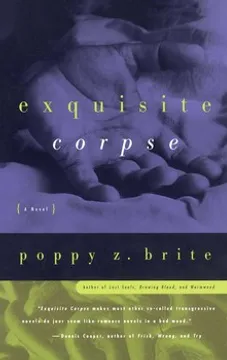


Plot Summary
A Killer Chooses Life
Andrew Compton1 has spent five years in a British prison for murdering twenty-three young men, with no expectation of release and no wish to reform. His notebooks first seem to lead him toward remorse, but the memories of his victims revive the pleasure he once took in killing. He decides that he would rather risk freedom than endure the cell until death.
A blood test reveals that he is HIV-positive, and he realizes the prison staff fear contagion. Since adolescence, Andrew1 has trained himself to slow his body until he seems dead. Now he plans to use that discipline to escape the institution that has made his confinement feel permanent.
Andrew’s decision rejects the moral structure prison is meant to impose. Reflection does not make him repent; it clarifies that his appetite remains and turns self-knowledge into strategy. The HIV result matters less as a medical prognosis than as a social fact he can exploit: fear makes the authorities careless in specific ways. His practiced near-death state joins the book’s central paradox, that control over the body can look like surrender. Andrew does not seek freedom to become someone else. He seeks the chance to resume being himself, which makes the escape both a plot engine and a refusal of rehabilitation.
The Morgue Awakens
Andrew1 stops eating, studies the rhythms of his body, and stages a fall that gets him examined in the prison infirmary. After a blood draw confirms his HIV status, staff become wary of handling him. He then lies motionless until guards find no pulse or breath and report him dead.
Because the prison cannot rule out an infectious illness, officials send him to a hospital morgue for examination. During an autopsy, the first incision jolts Andrew1 back into consciousness. He kills the pathologist10 and his assistant,11 dresses in the assistant’s clothes, and takes his keys, cash, spectacles,11 and car. By the time hospital staff realize what happened, he is already driving away.
The escape makes Andrew’s body both instrument and adversary. He has to relinquish ordinary signs of life without letting go of the will that keeps him attached to it, then endure medical procedure until pain restores movement. The morgue is an especially pointed threshold: the institution treats him as an object, and he reclaims agency by becoming dangerous again. His victims in this sequence are not part of his chosen pattern, but he kills them without hesitation because they threaten his escape. The scene establishes a governing distinction in Andrew’s mind: he can call an act necessary without questioning its violence.
Sam’s Borrowed Passport
Back in London, Andrew1 meets Sam,9 an American doctoral student, in a Soho pub and draws him into a private encounter. In a public toilet, Andrew1 kills him, then takes his passport, money, and clothes. A newspaper at Heathrow reports that the authorities still believe Andrew1 is dead, so he can pass through the airport without being recognized.
To frustrate any search, he buys tickets to several destinations and boards the flight to Atlanta. He trades Sam’s9 pounds for dollars, takes a bus through industrial and swamp country, and reaches New Orleans. The city’s dense concentration of bars and its distance from his old life make it an attractive place to begin again.
Sam’s stolen identity turns escape into performance. Andrew does not merely flee; he assembles a plausible public self from another man’s documents, clothing, and money. The airport’s report that he is still considered dead gives the disguise its central irony: official certainty protects him better than secrecy would. His multiple tickets create uncertainty for investigators, while the bus ride takes him from London’s familiar geography into a city he can imagine as a new landscape of appetite. Andrew reads places through what they might offer him. New Orleans is not a refuge from his nature, but a fresh setting in which to exercise it.
The Pet and the Runaway
In New Orleans, wealthy, withdrawn Jay Byrne2 buys LSD from Tran,3 a young Vietnamese American dealer, and asks to photograph him. Tran3 declines that evening, preferring a rave. Later, a hungry runaway14 approaches Jay2 outside a cafe and offers himself as a pet in exchange for shelter. Jay2 takes him home, drugs and tortures him, then kills him.
The violence unfolds in rooms Jay2 keeps almost unnaturally clean, while his private quarters hold the remains and tools of a hidden life. At the same time, Tran3 spends the night at the rave and returns to his family home. The two men’s separate choices bring them toward Jay’s house,2 but for very different reasons.
Jay’s cultivated house is not a contrast to his violence so much as its enabling structure. Order lets him keep separate compartments for hospitality, image-making, and cruelty. Tran, by contrast, moves between worlds without fully belonging to either: his family’s home, the Quarter’s drug scene, and the subculture he seeks out at night. The runaway’s bargain exposes how easily economic desperation can masquerade as consent, while Jay’s role as host turns care into a method of control. The novel’s paired characters are not yet connected, but their different relationships to vulnerability are already visible: Tran risks trust to find shelter, while Jay uses need to obtain access.
Letters at Home
After the rave, Tran3 finds his father, Truong Van Tran,7 waiting in his bedroom with intimate letters from Luke Ransom,4 Tran’s3 former boyfriend. The letters confirm that Tran3 is gay and that he and Luke4 used drugs together.
Truong7 fears his son3 may have AIDS and asks whether he has ever harmed his younger brothers. Tran3 denies it, but his father’s suspicion and shame make the house unlivable. Tran3 gathers his belongings and leaves for the French Quarter. He returns to Jay’s2 gate, where Jay2 has just finished dealing with the runaway’s14 body.
Jay2 lets Tran3 stay, and their attraction turns physical until a pirate radio broadcast brings Luke’s4 voice into the room. Tran3 breaks down and tells Jay2 that Luke,4 who has HIV, once tried to inject him with infected blood.
The family confrontation makes privacy itself a battleground. Truong has violated Tran’s room, yet his fear is not invented from nowhere: he has found evidence of risky behavior and cannot distinguish sexual identity from danger. Tran’s denial about his brothers answers the accusation but cannot repair the breach of trust. Jay initially offers the kind of welcome Tran needs, though the reader has already seen that his hospitality carries peril. Luke’s voice interrupts their intimacy from outside the house, showing how a former relationship can remain present through memory and media. Tran leaves one form of judgment only to enter a more intimate, less predictable dependency.
Soren Makes a Bridge
The day after leaving Jay’s house,2 Tran3 falls asleep in Jackson Square and wakes with Soren Carruthers5 beside him. Soren5 takes him to a Vietnamese restaurant, where Tran3 can eat and speak without having to explain every part of himself.
Their conversation reveals Soren’s5 own distance from his wealthy family and creates a cautious friendship. Tran3 learns that Soren5 works with Luke4 on WHIV, a pirate radio station where Luke4 broadcasts as Lush Rimbaud. Soren5 also tells him that Luke4 is HIV-positive and still emotionally attached to him.
Tran3 admits Luke4 threatened to infect him after their breakup, but insists he no longer hates him. The friendship gives Tran3 support, while connecting Luke’s4 private crisis to the choices unfolding around Jay.2
Soren’s value in this section is practical as much as emotional: he offers food, conversation, and a place in a community that is not organized around sexual access or drug sales. The restaurant matters because Tran can briefly inhabit a cultural setting without returning to the family that has expelled him. Soren’s disclosure about Luke complicates Tran’s account of the past. Luke is neither simply a monster nor simply a lost love; he is a dangerous person whose illness has intensified an already volatile character. By linking Tran to WHIV, Soren makes private pain audible, preparing the story to test whether public speech can still help the people whose lives it describes.
Two Predators Recognize Kin
After arriving in New Orleans, Andrew1 enters the Hand of Glory bar and meets Jay,2 who approaches him with a cold drink. Their mutual touch and urgent kiss signal that each recognizes danger in the other. At Jay’s house,2 Jay2 handcuffs Andrew1 and tests him by hiding a key in a severed head. Andrew1 retrieves it without flinching, then explains what prison taught him about confinement and fear.
Jay2 releases him, and the two men spend the next days comparing their histories and desires. Andrew’s1 account of murder and Jay’s2 hidden practices make ordinary intimacy impossible, but their shared knowledge gives each a rare sense of recognition. Jay2 has never had a living equal; Andrew1 has found a partner rather than another victim.
Their meeting is a courtship conducted through threat. Jay’s restraint and Andrew’s response turn the severed head into a test of whether either man will recoil from the other’s private world. Andrew passes by treating the act as familiar, not by proving himself stronger. Their bond offers a distorted answer to loneliness: recognition without moral restraint. Each can speak plainly because neither expects the other to condemn him. The relationship complicates the usual predator-victim arrangement by making violence a shared language, yet the balance is not equal. Andrew is more practiced at reading the world beyond his obsessions, a difference that will shape their partnership.
Birdy’s Poisoned Body
At the Hand of Glory, Andrew1 and Jay2 meet Tran,3 who is looking for customers and recognizes Jay.2 Andrew1 introduces himself as Jay’s2 cousin Arthur, then insists that Tran3 is the kind of victim they should take. Jay2 resists because Tran3 is a local with family and friends nearby. To satisfy their appetite without risking Tran,3 they invite Birdy,8 a young heroin user, back to Jay’s house.2
After Birdy8 dies, they find abnormal growths throughout his body and realize they cannot consume him. Jay2 drives the corpse to a concealed warehouse holding chemical waste from his family’s factory and seals it in a barrel of acid. The contamination links the city’s poisoned environment to the bodily danger that now disrupts their plans.
Birdy’s body brings the book’s environmental subplot into direct contact with its private violence. Byrne Metals’ legacy is not an abstract civic scandal: toxic waste becomes a physical obstacle inside the killers’ ritual. Andrew interprets Tran as destiny, while Jay thinks in terms of exposure and consequence, exposing their different kinds of calculation. Birdy is treated as expendable by both men, yet the contamination denies them the use they expected from him. The waste warehouse makes Jay’s family fortune materially present in his crimes. Wealth does not erase the factory’s damage; it gives Jay a hidden place to bury its consequences.
The Broadcast Falls Silent
On WHIV, Luke’s4 anger at the world reaches a breaking point when a caller challenges his contempt for people raising children and asks what he would build instead. Luke4 admits that he wants to live, not redesign society, and decides he can no longer host the show. On the same broadcast, Johnnie Boudreaux6 reveals that his brother Etienne15 has died of AIDS-related illness and that he intends to kill himself.
Luke4 and Soren5 agree to stay with him. Johnnie6 shoots himself on the showboat, and a gator drags his body into the bayou. Afterward, Soren5 tells Luke4 that Tran3 has been staying with Jay Byrne.2 Luke4 learns where Jay2 lives, leaves Soren’s house,5 and heads toward the Quarter.
Luke’s broadcast collapses the distance between rhetoric and responsibility. His anger has given WHIV force, but the caller makes him confront its limits: denunciation can expose hypocrisy without offering a life to inhabit. Johnnie’s death removes any easy distinction between political speech and immediate care. Luke and Soren cannot prevent his suicide, but they remain with him because he asks not to die unseen. That act changes Luke’s direction. His decision to leave the station is not a cure for his rage; it is a choice to stop using public performance as a substitute for reaching Tran. The broadcast ends, but its consequences propel him toward a private crisis.
Dinner Becomes an Ambush
Jay2 invites Tran3 to dinner with himself and Andrew,1 who is introduced as Arthur. After the meal, alcohol and sexual attention leave Tran3 disoriented. Jay2 attacks him, and Tran3 bolts through the house, reaches the courtyard, and escapes through the gate.
Injured and barely able to think, he collapses in the street. Jay2 catches up and bribes two police officers to treat the incident as a drunken lovers’ quarrel. Luke4 arrives and tries to reach Tran,3 but the officers restrain him while Jay2 claims the boy as his partner.
Luke4 cannot persuade Tran3 to recognize him or the police to intervene. Jay2 leads Tran3 away again. The escape has bought Tran3 only a brief interval, and Luke’s4 attempt to save him has revealed how easily authority can be purchased.
The failed rescue is built from overlapping impairments: Tran is hurt and intoxicated, Luke is exhausted and ill, and the police choose convenience over investigation. Jay’s money does more than secure silence; it converts public authority into an extension of his private control. Luke’s presence offers no immediate protection because Tran cannot recognize him and the officers have already accepted Jay’s version. The scene frustrates a familiar rescue pattern: love and urgency do not automatically make someone capable of saving another person. Tran’s escape matters because it proves resistance is possible, but the bought police response shows how quickly that possibility can be closed down.
The Slaughterhouse Door Breaks
Tran3 wakes bound in Jay’s2 hidden workroom and understands that Jay2 and Andrew1 mean to kill him. They torture him before his body gives way, and he dies while they feed on him. Luke,4 who has climbed over the walls behind Jay’s house,2 hears Tran3 and smashes through a window. He overturns the metal table, pins Jay,2 and cuts his throat with a razor.
Andrew1 holds Jay2 as he dies, then turns on Luke,4 recognizing the signs of HIV in his face and hands. Rather than kill him or call the police, Andrew1 taunts him and leaves him alive. Luke4 has stopped Jay,2 but he cannot save Tran.3 Andrew’s1 choice leaves the room’s surviving witness free to carry what happened beyond it.
The climax refuses the satisfaction of rescue. Luke reaches Tran, but only after Jay and Andrew have made the violence irreversible. His killing of Jay is an intervention and an act of rage, not a reversal of the harm. Andrew’s decision not to kill Luke extends the book’s unsettling logic of kinship: he recognizes a fellow person marked by illness and despair, yet offers no compassion that would amount to rescue. Luke’s survival leaves him with responsibility rather than triumph. He has witnessed the truth, but the act of witnessing cannot restore Tran or Jay, and Andrew remains beyond the reach of ordinary justice.
Andrew Carries Jay West
After Jay2 dies, Andrew1 carries his body into the house, washes and tends to him, and takes a portion of his flesh for the journey. He places Jay2 beside Tran3 in the hidden quarters, then leaves the property without confronting Luke4 again. Using Jay’s2 money, he buys a private compartment on a train heading west into the American desert.
Onboard, Andrew1 slows his body almost to death, not to escape a prison this time but to keep Jay’s2 flesh within him for as long as possible. Luke4 remains behind with the evidence of the slaughter and the memory of two losses. Andrew’s1 escape completes his self-made rebirth, but it offers no moral resolution or assurance that his violence will end.
Andrew’s final act turns intimacy into literal incorporation. Unlike his earlier victims, Jay is not simply kept as a body that cannot leave; Andrew takes him into himself, making possession the most complete form of companionship he can imagine. The train carries him away from the crime scene and toward an unknown future, but the narrative does not frame distance as transformation. His body’s deliberate near-death state now serves attachment rather than escape. Luke, by contrast, is left with memory and the possibility of telling what happened. The two men depart the climax with different forms of survival: Andrew through appropriation, Luke through testimony.
Epilogue
Later, Jay2 and Tran’s3 bodies decay together in the hidden quarters, their remains gradually merging into the space where Andrew1 left them. Luke4 wakes in a cheap motel after injecting heroin, still caked with blood from the night in Jay’s house.2
His first impulse is to blur the memories with whiskey, but he is lucid enough to know he cannot bear them that way. He begins speaking aloud, trying to understand how the night unfolded and to persuade himself that he still has a story to finish. The bodies remain behind while Luke4 attempts to turn witnessing into an account.
The epilogue denies the reader a clean aftermath. Jay and Tran’s decomposition does not restore them to human meaning; it leaves their bodies as the physical remainder of a violence Andrew has converted into intimacy. Luke’s return to consciousness is not redemption, but a fragile refusal to erase what he saw. His need to narrate echoes the novel’s competing forms of possession: Andrew incorporates the dead, while Luke tries to preserve events in language. Neither action repairs the loss. The ending instead distinguishes survival from recovery and makes storytelling an imperfect but necessary answer to the destruction of evidence, bodies, and relationships.
Analysis
Exquisite Corpse places two forms of hunger beside one another: the killers’ desire to possess bodies and the survivors’ desire for time, touch, and recognition. Andrew1 and Jay2 treat death as a solution to abandonment, converting other people into objects that cannot leave. Their bond appears to answer loneliness, but its intimacy depends on erasing the other person’s independence. Tran’s3 vulnerability is therefore not a sign that he welcomes harm. His need for shelter and affection is repeatedly mistaken by men who interpret access as permission.
The novel’s treatment of HIV resists a single moral meaning. The disease is neither punishment nor metaphor alone. It is a biological threat made more devastating by stigma, inadequate care, and political neglect. Luke’s4 fury exposes real cruelty, but his rhetoric also narrows his emotional world until he struggles to imagine a future beyond grievance. Soren’s5 and Johnnie’s6 presence shows that illness creates communities as well as losses, though community cannot guarantee survival.
The environmental plot extends this material vision. The Byrne family’s toxic waste is hidden, deferred, and eventually encountered through damaged bodies. Private violence does not float free of public systems: Jay’s2 money, factory inheritance, and access to a chemical dump shape what he can conceal. The book’s bleakness comes partly from refusing to let any one form of damage remain symbolic. Bodies decay, illness progresses, and polluted ground stores consequences.
Finally, the novel distinguishes survival from moral change. Andrew1 escapes and remakes intimacy as incorporation; Luke4 survives the night and attempts to make a story from what he witnessed. Neither action repairs what was lost. Yet the difference between them matters. Andrew1 absorbs the dead to prevent separation, while Luke’s4 account keeps the dead from disappearing into silence. Storytelling cannot restore a body, but it can refuse the killers’ claim that their private world is the only one that counts.
Review Summary
Exquisite Corpse is a controversial and divisive novel, praised for its vivid prose and exploration of dark themes, yet criticized for its graphic violence and gore. Set against the backdrop of the AIDS crisis, it follows two serial killers in a disturbing romance. Readers found it both repulsive and captivating, with some appreciating its unflinching approach to taboo subjects and others finding it gratuitous. The book's intense content and complex characters elicited strong reactions, making it a polarizing work in the horror genre.
People Also Read







Characters
Andrew Compton
The escaped London killerAndrew is an articulate, observant Englishman convicted of murdering twenty-three young men. He studies people with the precision of someone gathering material, but his intelligence does not produce empathy or restraint. Prison sharpens rather than cures his self-understanding: he concludes that his appetite is part of him and plans his escape accordingly. He is fascinated by death, by the boundaries of bodily consciousness, and by the possibility of choosing when to appear alive. Andrew can imitate charm and read social situations, which helps him move through the world unnoticed. Beneath that adaptable surface, he treats intimacy as possession and measures freedom by whether he can act on his desires.
Jay Byrne
The guarded Quarter heirJay is a wealthy New Orleans heir who lives behind iron gates in a house arranged around his need for control and privacy. He is elegant, watchful, and socially awkward in ways that make his manners seem almost ceremonial. His wealth separates him from the people he encounters, while his fascination with photography and bodily vulnerability draws him toward those who are easier to control. Jay has built a life of rigid routines and hidden rooms, but he is not incapable of attachment. He longs for a connection that does not depend on money or performance, even as his instinct is to make another person unable to leave. That contradiction shapes his bond with Tran3 and his recognition of Andrew1.
Tran Vinh
The restless Quarter dealerTran is a Vietnamese American young man who moves between his family’s East New Orleans home and the French Quarter’s queer, drug-using nightlife. He sells LSD, writes in notebooks, and is drawn to art, death, and experiences his family regards as dangerous. Tran is intelligent and curious, but he is also still discovering how much of his own life he wants to claim openly. His relationship with Luke4 has left him with memories of intense tenderness alongside fear and betrayal. He seeks affection without wanting to be managed, yet his longing for closeness can make him trust people before he understands their limits. Tran’s divided worlds are not simply cultural; they reflect his struggle to define himself apart from other people’s expectations.
Luke Ransom
The furious radio novelistLuke is a novelist living with HIV who hosts the pirate radio program WHIV under the name Lush Rimbaud. His talent for language gives shape to a deep, volatile anger at stigma, political indifference, and the prospect of dying young. Luke can be generous and perceptive, but his fear and jealousy have made him cruel toward Tran3, the first person he loved with sustained intensity. He often turns pain into performance, using the broadcast to attack a world he believes has abandoned him. Beneath the bravado, he wants ordinary things: time, work, and the chance to be close to Tran3 again. His conflict is whether he can stop making rage his only proof that he is still alive.
Soren Carruthers
The pirate radio engineerSoren is a technically gifted young man from a wealthy New Orleans family who chooses distance from its expectations. He builds and maintains the equipment for WHIV and helps Luke4 broadcast from a boat in the bayou. Beneath his polished clothes and dry humor, Soren understands estrangement and the practical demands of living with HIV. He can be guarded about trust, especially when Luke’s4 choices threaten the station, but he offers Tran3 food and companionship when Tran3 has nowhere safe to turn. Soren’s care is concrete rather than sentimental: he listens, shares information, and remains present when others are in crisis.
Johnnie Boudreaux
The bayou boatmanJohnnie is a kind-hearted Cajun who knows the waterways around New Orleans and operates the boat that carries WHIV’s equipment. His practical skills make the broadcasts possible, while his relaxed humor softens the tension between Luke4 and Soren5. Johnnie lives with HIV and bears visible signs of illness, but he does not hide his condition behind the same anger Luke4 displays. His family history is complicated by a brother15 who was also gay and whose illness has shaped Johnnie’s understanding of loss. He is a friend who asks plainly for company when he needs it.
Truong Van Tran
Tran’s worried fatherTruong, whom his family also calls T.V., runs a small restaurant and values discipline, privacy, and family responsibility. He has built a stable life after displacement, and his certainty is shaken when he discovers his son’s3 intimate letters and drug use. His fear of illness and harm to Tran’s3 younger brothers comes out as suspicion, even though he also feels responsible for his son’s3 distress. Truong’s love is real but constrained by the assumptions he trusts and the emotions he cannot easily express. His confrontation with Tran3 reveals the cost of protection when it becomes surveillance.
Birdy
The hungry street runawayBirdy is a thin young drifter whose need for shelter and drugs has made him willing to bargain with strangers. He approaches Jay2 with a mixture of humor and desperation, asking to be taken in and treated like a pet. His street experience gives him a wary sense of price and risk, but little power to negotiate on equal terms. Birdy shows how easily a request for care can be turned into access by someone richer and more dangerous.
Sam
The visiting physics studentSam is an American doctoral student visiting London, curious about particle physics and eager for conversation. His openness makes him easy for Andrew1 to approach, and his passport becomes central to Andrew’s1 escape. Sam represents the ordinary trust Andrew1 exploits when constructing a new identity.
Dr Martin Drummond
The hospital pathologistDrummond is the pathologist assigned to examine Andrew1 after the prison reports him dead. He is confident in the routine of the autopsy room and dismissive of the young assistant’s11 concerns. His professional certainty places him directly in the path of Andrew’s1 calculated return to life.
Waring
The nervous junior doctorWaring is a young medical assistant working with Drummond10. His fascination with famous killers sits uneasily beside his nervousness in the morgue. He provides the clothes, keys, and identity Andrew1 uses to pass through the hospital.
Dr Selwyn Masters
The prison physicianDr Masters performs Andrew’s1 routine prison examinations and is called to certify his apparent death. His gentle manner makes him less hostile than the prison officials, and he unknowingly helps Andrew1 pass out of custody.
Alex
The challenging radio callerAlex is a gay man who calls WHIV and describes raising three children with his partner after becoming their guardians. He challenges Luke’s4 contempt for parents and forces him to confront the gap between denunciation and constructive action.
The runaway called Fido
Jay’s first Quarter guestThe unnamed runaway whom Jay2 calls Fido is a newly homeless teenager who approaches him outside a cafe seeking food, shelter, and affection. His willingness to accept Jay’s2 terms reveals the danger hidden inside Jay’s2 performance of hospitality.
Etienne Boudreaux
Johnnie’s absent brotherEtienne is Johnnie’s6 much older brother, a gay man whose illness and death shape Johnnie’s6 final days. Their family’s rejection limited the care they could seek openly, leaving Etienne’s sister to help in secret.
Plot Devices
Andrew’s deathlike discipline
Escape through stillnessAndrew’s1 lifelong practice of slowing his breathing and pulse becomes the means by which he fools prison staff into declaring him dead. The technique is introduced through his earlier private attempts to leave his body and is developed into a deliberate escape plan. It also gives the novel a recurring image of suspended consciousness: Andrew1 is neither fully present nor fully gone while officials move him from prison to hospital. The method depends on the authorities’ fear of HIV, so a bodily skill and a social prejudice converge to open the route out of confinement.
Sam’s stolen identity
A passport becomes a maskAfter killing Sam9 in London, Andrew1 takes his passport, money, and clothing. The documents let Andrew1 pass as an American traveler, while purchasing several flight tickets obscures which destination he chooses. The newspaper’s mistaken certainty that Andrew1 remains dead helps the disguise work. This device converts identity into portable evidence: a photograph, a name, and a travel document can outweigh the truth of who is carrying them. It also carries Andrew1 out of the British plot and into the New Orleans story, where his borrowed name no longer protects him from recognition by another predator.
WHIV pirate radio
Private pain goes publicLuke’s4 illegal radio program gives his anger a platform and connects him to listeners, friends, and the wider AIDS crisis. The broadcasts reveal his talent for rhetoric, his hostility toward political hypocrisy, and the instability beneath his public persona. WHIV also ties Luke4 to Soren5 and Johnnie6, making the station a fragile community rather than merely a stage. A caller’s challenge pushes Luke4 to acknowledge that anger has not told him what to build, while the station’s eventual silence sends him toward Tran3. The broadcasts therefore carry both the story’s political argument and its character plot.
The poisoned warehouse
Industry returns as bodily costJay’s2 family business has polluted the bayou for decades, and its industrial waste persists in a hidden warehouse outside the city. Jay2 uses one of its chemical stores to dispose of a body, linking private violence to the family’s public legacy. Later, abnormalities found in Birdy’s8 body prevent Andrew1 and Jay2 from treating him as food. The poison is more than atmosphere: it interrupts the killers’ ritual and gives the region’s environmental damage a bodily consequence. Jay’s2 inherited wealth and access to the waste site make him both beneficiary of the family industry and custodian of its concealed refuse.
HIV and public fear
Illness reshapes every bargainHIV is a medical reality, a source of stigma, and a force that rearranges how characters think about time and intimacy. Andrew1 exploits prison staff’s fear of contagion; Luke’s4 diagnosis intensifies his rage and his fear of abandonment; Tran3 faces the possibility of infection after his relationship with Luke4. Soren5 and Johnnie6 show different ways of living with the same disease, while public rhetoric often reduces infected people to threats or moral failures. The novel uses the epidemic not as a simple symbol but as a material condition whose effects include uncertainty, social exclusion, treatment burdens, and the temptation to treat death as either punishment or romance.
Download PDF
Download EPUB
.epub digital book format is ideal for reading ebooks on phones, tablets, and e-readers.








