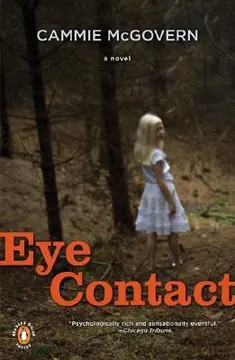


Plot Summary
Two Children Vanish
At Woodside Elementary, Cara Miller waits for news of her nine-year-old son, Adam, who has disappeared during recess alongside Amelia Best, a new fourth grader. The school explains that Adam's substitute aide misunderstood her duties, leaving him outside without his usual support.
Police search the grounds and nearby woods. Adam is found alive, but Amelia is dead. Cara's first relief collapses when she sees him folded into a terror she cannot reach with her voice.
The school sends the middle-school students home and alerts their families, while the police take Cara and Adam to the station. The crime begins as a question about two missing children, then becomes an urgent mystery with one surviving witness who cannot yet explain what he saw.
The opening makes a procedural failure concrete: an aide misunderstands a schedule, and a child who depends on reliable routines is exposed to an unpredictable world. The emotional reversal is equally abrupt. Cara receives the news she has been waiting for, that Adam is alive, only to understand that survival has not spared him from what happened. The crime's central difficulty is established at once: the witness is present, but his experience cannot be translated into the familiar narrative forms adults demand. Suspense therefore grows from a gap between what the institutions need and what Adam can communicate.
Morgan Writes It Down
At middle school, thirteen-year-old Morgan writes a private confession to organize a crime he has not yet admitted to anyone. He insists to himself that he is not usually a rule-breaker, then acknowledges that he has done something terrible and means to make amends without facing punishment.
During a lunch group for students struggling socially, counselor Marianne Foster introduces a community-volunteering project. An office worker interrupts with news of an emergency, and Morgan assumes the police have discovered his secret.
Instead, Marianne tells him that a girl has died at the elementary school. Morgan learns that another child was found with her and recognizes Adam from an earlier visit to the special education room. While the school empties, his own confession stays folded in his notebook.
Morgan's written confession gives the novel a second kind of unreliable-looking testimony, though he is trying to be scrupulously accurate. His difficulty is moral rather than evidentiary: he believes doing something wrong has made him, permanently, the wrong kind of person. The murder interrupts his private effort to manage shame and gives it an external object. His attention to Adam also introduces the book's counterpoint to adult expertise. Morgan recognizes the boy not through a diagnosis or a case file, but through an earlier shared activity, making their eventual connection plausible before it becomes important.
A Witness Goes Silent
At the police station, Adam cannot answer Cara or the young detective, Matt Lincoln, and retreats into rocking, humming, and vigilant listening. A specialist tries to interview him, but unfamiliar people and unfamiliar toys deepen his withdrawal.
Investigators explain that no one saw the children leave, no vehicle tracks lead into the woods, and the clearest footprints belong to the children. They consider whether Adam could have harmed Amelia, then discount the idea because there is no blood or evidence of concealment.
A teacher remembers seeing the children together on the swings, apparently singing rather than talking, before they vanished. Cara sees her son acting unlike himself and must reconsider how much she knows about his abilities and his fear.
The investigation's early evidence is defined by absence: no adult tracks, no observed departure, no usable verbal account. The police must treat Adam's silence as a constraint, but the novel refuses to equate silence with emptiness. Cara's knowledge is also shown to be provisional. She has spent years learning Adam's patterns, yet this crisis reveals that careful familiarity is not omniscience. His renewed distress may indicate trauma, but it may also reflect a world adults have misread. The section establishes a tension between responsible caution about suggestion and the risk of dismissing a witness before anyone has learned how he communicates.
Cara and Kevin's Old Wound
The case pulls Cara back to fifth grade, when she volunteered to help Kevin Barrows after a bicycle crash left him with brain damage and severe physical disabilities. Her best friend, Suzette, recognized that Cara's devotion mixed compassion with a wish to be noticed.
Years later, Cara and Kevin meet again in high school. She records English assignments so his poor eyesight will not keep him from class, and their private notes reveal a shared humor. When Kevin confesses that he has loved her for years, Cara cannot return the feeling and withdraws.
During his failing kidney treatment, she visits him but sends only a cautious card. Kevin survives a transplant, then leaves school and disappears from Cara's daily life, leaving her with guilt and unfinished affection.
Cara's childhood decision to help Kevin is both generous and self-revealing. She sees a person in need, but also imagines that care might secure a place for her in the social world. The distinction matters because the same impulse will shape her adult parenting: help can be love, a bid for recognition, or an attempt to control outcomes. Kevin's disability does not make him a passive emblem. His humor and direct affection complicate Cara's fantasy of rescue, while her withdrawal shows how intimacy can feel more frightening than service. Their early history establishes an emotional debt that later events bring back into view.
A Family Without Names
As young adults, Cara and Suzette share an apartment, but their friendship frays when Suzette grows close to Kevin and Cara begins a secret relationship with a married instructor.
After the instructor disappears from her life, Cara reconnects with Kevin, becomes pregnant, and decides to raise the baby without identifying his father. She and Suzette plan to parent together, but Suzette withdraws before the birth, unable to take on the role Cara has imagined for her.
Adam arrives difficult to soothe, later receives an autism diagnosis, and becomes the focus of Cara's demanding therapies and daily adjustments. Suzette's visits dwindle. When Cara once asks why her baby seems to resist being held, Suzette cannot answer, and the friends stop speaking.
Cara's decision to keep Adam is an act of agency, but she also loads it with a hope that motherhood will restore her bond with Suzette. That unspoken bargain helps explain why Suzette's retreat wounds her so deeply. The father's anonymity likewise becomes a way of protecting the small family Cara believes she can manage alone. Adam's diagnosis does not simply introduce a challenge; it exposes the limits of Cara's belief that enough effort can produce a predictable future. Her tireless care is loving, but its intensity can also make other people feel drafted into a life plan they did not choose.
Amelia's Rabbit's Foot
As police interview staff, special education teacher June Daly admits that Amelia had been isolated in her class and that she failed to arrange the friendship her mother requested. June remembers Amelia's quietness, her unpredictable closeness, and an incident she never documented involving a strong smell in the classroom.
Adam's aide, Phil, tells Cara that Amelia often sought Adam out at recess; the children sat together and sang. A substitute aide then reveals that she once found Adam with Amelia in the boys' bathroom before school.
Searching his backpack, Cara discovers a rabbit's foot concealed inside his pencil pouch. Amelia had carried one too. The small object suggests that Adam and Amelia shared more than a passing playground encounter, though he remains unable to explain how it came to be there.
The rabbit's foot turns a private attachment into material evidence, but it cannot immediately tell Cara what the relationship meant. That uncertainty is central: adults have kept records of assignments, accommodations, and deficits, yet the most consequential part of the children's day happened in places those records barely describe. June's forgotten observation also shows how institutional omissions accumulate. She did not intend harm, but failing to record an embarrassing clue left Amelia's needs harder to understand. The keepsake offers no simple answer; instead, it proves that the children's connection had a history adults did not see.
Boggle Opens the Room
Morgan asks counselor Marianne to let him volunteer with Adam, hoping to make amends for his own hidden wrongdoing as well as help the boy. Cara agrees to a brief visit but expects little. Adam will not approach Morgan until Morgan offers to play Boggle by a version they once shared in the special education room, where sounds count as words.
Adam comes to the table, picks up his pencil, and writes a few words. The modest game is the first time he has willingly joined another child since the murder. Cara asks Morgan to return, and his presence becomes a point of safety Adam can recognize. Morgan, however, also hopes that Adam may help him solve the crime and prove he is not a bad person.
The game works because Morgan does not force Adam into a standard performance of friendship. He offers a familiar rule that makes room for sounds, not just conventionally recognized words. This is an ethical form of accommodation: the activity changes so participation becomes possible, rather than demanding that Adam first become easier for others. Morgan's motive is mixed, and the novel allows that mixture to matter. His need to redeem himself is not yet the same as care, but genuine attachment begins to grow inside an imperfect intention. Cara's relief is real, even as she cannot tell how durable the breakthrough will be.
The Flute's False Trail
Watching Morgan sit with Adam on the playground, Cara tests sounds from a distance and learns that a small piece of music can pull Adam across the field. She suspects that music drew him into the woods and tells Matt that the killer may have gone barefoot.
Police find a musician, Robert Phillips, known as Busker Bob, who carried a tin whistle and had been walking near the woods. Adam's response during a lineup appears to support the lead, and officers move quickly.
Cara later doubts the identification: Adam's echoed description and the man's voice do not fit, and a familiar phrase sounds less like a stranger's accent than a voice she has heard before. Meanwhile, Morgan's mother discovers his confession and takes him to police, where he admits setting a fire on conservation land.
Sound becomes evidence because Cara understands that Adam's attention is not distributed like an adult's. Music can reach him when faces, questions, and warnings cannot. Yet the apparent breakthrough with Busker Bob demonstrates the danger of turning one accurate insight into certainty. The suspect fits a theory, but Cara notices that the voice does not fit Adam's memory. Morgan's confession runs alongside this false lead, linking the book's two crimes through shame rather than causation. His act damaged a habitat, and his attempt to undo it by solving a murder risks making other people instruments of his self-forgiveness.
Portraits and a Disappearance
Morgan brings Cara Amelia's hidden drawings, including several careful portraits of Adam and one of Cara herself. The images suggest that Amelia studied both of them closely.
Cara visits Amelia's mother, Olivia, who explains that her daughter had struggled with learning and social connection, and that she had recently begun making progress at Woodside. Amelia had spoken warmly about Adam and wanted to invite him home. As they compare what the school knew with what Olivia knew, Cara realizes that Amelia's needs and strengths had been largely invisible to her teachers.
At the same time, thirteen-year-old Chris Kolchak disappears from home. Morgan was supposed to meet him that afternoon, but failed to show up, and the police begin asking what Chris may have known about Amelia's death.
The drawings reverse the direction of observation. Cara has spent years watching Adam and interpreting his gestures; now Amelia's portraits show that someone else watched him with patience and detail. The images make his significance visible without proving that the adults understand the friendship. Olivia's account further unsettles the school's categories: Amelia was not simply quiet or academically behind, but a child whose abilities and difficulties changed with context. Chris's disappearance extends the danger beyond the original crime and gives Morgan's missed appointment a new moral weight. Attention, in this section, becomes both a gift and a responsibility.
Kevin Steps Out of Shadow
Adam's repeated phrase leads Cara to Kevin, whose speech patterns match the voice in Adam's memory. Kevin admits that he believes he is Adam's father and that he had been in the woods to meet the boy. He says he left before Amelia was killed, afraid that his arrival would disrupt Adam's established life. His first account obscures how much he saw, so Cara takes him to the police.
Kevin's mother, Evelyn, then claims she helped him reach the woods and threatens Cara with a knife when she tries to leave. Suzette arrives and calmly takes control, allowing police to remove Evelyn. The case remains unsettled: neither Kevin nor Evelyn explains the killer, and Cara must face how much of her family's history has been hidden from her.
Kevin's return makes the mystery intimate without making intimacy proof of innocence. Cara recognizes the voice, but recognition only identifies a presence, not an act. Kevin's fear of disrupting Adam's life resembles Cara's own protective instinct, yet it has led him to secrecy and a dangerous attempt at contact. Evelyn's intervention shows how care can harden into possession: she treats Kevin's vulnerability as a reason to manage the truth for him. Suzette's composed arrival is a quiet reversal of her old retreat. She can act decisively for someone else, even while her own fear of the outside world remains powerful.
The Hole in the Woods
While the town searches for Chris, June follows a faint light into the woods and finds him digging a deep, coffin-shaped hole. He tells her that the murder was his fault because he had brought a knife to school. When June stays beside him instead of summoning help immediately, Chris explains that he planned to use the knife against Harrison Rogers, a boy who had bullied and threatened him.
Chris had hidden the weapon in the woods; when he returned with Harrison, Amelia was there, looking for a man in a wheelchair. She challenged Harrison, who took the knife and stabbed her after she escaped his sexual threats. Chris froze, then helped Harrison conceal what happened. June brings him to safety, but his guilt does not lift with rescue.
Chris's hole gives physical shape to a fantasy of control: he imagines he can bury the evidence of violence and decide who will be missed. The confession reveals that his threatened attack on Harrison grew from sustained bullying, but it does not excuse the danger he created by bringing a knife. June's decision to join him at the hole creates the conditions for disclosure because she first meets him in the world he has made, rather than demanding an immediate account from outside it. His paralysis during Amelia's attack is painful evidence of how fear can narrow action, while leaving responsibility intact.
Harrison's Shoes Give Him Away
Morgan realizes that Chris's talk of dangerous bullies may point toward Amelia's killer, not merely toward people who teased him. He gives Cara a list of students who targeted Chris and marks the worst offenders. Cara passes it to Matt, who recognizes Harrison Rogers as a boy already linked to the investigation.
At the station, Cara notices Harrison's slip-on shoes have the same sole pattern as Adam's, explaining why investigators found only the children's tracks near the clearing. Police question Harrison with a lawyer present.
He eventually confesses: after Chris's knife was taken from its hiding place, Amelia confronted him in the woods, and he stabbed her when she resisted him. The earlier musician and Kevin are cleared; the crime grew from a bully's violence and Chris's desperate, failed plan.
The decisive clue is not a forensic marvel but a comparison made by someone who knows Adam's ordinary shoes. The case turns on attention to mundane detail, just as Adam's witness account depends on details adults initially discount. Morgan's list also has a moral function: it converts private knowledge of bullying into evidence that institutions can act on. His earlier silence when he saw Chris attacked is not erased, but he now chooses to risk disclosure. The murderer is not a mysterious outsider. He is a student whose cruelty was visible to peers and whose threats had been treated as a problem Chris should manage.
The Past Opens Again
With the killer identified, Cara visits Suzette and learns that Kevin once planned to win Cara's affection and then reject her as revenge for her earlier withdrawal; Suzette helped, then withdrew from the scheme.
Cara apologizes for asking Suzette to build a life around a baby she had not chosen, and Suzette acknowledges her own part in their estrangement. Kevin later admits he was with a friend following Cara's parents' car on the night they died, hoping to learn whether Adam was his son.
Cara cannot forgive the secrecy or accept his account as harmless, and sends him away. June, meanwhile, tells Teddy how deeply she cares for him; after Chris is found, they acknowledge their love and decide to live together. Morgan's mother also recognizes that her son needs friends, not just correction.
The murder does not resolve the older injuries; it makes them harder to avoid. Cara and Suzette discover that both interpreted the other's choices through loneliness, then treated silence as protection. Kevin's disclosure about Cara's parents complicates any easy reunion, since his longing for Adam is entangled with a past he concealed. The novel does not offer instant forgiveness as proof of emotional growth. Instead, Cara sets limits while leaving open the possibility of contact. June and Teddy's decision to share a home offers a contrasting form of commitment: it follows direct acknowledgment rather than years of avoidance.
A Friendship Takes Shape
Cara explains Amelia's death to Adam in words he can hold: she is gone forever, and he will not see her again. He is sad, but also relieved that he no longer has to search for her at recess. Later, Morgan returns Adam's belongings and apologizes for treating their visits partly as an investigation.
Adam recognizes him and asks, without prompting, what game Morgan likes best. Cara lets the exchange continue. Morgan then explains that Amelia had been trying to help a man in a wheelchair, and Cara understands that she had been seeking Kevin.
She allows Kevin to meet Adam again, but sets boundaries and insists they not be alone together yet. At a roadside diner, Adam delights in Kevin's wheelchair lift and helps operate it, while Cara watches their relationship begin in small, practical acts.
The ending measures progress in actions scaled to these characters: a spontaneous question, a shared game, a boy operating a lift. None erases Adam's autism or guarantees a conventional future. What changes is the shape of the social world around him. Cara makes room for relationships she cannot control, while still setting boundaries informed by real harm. Adam's response to Amelia's death is neither the expected display of grief nor indifference; it is a personal understanding built from permanence, routine, and relief from searching. The novel ends not with perfect access to his inner life, but with others learning to meet him without demanding that he translate everything.
Analysis
Eye Contact treats communication as a problem of access, not a simple measure of intelligence or feeling. Adam's silence does not mean that he has failed to notice the world; it means that adults are asking him to deliver experience through forms that do not reliably fit his mind. Music, repeated speech, shoes, and small objects become meaningful because Cara learns to read them without pretending they provide a complete account. The novel's strongest ethical question is therefore not whether Adam can be made legible, but whether institutions and caregivers can tolerate evidence that arrives in unfamiliar shapes.
Care itself receives a similarly unsentimental examination. Cara's devotion gives Adam support, yet she sometimes treats progress as something she can engineer through enough practice. Her history with Kevin and Suzette shows that rescuing another person can conceal a wish to be needed, while protective silence can become another form of control. The book does not condemn caregiving; it asks caregivers to recognize the difference between supporting another person's life and scripting it.
Morgan and Chris extend that question into adolescence. Both boys are isolated, but their responses to exclusion diverge: Morgan converts guilt into lists and service, while Chris imagines violence as a way to stop being powerless. The novel traces how bullying is not merely a private hurt but a social condition that adults can minimize until it becomes dangerous. Responsibility remains complex without becoming vague. Chris's suffering matters, but his choices have consequences; Morgan's good intentions do not erase his fire.
Finally, Amelia's drawings and Adam's modest acts of attention challenge the assumption that a child's value depends on typical achievement. The ending offers no cure and no complete translation of Adam's inner life. It offers something more credible: adults and children learning to make room for one another, through games, questions, boundaries, and practical help.
Review Summary
Eye Contact received mixed reviews, with an average rating of 3.57 out of 5. Readers praised McGovern's portrayal of autism and the mother-son relationship, finding the insights into special needs families compelling. The mystery element garnered both praise and criticism, with some finding it suspenseful and others feeling it was convoluted. Many appreciated the author's knowledge of autism but felt the plot became unfocused with too many characters. Some readers found the book emotionally impactful, while others struggled with its pacing and resolution.
People Also Read



Characters
Cara Miller
Protective, searching motherCara is a single mother who has organized her life around helping Adam navigate a world that often overwhelms him. She is observant, determined, and generous, but her care can become a project of anticipating every difficulty and interpreting every silence for him. Her own childhood left her hungry for friendship and recognition, so she sometimes mistakes being needed for being securely loved. When Adam's crisis exposes the limits of her knowledge, she must distinguish advocacy from control. Cara's emotional strength lies not in always knowing what is best, but in revising her assumptions, setting boundaries, and allowing Adam to build connections that do not pass through her.
Adam Miller
Listener beyond the noiseAdam is a nine-year-old autistic boy whose language, movement, and attention work in distinctive ways. He loves music, machines, and precise patterns, and he often notices sounds others miss while struggling with abstract questions or social expectations. His mother has spent years helping him communicate, sometimes through demanding therapies and sometimes by learning which routines make the world bearable. Adam is not simply a puzzle for adults to solve: he has preferences, attachments, fears, and forms of understanding that may not look like conventional conversation. His relationship with Cara is close and loving, though both must make room for his growing capacity to connect beyond her.
Morgan
A guilty young observerMorgan is a socially isolated middle-schooler with intense interests, careful habits, and a mind that records details others overlook. He longs for friendship but has learned to monitor his words after being mocked for speaking too freely. His private notebooks give structure to both his curiosity and his guilt; he treats moral repair as if it were a problem he could solve by collecting enough facts. Morgan's attention to Adam and the murder grows from mixed motives, including the wish to make his own wrongdoing disappear. Over time, his capacity to notice becomes more valuable when paired with the courage to speak and the patience to remain present.
Amelia Best
The watchful new girlAmelia is a ten-year-old newcomer whose quietness and uneven school performance leave adults unsure how to understand her. She draws with unusual care, carries a rabbit's foot, and seeks company in ways that can be difficult to read. Her attention to Adam is not based on correcting him or making him perform; she appears interested in his particular habits and sounds. Amelia's mother sees strengths that the school's thin records fail to capture, while teachers notice only fragments of her behavior. She is a child with her own wishes and limits, not merely a mystery for other people to interpret.
Kevin Barrows
The wounded old friendKevin is a former schoolmate of Cara's whose childhood accident left him with lasting physical and speech impairments. He is intelligent, dryly funny, and capable of great tenderness, but his repeated health crises and periods of depression have made dependence and independence difficult to balance. Kevin resists being reduced to a lesson in perseverance, especially when others decide what he can or cannot manage. His history with Cara is shaped by mutual watching, missed chances, and long silences. He wants to be seen as a person with agency, even when his needs make that wish complicated for him and the people who care about him.
Suzette
The guarded lifelong friendSuzette has been Cara's closest friend since childhood, a practical, independent girl who cared little for popularity and devoted herself to art and family. She is perceptive about other people's motives, but that insight does not prevent her from retreating when relationships become frightening or demanding. Her history of caring for her younger brother gives her a strong sense of responsibility, while her anxiety narrows the life she is willing to enter. Suzette and Cara have loved each other deeply, yet often assumed they understood the other's choices without asking. Her artistic eye and guarded honesty reveal a person who remains connected to the world even when she cannot comfortably move through it.
Chris Kolchak
The frightened targetChris is a thirteen-year-old with severe anxiety, obsessive habits, and an elaborate inner life shaped by health fears and isolation. He can talk at length about his interests, yet struggles to recognize when his plans place him or others in danger. At school, he is an easy target for students who exploit his differences, and repeated humiliation leaves him imagining dramatic ways to regain control. Chris is neither a symbol of helplessness nor a hidden villain; he makes consequential choices while carrying real fear. His connection with Morgan offers a rare chance to be seen by another boy who understands what it means to feel conspicuous.
June Daly
The patient special-ed teacherJune teaches students with learning and developmental disabilities and believes that patient, practical support can change what a child is able to do. She cares deeply about her pupils, but knows that good intentions do not guarantee close observation; she has missed opportunities to understand Amelia. June is reflective and self-questioning, sometimes to the point of painful doubt. Her relationship with Teddy gives her a chance to risk directness rather than hide behind professional composure. She is at her best when she listens closely and adapts to the person in front of her.
Matt Lincoln
The open-minded detectiveMatt is a young detective investigating Amelia's death. He understands the need for careful, non-leading interviews and shows more patience with Adam than Cara expects from the police. His nephew's autism gives him a personal reason to resist dismissing an unusual witness, though he remains bound to evidence and procedure. Matt is methodical rather than infallible: he can follow a plausible lead too far, then reconsider when new details emerge. His connection with Cara grows through mutual respect and practical concern, not a sudden escape from the pressures of the case.
Teddy
Suzette's devoted brotherTeddy is a police officer and Suzette's younger brother, who has spent much of his life caring for her. His loyalty makes him dependable, but also leaves little room for him to imagine a future separate from her needs. He is gentle, thoughtful, and less articulate about emotional matters than June, who helps him find language for what he feels. Teddy's connection to Cara's past gives the investigation a personal dimension, while his relationship with June asks him to balance family duty with adult partnership.
Olivia Best
Amelia's determined motherOlivia is Amelia's mother, raising several children while trying to secure a school setting that recognizes her daughter's needs. She has fought for Amelia's education and understands abilities that do not show up in a thin school file. Grief and frustration coexist in her, but she is willing to speak honestly with Cara about Amelia's private struggles and attachments. Olivia's account broadens the adults' understanding of the girl without claiming to explain everything about her.
Evelyn Barrows
Kevin's vigilant motherEvelyn has spent decades caring for Kevin through severe injuries, rehabilitation, and recurring health problems. She measures love through practical intervention and preservation, keeping a photographic record of his recovery and worrying that he underestimates his limitations. Her devotion is real, but it can become controlling when she decides that protecting Kevin matters more than telling him or others the truth. Evelyn's life shows the strain of caregiving when a parent's identity narrows around a child's needs.
Phil
Adam's trusted school aidePhil is Adam's regular aide, a young man who speaks to him casually and treats him as a boy rather than a clinical assignment. Cara values the ordinary peer-like rhythm Phil brings to school, though he does not always recognize which small observations will matter. His recollections of Amelia and Adam together help Cara understand a friendship that had taken shape outside formal lessons.
Morgan's mother
The outspoken environmentalistMorgan's mother is an environmental lawyer and activist who has spent years trying to protect local wetlands. She is forceful in public and certain that direct action is more useful than social convention, but she has difficulty recognizing how much Morgan needs guidance with friendship and shame. Her relationship with him changes when his dangerous choices make his distress impossible to dismiss. She is loving, though not always skilled at seeing what kind of help he is asking for.
Marianne Foster
The steady group counselorMarianne leads a small middle-school group for boys working on social and emotional difficulties. She creates a private, accepting space and encourages Morgan to take on a volunteering project, while remaining alert to how vulnerable students respond to crisis. Her support is practical rather than sentimental: she gives Morgan a structured opportunity to connect with someone outside his usual circle.
Harrison Rogers
A volatile older studentHarrison is a red-haired middle-schooler whose intimidating clothes and quick temper make him stand out to other students. He moves within a group of boys who have targeted Chris, and his presence contributes to the climate of threat surrounding the school. His relationship with his mother is marked by her loud defensiveness and his visible discomfort.
Robert Phillips
The children's musicianRobert Phillips performs children's music as Busker Bob, using instruments and birdlike sounds to draw young listeners close. Cara remembers him from concerts Adam attended when he was small. His presence near the woods makes him relevant to the investigation, though his role is easy to misread.
Plot Devices
Adam's delayed echolalia
Memory without a narrativeAdam sometimes repeats words or phrases long after hearing them, preserving speech in a form adults may mistake for a response to the present moment. Cara understands that this can function like a stored recording, but investigators initially struggle to separate remembered speech from direct testimony. The device makes sound a kind of evidence and gives Adam a route into the case that does not depend on describing a face or telling a chronological story. Its limits matter too: a repeated phrase can identify a voice or event without establishing exactly what the speaker did.
The rabbit's foot
A keepsake becomes evidenceAmelia carries a rabbit's foot, and Cara later finds one hidden inside Adam's pencil pouch. Its presence confirms that the children shared an attachment and leads Cara to study Adam's belongings as possible traces of the woods. The object connects the students' private friendship to the adult investigation. When it appears beside a knife, it also points toward the weapon, though the clue needs interpretation and cannot by itself identify the killer.
Music in the woods
Sound draws Adam outwardAdam's extraordinary attention to music shapes both his movements and the investigation. Cara tests sounds at the playground and discovers that even a distant piece of music can pull him toward its source. A flute-like sound in the woods helps explain why he left the playground, while a musician's presence becomes a convincing but misleading lead. Music also offers a bridge between Adam and other people, including Amelia, whose songs invite a connection that ordinary conversation might not have achieved.
Morgan's notebooks and lists
Private records become testimonyMorgan writes down facts, suspicions, and his own confession because paper feels more manageable than speaking. His lists initially include implausible suspects, reflecting his tendency to treat every observation as a possible clue. Later, he records the students who bullied Chris and marks the most dangerous ones. That list gives police a lead they had not properly connected to the murder. The notebooks also expose Morgan's need to turn guilt into a solvable task, while his eventual willingness to share them becomes a more meaningful form of responsibility.
Footprints and shoe soles
Ordinary shoes expose a lieInvestigators find few tracks near Amelia, making it difficult to reconstruct who entered the clearing. Cara's familiarity with Adam's slip-on shoes helps her recognize that another student's matching soles could explain the missing adult-sized impressions. The clue is deliberately mundane: it emerges not from specialized equipment alone but from sustained attention to a child's ordinary possessions. It redirects suspicion away from the apparent outsider and toward someone already connected to the school's bullying history.
Download PDF
Download EPUB
.epub digital book format is ideal for reading ebooks on phones, tablets, and e-readers.








