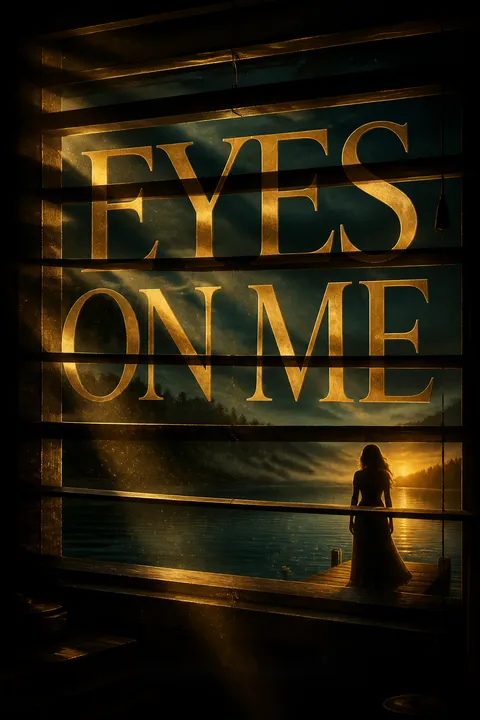


Plot Summary
Prologue
Seven years before the main story, Garrett Porter1 admits to his friends that he wants to watch consensual sex, after several attempts to share his less conventional desires have left him feeling like a creep.
His friend Emerson3 turns that admission into a business plan: a dating app for people with compatible kinks, followed by an exclusive club where they can explore without shame. When the company they work for collapses, Garrett1 joins Emerson3 in building Salacious Players’ Club. The new venture gives him a purpose at a time when even getting out of bed has become difficult.
The origin story makes Salacious more than a glamorous workplace: it begins as a practical answer to the shame that has isolated Garrett. His voyeurism is framed not as covert intrusion but as a desire for mutually agreed intimacy, and the club’s rules and carefully managed spaces grow from that distinction. Emerson’s response also establishes a crucial friendship pattern. He recognizes Garrett’s idea and gives it structure before Garrett can dismiss it as foolish. The club becomes both a business and a shelter, though the prologue hints that work can give Garrett purpose without fully curing the private despair he is trying to outrun.
A Lake Invitation
At Salacious, Garrett1 manages the voyeur rooms with an eye for both pleasure and safety, but the new club has not filled the emptiness that follows him home. His mother4 invites him to the family lake house, where his stepsister2 Mia2 is spending the summer with their parents.4
Garrett1 has avoided the trip for years, partly because he and Mia2 have always traded insults, and partly because he prefers work to family closeness. Mia,2 twenty-three, makes money through private online performances, though she tells Garrett1 she does data entry.
She has been in love with him for years and hides it behind their familiar sparring. During a video call about their ailing stepfather,5 Garrett1 and Mia2 stumble into a charged conversation, then end it still guarded.
The opening establishes two kinds of distance. Garrett uses work and joking sociability to evade the private life that feels unmanageable; Mia uses a polished online persona to control attention while concealing the job that gives her both income and confidence. Their family roles complicate rather than prevent intimacy: they are not blood relatives, but years of teasing have taught each to treat vulnerability as an invitation to be mocked. The lake invitation matters because it moves both from familiar isolation into shared space. The attraction has not yet been acknowledged, but their call shows how badly each wants to be understood by the other.
The Wrong Viewer
Alone and restless after another evening of watching other people at the club, Garrett1 downloads a camming app. He recognizes Mia2 when her livestream appears, and his concern for her safety quickly tangles with fascination. Under the false username Drake, borrowed from his flirtatious friend,8 he pays for a private session.
Mia2 believes she is entertaining an unknown customer; Garrett1 watches her undress, then reveals enough of himself to make the encounter mutual. The intimacy ends in simultaneous climax, followed by Garrett’s1 abrupt retreat from the app and a rush of shame. He has crossed a serious boundary without her informed consent, yet the encounter also shows him a side of Mia2 he had never tried to know.
The episode turns looking into an ethical problem. Garrett’s profession depends on consent, carefully arranged sightlines, and making spectatorship safe, yet anonymity lets him violate those very principles at home. His arousal does not cancel the deception; the gap between what Mia consents to and what he knows is the scene’s moral pressure point. At the same time, the encounter disrupts his fixed image of Mia as a bratty child. Desire arrives through a screen, where each can perform, but the apparent intimacy rests on radically unequal knowledge. The account name will let Garrett speak more freely, while also making genuine trust harder to achieve.
The Lake House Return
Garrett1 asks Emerson3 for time off and reaches the lake house the next day, where his mother4 and stepfather5 welcome him and Mia2 greets him with suspicion. He proposes a walk, surprising the family and himself. On the trail, his clumsy jokes about Mia2 living at home give way to a more serious exchange about what makes sex satisfying.
Mia2 challenges his description of running as relaxing, and Garrett1 describes the release he finds in exhausting himself. Later, while she livestreams, he pays for another private chat as Drake. This time he asks about her abandoned studies, jobs, and unhappiness rather than demanding a show. Mia2 admits it is easier for her to connect through a screen than face-to-face, and Garrett1 listens without teasing.
The lake setting places the anonymous intimacy beside the ordinary family relationship, making the contrast impossible to ignore. As Garrett, he defaults to mockery; as Drake, he offers attention and encouragement. The latter feels more authentic to Mia, but it is authentic only in fragments because the identity behind it is false. Her admission about struggling to connect is not a confession of weakness so much as a description of the conditions under which she feels safe. Garrett’s attention begins to change his view of her, while the pseudonym gives him a shortcut around the accountability that real closeness requires.
A Couch Too Close
After a late-night conversation in the basement, Garrett1 presses Mia2 to reveal what she does for work. She refuses, and their argument becomes a wrestling match that leaves him pinning her to the couch.
The teasing turns unmistakably physical when Mia2 presses back against his erection, but Garrett1 stops before either can go further, demanding an answer about her job as the price of his attention. Mia2 storms upstairs, humiliated and furious. The next day, their mother4 gets them onto paddleboards together.
Garrett1 struggles to balance, Mia2 steadies him, and their laughter softens the previous night’s tension. She asks why he stopped running for a year; he deflects, leaving the question unanswered while the attraction between them grows harder to disguise.
The couch scene exposes the danger of their old pattern: they have always used provocation to approach feelings they cannot name, but physical strength and unequal confidence make playful conflict potentially coercive. Garrett’s decision to stop prevents escalation, yet his demand that Mia disclose a secret before he will continue still turns intimacy into leverage. The paddleboard offers a contrasting image of balance built through cooperation. Mia helps him steady himself, and he lets her see a moment of awkwardness rather than managing the scene. Her question about his running opens a door to his history, though he is not ready to walk through it.
Reese Sees Too Much
At Mike’s Tavern, their parents introduce Mia2 to Reese,10 a recent Yale graduate they hope she will date. Mia2 sings karaoke with carefree enthusiasm, while Garrett’s1 jealousy sharpens as Reese10 pays her little attention. When Garrett1 later overhears Reese10 identifying Mia2 as a camgirl and planning to film sex with her, he confronts him and destroys the man’s attempt to share her nude image.
Mia2 sees the photograph and realizes Garrett1 knows her secret; she also sees Reese’s10 contempt. Garrett1 punches Reese10 when he tries to treat her as a paid sexual service, then takes Mia2 home. Outside the house, Mia2 accuses Garrett1 of wanting her while still treating her feelings as a game. He kisses her instead of answering, and she kisses him back.
Reese makes visible the distinction Mia has spent years trying to defend: choosing sexual work does not grant other people ownership of her image or body. Garrett’s intervention protects her from a specific violation, but it also reveals how possessiveness can imitate care. His anger is partly moral, partly personal, and partly jealousy he has not admitted. The kiss follows a confrontation rather than a clear agreement about what they want, so it marks a threshold without resolving the imbalance between them. Mia’s secret is now exposed, yet Garrett’s silence about how he already knew it keeps the scene from becoming fully honest.
The First Boundary
In the basement, Mia2 and Garrett1 begin undressing each other, and he touches her until she tells him she is a virgin. Garrett1 immediately stops, insisting that she is drunk and should not give her first time to her much older stepbrother.1
Mia2 experiences his caution as another cruel reversal after days of teasing and desire. The next morning, he repeats that he is not right for her, and she leaves believing he has humiliated her on purpose. Hurt and alone, Mia2 messages Drake for comfort.
She tells the stranger that she loves her stepbrother1 and was rejected; Drake listens, shares that he has gone ten years without sex, and assures her she can speak without paying for his attention. Their conversation lasts long after the immediate crisis passes.
Garrett’s refusal is ethically motivated: he recognizes Mia is intoxicated and that their age difference and family roles raise the stakes. But he expresses protection as rejection, leaving Mia to interpret his restraint through a history in which he often made her feel foolish. Her trust in Drake grows because he offers what Garrett cannot yet manage face-to-face: sustained attention without ridicule. The irony is that the comfort comes from the very person who caused the hurt, concealed behind an invented identity. Their bond deepens through truth-telling, but the structure is unstable because only Mia is being fully candid.
Ice and Old Shadows
Garrett1 approaches Mia2 again, and their argument becomes a consensual game with an ice cube, until he abandons watching and brings her to orgasm with his mouth. Their parents return unexpectedly, so they hide what happened. Later, Laura4 tells Mia2 that Garrett1 has long suffered severe dark periods. Ten years earlier, during Mia’s2 thirteenth birthday, he arrived exhausted and intoxicated, fought with his mother,4 then left.
Laura4 and Paul5 found him after he had taken benzos with vodka in an episode he later described as an accident. Mia2 had been away and never knew how close he came to dying. Laura4 explains that Garrett’s1 humor and bullying often kept people from seeing his pain. Mia2 begins to reconsider what his teasing may have concealed.
This revelation reinterprets the relationship without erasing harm. Garrett’s jokes were not proof that he felt nothing; they were part of a mask that kept his distress from becoming visible, especially to a younger Mia he wanted to protect. Laura’s account also shows the cost of secrecy within a family: Mia was spared frightening knowledge as a child, but the silence left her with a distorted picture of Garrett. The sexual play between them offers pleasure and trust, yet it cannot substitute for the difficult disclosure that would make that trust durable. Mia’s compassion grows, while the underlying history remains Garrett’s to own.
The Lake Goodbye
After sharing a quiet night in Garrett’s1 bed, Mia2 joins him on a hike. He proposes that she touch herself where strangers might pass, but Mia2 redirects the game and takes his cock in her mouth instead.
The encounter is intense and playful, and afterward Garrett1 praises her rather than retreating into mockery. Back at the house, they share a shower and bring each other to orgasm, though Garrett1 still calls their arrangement temporary. On the final morning, he drives home and tells Mia2 they are done.
She accepts the goodbye, but later sends Drake a selfie, and he resumes their messages rather than ending the false connection. Garrett1 returns to work carrying both the memory of Mia2 and the secret account that lets him remain close without admitting who he is.
Mia’s reversal on the hike matters because she refuses to be merely the object of Garrett’s voyeuristic experiment. She chooses what to offer and turns his own desire to watch into an encounter in which she directs the action. Their physical ease grows, but Garrett still uses the language of temporary play to protect himself from commitment. His departure appears to restore the old order, while his continued messages as Drake quietly undo that separation. The double relationship lets him preserve intimacy and avoid risk at once. It also makes the eventual revelation more consequential, because he has chosen concealment after seeing how much Mia trusts him.
Behind Salacious Doors
Back in Briar Point, Garrett1 learns Salacious needs a fresh event to reverse a decline in VIP memberships. He considers inviting cam performers, while resisting the idea of involving Mia.2 Meanwhile, Mia2 arrives at the club intending to confront him about their unfinished relationship. Hunter6 assumes Garrett1 invited her to help with the event, but Garrett1 is nowhere nearby.
Curious, Mia2 leaves the office and wanders into a VIP room where guests are having sex. Eden,9 a regular who once did cam work, rescues her from the confusion and gives her a tour of the club’s themed rooms and voyeur hall. Mia2 recognizes that the place is designed for consensual spectatorship, then sees Garrett1 watching her from across the glass.
The club converts a private kink into architecture: rooms, curtains, rules, and staff make watching a negotiated social practice rather than an act of trespass. Mia’s discovery also collapses the boundary Garrett has maintained between his public identity and his family life. He has withheld the club not because she could not understand it, but because he assumed he could decide what she should know. Eden provides a counterpoint to that paternalism by treating Mia as an adult who can learn the space on her own terms. The voyeur hall now becomes a place where their differing needs for control and visibility can meet.
The Mirror Room
Mia2 and Garrett1 argue in the staff corridor about his secrecy and the club, but her anger quickly gives way to the desire that brought her there. He takes her to a mirrored private room and gives her a chance to stop. Mia2 chooses to continue, and Garrett1 enters her slowly, watching her face and pausing when she feels pain.
Once she asks him to move, their first intercourse becomes an intense, mutual experience rather than the hurried conquest she feared. They stay at his apartment afterward, where Mia2 asks about the club and he explains the planned performer event. The next morning he brings her back home, then asks her to help shape the event. She agrees, despite knowing he still avoids naming what they are.
The room’s mirrors intensify the novel’s central question: what does it mean to be seen by someone who knows you? Garrett’s attention to Mia’s discomfort and her explicit choice distinguish this encounter from the earlier anonymous session, where he possessed information she had not consented to share. Yet the emotional terms remain unresolved. He can give her care in bed and ask for her expertise at work, but he still resists the language of commitment. Mia’s decision to help is an assertion of competence, not simply a bid for affection; she understands the performers and can see what the club’s management has missed.
Mia Takes the Glass
Mia2 tells Garrett1 that Salacious should invite performers as guests, not merely hire them to entertain their fans; they can experience the club, become members, and draw their audiences later. Garrett1 adopts the idea.
Around this time, Drake sends Mia2 a discreetly packaged plug and suggests she surprise Garrett1 with it. At the club, Mia2 chooses to rent a voyeur room alone. She uses a vibrator and nipple clamps while spectators gather beyond the glass, discovering that being watched can feel empowering when she controls the terms.
Garrett1 sees her performance and rushes in, unable to remain a detached observer. They have sex in the room, and his possessive declarations reveal how much his feelings have outrun the casual arrangement he keeps claiming they have.
Mia’s solo performance is not simply a sexual escalation; it is an experiment in agency. She selects the room, the objects, the pace, and the audience, transforming public visibility into something she directs rather than something imposed on her. Her event proposal applies the same insight institutionally: performers should be treated as participants with needs, not as content. Garrett’s response exposes the limit of his carefully cultivated voyeur role. He can regulate the room for others, but watching Mia choose an audience makes him confront the desire to claim what he cannot own. The plug’s arrival also plants a later reversal of power between them.
A Hospital Promise
While running, Garrett1 receives Mia’s2 panicked call: her stepfather5 Paul5 has collapsed and is undergoing emergency surgery. He runs to the hospital and holds Mia2 through the long wait. Paul5 survives a ruptured abscess that threatened sepsis, and Garrett1 sees Mia’s2 mother4 and stepfather5 comfort each other as a family.
The experience clarifies that he wants more than sex; he wants to be the person Mia2 reaches for in a crisis. Back at his apartment, he agrees to try a real relationship, and Mia2 accepts. At the hospital, Garrett’s1 mother4 recognizes the couple and urges him to be honest about his struggles. He intends to tell Mia2 the truth, but before he can, his friend Drake8 arrives with food and flowers.
The hospital changes the scale of Garrett’s desire. Sex has let him experience closeness, but Paul’s emergency makes him imagine an ongoing role in Mia’s life, one measured by presence rather than possession. His run to the hospital is a concrete act of care that neither jokes nor anonymous messages can replace. The family scene also confronts him with a model of mutual support he has rarely believed himself capable of sustaining. His promise to Mia is sincere, but his mother’s warning identifies the unresolved obstacle: commitment without honesty will reproduce the very isolation he hopes to escape.
The Name on Her Phone
When the real Drake8 leaves Garrett’s1 apartment, Mia2 is unsettled by the name and the phone in Garrett’s1 hand. She messages her online contact, and Garrett’s1 phone chimes.
The confirmation makes the summer’s private chats snap into focus: Garrett1 has been posing as Drake, watching her and encouraging her while concealing that he was also the stepbrother1 she loved. Mia2 confronts him, recognizing that he came to the lake because of the first cam session.
Garrett1 admits the deception and says his feelings were real, but Mia2 cannot separate those feelings from the manipulation. She leaves after telling him she had wanted him more than anyone. The discovery destroys the new relationship before it has time to settle, and Garrett1 spirals into another depressive episode.
The revelation makes the book’s central form of intimacy inseparable from an imbalance of knowledge. Garrett’s kindness as Drake was genuine, but Mia was denied the ability to decide whether she wanted that intimacy with him. His confession cannot simply redeem the earlier pleasure because it changes the meaning of every conversation that followed. Mia’s departure is therefore not a rejection of desire; it is a demand that desire be answerable to truth. Garrett’s self-sabotage becomes especially stark here: he built the very connection he feared, then protected himself with a lie that made it impossible for Mia to trust him.
The Black Hair Tie
Mia2 stays away, and Garrett1 stops going to work, running, or caring for his apartment. A black hair tie Mia2 left in his bathroom triggers the despair he has hidden for years. The narrative returns to ten years earlier, when he arrived drunk at Mia’s2 birthday, fought with his mother,4 and later mixed benzos with vodka in an act he insists was accidental.
In the present, Emerson3 forces his way into Garrett’s1 apartment, refuses to leave, cleans the kitchen, and gets him to shower. Garrett1 finally breaks down and admits what has happened with Mia.2 Emerson3 tells him his depression is not a moral failure and refuses to let him abandon Salacious. He persuades Garrett1 to attend the event Mia2 helped create.
The hair tie functions as a material trace of intimacy: an ordinary object becomes unbearable because it proves Mia was present and is now gone. The flashback places the present collapse inside a recurring illness rather than treating it as a melodramatic reaction to heartbreak. Garrett has long mistaken secrecy for strength, and his language of being broken keeps him from seeking help. Emerson’s intervention is deliberately practical: food, cleanliness, company, and a reason to leave the apartment. Care here is not a miraculous cure but a refusal to let isolation masquerade as independence.
The Stage Changes Hands
At the event, Garrett1 sees Mia2 perform on the rotating stage in front of a packed club. He climbs up, but she refuses to be claimed without an apology. Mia2 binds him to the wall and uses the plug he had sent her through the Drake account, making Garrett1 experience the exposure and vulnerability he had asked of her.
She lets him come only after he apologizes and promises to speak to her as himself. Their encounter continues in the voyeur room, where he frees her and they have sex.
Afterward, Garrett1 admits that he has been in a depressive episode and explains how long he hid it. He agrees to seek therapy and medication, while Mia2 tells him she accepts his struggles but will not accept further deception. They reconcile on terms built around honesty.
The public reversal gives Mia control of the exact structure Garrett once used to control their intimacy: watching, directing, and deciding when pleasure is granted. Her act is not retaliation alone; she makes vulnerability experiential, then insists on an apology and a promise before reconnecting. Garrett’s willingness to be bound matters because he accepts exposure without disguising it as performance. The club’s audience, once a source of his power as curator, becomes a witness to his dependence and surrender. Their reconciliation is not secured by sex itself. It becomes credible when Garrett names his illness and agrees to seek help.
Epilogue
Three months after the event, Garrett1 and Mia2 are engaged. He asks her simply, without a staged proposal, and she accepts. Nearly two years later, they celebrate their anniversary in Japan, still exploring their sexuality together and now trying for a child.
Garrett1 has spent a year in therapy and on antidepressants; his depressive episodes have not vanished, but he can move through them without hiding from Mia2 or abandoning his responsibilities. Their future remains playful and imperfect, built on the fact that neither expects love to erase every difficulty.
The two epilogues measure permanence through ordinary choices rather than a sudden cure. Garrett’s proposal marks a commitment he once dismissed as impossible, while the later anniversary shows that treatment and partnership require maintenance. His depression remains part of his life, but it no longer has to be concealed as proof of failure. Mia’s sexuality also remains hers: marriage and plans for a child do not erase the autonomy she found in choosing how to be seen. The ending’s humor preserves the couple’s irreverence, but beneath it lies a more consequential change: intimacy now includes disclosure, care, and a future they can plan together.
Analysis
Eyes on Me builds its romance around the difference between being watched and being known. Garrett’s1 voyeurism is not treated as inherently predatory; Salacious establishes consent, boundaries, and mutual pleasure as the conditions that make spectatorship ethical. The trouble begins when Garrett1 applies a different rule to himself. His fake identity lets him give Mia2 intimate attention while withholding the information she would need to choose him knowingly. The book’s central betrayal is therefore not that he desires her, but that he makes her trust a version of him she cannot evaluate.
Mia’s2 cam work and later club performance complicate familiar assumptions about sexual labor. She uses performance to reclaim control from men who once made her feel reduced to her body. Her agency is not diminished by wanting affection, nor does independence require rejecting desire. The novel’s strongest scenes show her setting the terms: redirecting Garrett’s1 hiking fantasy, choosing a voyeur room alone, and reversing their power dynamic onstage. Her eventual demand is not ownership but reciprocity, especially honesty and priority.
Garrett’s1 depression gives his fear of intimacy a deeper logic without excusing its effects. He has learned to convert distress into jokes, work, and distance, then mistakes concealment for protection. His friends and family cannot cure him, and Mia2 is not presented as a substitute for treatment. The ending matters because he accepts professional help and lets love coexist with an illness that remains. Their relationship succeeds not by erasing the mess, but by making it speakable. In that sense, the club’s carefully negotiated play becomes a model for emotional life: vulnerability can be intense, even frightening, when both people know the rules and can change them.
Review Summary
Eyes on Me is a steamy romance novel with mixed reviews. Many readers praise its taboo step-sibling relationship, age gap, and voyeurism/exhibitionism themes. The book is noted for its intense sexual content and emotional depth, particularly in its portrayal of mental health issues. Some readers found the characters compelling and the story engaging, while others criticized the plot as shallow or problematic. The book's handling of sex work and queerness received both praise and criticism. Overall, opinions were divided, with some readers loving the book and others finding it disappointing.
Characters
Garrett Porter
The careful voyeurGarrett is a co-owner of Salacious Players’ Club, where he designs experiences that let people explore their desires safely. He is quick with jokes, attentive to other people’s comfort, and far less skilled at applying that care to himself. His voyeurism reflects a wish for intimacy that does not require him to take center stage, while his work gives him structure and purpose. A long-hidden depressive illness complicates his breezy manner; he often treats emotional need as a weakness to conceal. His history with Mia2 is built on teasing, loyalty, and a family bond neither of them knows how to interpret. Beneath his confident control is a man who wants connection but fears that being fully known will make him unlovable.
Mia
The self-possessed performerMia is Garrett’s1 stepsister, a warm, funny homebody who has never been able to tell him what she feels without hiding behind sarcasm. Her online work as a cam performer grows from a desire for income, confidence, and control over the attention she receives. She is comfortable with sexuality, but that does not mean she is careless with trust; she wants emotional connection as much as physical pleasure. Her abandoned courses and changing career attempts have left her sensitive to being dismissed as a failure. Mia’s humor and exuberance are genuine, not a mask, though she uses them to keep painful uncertainty at bay. She is determined to make her own choices, even when love tempts her to accept less than she needs.
Emerson
The steadfast cofounderEmerson is Garrett’s1 best friend and business partner, the forceful planner who turns Garrett’s1 idea for kink-compatible dating into Salacious Players’ Club. He is direct, ambitious, and comfortable taking responsibility when others hesitate. His loyalty is practical rather than sentimental: he checks on Garrett1, insists on getting him out of isolation, and refuses to treat his illness as a personal defect. His own relationship has taught him that vulnerability can be chosen rather than merely endured. Emerson’s confidence sometimes makes him overbearing, but his persistence gives Garrett1 a dependable point of contact when self-reliance becomes dangerous.
Laura
The observant motherLaura is Garrett’s1 mother and Mia’s2 stepmother, a warm family anchor who wants both young adults to feel they belong. She has built a close bond with Mia2, who lost her own mother as a baby, while remaining deeply attentive to Garrett’s1 moods. Laura remembers the frightening periods he tried to hide and knows that affection alone cannot make them disappear. Her impulse to protect can lead her to keep painful information from Mia2, especially when Mia2 is young, but she also recognizes that adult intimacy requires honesty. She offers Garrett1 both tenderness and clear warning, refusing to confuse love with permission to deceive.
Paul
Mia’s devoted fatherPaul is Mia’s2 father and Garrett’s1 stepfather, a kind, steady presence who has battled cancer while remaining close to his daughter. He lost his first wife when Mia2 was a baby and later welcomed Laura4 and Garrett1 into his family. His affection is often expressed through ordinary care, from remembering how Mia2 likes her food to making room for Garrett1 as family. Paul’s illness gives the household a quiet undercurrent of uncertainty, but he is not reduced to it; he retains humor and directness. He wants Mia2 to be safe and happy, while trusting her to stand up for herself.
Hunter
The club’s steady partnerHunter is one of Garrett’s1 business partners and a close friend within the Salacious circle. He is practical and observant, helping keep the club’s operations grounded while Garrett1 focuses on members’ experience. His marriage to Isabel gives him a settled domestic life that contrasts with Garrett’s1 skepticism about commitment. Hunter is not as verbally expressive as some of the group, but his actions show loyalty, including guiding Mia2 through the club when she arrives unexpectedly. He represents the dependable social network that surrounds Garrett1, even when Garrett1 is too withdrawn to recognize how much support he has.
Charlotte
Emerson’s candid partnerCharlotte, often called Charlie, is Emerson’s3 secretary and romantic partner. She is outspoken, playful, and comfortable discussing sex without treating it as a source of shame. Her directness cuts through the guarded manners of the club’s owners, and she helps carry news and ideas between the people around Salacious. Her relationship with Emerson3 offers Garrett1 a nearby example of affection that is openly acknowledged rather than dismissed as temporary. Charlotte is socially generous and quick to welcome Mia2 into the group, helping the club feel less like a workplace and more like a community.
Drake
The blunt contractorDrake is a construction contractor and friend of Hunter’s6 who helped renovate Salacious. He is sociable, flirtatious, and at ease in the club’s sexual atmosphere, where he has a lifetime membership. Garrett1 borrows his name for an anonymous online account, making the real Drake’s eventual appearance important to Mia’s2 understanding of the identity deception. In person, however, Drake is simply part of the club’s network, bringing practical skill and an unembarrassed confidence to the group. He is distinct from the online persona Mia2 knows.
Eden
The club’s welcoming guideEden is a regular at Salacious, an assured and elegant woman who once tried cam work herself. She understands the difference between wanting to be watched and wanting physical connection, and she does not judge either choice. When Mia2 wanders into the club’s VIP area, Eden recognizes her confusion and offers a calmer introduction to the space. Her welcome is neither naïve nor intrusive; she treats Mia2 as an adult capable of deciding what interests her. Eden’s ease in the club helps reveal the community and consent rules behind its theatrical surface.
Reese
The entitled dateReese is a young Yale graduate introduced to Mia2 by their parents as a possible date. His polished credentials and good looks initially make him seem like a promising match, but his attention turns exploitative when he recognizes her online work. He treats private images as currency for impressing friends and assumes that paid performance means unlimited access. Reese exposes the difference between sexual confidence and respect: knowing a woman’s public persona does not entitle him to her private body.
Ronan
The seasoned club regularRonan is an older Salacious regular who speaks candidly with Mia2 at the bar. His experience with relationships has made him skeptical of grand declarations unsupported by action. He encourages Mia2 to judge a partner by the time, attention, and priority he gives her, not by romantic language alone. Though he appears briefly, his practical advice gives Mia2 a clearer standard for what she wants from Garrett1.
Plot Devices
The Drake account
Anonymity with consequencesGarrett1 uses the name of his friend Drake8 to enter Mia’s2 cam sessions without being recognized. The account lets him speak openly, listen to her private worries, and explore his voyeurism, but it also gives him access under false pretenses. Mia’s2 trust grows because she believes she is speaking with a stranger who has no power over her family life. When the identity is exposed, every intimate exchange must be reinterpreted. The device therefore provides the romance with its most important double bond and its central breach of consent and trust.
Salacious Players’ Club
Desire made communalThe club organizes consensual sexual expression through private rooms, a voyeur hall, staff oversight, and rules that protect participants and spectators. It gives Garrett1 a vocation shaped around his own kink and becomes the setting where Mia2 discovers a form of public performance she can control. Its financial troubles create a practical problem for Garrett1, while the event he and Mia2 develop gives her expertise a meaningful role. The club’s design makes the story’s questions about watching, privacy, and agency literal: who sees, who chooses, and who sets the terms.
Voyeurism and performance
Visibility on chosen termsGarrett’s1 desire to watch and Mia’s2 work as a cam performer initially seem like complementary kinks, but the story distinguishes chosen visibility from secret observation. Mia2 controls what she broadcasts and what she withholds, while Garrett’s1 false account removes her ability to consent to being watched by him specifically. Later, the club’s glass rooms and stage let her choose an audience in person. The motif becomes a way to test whether looking is an act of care, control, or both, and whether the person being seen retains authority over the encounter.
The teal plug
A reversal of controlThe intimate toy Mia2 receives through the anonymous account begins as a suggestion for her to use with Garrett1. It first appears as a private surprise that deepens their experimentation, then returns at the club’s public event when Mia2 binds Garrett1 and turns the dynamic around. Its payoff depends on the earlier development of their trust and play, but it also makes the deception materially present: the object came from the person Garrett1 pretended to be. Mia’s2 use of it becomes both erotic play and a demand that Garrett1 experience vulnerability rather than merely direct it.
Running and the hair tie
A measure of hidden strainRunning gives Garrett1 routine and relief, but his mother’s4 remark that he has started again hints at a period when he could not maintain even that habit. His body can keep moving while his emotional life remains concealed, so the practice becomes an incomplete coping tool rather than a cure. After Mia2 leaves, a black hair tie she has left behind triggers memories and helps expose the severity of his depressive episode. The contrast between disciplined running and immobilizing despair makes the episode visible through concrete habits and objects rather than through a sudden change in personality.
FAQ
Synopsis & Basic Details
What is Eyes on Me about?
- Forbidden stepsibling attraction: Garrett, a sex club owner, discovers his stepsister Mia is a camgirl, sparking unexpected and forbidden desires.
- Exploration of sexuality: The story delves into themes of voyeurism and exhibitionism, and sexual exploration as Garrett and Mia navigate their complex feelings.
- Emotional vulnerability: Both characters confront their vulnerabilities and insecurities as they navigate their relationship, leading to personal growth and transformation.
Why should I read Eyes on Me?
- Steamy and engaging romance: The book offers a captivating and sensual romance with plenty of tension and emotional depth.
- Exploration of complex themes: It delves into themes of forbidden desire, societal norms, and personal growth, providing food for thought.
- Unique and unconventional characters: Garrett and Mia are complex and relatable characters with unique perspectives on love and sexuality.
What is the background of Eyes on Me?
- Modern sexuality: The story explores modern attitudes towards sexuality, including cam work, voyeurism, and exhibitionism, reflecting contemporary discussions about sex positivity and body image.
- Family dynamics: It examines the complexities of blended family relationships, particularly the challenges of navigating attraction and boundaries between step-siblings.
- Mental health: The book touches on themes of depression and anxiety, highlighting the importance of vulnerability and seeking help.
What are the most memorable quotes in Eyes on Me?
- "I thought you liked to watch.": This quote, repeated by both Emerson and Garrett, encapsulates the voyeuristic element and Garrett's initial detachment from direct involvement.
- "If you want something, you have to be willing to give something in return.": This rule, one of the many listed in the book, highlights the transactional nature of relationships and the importance of reciprocity.
- "I'm really no better than any of my clients.": This quote reveals Mia's self-awareness and her struggle to reconcile her camgirl persona with her own emotional needs.
What writing style, narrative choices, and literary techniques does Sara Cate use?
- First-person perspective: The story is primarily told from Garrett and Mia's perspectives, allowing readers to intimately experience their thoughts, emotions, and desires.
- Rule-based structure: The use of numbered rules at the beginning of each chapter provides a framework for the narrative and foreshadows upcoming events.
- Explicit and sensual language: Cate uses vivid and descriptive language to create a steamy and engaging reading experience, immersing readers in the characters' physical and emotional experiences.
Hidden Details & Subtle Connections
What are some minor details that add significant meaning?
- Garrett's running: His dedication to running, initially presented as a simple habit, later reveals a deeper connection to his mental health and a way to cope with stress and anxiety.
- Mia's cat, Betty: The cat's presence, seemingly a minor detail, adds a touch of domesticity to Mia's life and provides a sense of comfort and companionship.
- The lake house setting: The isolated setting of the lake house creates an atmosphere of intimacy and allows Garrett and Mia to explore their feelings away from the pressures of their everyday lives.
What are some subtle foreshadowing and callbacks?
- Garrett's voyeuristic tendencies: His initial confession about liking to watch foreshadows his later actions and his attraction to Mia's camgirl persona.
- The mention of Drake: The use of Drake's name as Garrett's alias foreshadows the later appearance of the real Drake and the complications that arise from Garrett's deception.
- The black hair tie: The mention of the black hair tie in Rule #33 foreshadows a moment of vulnerability and emotional turmoil for Garrett.
What are some unexpected character connections?
- Eden's past as a camgirl: This revelation creates a connection between Eden and Mia and provides Mia with a sense of validation and support.
- Drake's long-term celibacy: This unexpected detail adds depth to Drake's character and challenges the reader's assumptions about his motivations.
- Laura's understanding of Garrett's mental health: Her knowledge of Garrett's struggles and her willingness to discuss them with Mia reveals a deeper level of understanding and compassion.
Who are the most significant supporting characters?
- Emerson: As Garrett's best friend and business partner, Emerson provides support and guidance, often pushing Garrett to confront his feelings and take risks.
- Laura: As Mia's stepmother and Garrett's mother, Laura offers a nurturing presence and provides insights into both characters' personalities and motivations.
- Drake: While initially presented as a potential romantic rival, Drake serves as a catalyst for Garrett's self-discovery and forces him to confront his feelings for Mia.
Psychological, Emotional, & Relational Analysis
What are some unspoken motivations of the characters?
- Garrett's fear of vulnerability: He uses voyeurism as a way to distance himself from emotional intimacy and avoid the risk of rejection.
- Mia's desire for validation: She seeks validation and empowerment through her camgirl persona, but also craves genuine connection and acceptance.
- Emerson's need for control: He seeks to control situations and people around him, stemming from a fear of losing control and a desire to maintain order.
What psychological complexities do the characters exhibit?
- Garrett's manic depression: He struggles with extreme mood swings and uses various coping mechanisms to manage his condition, often with limited success.
- Mia's low self-esteem: Despite her confident online persona, she struggles with self-doubt and insecurities about her body and her life choices.
- Emerson's control issues: He exhibits a need to control situations and people around him, stemming from a fear of losing control and a desire to maintain order.
What are the major emotional turning points?
- Garrett discovering Mia's camgirl profile: This revelation forces him to confront his feelings for Mia and challenge his preconceived notions about her.
- Mia confessing her feelings for Garrett: This act of vulnerability creates a shift in their relationship and forces Garrett to confront his own emotions.
- Garrett revealing his identity as Drake: This betrayal shatters Mia's trust and forces both characters to re-evaluate their relationship.
How do relationship dynamics evolve?
- Sibling rivalry to forbidden desire: Garrett and Mia's relationship evolves from a playful sibling rivalry to a complex and intense romantic connection.
- Distrust to vulnerability: Both characters gradually learn to trust each other and open up about their vulnerabilities, leading to a deeper and more meaningful connection.
- Deception to honesty: Garrett's deception as Drake creates a rift in their relationship, but ultimately forces him to be more honest and authentic with Mia.
Interpretation & Debate
Which parts of the story remain ambiguous or open-ended?
- The long-term impact of Garrett's mental health: While the story ends on a hopeful note, the long-term impact of Garrett's manic depression on his relationship with Mia remains uncertain.
- The future of Mia's camgirl career: The story leaves open the question of whether Mia will continue to work as a camgirl and how that will affect her relationship with Garrett.
- The role of voyeurism in their relationship: The story does not fully resolve the question of whether Garrett's voyeuristic tendencies are a healthy part of their relationship or a potential source of conflict.
What are some debatable, controversial scenes or moments in Eyes on Me?
- Garrett's initial voyeuristic actions: Some readers may find Garrett's initial actions of watching Mia without her knowledge to be creepy or unethical.
- The power dynamics in their relationship: The age gap and the power dynamics between Garrett and Mia may raise concerns for some readers.
- The use of BDSM elements: The inclusion of BDSM elements in their relationship may be controversial for some readers, particularly given the power dynamics at play.
Eyes on Me Ending Explained: How It Ends & What It Means
- Acceptance and commitment: The ending emphasizes the importance of acceptance, honesty, and commitment in overcoming challenges and building a lasting relationship.
- Personal growth and transformation: Both Garrett and Mia undergo significant personal growth and transformation, learning to embrace their vulnerabilities and support each other through difficult times.
- Hope for the future: The ending offers a hopeful vision of the future, suggesting that love can conquer all and that even the most complex relationships can thrive with effort and understanding.
Salacious Players Club Series




About the Author
Other books by Sara Cate









Download PDF
Download EPUB
.epub digital book format is ideal for reading ebooks on phones, tablets, and e-readers.








