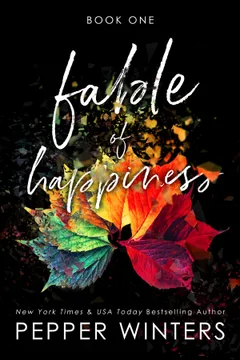


Plot Summary
Prologue
Kas,2 a scarred man who has lived alone for eleven years, paces outside a locked cellar where Gemma1 lies unconscious. He tells himself that her trespass demands punishment, yet hesitates over the key.
The opening frames their first days together as a crisis of control: someone has entered the hidden world he built, and he must decide whether to face her or erase the threat.
The prologue begins after Gemma’s capture, then suspends the action at the locked door. Kas’s inner argument makes the cellar both a literal prison and a boundary around memories he cannot bear to revisit. His insistence that trespass justifies violence is less a stable moral code than a defense against vulnerability. The key in his hand marks a choice he does not want to admit he has: he can approach Gemma as a person, or preserve his private world by treating her as a problem to dispose of.
Success Without Company
At twenty-six, Gemma1 has turned her climbing videos into a lucrative career, bought a home, and built a life around difficult routes. Her father’s5 death and her mother’s4 resentment left family life complicated, but her younger brother, Joshua,3 remains close. Romance has been less rewarding: a recent date turned out to be married, and Gemma1 closes a dating profile rather than settle for another bad match.
Then an online climbing group posts a photograph of an unclaimed boulder in Kentucky. Gemma1 packs her Jeep with food, climbing gear, and a locator beacon, tells Joshua3 to worry only if she is gone five days, and drives out alone. Her next adventure begins as an answer to loneliness as much as ambition.
Gemma’s success is real, but it does not answer the particular loneliness she feels. Her career offers a form of control built on preparation, skill, and measurable risk; dating, by contrast, has exposed her to dishonesty she cannot solve through competence. The new route attracts her because it promises a challenge on her own terms. Her decision to leave is neither simple recklessness nor a quest for romance. It grows from the same self-reliance that has made her successful, while quietly revealing its limit: independence protects her from dependence, but not from isolation.
Ribbons Past Midnight
The park’s posted directions fail to deliver Gemma1 to the boulder. She follows weathered yellow ribbons deep into the forest, loses reception, and eventually admits she cannot find her Jeep again. Too exhausted to continue, she pitches a small tent and sleeps. A howl wakes her in the darkness, carrying such human-sounding anguish that she leaves the tent with a knife, ready to help whatever is hurt.
She finds only silence. At dawn, she pushes farther into the ravine, then spots a river disappearing into a cave and, beyond it, a vast house nearly swallowed by ivy. Gemma1 abandons the climbing search and descends toward the building, whose concealed entrance and wild surroundings promise a mystery she cannot leave unexplored.
The old ribbons quietly change the trip’s meaning. Gemma first reads them as directions to a route, then feels kinship with something left hidden and alone. The howl intensifies that response, turning curiosity into a wish to help, though she cannot know whether the sound came from a person or an animal. Her decision to descend is therefore driven by several impulses at once: professional curiosity, compassion, and a recognition of seclusion that resembles her own. The danger is that she mistakes emotional recognition for permission to enter another person’s world.
Fables Beneath Ivy
The house looks ruinous from the ravine, yet Gemma1 finds its kitchen clean, its appliances working, and its lavish rooms carefully maintained. She calls out, receives no answer, and explores anyway, passing a grand foyer, a towering library, a conservatory, and a dining room marked by shattered mirrors.
Empty bedrooms and missing bathroom mirrors deepen the sense that someone has erased signs of ordinary life. Upstairs, Gemma1 hears movement. Meanwhile, the mansion’s solitary resident has spent years following a strict routine, sleeping in a fortified dormitory and running to keep painful memories at bay.
After waking from a night of digging in his sleep, he notices a shoeprint inside the house. He races back, certain an intruder has reached his sanctuary.
The contrast between the mansion’s neglected exterior and its immaculate interior makes concealment an active choice. Its beauty is not evidence of welcome; it is a preserved surface over a history of damage. The missing mirrors and the resident’s sealed bedrooms suggest that keeping the house clean cannot make its past disappear. Gemma reads the rooms as an invitation to solve a puzzle. The resident reads a footprint as proof that his fragile safety has been breached. Both interpretations make sense from inside their separate histories, but only one of them controls the doors.
The Stranger Upstairs
The resident, a long-haired man with a body mapped by old scars, bursts into the mansion foyer and finds Gemma1 on the stairs. She tries to explain why she entered, but he charges after her, knocks down the bedroom door, and chokes her until she loses consciousness.
He stops short of killing her, carries her into the cellar, and locks her in a bare stone cell. When she wakes, she finds that he has left her phone and locator beacon but taken her knife and compass. Her bruised throat and the cold, damp room make his intentions plain: she is alive for now, but entirely at his mercy. His home has become her prison.
The first meeting strips away the safe assumptions that guide Gemma outdoors. Climbing has taught her to assess terrain and prepare for physical danger, but she has no framework for a person who treats her explanation as irrelevant. The man’s abrupt shift from lethal force to imprisonment reveals not restraint so much as indecision: he cannot yet decide what her presence means. By leaving the locator beacon, he also shows how little he understands her equipment. His power is immediate and physical, while his knowledge of the outside world appears strangely out of date.
Terms in the Cell
When the man returns, Gemma1 learns that he believes no one can reach the valley and intends to keep her there. He demands to know who sent her; she explains that she came alone while searching for a climbing route. His questions turn to threats, and he presses himself against her before climaxing without her consent.
Humiliated and afraid, Gemma1 decides that staying alive matters more than preserving her pride. When he returns with food, she offers sexual access in exchange for continued life and eventual release. She performs an oral act he has ordered, and he promises only one more day. The bargain does not give her freedom, but it changes their captor-prisoner dynamic into a grim negotiation neither can control.
Gemma’s bargain is a survival strategy made under coercion, not consent freely given. The distinction matters because the man repeatedly treats her trespass as if it transfers ownership of her body, while she tries to create even a narrow margin of choice inside captivity. His one-day extension turns life into a renewable debt, keeping hope alive while preventing any real security. Their physical intensity does not make the arrangement equal. Instead, the scene exposes how easily desire, fear, and power can coexist without canceling the harm each one causes.
Rescue in Pieces
The man brings Gemma1 food again, but her attempts to question him meet suspicion. He seizes her phone and locator beacon, then smashes both when she fights to protect them. Her only apparent link to Joshua3 and the outside world is gone. Gemma1 demands sunlight, proper washing, and a toilet; she also warns that the cellar’s conditions could make her ill.
He finally takes her upstairs. When she begs for privacy in the bathroom, he refuses until her exhaustion breaks her composure, then leaves her alone. Gemma1 showers, dresses in clothes from a guest wardrobe, and lets him pleasure himself with her hand. Afterward, he refuses to move her upstairs and returns her to the cellar, where his brief kindness proves no guarantee of safety.
The smashed devices are more than practical obstacles: they destroy Gemma’s ability to imagine rescue as something already in motion. Her bargaining therefore shifts from outside help toward managing the man in front of her. The bathroom episode exposes the difference between a small concession and restored agency. He grants privacy only after watching her reach a breaking point, then treats access to her body as payment for basic care. His moments of gentleness complicate her reading of him, but they do not undo the captivity that gives those gestures their force.
The Names Underneath
Gemma1’s questions and resistance unsettle the man, who has concealed his name and past even from himself. A memory reveals that he is Kassen, called Kas,2 and that as a boy he lived at Fables among other captive children, including Zanik,7 Quell,8 and Nyx.9 Wealthy adult visitors used the children sexually; Kas2 remembers being sterilized and punished, and the children relied on one another through a blood-marked promise to survive.
In the present, Gemma1’s touch and his own sexual response trigger memories he has spent years suppressing. He strikes her, flees the cellar, and decides he cannot keep her without losing the fragile blankness that has helped him live alone. He returns carrying a shovel, determined to end the disruption.
Kas’s chosen amnesia is not simple forgetfulness but an improvised defense against traumatic recollection. His isolation has let him build routines that reduce the past’s intrusion, while Gemma’s presence activates both bodily desire and memories of sexual abuse. The distinction between what he feels and what he does remains crucial: trauma helps explain his terror of intimacy, but it does not excuse his violence toward Gemma. The children’s blood promise, meanwhile, reveals that his capacity for attachment once served survival. His attempt to erase Gemma repeats the same logic that made isolation seem safer than connection.
Shovel and Thunder
Kas2 takes Gemma1 out of the cellar and forces her toward a bare patch of earth, where he orders her to dig what she understands to be her grave. She tries to reach him with details of her family and loneliness, but he attacks. Gemma1 uses her self-defense training to throw him off balance, then strikes his head with the shovel and runs.
Kas2 wakes, climbs the ravine after her, and tracks her through a storm. Gemma1 reaches her Jeep, reconnects its battery, and digs up the keys she hid beneath a marked stone. Before she can drive away, Kas2 tackles her in the rain. Her escape is no longer a plan on paper; it becomes a violent struggle beside the vehicle that could take her home.
The grave scene gives Gemma no illusion that conversation or sexual compliance can reliably protect her. She responds with the skills she has cultivated for physical risk, turning climbing strength and self-defense training into an immediate chance at escape. Kas’s pursuit shows how strongly he experiences her departure as another abandonment, but his fear still takes the form of force. The storm removes the clear lines of a planned escape: the Jeep is within reach, yet neither the vehicle nor Gemma’s preparation can keep the struggle from becoming personal and dangerous.
Keys Into Darkness
At the Jeep, Gemma1 and Kas2 fight through mud and rain. When he pins her and reaches for her throat, she grabs his genitals to make him release her; instead, the two kiss and have sex. The encounter is charged by their violence and attraction, but it does not free Gemma1 or resolve the coercion between them.
Afterward, Kas2 tells her he was sterilized as a child at Fables, then ties her wrists with her climbing rope. He takes her keys and throws them into the forest, destroying her immediate route home. Gemma1 attacks him in anger, but their contact again pulls them toward sex. She stops him before he can bring her to orgasm and retreats into the Jeep, insisting on a boundary she has been struggling to keep.
The storm fight makes the novel’s central contradiction impossible to ignore: Gemma experiences powerful desire while remaining captive to the person who has repeatedly threatened her life. Their sex may feel mutual in the moment, but it follows an unequal history and does not transform Kas’s control into consent. His disclosure about sterilization links his body to the childhood abuse he has only begun to remember. Throwing away the keys then makes his priority unmistakable: he is willing to destroy her chance of leaving rather than risk losing her.
Chocolate and Confession
While rain keeps them at the Jeep, Kas2 searches Gemma1’s supplies and discovers packaged sweets he has not tasted in years. He eats chocolate, admits he has been alone for roughly eleven years, and begins to recall the people he left behind at Fables, though he cannot bear to explain more. Gemma1 shares the food despite resenting his theft.
Kas2 later forces another sexual encounter in the back of the vehicle. That night, however, he covers her with a blanket and watches over her as she sleeps. In the morning he denies the tenderness, dresses her himself, rebinds her wrists, and starts the long trek back to his hidden valley. Gemma1 quietly works at the rope, preparing to escape again.
The chocolate creates a brief, ordinary exchange inside an extraordinary imbalance. Its sweetness gives Kas a concrete reminder of what life outside his routines once contained, while Gemma’s willingness to share it shows how care can persist without trust. His overnight tenderness matters because it reveals a protective impulse, but the morning makes clear that tenderness is not yet a change in conduct: he binds her and takes her back. Gemma’s hidden work with the knots keeps her identity anchored in action rather than in the role Kas assigns her.
Rope Over the Edge
During the return hike, Kas2 grows unsteady from the head injury Gemma1 gave him, while she uses her climbing knowledge to loosen the rope around her wrists. Near the ravine, she attacks before he can turn toward her, trying to bind his arms and escape with her gear. Kas2 fights back, and Gemma1’s momentum carries them toward the cliff edge.
She lunges at him, and he loses his footing. For a moment, Gemma1 catches the rope around his wrist and believes she has him. His weight pulls the rope from her hands. Kas2 drops out of sight into the valley. The book ends before Gemma1 can learn whether he survives or decide whether to pursue the man she has been trying to escape.
The ending turns Gemma’s expertise into both an instrument of escape and the source of an irreversible accident. She is not simply rescued or defeated; she acts, takes a calculated risk, and loses control of its consequences. Kas’s fall also unsettles the roles that have defined them: the captor is suddenly beyond her reach, while Gemma holds the choice of what to do next. By ending before either survival or decision is confirmed, the book leaves their bond suspended between responsibility, fear, and the possibility of return.
Analysis
The novel builds its dark romance around a contradiction it does not resolve: Gemma1’s desire for Kas2 is powerful, but her captivity makes clear consent impossible whenever he controls whether she can leave, eat, or receive basic care. Her bodily responses do not cancel the violence that precedes them. Kas2’s past helps explain why intimacy triggers shame, fear, and efforts to dominate, yet the story also shows him choosing to restrain Gemma,1 destroy her means of rescue, and threaten her life. Explanation is not absolution.
The hidden mansion gives that conflict a physical shape. Its neglected exterior conceals rooms kept in order, much as Kas2’s strict routines conceal memories he has trained himself not to face. Gemma1’s entry does not simply disturb his solitude; it exposes how little his private system can withstand another person. Meanwhile, her climbing practice offers a counterpoint to his control. She has built competence through calculated risk, but in the valley even preparation cannot guarantee autonomy.
The book also makes isolation psychologically double-edged. Kas2 uses solitude to avoid reminders of what happened, while Gemma1’s loneliness helps draw her toward the unknown house. Each sees something familiar in the other, and that recognition fuels both compassion and danger. Their attraction becomes a force neither can interpret cleanly, especially when it is entangled with coercion and traumatic memory.
The final fall refuses the comfort of a resolved romance. Gemma1’s decision to escape is an assertion of self-preservation, yet Kas2’s fall leaves her holding responsibility for the outcome. The story ends with no confirmed survival, no repaired trust, and no settled choice between flight and care. Its central question remains practical as well as emotional: can recognition between damaged people become safety, or will it only make harm harder to leave?
Review Summary
Fable of Happiness receives polarizing reviews, averaging 4 out of 5 stars. Fans praise Pepper Winters' addictive, vivid writing, the tortured hero Kassen, and the Beauty and the Beast-inspired dark romance. Critics, however, lambaste the heroine Gemma's reckless decision-making and the hero's near-constant arousal, which some reviewers humorously treated as a separate character. The captivity storyline, dubious consent, and explicit scenes divide readers sharply. Nearly all reviewers agree the cliffhanger ending is brutal, leaving them desperate for the sequel.
People Also Read


Characters
Gemma Ashcroft
The self-made climberGemma is a financially successful climber and online creator whose confidence comes from years of training, preparation, and taking physical risks on her own. She loves her independence, but her difficult dating experiences and distance from her mother leave her wanting genuine companionship. Her brother Joshua3 is a steady presence in her life. When danger arrives, Gemma relies on practical skills rather than waiting to be rescued, though her compassion can draw her toward people who have hurt her. Her central tension is not weakness versus strength; it is how to remain caring without surrendering the boundaries that make her life her own.
Kas
The valley’s scarred recluseKas is an isolated man whose daily life depends on strict routines, physical labor, and keeping painful memories out of reach. His scars and worn clothes reveal a body shaped by hardship, while his carefully maintained house shows that he still clings to order. He has little practice speaking with another person and tends to treat uncertainty as a threat. Desire unsettles him because it is entangled with shame and fear, and he responds to vulnerability with control or flight. Beneath his hostility is a capacity for care, but it does not reliably govern his actions. His struggle is to face what happened without repeating its harm.
Joshua
Gemma’s protective brotherJoshua is Gemma1’s younger brother and one of the few people who understands her appetite for spontaneous climbing trips. He teases her about taking needless risks but asks to track her location and expects her to check in. Their easy affection gives Gemma1 a connection to home that is practical as well as emotional. He is not present in the valley, yet Gemma1’s wish to see him again shapes her decisions there.
Gemma’s mother
The grieving parentGemma1’s mother is still burdened by her husband’s death and struggles to understand her daughter’s success and independent choices. Her resentment complicates their relationship, though Gemma1 continues to think of herself as her mother’s daughter and remains attached to her. She represents a family bond that persists without easy closeness.
Gemma’s father
The absent family anchorGemma1’s father died suddenly, leaving her and Joshua3 with a grieving mother. His absence helps explain the family’s altered shape and remains part of Gemma1’s private sense of home.
Katie
The climbing-gym friendKatie is Gemma1’s friend from a local bouldering gym. Gemma1 remembers confiding in her about self-defense and her confidence in handling danger, making Katie a small but telling link to Gemma1’s life before the valley.
Zanik
Kas’s steadfast companionZanik appears in Kas2’s memories as a fellow young person who offers comfort when Kas2 is hurt. His instinct is to protect others even when he is struggling himself, embodying the practical tenderness that can form among people forced to rely on one another.
Quell
The gentle companionQuell is one of the young people connected to Kas2’s buried past. Her closeness and willingness to comfort him make her a figure of tenderness in memories otherwise dominated by fear, injury, and loss of control.
Nyx
The youngest oath-makerNyx is a shy, red-haired girl in Kas2’s memories. She shows a surprising resolve when she proposes a shared pledge among the young people around her, turning a simple gesture into a source of collective courage.
Jareth
A guarded companionJareth belongs to the circle of young people in Kas2’s memories. His presence helps establish that Kas2 once lived among others who shared danger and learned to watch over one another.
Maliki
A fellow survivorMaliki is part of Kas2’s remembered community. Though briefly drawn, the name helps show that his past involved a wider group rather than a solitary trauma.
Sarez
A fierce companionSarez appears among the people Kas2 remembers from his early life. The group’s close bonds give context to the emotional cost of his present isolation.
Elise
A missing memberElise is one of the young people connected to Kas2’s past. His concern for those who are not present shows how strongly their shared history still shapes him.
Neo
A member of Kas’s circleNeo belongs to the group that surfaces in Kas2’s memories. The brief reference to him underscores the number of people once woven into Kas2’s life.
Wes
A wounded allyWes is a fellow figure from Kas2’s past whose suffering and poor condition remain vivid in Kas2’s fragmented recollections. Their bond carries the urgency of people trying to protect one another in circumstances neither can control.
The Storymaker
The polished authorityThe Storymaker is a powerful figure associated with the Fables world in Kas2’s memories. His title suggests authority that is carefully constructed and socially protected, contrasting with the vulnerability of those who live under his rules.
Mrs. Willby
A demanding adult visitorMrs. Willby appears in one of Kas2’s painful memories of adulthood and sexual control. Her presence contributes to the history behind his shame and fear around his own body.
Mr. Willby
A coercive visitorMr. Willby is Mrs. Willby17’s husband and part of Kas2’s fragmented recollection of adults who dictated what happened to his body. His manner reflects the entitlement that shapes those memories.
Mrs. Dita
A manipulative visitorMrs. Dita is another adult figure from Kas2’s past. He remembers her as someone whose kindness could shift into cruelty, a contradiction that helps explain his suspicion of affection.
Plot Devices
The hidden valley and Fables
A beautiful sealed worldThe mansion sits in a ravine reached only through difficult wilderness and a cave system. Its ivy-covered exterior hides an immaculate, extravagant interior, while empty rooms, broken mirrors, a secured dormitory, and a cellar preserve signs of a painful history. For Gemma1, the place begins as an unexplained discovery; for Kas2, it is both refuge and reminder. The valley makes escape physically difficult and helps sustain the isolation that shapes their conflict.
Gemma’s locator beacon
A fragile line to rescueGemma1 carries a personal locator beacon because her climbing trips take her beyond phone reception. She activates it after being imprisoned, hoping satellites will lead rescuers to the valley. Kas2 does not understand its purpose at first, but he later smashes it along with her phone. The device turns an abstract hope of rescue into something Gemma1 can physically protect, then makes the loss of outside contact concrete.
Rope and climbing skill
Escape written in knotsGemma1’s expertise is not only a source of identity; it gives her specific tools for survival. She reads terrain, climbs the ravine, prepares gear, and understands knots well enough to work at the rope binding her wrists. The same rope Kas2 uses to restrain her becomes part of her escape plan. Her familiarity with physical risk lets her act decisively, but it cannot remove uncertainty or guarantee that a desperate maneuver will end safely.
Kas’s blocked memories
Trauma behind the blank spacesKas2 has trained himself to avoid recalling the years before his solitary life. Routines, physical exertion, and his rejection of mirrors help him maintain a fragile distance from his history. Gemma1’s arrival, her touch, and his own sexual responses disrupt that arrangement, allowing memories of Fables and the other young people to surface. The device explains why intimacy destabilizes him while also showing the cost of treating forgetting as a permanent cure. It clarifies his behavior without excusing the harm he inflicts.
Gemma’s Jeep and hidden keys
Freedom within sightGemma1 parks the Jeep beyond the ravine and hides its keys near a ribbon marker before exploring. The vehicle represents the practical life she expects to return to: her gear, work, home, and family. Reaching it gives her a real chance to escape, but Kas2 catches her before she can drive away and later throws the keys into the forest. The Jeep keeps freedom visible even after Kas2 makes reaching it useless.
About the Author










Download PDF
Download EPUB
.epub digital book format is ideal for reading ebooks on phones, tablets, and e-readers.








