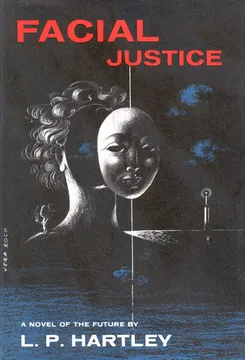


Plot Summary
The Face Appointment
At the Ministry of Facial Justice, Jael meets Judith, her pretty, tearful friend, who is preparing to exchange her face for a standard Beta model. Judith says her husband, Cain, wants the change, and that she has been judged too ordinary to remain a Gamma. Jael knows the pressure from another direction: her beauty has brought twenty five official complaints, and her brother Joab wants her to stop provoking envy by accepting a standardized face.
She had even cut her own cheek in hopes of lowering her rank. Judith sees that Jael is frightened rather than willing. Before either woman enters for her appointment, Judith persuades Jael to leave and reconsider. Her own operation, however, remains scheduled.
The opening makes a face both private property and public offense. Jael’s fear is not simply vanity: her face carries the evidence of a self that cannot be mass produced. Judith’s choice complicates the conflict. Standardization offers her genuine relief from shame, making conformity attractive not only through force but through the promise of social ease.
A Tree in March
Fifteen years earlier, survivors had left underground shelters after a child’s mysterious voice led them into the ruined world above. The Dictator built a society around sameness, sedation, ritual, and protection from dangerous individual impulses.
Now, after leaving the Ministry, Jael finds a crowd gathered around a rare tree being planted. The living branches move her more than the State’s plastic substitutes do, though she cannot explain why. An Inspector stops her and tests her knowledge of official slogans.
When Jael gives the wrong description of Alphas, he first fines her, then returns her money and calls her something more than the obsolete category she has been taught to accept. His unexpected kindness leaves her with a spark of confidence.
The tree offers a small, physical alternative to the State’s managed imitations. Jael responds to growth before she can turn that response into a political belief. The Inspector’s mercy works similarly: because he acts outside the expected machinery of punishment, Jael briefly encounters a person where the system insists there should be only a category.
The Dangerous Road
Joab, Jael’s older brother and a government statistician, insists that keeping her face threatens social peace. He regards her restlessness as guilt and urges her to take the prescribed bromide.
The Dictator then warns that one of the six country coaches will be deliberately put in danger, hoping to discourage passengers. The surviving cathedral tower at Ely is the most compelling destination, although the bomb scarred countryside offers little else to see. Jael’s desire to travel grows stronger under the threat.
Joab predicts that no one will go and warns her again, but she buys a ticket and heads to the departure square. Crowds have gathered, some hoping to board, others demanding equal access. Jael secures her seat as the coach prepares to leave.
Jael’s decision is a modest act with an unusually large psychological meaning. The regime has arranged leisure so that citizens need not choose; even danger is administered from above. By boarding despite the warning, Jael discovers that wanting something can survive the sedative logic of safety. Joab’s care remains sincere, but he can imagine protection only as compliance.
Ely's Forbidden Height
The coach crosses a bleak landscape until the surviving western tower of Ely Cathedral rises above the flat horizon. Its height frightens the passengers, who have been taught to distrust anything that might elevate one person above another. Some want to turn back; Jael insists they continue.
At the tower, several passengers collapse under the shock of looking upward, but Jael moves among them and urges them to stand and face the ruin. Their terror gives way to awe, and they circle the tower in an improvised dance. The shared exhilaration does not last. On the road from Ely, the coach suffers the promised accident. Five passengers die and twenty seven are injured. Jael is trapped among the wounded, her face badly cut.
The tower makes a forbidden dimension bodily, not abstract. Looking up requires each passenger to endure a private sensation, yet the dance turns that sensation into collective action. The accident then exposes the Dictator’s use of risk as a controlled outlet: the citizens’ longing is real, but its consequences have been engineered to keep it manageable.
Michael in the Wreckage
As Jael loses consciousness beneath the wreckage, the Inspector who once spared her fine reaches her and carries her away. He is Michael, though she does not learn his name yet. In her confused, pain dulled awareness, his presence seems to lift her beyond ordinary time. He tells her she is badly injured and that her face will no longer place her among the Failed Alphas.
Jael fears that this change will make Michael reject her, but he treats her as a particular person rather than a rank. She wakes in a hospital ward with a head injury and no clear memory of how she arrived. A blue cineraria sits beside her bed, unlike the identical plastic flowers at the other beds. Its unexpected life gives her a reason to believe the rescue was real.
Michael’s rescue joins physical care to Jael’s longing for individual recognition. Her fear of losing beauty immediately becomes a fear of losing the person who seemed to see her. The flower supplies material proof where memory cannot: in a society built from replicas, its fragile, changing life makes the possible intimacy feel more trustworthy than Jael’s disoriented recollection.
The Living Cineraria
While Jael recovers, Judith visits and describes her marriage to Cain after her own Beta conversion. Their home has become calmer, she says, though she sometimes misses the intensity of their former arguments. Jael admits that leading the dance at Ely mattered more to her than the excitement afterward.
Later, an elderly hospital Visitor asks about Jael’s welfare. Jael tells her that the blue cineraria belongs to her, and the Visitor examines it closely. Unlike the ward’s plastic flowers, this one is genuinely alive and beginning to fade.
The discovery astonishes the Visitor, who permits Jael to take it home. She also reassures Jael that the accident will not bring the severe punishment she fears. Jael leaves the meeting relieved, believing that she has paid for her disobedience.
Judith’s account shows why the State’s promise of sameness can feel like comfort, even as Jael finds the price unbearable. The living flower quietly resists the Visitor’s theory that standardized substitutes are sufficient. Yet Jael accepts reassurance from an authority figure without testing it, revealing how deeply her longing for safety still shapes her judgment.
A Face Without Consent
Michael visits before Jael’s discharge and confirms that he sent the cineraria. He tells her that she has changed, but Jael believes her recovery will eventually restore their closeness. The next day, a nurse hands her the compact she brought into the hospital.
The reflection shows a standard Beta face. While Jael was unconscious, the plastic surgeon Dr. Wainewright replaced her injured features with a stock model, following the rule to convert patients when their faces were in doubt. Her original face has been discarded.
The new waterproof skin will not register tears or ordinary touch, and Michael’s earlier hesitation now seems decisive. Jael leaves the hospital with the real flower but without the face that had made her recognizable to herself or to him.
The hospital’s act is more than cosmetic treatment: it converts medical helplessness into political opportunity. Jael’s consent is irrelevant once her body becomes a site the State can improve. Her reflection therefore breaks the fragile reconciliation she had imagined with Michael. The face is not her whole identity, but the forced alteration makes her feel that even her inward life is no longer secure.
The Black Veil
Jael tries to repeat her old routines after returning to Joab’s home, but Joab notices that her behavior has changed as sharply as her face. The strain of acting like her former self convinces her that the operation has altered something inward as well.
She begins looking for people willing to oppose the Dictator. Since citizens are already allowed to mock the ruler, ordinary criticism offers no path to change. Jael instead joins a small conspiracy whose members meet in secret and practice a dance meant to make political killing easier.
She wears a black veil over her Beta face and presses the group to identify the unseen ruler. Through Dr. Wainewright, the surgeon who changed her, she learns that the Dictator does exist, though his identity remains unknown.
The veil makes Jael conspicuous precisely because it conceals the feature the State has standardized. Her resistance grows from genuine political insight, but also from a personal wound she cannot set aside. The conspirators’ ritual dances imitate the society they oppose: even rebellion risks turning people into a coordinated body that suppresses individual judgment.
Revolt by Permission
Jael and the conspirators spread posters urging citizens to stake their own identities and choices. Crowds gather, argue, and begin to fight, giving people an outlet the carefully managed society has not contained. The Dictator responds by claiming that the posters and first outbreak were his own experiment in free will.
He admits that he had also arranged the earlier coach accident, then announces another test, this time promising greater danger. The citizens interpret the next round of posters as a joke and return to the Dictator’s protection with relief.
Jael’s fellow conspirators accept his account and vote to disband. When she insists that she started the movement, they reject her and beat her during a celebratory dance. Her effort to turn popular dissatisfaction into organized resistance has made her more isolated.
The Dictator defeats dissent by making it indistinguishable from his own policy. His strategy does not merely suppress opposition; it absorbs the desire for opposition and returns it as entertainment. Jael’s companions accept the comfort of a story in which the ruler remains in control. Her isolation exposes the limit of collective rebellion when its members have been trained to distrust personal agency.
The Heart Beneath Skin
After the conspiracy collapses, Jael continues seeing Dr. Wainewright, using his attraction to gain information. She learns that he once treated the Dictator and carries the scars of a small operation.
During their intimate encounter, she draws out the detail he has tried to hide: the ruler has a heart shaped birthmark below the heart. Wainewright gives her the scalpel he used in facial surgery, hoping to keep her close. Jael then attends a piano concert where a brilliant performer and a poor one expose the audience’s discomfort with unequal ability.
She writes an article arguing that mistakes deserve praise because they make everyone equally fallible. Wainewright helps her place it in print. Jael has found a weapon and a way to turn the regime’s own logic against it.
Jael treats intimacy as a transaction because she can no longer trust it as mutual recognition. The scalpel makes that bargain dangerously concrete. Her article, meanwhile, transforms a private grievance into a public experiment: if equality requires suppressing excellence, then celebrating error can reveal the absurdity hidden inside the rule.
Mistakes Turn Violent
Jael’s article inspires citizens to make deliberate errors at work, and the New State’s services falter amid a public craze for mistakes. She follows with another article arguing that unequal birthmarks are unfair and urging people to expose one another.
The proposal turns suspicion into spectacle. Men challenge each other to undress and prove they lack the Dictator’s identifying mark; spectators join the fights, and some encounters become deadly. Women gradually enter the violence as partisans.
Judith, who has avoided the struggles, is killed when a thrown brick strikes her temple. Jael feels a flicker of remorse but does not stop. The Inspectors, who once enforced the rules, do not intervene. Their absence lets the birthmark hunt spread until violence becomes the town’s most powerful shared activity.
Jael’s campaign succeeds by exploiting a population trained to experience difference as injury. The mark becomes a target because citizens cannot imagine inequality without imagining a culprit. Her method exposes the violence already latent in the regime, but it also makes her responsible for directing that violence. Judith’s death gives that responsibility a face Jael cannot easily dismiss.
The Housing War
As the birthmark fights disrupt daily life, Jael publishes a third article attacking the unequal sizes of old and new homes. Crowds begin demolishing older houses, and demolition squads clash with residents. During one battle, the Dictator announces that the familiar voice was only a performance and that his social experiment is over.
The Inspectors disappear. In the fighting that follows, Joab is killed; Dr. Wainewright also dies during the disorders. Public services fail, and food stocks shrink because only the vanished Inspectors knew how to replenish them.
A Committee of Public Safety seizes power and threatens death for disobedience. It demands six hostages, three men and three women, to send to the feared Underworld. The population, accustomed to acting as a mass, cannot bear the thought of being chosen alone.
The collapse is not a sudden release into freedom. Once the institutions that organized food, safety, and movement vanish, citizens turn the old habits of blame and punishment toward one another. Jael’s attacks have cracked the State’s structures without preparing people to replace them. The threatened hostages make individuality newly terrifying: they must suffer separately, without the shelter of collective feeling.
The Hidden Ruler
Jael volunteers to become one of the hostages, partly to spare an unknown woman and partly to assert the individual choice the State had taken from her. On the rainy night before she reports, an elderly woman arrives at her home, soaked and exhausted. Jael gives her dry clothes and food tablets. When the visitor falls asleep, Jael sees a heart shaped birthmark below her heart and recognizes the sign Wainewright described.
The old woman is the Dictator. Jael takes up the scalpel, ready to kill the person she blames for her altered face and the town’s ruin. Before she acts, Michael enters. He kneels beside the dying ruler, and Jael understands that the helpless woman before her is not simply the symbol she has hated.
Jael’s choice to volunteer is her clearest act of self direction, though it does not erase the revenge driving her. The recognition of the birthmark forces her to distinguish a person from the political image she has built around that person. By delaying the strike, she faces the moral question that her articles avoided: whether exposing injustice excuses killing the human being who embodies it.
A Voice Takes Flight
The dying Dictator reveals that Michael served as the unseen announcer and asks him and Jael to build a better order together. The ruler dies as crowds outside demand the return of the voice they once obeyed. The town catches fire, forcing Jael and Michael to flee with the living cineraria. They escape the collapsing streets and reach a community waiting for direction.
Michael kneels before Jael, recognizing her authority. She begins a new address, not in her own voice but in Michael’s, offering a blessing to the people gathered there. The story ends with no proof that this new beginning will succeed. Jael has exchanged the Dictator’s imposed performance for a responsibility she must now share with another person.
The ending does not certify that Jael can govern better than the Dictator. It gives her the harder task of speaking to people who still want a guiding voice, while refusing to make authority a solitary possession. The cineraria survives as a small emblem of care amid destruction. Michael’s voice complicates Jael’s new role: her first act of leadership is already collaborative.
Analysis
Facial Justice imagines equality not as shared rights but as the removal of differences that might provoke comparison. Its satire is sharp because the New State’s methods are not wholly implausible: its people have survived catastrophe, fear renewed violence, and genuinely value some of the security the Dictator provides. Their passivity is cultivated through bromide, ritual, managed recreation, and a steady stream of official explanations, yet it also becomes a habit they embrace. Jael’s resistance begins with her face, but the novel does not let her claim a pure political motive. She defends individual identity while seeking revenge for its violation, and her campaigns reproduce the very coercion she opposes. By turning equality into an argument for exposing birthmarks, celebrating mistakes, and demolishing homes, she shows how easily a principle can become a weapon when people are trained to experience another person’s advantage as an injury. The Dictator’s rule is similarly double edged. It prevents some forms of harm by limiting choice, but its protections leave citizens unable to organize themselves once the restraints disappear. The final fire therefore offers no simple revolution or restored utopia. Jael inherits the power to speak to a frightened population, but the closing image makes leadership a shared responsibility rather than proof that one voice should rule. The title’s justice is facial in both senses: it concerns visible appearance, and it asks whether a society can call itself fair when it decides which human differences may remain visible at all.
Review Summary
Characters
Jael
Reluctant rebelJael begins as a sociable conformist whose beauty has made her a target of official complaint. She values her face not only as an advantage but as a personal signature, and resists the idea that comfort requires becoming interchangeable. Her instincts are divided: she wants affection and belonging, yet she also wants the freedom to notice, choose, and feel differently from the crowd. After a forced change to her appearance, she turns private injury into political action. Her courage is real, but so is her appetite for revenge, and the story refuses to pretend those motives can be cleanly separated.
Michael
Inspector with a private conscienceMichael belongs to the privileged Inspector class, whose members enforce rules ordinary citizens cannot challenge. Yet he notices Jael as an individual and acts with a warmth that his office does not require. His attention gives her a glimpse of intimacy outside the State’s managed relationships, though his reserve leaves her uncertain about what he truly feels. Michael’s divided position makes him more than a rescuer or romantic figure: he must navigate the distance between exercising power for the system and responding to a particular person.
The Dictator
The unseen social architectThe Dictator rules through an ever present broadcast voice, official rituals, and a social order designed to prevent envy, violence, and individual ambition. The ruler presents control as care, invoking the catastrophe that preceded the New State as proof that citizens need protection from their own impulses. This authority is neither simply cruel nor simply benevolent. Its central psychological contradiction is a wish to preserve people by limiting the very capacities that make them distinct. The public knows the Dictator through pronouncements and hearsay, not through ordinary personal contact.
Joab
Jael's loyal bureaucrat brotherJoab is Jael’s older brother, a Failed Alpha whose statistical talent gives him a respected government post. He sincerely loves her, but his devotion to the regime teaches him to interpret her independence as a danger to herself and others. He trusts formulas, official explanations, and routines more than emotional evidence. His care therefore arrives as correction: he wants Jael safe, but imagines safety as obedience.
Judith
Jael's conforming friendJudith is Jael’s old friend, a Gamma who chooses a standard Beta face at her husband’s urging. She is candid about the relief that comes with belonging to the majority, and about the intimacy and spontaneity that standardization can flatten. Judith is neither foolish nor weak for wanting social ease. Her perspective reveals how a coercive system can recruit people through genuine comfort, especially those who have lived with pity, exclusion, or the strain of being visibly different.
Dr. Wainewright
The surgeon who remakes facesDr. Wainewright is the plastic surgeon responsible for Jael’s treatment after the coach accident. He is professionally skilled and personally entangled, treating medical authority and romantic desire as if they can be kept in the same room without consequence. His attraction to Jael is sincere, but it is shaped by the face he helped create and by his expectation that she might eventually return his affection. He embodies the blurred boundary between care and possession.
The Visitor
A patient welfare inspectorThe Visitor is an elderly woman who moves through hospitals asking patients about their treatment and comfort. Staff regard her as harmless and somewhat tiresome, but her attention is patient and unusually receptive. She listens to Jael without immediately treating her as a problem to be managed. Her gentle presence offers a contrast to the impersonality of the hospital, and to the assumption that official attention must always be punitive.
Cain
Judith's face conscious husbandCain is Judith’s husband, whose preference for an idealized face helps prompt her decision to become a Beta. He represents the ordinary domestic pressure that supports the larger State policy: a partner’s approval can make standardization feel voluntary, even when it narrows a person’s choices.
Plot Devices
Facial Justice
Makes appearance a public lawThe New State sorts women into facial categories and offers standardized Beta faces to those judged too beautiful or too plain. Beta skins provide a fixed expression and a waterproof surface, while preserving the appearance of voluntary choice. The system gives the plot its first conflict through Jael’s refusal, then makes the political argument physical when her face is changed without consent. Because the face governs how people recognize and respond to one another, the policy reaches beyond looks into intimacy, memory, and selfhood.
Bromide and ritual
Keeps rebellion sedatedCitizens take prescribed bromide and perform dances when they encounter dangerous official words such as equality or envy. These rituals turn abstract obedience into bodily routine, draining strong feeling while making compliance appear communal. The Dictator also uses compulsory entertainment, slogans, fines, and sudden announcements to channel frustration into approved forms. When citizens begin acting outside those forms, their learned dependence on cues makes the resulting disorder difficult to contain.
The Ely tower
Restores forbidden perspectiveThe surviving tower of Ely Cathedral is a remnant of a world whose height and architecture have otherwise been erased by war. Its vertical scale gives Jael and the coach passengers a direct experience that contradicts the State’s insistence on a flat, equal social world. Jael’s decision to make the others look upward becomes a turning point in her ability to act against collective expectation. The tower also foreshadows the costs of pursuing an experience that the regime has carefully restricted.
The living cineraria
Proof against imitationMost flowers in the New State are standardized plastic objects, identical and durable. Jael’s blue cineraria is alive, imperfect, and prone to fading. Its presence links her hospital recovery to the Inspector who rescued her, and it becomes an intimate object she tends when her human relationships grow uncertain. The flower gives material form to a kind of value that cannot be measured by sameness or permanence. Its survival into the final crisis makes it a quiet counterweight to the State’s manufactured world.
The heart shaped mark
Identifies the hidden rulerA heart shaped birthmark below the heart is the sign by which the Dictator can be identified. Jael learns of it from Dr. Wainewright and uses the knowledge to turn a public obsession with bodily difference toward the ruler. Citizens who have been taught to resent unequal appearance begin stripping and attacking one another in search of the mark. The device links private anatomy to political identity, and its eventual discovery forces Jael to confront the human being behind the symbol.

Download PDF
Download EPUB
.epub digital book format is ideal for reading ebooks on phones, tablets, and e-readers.








