

Plot Summary
Flor Books Her Own Farewell
At seventy, Flor Marte, a Dominican immigrant who has spent her life dreaming of other people’s deaths, watches a documentary about a man surrounded by family while he is still alive. The tenderness of his farewell unsettles her.
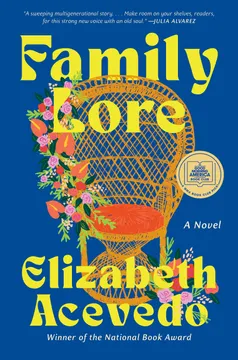
She decides to gather her own sprawling family for a living wake, though she has no diagnosis to explain the urgency and no intention of telling her daughter, Ona, what she fears. Flor books a Bronx hall, orders a peacock chair, chooses a photograph from her first days in New York, and insists the flowers be bright red.
Planning gives her something to control while the future approaches. Her sisters and daughter will have to decide what to make of an invitation that sounds like a funeral but arrives from a woman who is still living.
The Family Takes Its Seats
Flor recruits her niece Yadi to design the invitation and help arrange catering, bypassing Ona, who is away at a conference. Yadi organizes a vegan menu and asks her aunts to help, drawing Matilde into the work at the family’s neighborhood cafeteria.
Flor’s sisters gossip over possible explanations, from an ominous medical result to confusion, but Flor refuses to answer. Ona begins recording family interviews for her anthropology research and studies her mother’s bills for clues.
She finds nothing unusual beyond a new streaming subscription, yet Flor’s insistence that she simply wants to be celebrated does not quiet her. The interviews give the women room to tell histories they rarely share, while the approaching event makes every old silence feel newly consequential.
Ant Returns to the Stoop
Yadi, Pastora’s daughter and a chef who built a vegan cafeteria, nearly drops her groceries when she finds Ant on the stoop. He is the boy she loved before he was imprisoned for his part in a gang beating that left another boy comatose. He has served eighteen years and returns to Harlem without warning, carrying the body of a grown man and the familiar sarcasm of her childhood friend.
Yadi lets him into the apartment, then hides the shock behind a meal and practical tasks. Their years apart cannot be neatly repaired over groceries: she has built a business and a life, while he has survived a world she barely knows. His presence makes the past physical again, and her careful composure begins to strain.
Pastora’s Exile Leaves Scars
As a girl, Pastora recognizes the lies beneath the flirtation of a wealthy Santana boy and refuses his attempt to draw her into his bedroom. His mother later accuses Pastora of stealing and seducing her son, and the family sends her away to live with an aunt rather than defend her.
The aunt forces Pastora into exhausting domestic labor and beats her, while episodes of spiritual possession make the house more frightening. Pastora finds a santero who offers protective oil, but the real rescue comes when Flor refuses the convent’s plans and travels to retrieve her.
She nurses Pastora, brings her to safety, and stays beside her until the danger passes. That rescue binds the sisters together, while Pastora’s sharp sense for what people conceal becomes a way to navigate a world that has repeatedly failed to protect her.
Matilde Finds the Beat
Matilde’s marriage to Rafa began with music and ended early on their wedding night, when he left her alone at their hotel to go drinking and singing elsewhere. Over decades she learns of his affairs, endures repeated miscarriages, and keeps trying to believe that marriage is better than loneliness.
She once dreamed of touring as a salsa dancer, but her mother dismissed the possibility before Matilde could pursue it. Now Pastora’s warning about Rafa has reopened the old wound.
At a community class, Matilde meets Kelvyn, a baseball player assisting his father’s dance program. He leads her with care and recognizes her skill. At Yadi’s cafeteria, Matilde gives him a smoothie and asks him not to text again, but his composure leaves her newly aware of how much she still wants from life.
The Forgotten Sister’s Bargain
Camila, the youngest Marte sister, grows up after most of her siblings have left home and is often overlooked, though she develops a gift for recognizing useful herbs. When the same wealthy Santana family that harmed Pastora turns its attention toward Camila, Mamá Silvia intervenes as the family’s son tries to assault her by the canal.
Fearing he will return, her mother arranges Camila’s marriage to Washington, a gentle, prosperous man who offers protection but little physical intimacy. Camila finds her new life comfortable and lonely. Years later she becomes pregnant by another man, and Washington accepts the child as his own.
In New York, Camila makes a home apart from her sisters’ crowded households, keeping beauty, plants, and carefully chosen comforts around her. Her history shows how safety can be secured through bargains that still leave a woman wanting a life of her own.
Ona Counts What May Come
Ona, Flor’s daughter and an anthropology professor, has spent years protecting the life she built with her partner, Jeremiah, from the demands of family and parenthood. A large fibroid forces surgery, and its removal awakens a desire for a child she had once kept at a distance.
Months of trying bring no pregnancy, only cycles she watches with anxious precision. At a conference, she meets Soraya, a former college lover who urges her to study her own family; Ona resists the invitation to renew their intimacy.
When her gifted student Caridad announces she is leaving school to have a baby, Ona responds with questions instead of congratulations and immediately regrets the hurt she causes. The news sharpens her private grief. As Flor’s wake nears, Ona wants her mother to disclose what she knows, while her own body and marriage refuse to follow a schedule.
The Dream Names Flor
Flor’s gift first announces itself in childhood, when she predicts a relative’s death with details no one could have given her. She grows up feeling partly attached to the world of the dead, until pregnancy with Ona makes her feel fully present in her own body.
She also carries an unfinished affection for her cousin Nazario, then builds a life with Pedro, whose drinking and secret spending eventually erase the savings they had meant for a home in the Dominican Republic. After the documentary, Flor dreams that her teeth crumble and finds her own name among them.
The dream has not offered a date, only the frightening possibility that she is the death she senses. A recurring dream of the snake that once bit her intensifies her fear, but she still refuses to explain the omen to her family.
Yadi’s Lime Inheritance
When Yadi’s grandmother dies, Yadi suddenly craves the limes she once could not tolerate, inheriting a taste that later flavors her cooking and gives her food a family history. The loss sends her back to the Dominican Republic, where her grandmother helps her recover from heartbreak after Ant’s arrest and teaches her care through everyday work.
Years later, Ant’s return unsettles the life Yadi has made, but she lets him help prepare food for Flor’s wake. After he freezes at a self-checkout machine, unable to use the bank card she gave him, Yadi brings him home and comforts him.
Their first night together is tender and urgent, but by morning she tells him it cannot become a promise that time has not earned. She continues cooking, carrying the old love and the changed man side by side.
Water Denied, Truth Unsteady
Pastora sees Rafa’s pregnant partner as a threat to Matilde and refuses her request to use the store bathroom or have water. The young woman leaves, then collapses nearby from dehydration and false contractions; her baby survives.
Pastora realizes that her gift for hearing what people hide did not tell her everything about this woman, and she returns to the store the next morning with water and questions. At a family gathering that night, Pastora admits what she did and urges Matilde to leave Rafa.
Matilde rejects the intervention, while Flor tries to keep the sisters from turning the gathering into a trial. Matilde goes home, where Rafa confesses that he has been seeing the woman and believes the baby may be his. Rather than leave him, Matilde comforts him, repeating the habit of endurance her mother taught her.
The Wake Becomes a Ritual
The hall fills with relatives who have dressed for an occasion no one quite understands, and Flor arrives in the red gown she chose herself. From her peacock chair she watches children run between tables, cousins crowd together, and Ona hold Jeremiah’s hand.
When Flor finally approaches the microphone, she admits that she dreamed someone would die, but cannot bring herself to explain more. Her voice falters, and her sisters, niece, and brother gather around her instead of demanding an answer.
Flor recovers enough to tell the guests that life is brief and that she wanted them to mark the time they have shared. One by one, relatives approach to acknowledge her. Pastora then fastens a Saint Joseph medallion around Flor’s neck, a quiet gesture toward family and a good death.
What They Choose Next
After the guests dance, Matilde sees Rafa’s possessiveness and her own place in the marriage more clearly. She returns home, throws his clothes and photographs out of the apartment, and accepts Kelvyn’s invitation to take over the dance class.
Yadi tells Ant she plans to return to the Dominican Republic for a while, apologizes for abandoning their friendship, and learns he has built other connections during his sentence rather than waiting for her. They make love again, and he holds her when a call comes about Flor.
Alone in her apartment, Flor has bathed, put on her Saint Joseph medallion, and gone to bed. Her sisters reach her too late. Her death confirms the dream she had hidden from them, but the living wake has already given her the farewell she wanted.
A Body Answers Back
On the drive home, Jeremiah asks Ona to stop making a child the measure of their future. He wants their life together to remain enough even if conception proves impossible. Ona cannot promise she will feel no grief, but she accepts that their intimacy should not be reduced to timing and fertility signs. At home they make love without treating sex as another attempt to conceive.
Afterward, Ona notices a small amount of blood, different in color and smell from her period. She wonders whether it could be implantation bleeding, but neither she nor Jeremiah can know yet. The uncertainty leaves the ending open: her mother’s death has not answered her questions about life, and her body offers possibility without certainty.
Analysis
Family Lore treats inheritance as something more complicated than blood or property. The Marte women pass down supernatural gifts, recipes, trauma, habits of endurance, and ideas about what a woman is allowed to want. Those inheritances do not arrive neatly. Yadi receives her grandmother through a craving that once seemed impossible; Matilde’s dancing survives the family’s refusal to treat it as a vocation; Pastora’s protection can become coercion; Ona’s academic language cannot make her mother disclose what she fears. Magic here is not an escape from social history. It is one of the forms through which the women notice, survive, and sometimes misread that history.
Flor’s living wake turns recognition into an action rather than a sentiment. She wants to hear what her presence means while she can still receive it, but the event also reveals how difficult it is for a family trained in silence to speak plainly. The relatives arrive carrying old disappointments, yet the wake gives them a shared ritual: they approach Flor, acknowledge her, and let her be seen. Her death soon afterward does not make the gathering a failure. It shows why she wanted the farewell before the absence.
The novel’s emotional resolution is deliberately not a clean repair. Matilde begins to imagine a life organized around dance rather than a husband’s needs. Yadi can love Ant without pretending their lost adolescence can be restored. Ona and Jeremiah loosen the pressure placed on conception without surrendering their hope. These changes are small but consequential because the women have long been taught that endurance is proof of love. Acevedo instead asks what care looks like when it includes choice, limits, and the right to be celebrated before anyone knows how much time remains.
Review Summary
Family Lore receives mixed reviews, averaging 3.52/5. Readers praise Acevedo's lyrical, poetic prose and rich Dominican-American cultural representation, with many appreciating the magical realism and complex female characters. However, common criticisms include difficulty tracking multiple POVs, a confusing non-linear timeline, underdeveloped characters, and an abrupt ending. Many note the jarring tonal shift from Acevedo's YA work, particularly regarding explicit content. Standout elements include Matilde's arc of self-discovery and the portrayal of intergenerational immigrant experiences.
Characters
Flor Marte
Death-dreaming matriarchFlor is a Dominican immigrant, mother to Ona, and one of four Marte sisters. Her dreams give her knowledge of impending deaths, a talent that makes her wary of ordinary pleasures and unusually attentive to the living. She values order, careful planning, and the right to decide how she is seen, yet she often struggles to express what she feels to her daughter. Pregnancy once brought her into intimate contact with her own body, while loss and family duty taught her to keep much of herself private. Flor is neither simply prophetic nor resigned: she wants to be celebrated, to belong to her family, and to shape the meaning of her own life.
Ona Marte
An anthropologist daughterOna is Flor’s only child, a professor and researcher whose work examines Dominican history, ritual, and memory. She approaches her family with both scholarly curiosity and a daughter’s fear, recording interviews while trying to decode what her mother will not tell her. Ona’s own supernatural affinity centers on sexual embodiment, a power she experiences as both agency and responsibility. Her relationship with Jeremiah is loving but strained by the uncertainty of fertility after surgery. Ona is intellectually confident and emotionally less certain, often better at interpreting systems than asking her mother for tenderness. Her research gives the family a language for stories they have left unspoken, even as she learns that documentation cannot control loss.
Matilde Marte
The dancing eldest sisterMatilde is the eldest Marte sister, a gentle woman whose instinct is to care for others without asking for much in return. She works alongside her niece Yadi at the family cafeteria and finds private freedom in salsa, where her body expresses confidence her daily life often suppresses. Her marriage has long shaped her sense of security, though it has not given her the uncomplicated affection she hoped for. Matilde is not passive so much as deeply practiced at accommodating other people’s needs, a habit rooted in family expectations and fear of loneliness. Beneath her soft manner is an independent sense of rhythm and an appetite for choices she has postponed.
Pastora Marte
The truth-reading protectorPastora is Flor’s younger sister and Yadi’s mother, a sharp-tongued retailer who can hear the gap between what people say and what they mean. Her gift makes her perceptive, but it can also turn care into intervention before others have asked for help. She protects her daughter and sisters fiercely, often through blunt advice and practical action. Childhood poverty, rejection, and abuse taught her to rely on herself; her marriage to Manuelito gives her a rare experience of trust without constant vigilance. Pastora’s strength is real, but so is the vulnerability she guards. She is at her best when she remembers that protecting someone does not always mean choosing for them.
Yadi Marte de Polanco
The lime-loving chefYadi is Pastora’s daughter, Ona’s cousin, and the owner of a vegan cafeteria. Her unusual affinity for limes links food to memory, especially to her grandmother, whose death altered Yadi’s taste. She is perceptive and funny, but anxiety can make her retreat from decisions and relationships that feel too large. Her first love with Ant ended under the pressure of his imprisonment, leaving her to build a life in his absence. Yadi’s cooking is both livelihood and a way of feeding people without repeating every custom she inherited. She has learned to create boundaries, though old grief can still draw her toward familiar people and places.
Camila Marte
The herbalist youngestCamila is the youngest Marte sister, an herbalist who notices the healing possibilities in plants. Raised apart from her older sisters, she can feel like an outsider in their tightly bound group, yet she has made an independent life in New York. She values beauty, comfort, and objects that carry personal meaning, including a handmade doll from her childhood. Camila is practical about technology and hospitality, and her generous apartment becomes a gathering place for the sisters. Her easy manner hides the loneliness of being loved in a different way from the siblings who shared more of their mother’s hardships.
Ant Morales
Yadi’s returning first loveAnt is Yadi’s childhood sweetheart, a quiet listener who once imagined a future with her in the Dominican Republic. A violent gang incident altered the course of his adolescence and led to a long prison sentence. He returns to Harlem as an adult carrying experiences Yadi cannot immediately understand. Ant is observant, proud, and careful about asking for help, but he has learned practical skills and built relationships during his absence. His affection for Yadi remains real, though he does not assume that she owes him a resumed romance.
Jeremiah
Ona’s artistic partnerJeremiah is Ona’s life partner, a visual artist whose installations use light, shadow, and physical materials to make abstract ideas tangible. Raised in a close-knit family in North Carolina, he values chosen partnership as much as biological kinship. He supports Ona through surgery and fertility uncertainty, but resists having their intimacy become a scheduled task. His competitiveness can make small losses feel personal, while his devotion is steady and generous. Jeremiah offers Ona a model of love not based on achievement, though he must also learn how to speak honestly about what he fears.
Mamá Silvia
The formidable family motherMamá Silvia, the sisters’ mother, is remembered as a skilled seamstress, a demanding parent, and a woman shaped by poverty, lost pregnancies, and a difficult marriage. She grants each daughter a different measure of tenderness, and her choices leave lasting marks on the sisters’ relationships with one another. Her knowledge of plants and household remedies is practical rather than ornamental. Yadi experiences her as a source of care, while Pastora carries the pain of feeling unwanted by her. Mamá Silvia’s influence persists through habits, food, inherited tastes, and the family rules her daughters continue to debate.
Rafa
Matilde’s unreliable husbandRafa is Matilde’s husband, a singer with charm and a talent for making himself the center of attention. His music helped attract Matilde, but his repeated infidelities have made their marriage a source of pain and compromise. He can be affectionate and persuasive, especially when he needs comfort, yet he often places his desires ahead of Matilde’s security. Rafa is not a simple villain in the family’s eyes; his ability to dance and his familiar presence still matter to Matilde. That attachment helps explain why leaving him is harder than recognizing his failures.
Manuelito
Pastora’s steady husbandManuelito is Pastora’s husband, a quiet and dutiful man whose careful speech gives her relief from the deception she detects in others. He shows love through small rituals and dependable presence rather than grand declarations. His responsibilities sometimes take him away from Pastora, particularly when family obligations call him to the Dominican Republic. Their relationship offers a contrast to marriages built on endurance alone, and Pastora trusts him enough to let her sharp defenses soften.
Pedro
Flor’s complicated husbandPedro is Flor’s late husband and Ona’s father. He is affectionate in some parts of family life, but alcohol gradually reshapes his behavior and compromises the financial future he and Flor planned together. His private habits create a complicated legacy for Ona, who remembers both the damage and the human being behind it. Pedro’s presence in Flor’s history helps explain why she learned to manage crises quietly rather than expect other people to repair them.
Washington
Camila’s protective husbandWashington is Camila’s husband, a prosperous and reserved man who offers her safety and financial stability. He is not a passionate companion, but he is generous in practical ways and does not punish Camila for the shape her life takes. His willingness to accept her child gives Camila room to build a family without exposing private truths to the community. He represents a marriage that works as shelter, even when it does not meet every emotional need.
Soraya
Ona’s former college loverSoraya is a former lover from Ona’s college years, an artistically minded woman who once offered Ona both desire and a possible life outside convention. Their reunion at a conference revives an old intimacy and the arguments they once had about what work and love should mean. Soraya is direct about Ona’s habit of chasing external approval, but she does not demand that Ona choose her. Her presence lets Ona confront a past self without requiring her to abandon the life she has built with Jeremiah.
Doña Reina
Ant’s devoted motherDoña Reina is Ant’s mother, a deeply loyal parent who maintains contact through his imprisonment and welcomes him home. She has also stayed connected to Yadi and keeps her informed about the neighborhood and her son. Her care gives Ant a dependable link to family life after years away. Reina’s persistence offers a quiet counterpoint to the stigma and isolation attached to incarceration.
Kelvyn
Matilde’s dance instructorKelvyn is a baseball player and the son of the older salsa instructor whose class Matilde attends. He is younger than Matilde, confident without being coercive, and attentive to the way she moves. Rather than treating her as a novelty, he recognizes her ability and encourages her to teach. His interest gives Matilde a glimpse of being seen for a talent she has kept private, while his restraint leaves her room to decide what she wants.
Samuel
The only Marte brotherSamuel is the eldest Marte child and the only son. He leaves the family’s rural home for work and later builds a life with his wife and daughters. His place as the family’s firstborn shapes the sisters’ memories of gender and responsibility, even though he is less involved in their conflicts.
Nazario
Flor’s first forbidden loveNazario is Flor’s cousin, a polished young man from a more prosperous branch of the family. His visits awaken a powerful affection in Flor when she is young. Their relationship remains constrained by kinship, circumstance, and the expectations surrounding her possible future in a convent.
La Vieja
Pastora’s abusive auntLa Vieja is Mamá Silvia’s sister, the aunt to whom Pastora is sent as a girl. She is feared for her harsh discipline and episodes of spiritual possession. Her household becomes a place where Pastora must learn to survive without the protection she expected from adults.
Doña Yokasta
The wealthy accuserDoña Yokasta is the wealthy mother of the Santana boy who targets Pastora. She uses her status to make an accusation carry more weight than Pastora’s account, helping push the girl out of her own home. Her power comes less from direct violence than from the family and class structures that accept her version.
Caridad
Ona’s promising studentCaridad is one of Ona’s strongest students, a curious and disciplined young scholar. Her decision to leave school while pregnant forces Ona to confront the gap between her intellectual beliefs and her private longing for motherhood. Caridad is clear about her own choice and expects respect rather than pity.
Rafa’s pregnant partner
A stranger seeking shelterRafa’s pregnant partner is a young woman who has left her home country and believes he will build a future with her. She is tired, vulnerable, and protective of her pregnancy, but also capable of defending herself when Pastora judges her. Her presence brings an old family wound into the open.
Plot Devices
The Marte women’s affinities
Magic rooted in the bodyThe women inherit distinct, unpredictable gifts rather than a single system of magic. Flor dreams deaths, Pastora hears hidden intent, Camila understands healing plants, Matilde finds her power in dance, and Yadi inherits a taste for limes. Ona’s sexual affinity gives her a different relationship to bodily agency. These gifts shape daily choices and family relationships, but they do not offer total control. Their limits matter: knowing a truth does not always mean knowing what to do with it, and healing cannot prevent every injury.
The living wake
A farewell before lossFlor’s party creates the novel’s deadline and gathering place. It turns an ordinary family celebration into a public rehearsal for grief, making relatives wonder whether Flor knows something they do not. The event also gives Flor a chance to choose her clothes, music, guests, and the form of her farewell. Because the family does not know what her dream means, the wake functions simultaneously as celebration, suspense, and a ritual of recognition.
Ona’s interviews
Family memory becomes testimonyOna’s research interviews invite her aunts to narrate the past in their own voices. The transcripts interrupt the present-day preparations and uncover the experiences that shaped each sister’s choices, including displacement, desire, abuse, and care. The device does not turn family history into clean evidence: the women withhold, contradict, and reinterpret. Their stories show Ona that collecting memory is also an act of intimacy, one that can reveal how much a mother has carried without making her fully knowable.
Teeth, dreams, and omens
The future arrives obliquelyFlor’s dreams communicate through bodily images, especially crumbling teeth and the return of the snake that once bit her. The signs do not provide a clear timetable, which leaves Flor and her family to interpret them imperfectly. Her visions connect the supernatural to physical vulnerability: sleep, pain, aging, and the fear of leaving loved ones. The dream language generates urgency without granting certainty, a distinction that becomes central to how the family responds to the wake.
Food as inheritance
Memory made edibleFood carries family history through Yadi’s changed taste for limes, her grandmother’s cooking, the sisters’ shared labor, and the vegan menu at Flor’s wake. Recipes let the women care for one another when direct conversation is difficult. Yadi’s cafeteria turns that inheritance into work and a public offering, while Matilde’s help makes the business a shared dream. The food’s flavors preserve relationships that cannot be restored exactly, but can still be tasted, adapted, and passed forward.
Download PDF
Download EPUB
.epub digital book format is ideal for reading ebooks on phones, tablets, and e-readers.








