

Plot Summary
A Drowning Calls Them South
At Watch Landing, Elsa Grey joins her younger brother, Nolan, after a police officer reports that their father, Ian, has drowned near Leap's Island. Nolan wants to collect Ian's belongings and learn what he was doing among researchers who believe evolution is reversing. Elsa suspects suicide, and the possibility angers Nolan, who needs to believe their father would not choose to die.
They have not been close for years. Their mother, Keiko, is already dead, and Nolan has no other family he can ask to make this journey with him. Elsa, a Minnesota teacher, has her own escape plan: she is a finalist for a one-way Mars colonization program. Still, she agrees to go, carrying doubts she cannot settle from shore.
The journey begins with a dispute over what Ian's death means, not with certainty about its cause. Nolan treats the trip as a chance to preserve his father and recover an explanation; Elsa treats it as an unwanted summons from a past she has tried to outdistance. Both readings are self-protective. His hope keeps abandonment from becoming deliberate, while her suspicion makes loss seem legible. The Mars application introduces Elsa's competing escape route, but her decision to accompany Nolan shows that family obligation still exerts a pull stronger than the future she is trying to arrange.
The Well Between Them
A childhood memory reveals the first shape of the siblings' estrangement. Ten-year-old Elsa visits Ian's new household and meets Nolan, her four-year-old half brother, who has made a secret world in a tangled hedge. When Nolan climbs down into an abandoned well to retrieve tennis balls, Elsa reaches toward him, then steps away and leaves him there.
She tells Keiko she does not know where he is. Ian and Keiko search until they find Nolan, while Elsa sits alone at the piano, discovering that her sheet music is gone. The adults later treat the well as the moment the family went wrong, but Elsa and Nolan will keep locating the damage elsewhere. Their search for a single origin becomes its own inheritance.
The well gives the siblings a physical image for a lifelong pattern: Nolan waits below for rescue, while Elsa both wants closeness and fears what it asks of her. The scene is not presented as a complete explanation of their later actions. The adults' retrospective blame is itself suspect, since they were absent when the children entered the hedge and prefer a tidy first cause to a more difficult account of family choices. Elsa's missing music quietly joins abandonment to lost access: she cannot simply resume the life she had before the household changed.
The Birthday That Broke Them
At twenty, Elsa learns that Ian is not her biological father, a truth her three parents had concealed. During her birthday visit, they delay explaining it to Nolan and send the siblings to the apartment pool.
Elsa, furious at being lied to and eager to test whether Ian's love has limits, initiates a sexual encounter with fourteen-year-old Nolan. The adults discover them before they can understand what has happened. Their anger and shame replace an honest conversation, and the siblings are kept apart.
Years later, Elsa remembers meeting Ian at Minnesota's Mississippi headwaters: he offers his hand, but she pulls away, still unable to trust love that is not guaranteed by biology. The past leaves them with guilt, silence, and no shared account of responsibility.
The revelation does not merely change a family tree. It destabilizes Elsa's confidence that affection will survive any mistake, and she responds by manufacturing a test whose harm falls most sharply on Nolan. The adults' concealment and avoidance help create the conditions, but they do not erase the age difference or Elsa's agency. The novel refuses to make the encounter a romantic origin story. Instead, it shows how a child deprived of trustworthy explanation can turn intimacy into proof, then spend years confusing forgiveness with permission to return to the old arrangement.
Shack Seven Keeps Secrets
The siblings cross the Gulf with the island postman and meet Mariana Gates, who takes them to Ian's raised shack. They find Jinx, the shaggy dog Ian had once forbidden Nolan to have, along with journals, feathers, and carefully stored research.
Ian's clothes were found in a crumpled bundle near the water, an oddity Elsa recognizes: he used to insist that belongings be put away properly. Nolan resists Elsa's suicide theory, while the stormy conditions support an accidental drowning.
Their first look at the undowny buffleheads, whose feathers fail to repel water, shows why Ian abandoned conventional academic life to study them. With a week before the post boat returns, the siblings begin sorting his effects and asking the islanders what they remember.
The shack makes the absent father tangible, but its objects refuse to add up to the man the siblings remember. Jinx and Ian's informal journals suggest a warmth they did not expect; the disorderly clothes suggest either a final break from his habits or evidence they cannot interpret. Each detail becomes a proxy for a question the siblings cannot ask Ian directly. The scientific setting sharpens that problem: observation can accumulate, but it does not automatically yield motive. They arrive seeking a verdict and instead inherit a collection of clues whose meaning depends on what they already fear.
Twelve's Missing Footprints
At the Lobby, an unfinished hotel turned communal field station, Nolan and Elsa meet Esther Stein, an elderly ecologist who recruits them to record duck behavior. Nolan devises a faster way to log observations, but Esther prefers her practiced method.
She explains that the islanders disagree about what the buffleheads' weakening waterproofing means. The siblings also meet Mitchell Townes, the island's owner, and learn that his institute needs a publishable consensus to keep its tax status and funding.
Mick and Jim Riordan, young former researchers turned farmers, later reveal that Ian welcomed them when older residents wanted them gone. They remember Ian's close attention to Duck Twelve, a strange specimen, but cannot say what he hoped to prove. His notes remain their best lead.
The island's research community mirrors the siblings' family: people share a place and a history without agreeing on what either one means. Nolan's proposed data shortcut is efficient but not automatically better, while Esther's resistance is neither simple wisdom nor mere stubbornness. Mitchell's institutional pressure exposes how scientific claims depend on material survival, not just evidence. The Riordans' memory of Ian defending them complicates Elsa's assumption that he only left people behind. Yet their admiration cannot fill the private gap Nolan and Elsa came to investigate.
A Duck Against Doom
Gwen Manx, a reproductive scientist, takes the siblings to her tree-house laboratory and tests Elsa's response to shirts worn by island men. One belonged to Ian, a discovery that unsettles both of them.
Gwen explains that she sees the ducks' changing reproductive systems as a warning, but Ian interpreted Duck Twelve differently: he believed its unusual traits might suggest that evolution's supposed forward march was not always an improvement. The island's dominant theory had little room for his optimism.
Back at Shack Seven, Nolan and Elsa fight over whether Ian could have killed himself and revisit the sexual encounter that split their family. Nolan insists Elsa was twenty and he was fourteen; her remembered timeline had softened that fact. Hurt and shaken, Elsa leaves alone for the dark Gulf.
Gwen's account reverses the siblings' assumption that Ian joined the island because he had concluded the world was doomed. His interest may have contained hope, though it was speculative and unsupported by the consensus around him. That possibility does not resolve his death; it makes the siblings' need for a simple answer more painful. Their argument also exposes how memory protects the person remembering. Elsa has narrated the past as mutual youthful damage, while Nolan names a real imbalance. Her flight toward the water repeats her habit of escaping when accountability becomes concrete.
Elsa Tests the Gulf
Elsa wades and swims away from shore, trying to understand what drowning might have demanded of Ian. She intends to explore the experience, not to die, but the distance grows, her legs cramp, and she nearly cannot return.
Mitchell Townes, passing in his boat, hears her and hauls her aboard. He tells her about his own island childhood, a severe leg injury, and the addiction that took him away before he returned to inherit the damaged commune. Elsa responds to his scar and his apparent self-possession by going with him to the Lobby.
There, inside a small wooden dome built for nesting ducks, she has sex with him. The encounter offers temporary escape, then leaves her confronting the same pattern of seeking certainty through another person's body.
Elsa's swim turns speculation into bodily risk. She wants to know whether Ian's death could have been deliberate, but the water offers no clean experiment: exhaustion, currents, and chance quickly exceed intention. Mitchell's rescue interrupts her attempt to make herself disappear without turning him into a cure. His injury and return give Elsa another person whose life was shaped by damage, yet she mistakes proximity to his apparent certainty for access to her own. The nesting dome, meant to shelter a future generation of ducks, becomes the setting for her repeated effort to escape herself.
The Island's Backward Clock
The narrative turns backward through Leap's history, tracing the island from Ian's last night to its earliest human stories. Ian enters the Gulf naked and seems at first to welcome the water as a return to an earlier state.
When a boat of partying young people passes, he calls out to them, but their music masks him; he sinks without being saved. Earlier island histories reveal Mitchell's father raising a commune in the ruins of a hotel, and Mitchell returning from addiction to rebuild the place as a scientific institute.
Farther back, the hotel founder's men murder a Choctaw family to claim the land. A Choctaw story imagines the world as a turtle's shell being repaired. At the furthest turn, the island exists without human plans or explanations.
The backward structure denies the comfort of a single, clean origin. The island's successive residents call their departures from the mainland a return to purity, but the land's history includes theft, failed utopias, and institutions that reproduce the harm they claim to escape. Ian's swim remains morally ambiguous: his actions look purposeful, yet he calls for help when a boat approaches. The Choctaw story offers a different model of repair, one made by connection rather than retreat into an imagined past. The island without people is not a practical solution, only a reminder that human stories are not the whole world.
The Search Begins Again
The morning after her encounter with Mitchell, Elsa sees him working with Esther and feels embarrassed by the drama she has made of herself. She phones her mother, Ingrid, who invites her home and mentions the algae bloom at the lake.
Returning to Shack Seven, Elsa finds Nolan and Jinx gone, but Ian's field journal and music player remain. Nolan comes back after reading the journal through the night. Its entries describe Duck Twelve playing, recovering quickly from a frightening tangle, and taking pleasure in ordinary activity.
Nolan wants to see the bird Ian loved; Elsa fears that finding it might prove Ian was right. She agrees to search with him. They pack the journals, Ian's clothes, and Jinx's supplies, turning their collection of evidence into a journey rather than an argument over what to believe.
Elsa's shame does not magically repair anything, but it interrupts her usual effort to make another person responsible for defining her. Nolan's return gives her a choice: retreat into resentment or participate in something whose answer may remain uncertain. The journal changes the inquiry from a search for Ian's hidden judgment of his children into an attempt to understand what he actually observed. Duck Twelve matters less as proof than as a focus for attention they can share. Their agreement is modest and therefore credible: they decide to look, not to guarantee what looking will settle.
Mars Loses Its Gravity
At Ian's first recorded site, a cove crowded with feeding buffleheads, Nolan tells Elsa that Mars Origins is not going to send ordinary applicants to colonize Mars in their lifetime. He sees the program as publicity, not a real exit. Elsa had treated her finalist status as a moral certainty and a way to escape the choices she fears on Earth. His bluntness breaks that illusion.
She admits she wanted Ian to find the plan impressive, then accepts that the mission may be false. Nolan asks her to stop calling him New Baby, and she agrees. While the ducks leave the water to dry their feathers, the siblings scan for Number Twelve but cannot identify him. Elsa decides they will keep searching, even without the clean future she had imagined.
Mars functions here as more than a career ambition. Elsa has made the mission carry the burden of moral clarity, imagining that leaving Earth would absolve her from the imperfect work of living on it. Nolan's challenge hurts partly because he punctures a hope she had not admitted was fragile. His request about the nickname also asks her to recognize him as an adult rather than a permanent dependent. Their small agreement marks a shift from inherited roles toward a relationship they can revise, even as the duck remains unfound.
Gwen's Seizure, Nolan's Turn
Trying to reach Ian's second site, a sinkhole at the island's center, the siblings lose their route and stumble upon Gwen, Mick, and Jim. The farmers are building nesting domes and tending experimental gardens. That evening Gwen has an epileptic seizure. Nolan remembers that she wants people to stay calm and leave her alone, so he clears the deck, protects her from falling, and waits beside her until it passes.
In the morning, he and Elsa reach the sinkhole, but Duck Twelve does not appear. Nearby, they visit Remy St. Gilles, the science-fiction writer who rejects the idea of a simple return to a better past. He also doubts the near-term Mars mission. His bleakness deepens their uncertainty, but neither sibling abandons the search.
Nolan's response to Gwen is a practical change in self-conception. He has spent much of his life waiting for more competent adults to decide what he should do; this time, he trusts what he knows and acts. The island's younger residents also complicate its reputation as a refuge from work: Mick and Jim build, grow, and care for one another. Remy's refusal of nostalgia is intellectually bracing but not sufficient as a way to live. The siblings leave his shack without a solution, yet they are no longer waiting for an authority to supply one.
The Paradise Duck Appears
At the third site, near Esther's home, the siblings find Gates with a shotgun. She hopes to kill Duck Twelve because his unusual traits could undermine the single theory the institute needs to publish and keep the island. Nolan and Elsa refuse to give her Ian's laboratory reports.
Esther then reveals that the duck has been visiting the plastic pool on her deck. When Twelve arrives, he splashes, chases a dragonfly, and investigates Elsa's offered hand, apparently delighted by each fresh sensation.
Esther says Ian believed the duck did not carry learned experience from one day to the next. Nolan recognizes that the bird is not a triumphant evolutionary improvement, but he loves it anyway. The siblings remove its numbered band, freeing it from the institute's records and Gates's hunt.
The duck's appearance refuses both grand theories. It is not obviously a superior creature or a reassuring emblem of the future; its apparent delight coexists with traits that may make survival harder. Ian's attention to it nevertheless becomes legible as affection, not merely a scientific verdict on his children. Removing the band is a small, imperfect act of protection. It also releases the bird from the human demand that it prove something. Nolan's love and Elsa's participation matter more than whether the specimen can validate Reversalism.
A Rocket Comes Home
On the boat away from Leap's, Elsa finds the laboratory reports that had arrived for Ian and hands them to Nolan. He cannot turn them into a simple answer, but he can see how stubbornly Ian hoped the next generation might fare better.
At Watch Landing, the siblings eat their way through the noisy boardwalk instead of retreating from it. Nolan listens to Janine's patient messages and feels the pull of his old life, then chooses to visit Ingrid with Elsa.
At the lakehouse they confront their mother about the years of silence, but Ingrid lets them eat together without pretending the past was harmless. Later, they send Elsa's inflatable tiger across the lake. Nolan shows her a reusable rocket landing safely, giving Mars a future without pretending she is going there.
The ending does not solve Ian's death or certify his theory. The lab reports remain reports, and the siblings' return to Ingrid does not erase what the adults failed to do. What changes is their willingness to live without a final explanation before making a next choice. The rocket offers a more grounded image of possibility than Elsa's private Mars fantasy: progress can involve returning, reusing, and trying again. Sending the tiger away makes room for mourning that is theirs, not a reconstruction of Ian's wishes. Their future begins as continued contact, not reconciliation perfected.
Analysis
Family of Origin treats the search for a first cause as a family habit with real costs. Elsa and Nolan keep revisiting childhood scenes, the concealed parentage, and their sexual encounter as if one correct diagnosis might restore the life that preceded the damage. The novel resists that promise. Their parents contributed to the rupture through secrecy and avoidance; Elsa's choices also injured Nolan. Responsibility is shared without being made equal, and understanding the circumstances does not erase consequence.
The island broadens this private problem into a dispute over history and progress. The Reversalists seek evidence that the present has gone wrong, while their predecessors sought an idealized past. Both positions risk using a grand account of decline to excuse withdrawal. The island's own history, including the murder of its Choctaw inhabitants, makes any fantasy of untouched refuge morally unstable. Its bird research similarly refuses a neat verdict: Duck Twelve may be anomalous, vulnerable, or simply outside the categories the researchers have built.
Ian's interest in the duck complicates the children's belief that his departure was a judgment against them. His journals suggest curiosity and pleasure, but they cannot provide the absolution Nolan hopes for or settle Elsa's suspicion about his death. The book makes evidence matter without pretending it can answer every human question.
The ending offers no cure for grief and no guarantee that Earth will be saved. Instead, the siblings make smaller, consequential choices: Nolan acts when Gwen needs help, Elsa keeps searching after her Mars fantasy collapses, and both return to Ingrid rather than letting the past dictate permanent estrangement. The reusable rocket gives them a future image built from return and reuse, not escape alone. Their movement forward begins when they stop demanding certainty as the price of continuing to live.
Review Summary
Family of Origin garnered mixed reviews, with praise for its writing style, quirky premise, and exploration of family dynamics. Many found it thought-provoking and emotionally rich. However, some readers were disturbed by the inappropriate relationship between the siblings and felt the book's themes were muddled. The lack of quotation marks bothered some. Overall, reviewers appreciated Hauser's literary skills but were divided on the story's execution and content.
Characters
Elsa Grey
The restless older sisterElsa is a Minnesota second-grade teacher who has a talent for decisive gestures and a deep suspicion of the needs that drive them. She reads danger quickly but often mistakes certainty for safety, whether she is pursuing a Mars mission, provoking a lover, or deciding what her father's choices mean. Her estrangement from Nolan is bound up with old family wounds and with her fear that love can be withdrawn once she has failed. She is sharp, funny, and capable of tenderness, though tenderness makes her feel exposed. Her central struggle is not simply whether to stay or leave, but how to act when no choice promises innocence.
Nolan Grey
The searching younger brotherNolan works in publicity and social media for the San Francisco Giants, a job that reflects his affection for baseball and his uncertainty about what he is meant to do. He is observant, easily wounded, and more emotionally perceptive than he trusts himself to be. His relationship with Elsa combines loyalty, resentment, and a long hunger to be recognized as an equal. He often waits for approval from people he considers more capable, especially his father and sister. Nolan's sensitivity can make him evasive, but it also allows him to notice small forms of care and to respond when someone needs him.
Ian Grey
The absent scientistIan is a biologist whose formidable intellect and rigid habits shape the expectations of both his children. His professional life becomes increasingly unstable as he defends ideas that colleagues consider fringe, and his move to Leap's Island transforms his work as well as his daily life. He is remembered differently by everyone: exacting father, gifted scientist, baseball companion, and generous mentor to younger researchers. Ian's habit of pursuing questions beyond conventional approval makes him difficult to understand from a distance. His children keep trying to convert his choices into a verdict on their worth, though his work suggests a more complicated inner life.
Ingrid
The patient motherIngrid is Elsa's mother, a hospice nurse who brings a steady, practical tenderness to family life. Her calm can comfort others, but it can also feel like evasion when Elsa needs anger or a direct reckoning. Ingrid believes that ordinary acts of care matter even when they cannot repair the past. She loves Elsa without demanding that she become easy to manage, and she has maintained affection for people whose relationships have changed. Her warmth is not ignorance of pain; her work keeps her close to it. The tension between her acceptance and Elsa's urgency shapes how mother and daughter understand responsibility.
Keiko Grey
The steady scientist motherKeiko is Nolan's mother and a microbiome researcher who shares Ian's scientific seriousness and his love of baseball. She is observant, direct, and often the calmest person in a family crisis. Her history with Ian and Ingrid gives the children a model of an unconventional family that can contain affection, though the adults' silences also contribute to later confusion. Keiko values competence and intellectual honesty, yet she understands that people cannot be reduced to their biological connections. Nolan remembers her as a source of steadiness and a standard he fears he cannot meet.
Mitchell Townes
The island's uneasy ownerMitchell owns Leap's Island and directs the institute that houses the Reversalists. Raised in the commune founded by his father, he rejects its loose spirituality in favor of a scientific identity, even while his authority depends on inherited land and money. He is guarded, capable, and controlling, but not simply a caricature of privilege. His history includes injury, addiction, and a difficult return to the place he once fled. Mitchell offers Elsa temporary shelter, yet his own life suggests that isolation does not guarantee peace or self-knowledge.
Mariana Gates
The exacting field ecologistGates is a coastal ecologist who studies the island's water and wildlife. She is practical, private, and deeply committed to research, with a frustration sharpened by years of watching people admire endangered animals without protecting their habitats. Her history with whooping cranes reveals both her capacity for devotion and the fatigue that follows repeated losses. Gates is drawn to Esther's purposefulness and has built a life around the island, though she knows her choice to stay has narrowed her options. Her conflict with Ian's research reflects the pressure to make complex evidence fit a publishable theory.
Esther Stein
The stubborn bird naturalistEsther is an elderly ecologist and lifelong birder who continues collecting field observations after professional institutions have pushed her aside. She is theatrical, impatient, and affectionate, treating the Grey siblings as children even when they resist the label. Her faith in direct attention to animals is both scientific practice and a defense against a world she believes has grown harder to teach. Esther is not infallible, but she is willing to stay with a question longer than other people will. Her small deck and plastic pool become an unlikely place where the siblings can encounter Ian's work.
Gwen Manx
The frustrated reproductive scientistGwen is a reproductive scientist whose research focuses on duck fertility and mate selection. She is blunt, eccentric, and intensely focused, bringing personal pain and professional expertise into the same frame without always separating them. Her desire to become a mother has shaped how she interprets the ducks' reproductive adaptations, while her scientific training makes her alert to patterns others ignore. Gwen insists that people respect her instructions during an epileptic seizure, a request that reveals how often others assume they know better than she does. Her directness unsettles the siblings but also gives them information they cannot get elsewhere.
Remy St. Gilles
The stalled novelistRemy is a celebrated British science-fiction writer with academic training in evolutionary biology and cosmology. His long-running space series made him famous, but the final novel has become difficult because he cannot imagine a credible future for Earth. He is dry, irritable, and impatient with people who ask him to solve problems for them. His skepticism about nostalgia and easy escape challenges the assumptions Elsa and Nolan bring to the island. Remy is not a dependable oracle: his intelligence does not free him from pessimism, or from the limits of what he can imagine.
Mick Riordan
The practical younger researcherMick is one of two gifted brothers who leave academic science after witnessing the destruction of species they hoped to study. He helps build nesting structures for the buffleheads and grows food with his brother, preferring physical work to despairing discussion. Mick is sociable and irreverent, but his humor does not erase his grief about environmental loss. He and Jim are among the few younger residents Ian actively defended, which gives Nolan and Elsa a different picture of their father.
Jim Riordan
The inventive younger researcherJim is Mick's brother and fellow former academic, equally brilliant and deeply disillusioned by extinction and environmental damage. He helps design the island's duck nesting domes and works the gardens, translating worry into tasks that can be completed with tools and time. His humor and care for his brother make him an easy presence, though his first impulse during Gwen's seizure is to reach for a harmful folk remedy. Jim represents the difference between having knowledge and knowing how to use it.
Janine
Nolan's uncertain partnerJanine is a modern dancer and Nolan's girlfriend, known for her energy and her work with a politically engaged dance troupe. Nolan admires her decisiveness but feels their relationship has become mismatched and is unsure how to address it. She is perceptive enough to notice his distress and patient enough to leave him space while he grieves. Her messages during his time away complicate his belief that his mainland life is merely an empty performance. Janine's presence is felt most strongly through the choices Nolan has avoided making.
Dylan
Elsa's former partnerDylan is Elsa's Minnesota boyfriend, a grounded and affectionate presence who understands that her apparent appetite for sex can conceal a smaller need for closeness. He offers her a relationship built around dependable gestures, though Elsa's fear of being left makes dependence feel dangerous. His response to her Mars ambitions helps expose how she uses the mission to test whether another person will stay.
James Peacock
Elsa's sensitive studentJames is a second-grade student whose large emotions and unusual perspective make his teachers worry about him. Elsa sees him as perceptive rather than simply immature and tries to teach him directly about death after they find a dead bird. His reaction leaves her questioning whether honesty alone is enough, or whether she has mistaken her own despair for wisdom.
Plot Devices
The Undowny Buffleheads
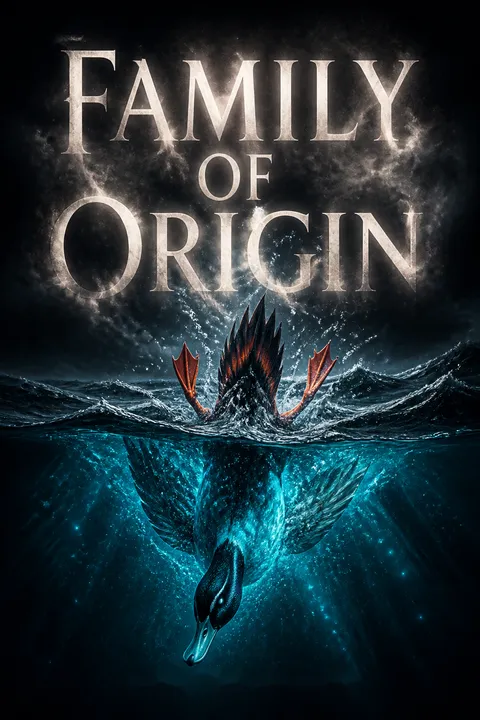
A living scientific disputeThe buffleheads are the only known birds of their kind, and their feathers do not keep water out as effectively as those of related ducks. On Leap's Island, different researchers treat this change as evidence that evolution is reversing, though they disagree about whether reversal means decline. Ian's focus on the unusual Duck Twelve gives his children a concrete trail through the island's competing theories. The birds also prevent the story's questions about progress from remaining abstract: their adaptations may be costly, harmless, or simply different. The duck's observed behavior does not prove the grand claims made about it.
Ian's Field Journals
A belated trail of evidenceIan's journals and banding records preserve the observations he did not share with his children or with the island's researchers. The siblings use them to identify sites where he watched Duck Twelve, and the entries reveal his unusual interest in the bird's play, attention, and apparent pleasure. They also expose the limits of what documentation can establish: the notes show what Ian saw and believed, but not the complete truth about his motives or death. The laboratory reports that reach the siblings later add evidence without turning it into a final verdict.
Leap's Island
A refuge with its own historyThe private island removes the siblings from phones, work, and ordinary escape routes, forcing them to spend time together while they investigate Ian's life. Its converted hotel, communal Lobby, stilt shacks, and isolated research sites create a contained world with its own rules. But the island is no clean alternative to the mainland. Its history includes colonial violence, failed idealism, addiction, institutional rivalry, and residents who are unsure how to leave. The setting makes retreat feel temporarily possible while showing that no place can be separated from the histories and compromises that shaped it.
The Mars Application
Elsa's promised exitMars Origins gives Elsa an apparent route away from Earth and from the small decisions she fears she will make badly. Being selected for an interview lets her imagine a future with a clear purpose, but Nolan and Remy challenge the likelihood that the program will send colonists in her lifetime. The application is not merely a career possibility: it carries Elsa's hope of escaping responsibility and securing a version of goodness beyond ordinary life. Its loss forces her to consider whether a meaningful future requires certainty or can begin without it.
Darwin Walking Backward
A contested story of progressThe image of Darwin stepping backward represents the Reversalists' belief that evolution and human life may be moving away from complexity. Their movement descends from a commune that romanticized preindustrial life, but Mitchell recasts its symbol as scientific warning. Ian shares the movement's interest in reversal while resisting its pessimism, making the sign's meaning unstable. The novel uses this history to question who gets to define progress and which past a person wishes to recover. Retreat can look like wisdom or avoidance, depending on what a person refuses to remember.
FAQ
Synopsis & Basic Details
What is Family of Origin about?
- Estranged siblings reunite: Elsa and Nolan Grey return to Leap's Island after their father's death to settle his affairs and understand his involvement with a group of scientists called the Reversalists.
- Exploring a father's choices: The novel explores the siblings' complex relationship with their father, Dr. Ian Grey, and his controversial theories about evolution running backward.
- Seeking closure and understanding: As they navigate the island and its eccentric inhabitants, Elsa and Nolan confront their past, their identities, and the meaning of family.
Why should I read Family of Origin?
- Intriguing character dynamics: The novel offers a compelling exploration of sibling dynamics, family secrets, and the challenges of understanding those closest to us.
- Thought-provoking themes: It delves into themes of scientific belief, personal identity, and the search for meaning in a world grappling with uncertainty and change.
- Unique and quirky setting: Leap's Island and its inhabitants provide a memorable and thought-provoking backdrop for the story's exploration of complex issues.
What is the background of Family of Origin?
- Contemporary societal anxieties: The novel reflects contemporary anxieties about climate change, scientific progress, and the future of humanity, as seen through the Reversalists' beliefs.
- Island as a microcosm: The isolated setting of Leap's Island allows for an exploration of alternative communities and belief systems, removed from mainstream society.
- Scientific and philosophical debates: The novel engages with debates about evolution, progress, and the nature of scientific inquiry, questioning traditional assumptions and exploring alternative perspectives.
What are the most memorable quotes in Family of Origin?
- "The Greys remembered everything.": This quote encapsulates the siblings' inability to move on from the past and their tendency to dwell on old grudges and unresolved issues. It highlights a central conflict driving their interactions.
- "It's not their fault, Elsa said. It's the people who tell stories about them.": This quote speaks to the theme of narrative and interpretation, suggesting that the meaning we ascribe to things, like the undowny bufflehead, is more significant than the things themselves.
- "Everyone says they moved for the ducks, Esther said. But it's not for nothing that you wind up out here. We're all a bunch of old kooks, if you ask me.": This quote acknowledges the underlying reasons for the characters' presence on Leap's Island, suggesting that their personal struggles and disillusionment are as important as their scientific pursuits.
What writing style, narrative choices, and literary techniques does C.J. Hauser use?
- Omniscient narration with character focus: The narrative shifts between the perspectives of Elsa and Nolan, providing insight into their thoughts and feelings while maintaining an omniscient voice that comments on their actions and motivations.
- Witty and insightful prose: Hauser employs a distinctive writing style characterized by sharp wit, keen observations, and a blend of humor and pathos.
- Non-linear storytelling: The novel incorporates flashbacks and shifts in time to reveal the characters' past experiences and the evolution of their relationships, adding depth and complexity to the narrative.
Hidden Details & Subtle Connections
What are some minor details that add significant meaning?
- Elsa's ill-fitting beach attire: Elsa's green pants and Teva sandals on the bus to Watch Landing immediately establish her as an outsider, highlighting her discomfort and detachment from the carefree vacationers. This foreshadows her internal conflict and inability to embrace the present moment.
- The pink inflatable tiger: The tiger raft tethered to the marina store awning, described as "being punished for something he'd once done," mirrors Elsa's own feelings of being trapped by her past mistakes and burdened by guilt.
- The empty music cupboard: The empty blue velveteen piano bench in San Luis Obispo symbolizes the loss of Elsa's childhood and the absence of her father's presence in her life. It represents the emotional void created by their separation.
What are some subtle foreshadowing and callbacks?
- The "Darwin Walking Backward" logo: The Reversalists' logo foreshadows the novel's exploration of regression, both in terms of evolutionary theory and the characters' personal lives. It also hints at the potential for positive change through unconventional means.
- Nolan's childhood fall into the well: The childhood incident where Elsa leaves Nolan in the well foreshadows their later estrangement and Elsa's tendency to withdraw from emotional connection. It also highlights Nolan's vulnerability and dependence on Elsa.
- The apricot dog: The apricot dog that Nolan sees after receiving the news of his father's death foreshadows Jinx, Ian's dog, and the connection that Nolan will eventually form with her.
What are some unexpected character connections?
- Ingrid's past with Elsa's biological father: The revelation that Ingrid had a relationship with Elsa's biological father adds a layer of complexity to their relationship and challenges Elsa's perception of her mother.
- Remy St. Gilles's connection to Nolan's childhood: Nolan's admiration for Remy St. Gilles, the author of the Asterias series, creates an unexpected connection between his childhood and his father's world on Leap's Island.
- The Riordan brothers' relationship with Ian: The Riordan brothers' close relationship with Ian, who defended them against the other Reversalists, reveals a more compassionate and supportive side to his character.
Who are the most significant supporting characters?
- Mariana Gates: The island guide: Mariana serves as a guide for Elsa and Nolan, providing practical assistance and insights into the Reversalists' community. Her own research and motivations add depth to the island's complex social dynamics.
- Esther Stein: The disillusioned scientist: Esther's story of disillusionment with modern education and her passion for birdwatching offer a unique perspective on the themes of progress and decline. Her connection to Ian and her knowledge of the undowny bufflehead make her a valuable source of information for the siblings.
- Gwen Manx: The reproductive scientist: Gwen's research on the undowny bufflehead's reproductive systems and her personal struggles with infertility highlight the complexities of evolution and the challenges of human reproduction.
Psychological, Emotional, & Relational Analysis
What are some unspoken motivations of the characters?
- Elsa's need for escape: Elsa's desire to go to Mars stems from a deep-seated need to escape her past, her family, and her own perceived failures. It represents a yearning for a clean slate and a sense of purpose.
- Nolan's desire for validation: Nolan's search for answers about his father's death is driven by a desire for validation and a need to prove his worth. He seeks to understand his father's motivations and to find evidence that he was loved and appreciated.
- Ian's search for meaning: Ian's involvement with the Reversalists reflects a search for meaning and purpose in a world he perceives as declining. His fascination with the undowny bufflehead represents a desire to find evidence of hope and potential for positive change.
What psychological complexities do the characters exhibit?
- Elsa's self-destructive tendencies: Elsa exhibits self-destructive tendencies, engaging in risky behavior and sabotaging her own relationships. This stems from a deep-seated belief that she is flawed and undeserving of happiness.
- Nolan's insecurity and need for approval: Nolan struggles with insecurity and a need for approval, constantly seeking validation from others. This stems from a childhood marked by feelings of inadequacy and a desire to live up to his parents' expectations.
- Ian's intellectual arrogance and emotional detachment: Ian's intellectual arrogance and emotional detachment create distance between him and his children. His inability to express his feelings and his tendency to prioritize his work over his relationships contribute to the family's dysfunction.
What are the major emotional turning points?
- Elsa's realization about Mars: Elsa's realization that the Mars Origins program is not what she thought it was forces her to confront her own illusions and to re-evaluate her goals.
- Nolan's discovery of Ian's true beliefs: Nolan's discovery that Ian saw the Reversal as a positive thing challenges his assumptions about his father's worldview and forces him to reconsider his own beliefs.
- The siblings' shared experience with the Paradise Duck: The siblings' shared experience with the Paradise Duck allows them to connect on a deeper level and to find a sense of peace and understanding.
How do relationship dynamics evolve?
- From estrangement to tentative connection: Elsa and Nolan's relationship evolves from estrangement and resentment to a tentative connection based on shared grief and a desire for understanding.
- Confrontation and forgiveness: The siblings confront their past and their own flaws, allowing them to forgive each other and to move forward with a renewed sense of empathy and compassion.
- Acceptance and understanding: The novel culminates in a moment of acceptance and understanding, as Elsa and Nolan recognize the complexities of their family history and embrace the possibility of a future shaped by their own choices.
Interpretation & Debate
Which parts of the story remain ambiguous or open-ended?
- The true cause of Ian's death: The novel leaves the question of whether Ian's death was an accident or suicide open to interpretation, allowing readers to draw their own conclusions based on the available evidence and their understanding of his character.
- The future of the Reversalists: The future of the Reversalists and their movement remains uncertain, suggesting that their beliefs and practices may not be sustainable in the long term.
- The long-term impact of the siblings' journey: The long-term impact of Elsa and Nolan's journey on their lives and their relationship is left open-ended, suggesting that their healing and growth will continue beyond the confines of the novel.
What are some debatable, controversial scenes or moments in Family of Origin?
- Elsa and Nolan's past relationship: The hints of a past inappropriate relationship between Elsa and Nolan are disturbing and open to interpretation. The extent of their involvement and the impact it had on their lives are left ambiguous, raising questions about consent, power dynamics, and the complexities of family relationships.
- Elsa's behavior with the bartender: Elsa's impulsive and self-destructive behavior with the bartender raises questions about her agency, her motivations, and the impact of trauma on her choices.
- Gwen's plan to kill Duck Twelve: Gwen's plan to kill Duck Twelve is ethically questionable and raises concerns about the potential for scientific research to be driven by personal agendas and biases.
Family of Origin Ending Explained: How It Ends & What It Means
- Releasing the Paradise Duck: By releasing the Paradise Duck from its ID band, Elsa and Nolan reject the need to categorize and control nature, embracing the uncertainty and potential for positive change.
- Choosing connection over escape: Elsa's decision to stay on Earth and to connect with her family represents a rejection of her desire to escape and a commitment to facing the challenges of the present.
- Embracing uncertainty and hope: The novel's ending emphasizes the importance of embracing uncertainty and finding hope in the face of adversity. It suggests that even in a world that seems to be moving backward, there is still potential for growth, connection, and meaning.
Download PDF
Download EPUB
.epub digital book format is ideal for reading ebooks on phones, tablets, and e-readers.








