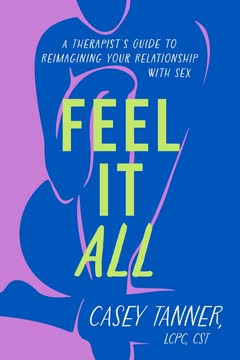
Key Takeaways
1. Insecure Sexuality is a Systemic Issue, Not Your Fault
Insecure sexuality is a normal, predictable reaction to what you’ve been through.
Self-blame is common. Many individuals seeking support for their sex and love lives feel inherently broken, blaming themselves for perceived shortcomings like low sex drive, relationship struggles, or feeling like "damaged goods" after trauma. This self-blame is often reinforced by comparing their experiences to others, leading to feelings of inadequacy. However, this pervasive sense of fault is not a symptom of mental illness but a learned response to societal pressures.
A vast chasm exists. There's a significant gap between the diverse range of human sexual experiences and the inadequate tools society provides for navigating them. This deficit stems from a lack of comprehensive, accurate sex education in schools and medical/mental health professions. For example:
- Only 42.8% of high schools provide critical sex education topics.
- Medical students receive only 3-10 hours of sexual health education.
- Many counseling programs don't require sexuality courses.
This leaves individuals disoriented and professionals ill-equipped, perpetuating a cycle of misinformation and shame.
Insecure sexuality defined. It's a fear-based orientation to one's sexual identities, desires, responses, or behaviors. It manifests as anxiety about sex, questioning one's desire frequency, believing one's body is "working against them," or grappling with lovability. This anxiety is not an inherent flaw but a predictable outcome of living in a sex-negative culture that fails to provide secure resources and understanding.
2. Complex Trauma Underpins Sexual Insecurity
Traumatic experiences don’t have to be once in a lifetime to change the fabric of who you were in a way that impacts your life today.
Trauma is broad. The traditional, narrow definition of trauma, often limited to acute, life-threatening events, fails to capture the full spectrum of experiences that profoundly impact individuals. Many people dismiss their own pain as "not extreme enough" because it doesn't fit this limited framework, leading to self-blame and the belief that they are "overdramatic." However, trauma comes in many forms and is not a competition.
Complex trauma is pervasive. This type of trauma unfolds over time through repeated abuse, neglect, or systemic violence, often stemming from generations of oppression. Unlike PTSD, complex trauma's impacts on interpersonal relationships, self-perception, and emotional regulation are not always recognized by diagnostic manuals, making it feel as "unremarkable as the air you breathe." It can feel like being left on a deserted island, where repeated exposure to harsh elements wears you down.
Building blocks of insecurity. Insecure sexuality is built upon three interconnected forms of complex trauma, none of us are exempt from their impact:
- Sexual Oppression: Systems like white supremacy, heterosexism, misogyny, transphobia, ableism, and fatphobia create biased standards of "good sexuality."
- Sex Miseducation: Harmful, fear-based messages about sexuality, gender, and relationships from home, school, religion, and media.
- Attachment Wounds: Early experiences of isolation or unmet needs with caregivers that shape our relational patterns.
Understanding these roots shifts blame from the individual to the systems and experiences that shaped them.
3. Oppressive Systems Distort Our Sexual Self-Worth
Control of sexuality is a classic tool of domination, used by men against women, by white people against people of color, by the abled against the disabled—or, to cut a long list short, by the powerful against the less powerful.
White supremacy as the measuring stick. This ideology, asserting white superiority, creates and reinforces narrow standards of "good sexual personhood," underpinning all sexual insecurities. Historically, it justified slavery by falsely characterizing Black women as hypersexual or asexual, while pedestalizing white women as virginal. Purity culture, prevalent in modern American culture, continues to center whiteness, thinness, and youth in its sexual ideals, devaluing other identities.
Myth of biological determinism. Society often assumes gender, sexual orientation, and desire are fixed by genitalia at birth. This leads to rigid stereotypes: penises mean boys, attracted to girls, high sex drive; vulvas mean girls, attracted to boys, low sex drive. This heteronormative and cisnormative conditioning limits our ability to explore authentic sexuality and love those who differ, including ourselves. It's a collective lack of creativity around gender and sexuality.
Unrealistic sexual health standards. The "wellness industrial complex" defines sexual health by an unattainable ideal: a thin, able body, free of illness, that desires sex appropriately, gets aroused on command, and avoids unintended pregnancies or STIs. This ableist and fatphobic definition deems many bodies "defective" rather than "different," gatekeeping pleasure and intimacy. It forces individuals to put their lives on pause until they meet arbitrary, impossible standards, rather than fostering creativity and accommodation for diverse bodies and needs.
4. Sex Miseducation is a Form of Neglect and Violence
limiting access to comprehensive sexuality education equates to violence against individuals across the lifespan.
Formal miseducation is the norm. Most formal sex education in the U.S. is fear-based and incomplete. Only 30 states mandate sex education, and only 17 require it to be medically accurate. Many programs are abstinence-only, neglecting LGBTQIA+ inclusion, consent, and resources for sexually active individuals. This fear-driven approach focuses on preventing negative outcomes rather than empowering individuals with comprehensive information, effectively acting as a "government-sanctioned form of trauma."
Informal miseducation fills the void. In the absence of adequate formal education, individuals turn to informal sources like friends, family, media, and porn. These sources are often influenced by the same puritanical, racist, sexist, homophobic, and sex-negative notions as formal curricula. Silence from caregivers about sex also sends a powerful message: that sex is taboo, shameful, or not to be discussed, leaving children to make sense of their developing bodies and desires in isolation.
Impact on autonomy and self-perception. Early experiences, such as adults shaming children for touching their genitals, teach that bodies are "bad" and self-soothing is sinful. This disconnects individuals from their bodies and natural curiosity. Peer miseducation, driven by social acceptance, often leads adolescents to mask their authentic sexuality. This collective miseducation fosters sexual loneliness, confusion, and yearning, making individuals feel like "sexual outsiders" and blaming themselves for struggles that are rooted in systemic failures.
5. Attachment Wounds Shape Our Sexual Dynamics
Your relationship with sex has everything to do with how you see yourself, others, and the world—all of which began to take shape during infancy, through a process called attachment.
Early blueprints for intimacy. Our attachment system, developed in infancy through interactions with caregivers, dictates how we seek closeness and respond to distress. When caregivers are consistently responsive, a secure attachment forms, fostering beliefs of self-worth and trust in others. However, inconsistent or neglectful care leads to insecure attachment styles (anxious, avoidant, disorganized), where individuals struggle with their lovability, trust, and sense of safety in the world.
Inherited patterns. Insecure attachment often stems from generational trauma, where patterns of nervous system regulation are passed down. If caregivers were anxious or shut-off due to their own traumas, children learn to mirror these responses. As adults, our attachment system remains active, easily triggered by perceived threats in intimate relationships, especially romantic and sexual ones, which heighten vulnerability. This means our past loneliness and coping mechanisms continue to influence our present sexual experiences.
Anxious and avoidant strategies. When attachment alarms are triggered in adulthood, we employ secondary strategies to cope:
- Anxious strategies: Intensify attempts to gain closeness (e.g., protest behaviors like excessive texting, passive-aggressive reassurance-seeking, catastrophizing, seeking sex as "proof" of care).
- Avoidant strategies: Create emotional distance (e.g., defensiveness, people-pleasing, using sex as avoidance, interpreting desire as clinginess).
These strategies, while adaptive in unsafe past environments, become barriers to intimacy in safe relationships, creating self-fulfilling prophecies of rejection or isolation.
6. Somatic Awareness is Key to Healing Sexual Triggers
Trauma is . . . a wordless story our body tells itself about what is safe and what is a threat.
The body remembers. Our bodies are first responders to triggers, sending information to the brain that interprets it based on past memories. This "neuroception precedes perception" means our nervous system reacts before our conscious mind understands why, often misinterpreting present situations through the lens of past fear and loneliness. This can lead to biased interpretations of social cues and disproportionate reactions, making intimacy challenging.
Stress responses impact sexuality. Our autonomic nervous system mediates stress responses (fight, flight, freeze/shut-down). In an activated state, the body mobilizes for threat, making sexual arousal less likely. In a shut-down state, the body withdraws and dissociates, appearing calm but being psychologically fragile, with unresolved pain simmering beneath the surface. Both states hinder sexual arousal, making it difficult to orgasm, maintain erections, or relax during sex.
Somatic healing tools. To move from reactivity to intentional choice, we must learn to recognize and regulate our nervous systems. This involves:
- Maintenance checks: Brief body scans to assess vulnerability (hunger, fatigue, pain) and resiliency factors.
- Somatic microdoses: Small, body-related interventions like Lion's Breath (deep breathing to relieve tension) or Self-Soothe with Five Senses (grounding through sight, sound, smell, taste, touch).
- Sex/Masturbation: Can be a microdose, releasing oxytocin and endorphins to reregulate the nervous system.
These practices help us distinguish between past trauma and present danger, allowing us to listen to our bodies without immediately acting on every impulse.
7. Healing is Relational: Build Trauma-Informed Partnerships
Just as the damage is relational, the healing is relational.
Shared nervous system resources. Because trauma and insecurity are often co-created in relationships, healing also requires connection with others. Our nervous systems attune to those around us; being with regulated individuals can help us regulate ourselves. However, sexual partnerships can be challenging "support groups with no facilitator" due to shared and individual sexuality-related triggers, making it hard to navigate desire discrepancies or a partner's sexual shame.
Beyond "the one." The myth that a single "soulmate" will solve all our problems, or that non-monogamy is a universal cure, is misleading. All relationships, whether monogamous or non-monogamous, will trigger attachment wounds. The goal isn't to find a perfect, non-activating relationship, but to cultivate "trauma-informed partners" who are committed to a never-ending process of healing, accountability, and compassion, both for themselves and others.
Wind-resistant relationships. Like the bundled tubes of the Willis Tower, relationships become resilient when individuals accept their neediness and link arms with others. Trauma-informed partners:
- Are intentional about relationship evolution, openly discussing pace and feelings.
- Let go of control over a partner's desire, instead seeking to understand it.
- Value difference as an invitation to curiosity, not a threat.
- Practice nuance, holding space for complexity rather than black-and-white thinking.
- Assess their energy levels and set boundaries.
This communal dependency, or "nervous system mutual aid," fosters collective resilience against insecure sexuality, challenging individualistic narratives that shame our need for others.
8. Embrace Desire Diversity Beyond Sexual Performance
sex is rarely the root of our insecurity, but our anxieties dance on the stage of sexuality.
Desire is diverse and non-sexual. Desire is longing, not always sexual. We desire places, people, things, and experiences. Many cultures fail to acknowledge or validate non-sexual desire, or queer desire, projecting sexual meaning onto all forms of closeness. This erases authentic longing and forces individuals to exile parts of themselves that don't fit narrow, heterosexual norms.
Pleasure beyond performance. Pleasure is a much broader concept than sexual performance, orgasm, or erection. Many experience profound non-sexual pleasure daily (e.g., petting a cat, a delicious meal). Siloing pleasure to sexuality leads to self-judgment during "dry spells" or when desire changes. Shifting focus from achievement-oriented sex to pleasure-oriented sex, regardless of orgasm, is crucial for secure sexuality.
Fluidity of attraction and identity. Attraction is also diverse, encompassing romantic, emotional, aesthetic, or intellectual pulls, not just sexual. It's fluid, changing over time in terms of who we're attracted to and how. Societal pressures, like the "just a phase" narrative for queer individuals or the expectation for straight people to never question their orientation, create fear around this fluidity. Embracing this natural evolution, rather than resisting it, is vital for a secure sense of self and relationships.
9. Nurture Your Erotic Imagination Through Play
Possibility is the birthplace of passion.
Rediscover adult play. Childhood play is crucial for developing self-awareness and processing emotions, but it's often disrupted by trauma or a focus on productivity. In adulthood, play fosters creativity, social connection, and deeper intimacy. Gianna's postpartum journey, for example, highlighted the need to re-engage with play to navigate new sexual experiences without the pressure of "failure."
Schedule play, not just sex. While scheduling sex can create anxiety and pressure, scheduling "playdates" lowers the stakes and invites imagination. Play can be anything from a tickle fight to a game of Truth or Dare, fostering a "no-bad-ideas mindset." This intentional time for possibility, rather than rigid expectations, is where passion can truly flourish in relationships.
Create containers and gather props. Successful play, especially in sexuality, thrives within well-defined boundaries or "containers." These can be explicit agreements (safe words, traffic light systems, yes/no/maybe lists) that allow partners to take risks without fear of retaliation or judgment. Props—from lube and lingerie to a simple hair tie or a playlist—can amplify play, serve as conversation starters, expand accessibility, and enhance pleasure, shifting focus from performance anxiety to creative connection.
10. Reclaim Your Authentic, Fluid Sexuality
You do not need to make sense.
Beyond default settings. As a trauma response, many engage with gender, sexuality, and relationships on "default," clinging to rigid roles and scripts (e.g., men initiate, women receive; sex must lead to orgasm). This rigidity, while offering an illusion of safety, stifles authenticity and pleasure. A sexual awakening involves deconstructing these learned roles and embracing a new vision for sexuality outside limiting paradigms.
Tune in to internal desire. Many have lost touch with their intuitive sense of desire due to external "shoulds" and fear of rejection. Reconnecting involves noticing bodily sensations of "resonance" (harmony, expansion, lightness) and "dissonance" (tension, constriction, heaviness). This somatic feedback helps discern authentic desire, aversion, or ambivalence, allowing for choices that align with one's true self, even if it means saying "I don't know."
Embrace perplexity and fluidity. The journey to secure sexuality isn't about finding a fixed "true self" or a perfect label. It's about making friends with not knowing, letting go of certainty, and embracing the "I don't know" spectrum. This means trying on new identities, pronouns, or expressions without needing to prove them or make sense to anyone. Imposter syndrome often signals the verge of liberation, reminding us that our worth is not tied to societal measurements.
The voice of secure sexuality. As you heal, an inner voice emerges—a tenderhearted friend who validates your anxiety, guides you back to your breath, and encourages reaching for support. This voice fosters accountability without shame, helps identify knowledge gaps, and protects your sexual security. It celebrates your unique desire, body, and identity, allowing you to become an admirer of your own sexuality, even in its messy, evolving, "half-baked glory."
Last updated:
Similar Books