Plot Summary
Sisters, Secrets, and Shadows
Detective Josie Quinn and her twin, Trinity Payne, are emotionally estranged, their relationship strained by old wounds and misunderstandings. Trinity, a high-profile news anchor, is reeling from a career crisis and a humiliating on-air gaffe, seeking solace in her sister's home. Their differences—Josie's guarded resilience and Trinity's desperate ambition—clash, culminating in a bitter argument. Trinity's sense of isolation and Josie's guilt over not truly knowing her sister set the emotional stakes. When Trinity abruptly leaves for a remote cabin, both women are left haunted by what was said and unsaid, their bond frayed but not broken. The stage is set for a story of family, regret, and the desperate need for connection.
The Disappearance at Whispering Oaks
Josie, prodded by guilt and concern, visits Trinity's rented cabin in the woods, only to find it abandoned. Trinity's car is packed and ready to go, her phone and belongings left behind, but she is nowhere to be found. A cryptic note to the landlord suggests she left weeks earlier, yet her car and suitcase remain. Outside, Josie stumbles upon a chilling display: human bones, meticulously arranged in a ritualistic pattern. The discovery sends shockwaves through Josie and the Denton police, launching a frantic investigation. The emotional weight of possibly losing her sister forever presses on Josie, who is torn between her role as detective and as family.
Bones in the Clearing
The bones found behind the cabin are not Trinity's, but those of another woman, later identified as Nicci Webb, a missing schoolteacher from a nearby town. The remains are arranged in a symbolic, almost artistic display, pinned down with fishing line and tent stakes. The methodical, almost reverent staging suggests a killer with a message and a pattern. The investigation expands, connecting Trinity's disappearance to a broader, more sinister series of crimes. Josie's relief that the remains are not her sister's is tempered by the horror of what this means: Trinity is still missing, and a serial killer may be at work.
The Message in the Car
Forensic analysis of Trinity's car reveals a message scrawled in fingerprint residue on the door: "Vanessa," Josie's birth name, and a string of shorthand symbols. This cryptic communication, left in the seconds before Trinity was taken, is a direct call to Josie, urging her to look to the past and to a shared secret language. The message is both a clue and a lifeline, a sign that Trinity was thinking of her sister in her final moments of freedom. Josie's guilt and determination intensify, as she realizes Trinity is relying on her to solve the puzzle and bring her home.
The Bone Artist's Return
The investigation uncovers a chilling connection: the "Bone Artist," a serial killer who staged his victims' skeletons in elaborate displays, has returned after years of silence. Trinity, obsessed with the case for a story, had been trying to make contact with the killer, believing she could draw him out. The killer's signature—ritualistic bone arrangements, even-year cycles, and cryptic communications—matches the current crime. The team races to understand the Bone Artist's psychology, his need for attention, and his obsession with symmetry and games. The stakes rise as it becomes clear that Trinity is his latest "work."
Mirrors and Missing Women
The Bone Artist's pattern is revealed: for every public victim, there is a "mirror"—a second, often opposite-gender victim, who vanishes at the same time but is never found. The investigation uncovers a string of missing persons, each paired by name and gender, their fates intertwined in the killer's twisted sense of balance. Trinity's abduction fits the pattern, and Josie realizes she herself is the intended "mirror." The killer's obsession with duality, reflection, and hidden pain mirrors the sisters' own fractured relationship, deepening the emotional resonance of the case.
The Diary in Shorthand
Josie deciphers Trinity's shorthand message, leading her to search for a long-lost diary written in code during Trinity's troubled adolescence. The diary, hidden inside a VHS tape case, reveals Trinity's history of bullying, loneliness, and a fateful encounter with a boy named Max at a nature preserve. Max, scarred and reclusive, displayed early signs of obsession with bones and death. The diary becomes the key to identifying the Bone Artist, linking the sisters' past to the present horror. Josie's understanding of Trinity deepens, fueling her resolve to save her.
Childhood Scars, Adult Monsters
The narrative delves into the childhood of Alex "Max" Thornberg, the Bone Artist. Raised by a cold, abusive father and a fragile, artistic mother, Alex's life is marked by violence, neglect, and psychological torment. His only companion is an alter ego, Zandra, who emerges to absorb the pain and commit the acts Alex cannot face. The trauma of his upbringing, the loss of his half-sister Nicci, and his mother's eventual death shape him into a killer obsessed with art, symmetry, and control. The story draws a chilling parallel between the wounds of childhood and the horrors of adulthood.
The Game Begins
With the Bone Artist taunting the police and Josie personally, the investigation becomes a high-stakes game. Josie, using the media, issues a direct challenge to the killer, surrounding herself with symbolic props and allies—family, survivors, and the press. The Bone Artist responds with a grisly package: a human rib, a message of escalation. The tension mounts as Josie realizes the killer is always one step ahead, manipulating the investigation and relishing the attention. The emotional toll on Josie and her team is immense, as hope and dread war for dominance.
Patterns and Symmetry
The team deciphers the Bone Artist's true pattern: every public victim has a hidden "mirror," and the killer's final masterpiece will unite all his obsessions—art, symmetry, and personal history. Josie's insight into the killer's psychology, aided by Trinity's diary and the shorthand clues, leads them to the arboretum and the adjacent land where Alex grew up. The search is frantic, the clock ticking down as they realize Trinity's life hangs in the balance. The emotional stakes are at their peak, as Josie confronts her own fears and the possibility of losing her sister forever.
The Final Art Installation
The search leads to a hidden deer blind high in the trees at the nature preserve, transformed into the Bone Artist's ultimate installation. Inside, Trinity is found, barely alive, posed as the centerpiece of a grotesque tableau of bones and feathers—her arms outstretched, "wings" behind her, a living angel in a shrine to the killer's madness. Josie risks her life to reach her, the sisters clinging to each other in a moment of raw, redemptive emotion. The rescue is both a physical and spiritual reunion, the culmination of their shared pain and love.
Reunion and Reckoning
With Alex Thornberg in custody, the truth of his crimes and his fractured psyche comes to light. The existence of his alter, Zandra, explains the duality and violence of his actions. The remains of the mirror victims are recovered, bringing closure to families and to the case. Josie and Trinity, forever changed by their ordeal, confront the wounds of their past and the strength of their bond. The community, the police, and the media reckon with the horror and the heroism at the heart of the story.
Healing, Hope, and Homecoming
In the aftermath, Josie and Trinity begin to heal, surrounded by family, friends, and colleagues. Their relationship, once fractured, is now forged in fire—deeper, more honest, and unbreakable. The sisters share long-overdue truths, including the revelation that they once unknowingly crossed paths as teenagers, each saving the other in ways they never understood. The story ends with a sense of hope and renewal, the promise that even in the darkest of times, love and resilience can prevail.
Characters
Josie Quinn
Josie is a complex, deeply scarred detective whose childhood trauma and abduction have shaped her into a fiercely independent and driven investigator. Her relationship with her twin, Trinity, is fraught with guilt, misunderstanding, and longing for connection. Josie's psychological landscape is marked by compartmentalization and emotional restraint, but beneath her tough exterior lies a profound capacity for love and loyalty. Throughout the story, Josie's journey is one of self-discovery, as she confronts her own limitations, learns to trust others, and ultimately reclaims her role as both protector and sister. Her arc is a testament to the power of vulnerability and the enduring strength of family.
Trinity Payne
Trinity is Josie's mirror and foil—a glamorous, high-achieving news anchor whose confidence masks deep-seated insecurities and loneliness. Her career is her identity, and its unraveling leaves her adrift and desperate for a story that will restore her sense of worth. Trinity's psychological wounds stem from childhood bullying, the loss of her grandmother, and the absence of her twin. Her obsession with the Bone Artist case is both professional and personal, a quest for meaning and connection. Trinity's arc is one of reckoning—with her past, her choices, and her need for her sister. Her survival and reunion with Josie mark a hard-won transformation from isolation to belonging.
Alex "Max" Thornberg / Zandra
Alex is the Bone Artist, a product of relentless childhood abuse, neglect, and psychological torment. His psyche is fractured, manifesting as the alter ego Zandra, who absorbs the pain and commits the violence Alex cannot face. Alex's obsession with bones, art, and symmetry is a desperate attempt to impose order on chaos and to prove his worth to his father. Zandra, the "sister," is both protector and destroyer, embodying the rage and cunning that Alex represses. Together, they are a chilling study in the making of a monster, a tragic figure whose humanity is both lost and glimpsed in fleeting moments.
Shannon Payne
Shannon is the emotional anchor of the Payne family, her life marked by the loss and miraculous return of her daughter Josie. She is nurturing, practical, and fiercely protective, but also haunted by guilt over the family's fractured past. Shannon's relationship with both daughters is complex—she is both confidante and outsider, struggling to bridge the gap between them. Her resilience and compassion are vital to the family's healing, and her willingness to confront painful truths is a model of maternal courage.
Christian Payne
Christian is a figure of stability and sorrow, a father who lost one daughter and nearly lost another. His love for his family is unwavering, but he is often at a loss in the face of their pain and conflict. Christian's arc is one of humility and growth, as he learns to listen, to let go of control, and to support his children in their own journeys. His presence is a reminder of the quiet, enduring power of paternal love.
Noah Fraley
Noah is Josie's partner in both life and work, a steady, compassionate presence who grounds her in moments of crisis. His patience, humor, and unwavering support are essential to Josie's survival and success. Noah's own history of loss and resilience makes him uniquely attuned to Josie's struggles, and his willingness to share the burden of her pain is a testament to the strength of their bond.
Gretchen Palmer
Gretchen is Josie's trusted colleague and confidante, a seasoned investigator with a keen mind and a dry wit. Her friendship with Josie is built on mutual respect, honesty, and shared experience. Gretchen's ability to cut through emotional noise and focus on the facts is invaluable to the investigation, and her empathy provides a counterbalance to Josie's intensity.
Finn Mettner
Mettner is the backbone of the investigative team, his thoroughness and attention to detail driving the case forward. He is pragmatic, unflappable, and quietly supportive, often serving as the voice of caution and balance. Mettner's commitment to justice and his respect for Josie's leadership make him an indispensable ally.
Drake Nally
Drake is both an asset and a complication in the investigation—a skilled FBI agent with a personal connection to Trinity. His struggle to balance professional duty with personal feelings adds tension and depth to the story. Drake's arc is one of humility and growth, as he learns to trust Josie and to accept his own limitations.
Monica Webb
Monica is the daughter of Nicci Webb, the Bone Artist's latest victim. Her grief and determination mirror Josie's own, and her willingness to participate in the investigation provides both practical help and emotional resonance. Monica's presence is a reminder of the broader impact of violence and the importance of community in the face of tragedy.
Plot Devices
Dual Timelines and Flashbacks
The narrative employs dual timelines and flashbacks, alternating between the present-day investigation and flashbacks to the childhoods of both the sisters and the killer. These flashbacks provide crucial context, revealing the origins of trauma, the formation of identity, and the seeds of violence. The device deepens character development and creates suspense, as past and present converge in the search for answers.
Symbolism and Ritual
The Bone Artist's crimes are laden with symbolism—ritualistic bone arrangements, male/female symbols, and coded communications. These motifs serve as both clues and metaphors, reflecting the killer's psychology and the emotional dynamics of the sisters. The use of shorthand, hidden diaries, and artistic displays creates a layered mystery that rewards close reading and emotional engagement.
Psychological Profiling and Mirror Victims
The investigation hinges on the recognition of patterns—mirrored victims, cycles of violence, and the killer's obsession with duality. This device drives the plot and mirrors the emotional journey of the characters, particularly the sisters, whose own relationship is marked by reflection, opposition, and eventual reconciliation.
Red Herrings and Misdirection
The narrative employs red herrings—misidentified remains, ambiguous clues, and unreliable narrators—to keep both characters and readers off-balance. The shifting focus between suspects, the ambiguity of the killer's identity, and the uncertainty of Trinity's fate maintain tension and propel the story forward.
Emotional Stakes and Character-Driven Action
The plot is driven as much by emotional stakes as by procedural logic. Josie's guilt, Trinity's desperation, and the family's collective trauma infuse every decision and action with urgency and depth. The resolution of the case is as much about healing and forgiveness as it is about justice.
Analysis
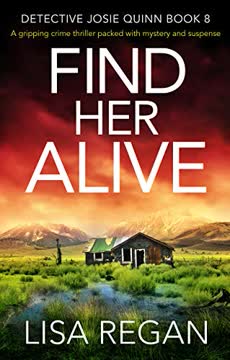
Find Her Alive is a masterful blend of psychological thriller, police procedural, and family drama, exploring the devastating impact of trauma and the redemptive power of connection. At its core, the novel is about the ways in which pain—whether inflicted by others or by circumstance—can fracture identity, relationships, and even reality itself. The Bone Artist's obsession with symmetry, mirrors, and art is a chilling metaphor for the human need to impose order on chaos, to find meaning in suffering. The duality of the sisters, their estrangement and eventual reunion, mirrors the killer's own fractured psyche, suggesting that healing is possible only through honesty, vulnerability, and the willingness to confront the past. The novel's use of coded messages, hidden diaries, and ritualistic crime scenes elevates the mystery, inviting readers to become active participants in the search for truth. Ultimately, Find Her Alive is a story of survival—not just of the body, but of the spirit—and a testament to the enduring strength of love, even in the face of unimaginable darkness.
Last updated:
Review Summary
Find Her Alive, the eighth Detective Josie Quinn novel, receives overwhelming praise from readers who rate it 4-5 stars. The story follows Detective Josie Quinn's desperate search for her twin sister Trinity, a TV journalist who vanishes while investigating a serial killer known as "The Bone Artist" who arranges victims' bones into sculptures. Reviewers praise the fast-paced, suspenseful plot, strong character development, and deeper exploration of Trinity's backstory. Many note this installment could work as a standalone but recommend starting from book one for full context and character understanding.