

Key Takeaways
Treat violence as learned survival behavior, not a child's natural appetite for harm
Violence is taught. Canada remembers his mother sending his older brother back to retrieve a stolen jacket, warning that the boys must not become easy targets. Years later, as a father, he told his daughter to fight back after school staff failed to reassure him she would be protected. He recognizes the same desperate logic in parents who urge children to retaliate: when institutions seem absent, force can look like the only available defense.
Fear shapes the lesson. Canada argues that children acquire violent behavior through years of imitation, pressure, and practice, not in one sudden transformation. This does not make every aggressive act predictable, but it shifts attention from labeling children as inherently dangerous toward asking what they have learned about safety, respect, and who will protect them.
What's important here is the distinction between explaining violence and excusing it. A social-learning lens asks how children observe adults, peers, and institutions solving conflict, then adapt those lessons to their own risks. The jacket story also exposes a painful bind: a parent may teach retaliation to defend a child while unintentionally making aggression part of the child's survival toolkit. Effective prevention therefore has to offer credible protection, not simply tell families to choose nonviolence while leaving them exposed. The claim that violence is learned is illuminating, though it need not rule out individual differences in temperament or impulse control.
Street codes can reduce chaos while making children prove their toughness
Rules offered order. On Union Avenue, boys were sorted by age and reputation. Fights were generally between children of similar size, and witnesses could settle who had already fought whom. A loss might lower a boy's standing; refusing to fight could leave him open to repeated attacks. The ranking system sometimes helped resolve disputes without further violence, but it depended on children accepting physical combat as the price of belonging.
The cost was real. Canada watched older boys beat Butchie, a large, gentle teenager who would not fight, to warn younger children what could happen to a perceived coward. His brother John, meanwhile, fought a roughly equal opponent and was then allowed to play freely. The neighborhood code offered a kind of local protection, but it also trained boys to suppress fear and treat violence as a test of manhood.
The street hierarchy resembles an informal institution: it assigns status, creates expectations, and provides a rough method for settling disputes. That helps explain why rules can make a violent environment feel safer to insiders, even while the system harms those who cannot or will not conform. The deeper lesson is that removing a code without replacing its functions may leave a vacuum. Communities need ways to grant respect, resolve grievances, and protect vulnerable children that do not require them to prove their worth through fighting. Local order is not the same as safety, especially for people at the bottom of its ranking.
Handguns turn rough, rule-bound conflict into sudden, unpredictable lethal danger
Weapons change the stakes. In Canada's childhood, many disputes involved fists, and neighborhood witnesses sometimes enforced rules against knives or other weapons. These limits were imperfect, and violence could still be brutal, but a fight usually offered some chance to retreat, intervene, or judge who had won. A handgun removes much of that margin. A child can be killed before anyone has time to interpret the situation.
The transition is social. Canada describes a progression from fists to sticks and knives, then to guns. The change is not simply that guns inflict more damage. Their presence weakens the old checks on aggression, because a child with a gun may feel able to confront someone who would once have been avoided. The result is not merely harsher violence, but a less predictable system in which bystanders, arguments, and misread intentions can become fatal.
This is a shift in the structure of conflict, not just in the weapon used. A fistfight has physical limits and often leaves room for bystanders to intervene; a gun compresses time and magnifies the cost of a mistaken judgment. That insight aligns with a public-health approach that treats access to lethal means as a key determinant of whether a crisis becomes a death. Still, weapons alone do not explain who carries them or why. The book's strongest account links guns to fear, status, and weak protection, which makes prevention broader than confiscation while keeping access central.
Trace policy consequences before calling harsher punishment a cure
Punishment changed the labor market. Canada argues that New York's Rockefeller drug laws, which imposed severe mandatory prison terms for drug possession, gave adult dealers a reason to use children as lookouts and messengers. Young people faced less severe treatment in juvenile court, and some gained street standing by serving time without cooperating with authorities. Later, crack's low price and intense demand expanded the market, drawing more teenagers into selling and encouraging young crews to buy guns for protection.
One intervention can compound another. Canada does not present this history as a single-cause explanation for youth gun violence. He describes a chain: harsh sentencing altered dealers' incentives, children entered the trade, crack expanded demand, and weapons became useful in the resulting competition. The lesson is to examine how a policy changes incentives on the ground, especially for adults who can shift risk onto children.
The policy lesson is about systems effects: a law can deter one behavior while relocating the danger to people with less power. That is a useful corrective to evaluating criminal policy only by arrests or sentences. It also suggests a practical test for any intervention: who absorbs the new risks, and what adaptations does the policy reward? The account is persuasive as a mechanism, but a memoir cannot isolate the relative contribution of sentencing, drug markets, poverty, and gun availability. That uncertainty does not erase the warning. It makes careful evaluation more necessary, not less.
A gun can make its carrier more confrontational, not simply more secure
Confidence shifted behavior. At college in Maine, Canada bought a small handgun because he feared walking through a Bronx neighborhood controlled by teenagers. In Maine, the gun seemed irrelevant. Back in the Bronx, carrying it gradually changed how he moved: he stopped avoiding the group, walked toward them with his hand on the weapon, and imagined himself ready to kill if challenged. He recognized that the gun was changing his judgment as well as his capacity for violence.
Protection can become provocation. Canada eventually discarded the weapon because he feared he would use it. His story complicates the claim that armed people carry guns only to defend themselves. A weapon may reduce a person's felt vulnerability while increasing willingness to enter confrontations. That individual experience does not prove every carrier will behave this way, but it shows why a gun's psychological effect belongs in any account of its danger.
The story captures a feedback loop: fear motivates carrying, carrying produces a sense of power, and that power makes avoidance feel unnecessary or humiliating. In behavioral terms, a perceived increase in control can alter choices before a weapon is ever drawn. This matters because safety is not only a question of what a gun can do in an emergency; it is also about how its presence reshapes ordinary decisions. The account is vivid rather than representative evidence, so it should not be treated as a universal psychological law. It does, however, expose a risk that simple self-defense arguments overlook.
Make adult authority protective and trustworthy, not merely visible
Presence must earn trust. As a child, Canada saw police respond slowly and dismissively after his family was robbed. At school, he and a friend secretly sought a principal's help to avoid a planned beating, then watched the principal summon their adversaries and expose their confidence. Such encounters taught children that adults might not understand the street's risks or keep a promise of confidentiality.
Rules need consistency. Canada also describes working with disruptive students who intimidated classmates because staff avoided confronting them. When a few powerful students escaped consequences, the rest learned that adults would not protect them. He argues that schools need clear standards, careful judgment, and adults willing to enforce them. Metal detectors may keep some weapons out of a building, but they cannot by themselves create the feeling that help will arrive when danger appears.
Institutional legitimacy is built through repeated encounters, not announced through policy. Children who expect betrayal or indifference have rational reasons to withhold information, avoid authorities, or rely on peers instead. This connects the book's street-level memories to procedural justice: people are more likely to cooperate with institutions they experience as fair, reliable, and respectful. Yet trust cannot replace capacity. A caring school that cannot respond to threats will also lose credibility. Strong practice needs both trustworthy relationships and concrete protection, with confidentiality treated as a safety obligation rather than an administrative detail.
Build a neighborhood support system around children, families, and schools
A school can anchor a community. Canada's Beacon model turned underused schools into centers open beyond the classroom day, offering youth activities, adult education, counseling, recreation, and other supports. The aim was not to add a single program but to connect children, families, and residents to a dependable local institution. In the surveyed Harlem neighborhood, about five thousand children needed late-evening weekend activities, while only about fifty places were available elsewhere.
Residents help shape the work. At Countee Cullen, a block association helped establish a summer play street despite the inconvenience of relocating parked cars. Performances drew neighbors outside; parents joined programs; teenagers organized cleanups and community campaigns. Canada argues that children cannot be supported sustainably without supporting families and rebuilding the places where they live. The Beacon approach treats safety, education, recreation, and community trust as connected needs rather than separate problems.
The model reflects an ecological view of development: a child's outcomes depend on linked settings, including home, school, peers, and neighborhood institutions. A school that stays open can reduce the distance between services and families while creating shared routines and relationships. The play-street example matters because community development is not only professional service delivery; it involves residents making decisions and accepting tradeoffs together. The approach is resource-intensive, and one successful site cannot establish that the same design will work everywhere. Its core principle travels better than any single blueprint: coordinate sustained support around the places families already use.
Train children as peacebuilders, and let them identify where danger starts
Young people know the terrain. Canada's Peacemakers program trained children in conflict mediation, research, and community organizing. It also asked them to help design safety plans, because children often know which hallways, corners, or transitions are common settings for fights. Adults may install security measures without asking the people who understand where conflict begins.
Participation carries risk. On the street, a child who intervenes in a dispute may become a target. The program therefore treated peacemaking as a skill requiring preparation and support, not a demand that children take responsibility for adult failures. Fifty children from Harlem and Brooklyn attended an initial training at Bowdoin College, then helped lead a community march for peace. Canada presents them not as troublemakers to contain, but as capable participants who need tools and backing.
This is a shift from designing safety for children to designing it with them. Participatory practice can reveal risks invisible to administrators, while giving young people a meaningful role beyond surveillance or discipline. The distinction between empowerment and burden is crucial: children should contribute knowledge and leadership, but adults remain responsible for protection, staffing, and follow-through. Confidentiality also matters because a student who shares information may face retaliation. The program's value rests not only in teaching mediation, but in whether adults use children's knowledge responsibly and make peacemakers safer rather than more exposed.
Be the reliable adult who gives children safety, attention, and a future
Care is practical work. Canada describes martial arts classes where discipline, attention, and belonging give children a place to focus beyond street danger. After one class, he helps a five-year-old hold shut a broken jacket against the cold, a small act that makes the larger argument tangible: children need adults who notice what they lack and respond. A student once explained that a caring worker's promise of a weekly trip to Wendy's helped him return to school and improve his grades.
No single hero can fix a system. Canada mourns young people killed despite their efforts to choose peaceful lives, including David Chen Joseph, whom he regarded as a son. His grief sharpens the demand for public commitment, not just individual kindness. Adults must stand visibly with children, while communities fund the programs and basic supports that make care dependable rather than occasional.
The book's image of the hero is deliberately ordinary: an adult who stays, pays attention, teaches, and makes a child feel protected. Developmental relationships often work through accumulated reliability rather than grand gestures, and the Wendy's story shows how modest time together can carry unusual meaning. But personal devotion cannot substitute for safe housing, functioning schools, or public investment. The tension is productive: individual adults can interrupt isolation, while durable systems must make such care available to many children. The work asks readers to value both the intimate act and the infrastructure that keeps it from being an exception.
Analysis
Canada's memoir works on two levels at once. It is a child's education in the local grammar of threat, and an argument that public policy must respond to the world children actually inhabit. The early scenes show how violence is learned through family desperation, peer ranking, and the failure of institutions to protect. The later chapters trace how handguns, drug markets, and punitive policy change the rules, turning forms of conflict that once had limits into lethal uncertainty. The narrative's power comes from refusing to treat these as abstractions: a stolen jacket, a bent finger, a gun in a car, and a child asking for advice all make structural failure bodily and immediate.
The book's central analytic strength is its attention to adaptation. Children and adults make choices that can look irrational from a distance, but often make sense within a setting where danger is routine and help is unreliable. That perspective is essential for designing interventions that do not mistake survival strategies for character defects. Canada also argues that programs must operate at neighborhood scale, link education with family support, and involve residents and young people in decisions about safety. Beacon centers and Peacemakers translate that argument into practice, while the memoir shows the trust and labor such efforts require.
The account is strongest as testimony and mechanism, less conclusive as causal measurement. Personal experience can reveal how policy incentives are interpreted on the street, but it cannot establish how much any single law or social program changes violence across a population. Its historical statistics and descriptions belong to the period discussed, not to present-day conditions without verification. Nor does learned behavior imply that every child exposed to violence responds alike. These limits refine rather than diminish the book's contribution. It offers a grounded moral and institutional challenge: do not demand that children abandon the tools they believe keep them alive until adults provide credible safety, meaningful opportunity, and relationships that last.
Review Summary
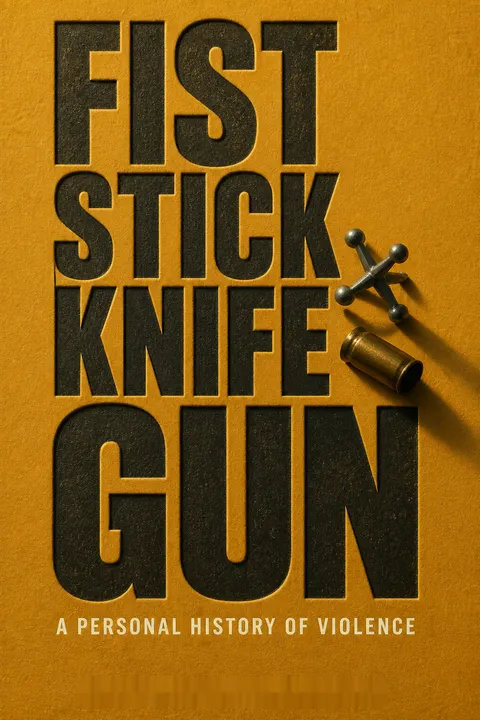
Fist Stick Knife Gun is a powerful memoir by Geoffrey Canada about growing up in the South Bronx amid violence. Adapted into a graphic novel, it vividly portrays the escalation of weapons from fists to guns. Readers praise Canada's honest storytelling, compelling narrative, and important message about inner-city violence. The book offers insight into street life, survival, and the author's journey to become an advocate for at-risk youth. While some found the tone overly confident, most consider it an eye-opening, essential read that resonates with current issues of urban violence.
People Also Read


Glossary
program busters
Students who destabilize programsCanada's term for a small number of highly defiant, intimidating students whose behavior can reshape an entire school's climate. When staff avoid confronting them, classmates may conclude that adults will not protect them, leading to more posturing and conflict. The term highlights how a few students can undermine a program when consistent, credible responses are absent.
heart
Courage under threatIn the street codes Canada describes, having heart means being willing to face a fight, even when victory is uncertain. It signals courage and can earn respect or protect a child's standing. The idea is more than confidence: refusing a challenge may invite further victimization, so children learn to display fearlessness even when they are afraid.
shamming
Practice boxing without face punchesA form of mock fighting among boys in Canada’s neighborhood, usually involving bare-knuckle punches to the body but not the face. It served as informal training in giving and absorbing blows before more serious confrontations. Although framed as practice, it could still hurt participants and reinforced the expectation that boys should develop competence in fighting.
rep
A reputation for toughnessShort for reputation, this term refers to the standing a young person gains through perceived courage, fighting ability, or willingness to use a weapon. In the neighborhoods Canada describes, reputation could deter harassment and help a person move through different blocks. As guns spread, reputation increasingly depended on whether a person carried and might use a firearm.
bopping
A street-tough way of walkingCanada's name for a distinctive walk used to signal toughness and readiness for confrontation. It involved a slight dip in the step, swinging arms, stiff fingers angled back, and a tilted head. In unfamiliar territory, the walk could communicate confidence, but it could also provoke attention. Canada describes changing his behavior depending on whether he wanted to avoid or project a challenge.
Free-Fire Zones
Communities facing uncontrolled violenceCanada's description of poor neighborhoods where children and youth face frequent gun violence and adults cannot reliably ensure safety. The metaphor conveys the danger faced by residents and the risks assumed by staff who work in these communities. It supports his argument that prevention requires trained, caring adults to work directly in neighborhoods rather than relying only on distant campaigns.
Beacon Schools
Schools serving as community centersA model in which school buildings host comprehensive programs for children, families, and neighborhood residents beyond regular class hours. Beacon sites may offer recreation, education, counseling, and community activities during evenings and weekends. Canada presents them as both service hubs and community-development strategies, with local residents involved in identifying needs and shaping the work.
Peacemakers
Children trained to prevent conflictCanada's program training young people in mediation, research, community organizing, and safety planning. Participants are expected to help develop practical approaches to reducing violence, drawing on their knowledge of where and why conflicts occur. The program treats children as potential community leaders while recognizing that intervening in violent situations can put them at risk and requires adult support.
FAQ
1. What is "Fist Stick Knife Gun" by Geoffrey Canada about?
- Personal history of violence: The book is a memoir in which Geoffrey Canada recounts his experiences growing up in the South Bronx, detailing how violence shaped his childhood and adolescence.
- Evolution of street violence: Canada explores the progression of violence from fistfights to the prevalence of guns, showing how the rules and codes of conduct changed over time.
- Social commentary: The book is also a critique of American society’s relationship with violence, poverty, and the failure of institutions to protect children in inner-city communities.
- Call for solutions: Canada uses his story to advocate for community-based interventions, education reform, and comprehensive strategies to address youth violence.
2. Why should I read "Fist Stick Knife Gun" by Geoffrey Canada?
- Firsthand perspective: The book offers an authentic, insider’s view of what it’s like to grow up in a violent, impoverished urban environment.
- Understanding root causes: It provides valuable insights into the social, economic, and psychological factors that perpetuate violence among youth.
- Relevance to current issues: The themes of gun violence, systemic neglect, and community solutions remain highly relevant in today’s society.
- Inspiration for change: Canada’s journey from victim to advocate demonstrates the power of resilience and the importance of community action.
3. What are the key takeaways from "Fist Stick Knife Gun"?
- Violence is learned: Canada argues that violence is not innate but taught and reinforced by environment, peers, and sometimes even parents.
- Codes of conduct matter: The unwritten rules governing street life can both protect and endanger children, and these codes evolve with the introduction of more lethal weapons.
- Institutional failure: Schools, police, and social services often fail to protect vulnerable children, leaving them to fend for themselves.
- Community-based solutions: Comprehensive, locally-driven programs like the Harlem Children’s Zone are essential for breaking cycles of violence and poverty.
4. How does Geoffrey Canada describe the evolution of violence in his community?
- From fists to guns: Canada details how conflicts escalated from fistfights to the use of sticks, knives, and eventually guns, making violence deadlier and more unpredictable.
- Loss of checks and balances: Earlier, street fights had rules and limits, but the proliferation of guns removed natural restraints and increased the lethality of confrontations.
- Impact of drugs: The rise of the drug trade, especially crack cocaine, brought more money, guns, and violence into the hands of younger children.
- Changing street codes: The old codes of conduct eroded, replaced by a culture where preemptive violence and gun use became normalized.
5. What are the "codes of conduct" discussed in "Fist Stick Knife Gun" and why are they important?
- Unwritten street rules: These are informal rules that dictate how children and teens interact, resolve disputes, and maintain status or safety on the block.
- Enforcement by peers: Older boys enforce these codes, teaching younger ones when to fight, when to back down, and how to avoid being labeled a coward.
- Survival mechanism: Following the codes is often a matter of survival, as breaking them can lead to repeated victimization or social isolation.
- Erosion with guns: The introduction of guns undermined these codes, making violence more random and less governed by any sense of fairness or restraint.
6. How does Geoffrey Canada address the role of parents and adults in "Fist Stick Knife Gun"?
- Parental dilemmas: Many parents, especially single mothers, feel forced to teach their children to fight back to avoid victimization, even if it means encouraging violence.
- Institutional impotence: Adults in schools and law enforcement are often unable or unwilling to protect children, leading parents to take matters into their own hands.
- Mentorship and protection: Positive adult figures, like Canada’s mentor Mike, play a crucial role in teaching survival skills and providing emotional support.
- Need for community involvement: Canada advocates for adults to be present and active in children’s lives, both as protectors and as role models for nonviolent conflict resolution.
7. What does "Fist Stick Knife Gun" say about the impact of guns on youth and communities?
- Escalation of violence: The easy availability of guns dramatically increases the lethality of conflicts and removes previous limits on violence.
- Psychological effects: Carrying a gun gives young people a false sense of power and invincibility, often leading them to take greater risks.
- Breakdown of order: Guns disrupt the social order, making it impossible for traditional codes of conduct to function and increasing fear and mistrust.
- Targeted marketing: Canada exposes how gun manufacturers deliberately marketed firearms to youth and minorities to expand their market, worsening the crisis.
8. How does Geoffrey Canada critique traditional approaches to crime and violence prevention?
- Ineffectiveness of policing: Canada argues that simply hiring more police or building more prisons does not address the root causes of violence and often breeds mistrust in poor communities.
- Problems with punitive measures: Mandatory sentencing and harsh drug laws have unintended consequences, such as drawing more children into the drug trade and criminal justice system.
- Need for prevention: He advocates for investment in prevention, education, and comprehensive community programs rather than relying solely on punishment.
- Community trust: Effective solutions require building trust between residents and institutions, and involving community members in designing and implementing interventions.
9. What is the Harlem Children’s Zone and how does it relate to the solutions proposed in "Fist Stick Knife Gun"?
- Comprehensive support model: The Harlem Children’s Zone (HCZ) is a network of programs providing education, social services, and community-building activities for children and families in Harlem.
- Beacon Schools: HCZ’s Beacon Schools serve as community hubs, offering extended hours, adult education, recreation, and support services to address multiple needs.
- Focus on prevention: The HCZ model emphasizes early intervention, sustained support, and the involvement of parents and community members.
- Replicable approach: Canada presents HCZ as a model that can be adapted to other communities facing similar challenges with violence and poverty.
10. What are the "Peacemakers" and what role do they play in Geoffrey Canada’s vision?
- Youth conflict mediators: The Peacemakers program trains children and teens in conflict resolution, negotiation, and leadership skills to help prevent violence among their peers.
- Empowering children: By involving youth directly in violence prevention, the program recognizes them as experts in their own environment and gives them agency.
- Community impact: Peacemakers organize marches, mediate disputes, and create safety plans, fostering a culture of peace and responsibility.
- Model for change: The program exemplifies Canada’s belief that children must be part of the solution and that peace can be taught and practiced, even in the most challenging environments.
11. What are some of the most powerful quotes from "Fist Stick Knife Gun" and what do they mean?
- "Violence is a learned response; I know this from my earliest education on the street." – Canada emphasizes that violence is not innate but taught by environment and necessity.
- "For the handgun generation there is no post-traumatic stress syndrome because there is no 'post.'" – He highlights the ongoing, unending trauma experienced by children in violent communities.
- "If we are to save our children then we must become people they will look up to. Children need heroes now more than ever because the poor children of this nation live with monsters every day." – Canada calls for adults to step up as visible, positive role models and protectors.
- "We have realized that you cannot save children without saving families, and you cannot save families without rebuilding communities." – He stresses the interconnectedness of individual, family, and community well-being.
12. What practical advice or methods does Geoffrey Canada offer for addressing youth violence in "Fist Stick Knife Gun"?
- Invest in prevention: Focus resources on early intervention, education, and comprehensive support rather than relying solely on punitive measures.
- Community engagement: Involve residents, especially youth, in designing and implementing programs that address their real needs and experiences.
- Build trust and relationships: Foster trust between institutions (schools, police, social services) and the community to create effective, sustainable change.
- Empower youth: Train young people as leaders and peacemakers, giving them the skills and confidence to resolve conflicts nonviolently and to support one another.
Download PDF
Download EPUB
.epub digital book format is ideal for reading ebooks on phones, tablets, and e-readers.








