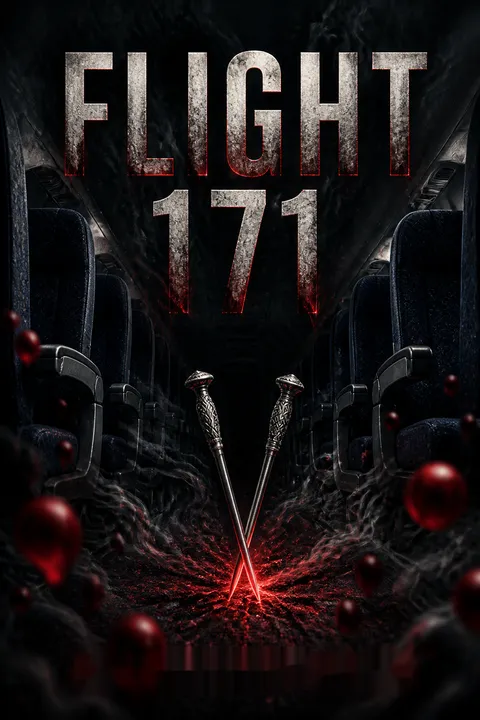


Plot Summary
The Seat Beside Jack
On a stormy Friday-the-thirteenth flight to Colorado, Devon Marsh tries to pass as her dead twin, Emily, wearing Emily’s clothes and straightening her own curls. Five months earlier, Emily died in a hit-and-run, and Devon blames herself for their last fight. She has also accused Jack, the boy she once loved, of being the driver, though police cleared him.
Devon boards anyway, partly to keep a promise to her parents and partly because backing out would feel like another failure. Her best friend, Carter, waits in their booked seats, but Devon chooses to sit across from him instead. As she settles in, an unnerving elderly passenger watches her with black eyes and clicking knitting needles.
Devon’s grief begins as an attempt at substitution: if she can dress and behave like Emily, perhaps she can repair the damage of losing her. But the impersonation also keeps her from facing the sister she actually knew, including the resentment and conflict between them. Her suspicion of Jack gives guilt a target outside herself, while her avoidance of Carter and refusal to retreat from the trip show how thoroughly she has narrowed her life around punishment. The elderly passenger’s attention punctures Devon’s self-imposed script before the plane even leaves the ground.
Knitting Needles Draw Blood
Once the plane reaches cruising altitude, the old woman walks the aisle and confronts flight attendant Carlos with intimate knowledge of his secret life. When he tries to stop her, she stabs him in the chest with her knitting needles.
Jack and several students help restrain her, while Devon picks up the bloodied needles and feels them hum in her hands. The woman names herself Dorothy and addresses Devon’s grief with impossible precision. Then she fills the cabin with gray smoke.
The students remain awake, but the adults and small children collapse unconscious. Dorothy explains that she needs a younger body and will take one only if the students choose who deserves to be sacrificed. A vision of the plane breaking apart shows she can make the threat feel terrifyingly real.
Dorothy turns the ordinary cabin into a closed moral arena: the students cannot hand responsibility to parents, crew, or authorities because those adults are physically present but unavailable. Her attack on Carlos establishes that knowledge and vulnerability are weapons, while the needles connect the mundane image of knitting to ritual violence. The sacrifice demand exploits an adolescent pressure already familiar to the group, the fear of being judged by peers. Devon’s involuntary attention to the needles and Emily’s apparent warning suggest that the crisis is not only an external test. It is reaching directly into the guilt Devon has tried to manage through imitation.
Devon Takes the Aisle
After Dorothy demonstrates a staged plane crash, Devon helps keep the students from scattering into panic. She argues that they should investigate before sacrificing anyone, then wins a vote to lead over Kiara, the class president, and Rebecca, the valedictorian.
Devon directs classmates to secure the unconscious crew near the cockpit and move Dorothy into a locked bathroom. She uses a flight attendant’s tablet to find emergency medical procedures, but the search cannot wake the crew or open the cockpit.
Wanting her pilot mother’s help, Devon climbs into the hidden bunk room and finds her unconscious too. Beside her mother, she watches an old family video of Emily and herself as children. Then her mother’s phone receives a message from Emily’s phone, repeating one word: needles.
Leadership arrives not as confidence but as a burden Devon accepts because fleeing would repeat the pattern she regrets. Her choices are practical, yet her motives remain tangled with the fantasy that acting like Emily will make her worthy of responsibility. The childhood video briefly restores Emily as a living person in Devon’s memory, not merely an emblem of goodness she must copy. The unexplained message disrupts that distinction: whether spiritual or not, it gives Devon a reason to act from her own judgment rather than from a performance of her sister.
The Sedative Fails
Before the students attempt to sedate Dorothy, her mental assault drives Rebecca to smash out one of her own teeth with an ice hammer. Devon and her classmates restrain Dorothy and inject a Valium mixture, but the apparent success lasts only minutes.
The plane pitches violently, the adults and children lapse unconscious again, and Dorothy crawls across the ceiling before forcing Billy to smash his head against the cockpit door. She then takes control of the cockpit and retrieves her needles.
Shaken by the injuries, Devon blames herself for resisting the sacrifice demand. Yara shows her phone images of a colored energy cloud around Dorothy, increasingly weakened after each burst of power. Devon realizes the creature feeds on their fear, but refuses to gamble with another attack.
The failed sedation changes the students’ problem from containment to interpretation: Dorothy’s power is real, but it has limits, and their emotional reactions appear to alter those limits. Devon’s first instinct is to convert a failed strategy into a verdict on her own character. That self-blame echoes the deeper premise of the ordeal, where everyone’s mistakes are being treated as evidence of who deserves to suffer. Yara’s images offer an alternative to panic: observation can reveal a mechanism. Yet knowledge alone cannot restore control, especially when the group’s fear is precisely what strengthens their opponent.
Secrets Fill the Screens
Rebecca takes the air marshal’s missing gun and argues that students should judge one another by grades, service, and reputation. Dorothy answers by showing Rebecca secretly planting fundraiser money in Kiara’s locker, a theft that left Kiara on probation.
The next video exposes Mai’s long-hidden affair with Billy, Jeanne’s boyfriend. Jeanne attacks Mai, while classmates begin naming both of them as possible sacrifices. The footage makes private shame public and turns the cabin into a jury.
Rebecca’s gun gives her leverage, and she uses it to control who speaks and when. Devon watches the students drift from cooperation toward punishment, while the countdown continues. The old woman has found a way to make their own judgments do part of her work.
The screens transform remembered wrongdoing into public spectacle, stripping each event of context before the group can decide what it means. Rebecca’s criteria pretend to offer fairness, but they turn social status into a moral ranking system. The revelations also expose the gap between accountability and humiliation: Kiara suffered consequences for a crime she did not commit, while Mai’s betrayal is real but does not make her disposable. Dorothy’s method is effective because the students participate in the judgment. Her power is not simply supernatural; it is amplified by the group’s eagerness to convert pain into a hierarchy of deservingness.
Wes Breaks Spencer’s Knee
Dorothy shows the class how Wes, long targeted by Spencer, ambushed the wrestler with a metal baton and destroyed his injured knee. Spencer attacks Wes in anger, but Devon and Jack stop the fight before he can seriously hurt him. The revelation forces the group to see Wes as both a victim of years of bullying and the person who deliberately crippled Spencer.
Dorothy then begins showing Devon a driver’s-eye view of the dark road where Emily was hit, but cuts away before identifying the driver. The partial footage confirms the crash happened near Devon’s home and leaves her desperate for the rest. In the same stretch of ordeal, Jack explains he drove drunk after the Halloween party but says he never encountered Emily.
Wes and Spencer’s history makes the sacrifice question harder than a simple contest between good and bad. Spencer’s injury is both an act of cruelty and the consequence of a school culture that treated his status as more valuable than Wes’s safety. The group’s anger risks repeating that culture by making retaliation seem like justice. Dorothy’s partial crash footage applies the same destabilizing technique to Devon: it provides enough evidence to intensify obsession, but not enough to resolve it. Jack’s admission adds moral complexity, because reckless behavior can be culpable without proving the specific crime Devon fears.
The Halloween Footage
The next recording reveals the driver’s car striking Emily, but the camera still hides who is behind the wheel. Devon watches her sister die on the roadside, then sees footage from earlier that night. Emily had tried to bring Devon home after their parents learned she was skipping school. Devon refused to hand over the keys, shoved Emily during their struggle, and sent her into the freezing night with a cruel dismissal.
Carter then admits he was the one who told their parents about Devon’s absences, hoping to interrupt her self-destructive choices. Jack adds that he passed out in his own car and was found by a neighbor, which supports his account. Devon’s certainty that Jack killed Emily begins to falter, but her guilt deepens.
The footage destroys Devon’s preferred division between the person who caused Emily’s death and the person who merely mourns it. Her words did not cause the collision, but they shaped the circumstances in which Emily was alone, and Devon has confused responsibility for the argument with responsibility for the accident. Carter’s disclosure further complicates blame: concern can still produce consequences someone resents. The scene does not absolve Devon. Instead, it forces her to distinguish grief from proof and moral regret from causal responsibility, distinctions she has avoided by turning Jack into a single answer.
Yara at the Ditch
The crash footage ends on a pair of painted combat boots that belong to Yara. Devon lunges at her, believing she has found Emily’s killer, but Jack and Carter hold Devon back long enough for Yara to explain.
Yara had been romantically close to Emily and went looking for her after she failed to appear at their meeting. She found Emily dying, called emergency services, and waited nearby, but concealed their relationship because they had not told their families. As Yara speaks, the old woman’s videos continue to torment the cabin.
Devon recognizes that the boots identify a witness, not a driver. She confronts Dorothy, who opens the cockpit door and reveals that both pilots are dead. The creature’s body is failing, but its power has grown from the students’ anger and grief.
Yara’s disclosure revises Devon’s understanding of Emily more radically than the crash footage does. The twin Devon mourned was not simply the dutiful, transparent person Devon imagined; Emily had an intimate life Devon never noticed because she was too absorbed in her own crisis. Yara’s silence came from fear and grief, not indifference, though it still deprived Devon of the truth. Devon’s attack on her shows how easily the need for an answer becomes permission to harm the nearest person. The dead pilots make the danger immediate again, while the creature’s strength demonstrates the cost of turning sorrow into vengeance.
Andrew’s Leather Journal
Searching for a clean shirt after Dorothy soils her, Devon spots Andrew’s leather journal beneath the ski-trip brochure. Its cover matches the book visible in the crash footage. The journal contains a brief note of remorse, and the match convinces Devon that Andrew drove the car.
Before she can confront him, she discovers he and Kiara have taken Rebecca’s gun and climbed into the crew bunk room, where Devon’s unconscious mother lies. Devon brings an ice hammer and climbs after them.
Kiara admits she recognized Andrew’s book earlier but could not expose the boyfriend she still loves. When Devon blinds Kiara with the bunk’s powerful flashlight, she knocks the gun from her hand and secures it. Andrew confesses that he hit Emily, hid the damage, and kept silent.
The journal solves the mystery through an ordinary object, not supernatural insight: a familiar cover links the anonymous driver to someone Devon trusted. The revelation also turns guilt into a practical threat, since Andrew and Kiara have seized a weapon and placed Devon’s mother at risk. Kiara’s loyalty is not innocent, but neither is it simple malice; she knows the truth and cannot bear the consequence of naming the person she loves. Andrew’s confession exposes the distinction between causing an accident and choosing to conceal it. His cowardice prolonged the harm long after the collision ended.
A Vote for Andrew
Devon takes Andrew back to the cabin as the students demand a sacrifice. They jeer at him and throw a soda can that cuts his forehead. Emily’s ghostly presence urges Devon to stop, but Devon keeps moving until Andrew’s family photo makes her imagine what possession would do to his younger brother. She releases Andrew, then rushes Dorothy with the recovered gun.
The creature seizes Devon’s body and turns the weapon toward her. Carter wrests it away and fires the remaining shots into Dorothy, but the bullets do not kill her. She snaps Carter’s neck. Grief overwhelms Devon, who offers herself as the sacrifice. Jack insists that everyone vote openly. The tally is close, but Andrew finally chooses himself, making him the group’s sacrifice.
This section brings the book’s central moral test into focus: punishment cannot restore Emily, and another family will inherit the damage if Devon treats vengeance as repair. Carter’s death is the cost of resisting Dorothy, but it also prevents Devon from dying by her own hand. Andrew’s self-selection matters because he moves from concealment to accepting consequence, even though the choice is made under supernatural coercion. The vote forces each student to own a judgment rather than hide behind a crowd. It offers procedure where emotion has made fairness nearly impossible, without pretending that procedure can make the outcome painless.
Needles Through the Throat
Dorothy begins transferring the black creature into Andrew, marking his face with the glowing knitting needles and forcing his mouth open. As the creature pours from her throat into his, Emily’s presence warns Devon that Dorothy is briefly vulnerable.
Devon pulls the needles from Dorothy’s pocket and drives them through her neck, interrupting the transfer. Andrew chokes out the black substance and survives. Dorothy’s body withers to dust, and the needles vanish. But the plane immediately drops: the creature had disabled the autopilot, and both pilots are dead.
Devon orders the students and waking passengers into seats, then races to the front. Her mother climbs down from the bunk and takes the controls, while the flight crew helps secure the cabin for an emergency landing.
Devon’s decisive action is neither an imitation of Emily nor an act of vengeance. She reads the moment, accepts uncertainty, and uses the same instrument that marked the sacrifice to interrupt it. The needles’ meaning shifts from the creature’s ritual to Devon’s capacity to act without surrendering moral judgment. Saving Andrew does not erase his responsibility, just as the creature’s destruction does not erase Carter’s death. The immediate free fall prevents the victory from becoming a clean release: Devon must move from the supernatural crisis to a concrete emergency and trust her mother’s skill.
A Landing and a Secret
Devon’s mother lands the plane in Denver, where frightened passengers evacuate without knowing what happened during their lost hours. Devon refuses to leave until her mother exits the cockpit, then confesses the fight in which she sent Emily away.
Her mother embraces her and makes clear that the argument did not make Devon responsible for the hit-and-run. The students agree to conceal the supernatural events because Yara’s recordings have disappeared. The next day, Yara finds an old photograph that suggests Dorothy’s earlier victims died after she possessed her first body.
On the bus home, Devon sees knitting needles protruding from Rebecca’s boot, but they vanish when she looks again. The book closes with Devon unsure whether trauma has distorted her sight or the creature survived.
The landing resolves the immediate physical danger, but the emotional ending depends on a confession rather than a clean account of justice. Devon finally tells her mother what she hid, and the response breaks the isolation she had mistaken for deserved punishment. The group’s shared silence protects them from disbelief but also creates another burden, especially around Carter’s death. The photograph broadens the creature’s history without confirming its final fate. Rebecca’s vanished needles keep the ending unstable: Devon may be traumatized, or the evil she destroyed may have left a trace. Survival does not guarantee certainty.
Analysis
Flight 171 traps its central question inside a moral crisis: what does it mean to deserve survival when everyone has done harm, suffered harm, or failed someone they love? Dorothy makes the students rank one another, but her method is designed to corrupt judgment. The public videos strip choices of context, while the countdown rewards speed over understanding. Each student is pushed toward a simple verdict, and the group’s anger becomes nourishment for the creature they are trying to defeat.
Devon’s arc turns on separating guilt from responsibility. She did hurt Emily and must face that truth, but she did not cause the hit-and-run. Her earlier fixation on Jack lets her avoid the harder work of grieving an imperfect relationship. Likewise, learning that Andrew was the driver does not make sacrificing him a meaningful repair. The novel tests whether accountability can exist without revenge, and whether compassion is possible without denying harm.
The ensemble gives that test several forms. Kiara’s loyalty conflicts with justice, Rebecca turns achievement into a measure of human worth, Wes’s victimization does not erase his violence, and Yara’s silence comes from grief as well as fear. Their secrets are not equivalent, even when Dorothy presents them as entries in a single ledger. The story insists that context matters without making context an excuse.
Emily’s presence complicates the idea of closure. Devon cannot return to the sister she lost or recover the private truths she overlooked. She can, however, stop converting love into self-erasure. Her confession to her mother and decision to interrupt the possession ritual mark a movement away from punishment and toward responsibility. The final image of needles that may or may not remain leaves a useful unease: surviving a crisis does not guarantee that its effects, or its dangers, have ended.
Review Summary
Flight 171 receives mixed reviews, with an average rating of 3.60 out of 5. Some readers praise its suspenseful plot and horror elements, comparing it to Final Destination. They appreciate the twist ending and the book's ability to keep them guessing. However, others criticize the shallow character development, predictable plot, and unrealistic dialogue. Many reviewers note that the writing feels amateurish, likening it to Wattpad stories. Despite its flaws, some readers find it an entertaining and quick read, particularly suitable for young horror fans.
Characters
Devon Marsh
Grieving twin and drummerDevon is a high-school senior who has lost her twin sister, Emily, and cannot stop replaying their last argument. She is a drummer with a quick temper, a strong instinct to resist authority, and a habit of acting before she has sorted out what she feels. After Emily’s death, Devon tries to become the sister she thinks her family needs, borrowing Emily’s clothes and taking on her commitments. Her grief makes her perceptive about others’ pain but unreliable about her own motives, especially when anger offers a simpler explanation than guilt. Her central struggle is learning that accountability does not require erasing herself, and that loving Emily does not mean becoming her.
Emily Marsh
Devon’s absent twinEmily is Devon’s twin sister, remembered as organized, caring, and more practiced at keeping peace within the family. She and Devon were once close, but their different temperaments and interests gradually widened the distance between them. Emily’s death leaves Devon with memories that are both cherished and incomplete; Devon often turns her into an ideal rather than remembering her as a person with private feelings and plans. Emily’s presence in Devon’s thoughts and experiences keeps their bond active, while also challenging Devon to see that devotion is not the same as imitation.
Jack
Former love under suspicionJack is Devon’s former romantic interest, a classmate whose past drinking and reckless reputation make him a focus of her suspicions after Emily’s death. He has withdrawn from school life, leaving Devon to interpret his absence without knowing what lies behind it. On the flight he becomes a practical helper, particularly when the group needs information from the crew’s tablet or someone willing to face danger. Jack’s care for Devon is complicated by her mistrust and by his own sense of responsibility for past choices. He is guarded, but he continues to offer support without demanding that Devon forgive him.
Carter
Devon’s devoted best friendCarter has been Devon’s closest friend since childhood and knows the impulsive, funny person she is trying to suppress after Emily’s death. He is a nervous talker, emotionally open, and deeply loyal, though his concern can lead him to make choices for Devon rather than trust her to make them herself. His long-standing affection for Devon and his discomfort with her withdrawal make the flight especially difficult for him. Carter serves as a reminder that Devon is not alone, even when grief makes accepting care feel like another debt she must repay.
Kiara
Class president and Emily’s friendKiara is an ambitious, meticulous student who takes responsibility for school events and expects plans to be carried through. She was Emily’s close friend before Emily’s death and gradually becomes closer to Devon, though that relationship carries the complicated pressure of grief and comparison. Kiara’s composure can look like control, but she is deeply affected by being falsely accused and by the possibility of losing people she loves. Her relationship with Andrew is important to her sense of safety, and her loyalty to him can conflict with her desire to do what is fair.
Andrew
Idealistic student organizerAndrew is Kiara’s boyfriend and a committed community volunteer who has helped create a restaurant program that serves people experiencing homelessness while connecting them with jobs. His public identity is built around service, patience, and practical compassion. Under stress, however, he becomes physically overwhelmed and turns toward questions of moral worth, faith, and whether people can ever make up for serious harm. Andrew’s relationship with Kiara is affectionate and familiar, while his earnestness can make him seem more certain about how to help others than about how to face his own fears.
Yara
Horror filmmaker and observerYara is a stylish, self-possessed senior who wants to make horror films with a social point of view. She carries her phone everywhere, partly to document what happens and partly because observing through a screen gives her distance from frightening events. Yara is alert to visual details others miss and is willing to challenge the group when its decisions become cruel. Beneath her confidence is a guarded private life, and her interest in horror reflects both artistic curiosity and a desire to give shape to things people would rather not see.
Dorothy Burdon
Unsettling elderly passengerDorothy is an elderly passenger whose old-fashioned clothes, humming, and ivory knitting needles make her seem harmless at first glance. Her attention is unusually focused, and she notices details about other people they have tried to keep private. She moves through the flight with a strange composure that unsettles the students before they understand why. Dorothy’s presence turns an ordinary school trip into a test of how teenagers respond when fear, shame, and authority collide. Her apparent frailty contrasts with the force of her will.
Rebecca
Competitive class valedictorianRebecca is an academically successful senior who believes intelligence and achievement qualify her to lead. She is competitive with Kiara and quick to treat social standing as evidence of merit. Under pressure, she reaches for control and uses sharp judgments to steady herself, even when those judgments hurt others. Rebecca’s confidence is real, but it is also a defense against being overlooked or considered inadequate. Her role tests the group’s temptation to confuse accomplishment with goodness.
Spencer
Wrestler with an injured kneeSpencer is a large, outspoken wrestler who leans into the dumb-jock image and enjoys provoking people, especially those he considers weaker. A serious knee injury has interrupted his athletic future, though he resists showing vulnerability. He is fiercely loyal to Billy and can act bravely when another person is in danger. Spencer’s swagger sometimes conceals pain and insecurity, making him susceptible to anger when his past is exposed.
Billy
Spencer’s wrestling teammateBilly is Spencer’s close friend and wrestling teammate, confident in public and quick to join in teasing or showboating. His relationship with Jeanne and his friendship with Mai place him within the trip’s shifting social alliances. Billy is physically imposing, but the flight strips away the ease with which he usually performs confidence. He is protective of his friends and has to confront how loyalty can become an excuse for keeping damaging secrets.
Mai
Quiet friend in Jeanne’s shadowMai is Jeanne’s closest friend, attractive and observant but often content to let Jeanne take the attention. She photographs Jeanne’s social media images and seems practiced at remaining in the background. That quietness should not be mistaken for passivity: Mai has her own desires and frustrations, though she struggles to express them directly. Her relationships with Jeanne and Billy reveal the emotional cost of keeping resentment unspoken until it becomes betrayal.
Jeanne
Social media standoutJeanne is a popular student who enjoys being photographed, praised, and recognized online. She is energetic and socially confident, often treating attention as an ordinary part of life. Her closeness with Mai is long-standing, and she expects loyalty from her friend and boyfriend. When that expectation is challenged, Jeanne’s certainty gives way to visible hurt and anger. She represents the gap between a polished public image and the vulnerability people often conceal beneath it.
Wes
Quiet student with a grievanceWes is a pale, soft-spoken student who has spent years being targeted by Spencer and other classmates. He is easily overlooked, partly because he has learned to avoid attracting attention. Beneath his mild manner is a deep store of resentment built from repeated humiliation and the feeling that adults failed to protect him. Wes’s story complicates easy divisions between bully and victim, while showing how unaddressed harm can harden into deliberate retaliation.
Devon's mother
Sky Royal pilot and parentDevon’s mother is a commercial pilot who understands the discipline and responsibility of keeping passengers safe. She joins the trip partly to support Devon and partly because she worries about how her daughter is coping with Emily’s death. Grief has made her more watchful and emotionally worn, while her work gives her a structure to return to when home feels overwhelming. Her relationship with Devon is loving but strained by the things they have not yet managed to say to one another.
Carlos
Flight attendant in dangerCarlos is a flight attendant responsible for keeping passengers safe and following cabin procedures. He tries to enforce the seat belt rules when Dorothy leaves her seat. His ordinary, professional role becomes the first sign that the flight has turned dangerous.
Shazia
Flight attendant and caregiverShazia is a Sky Royal flight attendant who helps Devon’s mother and cares for the injured crew. She remains attentive to passengers even when the cabin becomes frightening, and her employee ID gives Devon access to the crew’s hidden spaces. Shazia’s calm professionalism contrasts with the students’ lack of experience, while the danger around her reveals how little control ordinary procedures can offer in a crisis.
Mr. Lewton
Senior trip chaperoneMr. Lewton is a Greendale teacher and one of the adults supervising the ski trip. He knows the students and attempts to keep their behavior in check. His role underscores the students’ sudden isolation when the adults become unavailable.
Mrs. Sicmaszko
Biology teacher and chaperoneMrs. Sicmaszko is Devon’s biology teacher and a chaperone on the Colorado trip. She is a familiar adult presence at Greendale, especially for student council and school events. Her absence of authority during the crisis leaves the students to manage responsibilities they are not prepared for.
Olivia
Second flight attendantOlivia works alongside Carlos and Shazia as a flight attendant. She helps respond to the violence on board and brings medical supplies to the injured crew. Her frightened but persistent efforts show the strain the emergency places on the people responsible for the cabin.
Plot Devices
The Ivory Needles
Ritual weapon and clueDorothy’s knitting needles begin as an unsettling detail, clicking through the cabin before they become instruments of violence and supernatural power. Devon feels them vibrate and sees symbols appear on them after they are stained with blood. The needles are linked to Dorothy’s demand for a sacrifice, and the students’ cut palms become part of the selection ritual. Emily repeatedly directs Devon’s attention back to them. Their function changes at the climax, when Devon uses them to interrupt the transfer of the creature into Andrew. The device binds the book’s horror imagery to its moral conflict: the object that marks a victim can also become a means of resistance.
The Countdown Screens
Pressure toward a choiceA digital countdown appears on the seatback screens after Dorothy demonstrates her power. It measures the time remaining in the flight and turns the group’s delay into a visible threat. The clock pressures the students to choose a sacrifice, but it also encourages rushed judgments and gives Dorothy’s staged disclosures the force of a courtroom proceeding. As the number falls, the students argue over which sins are worst and who has the right to decide. The clock makes time feel like an antagonist, even though the deeper danger comes from the way panic narrows their moral choices.
Yara’s Energy App
Evidence of hidden powerYara uses a phone app designed to detect supernatural energy while appearing to record the crisis. The images show a colored aura around Dorothy and tendrils reaching toward the students. Across successive images, the aura changes after Dorothy uses her power, leading Devon and Yara to infer that fear helps restore her strength. The app gives the students a limited form of evidence, not a complete explanation. Its usefulness depends on close observation and interpretation, and it allows Yara’s horror-film interests to become practical rather than merely aesthetic.
The Projected Secrets
Shame turned into spectacleDorothy uses the seatback screens and the plane’s public address system to expose memories the students have tried to keep private. The recordings reveal wrongdoing, cruelty, betrayal, and grief, often without giving the full context that might explain a person’s choices. Each video changes the group’s alliances and adds candidates to the sacrifice debate. For Devon, the footage of Emily’s death becomes an increasingly urgent mystery, while earlier scenes expose Devon’s own conflict with her sister. The device turns private memory into public evidence and makes the students participants in Dorothy’s manipulation.
Emily’s Locket and Messages
A bond across absenceEmily’s locket is a physical reminder Devon carries throughout the flight, and it grows cold during moments when Emily seems close. A message appears on Emily’s phone after the cabin’s communications have failed, directing Devon toward the needles. Later, Devon hears Emily’s voice and glimpses her presence at moments when she is tempted to flee, retaliate, or sacrifice herself. The story leaves room for uncertainty about the precise nature of this contact, but its emotional function is clear: Emily’s presence challenges Devon’s self-punishment and urges her to make choices that are genuinely her own.
Download PDF
Download EPUB
.epub digital book format is ideal for reading ebooks on phones, tablets, and e-readers.








