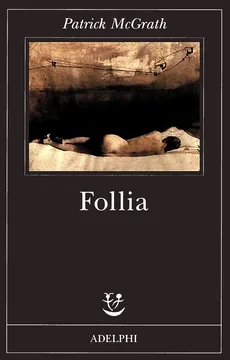


Plot Summary
The Greenhouse Assignment
Peter Cleave,3 senior psychiatrist at a high-security hospital, frames the events as a case of catastrophic desire, though his fascination with Stella1 already colors his account. In 1959, deputy director Max Raphael4 moves there with his beautiful, restless wife Stella1 and their ten-year-old son, Charlie.5
Max4 commissions the repair of a neglected Victorian greenhouse, and the work goes to Edgar Stark,2 a celebrated sculptor confined after killing his wife, Ruth,10 amid paranoid jealousy.
Five years inside have not shaken Edgar's2 belief that his violence was provoked. At the hospital dance, Stella1 watches him move with a confidence the other patients lack, then dances with him. Peter3 notices their conspicuous closeness, but does not yet understand what it will set in motion.
The greenhouse joins the novel's two governing systems: the hospital's effort to contain dangerous minds and the garden's promise of repair. Max wants to restore a structure that has been left to rot; Edgar is both its skilled craftsman and a patient whose account of his own violence remains unrevised. Peter introduces the story as a clinical case, but his attention to Stella's beauty and Edgar's charisma already makes him less neutral than he claims. The opening therefore sets up not only an affair, but a contest over who gets to interpret behavior: the patient, the lover, or the doctor.
A Sketch in the Drawer
Stella1 begins finding reasons to visit Edgar2 while he works. Charlie5 first draws her attention to him by hanging from a shovel Edgar2 holds steady, then Stella1 returns to watch the repairs and accepts a portrait Edgar2 makes of her. He tells her a moving story about a son he cannot see, though the child is invented.
When Charlie5 falls from an apple tree, Edgar2 carries him into the Raphael4 house, calling Stella1 by her first name and alarming the housekeeper. Stella1 thanks him but hides their familiarity from Max.4 Edgar's2 stories about crowded wards and humiliating conditions also change how she sees the patients. She starts treating his crime as a passionate mistake rather than evidence of illness, and keeps his sketch hidden in a drawer.
Stella's attachment grows through acts that can each be explained away: a visit to the garden, a conversation, a portrait, gratitude after Charlie's fall. The smallness of these choices is precisely what makes them consequential. Edgar's false story about a son recruits Stella's maternal sympathy, while his accounts of the wards turn her moral concern into personal identification. She begins to see him through the qualities she wants to find, not through the clinical history Peter knows. Hiding the portrait marks the first concrete division between her public marriage and her private desire. Her self-deception begins as a series of ordinary omissions.
The Cricket Pavilion
After the dance, Stella1 initially tries to keep her distance, but Edgar2 contacts her and restores their friendly pretence. She soon goes to him in the greenhouse, where they have sex for the first time. Their next meeting is interrupted when an attendant approaches the garden, so Stella1 searches out the cricket pavilion and prepares a hidden place to meet.
Edgar2 follows her there, and their encounters become regular. He takes whisky from the pavilion and asks Stella1 for money; she gives him what she has, accepting the risks as part of their bond. At home she remains attentive to Max4 and Charlie,5 but her days now revolve around the next meeting. She describes herself as in love and no longer believes she can choose to stop.
The affair moves from impulse to infrastructure. The greenhouse permits the first physical crossing; the cricket pavilion turns desire into a repeatable schedule, complete with a place to hide and money to sustain it. Stella's language of helplessness obscures the practical decisions she makes, including preparing the room and funding Edgar. Their secrecy is not merely a cover for passion. It becomes the form their relationship takes, making deception feel like loyalty. The contrast between her competent domestic routine and her growing dependence on the meetings reveals how compartmentalization can preserve appearances while quietly consuming the life it is meant to protect.
Max's Clothes Disappear
Edgar's2 position becomes precarious when hospital staff suspect him of bringing alcohol into the grounds. During a dinner attended by Max's4 formidable mother, Brenda,7 the director8 discusses the investigation, and Stella1 realizes Edgar2 may lose his work privileges.
Soon afterward, Edgar2 enters the Raphael4 house while Brenda7 is present, has sex with Stella1 in her bedroom, and steals Max's4 clothes and keys. Max4 notices the missing outfit, but delays alerting the director,8 unwilling to confront what the theft implies.
Stella1 leaves a warning for Edgar,2 yet he escapes before the search reaches him. The sirens sound that evening. Peter3 and the hospital staff begin a public search, while Stella1 conceals her grief behind concern for the institution and pretends the fugitive2 is simply a dangerous patient.
The affair now collides with institutional power. Until this point, Stella has treated Edgar's limited freedom as a romantic inconvenience; the suspected alcohol smuggling makes clear that privileges can be withdrawn and his future decided by others. His use of Max's clothes turns the marriage into literal camouflage, while Max's hesitation exposes his own investment in not knowing. Stella's silence is no longer passive: it helps Edgar get away. The escape also makes Peter's clinical framing more urgent, but his interest is mixed with personal curiosity. The scene reveals the asymmetry at the center of the story: Edgar can act, Stella can conceal, and the institution can punish, but none of them fully controls what follows.
The London Hideout
Stella1 waits through the search, then travels to London, where a young artist named Nick6 guides her to Edgar's2 hideout in an abandoned warehouse. At first she returns home after their meetings, inventing errands and buying gifts to support the deception.
Edgar2 has resumed drawing and wants Stella1 to sit for a sculpture, which gives their reunion an artistic purpose as well as a sexual one. Peter3 eventually confronts her with Edgar's2 history and warns her that he is dangerous.
Stella1 leaves immediately, withdraws money from the joint account, and returns to Horsey Street with a suitcase. Edgar2 accepts her decision to stay. Nick6 shares his cramped refuge with them, and Stella1 begins to help with meals and the daily work of their clandestine household.
Stella's move to London appears to fulfill the freedom she imagined, but the warehouse replaces one system of dependence with another. She leaves the Raphael home, yet enters a space organized around Edgar's needs, artistic work, and Nick's resources. Her first visits allow her to keep a foot in each life; Peter's warning forces a decision, and she chooses Edgar without a workable plan for Charlie or herself. The sculpture deepens the bond by making her both lover and subject. This arrangement also introduces a central ambiguity: Edgar's art may be an attempt to see Stella clearly, but his desire to define her remains inseparable from possession.
The Orange and Knife
Life in the warehouse grows strained as Edgar2 struggles with his sculpture and becomes increasingly jealous. Nick6 leaves for a time, and when he and Stella1 return from a walk, Edgar2 accuses them of betrayal and drives Nick6 away.
Later, Edgar2 strikes Stella1 and sharpens a knife, then offers her an orange. His suspicion that she might poison him recalls the delusions that preceded his violence against Ruth.10 Stella1 recognizes the danger and escapes to Nick's6 lodging. Edgar2 finds them there at dawn and hammers on the locked door, then leaves.
Nick6 and Stella1 move to a cheap boarding house, where fear and confinement turn their alliance sour. After sleeping with Nick6 once, Stella1 leaves him and returns to Horsey Street, where police officers find and question her.
The knife scene collapses Stella's distinction between Edgar's loving self and his illness. She has explained away earlier violence as a by-product of stress or devotion; the orange makes the old delusion visible in the present. Yet even when she flees, she does not simply return to safety. She moves from Edgar's control into Nick's protection, then uses sex and contempt to break away from Nick as well. The sequence refuses a clean division between victim and rescuer: each refuge carries its own dependency. Stella's ability to recognize danger arrives late, after she has made herself materially and emotionally vulnerable to the men around her.
A Family Sent North
Max4 brings Stella1 home after the police release her, choosing discretion over a public scandal, but their marriage becomes a cold arrangement. He loses his standing at the hospital, and Brenda7 pressures him to leave Stella.1
Charlie,5 who has stayed with his grandmother,7 eventually returns home after Stella1 asks to speak with him. His affection briefly gives Stella1 a reason to rejoin family life, but Max's4 career has collapsed and the Raphaels4 relocate to Plas Mold, a remote Welsh farm. Stella1 struggles with the move and resents Max's4 influence over Charlie.5
Their sleeping arrangements split them into separate rooms. She has an affair with the farmer, Trevor Williams,11 less from attachment than from loneliness and a need to feel something. The household continues, but its ordinary routines no longer restore intimacy.
The move to Wales converts scandal into exile. Max's professional status and Stella's social identity have both been damaged, but the losses are not equal: he retains authority over the family and a new job, while she depends on his decisions and on Charlie's willingness to love her. Their separate rooms make the marriage's rupture architectural. Stella's brief reconnection with Charlie is genuine, yet she cannot sustain it; Trevor's attention offers sensation without emotional risk. This is not a return to the old household but a strained reconstruction, held together by routine and financial necessity. The family remains physically intact while its members inhabit increasingly separate moral worlds.
The Welsh Winter
At Plas Mold, Stella1 drinks heavily and withdraws from Charlie.5 His teacher, Hugh Griffin,13 tries to alert her that the boy5 is unhappy and struggling at school, but she refuses to engage with him. Max4 confronts her about her neglect, and Charlie5 later asks Stella1 to be friends; she finally embraces him and agrees. Meanwhile, Edgar2 remains at large.
Peter3 learns that he may be heading north and informs Max,4 but Max4 does not warn Stella.1 The police eventually recapture Edgar2 in Chester. Stella1 knows nothing of this as she agrees to accompany Charlie5 on a school outing to Cledwyn Heath. The outing seems a modest chance to repair their bond, although she arrives exhausted, isolated, and emotionally far from the child5 walking beside her.
This section lets two forms of danger advance in parallel. Hugh's concern gives Stella a chance to notice Charlie's distress before the crisis, but she hears the warning as accusation and retreats further into resentment. Her eventual promise of friendship is a real gesture, not a cure. At the same time, Edgar's return to custody is hidden from her, so the obsessive attachment that has shaped her choices remains psychologically present even when its object is physically contained. Max's silence protects no one; it leaves Stella without information and preserves his power over what she can know. The outing gathers these unresolved pressures into one vulnerable setting.
The Heath's Black Water
On the school outing, Charlie5 wanders to a rain-darkened pond in search of newts. Stella,1 overwhelmed by depression and dissociation, watches him slip into the water without calling for help. Hugh Griffin13 reaches the pond and pulls Charlie5 out, but the boy5 has drowned.
Police question Stella,1 then charge her with manslaughter after Hugh13 reports that she remained still. During a later conversation with Max,4 Stella1 says she saw Edgar2 in the water, not Charlie.5 Max4 brings her home, but the authorities soon detain her again.
Peter3 visits and arranges for her to enter the hospital's women's wing. The story's central catastrophe is no longer an affair or an escape: Charlie's5 death forces Stella,1 Max,4 and Peter3 to confront what her divided inner life has cost.
The pond turns Stella's internal division into an irreversible event. Her stillness is not presented as a calculated act, but neither does the narrative soften its consequence: Charlie dies while she watches. Her vision of Edgar in the water suggests that the obsession has displaced the immediate reality before her, a psychic substitution with devastating material effects. Hugh's testimony makes the event legible to the community as monstrous or insane, and the police demand a causal account Stella cannot provide. Peter's clinical explanations offer care, but also begin to claim authority over the meaning of her failure. Grief, dissociation, and responsibility remain entangled rather than neatly separable.
A Proposal in the Asylum
Peter3 takes charge of Stella's1 treatment, first sedating her heavily, then guiding her through a gradual return to daily life. She begins speaking about Edgar2 and Charlie,5 but Peter's3 therapeutic interest is compromised by his growing desire for her.
Edgar,2 recaptured in Chester, is also back at the hospital, isolated and refusing to cooperate. Peter3 tells Stella1 that Edgar2 is there, then retreats from the disclosure when she reacts. She claims she is ready to accept Charlie's5 death and agrees to marry Peter,3 who offers her a home after release.
In private, she secretly saves her medication rather than swallowing it. Her composed clothes, careful manner, and apparent improvement persuade Peter3 that she is recovering, while she quietly prepares for an ending he does not anticipate.
The hospital offers safety through structure, but its authority is not ethically simple. Peter is both Stella's doctor and a man who wants to marry her; he interprets her progress in ways that serve his hopes. His therapeutic vocabulary allows him to mistake performance for recovery, while Stella learns to present the version of herself that will earn release. Edgar's return intensifies the irony: Peter's disclosure awakens Stella's attachment, yet he then tries to manage what she knows. The saved medication is the practical counterplot to her public calm. In this setting, treatment and courtship become difficult to distinguish, and the clinician's confidence becomes part of the danger.
The Black Dress Again
For the hospital ball, Stella1 wears the black dress she wore the night she first danced with Edgar.2 Peter3 reads it as a sign of pride and recovery, and she dances with other patients while he watches approvingly. Afterward she returns to her room and takes the medication she has hidden. Peter3 realizes too late that her attachment to Edgar2 never ended and that her apparent improvement was a performance.
Stella1 dies before dawn. At her burial, Max4 and Brenda7 attend, and Peter3 keeps the drawings and the bronze cast of Edgar's2 final sculpture of Stella.1 He does not tell Edgar2 she is dead. Instead, he remains director and continues treating him, holding onto the artwork as a private substitute for the woman he wanted to save and possess.
The dress links the hospital ball to the first night of Stella's affair, but its meaning is private and fatal rather than the triumphant recovery Peter imagines. The same ritual that once made desire public now gives Stella a final stage on which to conceal her decision. Peter's failure is not simply that he misses a clue; he has organized the clues around his own wish to be chosen. His keeping of the bronze head extends that wish beyond Stella's death, turning art into possession and grief into a collection. The ending leaves no therapeutic victory, only competing attempts to control memory: Stella's concealment, Peter's interpretation, and Edgar's sculpture.
Analysis
The novel makes interpretation itself dangerous. Peter3 describes Stella1 as a case, Edgar2 as a patient, and himself as an observer, yet each label becomes less reliable as private desire enters the room. Edgar2 turns ordinary details into evidence of betrayal. Stella1 turns an affair into a story of exceptional love. Peter3 turns clinical insight into a claim of intimacy and eventually mistakes the performance of recovery for recovery itself. Their distortions differ in scale and consequence, but all begin with a wish to make another person fit a desired account.
The institution is both refuge and mechanism of control. Its walls contain people who may be dangerous, but its routines also grant limited freedoms, and its hierarchy can remove them without hearing their perspective. The greenhouse and the hospital gardens soften the carceral setting while making its boundaries tangible: every path toward freedom passes under supervision. Stella's1 escape does not free her from dependency; it exchanges the hospital's formal rules for the unstable shelter of Edgar2 and Nick,6 then for Max's4 household and Peter's3 treatment.
The story also refuses to equate intensity with truth. Stella's1 passion feels authentic to her, but its force does not make her interpretation of Edgar2 accurate or its consequences harmless. Edgar's2 artistic search for a truthful image is compromised by possession, while Peter's3 admiration for Stella1 compromises his care. The sculpture therefore becomes more than a symbol of art: it shows how a person can be rendered into an image by someone else's need. By the end, Peter3 preserves that image instead of confronting what his own desire helped him miss.
The tragedy is not presented as a simple moral lesson about adultery or illness. It grows from neglect, delusion, secrecy, institutional power, and a family unable to speak honestly until its choices have narrowed. Charlie's5 death makes those separate failures converge. The final catastrophe does not prove that love is inherently destructive. It shows that a romantic story can become a shelter from responsibility, especially when everyone involved believes they understand the people they are trying to save.
Review Summary
Reviews of Follia are mixed, with many praising McGrath's elegant, clinical prose style and the novel's layered psychological complexity. Italian readers frequently highlight the compelling unreliable narration and the ambiguity surrounding who is truly "mad." Several reviewers were gripped by the atmospheric tension and the destabilizing final revelation. Critics note the story's exploration of obsession, passion, and destruction feels authentic, though some find the narrator dry and distancing. Common criticisms include an uneven pace, melodramatic moments, and an underdeveloped protagonist. The question of who is truly sane remains the novel's most compelling theme.
People Also Read


Characters
Stella Raphael
The doctor's restless wifeStella is elegant, observant, and accustomed to keeping her feelings behind a poised exterior. Married young to Max4, she inhabits a life shaped by family duty, hospital etiquette, and a marriage that leaves her emotionally and physically unsatisfied. She is also imaginative and susceptible to turning desire into a grand story about fate and exceptional love. Her empathy for people confined by the hospital gives her a sense of moral purpose, but it can blur into projection when she sees in another person what she longs to believe. Stella's central psychological tension is between control and surrender: she wants to remain composed, yet hungers for an experience powerful enough to break the limits of her ordinary life.
Edgar Stark
The gifted, volatile sculptorEdgar is a successful sculptor whose intelligence, physical confidence, and social charm make him difficult to read as a patient. His jealous convictions distort ordinary details into evidence, and his artistic attention is bound up with a desire to discover what another person is truly like. He can be funny, tender, and perceptive, yet his emotional world is governed by possessiveness and a fear of betrayal. Edgar seeks both intimacy and control, a contradiction that makes his relationships dangerous. His art offers a structure for feelings he cannot easily understand, but the same intensity that fuels his work can harden into fixation when reality fails to match his imagined version of another person.
Peter Cleave
The watching psychiatristPeter is a senior psychiatrist and the story's retrospective narrator. He values clinical insight, aesthetic refinement, and the authority that comes with long service at the hospital. His interest in artists and difficult cases is genuine, but so is his appetite for interpretation: he often believes that close observation grants him access to other people's hidden motives. That confidence makes him a compelling witness and an unreliable one. He cares for Stella1 and Edgar2, yet his professional concern mixes with personal desire, ambition, and a wish to control the story he tells about them. Peter's polished manner can conceal how much his own emotions shape what he notices and what he calls recovery.
Max Raphael
The reserved deputy directorMax is a criminal psychiatrist, Stella's1 husband, and Charlie's5 father. Reserved, melancholy, and capable at administration, he prefers order and professional responsibility to emotional improvisation. His ambitions are real, though he rarely expresses them with confidence, and his marriage has settled into a distance that he does not know how to repair. Max tends to interpret conflict through the language of reason, which can become a way of avoiding his own vulnerability. He is not simply cold: he wants to protect his family and preserve a respectable life, but his dependence on control leaves him poorly equipped to respond when the people closest to him act beyond his understanding.
Charlie Raphael
The curious, watchful sonCharlie is Stella1 and Max's4 ten-year-old son, a bright child fascinated by animals, fossils, and improvised experiments. He is physically awkward but adventurous, often absorbed in his own investigations of the garden and nearby wetlands. His curiosity gives him an independent life beyond the adults' concerns, though he remains deeply dependent on their affection and stability. Charlie notices more than his parents assume, and his questions expose the strain in the family without fully understanding its causes. He wants to belong and to be taken seriously, but the adults around him too often interpret his needs through their own conflicts.
Nick
The artist who offers shelterNick is a tall, shabby artist with a small income and a generous instinct toward fellow artists. He provides Edgar2 with a place to hide and makes room for Stella1 when she enters their precarious household. Nick is deferential to Edgar's2 talent, but he also has his own needs and can mistake kindness for intimacy. His awkwardness and loyalty make him an appealing refuge, though not a neutral one. He represents the fragile community around the fugitive artists, where money, companionship, and creative admiration are shared without much security.
Brenda Raphael
Max's commanding motherBrenda is Max's4 wealthy, socially assured mother. She values status, comfort, and her son's4 prospects, and she is accustomed to making her preferences felt. Her affection for Max4 is real but often expressed through intervention and financial leverage. She sees Stella1 as a threat to the orderly future she wants for her son4, while her concern for Charlie5 gives her a practical role in the family. Brenda's polished manners do not soften her determination; she can make a social visit feel like an examination.
Jack Straffen
The hospital's cautious directorJack is the director of the high-security hospital and a colleague of Peter3 and Max4. He manages a large institution where every security failure can threaten patient care and public confidence. His manner is genial in company but cautious when responsibility is at stake. Jack relies on hierarchy and institutional procedure, and he is wary of scandal, especially when it could undermine the hospital's limited freedoms for patients. He is not a villain, but his decisions reveal how quickly compassion can become subordinate to reputation and risk management.
John Archer
The watchful garden attendantJohn Archer is an experienced attendant who supervises patients working outside the hospital. His quiet observation makes him an important source of information for Peter3. He understands the routines and blind spots of the institution, and he notices how Stella1 and Edgar2 behave when they think no one is watching. Archer's role is practical rather than intimate: he connects the hospital's formal rules to the small daily movements that can either uphold or evade them.
Ruth Stark
Edgar's wife and modelRuth is Edgar's2 wife and an important presence in his artistic and emotional life. She is remembered by others as steady and reasonable, and she has supported herself and Edgar2 through the uncertainties of his career. In Edgar's2 mind, however, intimacy becomes vulnerable to suspicion and imagined betrayal. Ruth's role illuminates the gap between a person and the story a jealous partner constructs about her.
Trevor Williams
The guarded Welsh farmerTrevor owns the farm where the Raphaels4 rent part of a house. He is taciturn, watchful, and rooted in the physical routines of rural life. His guardedness carries a private appetite for pleasure, though he rarely displays much tenderness. Trevor's presence offers Stella1 a blunt form of attention in a place where she feels isolated, while also reflecting the limited choices available to her in the Welsh household.
Mair Williams
Trevor's worn-down wifeMair lives with Trevor11 at Plas Mold and spends much of her time on domestic work. She is restrained, tired, and sparing with conversation. Her life has been shaped by labor and disappointment, and she observes more than she says. Mair's quiet presence gives the farm household a muted, watchful atmosphere, distinct from the polished social world Stella1 has left behind.
Hugh Griffin
Charlie's concerned teacherHugh Griffin is Charlie's5 teacher, an earnest young man who notices the child's5 unhappiness and poor concentration. He tries to bring the problem to Stella's1 attention, despite her hostility toward his involvement. Hugh's concern is imperfect and sometimes unwelcome, but it gives the adults an opportunity to recognize that Charlie's5 distress is visible outside the home. He represents an ordinary form of care that the family cannot easily accept.
Sarah Bentley
The blunt fellow patientSarah is a patient in the women's wing who speaks openly about the violent circumstances that brought her to the hospital. She distrusts the institution and refuses to perform the calm, compliant behavior staff expect. Her candor briefly offers Stella1 a companion who does not disguise anger, but Sarah's defiance also shows how much survival inside the hospital can depend on appearing manageable.
Mary Muir
Stella's steady nurseMary is a young nurse in the women's wing who helps orient Stella1 to hospital routines and monitors her early treatment. She is capable and attentive, though bound by the rules of the institution and Peter's3 medical decisions.
Rodney Mariner
The patient in the garden crewRodney is a young patient whose repeated attention to Stella1 on the terrace alarms Peter3. His brief presence shows how quickly the hospital can restrict a patient's freedom on the basis of perceived risk.
John Daniels
The Welsh hospital directorJohn Daniels directs the hospital where Max4 works after the family moves to Wales. He controls the clinical assignments and opportunities that shape Max's4 reduced professional prospects.
Plot Devices
The Victorian greenhouse
A repair site becomes refugeMax's4 restoration project gives Edgar2 outdoor work and brings him within Stella's1 daily orbit. Its broken panes and decaying frame make it a place already marked by damage, while the careful repairs encourage Stella1 to imagine that Edgar2, too, can be restored. The greenhouse first hosts their charged encounters and becomes the physical threshold between the hospital's rules and Stella's1 secret life. Its unfinished state later echoes the lovers' inability to turn desire into a stable future.
The cricket pavilion
A hidden room sustains the affairWhen the garden becomes too exposed, Stella1 finds the cricket pavilion and arranges it as a private meeting place. Its relative distance from the house and its access points allow Edgar2 to reach her without leaving the hospital grounds. The pavilion transforms their desire into a routine and allows Stella1 to believe the affair can remain neatly separate from domestic life. The room's stolen whisky and the money Stella1 gives Edgar2 also anticipate how secrecy gradually expands into practical complicity.
Edgar's sculpture
Art gives obsession a bodyEdgar's2 drawings and sculpture of Stella1 are not merely records of her appearance. He says he wants to see her as she is, apart from his feelings, but his work repeatedly bears the marks of his changing mental state. As he shapes and damages the clay, the sculpture becomes a visible form for his struggle to distinguish the woman before him from the imagined figure in his mind. Peter3 later keeps the work, extending its role from artistic object to a container for memory and possession.
The hospital ball
A dance frames desire and lossThe annual hospital dance first brings Stella1 and Edgar2 together in public, where their closeness is visible but not understood by the staff. A year later, Stella1 wears the same black dress to the ball as a private act whose meaning Peter3 misreads. The repeated ceremony creates a contrast between the institution's orderly social ritual and Stella's1 concealed inner life. The dress carries memory across the novel, linking an early moment of erotic recognition to the final night of her life.
Peter's case narrative
Clinical hindsight disguises desirePeter3 tells the story after the events, combining his own observations with Stella's1 later account and his clinical theories. This structure lets him supply Edgar's2 history and the institutional context, but it also exposes the limits of his authority. He repeatedly claims to interpret Stella1 accurately, then reveals that personal desire has shaped his judgments. The case narrative makes the reader track not only what happened, but who is explaining it, what that person wants, and which facts his confidence has caused him to overlook.
Download PDF
Download EPUB
.epub digital book format is ideal for reading ebooks on phones, tablets, and e-readers.








