

Key Takeaways
Trace Ukraine's money trails before accepting either side's clean-hands story.
Kyiv's crowded money trail. Bongino portrays Ukraine as a meeting place for political influence, foreign lobbying, and private gain. He follows Paul Manafort's work for Ukrainian interests, an uncertain black ledger that helped draw scrutiny to him, and payments to other Washington lobbyists. The book also examines George Soros-backed anti-corruption groups and Burisma, the energy company that paid Hunter Biden to serve on its board. It notes that the ledger's provenance was disputed, and that the Justice Department closed some inquiries without charges.
A network is not proof. The author argues that these overlapping financial and political ties deserve scrutiny, especially when officials condemn rivals while their allies face similar questions. His method is to map money, access, and timing. The map raises questions, but it does not by itself establish a coordinated scheme or prove every allegation.
Following money is a useful investigative discipline because financial records can test public claims against incentives and relationships. The strongest version of this approach separates documented payments, official decisions, and unresolved suspicions rather than blending them into one narrative. That distinction matters here: the book presents some transactions as established and others through reported allegations or disputed records. A dense network can reveal conflicts of interest, but proximity is not causation. The analysis becomes more persuasive when each link is independently verified and when evidence that complicates the author's preferred interpretation receives equal attention.
Treat the Trump Tower meeting as evidence of optics, not proven collusion.
A meeting became a headline. In June 2016, Donald Trump Jr., Paul Manafort, and Jared Kushner met Russian lawyer Natalia Veselnitskaya at Trump Tower. An email had advertised possible damaging information about Hillary Clinton. The interpreter, Anatoli Samochornov, later told FBI agents that Clinton and campaign collusion were not discussed, no documents were exchanged, and Trump Jr.'s account was accurate. The book uses his interview summary to argue that the meeting produced dramatic appearances without evidence of a substantive exchange.
The author goes further. He suggests the meeting may have been useful to people seeking damaging imagery, and criticizes investigators and journalists for keeping the story alive. But the interpreter's account supports the narrower claim that he heard no relevant discussion. It does not establish who arranged the meeting for that purpose or what every attendee knew.
This episode illustrates how political meaning can be assigned before facts are complete. In communication studies, the frame around an event often shapes public judgment as much as the event itself: a brief meeting with a Russian national sounds different when described as a routine encounter or as a campaign contact. The interpreter's testimony is valuable because it offers a relatively independent account, but one witness cannot settle every question about motive or later conduct. A careful reader should distinguish the meeting's optics, what participants reportedly said, and what can be inferred about its organizers.
Repeated allegations can look corroborated even when they share one weak source.
From rumor to authority. The book centers on Christopher Steele's dossier, opposition research commissioned through Fusion GPS for the Clinton campaign and Democratic National Committee. It argues that unverified claims moved through the FBI, intelligence channels, congressional briefings, and news coverage, gaining credibility as they circulated. The Justice Department inspector general found that Steele reporting played a central role in the decision to seek surveillance authority on Carter Page, and that the FBI failed to reassess or fully disclose important problems with the reporting.
The dossier's status matters. The author emphasizes warnings that some claims could reflect Russian disinformation and points to statements attributed to sources who disputed what Steele reported. He sees the dossier's inclusion in an intelligence appendix as a way to lend it institutional weight. The book's broader claim of deliberate coordination, however, goes beyond what those documented process failures alone establish.
The mechanism described here resembles information cascades: people treat a claim as more credible when they see it repeated by several apparently independent authorities. Yet the sources may not be independent at all. Good intelligence analysis therefore tracks provenance, uncertainty, and whether corroboration comes from genuinely separate channels. That is a powerful lesson beyond this case. The caution cuts both ways, however. Evidence that a source is unreliable does not automatically prove an opposing account, and the existence of institutional failure does not establish a single plan behind it. The chain of transmission needs its own proof.
Separate documented surveillance errors from claims that officials plotted together.
The paperwork failed. The inspector general's review of four FISA applications found serious errors and omissions in the FBI's applications to surveil former Trump campaign adviser Carter Page. It criticized how the applications represented Steele's reliability and how relevant information was omitted or not updated. The report said the FBI's handling of the dossier was central to seeking the warrant. It also said investigators found no documentary or testimonial evidence that the case agent's pattern of errors was intentional.
A process failure is consequential. The book focuses on case agent Stephen Somma, also called Case Agent 1, and questions why the FBI pursued Page so quickly. It also highlights Somma's contact with informant Stefan Halper. Bongino treats timing and relationships as suspicious. Those are grounds for investigation, but the inspector general's findings establish errors, not the coordinated anti-Trump operation the author infers.
Surveillance powers demand unusually strong procedural safeguards because the target may not know a warrant exists and cannot readily challenge its basis. This is a classic principal-agent problem: officials wield authority on the public's behalf, while the affected person has limited ability to detect misuse. Audits and accurate records are therefore not bureaucratic fussiness; they are part of democratic accountability. At the same time, a rigorous review should preserve distinctions among negligence, bias, and intentional abuse. Treating all three as interchangeable can weaken the case for reform by making documented findings seem less credible.
Judge Flynn's case by the interview record, the charge, and the evidence withheld.
A narrow case, wide consequences. Michael Flynn pleaded guilty in 2017 to lying to FBI agents about his calls with Russian ambassador Sergey Kislyak during the presidential transition. The book recounts that investigators had considered closing their Flynn inquiry after finding no derogatory information, but kept it open. It highlights FBI notes questioning whether the goal was to establish the truth or induce Flynn to lie, and Peter Strzok's later recollection that Flynn did not seem deceptive.
The central dispute is specific. Bongino argues that the interview focused on whether Flynn remembered discussing Russia's response to US actions, while the charging document characterized the issue as sanctions. He says newly disclosed call records and internal documents undermined the prosecution. In 2020, the Justice Department moved to dismiss the case. The book presents this as evidence of an unjust prosecution, though the legal dispute was still unfolding at publication.
The Flynn story shows why legal analysis depends on precise questions: what the agents asked, what the defendant answered, what the charge alleged, and whether any statement was material to an investigation. A vague claim that someone lied cannot substitute for that chain. The newly surfaced records described in the book make the distinction between sanctions and diplomatic expulsions especially important. Still, unusual tactics and troubling notes do not alone resolve whether Flynn knowingly made a false statement. Separating procedural fairness from factual guilt keeps the inquiry both humane and legally disciplined.
Scrutinize a whistleblower's process without treating contacts as proof of bias.
The complaint began a political storm. The 2019 impeachment inquiry followed a CIA officer's complaint about Trump's call with Ukraine's president, Volodymyr Zelensky. The complainant had not personally heard the call, and the book examines reports that the officer, identified by some outlets as Eric Ciaramella, had connections to Obama-era officials and people involved in Ukraine policy. It also faults Intelligence Community Inspector General Michael Atkinson for deeming the complaint credible without reviewing the call record himself.
Connections require context. Bongino argues that contacts among the complainant, committee staff, and Democratic figures raised questions about how the complaint reached Congress. He also criticizes Adam Schiff's public account of his committee's prior contact with the complainant. Yet the book's identification of the whistleblower and claims about motive relied partly on reporting and inference. A connection may merit disclosure; it does not establish that a complaint was fabricated.
Whistleblower systems must protect people who report serious misconduct while allowing scrutiny of how claims are assessed and relayed. Those goals are compatible: confidentiality can shield a source from retaliation, while the underlying account remains testable against records and witnesses. The distinction between firsthand observation and secondhand reporting is especially important in this episode. Political affiliation or professional contact may inform an assessment of possible bias, but neither is a substitute for examining accuracy. Conversely, procedural protections should not make a complaint immune from verification. The standard should be consistent, transparent, and evidence-centered.
Separate China's documented outbreak failures from the book's unproven claim of deliberate spread.
The book argues for accountability. It recounts early warnings from Wuhan doctors, China's suppression of some public information, and the World Health Organization's January 2020 public statement that there was no clear evidence of human-to-human transmission. The chapter contrasts that message with concern expressed by a WHO technical lead and with Taiwan's early warning. It also discusses the Chinese government's destruction of early virus samples and the debate over whether the outbreak began near a Wuhan research laboratory.
Intent is a separate claim. Bongino argues that Beijing used the outbreak to damage the United States and Donald Trump's reelection prospects, pointing to China's restrictions on domestic movement and continued international travel. The material presented supports scrutiny of China's transparency and WHO communications. It does not establish that China deliberately exported the virus as an act of economic warfare, or that the virus was engineered.
The chapter raises a vital governance question: what happens when global health warnings depend on information supplied by a government with incentives to control it? International institutions need independent access, clear disclosure of uncertainty, and the ability to communicate risks without political permission. The evidence described supports examining delay, censorship, and institutional dependence. But intent requires a higher evidentiary bar than poor decisions or suspicious timing. The distinction between a catastrophic consequence and a deliberate strategy is essential. Without it, a defensible critique of transparency risks becoming a stronger claim than the available evidence can carry.
Compare Biden's prosecutor pressure with Trump's Ukraine request under one standard.
The book's closing test is consistency. Bongino contrasts Joe Biden's public account of pressuring Ukraine to remove prosecutor Viktor Shokin, alongside a billion-dollar loan guarantee, with Trump's request that Zelensky look into matters involving the Bidens. He stresses that Hunter Biden had joined Burisma's board and that Shokin had said he planned to investigate the company. He also notes that Ukraine received the military aid Congress had authorized and that the contemplated Burisma investigation did not occur.
The comparison is the point. The author argues that similar conduct should not be condemned or excused according to party. But the episodes differ in context, evidence, and stated purpose, so fairness requires examining each on its own record rather than assuming they are equivalent. The book's final political appeal is for voters to demand officials who are less beholden to personal gain and powerful interests.
Equal standards are indispensable, but equality does not mean declaring unlike cases identical. A sound comparison asks the same questions of each: Was public power used for a private benefit? What evidence supports that interpretation? What alternative explanations fit the record? The book is right to insist that party loyalty should not determine whether an allegation receives scrutiny. Its own polemical style, however, makes the method especially important: a consistent standard must also apply to claims favorable to the author. Accountability is strongest when it can survive scrutiny from both sides.
Analysis
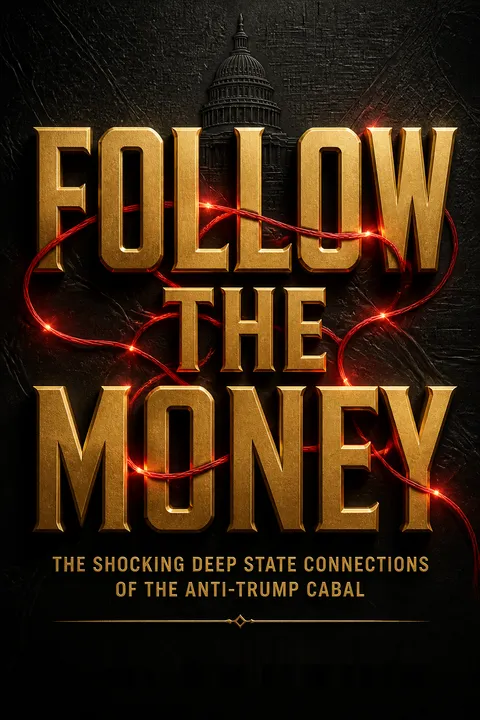
Follow the Money is a partisan political argument built as a chain of investigations. It moves from Ukraine's overlapping lobbying and business relationships, through the Trump Tower meeting and the Steele dossier, into FBI surveillance procedures, the Flynn prosecution, impeachment, and the COVID-19 crisis. Across these episodes, Bongino advances one main interpretation: political and government actors used suspicion, leaks, and institutional authority to damage Trump, while comparable conduct by his opponents received less scrutiny.
The book's most durable contribution is its attention to provenance and process. It highlights how an allegation travels, how intelligence claims enter official documents, and how warrant errors can matter even when an investigation finds no conspiracy. It also raises a legitimate accountability question: whether powerful officials face the same standards as ordinary people or political opponents. The inspector general findings on FISA applications provide a firm basis for concern about procedural failures.
The argument becomes less secure when it moves from error to orchestration. The book frequently places contacts, timing, funding, and political alignment beside one another, then interprets the pattern as evidence of a coordinated campaign. Such connections can generate investigative leads, but they do not establish causation or intent without corroborating evidence. The same evidentiary discipline should apply to the author's claims about the whistleblower, the Flynn investigation, and China's motives during the pandemic. Some claims are reported allegations, some are documented findings, and some are conjectures; the narrative often presses them together with similar confidence.
Readers gain the most by treating the book as a case for scrutiny rather than a final adjudication. Its strongest questions concern who knew what, when they knew it, and whether established procedures were followed. Its weakest conclusions arrive where suspicion is treated as proof. That distinction preserves the book's useful demand for accountability while protecting the reader from adopting the same one-sided standards it condemns.
Review Summary
Follow the Money receives mostly positive reviews, with readers praising Bongino's detailed research and ability to connect complex political events. Many find the book informative and eye-opening regarding alleged corruption and deep state activities. Supporters appreciate Bongino's fact-based approach and view it as revealing important truths. Critics, however, dismiss it as biased and promoting conspiracy theories. Some readers note the complexity of the information presented, while others commend Bongino for making intricate topics understandable. Overall, the book resonates strongly with conservative readers and Trump supporters.
Glossary
Scandal Manufacturers of America
Bongino's label for anti-Trump actorsThe author's pejorative name for an alleged informal coalition of Democratic politicians, media figures, and Never-Trump Republicans who, in his account, promoted or manufactured scandals intended to weaken or remove Donald Trump. It is Bongino's framing, not the name of a formally organized group.
intelligence laundering
Making weak claims seem validatedBongino's description of unverified or questionable intelligence gaining apparent credibility as it moves between sources, agencies, politicians, and news outlets. The term emphasizes how repetition and institutional authority can make allegations appear independently confirmed, even when their origins may overlap. The book presents this as a deliberate practice in the Trump-Russia investigation.
Crossfire Hurricane
FBI Russia-interference investigationThe FBI's code name for its 2016 counterintelligence investigation into Russian election interference and possible connections involving people associated with the Trump campaign. The book argues that investigators mishandled evidence and unfairly targeted campaign figures. The inspector general documented serious errors in related surveillance applications, while not finding evidence that the case agent's errors were intentional.
Woods Procedures
FBI checks for warrant accuracyFBI procedures intended to ensure that factual claims in Foreign Intelligence Surveillance Act applications are accurately supported and documented. The Justice Department inspector general found that applications concerning Carter Page contained errors and omissions, including overstated descriptions of Christopher Steele's prior reporting. The book treats these failures as evidence of a serious breakdown in safeguards.
FISA
Foreign intelligence surveillance lawThe Foreign Intelligence Surveillance Act, a US law governing surveillance for foreign intelligence purposes. Applications to the Foreign Intelligence Surveillance Court must present relevant factual information and meet legal requirements. In the book, FISA is central because the FBI used applications concerning Carter Page to obtain surveillance authority, and an inspector general review found significant inaccuracies and omissions in those applications.
Logan Act
Law restricting private diplomacyA 1799 federal law that prohibits unauthorized US citizens from corresponding with foreign governments about disputes involving the United States. The book describes it as rarely invoked and questions its relevance to Michael Flynn's transition-period calls with the Russian ambassador. Flynn was not charged under the Logan Act; the prosecution concerned statements he made to FBI agents.
FAQ
1. What is "Follow the Money: The Shocking Deep State Connections of the Anti-Trump Cabal" by Dan Bongino about?
- Deep State Allegations: The book investigates what Dan Bongino calls the "Deep State" and its alleged efforts to undermine and remove President Donald J. Trump from office.
- Scandal Manufacturers of America: Bongino introduces the concept of the "Scandal Manufacturers of America" (SMA), a coalition of Democrats, media pundits, and Never-Trumpers, who he claims orchestrated various anti-Trump scandals.
- Focus on Key Events: The narrative covers major events such as the Russia-collusion investigation, the Ukraine impeachment proceedings, and the COVID-19 pandemic, tying them to a network of political operatives, intelligence officials, and foreign actors.
- Money and Influence: The book emphasizes following the flow of money and influence, particularly in Ukraine, to expose connections between American political figures, foreign interests, and anti-Trump activities.
2. Why should I read "Follow the Money" by Dan Bongino?
- Alternative Perspective: The book offers a counter-narrative to mainstream media coverage of the Trump presidency, focusing on alleged abuses by government officials and political operatives.
- Detailed Investigative Approach: Bongino, a former Secret Service agent, uses investigative techniques to connect dots between people, organizations, and events often overlooked or dismissed by other sources.
- Understanding Political Scandals: Readers interested in the origins and mechanics of the Russia investigation, Ukraine impeachment, and related scandals will find a comprehensive, if controversial, account.
- Insight into Media and Politics: The book critiques the role of the media and the so-called "Deep State" in shaping public perception and political outcomes.
3. What are the key takeaways from "Follow the Money" by Dan Bongino?
- Collusion Narrative Origins: Bongino argues that the Russia-collusion story was manufactured by political operatives, with the Steele dossier and Fusion GPS playing central roles.
- Ukraine as a Corruption Hub: The book details how Ukraine became a focal point for influence-peddling, involving both Democratic and Republican figures, and how this set the stage for the impeachment of Trump.
- Role of Intelligence Agencies: Bongino claims that senior officials in the FBI and CIA, particularly John Brennan and James Comey, abused their positions to promote false narratives and spy on the Trump campaign.
- Media Complicity: The author asserts that mainstream media outlets were complicit in spreading misinformation and failed to hold anti-Trump actors accountable.
- COVID-19 and China: The book concludes by linking the COVID-19 pandemic to Chinese government actions and criticizes the World Health Organization for its response, suggesting geopolitical motives.
4. Who are the main players and organizations discussed in "Follow the Money" by Dan Bongino?
- Political Operatives: Glenn Simpson (Fusion GPS), Christopher Steele, Alexandra Chalupa, and the Podesta brothers are highlighted as key figures in anti-Trump activities.
- Intelligence and Law Enforcement: John Brennan (CIA), James Comey (FBI), Peter Strzok, Lisa Page, and Andrew McCabe are accused of bias and misconduct.
- Foreign Actors: Ukrainian politicians, oligarchs, and organizations like AntAC (Anti-Corruption Action Centre) are discussed as both sources and targets of influence.
- Media Outlets: The New York Times, Washington Post, and BuzzFeed are critiqued for their roles in publicizing and legitimizing unverified allegations.
- Billionaires and Donors: George Soros is portrayed as a major funder of anti-Trump efforts, particularly through his Open Society Foundations.
5. How does "Follow the Money" by Dan Bongino explain the origins and impact of the Steele dossier?
- Fusion GPS and Clinton Campaign: The book claims the Steele dossier was commissioned by Fusion GPS, funded by the Clinton campaign and the DNC, to dig up dirt on Trump.
- Unverified and Discredited: Bongino argues that the dossier was filled with unverified and false information, much of which was later discredited by official investigations.
- Used for FISA Warrants: The dossier was allegedly used as a primary source to obtain FISA warrants to spy on Trump campaign advisor Carter Page.
- Russian Disinformation: The book suggests that some of the dossier’s content may have been Russian disinformation, and that intelligence agencies ignored warnings about its credibility.
6. What role does Ukraine play in the narrative of "Follow the Money" by Dan Bongino?
- Corruption and Influence-Peddling: Ukraine is depicted as a "24-hour ATM" for American and foreign political operatives seeking money and influence.
- Hunter Biden and Burisma: The book scrutinizes Hunter Biden’s role on the board of Burisma and Joe Biden’s alleged intervention to protect his son’s interests.
- Impeachment Proceedings: Bongino argues that the impeachment of Trump was rooted in efforts to cover up or distract from Democratic involvement in Ukrainian corruption.
- Soros and NGOs: The influence of George Soros and his funding of Ukrainian anti-corruption groups is highlighted as part of a broader network of political manipulation.
7. How does "Follow the Money" by Dan Bongino describe the actions of U.S. intelligence and law enforcement agencies during the Trump-Russia investigation?
- Abuse of Power Allegations: The book accuses the FBI and CIA of abusing their authority to surveil the Trump campaign and promote the collusion narrative.
- Key Figures: John Brennan, James Comey, Peter Strzok, and Lisa Page are singled out for their roles in advancing the investigation despite weak evidence.
- FISA Process Manipulation: Bongino details how FISA applications were allegedly based on faulty or misleading information, particularly from the Steele dossier.
- Internal Bias and Leaks: The narrative suggests that anti-Trump bias within agencies led to selective leaks and a lack of accountability for misconduct.
8. What is the "Scandal Manufacturers of America" (SMA) as defined in "Follow the Money" by Dan Bongino?
- Definition: The SMA is Bongino’s term for an informal coalition of Democrats, liberal media figures, and Never-Trump Republicans dedicated to undermining Trump.
- Tactics: The group is accused of manufacturing scandals, spreading misinformation, and leveraging government and media resources to attack Trump.
- Key Examples: The Russia-collusion investigation, the Trump Tower meeting, and the Ukraine impeachment are cited as SMA-driven events.
- Motivation: Bongino argues that the SMA’s ultimate goal was not just to damage Trump politically, but to remove him from office by any means necessary.
9. How does "Follow the Money" by Dan Bongino address the impeachment of Donald Trump?
- Impeachment as a Political Tool: The book claims the impeachment was a continuation of failed efforts to remove Trump after the collapse of the Russia-collusion narrative.
- Ukraine Call Analysis: Bongino argues that Trump’s call with President Zelensky was routine and that no quid pro quo occurred, as Ukraine received its aid.
- Whistleblower Controversy: The identity and motivations of the whistleblower are scrutinized, with claims of bias and connections to anti-Trump operatives.
- Adam Schiff’s Role: Schiff is portrayed as a central figure in orchestrating the impeachment, allegedly using selective leaks and misleading narratives.
10. What does "Follow the Money" by Dan Bongino reveal about the attempted prosecution of General Michael Flynn?
- Targeted by Intelligence Community: Flynn is depicted as a victim of a coordinated effort by intelligence and law enforcement officials to entrap and remove him.
- Setup Allegations: The book details three separate "setups" involving Flynn, including a dinner at Cambridge, monitored calls with the Russian ambassador, and a controversial FBI interview.
- Exculpatory Evidence Suppressed: Bongino claims that exculpatory evidence was withheld from Flynn’s defense and that the charges against him were not material to any legitimate investigation.
- Eventual Exoneration: The narrative concludes with the DOJ’s move to dismiss the case against Flynn, framing it as a rare victory against the Deep State.
11. How does "Follow the Money" by Dan Bongino connect the COVID-19 pandemic to global politics and the Trump presidency?
- China’s Role: The book argues that the Chinese Communist Party deliberately covered up the outbreak and allowed the virus to spread globally while locking down its own population.
- World Health Organization Critique: Bongino criticizes the WHO for allegedly acting as a mouthpiece for China and failing to warn the world in time.
- Impact on U.S. Politics: The pandemic is framed as a geopolitical weapon that destabilized the U.S. economy, potentially undermining Trump’s reelection chances.
- Media and Political Response: The author contends that Democrats and the media politicized the pandemic to further damage Trump’s presidency.
12. What are the best quotes from "Follow the Money" by Dan Bongino and what do they mean?
- "Ukraine is a giant, twenty-four-hour ATM." – This quote encapsulates Bongino’s view of Ukraine as a hub for political corruption and influence-peddling by both American and foreign actors.
- "The Scandal Manufacturers of America pivoted to a new chapter in its senseless saga." – Here, Bongino criticizes the persistence of anti-Trump forces in manufacturing new scandals after previous efforts failed.
- "Disinformation can be very compelling." – This reflects the book’s theme that false narratives, once legitimized by authority figures, can have powerful and lasting effects.
- "If this won’t stick, what will?" – Referring to
Download PDF
Download EPUB
.epub digital book format is ideal for reading ebooks on phones, tablets, and e-readers.








