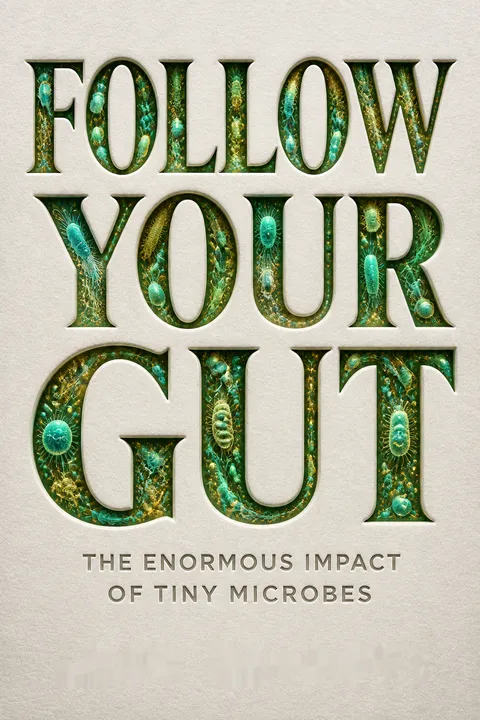


Key Takeaways
Treat yourself as an ecosystem, not a human body with microbial hitchhikers.
The body is inhabited. The human microbiota means the microbes living in and on a person; the human microbiome refers to their collective genes. These communities occupy distinct neighborhoods: skin, mouth, gut, and other sites each host different residents. New DNA sequencing revealed far more microbial variety than older culture methods could detect, including organisms that do not grow easily in a laboratory.
Identity leaves traces. Knight and colleagues found that a person's hand microbes could be matched to the computer mouse that person used with more than 90 percent accuracy. Even a person's left and right hands tend to carry distinct communities. The point is not that humans are somehow less human, but that our biology includes an ecological partnership we had largely failed to see.
What's striking is how this reframes individuality without dissolving it. A person remains a distinct organism, but one whose functioning depends partly on a shifting community of other organisms. Ecology offers a useful parallel: a forest is not merely a collection of trees, since relationships among species shape what the forest can do. The analogy has limits, however. Human microbes are not all beneficial, and the body's interests do not always align with theirs. The ecosystem view is most useful when it replaces the simplistic assumption that every microbe is either harmless or an invader.
Remember that gut microbes help determine what food and medicines do.
Digestion is shared work. In the large intestine, microbes ferment fiber that human enzymes leave undigested, producing compounds that nourish the gut lining. They also help determine how much energy and which nutrients the body extracts from food, and can affect how drugs are metabolized. The gut is not just a passive pipe; its residents influence the chemistry of what passes through it.
Diet selects residents. Long-term eating patterns in the studies Knight describes tracked with different microbial groups: Bacteroides were more common among people eating more meat and protein, while Prevotella were associated with grain-rich diets. In a small experiment, a meat-and-cheese diet shifted gut microbes quickly, while a vegan diet produced little immediate change. These findings show that food alters the microbial environment, not that a particular diet guarantees a health outcome.
This account connects nutrition to pharmacology: what a person eats can shape microbial activity, which can in turn alter the body's response to food or medicine. It also complicates the idea that calories or drugs act identically in every person. Still, a change in microbial composition is not automatically a health improvement. A useful next question is functional: what chemicals are the microbes producing, and do those changes measurably help or harm the host? Without that bridge, dietary microbiome claims can turn a biological mechanism into marketing shorthand.
Recognize how birth and childhood seed different microbial communities.
Early exposure matters. Newborns delivered vaginally initially carry microbial communities resembling those of the mother's birth canal; babies delivered by cesarean initially resemble skin communities. Knight and his partner's daughter was born by an unplanned cesarean, so they used sterile swabs to transfer samples from her mother's vagina to the baby. The author presents this as an experiment based on a scientific hypothesis, not as established medical practice or proof of benefit for their child.
Communities keep changing. A study followed one infant's gut microbes for 838 days and found large shifts as the child grew, ate solid foods, and received antibiotics. Breast milk also contains microbes and sugars that support certain bacteria. Siblings, pets, homes, and diet add further influences. These factors shape development, but they do not determine a person's health destiny.
The developmental framing matters because exposure is not a single event: a child's microbial community changes as diet, surroundings, and immune development change. It resembles other forms of early learning, where timing can shape later responses without fixing them permanently. The cesarean example is vivid, but its emotional force should not outrun its evidence. A different newborn microbiome is a measured observation; a lasting disease effect, or a benefit from transferring microbes, requires much stronger follow-up. Personal experimentation cannot substitute for controlled studies, particularly with newborns.
Judge microbes by their behavior in context, not by their names alone.
Presence is not proof. Helicobacter pylori can contribute to stomach ulcers, yet Knight notes that roughly half the human population carries it without developing one. The bacterium matters, but it is not a sufficient explanation by itself. Host biology, immune response, and the surrounding microbial community help determine whether a familiar organism causes trouble.
The same logic reaches beyond ulcers. Healthy people can carry organisms associated with disease, including Staphylococcus aureus. In inflammatory bowel disease, gut microbes may behave differently, but researchers had not established whether microbial changes cause inflammation or result from it. A microbe's identity is therefore only one clue. The larger question is what it is doing in a particular body and whether the surrounding conditions make that activity harmful.
This is a valuable correction to the classic hunt for a single culprit. The same organism can be a bystander in one setting and a threat in another, much as a normally contained process can become damaging when regulation fails. That does not make pathogens imaginary or reduce disease to vague imbalance. It makes causal explanations more precise: researchers must distinguish the organism's presence, its activity, and the host's response. The practical implication is restraint in interpreting a positive test. Detection alone does not establish that a microbe caused symptoms or should be eliminated.
Give developing immune systems diverse, safe microbial exposure.
Variety may help calibrate immunity. The hygiene hypothesis, as discussed in the book, proposes that limited exposure to diverse microbes early in life may contribute to allergies and immune problems. Children raised on or near farms, and children with siblings or early contact with pets, have in some studies shown lower rates of hay fever or asthma. These findings suggest that ordinary contact with a varied environment can shape immune development.
Safe does not mean sterile, or reckless. Knight distinguishes potentially helpful exposure to soil, animals, and healthy people from dangerous exposure to pathogens. He also notes that the evidence is still developing: particular microbes, timing, and individual circumstances matter, and results involving pets differ by age of exposure. The practical idea is not to seek infection, but to avoid treating every source of microbial contact as contamination.
The idea has an important public-health nuance: hygiene is not one dial that should simply be turned down. Clean water, sanitation, and protection from dangerous infection save lives, while the microbial exposures associated with healthy environments may support immune development. Those are compatible goals. The farm findings also invite caution about causality, since rural life differs from urban life in many ways beyond microbial contact. The strongest interpretation is modest: immune development occurs through interaction with an environment, and excessive avoidance of ordinary, safe contact may not be biologically neutral.
Treat gut-brain findings as promising mechanisms, not psychiatric cures.
The gut communicates with the brain. Knight calls the interacting pathways the microbiome-gut-brain axis. Gut microbes can produce chemical compounds, influence inflammation, and interact with systems that communicate with the nervous system. In mice, transferring microbes between strains with different anxiety-like behavior also shifted their performance in anxiety tests. Other mouse experiments linked microbial changes to appetite and repetitive behaviors.
Human conclusions remain limited. The book describes early associations between gut bacteria and depression, as well as experiments in mice where a specific Bacteroides strain reversed some autism-like symptoms. But gut problems can themselves change microbial communities, making cause and effect difficult to establish. A bacterial strain that appears helpful in one animal model may be ineffective or unsafe in people. The research offers testable pathways, not a reason to self-treat psychiatric conditions with supplements.
The gut-brain connection broadens the picture of behavior without implying that microbes dictate personality. Biological influence is not the same as control: sleep, stress, relationships, and many other processes also shape mood and cognition. Animal studies are especially useful for isolating mechanisms, but the leap from a mouse behavior test to a human diagnosis is substantial. The careful reader can hold two ideas together: microbial signaling may become relevant to mental health, and present evidence does not justify treating a complex psychiatric condition as a simple gut problem.
Choose microbiome treatments by evidence and strain, not by the word probiotic.
Products are not interchangeable. Prebiotics are nondigestible ingredients, often fibers, that feed selected microbes. Probiotics are live microorganisms administered in sufficient amounts to provide a health benefit. Knight explains that evidence applies to particular strains and conditions, not to every product labeled “good bacteria.” He describes stronger evidence for some probiotics in childhood diarrhea and irritable bowel syndrome, while many other advertised uses remained unproven.
One treatment can rebuild an ecosystem. For severe Clostridium difficile infection, fecal transplantation transfers stool microbes from a healthy donor to a patient. The book reports cure rates near 90 percent in the studies then available, after many patients had not responded to antibiotics. This is a medical procedure for a serious condition, not a do-it-yourself remedy. For any microbiome treatment, ask whether controlled trials support that specific product for that specific problem.
The strain-specific point is a lesson in evidence-based medicine: a category name is not a demonstrated effect. A probiotic label can conceal differences in organisms, dose, storage, and clinical research. The fecal-transplant example makes the ecosystem idea unusually concrete, since treating one difficult infection can involve restoring a community rather than targeting a lone species. Its success should not invite indiscriminate transplantation, though. A complex biological transfer can also carry unwanted organisms or functions, so the standard for matching donors and patients must remain high.
Use antibiotics when needed, while remembering they reshape more than pathogens.
Antibiotics exert ecological pressure. These drugs target bacterial processes, but broad-spectrum treatments can also eliminate helpful organisms alongside the infection. Surviving bacteria may carry resistance, and repeated exposure favors resistant populations. Knight also describes the use of low antibiotic doses in livestock to promote weight gain, a practice that can select for resistance in animals and contribute to the wider problem.
The tradeoff is real. Antibiotics save lives and remain essential for many bacterial infections. The concern is unnecessary or poorly targeted use, especially early in life, when studies cited in the book associated exposure with altered microbial development and later risks such as weight gain or allergy. Those associations do not prove that every course causes harm. The sensible response is not to refuse prescribed treatment, but to avoid using antibiotics without a clinical reason and to follow a clinician's instructions.
Antibiotic stewardship is a classic shared-resource problem. A prescription can benefit one patient immediately while adding evolutionary pressure that affects other patients and future treatment options. That makes unnecessary use more than an individual choice. At the same time, warnings about long-term microbiome effects should not obscure the danger of untreated bacterial disease. The appropriate goal is precision: use antibiotics when their expected benefit is substantial, and improve diagnosis so clinicians can target the right infection with the narrowest effective treatment.
Demand causal evidence before turning a microbial map into a prescription.
A map is a starting point. Many studies compare microbes in people who are sick with those in healthy people. Such cross-sectional comparisons can reveal patterns, but they cannot by themselves show whether a microbial difference caused the illness or followed from it. The book describes stronger approaches: track people over time, test mechanisms in animals, and see whether a specific intervention changes outcomes.
Methods shape the picture. Results can vary with how samples are collected and stored, which DNA regions are analyzed, and how data are processed. Findings can also differ across human populations. Mouse studies offer ways to test cause and effect, but a result in mice does not automatically apply to people. Microbiome science is most trustworthy when several methods converge and clinical trials confirm that an intervention helps.
This is the book's most durable scientific lesson: measurement does not equal explanation. The field can generate impressive maps while still lacking a reliable route from a microbial pattern to a treatment. That gap is familiar across data-rich sciences, where prediction can precede understanding of mechanism. A predictive signature may still be clinically useful, but it needs validation in the population where it will be used. Readers should therefore distinguish a plausible association, a demonstrated biological pathway, and a treatment proven to improve patient outcomes.
Analysis
Knight's central contribution is a change in the unit of thought. The body is not a sealed machine occasionally invaded by germs. It is a host whose tissues and microbial communities interact, with consequences for digestion, immunity, infection, and possibly behavior. That shift makes familiar questions more sophisticated: not simply which organism is present, but what it is doing, in which location, alongside which other organisms, and in a host with what biology.
The book is strongest when it shows how this ecological perspective changes interpretation. H. pylori can be common without causing ulcers in everyone. A microbe associated with illness may be a cause, a consequence, or a participant in a feedback loop. Fecal transplantation for severe C. difficile infection demonstrates that restoring a community can sometimes outperform repeatedly attacking a single pathogen. These examples turn the microbiome from a novelty into a serious framework for thinking about disease.
The same ambition also creates the main risk. Microbial associations can invite expansive stories about obesity, allergies, depression, and autism before human causality is established. The book repeatedly signals uncertainty, but vivid animal experiments can linger more strongly than their limitations. A mouse that changes behavior after a microbial transfer establishes an experimental possibility, not a human treatment. Likewise, a shift in a person's microbes is not proof of improved health.
The most useful reading is therefore neither microbial determinism nor dismissal. Microbes are part of the causal machinery of the body, but not a master switch for every trait. The practical promise lies in improved diagnosis, more targeted interventions, and a better account of why identical exposures produce different outcomes. Until those tools are validated, the book's lasting advice is intellectual: take microbial ecology seriously, and demand evidence before treating a microbial association as a medical instruction.
Review Summary
Follow Your Gut receives mostly positive reviews for its accessible introduction to the human microbiome. Readers appreciate the book's concise, informative content and engaging writing style. Many find the subject fascinating and praise the author's ability to explain complex scientific concepts in layman's terms. Some reviewers note that the information may become outdated quickly due to ongoing research. Critics mention wanting more depth, but overall, the book is recommended as a quick, enlightening read on an exciting area of scientific discovery.
People Also Read
Glossary
human microbiota
body's microbial inhabitantsThe collection of microorganisms living in and on a human body. Different sites, such as the skin, mouth, vagina, and gut, support distinct communities. The term refers to the organisms themselves, including bacteria, archaea, fungi, and other microscopic life.
human microbiome
microbial genes in humansThe genetic material of the microorganisms living in and on the human body. The book distinguishes the microbiome, meaning microbial genes, from the microbiota, meaning the organisms that carry those genes. Microbiome research uses DNA sequencing to identify community members and compare their genetic capacities.
microbiome-gut-brain axis
gut and brain signalingThe interactions connecting gut microbes, the digestive system, immune activity, and the brain. Microbes can produce chemical compounds and influence bodily processes that communicate with the nervous system. The term describes a set of possible pathways, not proof that microbes determine mood or mental illness.
prebiotics
food for selected microbesNondigestible substances, often soluble fibers, that are fermented by gut microbes and can favor the growth or activity of selected organisms. Their effects depend on the compound and the microbial community. The book describes possible benefits but notes that clinical evidence was limited for many proposed uses.
probiotics
administered beneficial microbesLive microorganisms that, when given in sufficient amounts, are intended to provide a health benefit. Effects are specific to organisms, strains, doses, and conditions, so one probiotic cannot be assumed to work like another. The book emphasizes that many commercial claims lacked strong clinical evidence.
fecal transplantation
transfer of donor gut microbesA medical procedure in which stool from a healthy donor is prepared and transferred to a patient to restore a disrupted gut microbial community. In the book, it is discussed chiefly as a treatment for severe Clostridium difficile infection, where reported results were notably successful. It is not presented as a do-it-yourself intervention.
hygiene hypothesis
early exposure shapes immunityAn explanation for rising allergies and related immune problems that links reduced exposure to diverse, ordinary microbes during early life with altered immune development. The book describes a shift from blaming common infections to considering exposure from farms, soil, animals, and other healthy environments. It does not recommend exposure to dangerous pathogens.
UniFrac
microbial community comparisonA method for comparing microbial communities by measuring how much evolutionary history separates the organisms they contain. Communities are placed on a phylogenetic tree, and their shared and distinct branches are compared. The approach helps researchers map similarities among samples without relying only on counts of named species.
gnotobiotic mice
mice with known microbesMice raised without microbes, or introduced to a precisely known set of microbes. Because researchers control which organisms are present, these animals help test whether particular microbes or communities contribute to changes in health or behavior. Findings can reveal mechanisms, but do not automatically establish the same effects in humans.
Human Microbiome Project
human microbial censusA large research effort supported by the US National Institutes of Health to describe microbial communities in healthy people and investigate differences associated with disease. The project helped establish methods and reference data for studying microbes across body sites. Its findings emphasized that many people carry organisms commonly labeled dangerous while remaining healthy.
FAQ
1. What is "Follow Your Gut: The Enormous Impact of Tiny Microbes" by Rob Knight about?
- Explores the human microbiome: The book delves into the trillions of microbes living in and on our bodies, explaining how they influence our health, behavior, and even our sense of self.
- Scientific breakthroughs: It highlights recent advances in DNA sequencing and computing that have revolutionized our understanding of the microbial world within us.
- Practical implications: The book discusses how our microbiome affects everything from digestion and immunity to mood and disease risk, and what this means for medicine and daily life.
- Personal and societal impact: Rob Knight combines personal anecdotes, cutting-edge research, and practical advice to show how microbes are redefining what it means to be human.
2. Why should I read "Follow Your Gut" by Rob Knight?
- Understand your inner ecosystem: The book reveals how your health, weight, mood, and even personality are shaped by your microbiome.
- Actionable health insights: It offers practical advice on how to nurture your microbiome for better health, including diet, antibiotics, and probiotics.
- Accessible science: Rob Knight makes complex microbiology engaging and understandable, using stories and analogies that bring the science to life.
- Future of medicine: The book provides a glimpse into how microbiome research is transforming medicine, from personalized treatments to new diagnostics.
3. What are the key takeaways from "Follow Your Gut" by Rob Knight?
- You are an ecosystem: Human bodies are home to trillions of microbes, outnumbering human cells and genes, making us more microbe than human by some measures.
- Microbial diversity matters: The diversity and balance of your microbiome are linked to health outcomes, including obesity, allergies, and mental health.
- Birth, diet, and environment shape your microbiome: How you are born, what you eat, and your surroundings all influence your microbial communities.
- Microbiome can be hacked: Through diet, probiotics, prebiotics, and even fecal transplants, we can potentially improve our health by altering our microbiome.
4. How does Rob Knight define the human microbiome in "Follow Your Gut"?
- Microbiota vs. microbiome: The human microbiota refers to the collection of microbes living in and on us, while the microbiome refers to all their genes.
- Diverse communities: Different body parts (skin, gut, mouth, etc.) host distinct microbial communities, each with specialized roles.
- Genetic impact: Microbial genes vastly outnumber human genes, contributing to our metabolism, immunity, and more.
- Dynamic and unique: Each person’s microbiome is highly individual, with only about 10% overlap in gut microbes between two people.
5. How do we acquire our microbiome according to "Follow Your Gut" by Rob Knight?
- Birth method matters: Babies born vaginally acquire microbes from their mother’s birth canal, while C-section babies get microbes resembling adult skin.
- Early influences: Breastfeeding, diet, siblings, pets, and environment all shape the developing microbiome in infancy and childhood.
- Rapid changes: The infant microbiome is highly dynamic, stabilizing into an adult-like state over the first few years.
- Long-term effects: Early microbial exposures can influence lifelong health, including risks for allergies, obesity, and immune disorders.
6. What roles do microbes play in human health and disease in "Follow Your Gut"?
- Essential functions: Microbes aid in digestion, synthesize vitamins, train the immune system, and protect against pathogens.
- Disease links: Imbalances or low diversity in the microbiome are associated with conditions like inflammatory bowel disease, obesity, allergies, and even kwashiorkor.
- Not always bad: Many microbes considered “dangerous” can be harmless or even beneficial in the right context.
- Complex interactions: Disease risk often depends on both microbial composition and host genetics.
7. How does "Follow Your Gut" by Rob Knight explain the gut-brain axis and its impact on mood and behavior?
- Microbiome-gut-brain axis: The book describes how gut microbes communicate with the brain via immune, hormonal, and neural pathways.
- Mental health connections: Changes in the microbiome have been linked to depression, anxiety, autism, and stress resilience in both animal models and humans.
- Probiotics and mood: Certain probiotics have shown promise in reducing anxiety and depressive symptoms, though research is ongoing.
- Early life effects: Microbial exposures in early childhood can have lasting effects on brain development and behavior.
8. What practical advice does Rob Knight give for "hacking" your microbiome in "Follow Your Gut"?
- Diet matters most: Long-term dietary patterns (fiber, protein, fat) have a major impact on your gut microbiome composition.
- Prebiotics and probiotics: Consuming prebiotics (fiber that feeds good bacteria) and evidence-based probiotics can support a healthy microbiome.
- Fecal transplants: In severe cases like C. difficile infection, fecal microbiota transplantation can restore a healthy gut ecosystem.
- Caution with interventions: Not all probiotics are effective, and more research is needed before widespread use for most conditions.
9. What does "Follow Your Gut" by Rob Knight say about antibiotics and their impact on the microbiome?
- Broad destruction: Antibiotics kill both harmful and beneficial bacteria, often disrupting the microbiome’s balance.
- Long-term consequences: Overuse, especially in early life, is linked to increased risks of obesity, allergies, and antibiotic resistance.
- Livestock and environment: Antibiotic use in agriculture contributes to resistance and may affect human health through the food chain.
- Use wisely: The book advocates for targeted, necessary use of antibiotics and finishing prescribed courses to minimize harm.
10. How does "Follow Your Gut" by Rob Knight describe the future of microbiome science and medicine?
- Personalized medicine: Microbiome analysis may soon guide individualized treatments, drug responses, and dietary recommendations.
- Microbial diagnostics: Tests based on your microbes could predict disease risk or treatment outcomes.
- Therapeutic design: Scientists are working to engineer microbial communities to prevent or treat diseases like obesity, infections, and even depression.
- Citizen science: Projects like American Gut invite the public to participate in mapping and understanding the human microbiome.
11. What are the main methods and challenges in studying the microbiome, according to "Follow Your Gut"?
- DNA sequencing advances: Next-generation sequencing allows rapid, detailed analysis of microbial communities from body samples.
- Data interpretation: New algorithms and statistical methods are needed to make sense of vast, complex genetic data.
- Defining diversity: Measuring and comparing microbial diversity is challenging due to differences in sampling, analysis, and species definitions.
- Causation vs. correlation: Most current studies show associations, not causation, and translating findings from mice to humans remains a hurdle.
12. What are the best quotes from "Follow Your Gut" by Rob Knight and what do they mean?
- "You are mostly not you." – Emphasizes that microbial cells vastly outnumber human cells in our bodies, challenging our sense of individuality.
- "We are not individuals; we are ecosystems." – Highlights the idea that our health and identity depend on the balance of many microbial communities.
- "In (microbial) diversity, there is strength." – Suggests that a diverse microbiome is linked to resilience against disease, much like biodiversity strengthens ecosystems.
- "The great power of microbiome science will come when we understand what we need to do in order to achieve a desired effect on the complete ecosystem within us." – Points to the future potential of targeted, science-based interventions to optimize our health through the microbiome.
Download PDF
Download EPUB
.epub digital book format is ideal for reading ebooks on phones, tablets, and e-readers.








