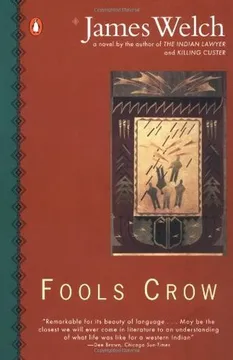


Plot Summary
A Place on the Raid
At eighteen, White Man’s Dog has little wealth, no wife, and no reputation as a warrior. His father, Rides-at-the-door, is respected, while his younger brother Running Fisher has already taken enemy horses. Fast Horse, a boastful friend who expects to inherit his father’s powerful Beaver Medicine, offers White Man’s Dog a place on Yellow Kidney’s planned raid against the Crow.
The experienced leader agrees to take him, though only as a helper. White Man’s Dog fears his weak medicine will bring disaster, so Fast Horse arranges for the healer Mik-api to purify and strengthen him. For the first time in months, the young man sees a chance to prove himself and earn a life beyond his father’s lodge.
The raid begins as a test of identity as much as a pursuit of horses. White Man’s Dog measures manhood through possessions and the respect they purchase, while his family’s comparisons with Running Fisher sharpen his sense of inadequacy. Fast Horse offers him access, but not equality: he assigns him a subordinate role and treats spiritual power as another advantage to claim. Mik-api’s ceremony gives White Man’s Dog hope without promising certainty. His first step toward adulthood is therefore not confidence, but accepting responsibility while still afraid.
Cold Maker’s Bargain
Yellow Kidney leads the small party south through enemy country, where they travel by night, ford rivers, and avoid white settlements. Fast Horse recounts a dream in which Cold Maker promised snow to cover their retreat if the raiders first cleared a rock from his hidden ice spring and later brought robes for his daughters.
At Woman Don’t Walk Butte, the men search but cannot find the spring. Yellow Kidney distrusts Fast Horse’s confidence, yet decides to continue, hoping to turn back if danger grows. Eagle Ribs scouts the Crow camp and finds traders, rifles, and hundreds of horses. White Man’s Dog also dreams repeatedly of a white-faced girl in a lodge of dead bodies, but he cannot interpret the warning.
The journey places competing forms of judgment beside one another. Yellow Kidney reads terrain, numbers, and the behavior of his young companions; Fast Horse treats a dream as a guarantee that he can direct events. Their failure to find the spring is a practical warning, but turning back would cost Yellow Kidney authority and disappoint the eager youths. White Man’s Dog’s troubling dream adds another warning that remains unspoken. The group continues not because the signs are clear, but because ambition makes retreat feel more dangerous than uncertainty.
Snow Over Crow Country
Yellow Kidney sends White Man’s Dog and three younger raiders to take horses while he, Fast Horse, and Eagle Ribs slip toward the Crow lodges for prized riding animals. White Man’s Dog steadies the youths, selects a manageable herd, and guides it away without waking the camp. When a Crow rider discovers a separated mare and colt, White Man’s Dog attacks before the man can raise an alarm and kills him with his knife.
Snow begins falling, covering the raiders’ tracks and fulfilling part of Fast Horse’s promised protection. The young men reach shelter with more than a hundred horses. Yellow Kidney and Fast Horse do not arrive, however, and Eagle Ribs fears his dream has foretold Yellow Kidney’s death.
White Man’s Dog becomes a leader through restraint, not bravado. He limits the herd rather than allowing the younger men to seize everything, then makes a lethal decision when discovery threatens the entire party. The killing earns him practical success but also gives him a memory that cannot be absorbed into simple celebration. Meanwhile, snow appears to confirm Fast Horse’s dream even as the missing leaders leave the group vulnerable to a more troubling interpretation. The raid’s apparent victory is therefore divided: the horses arrive, but the cost and the unanswered absence follow them home.
The Power of Wolverine
During the winter, White Man’s Dog hunts for Yellow Kidney’s family and grows close to Mik-api, helping with healing ceremonies. Fast Horse, by contrast, withdraws from camp and ignores his vow to provide robes and burning coals for Cold Maker’s daughters. White Man’s Dog suspects that the broken promise may be keeping Yellow Kidney from returning, but Fast Horse refuses his help.
Mik-api then sends White Man’s Dog into the Backbone after a trapped animal. Raven leads him to a wolverine caught in a white man’s steel trap. White Man’s Dog frees it and feeds it. Raven tells him that the wolverine’s courage can become his medicine, giving him a source of strength that does not depend on wealth or status.
The wolverine episode redirects White Man’s Dog’s idea of power. He does not gain strength by defeating a rival or acquiring a prized horse; he earns a relationship by releasing an injured creature and feeding it. Raven’s guidance makes courage reciprocal, grounded in care rather than domination. Fast Horse’s refusal to fulfill his vow offers a sharp contrast: he increasingly treats obligations to others as burdens. The two young men are separating psychologically before their paths visibly diverge. One learns that power requires kinship; the other is turning away from the bonds that might sustain him.
Yellow Kidney Comes Home
After winter, Yellow Kidney returns gaunt and fingerless, having survived among the Spotted Horse People. He explains that Fast Horse’s loud taunts alerted the Crow camp while Yellow Kidney was stealing Bull Shield’s horse.
Captured and mutilated, Yellow Kidney escaped into the snow, then endured smallpox before his hosts nursed him back to life. He also recounts entering a lodge filled with dead girls and discovering that one had the disease. White Man’s Dog recognizes the scene from his dream and blames himself for not warning the leader.
Yellow Kidney’s wife, Heavy Shield Woman, believes he is alive and vows to become the Sun Dance’s Sacred Vow Woman if he returns. The people welcome Yellow Kidney, but his survival does not restore his former life.
Yellow Kidney’s return changes the meaning of the raid’s success. The stolen horses remain, but the leader who planned the expedition comes back unable to hunt or handle weapons as before. His account links Fast Horse’s boastfulness to a concrete betrayal, while the diseased lodge reveals the danger White Man’s Dog sensed but could not interpret. His guilt is understandable, yet Rides-at-the-door later helps him see that one young man could not control the choices of the whole party. Heavy Shield Woman’s vow gives the family a way to act when ordinary mourning offers none.
A Vow and a Marriage
The Lone Eaters support Heavy Shield Woman’s vow, and White Man’s Dog carries news of it among the bands. His journey shows him the poverty and disarray left where Pikuni leaders have tried to accommodate white demands. Back home, he chooses to marry Red Paint, Yellow Kidney’s daughter, despite his mother’s preference for a wealthier match.
At the Sun Dance, he fulfills his own vow by dancing with rawhide lines attached to skewers through his chest until they tear free. He and Red Paint establish their own lodge, and she becomes pregnant. During the ceremony, Kills-close-to-the-lake sacrifices a finger after a dream about her forbidden longing for him; Wolverine’s medicine helps them relinquish that desire.
Marriage, ceremony, and sacrifice mark different forms of chosen obligation. White Man’s Dog accepts the cost of supporting Red Paint and her wounded family rather than selecting a match for material advantage. His Sun Dance ordeal transforms private gratitude into a public commitment, while Kills-close-to-the-lake’s sacrifice gives a contained form to desire that cannot ethically become a relationship. These rituals do not erase conflict; they establish responsibilities people can recognize and share. The young man’s growing status rests less on the raid’s wealth than on his willingness to bind himself to others.
Bull Shield’s Last Stand
To avenge Yellow Kidney, a large Pikuni war party rides against Bull Shield’s Crow camp, with White Man’s Dog chosen to strike first. Before the attack, Sun disappears in an eclipse, terrifying the warriors and making Running Fisher lose his nerve. At dawn the Pikunis charge. White Man’s Dog is wounded, then shoots Bull Shield as the Crow chief advances on fallen war leader Fox Eyes.
Fox Eyes dies, as do many other Pikunis and Crow families. Rides-at-the-door gives his son Bull Shield’s black horse and urges him to take the chief’s scalp. White Man’s Dog obeys, but vomits after the battle. The people later name him Fools Crow, enlarging the story of his courage beyond what he believes actually happened.
The battle grants Fools Crow the recognition he once craved, but it refuses the clean moral shape of a heroic test. The eclipse unsettles the warriors before the first shot, Running Fisher’s fear separates him from his brother, and the attack kills civilians as well as fighters. Fools Crow’s scalp-taking is both an honored act and a physical ordeal that leaves him sick. The new name belongs partly to communal storytelling: his people need a brave figure after losing Fox Eyes, while Fools Crow knows that legend can conceal confusion, terror, and chance.
The Seizers Ride In
When the Lone Eaters honor Fools Crow, blue-coated soldiers arrive seeking Owl Child and his companions, accused of killing the trader Malcolm Clark. Three Bears tells them the Lone Eaters have not seen Mountain Chief or Owl Child, while warning that white settlers are taking Pikuni land and game.
The visitors depart without resolving the conflict. Later, Raven tells Fools Crow that a white hunter is killing animals and leaving their bodies behind. Fools Crow kills the hunter in the Backbone, then brings the matter before a council.
Some men want open war; Rides-at-the-door argues that the United States can overwhelm them. The council honors Fools Crow’s act but forbids further attacks on white men, trying to keep one killing from becoming a campaign of retaliation.
The soldiers’ visit turns a dispute involving particular outlaws into a threat against an entire people. Three Bears refuses to surrender knowledge he does not possess, but his answer cannot satisfy authorities who treat Pikuni communities as responsible for every raider. Fools Crow’s killing of the hunter complicates the council’s strategy: the act protects the animals on which his people depend, yet it risks giving the military another pretext. Rides-at-the-door’s caution is not passivity. It is an effort to preserve lives in a situation where the other side can make collective punishment appear lawful.
Fast Horse Returns Wounded
Fast Horse returns to the Lone Eaters with a bullet wound from a raid on a white ranch. Fools Crow brings him to Mik-api, who performs an intensive healing ceremony while Boss Ribs watches. Fast Horse survives, and his father tries to draw him back into Pikuni life by offering to teach him the Beaver Medicine songs and rituals.
Fools Crow also urges his friend to seek help for the anger that has taken hold of him. Fast Horse refuses to admit that the Crow raid or his treatment of Yellow Kidney changed him. He leaves again to join Owl Child, choosing the freedom of the outlaw band over his father’s medicine and the obligations of camp.
Mik-api can close a wound, but healing the body does not automatically restore a person’s place among others. Boss Ribs offers Fast Horse the inherited knowledge that once seemed destined to define his future, while Fools Crow offers friendship without pretending the past was harmless. Fast Horse rejects both because accepting help would require acknowledging what he has done and what he has lost. His departure illustrates the limits of communal repair: a community can offer rituals, teaching, and welcome, but it cannot make someone accept them.
A Friend Left Behind
Boss Ribs asks Fools Crow to bring his son home, so Fools Crow follows Fast Horse’s trail south. He finds a white ranch where the owner has been killed, his wife assaulted, and his children left in terror by Owl Child’s gang. At Mountain Chief’s camp, Fools Crow learns that Fast Horse has already gone after the outlaws. He catches up with the group in a snowstorm and asks Fast Horse to return.
Fast Horse insists that Cold Maker betrayed him by failing to make him powerful, and he still blames Yellow Kidney for entering the Crow camp. Fools Crow refuses to pretend the betrayal was accidental. He rides home without Fast Horse, recognizing that their childhood friendship no longer gives him a way to change his companion.
Fools Crow’s failed rescue is a moral turning point because he stops confusing loyalty with agreement. He can name Fast Horse’s responsibility without abandoning concern for him, but neither affection nor argument can undo the other man’s chosen life. The ranch’s ruined household also makes the consequences of outlaw freedom visible beyond stolen property: violence reaches people who had no part in the original grievances. Fast Horse frames his anger as a response to spiritual betrayal, shifting blame outward. Fools Crow sees that this explanation protects his friend from the shame required for change.
Yellow Kidney’s Final Journey
As Yellow Kidney’s sons grow, he begins to imagine a life beyond his family’s care. He leaves the Lone Eater camp alone, hoping to take horses from the Cutthroats and return with something useful for his children. A yellow calf he sees on the prairie gives him a name for Red Paint’s unborn child, and briefly restores his desire to live.
A blizzard drives him into a war lodge, where a white rancher, already fearing Indian attacks, stalks inside and shoots him. Fast Horse later finds the body and carries it back on a travois. Seeing the mutilated hands he caused, he brings Yellow Kidney home but cannot bring himself to ask the family for forgiveness.
Yellow Kidney’s departure is an attempt to reclaim agency from a life in which others must do ordinary tasks for him. His hope is modest: he wants to provide, see his grandson, and return to his family with a meaningful contribution. The yellow calf lets him imagine a future name rather than define himself only by injury. His death arrives through the very climate of fear that reciprocal violence has created. Fast Horse’s decision to return the body is an act of responsibility, but it cannot repair the loss or settle the debt between them.
The Lodge of Shame
While Fools Crow is away, Running Fisher begins an affair with Kills-close-to-the-lake, his father’s young wife. Rides-at-the-door confronts them after Striped Face discovers their meetings. He admits that taking Kills-close-to-the-lake into his lodge as an act of generosity left her neglected, but he still removes her from the marriage and sends her back to her father with horses.
He sends Running Fisher north to live among the Siksikas, where a Medicine Pipe keeper may help him recover his discipline. Running Fisher confesses that jealousy of Fools Crow and fear during the Crow battle helped turn him into a man he despises. His father’s punishment includes a path toward restoration, not only expulsion.
Rides-at-the-door must judge his son’s conduct while acknowledging the conditions he helped create. His decision does not excuse the affair, but he recognizes that treating Kills-close-to-the-lake as a charitable addition to his household left her with little power or intimacy. Running Fisher’s confession reveals that bravado had been covering both fear and envy. Sending him away therefore serves two purposes: it protects the household’s social bonds and gives him a chance to rebuild himself under another community’s guidance.
Sully’s Impossible Terms
At the Four Horns agency, General Sully demands that the Blackfeet capture or kill Owl Child, return stolen horses, and end attacks on white settlers. Heavy Runner agrees to try, hoping to prevent war and secure food, blankets, and smallpox prevention for his people. Rides-at-the-door understands that the chiefs cannot control every young raider or recover horses already sold north, but he helps carry the terms back to the bands.
Soon the healer Sturgis warns the Lone Eaters that smallpox is spreading and that vaccination is coming too late for those already infected. Fools Crow and the elders debate whether to admit relatives seeking refuge or move north. No option protects everyone from both disease and the soldiers.
The agency meeting stages diplomacy as an unequal test with conditions the chiefs lack the power to meet. Heavy Runner’s agreement is a practical attempt to buy time and supplies, not proof that he can command every Pikuni band. Sully’s deadline turns political complexity into a simple measure of obedience. Smallpox then makes the choices more painful: families must weigh hospitality against contagion, while moving risks abandoning land and kin. Rides-at-the-door’s role as interpreter gives him access to the terms, but not the authority to make them fair.
The Yellow Skin Vision
With his people divided over flight and refuge, Fools Crow follows a dream helper’s instructions on a seven-day journey without food. He reaches a hidden valley and meets a woman who reveals herself as Feather Woman, the figure from Pikuni sacred history. Her yellow hide shows him scenes he cannot change: families dying of smallpox, Blackfeet bodies buried in boxes, herds gone from the plains, and Pikuni children behind a fence at a white school.
He also sees soldiers riding north from the agency. Feather Woman tells him that his people will endure, but their children will inherit a world stripped of familiar ways. Fools Crow returns carrying knowledge that offers no easy victory, only a responsibility to prepare those who remain.
The vision does not function as a puzzle whose solution can avert disaster. It gives Fools Crow a view of historical change on a scale beyond individual courage or ritual power. The school scene is especially unsettling because it shows children alive and laughing, yet separated from their own community and language. Feather Woman’s own exile makes her a fitting guide: she understands both cultural loss and the longing to remain connected. Fools Crow’s task shifts from defeating an enemy to helping his people preserve memory and care under conditions he cannot control.
Smallpox and the Massacre
Smallpox reaches the Lone Eaters, killing Fools Crow’s brother-in-law Good Young Man, chief Three Bears, and many others; One Spot survives after Fools Crow’s healing efforts. Yellow Kidney’s body is returned as the camp tries to manage its dead and protect the living. In the midst of this devastation, soldiers attack Heavy Runner’s camp, although its chief carries a paper declaring his people friendly.
They kill Heavy Runner and many women and children, burn lodges, and drive off the horses. Fools Crow reaches the smoking ruins and finds a handful of survivors, including the orphan Bear Head. He cannot promise revenge or safety. Instead, he insists that the survivors must think of the children, even when they have none beside them.
Disease and military violence converge on communities already stripped of strength, but they are not the same kind of catastrophe. Smallpox moves through intimate networks of care; the soldiers deliberately shoot people, burn homes, and destroy the material basis of return. Heavy Runner’s paper cannot protect him, exposing the hollowness of assurances made by authorities who demand compliance. Fools Crow’s appeal to think of children sounds almost impossible beside the ruins. Its force lies in refusing to let the massacre dictate that the future has already ended.
A Spring That Remains
After the epidemic and the attack, the Lone Eaters count their dead and begin to move again. Fools Crow and Rides-at-the-door lead the survivors through the depleted camp, while One Spot recovers and Red Paint gives birth to Butterfly. When spring comes, Mik-api performs the Thunder Pipe ceremony with fewer people than before, but the survivors join the procession, including Fools Crow, Red Paint, their infant, and One Spot.
Rain falls as they dance. That night the families share food and the children play in the mud. Beyond the camp, great herds of buffalo return to the prairie. The ending does not restore those lost or erase the coming changes; it shows a people continuing to gather, remember, and live.
The final ceremony makes survival communal rather than triumphant. Mik-api’s procession continues despite a depleted population, and the presence of Butterfly places a new life inside a community that has witnessed both epidemic and massacre. Rain and returning buffalo answer the immediate needs of the living, not the larger injustice that has reshaped their world. Fools Crow’s hope is therefore disciplined: he does not mistake renewal for restoration. The people endure by practicing the relationships and ceremonies that give their losses meaning and make another season possible.
Analysis
Fools Crow makes historical catastrophe intimate by measuring it through ordinary responsibilities: who hunts, who feeds a wounded family, who interprets a treaty, who carries a body home. White Man’s Dog’s growth does not turn him into someone capable of defeating every threat. It teaches him to choose care and judgment when courage cannot guarantee success. His path contrasts with Fast Horse’s increasingly isolated pursuit of status and retaliation, while Rides-at-the-door and Three Bears struggle to protect a people from an enemy with overwhelming force.
The novel’s spiritual world is not a shield against material history. Dreams, medicine, vows, and animal helpers guide characters, but smallpox and soldiers still take lives. That tension makes the ceremonies more than decorative expressions of culture. They are practices through which people organize grief, share obligations, and transmit knowledge when political power fails them. The Sun Dance cannot reverse what happens to Heavy Runner’s camp, yet its survival gives the living a structure for beginning again.
The buffalo connect ecological destruction to cultural dispossession. When herds vanish, the loss reaches the cooking fire, the lodge, the trade network, and the people’s ability to remain on their land. The vision of children at a fenced school sharpens this threat: survival may continue while inherited ways are broken. Fools Crow therefore ends neither in triumph nor surrender. His insistence that survivors think of children becomes an ethical answer to a future he cannot stop. The final rain, ceremony, and returning herds offer a limited but real hope: not that history will be undone, but that a community can keep making meaning, tending one another, and living forward.
Review Summary
People Also Read


Characters
White Man’s Dog / Fools Crow
Reluctant Pikuni leaderThe novel’s central character begins as an insecure young hunter who believes wealth and war honors will make him worthy of respect. His ties to Rides-at-the-door, Red Paint, Mik-api, and the Lone Eaters gradually teach him that strength includes restraint, service, and the ability to face fear without surrendering responsibility. His name changes as his community recognizes his deeds, but his private doubts remain important. He is attentive to dreams and the natural world, yet he does not treat every vision as a simple command. His struggle is to act faithfully when medicine, diplomacy, and courage cannot guarantee that his people will be spared.
Red Paint
Fools Crow’s chosen partnerRed Paint is Yellow Kidney and Heavy Shield Woman’s daughter, a skilled worker whose beadwork and hide preparation help support her family. She is observant, affectionate, and more practical than the young men who imagine her only as a beautiful future wife. Her bond with Fools Crow grows from cautious attention into a marriage built around mutual care. She also carries the strain of loving someone whose duties repeatedly draw him into danger. Red Paint’s loyalty to her mother and brothers remains central to her identity, even as she creates a household and future of her own.
Fast Horse
Ambitious estranged friendFast Horse is Fools Crow’s childhood companion and the son of Boss Ribs, keeper of the Beaver Medicine. He is handsome, competitive, and quick to use confidence as proof of strength. His ambition is not merely to gain possessions; he wants visible power and a place among the people that seems secure from insult or failure. He is drawn to risky action and resents limits imposed by elders or communal obligations. His friendship with Fools Crow provides an intimate contrast between two young men facing adulthood, each of whom must decide what to do with fear, status, and inherited responsibility.
Yellow Kidney
Wounded Crow raid leaderYellow Kidney is an experienced horse-taker and the father of Red Paint. He begins the Crow expedition as a capable leader who understands both the promise and danger of war. His concern for the young men makes him cautious, but he is also drawn toward the prestige of striking a powerful enemy. His family ties are strong, especially his bond with Heavy Shield Woman and their children. After severe hardship, he must reconsider what usefulness and honor mean when he cannot rely on his hands or former strength. His story brings the cost of war into the center of Fools Crow’s life.
Rides-at-the-door
Cautious father and adviserRides-at-the-door is Fools Crow’s father, a respected war leader and skilled negotiator who understands the language and intentions of white officials. He values courage but believes survival requires judging the unequal power of the United States. His counsel often puts him at odds with younger warriors who see compromise as surrender. At home, he is generous yet imperfect, and he must confront the consequences of his choices as husband and father. His central tension is not between bravery and fear, but between defending his people’s dignity and keeping them alive.
Heavy Shield Woman
Mother and sacred vow keeperHeavy Shield Woman is Yellow Kidney’s wife and the mother of Red Paint, Good Young Man, and One Spot. Her grief leads her to undertake a demanding public religious role, which requires fasting, wealth, and support from the wider community. She is both resolute and vulnerable, capable of organizing others while privately questioning what misfortune has done to her family. Her relationship with Yellow Kidney changes under the pressure of his suffering, and her relationship with Red Paint deepens as mother and daughter face loss together. She embodies the labor of sustaining a family when its former provider cannot.
Mik-api
Healer and patient teacherMik-api is an elderly Pikuni healer whose ceremonies draw on years of study, memory, and relationships with spiritual helpers. He treats Fools Crow as more than a patient, gradually involving him in the work of healing and teaching him to attend carefully to people and animals. His authority is quiet rather than forceful, and he recognizes that medicine cannot control every outcome. He carries his own history of love and loss, which prevents his spiritual role from becoming an escape from ordinary human feeling. His mentorship helps Fools Crow develop powers that serve the community rather than his ambition.
Running Fisher
Younger brother seeking statureRunning Fisher is Fools Crow’s younger brother, initially admired for his early success as a horse-taker. He wants the respect and independence that come with adult status, but his impatience makes him measure himself against his brother and Fast Horse. He struggles to admit fear, especially after the Crow battle, and his desire to appear powerful clouds his judgment. His relationship with Fools Crow combines affection with envy, while his father’s expectations add pressure. Running Fisher’s choices expose the emotional cost of trying to become a man before he has learned how to bear responsibility.
Three Bears
Lone Eater chiefThree Bears is the aging chief of the Lone Eaters and a central voice in community decisions. His experience gives weight to his judgments, but age and political pressure limit what he can accomplish. He supports Heavy Shield Woman’s vow and tries to balance the young men’s hunger for action against the danger posed by the United States. His leadership depends on listening and building agreement, not simply issuing commands. Through him, the novel shows how authority can remain meaningful even when a chief cannot compel every band or prevent every loss.
Owl Child
Outlaw resisting white ruleOwl Child is a feared Pikuni outlaw who attacks white settlers and rejects the chiefs’ strategy of accommodation. His defiance grows from personal grievances and a broader conviction that the settlers intend to take Pikuni land. He is charismatic enough to draw young men into his band, but his violence makes his political resistance dangerous to people beyond his immediate targets. He prizes independence and treats communal restraint as weakness. His presence forces Fools Crow and the chiefs to confront a painful question: how to resist dispossession without exposing the whole people to retaliation.
Boss Ribs
Keeper of Beaver MedicineBoss Ribs is Fast Horse’s father and the keeper of the powerful Beaver Medicine bundle. He is respected for his healing and ceremonial knowledge, yet private bereavements have made him cautious and sorrowful. He hopes to pass the bundle and its teachings to his son, seeing inheritance as both a gift and a duty. His care for Fast Horse is patient, but he cannot prevent his son from rejecting the life offered to him. Boss Ribs represents the difficulty of preserving sacred knowledge across generations when a young person no longer trusts the traditions that formed it.
Feather Woman
Exiled sacred ancestorFeather Woman, also called So-at-sa-ki, belongs to the sacred history that explains the Sun Dance. Her longing for her earthly family once drew her away from the household of the Above Ones, and she remains marked by the consequences of that separation. She welcomes Fools Crow with warmth and humor, then guides him toward knowledge he would rather not bear. Her presence joins intimate grief to collective history. Through her, the novel asks whether people can endure profound cultural loss without allowing memory and relationship to disappear.
Raven
Trickster and spiritual guideRaven is a talkative, self-interested spiritual being who nevertheless helps Fools Crow at decisive moments. He guides the young man to the trapped wolverine and later asks him to protect the animals from a wasteful white hunter. Raven’s humor keeps his wisdom from becoming solemn instruction, while his concern for animal kin extends the story’s moral community beyond humans. He sees far and moves freely between worlds, but he is not all-powerful. His guidance gives Fools Crow opportunities to act; it does not spare him from uncertainty or consequence.
Heavy Runner
Peace seeking Pikuni chiefHeavy Runner is a Pikuni chief who believes cooperation with white officials may protect his people from war. He carries the authority of a leader willing to negotiate, but his optimism leaves him vulnerable to promises that do not account for the settlers’ appetite for land. He does not lack courage; he chooses a different form of courage, accepting the burden of compromise in hopes of preserving lives. His position contrasts with Mountain Chief’s resistance and Rides-at-the-door’s wary diplomacy.
Mountain Chief
Defiant band leaderMountain Chief is a powerful Pikuni leader who distrusts white intentions and sees armed resistance as a defense of homeland. His position attracts men such as Owl Child, although he does not control every action they take. He understands the danger of military retaliation but believes accommodation will only make dispossession easier. His conflicts with more moderate chiefs reflect genuine strategic disagreement within the Pikuni leadership, not a simple division between brave and fearful.
Joe Kipp
Interpreter between communitiesJoe Kipp is a mixed-heritage scout and interpreter who knows Pikuni people and language but works for the United States Army. His position gives him access to both sides while making him trusted fully by neither. He carries messages, explains demands, and helps officials reach the camps, but his role cannot resolve the unequal interests behind those demands. Through Kipp, the novel shows how translation can transmit words accurately while leaving the power behind them unchanged.
Sturgis
Healer warning of smallpoxSturgis is a white healer married to a Pikuni woman. After her death from smallpox, he travels among the camps to warn people about contagion and vaccination. His grief and knowledge make him a more complicated visitor than the soldiers or settlers, though his advice forces the Lone Eaters to consider painful separation from relatives.
One Spot
Young brother marked by survivalOne Spot is Yellow Kidney and Heavy Shield Woman’s youngest son. He admires Fools Crow and longs to prove himself as a hunter and warrior. His encounters with danger reveal how children learn courage through the stories adults tell them, even when those stories cannot remove fear or physical pain.
Good Young Man
Older brother and learnerGood Young Man is Red Paint’s younger brother and One Spot’s older brother. He learns hunting and craft from Fools Crow and tries to protect One Spot. His steadiness gives the younger boy a model of care, while his growth shows the responsibilities passed between generations.
Kills-close-to-the-lake
Young wife in a divided homeKills-close-to-the-lake is Rides-at-the-door’s youngest wife, taken into his household after her poor father could not provide a dowry. Shy and often overlooked, she lives under the authority of his other wives and carries feelings she cannot safely express. Her position reveals how a gesture described as generosity can still deny a young woman agency. She is also connected to Fools Crow through a private desire that both must bring under control.
Double Strike Woman
Fools Crow’s protective motherDouble Strike Woman is Rides-at-the-door’s first wife and the mother of Fools Crow and Running Fisher. She is outspoken, affectionate, and alert to family reputation, often mixing teasing with genuine worry. She wants her sons to secure stable futures, but their choices expose the limits of a mother’s influence. Her warmth anchors the household even as its members begin to separate.
Bull Shield
Powerful Crow adversaryBull Shield is a Crow chief known among the Pikunis as a formidable enemy. His reputation makes him a powerful symbol of the dangers young raiders hope to overcome. He is also a leader defending his own community, which complicates the way the Pikunis’ stories of revenge frame him.
Plot Devices
Dreams and animal medicine
Guidance with uncertain meaningsDreams and spiritual helpers shape decisions throughout the novel, but they rarely provide simple instructions. Fast Horse’s dream of Cold Maker seems to promise success, yet the party cannot find the ice spring and his failure to honor the vow deepens his alienation. White Man’s Dog’s disturbing dream anticipates Yellow Kidney’s encounter with disease, though he understands it too late to act. Raven and the wolverine offer another kind of medicine, earned through rescue and care. These visions influence human choices without removing the need for judgment, and their meanings often become clear only after consequences arrive.
The Sun Dance vows
Obligation made visibleThe Sun Dance gives private promises a public and physical form. Heavy Shield Woman undertakes the role of Sacred Vow Woman after believing her husband will return, while Fools Crow fulfills his promise through an ordeal at the medicine pole. The ceremonies require sacrifice, preparation, and communal participation, making religious commitment inseparable from material work and social trust. They also contrast with Fast Horse’s broken obligation to Cold Maker. The vows do not guarantee safety, but they show what each character believes must be offered in return for help and belonging.
The yellow hide vision
A future shown without escapeFeather Woman’s painted hide becomes a window through which Fools Crow sees the future of his people. It presents smallpox deaths, missing buffalo, military movement, and Pikuni children at a fenced school. The vision does not offer a strategy that will prevent these events; instead, it forces Fools Crow to confront the difference between knowledge and control. It also shapes his later response to survivors, who face a future he has already glimpsed but cannot explain away. This device makes historical loss personal by showing it through familiar faces and places.
The wolverine stone
Courage rooted in kinshipAfter Raven leads White Man’s Dog to a wolverine caught in a steel trap, the young man frees and feeds it. The animal later becomes his spiritual helper, and a white stone and song serve as reminders of that bond. The stone is not simply a weapon or guarantee of victory. It represents courage received through an act of care and later helps Fools Crow face threats that frighten him. Its meaning connects human survival to responsibility toward the animals who share the land.
The blackhorn herds
Land, food, and continuityThe buffalo, called blackhorns by the Pikunis, sustain food, clothing, tools, trade, and communal life. Their herds give practical stakes to the conflict over land, since white settlers bring cattle and hunters who kill animals without using them. Their disappearance in Fools Crow’s vision signals more than hunger: a whole relationship between people and place is threatened. Their return in the final pages offers renewal, but not a restoration of everything lost. The herds make the novel’s political crisis visible in the material conditions of everyday survival.
Download PDF
Download EPUB
.epub digital book format is ideal for reading ebooks on phones, tablets, and e-readers.








