


Key Takeaways
Let a startling observation start inquiry, not dictate its answer.
A sighting became a question. In 1955, fifteen-year-old Jacques Vallée and his mother saw a gray, disk-shaped object with a clear dome hovering over a church in Pontoise. His friend Philippe reported seeing the same object from another location. Vallée’s father urged him to dismiss it as an aircraft and avoid publicity. The sighting stayed with him, alongside reports he had collected during France’s 1954 wave of UFO sightings.
A personal starting point. The diary follows his attempt to make that experience part of a serious investigation, not a settled explanation. His work as an astronomer, his marriage to Janine, and his move between France and the United States all shape the search. The mystery is also a human story about grief, ambition, and the uneasy gap between what a person observes and what science can explain.
The opening establishes a valuable distinction between taking testimony seriously and treating it as literal proof of a particular cause. Corroboration from two observers matters, especially when they are separated, but memories are not instruments that record events without interpretation. A strong investigation would preserve each account independently, note what observers could actually see, and seek evidence that does not depend on recollection. Vallée’s experience gives the inquiry urgency; it cannot, by itself, settle the nature of the object.
Test striking patterns against chance before calling them discoveries.
From maps to mathematics. French writer Aime Michel noticed that reports from the 1954 wave appeared to fall along straight lines. He called this pattern orthoteny, meaning sightings arranged in apparent linear alignments. Vallée used an IBM computer to extend selected lines around the globe, catalog reports, and investigate whether sightings tracked the changing distance to Mars. Some early results seemed striking, including alignments crossing regions of frequent reports.
A pattern needs a null model. Vallée later simulated fictitious sightings across the shape of France. Those tests showed that alignments as precise as Michel’s could arise by chance when the country’s geography was taken into account. The result weakened a celebrated claim without explaining the sightings themselves. The diary’s methodological lesson is clear: interesting patterns deserve tests that measure how often they would appear in data with no underlying signal.
This episode anticipates a central problem in data science: when researchers search many possible patterns, some will look meaningful by coincidence. A null model asks what the same analysis would produce if the proposed relationship were absent. Modern practice strengthens that safeguard through preregistered hypotheses, independent replication, and transparent data selection. The apparent Mars relationship was suggestive, not a demonstration of visitors from Mars. The important achievement was not finding a pattern, but being willing to test and revise it.
Ask what an agency is authorized, funded, and willing to study.
Mission shapes the answer. Project Blue Book was the U.S. Air Force’s program for collecting and assessing UFO reports. Its officers described their central concern as identifying objects that might threaten U.S. airspace, not explaining sightings worldwide or studying unusual occupants. In meetings with Vallée and astronomer J. Allen Hynek, Blue Book staff often favored familiar explanations and showed visitors cabinets of ordinary debris. Cases that remained unexplained were not necessarily investigated further.
A system is not a single mind. Hynek explained that government agencies contain groups with different interests, and that Blue Book’s small staff and limited remit did not amount to a comprehensive scientific program. The diary argues that poor analysis and selective access can result from bureaucratic incentives as well as deliberate concealment. Either way, a report’s official label tells readers about the institution’s process, not automatically about the event itself.
Institutional sociology helps explain why a program can gather data yet fail to answer the question outsiders think it is addressing. A military office optimizes for security decisions, a university for publishable research, and a public-relations unit for manageable public reaction. Those aims can overlap, but they are not interchangeable. The caution cuts both ways: a narrow mandate can leave important questions unanswered without proving a coordinated cover-up. Understanding incentives is a way to sharpen scrutiny, not a shortcut to a verdict.
Treat a secret memo as evidence of omission, not proof of everything.
A document changed the story. While sorting Hynek’s files, Vallée found a 1953 memorandum signed under the name Pentacle. It described analysis of thousands of reports by Battelle Memorial Institute, advised postponing or limiting a meeting of the Robertson Panel, and proposed instrumented observation areas where different aerial activity could be scheduled. The document suggested that the panel of prominent scientists may not have received all the relevant work already done for the government.
The limits matter. Vallée believed the memorandum pointed toward a hidden research effort and wondered whether its proposed tests had been carried out. But the document, as presented in the diary, does not prove that a comprehensive secret program existed or that every later official statement was part of a plan. Its authors and records remained difficult to verify. Vallée eventually hid the memo in a frame rather than making its existence public.
The memo is powerful because it raises a specific, testable historical question: what information did the Robertson Panel receive, and what happened to Battelle’s analysis? It is less powerful as proof of a sweeping conspiracy. Archival claims need provenance, independent copies, corroborating correspondence, and clarity about what a document does not say. Vallée’s restraint about the memo’s limits is essential to the credibility of the larger argument. A troubling gap deserves investigation, but a gap is not yet an explanation.
Keep unidentified separate from claims of extraterrestrial spacecraft.
An unexplained case is not an origin story. The Socorro incident of 1964 became important to Vallée and Hynek after police officer Lonnie Zamora reported seeing an egg-shaped object on four landing legs, along with figures near it and marks on the ground. Investigators found no ordinary explanation that satisfied them, but the case did not establish who or what operated the object. Blue Book’s inability to explain a report did not make the extraterrestrial interpretation true.
Vallée resisted the easy category. Across the diary, reported objects change shape, vanish, or appear with occupants whose behavior seems odd and inconsistent with ordinary space travel. He ultimately argues that the phenomenon is physical and historical, yet its nature remains unknown. He considers possibilities beyond conventional spacecraft, including interactions with consciousness. Those are hypotheses, not demonstrated mechanisms. The most reliable label remains the most modest one: unidentified.
The distinction between an observation and its interpretation is basic to careful science, but emotionally charged mysteries make it unusually hard to maintain. A landing trace, witness account, or radar return can strengthen the case that an event occurred without identifying its cause. The term unidentified is not a euphemism for alien, but neither is it a synonym for imaginary. Separating those claims lets evidence accumulate without forcing it into either a familiar physical explanation or a preferred cosmic narrative.
Compare UFO accounts with folklore without mistaking resemblance for proof.
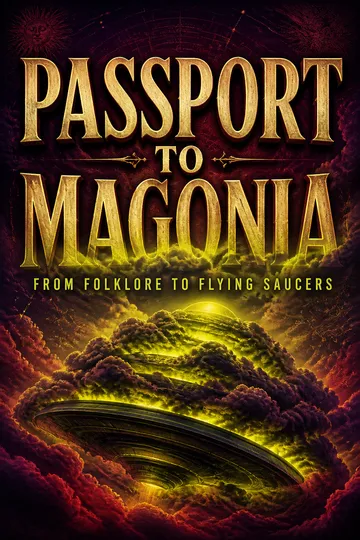
Old stories complicate modern labels. While researching in France, Vallée found accounts of small aerial beings, mysterious lights, and encounters that resembled parts of modern UFO reports. He studied writers such as Paracelsus, who described several kinds of elemental beings, and collected folklore alongside contemporary sightings. His book Passport to Magonia takes its title from a legendary land said to exist above the clouds. Vallée’s proposal is that UFO stories may be a modern form of a much older human encounter tradition.
Culture may shape the costume. In his reading, reports that once described fairies, angels, or spirits can resemble modern accounts of craft and visitors. He did not treat these similarities as proof that every tradition describes the same beings. Rather, they challenge the assumption that all reports should be understood as literal spacecraft from other planets. The comparison opens a question about how culture, expectation, and perhaps an unexplained phenomenon interact.
Folklore studies offer a useful way to compare recurring motifs across cultures, including beings who arrive from the sky or disrupt ordinary life. Such comparison can reveal how people organize unusual experiences into stories their communities recognize. But similar motifs do not establish a shared external cause: stories can spread, converge, or arise from common human concerns. Vallée’s strongest move is to widen the archive of relevant evidence. The comparison becomes less persuasive when treated as proof of a single enduring intelligence.
Protect witnesses from ridicule and from suggestive certainty.
The Hills’ account needed careful handling. Betty and Barney Hill described a frightening encounter in 1961 and later underwent hypnosis with psychiatrist Benjamin Simon. Vallée’s diary notes that other investigators had already discussed missing time, extraterrestrial life, and possible explanations with the couple before Simon began the sessions, roughly two years after the event. The hypnotic recordings preserve intense fear, but the history of the investigation complicates how confidently their later descriptions can be treated as independent memory.
Respect is not credulity. Vallée regards the experience as real to the Hills and potentially important, while questioning whether every remembered detail reflects an external event exactly as described. He criticizes both the dismissal of witnesses as foolish and the tendency of investigators to supply a ready-made alien narrative. His account argues for humane treatment, close documentation, and caution when interviewing people about frightening or poorly remembered events.
Memory research makes this case especially delicate: hypnosis can produce vivid, confident recollections without guaranteeing greater accuracy, and leading questions can shape what people report. That does not mean a witness is lying or that no unusual event occurred. It means investigators should distinguish the original report from later reconstruction, record question wording, and avoid treating emotional intensity as a measure of factual precision. Respectful methods protect both the witness and the credibility of any eventual conclusion.
Build tools that help people ask questions, not merely process data.
Computing changed Vallée’s method. In the 1960s he moved from astronomy into computer science and built Altair, a system that let researchers ask English-like questions of a catalogue of bright stars. He also worked with Infol, a language for managing data without writing a new step-by-step program for every query. These projects grew from the same instinct as his UFO catalogue: organize information so patterns can be examined rather than guessed at.
Technology alone is not progress. Vallée watched French institutions buy computers while resisting new ways to use them. At Shell, colleagues treated computers as number machines and kept relying on manual searches. Even when a system worked, users sometimes returned to old methods because those methods preserved valued skills. His career suggests that innovation depends on people, incentives, and good questions, not just faster hardware.
The episode is an early lesson in human-computer interaction: a tool succeeds only when it fits how people work and gives them a reason to change. A technically elegant system can fail if it threatens expertise, status, or established routines. The same principle applies to scientific databases. Better search can expose patterns and errors, but it cannot repair biased collection or weak definitions. The machine accelerates inquiry; people still decide what to record, compare, and believe.
Revise your theories as eagerly as you defend careful observation.
The diary records correction, not triumph. Vallée first helped investigate orthoteny, then found that simulated data could produce comparable alignments. He became skeptical of photographs he could not document and concluded that reported lunar structures were natural formations, not evidence of artificial domes. He also records moments when his expectations about colleagues, institutions, or the meaning of an event proved wrong. These admissions make the research process visible, including its false starts and emotional costs.
The final position stays open. Vallée ends by arguing that the UFO phenomenon is real, physical, and unexplained, while rejecting certainty about its origin. He believes it may interact with consciousness and recur across history, but presents these as interpretive claims, not settled findings. The journal’s value lies partly in showing how a researcher can preserve an observation, test an explanation, and still leave the central question unanswered.
A scientific memoir is most useful when it exposes not only conclusions but the machinery that produced them: excitement, institutional pressure, failed tests, and revisions. That transparency allows readers to distinguish evidence from the author’s evolving interpretation. Vallée’s eventual confidence that the phenomenon is physical exceeds what the diary’s public evidence can independently establish, so that claim deserves the same scrutiny he applies to official explanations. Intellectual honesty is not certainty; it is a willingness to show where certainty stops.
Analysis
Forbidden Science works as a memoir of research, a history of contested evidence, and a record of an investigator learning how institutions shape what can be known. Its central strength is procedural: the reader watches Vallée move from a childhood sighting to catalogues, computer analysis, interviews, and archival discoveries. Because the narrative keeps his doubts and reversals visible, the book resists the simple story of a lone genius proving aliens or a closed-minded establishment suppressing truth. It is also a portrait of scientific work under imperfect conditions: the crucial data are incomplete, access is uneven, and professional incentives reward safe conclusions.
The book’s most durable contribution is its insistence that unexplained observations deserve methodical attention without being assigned an origin prematurely. Its account of orthoteny illustrates self-correction. Its account of the Pentacle memorandum illustrates why primary documents matter, while also revealing how easily a suggestive document can become the foundation for a much larger inference. The reader should distinguish the existence of the memo as reported in the diary from the author’s speculation about what it means. The same separation applies to witness testimony, hypnosis, and the extraterrestrial hypothesis.
The form itself is evidence and limitation. A private journal preserves mood, conversations, and the uncertainty that polished histories erase. But it is one participant’s record, shaped by incomplete access, memory, and personal conflict. The prose’s intensity conveys the stakes of the search, yet sometimes makes institutional failures seem more coordinated than the evidence establishes. That tension is not a flaw to erase. It is the book’s central epistemic problem: how to remain open to anomalies without turning suspicion into proof. Its lasting lesson is to protect the question from both premature dismissal and premature certainty.
Review Summary
Glossary
Orthoteny
apparent sighting alignmentsAime Michel’s term for the apparent arrangement of UFO sightings along straight lines on a map. Vallée tested proposed alignments by calculating great circles and later simulating fictitious sightings across France. Those simulations showed that striking alignments could arise by chance, weakening the claim that the lines revealed an underlying pattern.
Arnold Phenomenon
neutral UFO labelVallée’s proposed alternative to the loaded popular phrase flying saucer and the broad abbreviation UFO. Named for pilot Kenneth Arnold, whose 1947 report helped popularize the subject, the term was meant to describe the problem without deciding in advance that the objects were spacecraft, illusions, or anything else.
Project Blue Book
U.S. Air Force UFO programThe U.S. Air Force program that collected and assessed reports of unidentified flying objects. Based at Wright-Patterson Air Force Base, it handled public reports and answered inquiries about the Air Force’s attention to the subject. Vallée portrays it as a small program oriented toward military identification and public response, rather than a comprehensive scientific investigation.
Project Stork
Battelle UFO analysis projectThe name associated in Vallée’s account with Battelle Memorial Institute’s work on UFO reports for the Air Force. A 1953 memorandum he found in Hynek’s files referred to analysis of thousands of cases and proposed instrumented observation areas. The diary argues that the work was not fully presented to the Robertson Panel, while acknowledging uncertainty about its wider significance.
Invisible College
informal research networkHynek’s name for the small, unofficial circle of scientists and investigators who met to discuss UFO evidence outside a formal university program. The group included people with different technical and scholarly backgrounds. Its informality allowed speculative discussion and collaboration, but the diary also shows how limited its resources and ability to conduct sustained field research were.
Altair
natural-language star database systemVallée’s system for translating English-like questions into computer operations on a catalogue of bright stars. It answered queries that would otherwise require writing and running a special program. Altair demonstrated how users could retrieve information without knowing the underlying programming language, and it formed part of Vallée’s doctoral work in information retrieval.
Infol
data-base query languageA language for managing and querying large collections of information without requiring users to specify every computational step. Vallée worked with Infol at Shell and wrote a compiler intended to make the system usable on different computers. The diary presents it as an early example of software that let people state what information they needed rather than how to retrieve it.
Magonia
legendary land above cloudsA legendary realm said in old European accounts to exist above the clouds. Vallée used the name for Passport to Magonia, his comparison of modern UFO reports with older stories of aerial beings and unusual encounters. The comparison proposes that cultural traditions may shape how people describe anomalies; it does not establish that all such accounts share one cause.
Extraterrestrial Hypothesis
alien-origin explanationThe hypothesis that UFOs are craft or devices from civilizations originating beyond Earth. Vallée treats it as one possible interpretation, not an established conclusion. He questions whether the reported behavior of objects and occupants fits ordinary ideas of interplanetary travel, and considers alternatives involving dimensions, consciousness, or a phenomenon that does not fit current scientific categories.
About the Author

Download PDF
Download EPUB
.epub digital book format is ideal for reading ebooks on phones, tablets, and e-readers.








