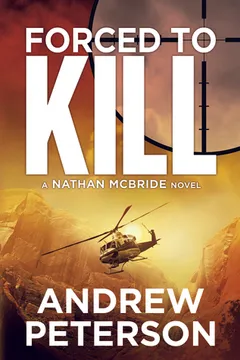


Plot Summary
Three Shots at Tobago
Marine Staff Sergeant Erick Ramsland parachutes into Tobago to seize Juan Montez de Oca, a former Nicaraguan interrogator now living behind cameras, guards, and Dobermans. Ramsland silently incapacitates the dogs, kills three guards, and enters the house. Montez answers with hidden flash-bang grenades, shoots Ramsland, and drugs him for a final interrogation.
Before dying, the Marine reveals that his wife is expecting their first child and insists he spared the dogs. Montez promises they will be cared for, then recognizes the attack as a betrayal by whoever hired the team. His unanswered question is not who tried to kill him, but what they fear he knows.
The opening makes the antagonist legible through contradiction: Montez is meticulous enough to protect his dogs and ruthless enough to kill a trained intruder without hesitation. Ramsland's brief act of mercy becomes a human measure in a world where survival is treated as the only rule. Montez, meanwhile, understands violence as a language of control, yet the attempted capture tells him that someone powerful may be trying to silence him. His next move is driven not simply by greed or cruelty, but by suspicion that his old patrons have turned against him.
The Scar in Holly's File
FBI agent Holly Simpson calls Nathan McBride, a former Marine and covert operative, to Sacramento and shows him a photograph of a man mutilated in the distinctive pattern once carved into Nathan's body.
The corpse, found weighted with chain-link fencing in Lake Powell, belongs to Arthur Kramer, an American commercial attaché connected to a Hungarian energy venture. Nathan recognizes the signature of Montez, who tortured him in Nicaragua fourteen years earlier. The memory threatens to revive the divided, furious self Nathan built to survive captivity.
His closest friend and business partner, Harvey Fontana, steadies him, while Nathan contacts his former commander, General Hawthorne. Nathan chooses to pursue Montez, despite knowing that renewed contact could reopen his worst wounds.
The photograph turns Nathan's past into present evidence: trauma is no longer only an internal memory but a crime scene demanding action. His first response is withdrawal, not heroic certainty, which keeps the decision psychologically credible. Harvey's role is more than companionship; he functions as Nathan's external regulator, someone who can recognize when determination is slipping into destabilization. Holly's decision to involve Nathan also places professional duty beside personal trust. The case begins because the old violence has entered public life again, forcing Nathan to decide whether protecting others requires returning to the conditions that once nearly destroyed him.
Two Hostages, One Trail
As Nathan and Harvey prepare to investigate Kramer, kidnappers seize NSA language specialist Nichole Dalton from a San Diego mall. Her daughters disappear with her, and off-duty Marine Christopher Kiddrich, known as Big Kid, is killed trying to stop the abduction.
Holly connects Nichole's Hungarian expertise to Kramer's work, making a link between the two cases difficult to dismiss. At his hidden base, Montez straps Nichole to a torture table, but quickly makes clear that her job is not what interests him.
He forces her to contact her ex-husband, Duane Dalton, and uses the threat against her daughters to compel his cooperation. Nathan, Harvey, and Hawthorne assemble a discreet search, hoping to find Montez before the family becomes another set of victims.
The kidnapping shifts the investigation from retrospective justice to a live rescue, and Kiddrich's death makes delay carry a human cost. Nichole's professional identity appears to explain her abduction, but Montez's refusal to question her about NSA work destabilizes that first theory. He uses her instead as leverage against someone else, demonstrating that torture in this story is organized around networks of dependency: the captive is often a means of reaching a more valuable target. Nathan's protective concern for children gives the case personal urgency, but it also risks narrowing his judgment and pushing him toward danger before the evidence is complete.
Stiegler's Bent Wire
Nathan, Harvey, and FBI agent Jeremy Duns search the Lake Powell marina after learning that Kramer's body was dumped nearby. Houseboat owner Lars Stiegler has left his slip, but Nathan tracks him to a canyon inlet and persuades him to explain why he believes someone took his boat.
The key is a mooring knot tied in the wrong direction, a spare key replaced backward, and a bent piece of wire that appears to come from chain-link fencing. The evidence points toward the boat used to dispose of Kramer. Holly then supplies the address of a condo belonging to Kramer's brother-in-law. Inside, Nathan and Harvey find plastic sheeting, bloody footprints, and the tools of a prolonged interrogation.
Stiegler's attention to small domestic irregularities gives the investigation its first material foothold. His knot and key matter because he knows his own habits well enough to detect a stranger's almost-correct imitation. The scene also lets Nathan's expertise operate without reducing him to a forceful action hero: observation and reconstruction are as important as weapons. Yet the crime scene carries a psychological charge for him. The blood and tools are not abstract clues; they resemble the world he survived. His inference that the murder became personal is plausible, but the evidence remains incomplete, a reminder that trauma can sharpen recognition while also coloring interpretation.
Four Guns at Clairemont
At Salt Lake City's medical examiner's office, Nathan sees Kramer's body and learns that Kramer was alive when Montez drowned him. The revelation triggers a near breakdown, and Harvey grounds him before they leave.
Later, while Nathan and Holly are together at his Clairemont home, four armed men break in. Nathan hides Holly in an armored kitchen cabinet, then kills three attackers in a close-range firefight while Holly fires beside him. The fourth escapes, but leaves behind a severed finger.
Harvey arrives to help them leave before police flood the scene. Holly is wounded, Nathan suffers a serious head injury, and their pursuers now know where Nathan lives. Their private relationship has been forced into the same dangerous reality as the investigation.
The autopsy changes Kramer's death from a method of disposal into a deliberately extended act of terror, intensifying Nathan's identification with the victim. His reaction shows that survival has not erased the body's memory of captivity. The home invasion then collapses the boundary between private refuge and operational danger. Holly does not remain a protected civilian: she acts under fire, and Nathan's reliance on her becomes practical as well as emotional. At the same time, the attack exposes the cost of their pursuit. The enemy has found Nathan's home, so the investigation is no longer something he can enter and leave at will.
The CIA's Old Bargain
In the hospital, CIA Director Rebecca Cantrell and FBI Director Ethan Lansing reveal that the CIA paid Montez eight million dollars after Nathan's capture in Nicaragua. The deal was meant to stop his interrogation and keep a covert American operation secret, but Montez left Nathan to die. The agencies now fear that killing him could activate a blackmail system exposing the old operation.
They refuse to help Nathan, and Nathan's father, Senator Stone McBride, joins the search through his own contacts. Meanwhile, Holly identifies the dead attackers through a severed finger: it belongs to Julio Ramirez. The match leads Nathan, Harvey, and Grangeland to a Long Beach warehouse linked to Ramirez's brother.
The revelation transforms Nathan's private betrayal into institutional betrayal: the government tried to buy his survival, then accepted a bargain that left him in mortal danger. Cantrell's account is morally compromised but not simplistic. The agency's fear of exposure is entangled with its claim that covert interrogations have prevented attacks. Nathan's distrust is therefore grounded in evidence, yet he cannot simply dismiss the strategic consequences. The severed finger offers a counterweight to political secrecy: a trace of bodily violence that can be verified. The story places official narratives and forensic facts in tension, making the search for Montez also a struggle over who controls the truth.
Long Beach, Open Door
Using a covert camera splice and a staged approach, Nathan, Harvey, and FBI agent Mary Grangeland draw the warehouse guards toward the entrance. Their raid neutralizes four armed men, including Ramirez, and reveals Nichole Dalton alive in a hidden office, injured and terrified for her daughters.
Nathan frightens Ramirez into admitting that a San Diego safe house may hold Montez. Once Nichole is stable enough to answer questions, she identifies her ex-husband, Duane, as the person Montez is really after.
Duane runs Energy Solutions, the same shell company tied to Kramer, and works on overseas power projects. Nichole also recalls a secluded home in Lomas Santa Fe where Duane stayed. The team now has a destination, but the girls remain missing.
The rescue gives the investigation a rare immediate success, but it does not deliver emotional closure: Nichole's first concern is still her daughters. The tactical plan depends on deception, including Grangeland's recorded appearance, making performance a literal tool of survival. Nathan's threat against Ramirez also reveals how easily he can borrow the methods he condemns. His intimidation works, but the scene complicates any clean distinction between just and abusive force. Nichole's testimony supplies the missing personal connection between Kramer and the kidnapping, showing that the apparent energy-company plot is also a family story manipulated through fear.
The House That Exploded
Following Ramirez's directions, Nathan and Harvey approach the San Diego safe house with him as their guide. Montez has anticipated the arrival: the building explodes when Ramirez reaches the door, killing him and destroying the site. Nathan and Harvey escape the blast and realize that the girls may be held elsewhere.
Nichole's memory leads them to a wealthy Lomas Santa Fe property with a white fence, electric gate, brick pavers, and a cut eucalyptus stump. They find guards and a dog dead outside, then discover Duane's bloodied interrogation room. A photograph and a file on a yacht named Lady of the Waves point toward a marina. Before they can close in, Montez escapes in a van with one of Nichole's daughters.
The explosion is both a tactical reversal and a demonstration of Montez's willingness to sacrifice his own men to protect himself. It removes the safest route into the operation while making every surviving clue more urgent. Nichole's sensory memory becomes a form of evidence: she has not seen the house, yet details retained from years of drop-offs let the team locate it. The yacht photograph draws together the story's recurring water imagery, from Kramer's drowning to the disposal plans now threatening the family. Montez's escape with a child turns the pursuit into a moral constraint: Nathan may have a shot, but cannot take it without risking the hostage.
Water Leads to Belmont
Nathan and Harvey race toward the Bahia marina after finding the yacht file, but the Lady of the Waves is already leaving. Nathan swims after it, carrying a knife and pistol, then recognizes a white van near the hotel as the vehicle Montez used. He turns back toward shore. Montez has meanwhile stunned Harvey and prepared to capture Nathan, but Nathan arrives in a stolen van, kills Montez's accomplice Arturo, and cuts Harvey free.
Montez shoots Harvey in the shoulder and flees on foot. Barefoot and bleeding from glass in his own feet, Nathan pursues him through the hotel grounds and toward Belmont Park. The chase becomes a contest of endurance, while sirens close in and both men move through the night injured.
Nathan's decision to swim is an act of desperation shaped by the fear that the yacht carries the hostages, but his return shows intuition overriding fixation. Water has become a physical route, a crime scene, and a trigger for memory. Harvey's capture reverses their familiar partnership: the steady friend is now vulnerable, and Nathan must act without his usual anchor. The injuries make the chase bodily rather than abstract. Nathan's determination is impressive, but the scene also exposes its danger: he is pursuing an old tormentor while exhausted, wounded, and increasingly tempted to let hatred supply the strength his body lacks.
Montez in the Kiosks
Inside Belmont Park, Nathan follows Montez's blood drops and partial footprints, but notices the trail ends too neatly. Recalling a trick from a film, he suspects Montez has doubled back and uses the sound of a ringing phone to find him between souvenir kiosks.
Nathan strikes him down and forces him to order his men to bring the hostages back alive. Montez later breaks free of his restraints, grabs a police officer's gun, and kills a security guard.
When Montez threatens the officer, Nathan fires into the officer's chest to disrupt the hostage hold, then tackles Montez and knocks him unconscious. Nathan puts Montez in a police cruiser and escapes before the responding officers arrive. He has finally captured the man who once controlled his life.
The capture depends on Nathan reading a deliberate lie in the landscape, a reversal of the earlier moments when Montez controlled what others could know. The phone's accidental ring makes technological vulnerability decisive where physical tracking fails. Yet victory remains ethically unstable. Nathan risks an officer's life to stop Montez, then steals a cruiser to avoid losing custody to the police. He does not win through clean procedure; he wins through improvisation under pressure. That distinction matters because the next question is not whether Montez deserves punishment, but whether Nathan can resist turning the capture into a private reenactment of his own torture.
Who Owned Ironclad
With Montez trapped in the cruiser, Nathan learns that Duane Dalton was a contractor for a covert rendition program called Ironclad. Kramer's Energy Solutions served as a front, moving detainees through Hungary to Montez's interrogation site in Tobago.
Montez claims that Senator Alan Kallstrom stood above Duane in the chain, and threatens to expose the operation using Duane's recorded confession. Nathan nearly gives in to the urge to mutilate him, but Holly and Grangeland arrive and confront him with the person he is becoming. Nathan drops his knife.
Grangeland knocks Montez unconscious, and the team secures him. At a plastic surgeon's office, Nichole is reunited with her daughters. Cantrell later explains that Ironclad was privately funded by the Kallstrom family and used to interrogate captured terrorists.
The conspiracy widens the moral frame without absolving its participants. Ironclad's secret work was justified by officials through threats it allegedly prevented, while its machinery depended on contractors, euphemistic fronts, and a torturer already known to the government. Nathan's near-violence echoes the system's logic: a person can claim necessity while crossing boundaries that cannot be uncrossed. Holly's intervention is not simply romantic reassurance; she makes Nathan answer to a relationship and identity outside the cycle of retaliation. The reunion of Nichole and her daughters provides a concrete counter-image to the program's abstractions: the people endangered by secrecy are not theoretical casualties.
Behind the Two-Way Mirror
Cantrell tells Nathan that Montez's interrogations produced intelligence used to disrupt terrorist plots, including an attempted attack on a football stadium. She also reveals that CIA officers broke Montez through humiliation and sleep deprivation, without the physical torture he inflicted on others.
Nathan and Harvey then travel with Hawthorne to Guantanamo Bay, where they observe Montez in custody through a two-way mirror. His hair is gone, his hands are chained, and the self-command he once wielded has collapsed into a prisoner's silence.
Nathan feels pity alongside anger. Back in California, he and Holly return to his La Jolla home. Holly questions the life Nathan chose as a Marine and operative, while he admits how deeply that work shaped him. At last, he sleeps beside her without retreating to the floor.
The prison visit refuses a simple revenge ending. Nathan sees Montez stripped of authority, but feels pity rather than triumph, recognizing that punishment cannot undo either man's history. Cantrell's account of prevented attacks complicates the reader's judgment of Ironclad, yet the novel does not make efficacy equivalent to innocence. Nathan's final conversation with Holly shifts the question from what he did for a living to whether that work exhausts his identity. His choice to accept intimacy and rest is modest, not curative. The ending's emotional resolution is embodied in sleep: he can finally surrender vigilance in a place where another person is trusted to remain.
Analysis
Forced to Kill builds its thriller around a conflict between necessary action and the danger of becoming shaped by that action. Nathan's training makes him effective, but the story repeatedly shows that competence does not protect him from trauma, grief, or moral compromise. His body remembers what his conscious mind would rather contain: Montez's methods return through scar patterns, forensic evidence, and the sight of a man drowned alive. Harvey helps Nathan regulate that history, while Holly asks him to answer for what he chooses to do with it.
The political plot complicates any easy division between good institutions and bad individuals. Ironclad's secret interrogations are defended as a source of intelligence that prevented attacks, yet the program relies on hidden funding, private contractors, false business fronts, and a torturer whose brutality was known and exploited. The book neither treats security claims as self-evidently false nor allows them to cancel the people harmed in their name. Instead, it places strategic consequence beside personal cost and leaves the reader to confront how secrecy can make accountability almost impossible.
Water, scars, and recorded testimony connect separate strands of the story. Each begins as a practical clue or physical trace, then becomes a reminder that violence leaves evidence even when institutions try to bury it. The most consequential choice belongs to Nathan, not the government: he can retaliate against Montez, but doing so would repeat the logic of domination that defined his captivity. His refusal is not a clean cure or a claim that anger has vanished. It is an act of self-government, supported by relationships that give him reasons to imagine a life beyond vigilance. The ending's quiet domestic image matters because it makes rest, trust, and ordinary intimacy concrete outcomes rather than abstract promises.
Review Summary
Forced to Kill is highly rated, with readers praising its fast-paced action, suspense, and character development. Many appreciate the exploration of Nathan McBride's past and his PTSD. The book delves into McBride's pursuit of his former torturer, Montez de Oca. While some find the violence disturbing, most enjoy the thrilling plot and witty dialogue. Readers commend Peterson's research and writing style, though a few note repetitive elements. Overall, fans of action thrillers find it engaging and look forward to continuing the series.
Characters
Nathan McBride
Scarred former operativeNathan is a former Marine scout sniper and CIA operations officer whose body and habits bear the history of captivity in Nicaragua. He is observant, disciplined, and deeply protective of people in danger, especially children. His training makes him effective under pressure, but his trauma has also left him vulnerable to rage and a divided sense of self he calls the other. Nathan relies on Harvey's steadiness while guarding his independence, and his growing bond with Holly challenges his belief that intimacy will only expose others to harm. His central struggle is not whether he can defeat an enemy, but whether he can keep the enemy's violence from defining who he becomes.
Harvey Fontana
Nathan's steady partnerHarvey, usually called Harv, is Nathan's closest friend and business partner at First Security. A former Marine and CIA operations officer, he shares Nathan's skills and past but tends to serve as the more cautious planner. His friendship is expressed through practical care: he watches Nathan's mental state, challenges reckless decisions, and stays beside him when an investigation turns dangerous. Harv has a wife and sons, so the risks of the mission reach beyond his own life. His loyalty is neither blind nor passive; he is willing to argue with Nathan because preserving their partnership matters more than simply agreeing with him.
Holly Simpson
FBI chief and confidanteHolly is the special agent in charge of the FBI's Sacramento field office. A capable investigator with political and organizational responsibilities, she connects the Lake Powell murder to the kidnapping and supports Nathan without pretending his past is harmless. She has endured a bombing at her office and lives with a cane, but does not let physical injury erase her professional authority. Her relationship with Nathan grows through honesty about fear, loneliness, and the limits each has placed on intimacy. Holly's compassion is active rather than sentimental: she can comfort Nathan, challenge his self-image, and insist that his choices carry consequences for the person she loves.
Juan Montez de Oca
Master of coercionMontez is a former Sandinista colonel who rebuilt his wealth and status after fleeing Nicaragua. A practiced interrogator, he treats fear, humiliation, and carefully controlled pain as instruments for extracting information and establishing dominance. His courtesy toward victims can coexist with extreme cruelty, making politeness part of his control rather than evidence of restraint. Montez is patient, strategic, and intensely concerned with protecting himself from betrayal. His past connection to Nathan gives their conflict unusual intimacy: he knows the methods that once broke Nathan's body and believes he understands the man those methods created.
Nichole Dalton
NSA translator and motherNichole works from home as an NSA language specialist, translating communications from Eastern Europe. Divorced and raising two daughters, she values their security and has built a comfortable life through her professional skills and financial independence. Her past marriage to Duane remains a guarded part of her history because his work required secrecy. When danger reaches her family, Nichole's fear is inseparable from her determination to protect her children. She is not an intelligence operative, but her careful memory of places, routines, and details becomes important to the investigation. Her experience exposes how easily a private citizen can be used as leverage in conflicts conducted far beyond her knowledge.
Duane Dalton
Secretive energy contractorDuane is Nichole's ex-husband and the father of her daughters. A former Air Force officer, he now runs a construction management business focused on overseas power projects. He keeps his work and personal life carefully separated, leaving Nichole with little understanding of his professional world and few ordinary ways to contact him. His distance from his family is a source of hurt, even as his secrecy is presented as protection. Duane's connection to Energy Solutions places him at the intersection of private contracting, intelligence work, and family obligation.
Stone McBride
Senator and Nathan's fatherStone is Nathan's father, a decorated former serviceman and influential United States senator who chairs a committee concerned with domestic terrorism. Their relationship has been strained, partly by the secrecy surrounding Nathan's service and the consequences it carried. Stone is politically powerful but also openly worried about his son, and his support gives Nathan access to information that ordinary investigators cannot reach. He must balance paternal loyalty against the possibility that his involvement could damage his office or expose national secrets.
Mary Grangeland
FBI forensic field agentGrangeland is an FBI agent with advanced forensic training and a strong record in field operations. She has survived a serious injury in earlier work and approaches danger with discipline rather than bravado. She respects Nathan and Harvey while remaining willing to question their decisions, especially when their pursuit threatens to eclipse the needs of a victim. Her competence includes evidence, tactical planning, and care for people in shock. She is a trusted colleague whose judgment helps keep the mission from becoming only a private contest between Nathan and Montez.
Rebecca Cantrell
CIA director under pressureCantrell directs the CIA and must manage the consequences of a covert program that predates her current authority. She wants Montez captured alive because she fears the exposure of government secrets and knows the intelligence he may hold. Her position makes her both an obstacle and a potential ally to Nathan: she limits what she can disclose, but is unwilling to use lethal force against him when ordered to secure Montez. Cantrell's defining tension is institutional loyalty against personal ethical boundaries.
General Robert Hawthorne
Nathan's former commanderHawthorne, known as Thorny, once commanded Nathan and Harvey during their covert service and later becomes commandant of the Marine Corps. He understands their abilities and the history they carry, so he trusts them with a mission that official channels cannot openly support. His military discipline is matched by a personal loyalty to his former men. When senior officials order him to withdraw, he complies with the chain of command while continuing to watch events and offer advice.
Arthur Kramer
Attaché tied to Energy SolutionsKramer is an American commercial attaché assigned to Hungary and associated with a clean-coal venture. He has no close family life in the account, and his business appears to be a small, opaque company with influence beyond its public face. His murder supplies the first concrete link between Montez and a new American investigation. Medical evidence and the crime scene reveal the deliberate method used against him, while his professional connections gradually expose a wider clandestine network.
Lars Stiegler
Houseboat owner and witnessStiegler is a retired Army helicopter pilot who lives aboard a carefully maintained houseboat on Lake Powell. Blunt, proud, and observant, he knows his boat's routines well enough to recognize that someone has used it and returned it imperfectly. His attention to a changed knot, a reversed spare key, and a fragment of fencing gives the investigators a crucial lead. Though suspicious of law enforcement, he respects competence and is willing to help once Nathan approaches him directly.
Christopher Kiddrich
Marine who intervenesKiddrich, nicknamed Big Kid, is an off-duty Marine military police officer who sees Nichole Dalton being abducted at a shopping mall. He acts without waiting for help, despite being wounded and outnumbered. His attempt to stop the kidnapping shows the instinctive courage that makes him memorable, while the loss of his life gives the case an immediate human cost.
Erick Ramsland
Marine sent after MontezRamsland is a Marine staff sergeant sent by an unidentified employer to capture Montez alive in Tobago. Highly trained in airborne insertion and covert movement, he plans carefully and avoids killing the Dobermans guarding the property. His brief encounter with Montez establishes that the interrogator has powerful enemies and that even a disciplined operation can fail against a prepared target.
Senator Alan Kallstrom
Political link to IroncladAlan Kallstrom is a wealthy senator whose family has deep connections to national security and intelligence work. His name emerges through Montez's account of the covert program, placing political authority near the private contractors who supported it. Kallstrom represents the way an operation can pass through layers of intermediaries, leaving responsibility difficult to locate even when its consequences are severe.
Samuel Kallstrom
Former CIA directorSamuel Kallstrom is a former CIA director associated with the earlier decisions that allowed Montez to continue operating. He has longstanding ties to senior intelligence officials and knows the risks of exposing covert programs. His influence and experience place him among the custodians of the secrets Nathan is trying to uncover.
The Dalton daughters
Sisters caught in dangerNichole and Duane's two young daughters are the emotional center of the kidnapping plot. Montez uses their vulnerability to pressure their parents, while Nathan's concern for children shapes his decisions throughout the pursuit. The girls are not given separate narrative arcs, but their safety makes the conflict more than a contest over information or revenge.
Plot Devices
The diamond scar pattern
Links past violence to presentThe repeated crisscrossed wounds identify Montez's method and connect Nathan's captivity in Nicaragua to Kramer's murder. The pattern turns Nathan's body into evidence, so his private history becomes the key to recognizing a public crime. It also carries a psychological function: every new sight of the cuts threatens to reactivate the hatred that helped Nathan endure torture. The marks therefore advance both the investigation and Nathan's internal conflict. They are not merely a signature left by a killer; they are the visible boundary between what Nathan survived and what he fears he might become.
Lake Powell's water trail
Connects crimes and locationsWater recurs in the disposal of Kramer, the stolen houseboat, the yacht file, and Nathan's pursuit through Mission Bay. The lake initially appears to be an arbitrary dumping ground, but boat details and forensic evidence make it a route into the crime. Later, Nathan recognizes that water links Montez's choices and uses that pattern to identify the yacht. The motif is also physical and psychological: Kramer's drowning recalls Nathan's own helplessness, while Nathan's swim places him at risk as he tries to prevent another disposal. Water serves as clue, threat, and memory trigger.
The severed finger
Turns an ambush into a leadAfter the attack at Nathan's Clairemont home, the escaping mercenary leaves behind a severed finger. Holly's investigators recover a fingerprint match to Julio Ramirez, an associate linked to the Long Beach warehouse. A single bodily trace therefore converts an otherwise anonymous assault into a searchable identity and gives Nathan's team a target they can reach without launching a broad public operation. The finger also reverses the violence of the attack: the mercenary's injury becomes evidence against the people who came to kill Nathan. The clue is useful because it is physical, specific, and independently testable.
The thumb drive
Makes secrecy a hostageMontez records Duane Dalton's confession and keeps it on a thumb drive, claiming that copies or its contents can expose the covert program behind his work. Its presence changes the stakes of capture: Montez is not only a murderer with intelligence, but a possible source of political scandal. Nathan must weigh personal revenge against the danger of releasing evidence that could damage agencies and officials. The device makes information function like physical leverage, much as the kidnapped family does. It also keeps uncertainty alive, because Nathan must judge whether Montez is telling the truth about the recording's reach and importance.
The other
Externalizes Nathan's trauma responseNathan calls the rage-filled state that emerged during his torture the other. It helped him psychologically survive the bullwhipping and later resurfaces when he confronts evidence of Montez's cruelty or chases him through pain. The term gives Nathan a way to distinguish a survival response from the values he wants to live by, but it also risks making that response seem like a separate person beyond his responsibility. The story tests that distinction when Nathan has Montez at his mercy. His choice to put down the knife does not erase the rage; it shows that he can experience it without obeying it.
Download PDF
Download EPUB
.epub digital book format is ideal for reading ebooks on phones, tablets, and e-readers.








