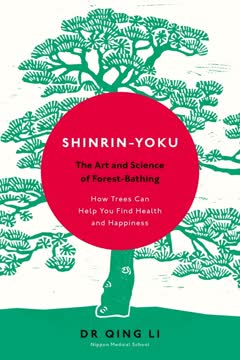
Key Takeaways
1. Shinrin-Yoku: An Ancient Practice for Modern Stress
Shinrin in Japanese means ‘forest’, and yoku means ‘bath’. So shinrin-yoku means bathing in the forest atmosphere, or taking in the forest through our senses.
Innate connection. Humans possess an ancient, intuitive connection to nature, a concept known as biophilia, which is fundamental to our health and well-being. However, modern urban living, characterized by constant screen exposure, crowded environments, and high stress, has increasingly severed this vital link, contributing to a global health epidemic of anxiety and depression.
Urban disconnect. Spending 90-93% of our time indoors and navigating densely populated cities disconnects us from nature's rhythms, leading to technostress, mental fatigue, and various physical ailments. This profound urban disconnect underscores the urgent need for practices that can restore our natural balance and rejuvenate our minds and bodies.
Restorative power. Shinrin-yoku, or forest-bathing, offers a simple yet profound solution: a mindful immersion in the forest atmosphere through all five senses. It is not about exercise or hiking, but a deliberate practice to de-stress, relax, and reconnect with our true selves, allowing our nervous system to reset and our innate healing capacities to activate.
2. The Scientific Validation of Forest Medicine
Until recently, however, there was little scientific evidence to support what we have always known innately about the healing power of the forest.
Empirical evidence. What began in Japan in the early 1980s as an intuitive idea for healing and forest protection has evolved into a scientifically validated field of "forest medicine." Initial observations of improved mood and energy from forest walks paved the way for rigorous scientific investigations into nature's therapeutic effects.
Measurable benefits. Dr. Qing Li's pioneering research, starting in Iiyama city, Japan, provided the first scientific proof of forest-bathing's profound health impacts. Studies consistently demonstrate that time in nature significantly:
- Boosts the immune system by increasing natural killer (NK) cell activity.
- Increases energy levels and reduces fatigue.
- Decreases negative emotions like anxiety, depression, and anger.
- Lowers stress hormones such as cortisol and adrenaline.
- Reduces blood pressure and balances the autonomic nervous system.
Lasting effects. These health benefits are not merely temporary; a three-day, two-night forest-bathing trip has been shown to increase natural killer cell activity for as long as 30 days. This suggests that a monthly forest visit can be sufficient to maintain a robust immune system and sustained well-being, leading to the establishment of certified forest-therapy bases across Japan.
3. Phytoncides: The Invisible Healing Power of Trees
Could it be that breathing in the forest’s natural aromatherapy – the plant chemicals known as phytoncides – is what was providing this huge boost to the immune system?
Tree's defense. Phytoncides are natural oils released by trees as part of their defense system against bacteria, insects, and fungi, and also for communication among trees. These volatile organic compounds, particularly terpenes like D-limonene (lemony) and alpha-pinene (piney), are the primary components that give forests their distinctive, healing fragrance.
Immune boost. Research has confirmed that inhaling phytoncides significantly increases the activity and number of natural killer (NK) cells, which are crucial white blood cells that attack and kill virus-infected cells and tumor cells. This boost in anti-cancer proteins like perforin and granzymes suggests a powerful anti-cancer effect derived directly from exposure to the forest atmosphere.
Mood and stress. Beyond their profound impact on immunity, phytoncides also significantly influence mood and stress levels. Studies show they:
- Stimulate pleasant moods and reduce feelings of tension, anxiety, and anger.
- Lower blood pressure and heart rate, promoting physiological relaxation.
- Suppress the sympathetic ("fight or flight") nervous system and enhance the parasympathetic ("rest and recover") system, bringing the body into balance.
- The citrus fragrance of D-limonene, for instance, has been shown to be more effective than antidepressants for lifting mood in patients with mental-health disorders.
4. Beyond Phytoncides: Soil, Sight, and Sound
There is no medicine you can take that has such a direct influence on your health as a walk in a beautiful forest.
Soil's secret. The forest's healing power extends to the very ground beneath our feet. Breathing in Mycobacterium vaccae, a common and harmless soil bacteria, has been shown to act like an antidepressant, improving mood, energy, and cognitive function by stimulating the immune system. This earthy smell, known as geosmin, often intensified after rain (petrichor), connects us to ancient instincts for finding food and water.
Visual therapy. Our eyes, often strained by urban greys and the blue light from digital screens, find profound rest and rejuvenation in nature's vibrant greens and blues. The magical "komorebi" (sunlight filtering through leaves) and the natural fractal patterns found in trees, clouds, and water are scientifically proven to reduce stress by as much as 60%. These awe-inspiring sights foster prosocial behavior, transform negative emotions, and restore our capacity for clear thinking.
Sonic landscape. Natural silence, an increasingly endangered resource, is in fact a constant, wondrous symphony of birdsong, rustling leaves, and flowing water. Studies show that listening to nature sounds, particularly birdsong and the murmur of water, decreases the "fight or flight" response, increases the "rest and recover" system, and improves concentration, making us more relaxed and cognitively refreshed.
5. Mastering Shinrin-Yoku: A Sensory Immersion Guide
The art of forest-bathing is the art of connecting with nature through our senses.
Mindful presence. To effectively practice shinrin-yoku, one must intentionally slow down, leave all digital distractions behind, and allow the body to guide the experience. It's about aimless wandering, savoring the present moment, and letting nature enter through every sense without a specific destination or goal, fostering a deep connection.
Sensory engagement. The core of forest-bathing lies in consciously engaging all five senses:
- Listen: Tune into the subtle sounds of birdsong, the breeze rustling leaves, or the trickling of water.
- Look: Observe the myriad shades of green, the interplay of sunlight and shadows (komorebi), and the intricate fractal patterns in nature.
- Smell: Inhale the therapeutic fragrance of phytoncides, the damp earth (geosmin), and the refreshing petrichor after rain.
- Taste: Savor the freshness of the forest air, and if safe, wild foods (sansai) or forest-brewed teas.
- Touch: Feel the texture of tree bark, the coolness of stream water, or the sensation of bare earth (grounding) beneath your feet.
Personalized experience. While trained guides can facilitate the experience, self-guided practice is equally effective. Seek out a comfortable spot that resonates with you, perhaps evoking cherished childhood memories or offering specific sensory delights like waterfalls, which are rich in invigorating negative ions. Activities such as slow walking, gentle yoga, meditation, or even foraging for local "sansai" (wild mountain vegetables) can deepen your connection, but always prioritize safety when identifying edible plants.
6. Integrating Nature: From Forest to Home and Office
If you can’t get outside for shinrin-yoku, you can bring the forest into your home with essential oils.
Indoor greening. Even when a forest is out of reach, nature's benefits can be brought indoors. Houseplants significantly improve indoor air quality by absorbing carbon dioxide and harmful toxins, releasing oxygen, and increasing humidity, which helps deter respiratory illnesses. NASA's list of top air-purifying plants, including peace lilies and snake plants, are ideal for creating healthier living and working environments.
Aromatic sanctuary. Essential oils, particularly those derived from conifers like hinoki, pine, and spruce, can effectively recreate the forest's therapeutic atmosphere at home. Diffusers, reed diffusers, or even cedarwood shavings release beneficial phytoncides, which reduce stress, boost immunity, and aid in achieving restful sleep. These natural aromas offer a powerful, direct method of aromatherapy, transforming indoor spaces into calming sanctuaries.
Workplace wellness. The office, where many spend a significant portion of their waking hours, also benefits immensely from nature integration. Plants boost morale, reduce sick leave, and enhance concentration. Listening to nature sounds, taking "green micro-breaks" by gazing at natural scenes or photographs, and even using grounding mats can combat technostress, improve productivity, and foster a more positive and healthy work environment.
7. Urban Forests: Essential for City Health and Well-being
Trees in the city are just as important for our health as trees in the countryside – maybe even more important.
Urban lungs. City trees are a critical component of urban infrastructure, acting as natural air purifiers by absorbing pollutant gases like carbon monoxide and filtering out particulate matter, which contribute to respiratory and cardiovascular diseases. They also effectively mitigate the urban "heat island" effect, cool the air, and manage stormwater runoff, providing indispensable ecological services.
Mental oasis. Beyond their physical benefits, urban green spaces are vital for psychological and emotional well-being. Studies show that living near trees reduces anxiety and depression, with these positive effects often lasting longer than short-term boosts like a pay rise. Research indicates that higher tree density correlates with fewer antidepressant prescriptions and can make city residents feel both richer and younger.
Global initiatives. Cities worldwide are increasingly recognizing this importance, with initiatives like Tokyo's "Green Tokyo" project aiming to plant millions of trees and Singapore's ambitious goal for 85% of its residents to live within 400 meters of a green space. Innovative projects, such as converting disused railways into "Skygardens" or "Green Corridors," are transforming urban landscapes, demonstrating that even in dense megacities, a thriving urban forest is achievable and essential for public health.
8. The Future of Forest Medicine and Preservation
Our health and the health of the forest go hand in hand.
Interconnected destiny. Forests, covering 31% of the world's land and storing over a trillion tonnes of carbon, are indispensable for human existence, providing oxygen, clean water, food, and shelter. The alarming rate of deforestation—15 billion trees lost annually—directly threatens human health, underscoring the critical link between ecological well-being and our own survival.
Global movement. Recognizing this profound interdependence, international efforts like the UN's International Year of Forests and International Forest Day aim to strengthen our connection to trees and promote global conservation. Governments worldwide are increasingly investing in forest medicine, with South Korea's National Forest Therapy Centre and "green prescription" schemes in New Zealand and America leading the way in integrating nature into public health strategies.
Children as stewards. The "nature deficit disorder" in children, linked to behavioral issues, depression, and physical health problems, highlights the urgency of reconnecting youth with nature. Forest kindergartens and outdoor education foster resilience, creativity, and a deep love for the natural world. By allowing children to play and learn in forests, we cultivate future generations who will inherently understand the importance of, and actively protect, these vital ecosystems.
Last updated:





