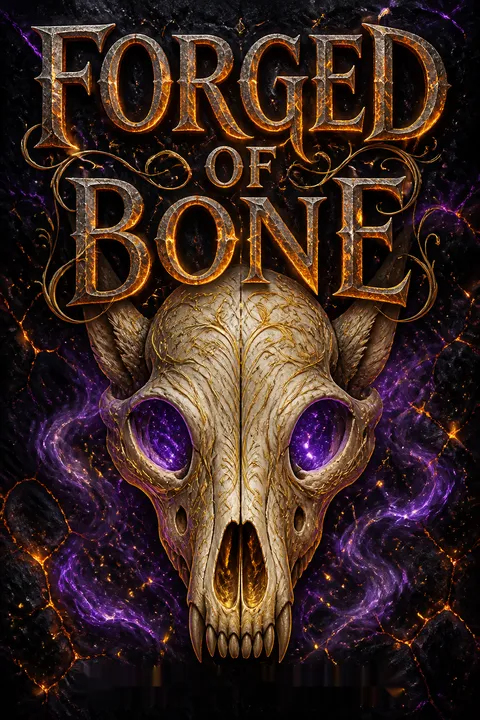


Plot Summary
The Prince at the Portal
Days after Jakub’s ritual killed her wolf and shattered her mate bond with Kaillen, Tala returns to the Supernatural Forces office with her twin, Tessa, and the hunter. A newly opened turquoise portal has drawn an unknown visitor into Earth, and Tala fears the stranger may be seeking her.
In Jakub’s warehouse, Malikhi steps out of the portal, recognizes the starry tattoo at Tala’s throat, and addresses her as royalty. His magic answers hers when she reaches out to test him, confirming that they share a power unlike anything the SF has encountered. Malikhi hands her a sealed scroll from Queen Nameena, then vanishes through the portal before Tala can question him. The message summons Tala to Lunaris.
The opening turns Tala’s recent bodily loss into a political vulnerability. Her dead wolf has severed the bond that once joined her to Kaillen, while the tattoo and unfamiliar magic mark her as legible to a power she does not understand. Malikhi’s recognition makes identity feel less like private self-knowledge than something other people can claim and interpret. Tala still acts from her own judgment, testing his magic and demanding answers, but the royal title arrives before she can decide what it means. Her old crisis has become a new one: the question is no longer only what happened to her, but who believes they have a right to her.
A Door That Must Close
Tala reads Nameena’s invitation as a threat: she must travel to the Lunarian Palace within two weeks, and Malikhi will return if she refuses. She demonstrates her awakening magic by draining and restoring Corporal Charlotte Morris’s strength, showing the SF that a Lunarian could devastate its squads.
Tala argues that Jakub, imprisoned for opening the portal, may know how to close it. Commander Klebus cannot let civilians into the maximum-security prison, so Tala and Kaillen accept consultant contracts with the SF, bargaining their commitment down to one year.
The arrangement gives them access to Jakub, but binds them to the organization’s rules and future assignments. Kaillen agrees because keeping Tala safe matters more to him than his independence.
Tala’s decision reframes apparent surrender as tactical responsibility. She does not accept the invitation, but neither does she treat refusal as consequence-free when the threat could reach everyone guarding the portal. Her demonstration makes the danger concrete, yet it also exposes the moral ambiguity of her own power: the same force that can kill can be controlled and returned. Kaillen’s contract negotiation matters because it converts devotion into an institutional cost. He gives up a measure of freedom, while Tala accepts obligations she would ordinarily resist. Their bond is damaged, but their behavior already shows a form of partnership that does not depend on the wolf recognizing it.
Jealousy Meets the Sprites
Tala’s ex-boyfriend, Carlos, asks her to dinner, and Tessa sees a chance to provoke Kaillen’s possessive instincts. Kaillen bristles when he learns of the plan, though Tala insists she only wants to end things face to face.
At the SF, Carlos approaches them and invites Tala to sushi; she accepts partly to test Kaillen’s reaction. The newly hired consultants then travel to the fae lands, where forest sprites ambush them before they reach Jakub’s prison.
Tala kills the attackers with her awakening magic, while Kaillen burns others with black fire. Seeing her fight reminds his wolf that Tala is powerful enough to stand beside him. His reaction offers her hope, but his instincts remain confused, and he still cannot fully accept her as his mate.
The book links romantic jealousy to a more basic question of recognition. Kaillen’s wolf is not persuaded by Tala’s assurances that she is still herself; it responds when she demonstrates the strength that once made her a worthy mate. That is a troublingly physical proof, but the scene also lets Tala reclaim competence after her transformation has made her feel diminished. Carlos becomes a catalyst rather than a true rival: his presence exposes Kaillen’s attachment, while the sprite attack reveals what Tala can do without her wolf. Neither jealousy nor combat repairs the bond by itself. They provide evidence that the old relationship still has roots.
Jakub Names the Heir
At the prison, Kaillen hides an illegal truth-compulsion spell beneath an illusion that deceives the guards and cameras. Jakub reveals that Tala is descended from the Bone Eaters, a royal Lunarian line whose power can drain or amplify other magic. An ancient sorcerer’s family, bound by a promise to find a lost princess, passed this knowledge to Jakub; he used a descendant of that princess as the key to open the portal.
Tala is that descendant. Jakub believes the Lunarians will reward him, but he cannot explain how to close the portal. His account links the queen’s summons to an old search for a vanished royal, and it sends Tala and Kaillen to the Bulgarian libraries for answers.
The revelation makes ancestry a mechanism of coercion. Tala’s power is not simply a gift that makes her exceptional; it is the reason Jakub could use her and the reason Lunaris now claims her. The lost princess’s story turns family history into an unfinished transaction, preserved by a guild and exploited across generations. Kaillen’s spell gives the couple the information they need, but it also shows how readily they step outside the law when institutions cannot move quickly enough. Jakub’s confidence in his promised reward exposes the same transactional logic at work in him: people become keys, debts, and instruments.
Sushi, Then the Wolf
At dinner, Tala tells Carlos that she has moved on and will not restart their relationship. Kaillen, who has secretly tracked them, appears when Carlos questions whether his rival has bewitched her. He stops Carlos from grabbing at Tala, and the conversation ends with Carlos leaving angry and rejected. Kaillen then takes Tala to his Montana home, where they attempt to recover their intimacy.
His wolf interrupts, mistaking Tala for an impostor and hurling her into a wall. A healing potion clears her injury, but Kaillen is devastated by what happened. His wolf’s guilt becomes a small sign of recognition, and the incident strengthens Tala’s resolve to seek a way to restore their bond while the Lunarian deadline closes in.
The restaurant scene settles one relationship honestly, even as it exposes the messiness of how Tala reached that honesty. She had used Carlos’s interest to provoke Kaillen, but she does not let the tactic become a false promise: she tells Carlos clearly that the relationship is over. Kaillen’s intervention is protective and possessive at once, a distinction the story leaves deliberately uncomfortable. At home, the wolf’s violence makes the cost of their fractured bond literal. Yet his remorse matters: unlike indifference, guilt recognizes that Tala has been harmed. The relationship can move forward only if that recognition becomes safer behavior, not merely a more intense claim.
The Archive and the Dance Floor
In Bulgaria’s Phantasia library, vampire representative Nicholas and gargoyles uncover records of a lost Lunarian princess who fled to Earth and a guild created to find her. The texts confirm Tala’s descent but do not yet explain how the portal was closed.
That evening, Kaillen’s friend Barnabas deliberately dances and kisses Tala to provoke his friend’s mating instincts. Kaillen’s jealousy breaks through his wolf’s resistance; he pulls Tala from the dance floor, and they have sex in an alley.
His wolf begins to recognize her again, and their bond edges toward repair. The moment is interrupted by Commander Klebus, who reports that Malikhi has returned. Because time passes faster in Lunaris, the prince believes Tala’s two-week deadline has expired.
The library gives Tala a historical identity, while the dance floor gives her a relational one: she is both heir to a vanished princess and the woman Kaillen still wants. Barnabas’s intervention is affectionate but ethically reckless, using Tala’s body and a vampire’s sexual influence as instruments in another person’s emotional repair. The method works, which complicates any easy distinction between manipulation and care. The scene’s sudden turn from reclaimed intimacy to Malikhi’s return also makes time itself an antagonist. The couple has recovered a measure of closeness, but the political clock has been running at a speed they did not understand.
A Palace Built for Breeding
Tala, Kaillen, Tessa’s friend Prisha, Barnabas, and Fallon enter Lunaris with Malikhi, but the royal family’s welcome becomes a trap. At a formal meal, Queen Nameena announces that Tala is expected to marry Malikhi and bear heirs. When Kaillen tries to take Tala away, Nameena attacks him with the same tentacle-like magic that killed Tala’s wolf.
Tala recognizes the queen as the power behind that earlier assault. The group escapes through a portal key, leaving Lunaris before an hour has passed on Earth. Back at the SF, they learn Malikhi is already threatening to kill people unless Tala returns. Tala chooses to go back, but insists that her friends accompany her; Klebus secretly gives them portal keys.
The palace turns a courteous invitation into a reproductive sentence. Nameena does not seek Tala as a person or even primarily as a political ally; she values the inherited power and fertility she believes Tala can provide. The revelation retroactively connects the royal mission to the earlier death of Tala’s wolf, making the queen’s attention personal as well as dynastic. Kaillen’s attempt to rescue Tala expresses love, but it also risks triggering the violence she is trying to prevent. Tala’s choice to return is therefore not consent to the royal plan. It is a decision made under threat, shaped by her determination to keep others from paying for her refusal.
Tessa Takes the Crown
On her return to Lunaris, Tala learns from her attendant Geriam that the royal family has been drinking from the Well of Souls to prolong their lives. The other Bone Eater families have died out, and the queen expects Tala to produce seven daughters so their preserved seed can rebuild the royal line.
Tala understands why her ancestor fled and why the queen is desperate. Knowing she cannot investigate while confined to etiquette lessons and courtship, Tala accepts Tessa’s offer to take her place.
SF sorcerers give Tessa Tala’s eyes and tattoo through a glamour and conceal a portal key on her body. Tessa assumes the role of reluctant princess, while Tala returns to Earth and joins Kaillen, Prisha, Fallon, Barnabas, and Nicholas in the search for a portal-closing spell.
Tala’s understanding of her ancestor shifts from distant curiosity to embodied recognition. The royal crisis is real, but its proposed solution would reproduce a system in which women’s bodies are state property and daughters inherit the same obligation. Tessa’s substitution challenges the assumption that Tala alone must carry every danger simply because she is the stronger twin. Their exchange is not a simple rescue: Tala entrusts her sister with a dangerous role, and Tessa accepts it as an assertion of competence. For Tala, the decision marks a difficult movement from protective control toward trust, while the glamour makes identity itself a tool that can be worn, borrowed, and risked.
Twelve Spears of Power
After Tessa’s return buys them time in Lunaris, the library team finds the spell Princess Heathermore used to close the original portal. One version requires killing hundreds; another can draw safely from twelve powerful volunteers.
The SF database identifies only seven eligible supernaturals beyond Kaillen, while Prisha, Fallon, and Barnabas volunteer their strength. Kaillen proposes the underworld as their remaining source of power: his mother, Asuran, is stronger than he is.
He and Tala travel there, where Asuran agrees to help in exchange for a human sacrifice. Kaillen offers Cameron, his estranged brother, as payment. When the pair return with Asuran, Tessa uses her concealed portal key to escape Lunaris and rejoin her sister just before the closing spell begins.
The spell forces Tala to confront the difference between a technically possible solution and a morally acceptable one. Heathermore’s method would make survival depend on mass sacrifice; Tala instead needs consent, but the required power is scarce. Her search leads to Asuran, whose help is not benevolent but bargained for with another person’s life. Kaillen’s willingness to offer Cameron reveals how his ethics remain bound to vengeance and loyalty rather than universal principle. Tessa’s escape completes the parallel bargain: she has risked herself to buy time, then chooses the moment to leave. The group’s plan rests on voluntary power, but it is built inside a world where almost every alliance carries a price.
The Last Inch Closes
Tala takes her place before the portal while twelve volunteers channel their power through spears. She draws on Kaillen, Asuran, and the others, forcing the turquoise opening shut inch by inch. Nameena and Malikhi attack from the far side, trying to tear it back open. Malikhi reaches through, but Asuran grabs him and wounds his face before hurling him back into Lunaris.
The volunteers begin collapsing, and SF members take their places so Tala can continue. Just as the portal is almost sealed, Nameena’s magic pierces Tala’s abdomen. Tala closes the final gap, but the spell ends with her bleeding out on the chamber floor. Kaillen pours his own blood into her mouth, using his magic to pull her back from death.
The climax makes closure both an act of boundary-making and an act of bodily cost. Tala refuses the sacrifice of hundreds and instead relies on volunteers, but consent does not make the process painless or guarantee safety. The queen’s attack is an attempt to preserve a dynasty by destroying the person who refuses to sustain it. Asuran’s intervention prevents Malikhi from crossing, yet her violence mirrors the power structure Tala is resisting. Kaillen’s blood finally answers the wound with a different kind of exchange: he gives himself to keep Tala alive. The ending of the portal is therefore not a clean victory, but a hard-won separation paid for by collective exhaustion and intimate risk.
Blood, Brother, and Home
Tala wakes in her bedroom with a faint scar and Kaillen beside her. His blood and magic saved her, and he has also tried to restore the wolf that the queen destroyed; early signs suggest it may return. The portal is gone, Asuran has been pulled back to the underworld by the wards, and the SF survivors are safe.
Jakub remains imprisoned, still expecting a reward that will never come, while Klebus continues hunting the informant who helped him. A week later, Kaillen finds Cameron, the brother who once delivered Tala to Jakub. He captures him, binds him with the same kind of cuffs used against Tala, and takes him to Asuran as the promised sacrifice. Kaillen’s pack accepts the punishment as part of its law, and he leaves with Tala.
The resolution refuses to make survival equivalent to innocence or reconciliation. Tala returns from the brink through Kaillen’s extraordinary sacrifice, but the scar and the uncertain recovery of her wolf preserve the cost of what happened. The portal’s closure ends the immediate external threat, while the unresolved informant and Jakub’s false hope show that consequences continue beyond the climax. Kaillen’s treatment of Cameron gives his own moral code a final, unsettling expression: he punishes the person who harmed Tala, but does so through a bargain that consigns Cameron to the underworld. Tala accepts Kaillen without pretending this violence is virtuous. Their intimacy is founded on choice and mutual knowledge, not moral purity.
Epilogue
A week later, Tala and Kaillen meet their friends in a lively fae-land tavern. Tessa dances with Barnabas, while Prisha and Fallon share an increasingly tender ease. Cameron is gone to the underworld, and Tala’s wolf is beginning to stir again.
Kaillen still guards his mate with fierce possessiveness, but Tala can meet his gaze without wondering whether his wolf sees her as a stranger. She raises a glass to the people who stood beside her and faces the future as something she and Kaillen will choose together.
The closing celebration gathers the story’s scattered forms of kinship into one room. Tessa, Prisha, Fallon, and Barnabas are not merely witnesses to Tala and Kaillen’s romance; their loyalty helped make survival possible, and their own flirtations suggest that chosen family keeps generating new attachments. Cameron’s absence leaves an uneasy shadow over the merriment, since the couple’s peace has been secured partly through Kaillen’s violent justice. Tala’s returning wolf offers hope without erasing her transformed identity. The ending resolves the immediate danger but leaves the couple’s future open, emphasizing that safety is not a return to the old self. It is the freedom to build a life with the people who remain.
Analysis
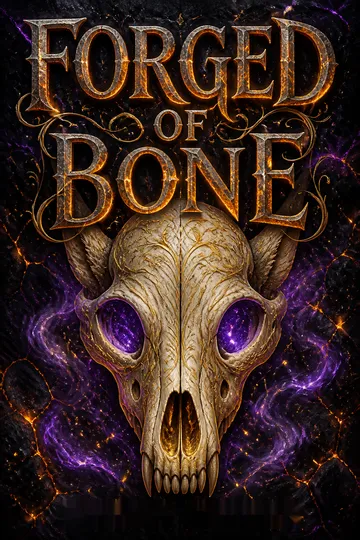
Forged of Bone makes inheritance a political weapon. Tala’s ancestry gives her extraordinary magic, but the same lineage allows Lunaris to describe her as property: the missing princess, the royal heir, the womb needed to restore a dynasty. The story’s central conflict is therefore not simply between two worlds. It is between inherited claims and chosen belonging. Tala’s powers may originate in Lunaris, yet her home is defined by the people she has chosen: Tessa, Prisha, Kaillen, and their friends.
The book repeatedly tests whether love can survive when the signs that usually authenticate it disappear. The queen kills Tala’s wolf, and Kaillen’s instincts no longer recognize the woman he loves. Their gradual reconnection proceeds through embodied evidence: Tala’s strength in battle, Kaillen’s jealousy, his guilt after hurting her, and ultimately his willingness to give his blood to save her. This is a deliberately imperfect romance. Kaillen’s possessiveness and violence are not erased, and Tala’s loyalty does not require her to become passive. Their bond is rebuilt through conflict, desire, and deliberate choice rather than a single magical certainty.
The plot’s systems of power also expose competing moral logics. Jakub treats captives as ingredients; the royal family treats women’s fertility as dynastic infrastructure; the closing spell threatens mass sacrifice in the name of safety. Tala rejects the premise that survival justifies any cost. The alternative spell depends on willing participants, turning the climax into a collective act rather than a solitary display of greatness. Yet the solution remains morally complicated: Kaillen recruits Asuran through a bargain involving Cameron, so the protagonists do not emerge untouched by the coercive logic they oppose.
Finally, Tessa’s substitution challenges Tala’s protective habit of deciding who may face danger. Trusting her sister does not remove risk; it acknowledges that love can mean sharing agency. The portal closes, but the deeper resolution is Tala’s refusal to let ancestry, institutions, or even fate dictate where she belongs.
Review Summary
Forged of Bone received mixed reviews, with ratings ranging from 1 to 5 stars. Positive reviews praised the emotional depth, character development, and satisfying conclusion to the series. Negative reviews criticized repetitive writing, pacing issues, and felt the story dragged on too long. Some readers found the plot twists engaging, while others thought they were far-fetched. Many appreciated the romance between Tala and Kaillen but felt the series could have been condensed. Overall, fans of urban fantasy and paranormal romance found it an enjoyable, if flawed, read.
People Also Read




Characters
Tala Davenport
The unwilling royal heirTala is a Chicago witch whose unusual powers and star-marked eyes set her apart even before she learns that her ancestry reaches into another realm. She is observant, stubborn, and quick to use humor when fear threatens to overwhelm her. Her instinct is to protect the people she loves, though that instinct can make her take responsibility for dangers that are not hers alone to bear. Tala’s relationship with her twin, Tessa, is intimate and protective; with Kaillen, it is marked by desire, trust, and hard-won equality. Her defining strength is not simply the ability to wield formidable magic, but her insistence that power does not grant anyone ownership of another person.
Kaillen King
The demon-born hunterKaillen is a werewolf hunter with formidable combat skill, black underworld fire, and a fiercely independent streak. His identity is shaped by rejection and by the family ties he has chosen among Barnabas and Fallon. He loves Tala with a possessive intensity, but his wolf’s instincts and the loss of her wolf complicate how he can express that love. Beneath his threatening reputation, Kaillen is attentive to small details and willing to surrender freedom when Tala’s safety requires it. He does not become gentle in the conventional sense; rather, his development lies in learning that devotion means staying beside Tala as she makes her own choices.
Tessa Davenport
Tala’s daring twinTessa is Tala’s twin sister, a charismatic woman with little magic but a keen instinct for social performance. Where Tala tends to meet danger head-on, Tessa reads a room, notices what people want, and knows how to redirect their attention. Her lively humor can conceal a serious desire to be trusted with consequential choices. Tala’s protectiveness has often kept Tessa at a distance from danger, but their closeness is not based on one sister being strong and the other needing rescue. Tessa wants the freedom to use her own gifts, and her bond with Tala is strongest when affection allows room for both independence and risk.
Malikhi
The Lunarian princeMalikhi is a Lunarian prince whose star-bright eyes and powerful magic resemble Tala’s. He arrives with courtly manners and an expectation that she will return to the realm he considers hers. His charm can be genuine, but it is bound to a rigid royal worldview in which lineage and duty dictate personal choices. Malikhi’s attention to Tala contrasts with his dismissiveness toward her friends, revealing how easily he mistakes possession for respect. He is not a simple brute: he can be courteous and curious, which makes his assumptions more revealing. His presence forces Tala to distinguish between being welcomed as a royal and being accepted as a person.
Queen Nameena
The dynastic queenNameena rules Lunaris with a confidence founded on inherited power and the survival of her royal line. She is polished in public and decisive when she believes the dynasty is threatened. Her interest in Tala is shaped by both family history and the need to secure heirs, so she treats personal autonomy as secondary to political continuity. Nameena’s power makes her commands difficult to resist, but the urgency behind them also exposes the fragility of the order she protects. She embodies a system in which privilege can disguise desperation, and in which a ruler’s fear of extinction becomes an excuse to control the bodies and choices of others.
Jakub
The portal-making sorcererJakub is a calculating sorcerer with ties to the European underworld and a talent for turning other people’s vulnerabilities into tools. He seeks power, wealth, and the reward he believes an ancient royal family owes him. His calm manner makes his cruelty feel procedural rather than impulsive: he can treat captives as materials in a plan and still imagine himself destined for recognition. Jakub is motivated by ambition more than loyalty, and his confidence depends on information he has collected from older, hidden sources. He serves as a human-scale reflection of the royal family’s larger logic, showing how easily people become means to someone else’s desired future.
Commander Klebus
The rules-bound commanderKlebus is a vampire commander in the Supernatural Forces who must balance urgent threats against legal procedure. She is disciplined, politically alert, and willing to revise her position when evidence shows that ordinary rules cannot meet the danger. Her relationship with Tala and Kaillen is marked by friction, especially when they bend regulations, but she recognizes their abilities and makes room for their contributions. Klebus is neither a detached bureaucrat nor an unquestioning ally. She represents the difficult work of protecting people through institutions that can be slow, imperfect, and still necessary.
Prisha
Tala’s fiercely loyal friendPrisha is Tala’s best friend, a confident woman whose loyalty is direct and practical. She brings blades, courage, and emotional steadiness when Tala’s world grows unfamiliar. Prisha does not mistake friendship for passive support; she challenges Tala, insists on being included, and is prepared to stand beside her in danger. Her relationship with Tala resembles chosen sisterhood, rooted in trust rather than shared blood. Prisha’s quick wit softens tense moments, but it never diminishes her resolve. She is an important counterweight to Tala’s habit of deciding that protecting others means keeping them at a distance.
Barnabas
The mischievous vampire allyBarnabas is a centuries-old vampire, assassin, and friend of Kaillen who hides concern beneath theatrical humor and shameless flirtation. He enjoys provoking Kaillen, but his teasing is often a form of intervention: he reads the hunter’s instincts and tries to push him toward what he cannot admit. Barnabas’s loyalty is real, though his methods can cross boundaries, especially when he uses his supernatural influence to stir jealousy. His fondness for Tala makes her part of the family he has chosen. He treats danger with irreverence, not because he fails to understand it, but because humor is one of his ways of refusing to be ruled by fear.
Fallon
The watchful fairy assassinFallon is a fairy assassin and one of Kaillen’s closest allies. He is sparing with words, observant, and more emotionally perceptive than his reserve suggests. In a crisis, he acts without hesitation, placing his skill at the service of the people he considers family. Fallon’s dry responses balance Barnabas’s theatrics, while his attention to Prisha hints at a quieter, more tentative side. He does not need to dominate a room to command attention. His steadiness gives the group a practical center when stronger personalities, including Kaillen and Barnabas, threaten to turn every problem into a contest.
Asuran
The underworld princessAsuran is a powerful demon princess and Kaillen’s mother. Her enormous strength, alien manner, and appetite for violence make her difficult to approach or predict. She is not a nurturing parent, and Kaillen’s expectations of her are shaped by the absence of any ordinary maternal bond. Yet she can be drawn into action by bargains that appeal to her own interests. Asuran’s presence links Kaillen to the underworld and reveals the danger inherent in his inherited power. She is compelling because she offers no comforting account of family: connection exists, but affection and obligation do not necessarily follow.
Nicholas Fitzpatrick
The library’s vampire guideNicholas is a vampire representative who guides authorized visitors through Bulgaria’s hidden supernatural libraries. He is knowledgeable, enthusiastic about history, and willing to help Tala and her companions search records that ordinary institutions cannot access. His interest in Tala’s unusual appearance can make him overfamiliar, but his professional role is grounded in careful research. Nicholas helps translate the library’s ancient material into usable evidence, and his friendship with Kaillen grows through their shared fascination with historical texts.
Carlos
Tala’s former boyfriendCarlos is Tala’s former boyfriend, a werewolf who hopes to rekindle their relationship after time apart. He is attentive and earnest, though his assumptions about what Tala wants sometimes outrun her intentions. His presence brings Tala’s unresolved history with an ordinary romantic relationship into contact with the more powerful bond she shares with Kaillen.
Cameron
Kaillen’s estranged brotherCameron is Kaillen’s brother and a powerful figure within their werewolf community. Their history is marked by betrayal and a deep break in trust. Cameron’s choices place family loyalty in conflict with Kaillen’s fierce desire to protect the people he loves.
Geriam
Tala’s palace attendantGeriam serves Tala in the Lunarian palace and takes genuine pride in caring for her. Her kindness makes her a rare source of warmth in a court that otherwise treats Tala as a royal resource. Geriam also knows the history and customs that the ruling family prefers to leave unspoken, making her a valuable guide to the pressures surrounding the throne.
Charlotte Morris
The sharp-eyed SF corporalCharlotte Morris is an SF corporal, an archer, and a capable fighter. She responds to Tala’s display of power with clear-eyed assessment rather than panic, and her practical courage helps the organization understand what it may face.
Wenzil Flusserwine
The healing fairy guideWenzil is a Solis fairy who guides Tala and Kaillen through the maximum-security prison. She can heal injuries and explains the prison’s shifting rooms and strict rules.
Plot Devices
The Lunarian portal
A dangerous realm crossingThe turquoise portal connects Earth to Lunaris after Jakub uses Tala’s inherited power to create it. Its existence brings Malikhi and the royal family into Earth’s affairs, while its unstable connection makes every delay dangerous. The portal also exerts a personal pull on Tala because her ancestry and magic originate in Lunaris, even though she considers Earth her home. Closing it requires a spell and extraordinary power, so the doorway functions as both a physical route between worlds and the central pressure shaping the plot.
Aureth and draipal
Power divided by inheritanceLunarians distinguish between draipal, a form of magic widely held in their realm, and aureth, the rare power associated with the Bone Eaters. Tala’s inherited aureth lets her drain supernatural strength and wield it in the portal conflict. The distinction explains why the royal family fears losing its line and why they seek Tala specifically. It also shapes the political hierarchy of Lunaris, where power is treated as proof of entitlement. The device turns ancestry into a source of both ability and danger, while forcing Tala to decide how she will use a power others believe gives them a claim over her.
The broken mate bond
Love blocked by wolf instinctWhen the queen’s power kills Tala’s wolf, Kaillen’s wolf believes its mate has died, even though Tala remains alive. The broken bond makes Kaillen’s instincts recoil from her and, at times, misidentify her as a threat. Tala and Kaillen rely on trust, shared danger, and the wolf’s gradual recognition of her strength to rebuild their closeness. The bond makes their romance more than a question of desire: it tests whether chosen commitment can persist when instinct no longer confirms it. It also gives the story a physical way to portray grief and the struggle to recognize a loved one after profound change.
The twelve-speared spell
Collective power closes the riftAn ancient spell uses twelve spears as conduits, allowing Tala to channel power into the portal. One version takes the lives of hundreds; another draws from twelve willing, sufficiently powerful supernaturals and protects them from death. The spell turns a desperate search through the libraries into a question of consent, capacity, and collective risk. Its limits explain why the SF’s database and the underworld become essential to the plan. During the final attempt, Tala must hold the spell steady while the Lunarian royals attack from the other side.
Tessa’s glamour
A twin trades identitiesThe SF’s sorcerers disguise Tessa as Tala with matching eyes and a replica of the tattoo that marks Lunarian royalty. A concealed portal key gives her an escape route, while her skill at courtship and social performance helps her maintain the deception. The glamour makes the twins’ resemblance a practical instrument, but it depends on Tala trusting Tessa to manage a dangerous role. Its function is therefore both tactical and emotional: it buys the researchers time and allows the sisters to share responsibility rather than leaving one to face the crisis alone.
Supernatural Curse Series

About the Author
Other books by Krista Street





Download PDF
Download EPUB
.epub digital book format is ideal for reading ebooks on phones, tablets, and e-readers.








