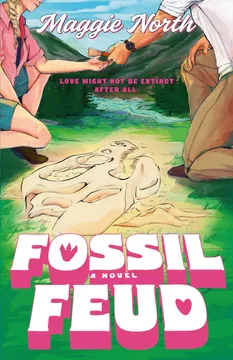


Plot Summary
Beauty Beneath the Tarp
Ripley Adams1 runs a struggling fossil dig on Yellowtail Ranch6 in Montana, where she has uncovered the wing of a rare, possibly unknown feathered dinosaur. The find could finance her company, help her cancer-stricken father,5 and secure a future for the ranch, but the excavation season is running out. Then James Smithson,2 a celebrated Oxford paleontologist, arrives uninvited.
Three years earlier, Ripley1 had hoped he might help her finish her PhD; instead, he believed the university’s account of an authorship dispute and left her to lose her place in academia. Now he needs her field expertise to investigate a suspicious proto-bird fossil submitted by Will Stone,4 Ripley’s former boyfriend4 and the man whose accusation destroyed her career.
Ripley’s fossil is both a scientific discovery and a precarious financial asset. The split exposes the cost of doing field science outside institutions: she has the skill to find what universities overlook, but not the money or authority to protect her work. James returns carrying the power that once failed to help her, so his request immediately tests whether expertise can be separated from status. Ripley’s guardedness is not simple bitterness. It is a practical defense built from a specific professional betrayal.
The Sponsor Walks
Ripley’s1 billionaire sponsor, Maury,8 learns that Will4 has another feathered dinosaur and abruptly withdraws support, favoring the specimen closest to market. The loss threatens to close the dig before Ripley1 can remove Beauty, and the Yellowtails6 need the fossil sale to protect their ranch from debt.
Ripley1 reluctantly accepts James’s2 investigation in exchange for his help finding new funding. She sets strict terms: the site remains hers, her discoveries stay hers, and their relationship must remain professional.
James2 agrees and visits the excavation, where Beauty’s wing and shoulder bones leave him visibly astonished. His attention also draws Ripley’s crew3 into his impromptu teaching, making her fear that his prestige will eclipse her authority. Still, Cara3 urges Ripley1 to keep the bargain for the ranch’s sake.
Money is not a side concern here. It determines who can keep excavating, who can study a specimen, and whose name will survive beside it. Maury’s withdrawal makes Ripley’s expertise suddenly vulnerable to market timing, while Cara reminds her that the dig is also a community project. Her rules are a response to Will’s theft, but they also show how trauma can turn boundaries into an attempt to control every possible risk. James’s admiration matters to her, even as his status makes that admiration feel dangerous.
A Midnight Lifeline
As Ripley1 searches the canyon for Beauty’s missing body, James2 works the phones and approaches potential patrons. He also sketches the dinosaur as he imagines her alive, revealing an artistic skill he keeps private. Just as Ripley1 prepares to tell the crew that the excavation is ending, James2 arrives with anonymous funding.
The sponsor offers first refusal on the fossils and requires study at an agreed research institution, while allowing Ripley1 first authorship. Ripley1 accepts, grateful but wary of the terms, and agrees that James2 can stay, helping excavate in exchange for investigation time.
Their late-night talks reveal how much she misses academic debate and how deeply her father’s5 illness shapes her urgency. James2 promises to keep trying for her, though neither admits how personal the partnership is becoming.
The funding rescue restores time, but not security: its anonymity and research conditions leave Ripley dependent on someone whose motives she cannot yet read. James’s drawings offer a counterpoint to his public identity as a taxonomist. He can imagine a living creature from fragmentary evidence, yet treats that creative self as secondary. Their emerging intimacy grows through work and observation, not a sudden collapse of distrust. Ripley lets him stay, but still measures closeness against the possibility that he may take credit or leave.
The Roadside Kiss
Ripley1 and James2 drive north to consult paleontologist Charlie Bassa,10 whose past experience with fossil fraud may help them assess Will’s4 claim. In a storm, Ripley1 steers their car clear of a skidding vehicle and stops safely.
James,2 shaken by the near collision and his own history of trauma, walks away from the car; Ripley1 follows and steadies him. In the rain, he confesses that he had read her paper before their first meeting and regretted believing the university’s accusations. He admits his attraction has lasted since then, and they kiss.
James2 soon insists that they cannot begin a relationship while he is investigating Will4 and while Ripley1 is vulnerable to professional gossip. They continue to her father5 Steve’s5 home, where Ripley1 discovers Steve5 has been secretly seeing their neighbor Sally.18
The crash forces James’s polished composure to give way, while Ripley’s driving shows the competence she has built far from academic approval. His confession repairs one misunderstanding but cannot erase the practical imbalance between them. He frames distance as protection, a choice that echoes his fear of repeating his father’s harm. At Steve’s home, Ripley encounters another kind of care: her father is still pursuing pleasure and companionship despite serious illness. Both scenes challenge her belief that love must mean vigilance and self-sacrifice.
The Empty Drawers
At the Royal Tyrrell Museum, Charlie10 bristles when Ripley1 and James2 suggest Will’s4 celebrated fossil may be fraudulent. A postdoctoral researcher, J.D. Oakes,11 helps them access the collection after Charlie10 leaves.
They find that Will4 consulted hundreds of specimens, then discover empty spaces where a birdlike coracoid, a skull, and other large bones should be. The missing pieces could have supplied the foundation for a composite skeleton, explaining why Will4 refuses confirmatory testing. Their phones die and James’s2 watch stops, so the pair fail to leave before the museum locks for the night.
While searching for food, they roam the exhibits and talk about their families, including James’s2 guilt over his mother’s death and the artistic life he abandoned. They begin a secret, limited intimacy before J.D.11 lets them out the next morning.
The missing specimens turn suspicion into a material trail, but not yet proof. In a research collection, theft can hide inside ordinary disorder, and Will’s apparent completeness may be manufactured from fragments other scientists trusted to remain accessible. The museum’s locked doors also remove the professional roles that have kept Ripley and James at a distance. Their personal histories reveal parallel inheritances: Ripley fears living for her father’s sake, while James fears that choosing himself will injure others. Neither fear is resolved by the night together.
The Sketchbook Confession
Back at the dig, paleobotanist Mindy Wong9 arrives to collect samples and questions Ripley’s1 control of the site. James2 challenges Mindy9 privately, insisting that Ripley1 leads the excavation and deserves respect.
Later, Ripley1 finds his sketchbook and discovers nine portraits of herself among his drawings of Beauty and the ranch. James2 admits he has feelings, but says he wanted to prevent hers from deepening because he fears separating her from her work and father.5 Ripley1 rejects the idea that avoiding pain can preserve them.
They choose to be together without pretending their time is unlimited. When a storm shifts the creek and leaves debris in the canyon, Ripley1 spots an unusual pattern in the earth. Beneath the branches lies a second, nearly complete feathered dinosaur.
James’s defense of Ripley matters because he uses his institutional authority to reinforce her leadership rather than replace it. The sketchbook makes his private attention visible, but his confession also reveals the danger in his protective logic: he has decided what Ripley can bear without letting her choose. Her answer is not a promise that their future will be easy. It is a refusal to let anticipated grief dictate every present decision. The fossil’s discovery arrives through patient attention to a changed landscape, not through certainty.
The Second Bird
Ripley1 and James2 realize the storm has exposed a complete birdlike skeleton, which the crew names Beast. Its body could help establish whether Beauty represents a new species, but the remaining excavation must be finished before the season ends.
James2 moves into Ripley’s1 cabin, and the two stop treating their relationship as a temporary accident, even while he resists promises about life beyond the summer. Ripley’s crew3 divides the work, with Cara3 and Griff7 handling delicate preparation as Jordin,13 Matteo,12 and the twins14 take on more responsibility.
Ripley1 and James2 also carve their initials into a small stone and bury it near the creek, creating a private marker of their shared time. The discovery gives Ripley1 the scientific evidence and potential sale that could change her company’s future.
Beast transforms Ripley’s hopes from a single vulnerable wing into a comparative scientific case. The find strengthens her professional claim, but it also makes the clock more dangerous: two fragile specimens must be recovered, scanned, and defended before the season closes. The crew’s expanding competence shows that Ripley’s leadership has produced more than a fossil. The buried stone works differently from the specimens. It is not evidence for a scientific claim, but a deliberate record of two people trying to make a fleeting season count.
Will Finds the Dig
At a Hercules feed store, Will4 finds Ripley1 loading supplies and admits that his celebrated fossil is tied to his ambitions for a prestigious chair. He still justifies claiming her old research idea, then reveals that he knows about her discoveries and her investigation.
James2 arrives and drives Will4 off, but his presence exposes the connection between them. Ripley1 tells James2 to leave before Will4 can damage his career; James2 refuses, choosing to remain beside her despite the risk. Soon afterward, the crew spots a drone surveying the canyon.
They cannot prove Will4 sent it, but its flight reveals how easily their secret site can be watched. With Beast still in the ground, Ripley1 pushes the crew to work faster while fearing that the evidence they need may be taken or destroyed.
Will’s return makes the conflict immediate and physical. He does not merely dispute authorship; he tracks Ripley’s location and uses his career prospects to rationalize past harm. James’s refusal to retreat marks a change from his earlier belief that distance is the safest form of care. The drone turns visibility into a threat: Ripley needs public recognition to establish her claim, yet exposure can invite interference before the bones are secure. Her urgency is both scientific and personal, shaped by the years and family time she cannot recover.
The Crates Are Seized
The crew extracts Beast by helicopter, lifting its enormous field jacket intact after weeks of painstaking work. At the airport, as Beauty and Beast are prepared for scanning and shipment, FBI agents seize both crates under an emergency court order.
Will4 has leased the neighboring Shipman property and claims a storm moved the creek, placing Beast on his land. His ally is the neighboring rancher, and the fossils are stacked dangerously as agents prepare to remove them. James2 identifies himself as connected to the Smithson Foundation and argues for the specimens, but the seizure proceeds.
Ripley1 then learns that James’s family foundation was the anonymous sponsor. She believes his influence has made her work appear to belong to him, and, feeling betrayed by another powerful man, orders him to leave.
The seizure weaponizes uncertainty over land boundaries against the people who did the excavation. Will’s claim exploits the creek’s storm-altered course, turning a geological event into a legal obstacle. James’s funding, meant to keep the dig alive, now appears inseparable from his family name and institutional influence. Ripley’s anger is grounded in a real problem: even an honest patron can dominate the public story of a discovery. Her response repeats an old survival strategy, cutting off a relationship before dependence can become another form of control.
The Dream Was Hers
After the season ends, Ripley1 returns to Steve’s5 trailer and searches the canyon for the stone she and James buried. She finds nothing. James’s2 package arrives with watercolor versions of his Beauty drawings and a letter acknowledging his failures, returning her rights to the artwork, and promising the foundation will not control her research.
Steve5 tells Ripley1 that he never intended to become a paleontologist and never expected her to complete his dream. His illness has improved enough for him to reclaim parts of his life, including his relationship with Sally.18
Then Matteo12 and his grandfather, John Foster,15 arrive with a phone recording of Will4 admitting that Ripley’s1 research idea was hers. The recording gives Ripley1 evidence she can use at the American Paleontology Society meeting.
Ripley has confused love with repayment: because Steve sacrificed for her, she has treated his imagined career as a debt she must settle. His correction lets her distinguish her own desire from a duty she invented. James’s letter likewise returns something rather than asking for access, though it cannot undo the concealed funding or the hurt it caused. The recording arrives through Matteo’s family and ordinary community ties, not a powerful institution. Together, these gestures widen Ripley’s support beyond the men whose approval once determined her career.
The Conference Revolt
At the Berkeley conference, Ripley1 arrives with Cara,3 Griff,7 and the crew, carrying John’s15 recording and a plan to confront Will4 publicly. James2 takes the stage to announce the prestigious Marsh Chair, but refuses to name Will,4 citing irregularities in the fossil data and the absence of independent testing.
Security removes him as the audience erupts. Ripley1 then takes the microphone and identifies herself, describes Will’s4 earlier appropriation of her work, and plays the recording in which he acknowledges her idea.
She connects his new land claim to his effort to discredit her and asks paleontologists to demand proper testing and help recover the seized fossils. The crew circulates posters and evidence. Ripley1 is detained for the disruption, while the appeal spreads beyond the room and galvanizes wider attention to misconduct in science.
The conference reverses the earlier Atlanta encounter: Ripley no longer approaches a powerful expert for permission to belong. She speaks under her own name, with evidence, in the institution that once excluded her. James’s refusal to award Will does not by itself prove the fraud, but it costs him influence and makes the ethical dispute public. Ripley’s testimony connects individual plagiarism to structural credibility gaps in science. The action is risky and imperfect, yet it makes silence more costly than scrutiny.
The Stone Comes Home
After security releases Ripley,1 James2 finds her waiting for a late bus. He returns the carved stone, explaining that he had planned to keep their shared marker but now believes it belongs with her.
Ripley1 tells him she understands why he funded the dig, yet also admits she would have refused if she had known the sponsor’s identity. She apologizes for sending him away and recognizes that his secrecy and her distrust both cost them time. James2 offers a practical future: a sabbatical, summers in Montana, and long-distance plans that can change as needed.
Ripley1 tells him she loves him and is willing to build a life without waiting for perfect circumstances. They reunite beneath the rain, choosing possibility over the safety of ending things first.
The stone changes meaning when it returns to Ripley’s hand. First buried as a private record, it becomes an object she can keep without treating it as proof that love guarantees permanence. Their reconciliation is not based on erasing the funding deception; Ripley names her own refusal as part of the loss, while James offers concrete changes rather than sentiment alone. The ending answers the novel’s fixation on time with a choice: uncertainty remains, but neither character lets it make the decision for them.
Epilogue
One year later, Ripley1 and James2 run Life Paleontology, while Cara3 leads Clever Girl nearby. The FBI releases Beauty and Beast, and Will’s4 supposed complete fossil is exposed as bones stolen from six museums. Beauty earns recognition as a new species, and Ripley1 resumes work on her PhD while James2 begins earning money as an illustrator.
At the Clever Girl Museum, the reconstructed birds are finally displayed. James2 proposes to Ripley1 with a ring placed on Beast’s wing, and she accepts, surrounded by the people who helped make their shared future possible.
The epilogue resolves the novel’s competing forms of value without pretending they were interchangeable. Beauty and Beast return to public study, Ripley regains an academic path on her own terms, and James gives serious room to the art he had dismissed as unserious. The neighboring businesses make collaboration tangible: Ripley’s success does not require Cara’s displacement. The proposal belongs beside the fossil display because their intimacy and their work have become mutually sustaining, not because either has swallowed the other.
Analysis
Fossil Feud makes the ownership of the past a concrete problem. A bone can be discovered by one person, financed by another, studied by an institution, and then claimed through a boundary dispute. Ripley’s1 struggle is therefore not simply to prove that she is talented. She must defend the conditions under which her talent can count as knowledge. The novel’s critique of academia is specific: prestige and access can turn disputed authorship into a career-ending verdict, while private money can rescue research and still compromise its independence.
Ripley1 and James2 respond to harm in opposite but related ways. Ripley1 limits trust because she has seen intimacy used as an avenue for taking credit. James2 withholds his desires because he fears that acting on them will reproduce family damage. Each mistakes unilateral protection for care. Their relationship changes when they stop treating suffering as something that can be prevented by controlling another person’s choices. The book does not make trust synonymous with naïveté; Ripley1 still needs transparent contracts, independent testing, and credit. Rather, it distinguishes safeguards from emotional retreat.
Time gives these conflicts their pressure. Fossils make deep history visible, but the living characters face deadlines measured in weeks, medical uncertainty, and careers that can be diverted by a single institutional decision. Steve’s5 refusal to let Ripley1 carry his imagined ambitions clarifies the difference between loving someone and living on their behalf. James’s2 eventual willingness to pursue art makes a similar distinction between inherited duty and chosen work. By the end, scientific recognition, economic security, intimacy, and creativity no longer need to be treated as mutually exclusive prizes. The story’s resolution is not that every loss is repaired. It is that Ripley1 and James2 choose their next actions openly, with the costs in view, instead of allowing fear or reputation to choose for them.
Review Summary
Fossil Feud receives largely enthusiastic reviews, averaging 3.95/5 stars. Readers consistently praise the unique paleontology setting, the swoony MMC James Smithson (described as a devoted "yearner"), and protagonist Ripley Adams' compelling character growth. Many compare it favorably to Ali Hazelwood's STEM romances. Common highlights include sharp banter, forced proximity tension, and meaningful commentary on academia and gender bias. Minor criticisms include occasional pacing issues, a slow middle section, and some feeling the British characterization felt stereotyped. The spice level is generally considered well-balanced.
Characters
Ripley Adams
The fieldwork survivorA Montana fossil hunter and founder of Clever Girl Fossils, Ripley is observant, funny, fiercely capable, and wary of anyone who can claim authority over her work. She left graduate school after an authorship dispute and now measures success in both scientific recognition and the practical security her work can provide her father5 and the Yellowtail family6. Her instinct to keep emotional distance protects her from being used, but it can also isolate her from people who want to help. Ripley’s deep attachment to fossils comes from wonder rather than prestige: she wants to understand the lives behind the bones and build a way of working beyond the academic system that rejected her.
James Smithson
The brilliant guarded professorA renowned Oxford paleontologist, James is meticulous, formally mannered, and more sensitive than his public reputation suggests. He is skilled at taxonomy, patient fieldwork, and encouraging young scientists, yet he carries a rigid sense of responsibility shaped by family expectations and painful history. His private drawings reveal an imaginative life he rarely allows himself to treat as serious. James wants to protect people from harm, but his habit of making decisions for them can become another form of control. Ripley1 unsettles his certainty about the life he is supposed to lead and draws out his curiosity, humor, and neglected creative ambition.
Cara Yellowtail
The next-generation field leaderRipley’s1 protégé and second-in-command, Cara is an Indigenous rancher’s6 granddaughter who wants to protect Yellowtail land and build a durable future for her community. Warm, teasing, and emotionally perceptive, she can read Ripley’s1 evasions and challenge her without undermining her authority. Cara understands the financial stakes of fossil work, but she also sees the relationships Ripley1 tries to treat as temporary. Her ambition is not simply to inherit a business; it is to keep her family’s land viable across generations while making room for love, partnership, and a life of her own.
Will Stone
The rival paleontologistRipley’s former partner1 and a university paleontologist, Will is talented, ambitious, and practiced at presenting self-interest as necessity. He fears losing his place in a precarious profession and regards opportunity as something he must secure before someone else takes it. That insecurity helps explain his rationalizations, but does not excuse the harm he causes. Will’s polished confidence makes him difficult to challenge, especially in a field where men with institutional standing are often granted credibility before their claims are examined.
Steve Adams
Ripley’s devoted fatherA former mechanic living with the effects of lung cancer, Steve raised Ripley1 largely on his own and shared her love of fossil hunting. He is affectionate, wry, and practical, teaching her to make choices rather than freeze when things go wrong. His illness makes Ripley1 feel responsible for buying him more time and comfort, while his stubborn appetite for ordinary pleasures reminds her that care cannot mean managing every decision he makes.
Geraldine Yellowtail
The ranch’s steady matriarchCara’s grandmother3 and owner of Yellowtail Ranch, Geraldine is generous, formidable, and deeply committed to keeping her family’s land secure. She offers Ripley1 fossil rights in exchange for mentoring Cara3 and treats hospitality as both affection and a way of drawing people into community. Her practical understanding of land, debt, and family gives the dig stakes beyond any single scientist’s career.
Griff
The dependable excavatorAn experienced Australian crew member, Griff is a skilled excavator and former firefighter who brings steadiness to dangerous fieldwork. He is understated, loyal, and patient with Cara3, even when their relationship becomes complicated. His place in the crew shows how a life built around seasonal work can still become rooted in a particular community.
Maury
The fickle fossil patronA wealthy sponsor who sees fossils as both valuable discoveries and a route to personal legacy, Maury funds Ripley’s1 dig until a competing specimen seems more profitable. He is charming when it suits him and bluntly transactional when it does not. His shifting support exposes how private funding can keep important work alive while leaving it vulnerable to a patron’s changing priorities.
Mindy Wong
The ambitious paleobotanistA respected paleobotanist whose specialty is ancient fungal networks, Mindy arrives to collect samples and collaborate with the dig. She is direct about wanting her field taken seriously and is unaccustomed to working outside established hierarchies. Her professional confidence can put her at odds with Ripley1, though she is capable of recognizing when she has misjudged someone.
Charlie Bassa
The wary fossil expertA paleontologist at the Royal Tyrrell Museum, Charlie is playful, sociable, and experienced with the reputational damage that follows a scientific hoax. His humor helps him manage old embarrassment, but it also makes him quick to bristle when he feels someone is questioning his judgment or the museum’s standards.
J. D. Oakes
The helpful museum postdocA postdoctoral researcher at the Royal Tyrrell and an old friend of Ripley’s1, J. D. is affectionate, easygoing, and generous with access. His willingness to bend procedure reflects his loyalty to Ripley1, as well as the precarious calculations of a young scientist hoping to advance.
Matteo
The reluctant summer internA young intern initially brought onto the dig through a family connection, Matteo begins as impatient and unreliable. Ripley’s1 direct supervision gives him a chance to learn the patience excavation requires. His evolving place in the crew reflects the value of instruction that corrects mistakes without writing a young person off.
Jordin Johnson
The exacting young researcherA high-achieving undergraduate on Ripley’s crew1, Jordin is diligent, ambitious, and inclined to believe that flawless work is the only acceptable work. She admires accomplished scientists and pushes herself hard to earn their approval. Ripley’s1 mentorship gives her both technical guidance and a counterweight to perfectionism.
Finn and Fiona
The inventive twin techniciansThe pale, sharp-witted twins work on Ripley’s crew1 and are adept at tools, technology, and elaborate practical jokes. Their synchronized habits make them a memorable pair, but each brings individual skill and loyalty to the group. They help turn the crew’s shared ingenuity into more than a collection of field hands.
John Foster
Matteo’s watchful grandfatherA local rancher and Matteo’s grandfather12, John is observant, practical, and protective of his family. He notices what happens around him and is willing to step forward when someone needs support.
Marie Wellesley
James’s formidable sisterJames’s older sister2 and a representative of the family foundation, Marie is brisk, discerning, and accustomed to handling family obligations. She can be sharp when she believes James2 has neglected those duties, but her directness also reflects the pressures surrounding their family’s wealth and expectations.
Daisy
James’s youngest sisterJames’s teenage sister2, Daisy is devoted to music and represents a younger generation still negotiating the ambitions their father expects them to pursue. James2 is especially protective of her and attentive to the possibility that her interests may not fit the family’s preferred path.
Sally Gunderson
The caring next-door neighborSteve’s5 neighbor is warm, nurturing, and close enough to Ripley’s1 life to feel like family. Her long-standing kindness makes her a source of comfort, even as Ripley1 is surprised to see Steve5 build a private relationship with her.
Plot Devices
Beauty and Beast
The scientific and financial stakesBeauty begins as the exposed wing Ripley1 discovers on Yellowtail Ranch6, a find valuable enough to attract a buyer but incomplete enough to leave its scientific importance uncertain. Beast, found later in storm debris, supplies a much fuller comparison. Together, the fossils could establish a new species and test Will’s4 competing claim. They also represent the practical stakes of excavation: ownership, research access, public display, and the risk of damage during extraction or shipment. Their journey from canyon floor to legal custody forces the characters to confront who controls scientific knowledge and who receives credit for finding it.
The Missing Specimens
The trail behind Will’s fossilJames2 and Ripley1 begin by questioning Will’s4 refusal to provide his original specimen for independent testing. At the Royal Tyrrell, they find that Will4 had examined hundreds of collection drawers and discover important bones missing from storage. The empty spaces suggest that his supposedly complete fossil may combine pieces taken from multiple institutions. The collection trail turns suspicion into a concrete investigative lead, though the researchers lack enough evidence at first to prove what happened. It also makes the museum’s ordinary cataloging system part of the mystery: a theft can hide among thousands of little-known bones.
Funding and First Refusal
Money with strings attachedWhen Maury8 withdraws support, Ripley1 needs another sponsor quickly or the dig will close. James2 finds an anonymous backer willing to finance the remaining season in exchange for first refusal on any fossil purchase and research at an agreed institution. Those terms save the excavation and make Beast’s later discovery possible, but they also create a conflict between financial rescue and Ripley’s1 control of her work. Because the patron remains unidentified to her, the funding contract becomes a test of trust well before she learns who arranged it.
The Buried Stone
A private record of shared timeDuring the dig, James2 carves their initials into a small stone and buries it near the creek. The gesture answers Ripley’s1 fear that their summer could leave no trace, but it is deliberately separate from the fossils and their scientific claims. The stone disappears after the season, then returns to Ripley1 during their reunion. Its shifting meaning follows the relationship: first a marker of temporary closeness, later a physical reminder that their choices can shape what comes next without guaranteeing permanence.
Download PDF
Download EPUB
.epub digital book format is ideal for reading ebooks on phones, tablets, and e-readers.








